
Atwood Magazine is excited to share our Editor’s Picks column, written and curated by Editor-in-Chief Mitch Mosk. Every week, Mitch will share a collection of songs, albums, and artists who have caught his ears, eyes, and heart. There is so much incredible music out there just waiting to be heard, and all it takes from us is an open mind and a willingness to listen. Through our Editor’s Picks, we hope to shine a light on our own music discoveries and showcase a diverse array of new and recent releases.
This week’s Editor’s Picks features Fantastic Cat, Maya Engen, MUNA, Stephen Sanchez, Keni Titus, and The Undercover Dream Lovers!

 follow EDITOR’S PICKS on Spotify

“Don't Let Go”
by Fantastic CatPerseverance rarely looks pretty. More often, it looks like grit in the teeth, fire in the chest, and a white-knuckled refusal to release what still matters just because the world has decided it’s time to move on. Fantastic Cat’s “Don’t Let Go” lives in that tension – not as a song about healing neatly or bowing out gracefully, but as a fervent, full-hearted defense of staying in it. In an age of emotional detachment and tidy self-preservation, this song dares to be stubborn. It aches, pushes, laughs in the face of good advice, and keeps its hands wrapped around the light anyway. Warm, ragged, charismatic, and gloriously alive, “Don’t Let Go” is a heart-first folk rock anthem for anyone still choosing conviction over comfort – a soundtrack to staying when it’s easier to walk away and fighting for what still matters, no matter the cost.
She said it’s time you reassess your life
Are you sure that’s what you’re like?
Or do you not know?
And while I swore that I was in control
There were lies I might have told
But I don’t know
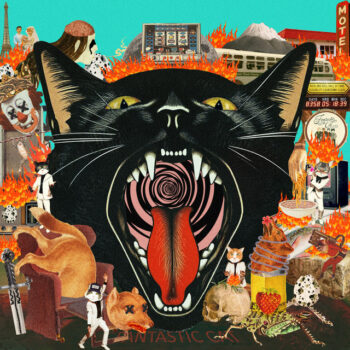
That defiant, driving spirit has made Fantastic Cat a singular force from day one. Comprised of Brian Dunne, Anthony D’Amato, Don DiLego, and Mike Montali, the New York–bred four-piece thrive in the sweet spot between sincerity and smart-assery, turning camaraderie, chaos, and craftsmanship into something far greater than the sum of their already formidable parts. Their songs are rich with wit and lived-in wisdom, but never at the expense of feeling; even at their funniest, there’s soul in the machinery. That tension – between the band’s off-the-cuff charm and the deep emotional current running beneath the surface – remains one of their greatest strengths, making their music feel deeply human even as album titles like The Very Best of Fantastic Cat (their debut), Now That’s What I Call Fantastic Cat, and their latest, Cat Out of Hell, can’t help but make us laugh.
Is a dream just a drawn out fantasy
A game of make-believe
A liminal state of being?
‘Cause in my head,
there’s a band that plays at 10
And I am young again
It’s quite a scene
Set for release April 10 via Missing Piece Records, Cat Out Of Hell is Fantastic Cat’s third album and, by all accounts, their fullest portrait yet – a record shaped by the road, the chemistry of the room, and the hard-earned confidence that only comes from years of playing together. According to the band, they sought to bring the energy and immediacy of their concerts to life in the studio, building something bigger than their first two albums while still holding onto the raw, human qualities that have defined their music since 2021.
Brian Dunne tells Atwood Magazine that when they made their first record, “we didn’t really know what we had until we started playing together live,” while the second was “kind of playing catch up.” This time, the mission was different: “To capture the lightning of our live shows into a more expansive record.” That ambition can already be heard in the album’s opening run, from the shot of energy that is lead single “Donnie Takes the Bus” to the charged conviction of its follow-up “Don’t Let Go,” a song that feels built to hit both in the speakers and in a crowded room full of people shouting back every word.
And what a song it is. Fueled by ringing guitars, roadhouse spirit, and a larger-than-life, instantly catchy chorus, “Don’t Let Go” turns perseverance into something visceral. “Don’t look down, baby, don’t let go / Grab onto anything you think you can hold / And hold on tight when the light gets low,” Dunne sings, before driving the point even deeper: “Hearts get hard, and people get old / And nothing you can buy can save what you sold / So hold on tight to the light in your soul. Don’t look down, baby don’t let go!” These aren’t lyrics about passive hope; they’re lyrics about choosing not to surrender. There’s desperation in them, yes, but also defiance, humor, and hard-won heart. Fantastic Cat know exactly how to make a song feel like a rallying cry without sanding down its rougher edges.
And they sing, “Don’t look down,
baby, don’t let go
Grab onto anything
you think you can hold
And hold on tight
when the light gets low
And don’t look down,
baby, don’t let go.”
That’s precisely what Dunne and co. set out to achieve. “‘Don’t Let Go’ is a song about perseverance and the stubborn act of never giving up,” he explains. “For a while, it felt like every new indie rock song was about finding inner peace, going to therapy, and the pleasures of a warm bath. This song intends to be the antithesis of that type of songwriting. It’s about holding onto something long after you should, no matter the cost. It does sound nice in the bath though.”
He expands further on that same resistance, noting that Fantastic Cat felt “everyone seems to be making their peace with the world,” and that while “that’s a sweet resolution,” maybe “now is not the time to make your peace.” In practice, not letting go means making a choice: “To stay hungry, to stay angry, to stay youthful and cautiously optimistic… We are not a lazy band. We are getting in the van and taking the album to every town that will have us.”
I was drunk. I was screaming in the street
Saying, “How can this be me?”
Well, I don’t know
There was a time when I felt like I was strong
Everyone but me was wrong
Now, where’d that go?
And if I act my age
And I’m a grown man full of rage
What a tragic thing to be
So proud of my misery
And all the time
There’s a thought inside my mind
It’s stubborn and unwise
But, so am I
That refusal to soften into complacency gives “Don’t Let Go” its pulse. It’s not just a song about hanging on; it sounds like hanging on – like digging in your heels, throwing your voice into the void, and finding that somewhere between the absurdity and the ache, there’s still something worth fighting for. Fantastic Cat have always known how to turn warmth into power and sentiment into singalongs, but this time they sound especially alive: Road-worn, clear-eyed, and unwilling to go quietly. Rousing, relentless, and ragged in all the right ways, “Don’t Let Go” storms through with a fistful of folk rock conviction – big-hearted and built to steady shaking hands, even as the ground starts to give way.
From there, Cat Out Of Hell promises to be one hell of a ride.
And it goes: Don’t look down,
baby, don’t let go
Grab onto anything
you think you can hold
And hold on tight when the light gets low
Don’t look down,
baby don’t let go
Hearts get hard, and people get old
And nothing you can buy
can save what you sold
So hold on tight
to the light in your soul
Don’t look down,
baby don’t let – don’t let go!
“Fool”
by Maya EngenEvery one-sided relationship eventually reaches a breaking point – the moment care curdles into clarity, when devotion gives way to something sharper, steadier, and far more necessary. Maya Engen’s debut single “Fool” captures that exact moment: Not the quiet unraveling, but the snap. The realization. The decision. With a voice that smolders and soars in equal measure, the New York singer/songwriter turns emotional exhaustion into something electric, channeling hurt, anger, and hard-won self-respect into a song that feels as cathartic as it is commanding.
From its opening lines – “You’re wasted / Gotta pick you up from off of the pavement” – “Fool” drops listeners straight into the imbalance, painting a vivid portrait of care that’s no longer reciprocated, of energy poured into someone who only takes. It’s specific, cinematic, and instantly gripping, but what makes the song hit is what comes next: The refusal. As the chorus rises, so does Engen, flipping her frustration into a universally relatable mantra of reclamation – “Don’t you dare try to make a fool out of me.” What begins as vulnerability becomes something else entirely: A declaration.

You’re wasted
Gotta pick you up from off of the pavement
Gotta pull the cigarette out your mouth
Gotta hold you up so i dont go down
You’re a deadweight
You’re never gonna figure it out
Never gonna turn it around
Do i need to say it out loud
Released in late February via Giant Music, “Fool” arrives not just as Maya Engen’s debut single, but as a defining first step. Written in one of her earliest Los Angeles sessions with producer Shy Kid and songwriter Tor Miller, the track marked a turning point – the moment Engen felt herself stepping into focus, both sonically and emotionally. It’s the song that changed everything, the one that made her realize what her music could be, and the one that ultimately helped open the door to this next chapter.
“‘Fool’ is about being in a toxic relationship or friendship where you feel like you’re giving so much more than you’re getting,” Engen tells Atwood Magazine. “You keep taking care of someone… and just exhausting every last bit of energy and love you have for them when they’re just simply not reciprocating.” That imbalance – repeated, internalized, and endured – becomes the song’s driving force, but what makes “Fool” resonate is the tension she refuses to resolve neatly. Hurt and anger coexist here, vulnerability and defiance locked in conversation.
That emotional immediacy is at the heart of everything Engen creates. A self-described maximalist, the 22-year-old NYU grad approaches music with a desire to feel – and make others feel – everything as deeply as possible, romanticizing even the hardest moments into something vivid and alive. It’s a perspective shaped by years of classical training in piano and voice, a background in musical theater, and a lifelong devotion to performance and storytelling. Now based in New York City, Engen blends soulful pop, country grit, and smoky jazz into a sound that feels both timeless and distinctly her own – rich, expressive, and rooted in the kind of raw emotion that can’t be faked.
Maybe it’s the way that you condescend
Or maybe its the way I’m so easy to bend
I lose you by the minute
You push me to my limit
Again and again and again
It’s not fair
You always do this to me
Cause I care
So sure I’d never try to leave
Stay right there
Gonna pull the rug from under your feet
Don’t you dare
Try to make a fool out of me
All this and more comes to life in her first song’s chorus, where Engen finally says what’s been building underneath: “It’s not fair… you always do this to me” she roars, voice radiating over percussive piano hits, thunderous bass, and thumping drums. Her words land as both recognition and release, but she doesn’t stay there for long – the line hardens, the boundary sets, and she pushes through with conviction: “Don’t you dare try to make a fool out of me.” As the fullness of her burgeoning artistry comes into view, everything she’s been carrying turns into something she won’t carry anymore.
She hears it, too. “It’s kind of the embodiment of those two voices fighting at each other in your head,” she explains – one asking how someone you love could hurt you this way, the other finally pushing back, insisting on something better. Writing the song became an act of reckoning as much as release: A way to name what was happening, to hold herself accountable, and ultimately to reclaim her independence.
“That chorus was a testament to, ‘you can’t make me feel bad about this anymore,” Engen says. “Like, I can say that it’s not fair that you did this to me, and I’m hurt by it, but I can also say that I’m gonna get my life back, and you’re never gonna do this to me again.”
“It’s really valuable to be able to own something that’s hard to admit, and being able to declare that, I think it’s just as powerful as saying you’re moving past something. I don’t think you’re truly ever moving past something if you’re not really accepting the feelings and thoughts that are the hardest to admit.”
That sense of reclamation pulses through every second of “Fool.” It’s there in the tension of her delivery, in the grit beneath the gloss, in the way her voice carries both the weight of what she endured and the strength it took to walk away. If the song begins in frustration, it ends in something far more powerful: Self-respect, hard-earned and fully owned.
“I was reclaiming my independence, and writing it, and especially being able to sing it, definitely helped me work through that situation,” Engen says. What started as something she had to work through became something she could stand on – and that’s exactly what she hopes listeners carry with them. “I want them to feel like the most confident versions of themselves when they listen to ‘Fool,’” she smiles. “I want people to listen to ‘Fool’ as if it’s their walkout song.” Not just a release, but a return to self.
Unfiltered, unflinching, and wholly unapologetic, “Fool” marks the moment where doubt gives way to clarity, and where choosing yourself stops feeling impossible and starts being necessary. It’s a bold, brutally honest and ultimately empowering introduction, but more than that, it’s a statement: of intent, of identity, and of an artist stepping fully into her own voice. Maya Engen is no “Fool” – but she’s very much a star on the rise.
“Dancing on the Wall”
by MUNAMUNA have always known how to turn emotional turmoil into something you can move to – but “Dancing on the Wall” hits differently. It doesn’t sit in its loneliness; it explodes past it. What starts from a place of unrequited feeling and self-awareness becomes expansive and electric, a radiant surge of passion built for bodies in motion and voices raised together. There’s a sense of release baked into every second – not escape, but expression – as the band transforms private frustration into a bold, buoyant, larger than life eruption. It’s the sound of letting yourself feel everything at full volume, of turning a cycle you can’t quite break into a moment you can fully own, if only for the length of a song.
A breathtaking singalong that pulses with life even as it aches at its core, “Dancing on the Wall” finds the beloved indie pop trio leaning fully into cool contradiction. The song surges forward on kinetic, propulsive production and soaring melodies that practically demand movement, yet beneath that sweetness lies a quieter, more fragile truth: The slow, dawning realization that the connection you’re clinging to was never really there to begin with.
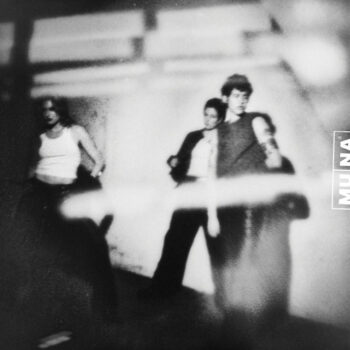
Released in February alongside the announcement of their fourth album Dancing on the Wall (out May 8 via Saddest Factory Records/Secretly Group), “Dancing on the Wall” signals a sharper, more emotionally volatile chapter for MUNA. Active since the mid-2010s, the trio of Katie Gavin, Josette Maskin, and Naomi McPherson have spent the past decade building a reputation as one of indie pop’s most vital and emotionally resonant voices, moving seamlessly from cult favorites to festival main stages and arena tours alongside the likes of Taylor Swift, Lorde, and Phoebe Bridgers. With Dancing on the Wall, they step into a new era defined by heightened intensity, deeper emotional risk, and a sound that feels bigger, bolder, and more immediate than ever before. Produced by Naomi McPherson, their new music embraces tension – between intimacy and spectacle, release and restraint – inviting listeners onto the dancefloor while leaving its inner world unresolved.
“‘Dancing on the Wall’ is possibly our favorite song we’ve made as a band,” MUNA share. “We think it’s all the best parts of MUNA – it’s coming from a really emotional and lonely place, but the song itself makes us feel powerful and euphoric. It’s written in the moment that the clock strikes midnight at the ball, and you have to give up the fantasy… the fantasy of loving someone or something that can’t love you back.”
That push and pull defines every second of the song. In the verses, devotion feels almost tender – “Bought your favorite ice cream, left it in the backseat” – small acts of care offered up without return. But the chorus hits like a bruise you keep pressing: “You’re the wall that I keep banging my head against… I know how to hurt myself on you.” The metaphor is as physical as it is emotional, turning longing into impact and repetition into damage. To be “dancing on the wall” is to be present but unseen, caught at the edge of someone else’s story, moving through something that looks like connection but feels like isolation.
And yet, that’s the magic of MUNA: They turn that isolation into cathartic and communal release. “Dancing on the Wall” isn’t just a song about being alone in love – it’s a song you scream in a crowded room, a shared, full-body exhale for a feeling that so often lives in silence. It’s euphoric, it’s devastating, and it’s deeply human all at once – a reminder that even when the fantasy falls away, there’s real power in feeling it as fully as we do.
“SWEET LOVE”
by Stephen SanchezLove doesn’t stay beautiful by accident – it stays beautiful because we keep choosing it. That’s the radiant heartbeat of Stephen Sanchez’s “SWEET LOVE,” a song that doesn’t just bask in romance, but throws its arms around it wholeheartedly. Warm, wide-eyed, and gloriously alive, this is the kind of music that feels like sunlight breaking through after a storm: bright, buoyant, and impossible not to smile through. Sanchez has always had a gift for making old-school romance feel thrillingly alive in the present, but “SWEET LOVE” hits with a different kind of lift – less lovesick pining than full-bodied surrender, a true unfiltered embrace of love in all its tenderness, devotion, and joy.
And what a rush it is. Radiant guitars churn behind a pounding beat as Sanchez sings with the kind of suave, youthful enthusiasm that has become one of his calling cards, channeling the spirit of early-‘60s pop and rock n’ roll without ever sounding trapped in nostalgia. The chorus bursts open with pure conviction – “Your sweet love, it’s got a hold on me now, yeah / And I ain’t ever gon’ let you go” – turning devotion into an immediate, kinetic, and altogether euphoric experience. Even the song’s dramatic flourishes feel charming rather than overblown; this is Stephen Sanchez at his most charismatic, charming, and fully committed, leaning into love not as abstraction, but as a force that can rearrange your whole world.
I was afraid for so long
Breaking hearts ’til the break of dawn
Hiding behind my guitar and a song
Then I found ya, and, boy, I was so wrong
‘Cause your sweet love,
it’s got a hold on me now, yeah
And I ain’t ever gon’ let you go, no, no, no
Your sweet love, it’s got a hold on me now, yeah
And I ain’t ever gon’ let you go, no
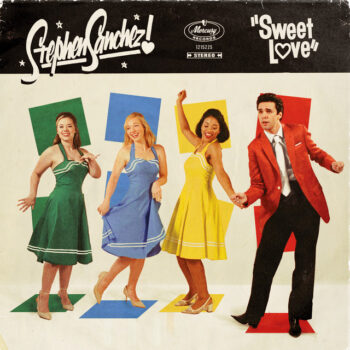
What makes “SWEET LOVE” feel both instantly familiar and newly energized in the context of his catalog is its sense of renewal. Marking his first solo single in nearly two years, the song kicks off the next chapter for Sanchez in 2026 – one that builds on the old-school romanticism of Angel Face while opening the door to a brighter, bolder, more immediate sound. It also sets the stage for his forthcoming sophomore album Love, Love, Love, due May 8 via Mercury Records, a record poised to expand his timeless sensibilities into a more vibrant, technicolor pop landscape. If Angel Face felt like a carefully constructed world, then “SWEET LOVE” feels like a door thrown open: A fresh start that keeps his classic instincts intact while letting more light pour in.
Beneath that brightness lies a deeper sentiment than mere infatuation. “‘Sweet Love’ really encapsulates the beautiful parts of love, and the active choice we have to make, to love one another every day,” Sanchez shares. Written during a period where he found himself questioning love, the song became a reflection of what he hoped it could be – not fleeting or fragile, but intentional and enduring. “My music comes from a desire to write songs that make you want to fall in love,” he adds, framing this new chapter as both a continuation and a deepening of that mission. Inspired by his grandparents’ decades-long relationship – and brought to life in a video shot in their home, with them at its center – “SWEET LOVE” carries a heartfelt warmth that extends beyond performance into the personal, the generational, and the real.
Ironically, “SWEET LOVE” wasn’t born out of certainty, but doubt. Sanchez wrote the song during a period where he felt disillusioned with love – a moment defined less by clarity than by questions. “The song represented what I wanted love to be,” he explains, “and all the questions I had.” That tension quietly reshapes how the song lands: What sounds like pure celebration is, at its core, an act of belief: Rather than documenting love as it is, Sanchez reaches for the version of love he still believes in, turning uncertainty into intention and longing into conviction.
This perspective carries into the song’s sound, too. “I wanted to try my hand at a more pop-leaning sound,” Sanchez shares, noting how “SWEET LOVE” blends the old-school influences that have long defined his music with “a bit of a modern twist.” It’s a subtle but meaningful shift – not a departure from his roots, but an expansion of them. The result is a track that feels both timeless and immediate, honoring the past while pushing his sound into a brighter, more contemporary space.
Do I need saving?
Are you the savior sent to set me
free from all my misbehaviours?
Who woulda guеssed that I’d be so investеd?
Oh, there ain’t no Heaven
like the way that my heart said
“Your sweet love’s got a hold on me now, yeah
And I ain’t ever gon’ let you go, no, no, no
Your sweet love, it’s got a hold on me now, yeah
And I ain’t ever gon’ let you go, no, no, no”
It’s this devotion that gives the song its staying power. Beneath all its sparkle and swagger, “SWEET LOVE” is animated by a remarkably earnest belief in love’s worth – not because it is easy, but because it is worth the effort. It’s not just about falling in love, but choosing it – again and again. “There ain’t no pleasure in life without your love / Now that I’ve had it, baby, I just can’t get enough,” he sings, and even that line lands less like infatuated excess than wholehearted truth. Sanchez understands, maybe better than most of his contemporaries, that grand romantic music only works when the feeling is real. That’s why this song feels so alive: It doesn’t posture. It believes.
And that belief is what makes “SWEET LOVE” such a thrilling return. Enthusiastically dramatic, deeply tender, and brimming with heart, it captures Stephen Sanchez in one of his purest forms – a modern-day crooner with an old soul, still making hopeless romance sound not only cool, but necessary. If this is where his new chapter begins, then he’s starting in the warmest, brightest place possible: Head over heels, all in, and singing like the sun just came back out.
More than anything, Sanchez hopes the song sparks movement – not just reflection. “I hope it helps to unlock something new within – a feeling that pushes listeners forward in loving somebody or choosing to love themselves. Perhaps the love they currently have doesn’t reflect the love they want, and maybe they realize that through the music,” he says. It’s a powerful sentiment, and one that reframes “SWEET LOVE” as more than a romantic high or nostalgic throwback. It’s an invitation – to feel more deeply, to love more honestly, and to choose it, again and again. Because love, at its best, isn’t something we wait for – it’s something we choose.
There ain’t no pleasure in life without your love
Now that I’ve had it, baby, I just can’t get enough
You’re my prayer come true
Can I stay with you?
Oh, ah
‘Cause your sweet love, it’s got a hold on me now, yeah
And I ain’t ever gon’ let you go, no, no, no
Your sweet love, it’s got a hold on me now, yeah
And I ain’t ever gon’ let you go, no, no, no
“hands to myself”
by Keni TitusKeni Titus doesn’t rush her feelings – she sits with them, turns them over, and lets them breathe. On her soul-stirring song “hands to myself,” that patience becomes its own kind of quiet power: A tender, confessional indie folk reverie that leans into uncertainty rather than trying to resolve it. There’s no grand declaration here, no clean answers – just the soft, steady unraveling of a thought you can’t quite shake, delivered with a warmth and intimacy that feels almost disarming.
Built around delicate acoustic guitar and Titus’ gently aching vocal, “hands to myself” unfolds with a hushed honesty that pulls you in close and doesn’t let go. Every line feels intentional, every pause earned, as she traces the uneasy space between devotion and doubt. And then, just as the song settles into its softness, a smoldering electric guitar cuts through – sudden, sweltering, and impossible to ignore – adding a flash of heat to an otherwise restrained world. It’s a striking moment, one that mirrors the song’s emotional core: Calm on the surface, yet burning underneath.
I look at you like my dog
sees the back screen porch
Could there be more?
Could it be me as a friend
holding you while the weed kicks in?
Cards on the table and eyes on the door

A highlight off Keni Titus’ recently released debut album AngelPink (out now via BannerYeer/ADA), “hands to myself” sits at the heart of a record defined by duality – softness and strength, clarity and confusion, who we were and who we’re still becoming. The LA-based singer/songwriter has spent the past few years carving out a space that blends raw emotion with wry wit, earning early acclaim and building toward this moment: A debut that feels both deeply personal and universally felt.
“When I wrote ‘hands to myself,’ I kept circling back to the whole grass is greener thing,” Titus shares. “The temptation, the quiet wondering, and thinking maybe you took something for granted.” That push and pull – between contentment and curiosity, presence and possibility – runs through every lyric. From the opening line, “I look at you like my dog sees the back screen porch, could there be more?” she captures a feeling that’s at once specific and deeply recognizable: The restless question of whether what you have is enough, or if there’s still something just out of reach.
I love you
But not ’til I’ve had someone else
Remind me why I keep my hands to myself
I mean it, I’m mean but it’s good for my health
Keeping my hands to myself
“It’s really just an honest exploration of that pull,” she adds. “The first line kind of sums it all up… It’s about discovery and longing, and honestly just fumbling through trying to figure out what would actually make you happy.”
That tension and turmoil give the song its emotional weight. “I love you / But not ‘til I’ve had someone else / Remind me why I keep my hands to myself,” Titus sings, balancing affection with self-preservation in a way that feels both raw and self-aware. There’s a subtle contradiction at play – wanting to stay, wanting to stray, trying to understand the difference – and Titus never forces it into resolution. Instead, she lets the feeling linger, messy and unresolved, like so many of the thoughts we don’t say out loud.
And that’s what makes “hands to myself” linger long after it ends. It doesn’t offer closure or clarity – it offers recognition. A fleeting thought, a passing doubt, a moment of curiosity that grows louder the longer you sit with it. Titus doesn’t judge it or dress it up; she simply gives it space to exist. In doing so, she turns a private feeling into a shared one – vulnerable, complicated, and achingly human.
Soon enough I’ll call it, silly me
Soon as it gets hard to fall asleep
Soon as I swallow, I choke
Get the nerve to get to second base
Staying up at someone else’s place
Missing the heart that I broke
That emotional openness runs throughout AngelPink, a record Titus describes as a process of both unraveling and return. “AngelPink is about losing yourself, then coming home – not to a person, but to yourself,” she shares. “I went through a breakup and a friend falling-out during this record. I felt really alone.” What emerges from that isolation isn’t bitterness, but clarity: A deeper understanding of self, and a gentler way of holding it. “Making this project reminded me that there are good, kind people who love me. And that making art is supposed to be fun. Not perfect – but fun.” Within that context, “hands to myself” feels less like a turning point and more like a mirror – a moment of intimate inner reckoning that sits right at the intersection of longing, self-awareness, and the ongoing process of figuring out who you are.
In many ways, that honesty is what makes “hands to myself” resonate so deeply. Titus doesn’t dramatize or disguise the feeling; she meets it exactly where it is. “I don’t kiss and tell, I just kiss and sing,” she says, a line that expresses her approach with striking clarity. There’s no need to overstate or overexplain; the truth lives in the telling. And here, it lands softly but surely – a song that doesn’t chase resolution or demand answers, but instead lingers in the questions, offering listeners a quiet place to recognize their own.
And I love you
But not ’til I’ve had someone else
Remind me why I keep my hands to myself
I mean it, I’m mean but it’s good for my health
And it’s harmless
It’s hard to remember his name
Forgive me for being some moth to some flame
It helps me remember the way that it felt
Keeping my hands to myself
“lies lies lies”
by The Undercover Dream LoversA life can start to feel scripted before you even realize you’re following along – a steady march of expectations dressed up as stability, success, or “the right path.” On “lies lies lies,” The Undercover Dream Lovers’ Matt Koenig pushes back against that conditioning, turning doubt into drive and disillusionment into something loud, bold, and defiantly his own. What begins as a reflection on the narratives we inherit becomes sharper and more urgent: A refusal to accept a version of life that trades curiosity for comfort, and a reminder that believing in your own path – however uncertain, however improbable – might be the most radical choice of all.
Released February 6, “lies lies lies” is a standout single off The Undercover Dream Lovers’ third studio album atomic house, set to arrive March 20, 2026 via SoundOn. The brainchild of Los Angeles-based musician and producer Matt Koenig, The Undercover Dream Lovers has been actively pushing the bounds of what pop music can look and sound like since 2016. What began as a solo bedroom endeavor has grown into a fully realized sonic world, shaped over nearly a decade of experimentation, instinct, and an unwavering commitment to feeling over formula – a process Koenig describes simply: If he can put the song on and feel a real connection from start to finish, he trusts someone else will too.
I sat in my room, stared at the wall
I wanted to be like Jimi playing guitar
My dad always said there’s too many stars
So stop all the daydreaming and go get a job
I just did what I was told
and now I’m stuck and
broke on the clock
They all had imagination,
funny how they all forgot

“lies lies lies” follows November’s “prom queen,” and finds Koenig confronting the push-and-pull between belief and expectation, channeling it into something immediate, anthemic, and impossible to ignore. Set to a propulsive pulse of bold bass, pumping drums, and radiant, synth-laced melodies, the song doesn’t just wrestle with tension – it explodes through it. Koenig pairs sweet, stacked harmonies with a wash of cool textures and hard-edged synths, building a chorus that feels as cathartic as it is contagious. From the opening lines – “i sat in my room / stared at the wall / i wanted to be like jimmy playing guitar” – he grounds the song in a deeply personal space before widening the lens, taking aim at the systems, unwritten rules, and social dictates that tell us who we’re supposed to be and when we’re supposed to give up.
American dream
I guess I’m the freak
They’re tryna sell me
Lies lies lies
A college degree
A house by the sea
Atomic family
Lies lies lies
Lies lies lies
Lies lies lies
Ultimately, “lies lies lies” is about that breaking point – the moment when belief collides with reality and you’re forced to decide whether to fall in line or push forward anyway. “At its core, the song is about the people who say things aren’t possible – often because they didn’t stick it out long enough to catch the right break,” Koenig tells Atwood Magazine. “There’s luck involved in anything creative, but you have to believe in it and stay in the game to even have a shot.” That tension fuels every second of the track, turning frustration into momentum and doubt into a force you can move through, not just sit with.
This sense of motion is baked into the way Koenig creates, too. The Undercover Dream Lovers is, at its heart, a solo project – “I write, record, produce, mix, and sometimes master everything myself,” he shares – built piece by piece in his home studio over the better part of a decade. It’s a process rooted less in perfection and more in feeling: “If I can put the song on, go for a drive or a walk, and really feel something from start to finish, then I trust someone else might feel it too.” You can hear that instinctive approach in “lies lies lies” – a song that feels less engineered than discovered, its energy unfolding naturally from the conviction behind it.
This sentiment is deeply earned: Though the song leans into defiance, Koenig’s perspective is more layered than a simple rejection of the path laid out for him. “Contrary to the lyrics, my dad was pretty supportive of me making music, but he was realistic – he didn’t treat it like a guarantee,” he explains. “There’s always that question of whether something will actually work.” What emerges, then, is much more nuanced: A balance between gratitude and grit, between recognizing how unlikely this life is and choosing it anyway.
Koenig’s perspective lands because he’s lived the alternative. Before fully committing to music, he spent years moving through different versions of adulthood – assembling ice machines in Pittsburgh during the week and playing shows on the weekends, later waiting tables, trying real estate, and working in menswear in New York. There was even a point where he stepped away from music entirely. That history gives “lies lies lies” its weight: It’s not fantasy, but a hard-won belief in possibility. As he puts it, the song feels like “both gratitude and defiance – recognizing how hard that path is, while also acknowledging that it’s possible if you commit to it.”
Put in my two weeks, picked up my guitar
I spent 25 playing to no one at bars
The truth of it is there’s too many stars
Doesn’t matter ’cause
I’m happy when I’m singing my song
They all had imagination,
funny how they all forgot
American dream
I guess I’m the freak
They’re tryna sell me
Lies lies lies
A college degree
A house by the sea
Atomic family
Lies lies lies
That duality runs through the song’s origin and construction. Written with collaborator Zhone, “lies lies lies” began with its central hook and grew outward from there, shaped through conversation, experimentation, and intention. “We talked through what it meant to both of us and debated how far to push certain lyrics,” Koenig says, even weighing whether the chorus should evolve or lock into a repeated and anthemic frame. The result lands squarely in that sweet spot – immediate, memorable, and built to be shouted back.
But “lies lies lies” isn’t just a standalone statement – it’s a key piece of the world Koenig builds across atomic house. Across fourteen tracks, he explores what he describes as a kind of “nuclear household,” moving through different perspectives, archetypes, and longings while drawing on tactile memories of growing up in the ‘90s. “There’s this fascination right now with ‘90s culture and earlier eras, especially in contrast to how hyper-digital everything feels today,” he says. “I was very immersed in that time when I was younger, and this song taps into that perspective.”
“Whether it’s dial up phones or the feeling of pushing a doorbell when you’re running around the neighborhood and playing ding-dong ditch, there are so many tactile things that just get us excited. That was my anchor for this whole record, remembering those feelings and stepping back into my own experience or into the shoes of a character who may have had these experiences.”
What makes atomic house resonate isn’t nostalgia for nostalgia’s sake, but the way those memories are reimagined in the present – revisited, reshaped, and made to matter now. “You can forget that your life is flexible,” Koenig reflects. “You can get stuck in a rhythm and think that’s just who you are. But the truth is, you can wake up any day and reorient the direction of your life.” That idea sits at the heart of “lies lies lies,” but it extends far beyond it – threading through the entire record as both question and answer, and arriving at a moment when more and more people are starting to question the paths they’ve been told to follow.
In that sense, “lies lies lies” feels less like a rejection than a reawakening – a song that doesn’t just call out the myths we’re sold, but reminds us what’s still possible once we stop believing them. And as atomic house unfolds, Koenig turns that realization into something bigger: A world built from memory, motion, and meaning, where the past doesn’t trap you – it opens the door to becoming something new.
Is this really what it’s like
To believe each perfect lie
To be deceived and wonder why
We all bought into
Lies lies lies
We all bought into
Lies lies lies
Lies lies lies
— — — —

Connect to us on
Facebook, 𝕏, Instagram
Discover new music on Atwood Magazine
Editor’s Picks
follow EDITOR’S PICKS on Spotify