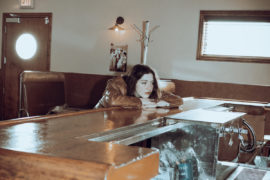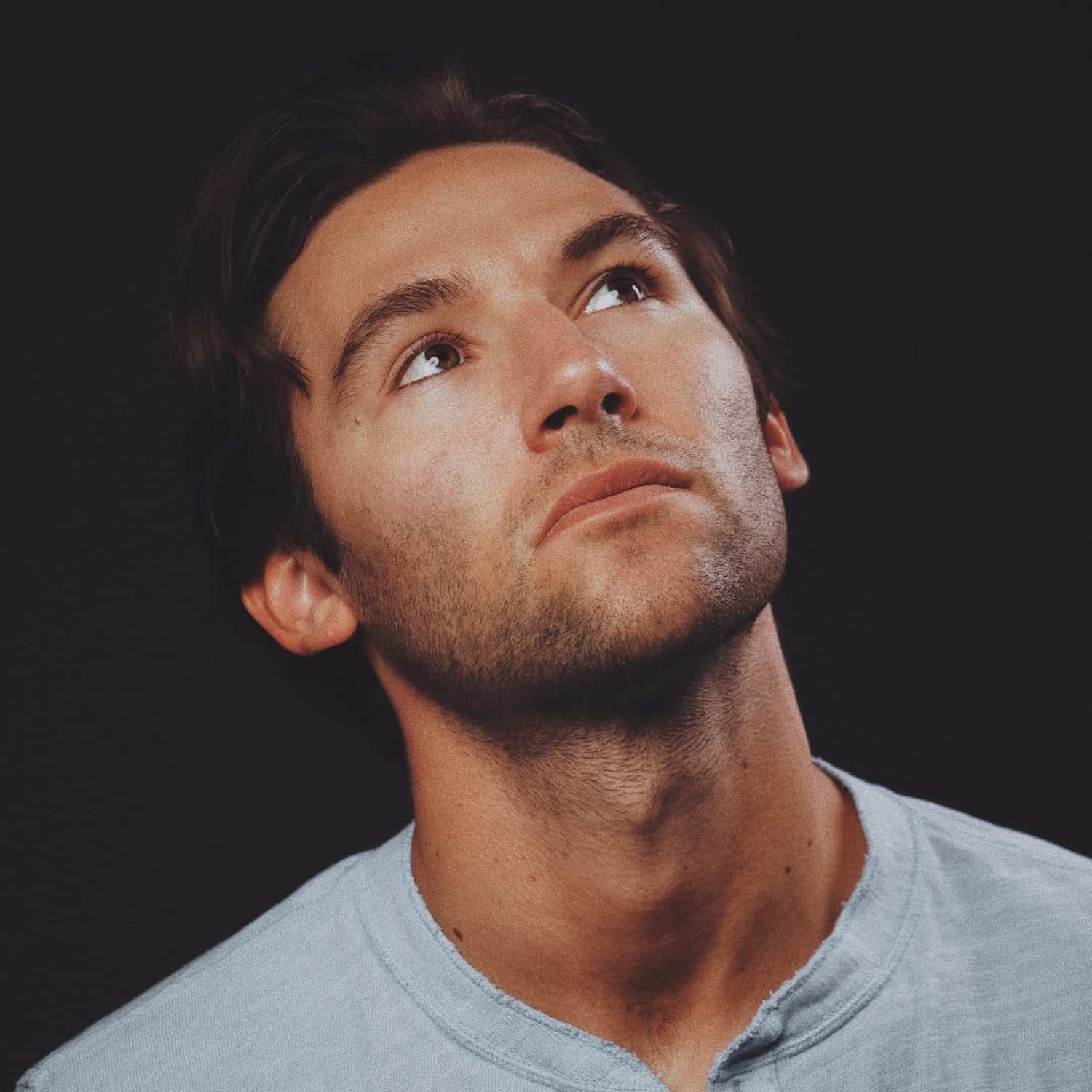
For Port Ross, dying is like a trip to the DMV; he has to do it at some point, but it’s probably not going to be fun. As he waits in the long queue line of the DMV of life, Port Ross gives us his last will and testament: “For My Young Death.” Exploring the ever-looming presence of ‘the end,’ he leaves us his playful dexterity and emphasizes the importance of human connection.
Stream: “For My Young Death” – Port Ross
Good music is when someone follows their own vision completely and trusts their own intuition.
* * *
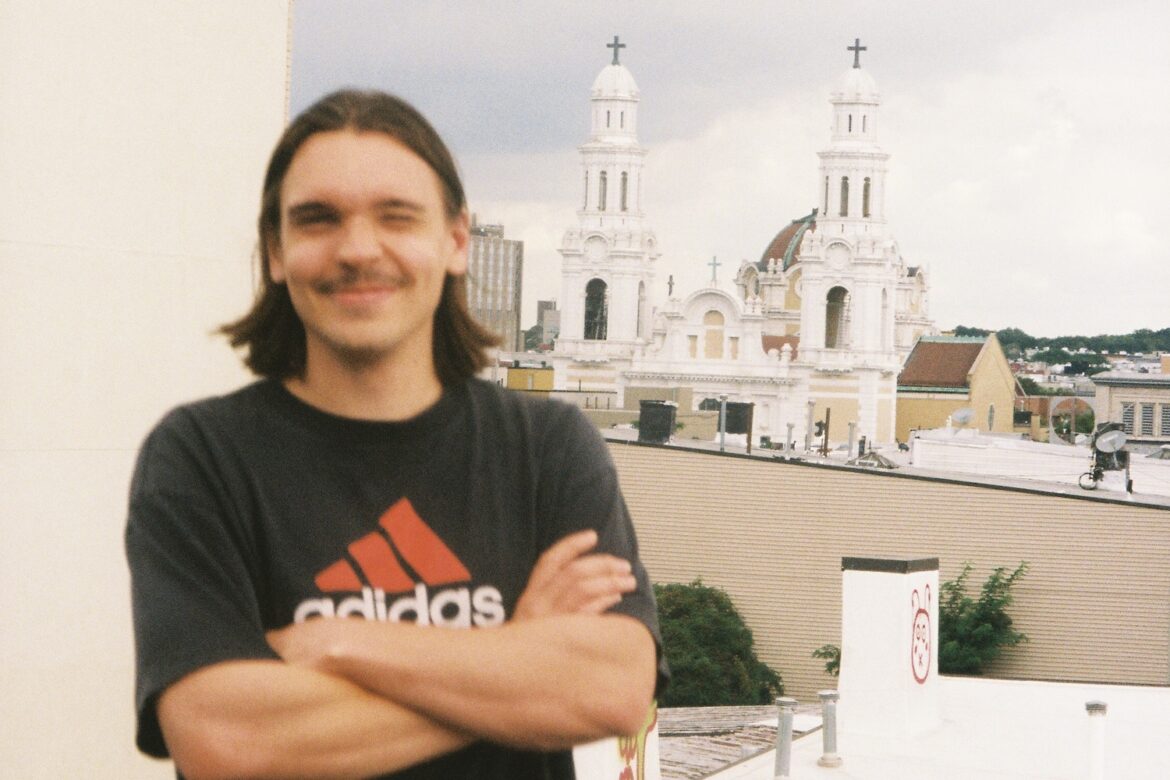
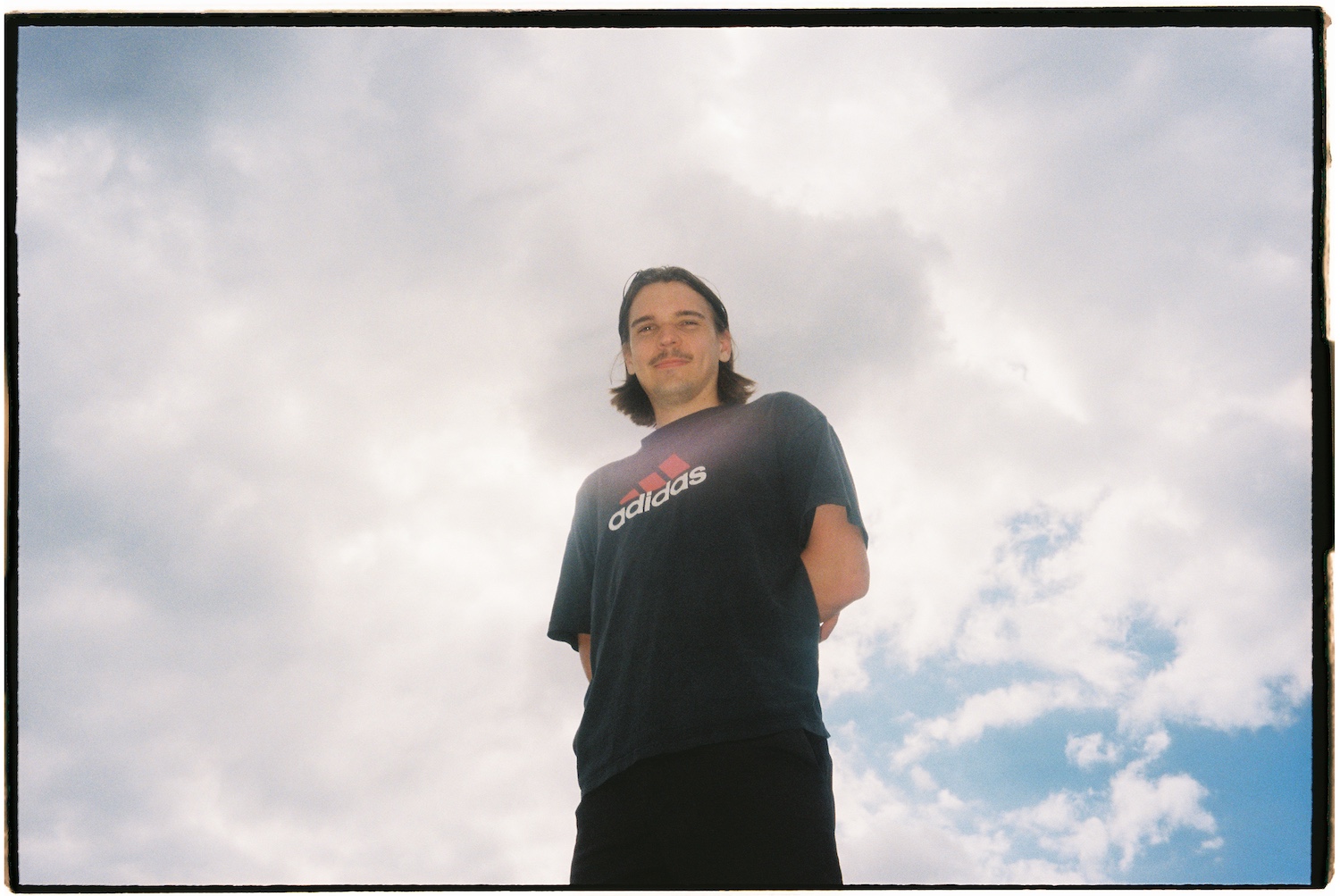
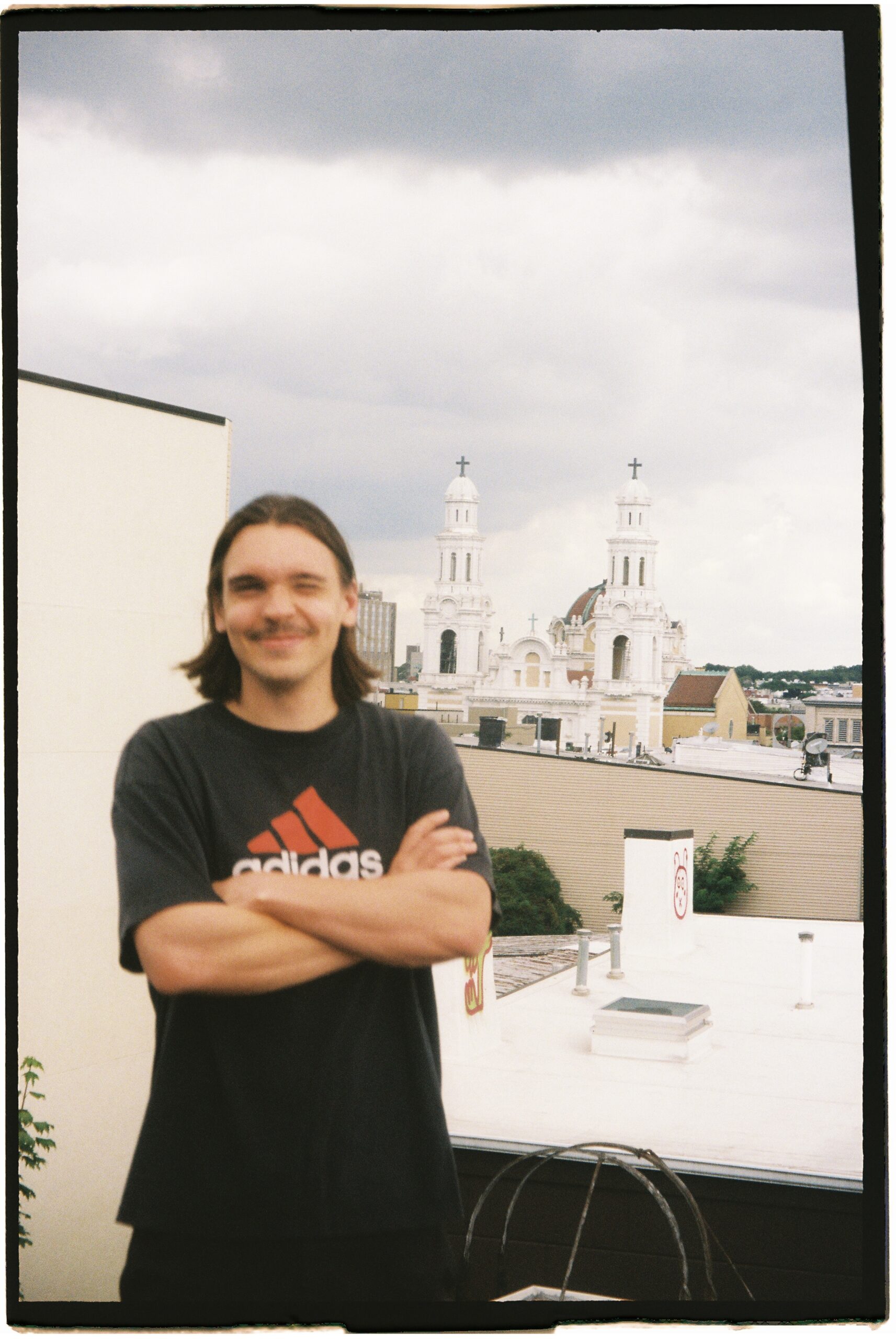
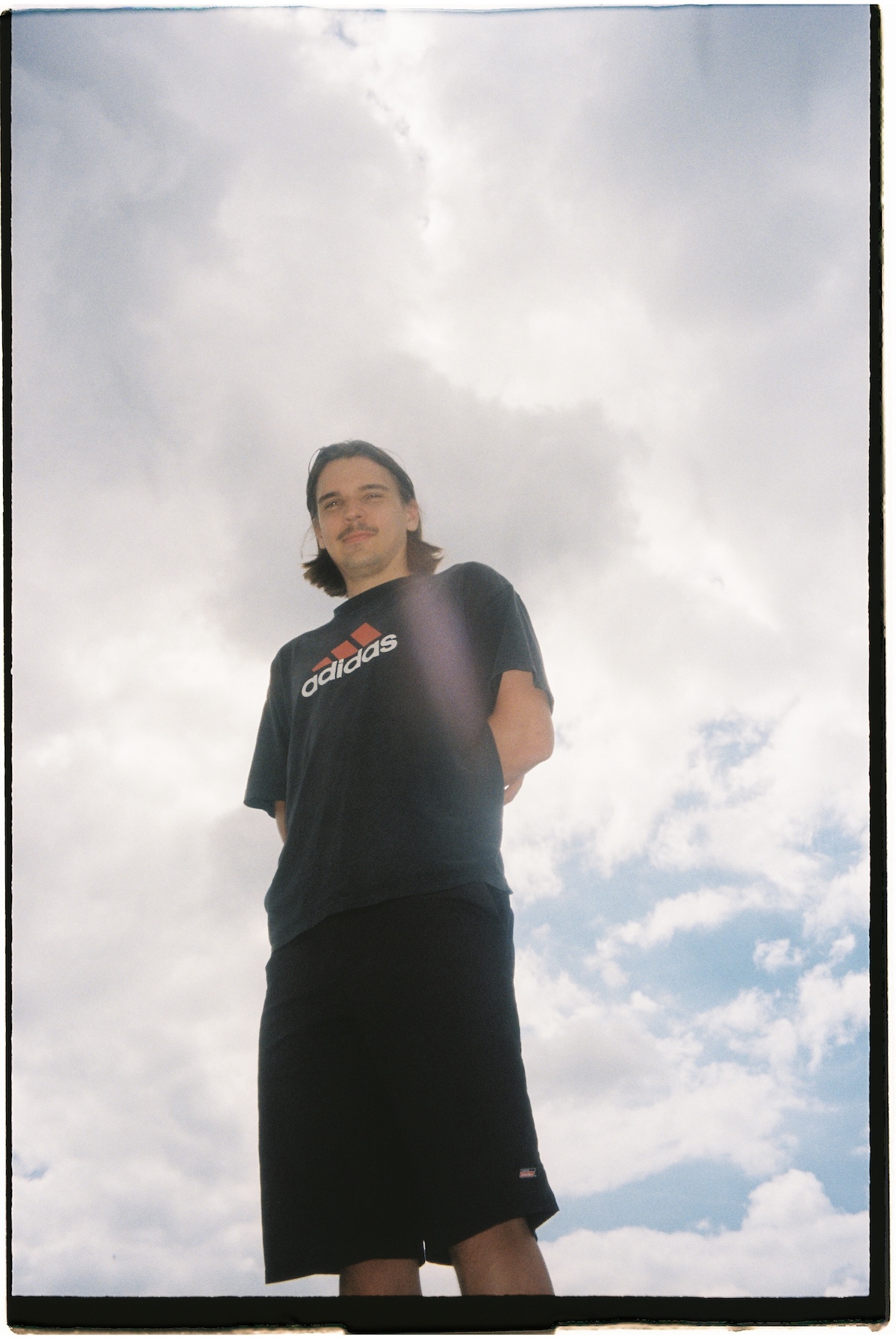
Port Ross (AKA, Jack Sperry) has brown hair cropped just below his ears (recently trimmed by his roommate), a coffin tattoo etched onto the palm of his left hand (as a memento mori), and a brain perpetually fogged by the fear of death (see again, the coffin tattoo etched onto the palm of his left hand).
This fear of death has a cumbersome inertia to it, paralyzing the average person in a Wong-Kar-wai-esque freeze frame as the rest of the world races past them in a blur. But Sperry is neither the average person nor interested in being suspended within a moment.
His single, “For My Young Death,” was spurred to life out of a sense of pressing urgency. As the final song to be released off of his upcoming debut record, Nighttime at Gardner Hall, Sperry claims the track was born out a morbid obsession with life’s finite end; drawn up by his need to outrun a death that could either be miles or inches ahead of him.
“I’ve always been really paranoid that I was gonna die, especially in my teens and early 20s,” he shares. “That was my drive – I was like: ‘I could die tomorrow, so I have to work on this [song] right now.’”
The song is the product of his determined sprint both toward and away from dying.
Sperry knows that death, as the predetermined victor of the race, does not need to run in order to win. Death walks calmly along the route with an unnerving nonchalance, in no particular hurry at all. But instead of deeming his own participation in the race pointless and giving up, Sperry keeps on moving right along. Why? Because he just has to.
“I was worried I was going to die and wanted to leave some sort of message behind for my mom if I did,” he says. “The lyrics were written in my first week after arriving in New York, in the Hell’s Kitchen apartment we were about to get evicted from. It was my statement on my life. Like, ‘if I die here, it’s alright.’”
While Sperry’s death serves as the focal point of this song, it is in no way a requiem or tearful eulogy. If birth is a baby shower, death is a surprise party – and Sperry places extra emphasis on the party.
“For My Young Death” is a celebration of life; as evinced by its lilting melody (and playful music video). The track jolts to a start with an electronic buzz, and from there, is propelled by airy synths that buoy Sperry’s bright vocals.
“In the last fallen leaves / Let the time go with me,” Sperry earnestly sings, “Come to see my memory / I’ll be waiting patiently.”
Instead of leaving listeners with an overt sense of dread, Sperry focuses on love – love, a feeling that has the ability to transcend physical presence. Death in no way invalidates the precious time we spend together; it has no sway over the way we care for one another. The connections we share on this earth do not disappear with us when we leave it.
The song slows to an end like the fading warmth of a t-shirt after it has been out of the laundry for a couple of minutes. “I’ll be with you, I’ll be with you / I’ll be with you, I’ll be with you” Sperry sings before the track abruptly cuts off, leaving us.

“For My Young Death” is a message to the living. Not one of overly optimistic nature, but not a drastically morose one, either.
It is a song situated in reality, fixed in the present but not holding on to it with a white-knuckled grip. Sperry, the burgeoning musician that he is, has a steadfast commitment to the time we have at hand, and not just a forlorn gaze toward the end of it.
With precision, wit, and a dance move or two, he charges forward in the race of life.
Continue reading below to learn more about the process of making “For My Young Death” and its accompanying music video, Port Ross’ discography, and why he lets his friends cut his hair.
— —
:: stream/purchase For My Young Death here ::
:: connect with Port Ross here ::
— —
Stream: “For My Young Death” – Port Ross
A CONVERSATION WITH PORT ROSS
Atwood Magazine: Congrats on the upcoming release of “For My Young Death.” How are you feeling about all of it?
Port Ross: I feel really excited. I’m just really excited to get it out. I feel really, really good about the song, and I’m excited for people to finally hear it. I wish it could be out already.
I love it. I don’t know the specific terminology for it, but the electric jolt at the beginning of the track and the synths that join in after remind me of starting up a car and driving aimlessly into the night on the highway. It puts a strong image in my brain and songs that have that pseudo-visual component are always some of my favorites. I'm super excited for the world to hear it.
Port Ross: That’s cool. Thank you. Thanks for saying that.
I want to get an overview of your background as a musician. What got you into making music, what keeps you making and releasing music and why is it fulfilling for you?
Port Ross: It probably goes back to my dad, who was always a huge fan of music. He was always playing a shit ton of music when we were kids. And then also my sister. I learned guitar because she played guitar. I remember trying it one day but I don’t really remember why I just tried it. I remember writing my first song.
My first avenue into art was actually through writing – my mom is a writer. I remember reading a book and being like: “Oh, I could definitely do this. I feel like I know how to do this. I love this so much.” I was definitely actually a writer before I was a musician, which is funny. I tried writing a book in high school, and obviously it was never finished, because I think music took me away from that. I was in a band in high school, and that was kind of fun, but I guess I just wanted to do it alone. I don’t think I’m very good at collaborating with people on stuff like music, so Port Ross began.
When I was starting college, I had these songs I wanted to try to produce. I had been writing songs for a couple years, but had never produced anything. Port Ross really started with the song “Pinkerton.” I don’t even think I had the name Port Ross at that point, but I had to write about this thing and talk about it. Turning your feelings into art is so cathartic and rewarding, because you have to find a way to really express yourself succinctly. But unlike actual therapy, you get that extra benefit of having an artistic object that you can look back on and have as a monument to that feeling.
That’s where Port Ross started, in that song. More importantly it was the realization of those feelings – that’s why it was so valuable. I was like, “Oh, shit, I can write about my feelings and it feels better than anything I’ve ever done before.”
Totally. Speaking of “Pinkerton,” I was reading one of your Instagram posts where you shared that it was the first track that felt true to you. What quality about a song makes it feel that way; what makes you not have any doubts about releasing it and sharing it with the world?
Port Ross: It’s mostly the lyrics. When you give an honest testimony about an emotion, it’s a very specific feeling. It could be kind of hard to tell when you’re not being honest, but when you’re actually honest, it feels so much bigger than yourself. It feels like there’s absolutely no insecurity. How could you be insecure about something if you’re just being honest? Lyrically, it’s just a feeling where you know that you’re not acting with any ego.
I think you can mix and produce with ego, because you’re not totally following your actual intuition – you’re doing it because it’s what you think somebody else wants to hear. Good music is when someone follows their own vision completely and trusts their own intuition.
That was a great answer. I really loved what you had to say about not being insecure about something that is so rooted in authenticity. What would you have to be insecure about since it's not this superficial veneer or front you're putting up? Can you tell me about the process of making “For My Young Death”?
Port Ross: I have these old Yamaha synths from the thrift store that still have the price tags on them. It was $6.99. I saw it and I was like, “Whatever, this looks like a piece of shit.” But they actually have so much character. I was messing around on those synths and made the first demo of the song that day. It actually sounds pretty close to the final song, the synths are the exact same. I think that the recording is called ‘LCD Soundsystem’ because it sounds like a LCD Soundsystem song.
I was working on other songs, but then I moved back into my Mom’s house for a couple months before I moved to New York in January 2023. That was the time where I was really trying to finish a lot of music before I moved, because I knew that I probably wouldn’t have a very stable studio setup after getting to New York for a while. “For My Young Death” was one of the songs that I basically finished completely at that time.
The only actual instruments on the song are the synths, a cello and an electric guitar. That’s pretty different from the other Port Ross songs, where there’s usually a ton of instruments – especially a ton of percussion stuff. But the synths are just doing so much! There’s so many different synth patches on there. I basically finished the track at that point and I’ve been writing the lyrics over the past two years. I got really stuck on them – like, really, really stuck on them. I swear to God, I had writer’s block because I was stuck on these lyrics and a couple other ones.
The song is called “For My Young Death.” What I wanted to express with the lyrics was this feeling where I’ve always been really paranoid that I was gonna die, especially in my teens and early 20s. That was my drive – I was like: “I could die tomorrow, so I have to work on this right now.”
It’s kind of like memento mori; that constant presence of death clouding existence.
Port Ross: Yeah, exactly! I have a coffin tattoo from As I Lay Dying by Faulkner, which is one of my favorite books. I got it because I wanted to always have this reminder, because it does make you savor things more.
I love that. I was reading the lyrics a second ago and I really like how you stand on the impermanence of time and simultaneously emphasize the consistency of companionship and how time doesn’t devalue those connections.
Port Ross: That’s cool. I like that reading a lot. Thank you.
Sure! I like how that almost morbid thought of death is paired with the really bouncy tune. It’s also funny that the making of the track was propelled out of this need to finish it, because you were just like, “Who knows, I could die tomorrow.” You have a really great music video for the single as well. I like how in some of the shots you can see you kind of squinting from the flashlight being pointed at you. How was it shooting that?
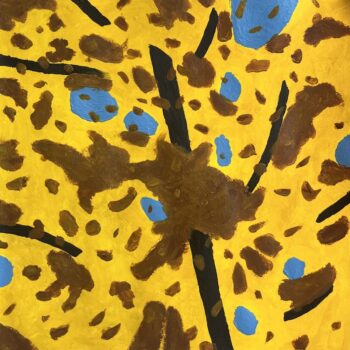
Port Ross: It was really fun. We kind of did the same thing for the “Pinkerton” music video. My friend filmed me when we were in Iceland for a trip after college. I was like, “F* it, let’s make a music video.” My sister was an influence on that for sure, because she is a SoundCloud rapper and she makes a lot of those Yung Lean style videos where it’s just someone in some awkward place. I really like that idea, especially because the project doesn’t have a face to it; the artwork is all just visual art and paintings. It’s also such a serious project. The music is very emotional and sad, so I feel like the music videos provide an avenue for me to be funny. I love to be funny and I love to dance. It was just so fun! I could just be like, ‘Oh, Caleb could we go outside right now and film? I need a couple more clips.’
You mentioned that when it comes to Port Ross, the lyrics can be heavy thematically. Would you say that the Port Ross persona is a deviation from the ‘Jack’ you are every day, or rather an outlet for parts of ‘Jack’?
Port Ross: Honestly, I have had the thought in the past that I’ve never been more myself than I am in my music. It couldn’t be more essentially like the person who I identify with. But there are other parts that maybe don’t have space in the music. This song has been really fun because most of what I listen to is indie folk, 21st Century classical music, minimalism stuff and hyper pop. Those first two have a lot of space within the acoustic realm to be explored. I love pop music just as much as I love anything else and maybe that comes through the songwriting. Most of the songs you can’t really dance to, which is kind of funny. I definitely think it fits, but it’s definitely a contrast.
Okay but you can definitely dance to “Only Child.”
Port Ross: Yeah, I guess that’s true, yeah.
You have been writing music for a while. Do you think consistency or innovation is more of a common thread when it comes to your music?
Port Ross: I put a lot of effort into trying to make sure that the album, for example, is cohesive. One thing I like about this project is that it’s not a band, I don’t have to find a way to put drums in this for a drummer or for a guitar player or bassist. I can put whatever on it that I feel like fits it. Some of the songs are synth songs, and some of the songs are huge arrangements with strings and 25 different percussion instruments and backing vocals. And then the next song on the album could just be a solo guitar song or an instrumental song – or whatever! It’s a really versatile canvas because it’s just my recording project and I don’t have to adhere to anybody else. If tomorrow I want to start making hyper pop music, maybe I would release it under Port Ross rather than trying to stick to defining Port Ross as one thing. In that way, I really value the ability to be able to do whatever I want to do, and for it essentially to just be the project. That’s what Port Ross is. It’s the music I make.
Totally, I love that. You’re not bound to a genre, you’re pulling from a synthesis of things, and you're not being strict about it. You don't have to create a side project and be like, “this is the hyper pop leg of Port Ross” – it can all exist under one umbrella. You actually segued perfectly into one of my next questions, which is about the upcoming record, Nighttime at Gardner Hall. I read in the press release that it has been 10 years in the making. How do you keep the material fresh and relevant within your life now and where you're situated?
Port Ross: Yeah, that’s definitely been something that I’ve thought about because it has been so long for some of these songs. Honestly, some songs, like “Pinkerton,” feel timeless to me. I still feel fresh about it; it still feels honest to me and fresh in my mind.
Something that I’ve encountered is that stepping away from something for a couple years and then coming back to it later can feel like it’s gone cold, but if I start working on it again and get inside of the music again, then it still feels alive and fresh. The earliest piece of Port Ross ever is now the guitar verse part to “Blue-faced Honeyeater.” It’s a voice memo from 2016 or 2017 – which is kind of crazy, because that was when I was writing my first songs ever. I was just like, “Oh, this part is cool,” and then it took me five or six years to figure out how to turn that into a part that I liked. So, if it’s not going well, just put it away for a while and come back to figure it out.
There's so much value in sitting on things. In the world today, people really emphasize having this constant rolodex of content. But I think there's so much value in being able to put ideas away and let them simmer. I really appreciate that you're able to do that and not have this constant urgency. What would be the ideal setting to listen to Port Ross in? If you had to make all listeners listen in one way, where would you situate them? It can be as weird as you want.
Port Ross: Probably like: you’re visiting home at Christmas. It’s Christmas Eve and you just drove back to whatever house you’re staying at. You’ve just parked at the house, but you feel really, really, really, really weird. It’s dark out and it’s snowing and it’s nighttime. You know, winter at night or summer night, when you get that crazy feeling where you’re so scared for some reason?
Wait, so I was kind of right with my turning the car on and driving on the highway vision. I just feel like your music suits that liminal space of reflection. There doesn't need to be an action paired with it – maybe a little dancing for a couple of the tracks. It is something that you can sit and think about. It's fun melodically to listen to, but the lyrics also tug at you and shout: “Hey, you should maybe think about this!” Before I ask my last question, I want to know if there's anything specifically you want to talk about here.
Port Ross: The music video – I don’t know if it’s a universal experience, but those summer nights as a kid in the park at night, playing night games with your friends. It’s so mysterious and dark and beautiful. There’s sprinklers and there’s swing sets and trees – stuff like that. Honestly that’s kind of the entire Port Ross aesthetic: the suburbs at night. In my mind, when I listened to the song, I thought of the sun shining through the trees in springtime but it’s also nighttime in the fall. I thought that was an interesting contrast. It was my vision to have this depiction of the suburbs in Utah, where I’m from, at night.
I love that. There’s this omnipresent sense of play throughout all of your music. It ties in with what you were saying before about not being so strict on adhering to certain genres or styles. It echoes throughout everything that you do and the visual presentation that you have as well.
Port Ross: That’s cool. I appreciate you saying that, I like that.
Of course. I always like to end my interviews on a happy note, so this is another silly question – wait, maybe it's not silly – this is something to take seriously. What is giving you joy in the present moment?
Port Ross: You know, it’s actually pretty funny. My roommate, Gentry, cut my hair yesterday, and I’m really pleased with my haircut.
That's great. Hair is everything! It can make or break a day. If I don't like my haircut, that's all I'm going to talk about.
Port Ross: Dude, that’s what I’m talking about. Getting your hair cut by your friend is such a tender, vulnerable and youthful experience. You’re like, “To hell with it! My hair needs to be cut. I trust you with my appearance.”
Totally. It also creates room for a tenuous situation, because they could do really bad, and then… friendship… over.
Port Ross: It (a bad haircut) has happened before. That’s when you just gotta buzz it.
Exactly.
— —
:: stream/purchase For My Young Death here ::
:: connect with Port Ross here ::
— —
Stream: “For My Young Death” – Port Ross
— — — —
Connect to Port Ross on
TikTok, Instagram
Discover new music on Atwood Magazine
© Lucie Day
 © Lucie Day
:: Stream Port Ross ::