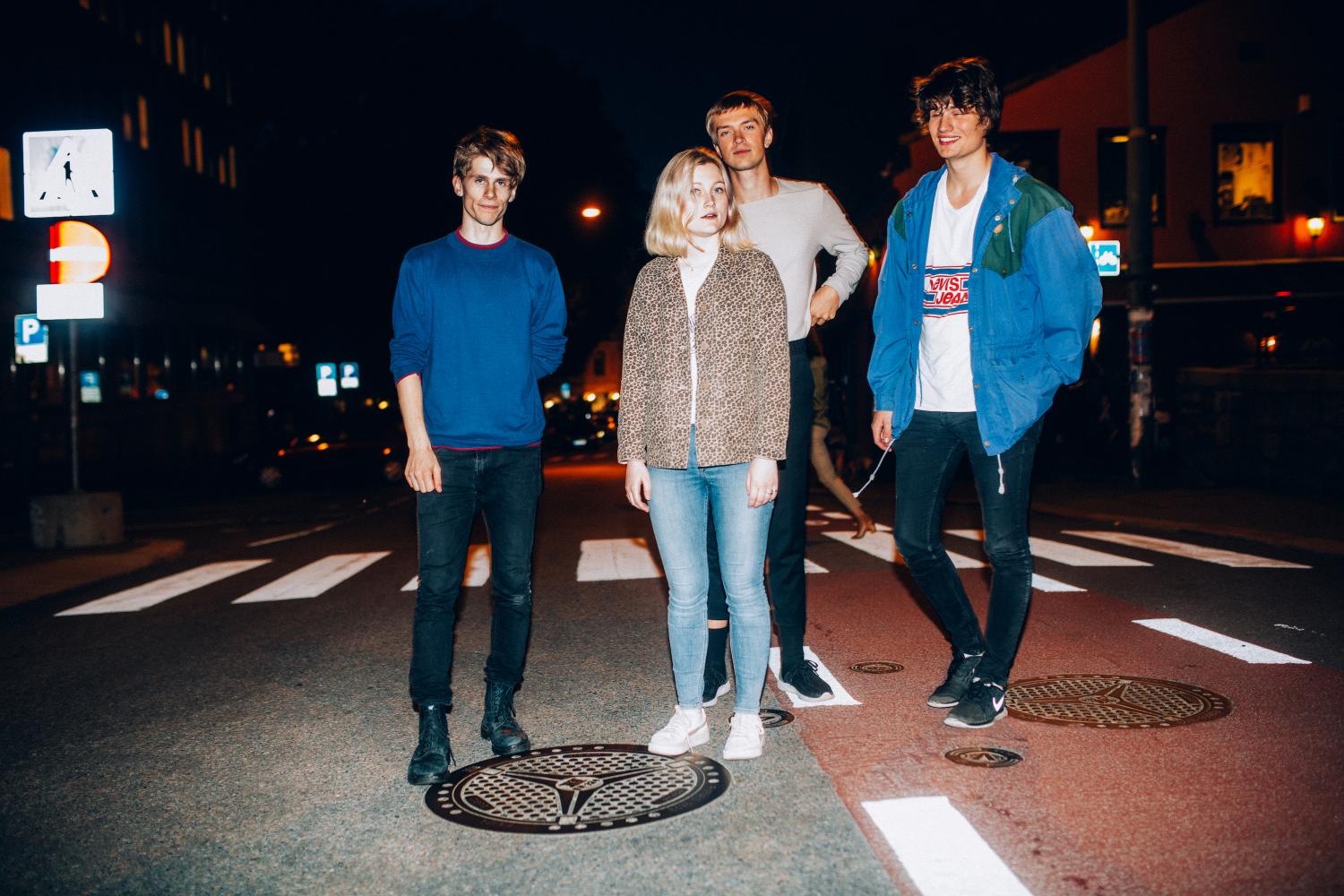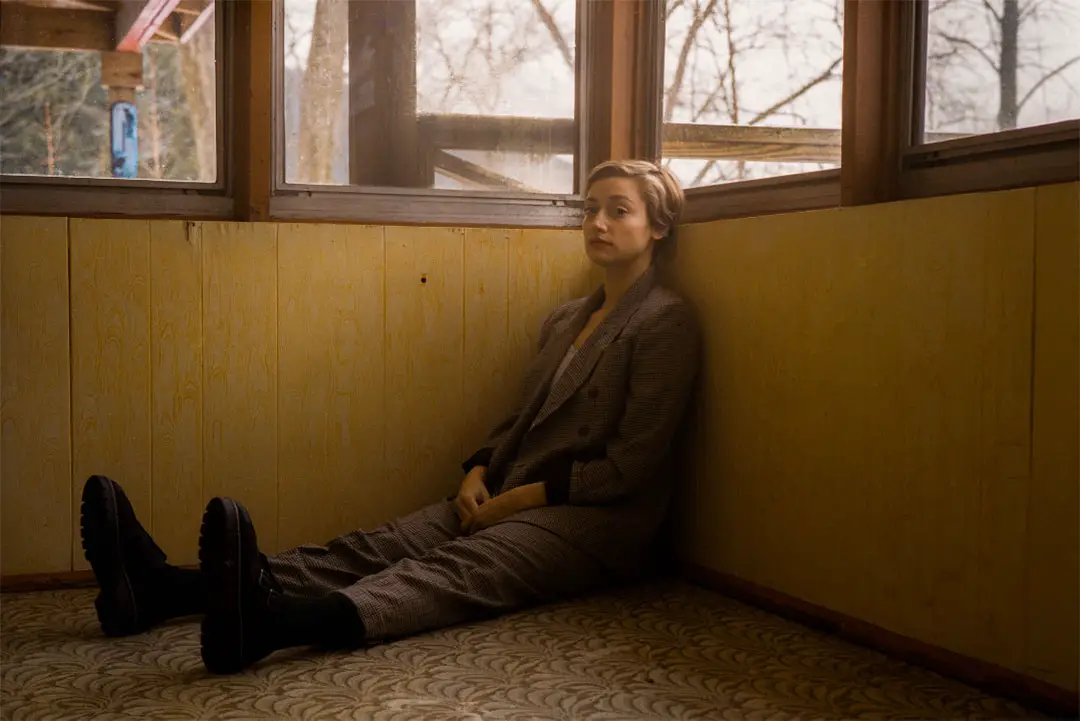
Black Country, New Road reflect on friendship, change, and creative courage on their beautifully bold third album ‘Forever Howlong,’ a lush, many-voiced art-rock record that turns their long-term camaraderie into an intimate, expansive portrait of connection in all its comfort, complexity, and wonder. Speaking with Atwood Magazine, the band members discuss adapting without losing themselves, trading the spotlight across three songwriters, and finding warmth, trust, and freedom in the creative space they’ve built together.
‘Forever, Howlong’ – Black Country, New Road
Do you wanna play forever, how long can I play?
* * *
Black Country, New Road open their third album with a question that feels less like a lyric and more like an invitation – into a friendship, into a room, into a whole shared universe.
Forever Howlong is full of these intimate little worlds: Kitchens and classrooms, kites and recorders, best friends and strangers on trains, all rendered in vivid detail and held together by the quiet, unshowy miracle of six people who genuinely love making music together. The result is a radiant record that feels lush and lived-in, tender and strange, full of small domestic scenes and big existential feelings, all glowing with the warmth of long-standing connection.
“I wanna be living with you, seeing it through,” Georgia Ellery sings in the aptly titled opener “Besties,” manifesting not just a lyric, but a promise – a small, shining vow to keep showing up for one another, in life and in song. Warm, expansive, and intricately crafted, Forever Howlong is an art-rock opus about the beautiful, fragile work of staying close, for however long you can.

Released this spring via Ninja Tune, Forever Howlong is an ambitious, artful tapestry of folk, prog, baroque pop, and alt-rock that could only have come from Black Country, New Road as they are now – a six-piece whose songwriting and vocal duties are shared between Tyler Hyde, Georgia Ellery, and May Kershaw. The arrangements are meticulous yet inviting, weaving a litany of instruments – including harpsichord and mandolin, recorders and saxophones, banjo, piano, and lap steel – into something that feels both expansive and deeply intimate: A lush, colorful, vulnerable, and genre-agnostic album that turns their anything-goes art rock instincts into a soft-glowing, many-voiced vessel for stories about care, closeness, and the strange business of staying human together.
This is, unavoidably, a new chapter for Black Country, New Road – their first studio record since 2022’s Ants From Up There and the seismic shift that followed (including lead vocalist and guitarist Isaac Wood’s departure) – but in talking with the band, you get the sense that Forever Howlong isn’t about reinvention so much as deepening. Georgia Ellery, Lewis Evans, Tyler Hyde, May Kershaw, Luke Mark, and Charlie Wayne have been playing together in one form or another for nearly a decade now, and you can hear that shared history in the way these songs breathe and move, in the trust it takes to let three distinct writers trade the spotlight and still arrive at a single, cohesive voice. For Kershaw, a loose through-line across the album is the human pull toward connection – our shared hunger to be known, the desire to understand others and feel seen in the process, and the complex, sometimes tricky nature of that closeness. You can feel that thread running through everything from the explosive joy of “Besties” to the choral ache of “For the Cold Country” and the quietly cinematic sprawl of the title track.
If 2023’s Live at Bush Hall was their “friends forever” rallying cry – proof that they could weather upheaval and find a magical resurgence on stage – then Forever Howlong feels like the sound of that friendship settling into itself, curious and confident and unafraid to take its time. Its songs invite you in one small world at a time, and then, almost without noticing, you realise you’re wholly engulfed –inside one big, expansive thing alongside the band. As drummer Charlie Wayne puts it, what matters most is still “the six people in the room doing it,” and you can hear that simple, sentimental faith in every swell, every groove, every recorder line that suddenly blossoms into something unexpectedly, breathtakingly beautiful.
From the explosive warmth of “Besties” – a sunlit, heart-thumping rush of pure affection that bursts forward like a door flung open – to the spiraling momentum of “The Big Spin,” Forever Howlong thrives on emotional specificity. “Mary,” one of May Kershaw’s personal favorites, unfurls like a living hymn, its choral voices rising and folding into one another with a tender, trembling gravity. “Happy Birthday” follows with its own spellbinding glow, built around what Georgia Ellery calls one of her favorite lyrical moments on the album: “Well a lady introduced to me by my best friend, we connected through the cans on head” – a line she loves for its “yummy” syntax and unusual, iconic phrasing.
From there, the title track stretches into a quietly cinematic bloom, its shifting arrangement mirroring the band’s fascination with closeness, change, and the spaces in between. And in the finale, “Goodbye (Don’t Tell Me),” which Kershaw describes as “very intricately crafted in the studio,” the album reaches a breathtaking sendoff – a groove-driven, deeply layered coda shaped by an intense back-and-forth in the mixing process. Taken together, these songs don’t just showcase Black Country, New Road’s multi-instrumental elasticity; they reveal the distinct emotional languages of Hyde, Ellery, and Kershaw, intertwining into something richer, stranger, and unmistakably their own.

Stepping back, what emerges is a record that feels at once grounding and liberating – a testament to what can happen when a band trusts itself enough to grow without fear.
Forever Howlong captures Black Country, New Road in a state of creative alignment, the kind that only comes from nearly a decade of playing, experimenting, failing, learning, and holding each other upright through change. It’s wondrous in its attention to detail, cathartic in its emotional sweep, and tenderly triumphant in its refusal to chase anything but the truth of where the six of them are now. These songs don’t just mark a new chapter; they reaffirm Black Country, New Road as one of the rare bands whose evolution feels like an act of courage – a communal leap toward something warmer, freer, and deeply alive. In its most breathtaking moments, Forever Howlong sounds like a reminder that connection is still worth striving for, and that music made with this much care can carry you further than you knew you needed to go.
Atwood Magazine sat down with May Kershaw, Charlie Wayne, and Georgia Ellery to talk about adapting without losing themselves, the unwavering bonds of friendship, the small universes inside each song, and the many ways Forever Howlong reintroduces Black Country, New Road – not as a band defined by lore or crisis, but as a living, breathing community of friends still figuring it out together, for however long they get to do this.
Read our candid interview below, and catch the band on tour this winter for a show full of intricate arrangements, communal warmth, and the quiet magic of six people making something bigger than themselves!
— —
:: stream/purchase Forever Howlong here ::
:: connect with Black Country, New Road here ::
— —
“Besties” – Black Country, New Road
A CONVERSATION WITH BLACK COUNTRY, NEW ROAD

Atwood Magazine: Black Country, New Road, your third album has been out for just over a month now. When I listen to Forever Howlong, I feel like you can hear how much emotion and how much thought and how much love, care, and time went into this record. How does it feel to have this album out into the world, and what has it been like to have it out for this first month?
May Kershaw: It feels good. It feels crazy that it’s only been a month. I feel like it’s been about six months. I don’t know, I feel like touring, you lose your sense of time completely. So yeah, it feels like it’s been out a lot longer. But a month, wow. Yeah, it feels good. It’s nice to play to audiences that have heard the music and seem to like it. Yeah, it’s nice. I think it was a bit scary before. It’s always a bit like, “Oh, how is it going to go?” And then it was… Yeah, it’s been okay.
Charlie Wayne: It’s been good. Yeah, we did our first North American show in Mexico about a week and a half ago, which I think is about as good a validation as you could possibly want. I imagine we could have played the kazoo for like 30 minutes and they would have gone nuts, but…
May Kershaw: They were such a supportive, kind audience. It was crazy.
Charlie Wayne: Yeah, it was extremely nice. It was a very, very nice experience. But yeah, playing live is kind of really… Makes the whole thing feel real when you’ve just been sat on a laptop and in a studio for years thinking about it.
Can we talk briefly about your band identity today? Because there has been a shift. This is what happens, people come and go, but I'd love to hear from you, who is Black Country, New Road today as you interpret yourselves?
May Kershaw: I guess it is the music that we’re playing at the moment is what Black Country New Road is today. And it’s a changing thing constantly. I think it’s where we’re all at. At the time of writing new music and where our tastes are at. Yeah,
Charlie Wayne: I think that’s the best way of describing it, really.
The story of humanity, we're all taught as children, is adaptation. We adapt in order to survive. When I think about your band’s growth, I think it's a story of adapting and thriving. May, you embraced lead vocal and songwriting duties together with Tyler and Georgia. The band itself adapted without losing certain principles of its core identity. What did that adaptation process look like for all of you?
May Kershaw: Yeah, it’s been a necessary part for us of doing things that interest us that keep us really engaged with what we’re doing. I feel like as soon as we’re not engaged in it, it’s not good for anyone, really. So kind of keep that. Because we’re all changing a lot, the music is inevitably going to change and will continue to change. For me, maybe it’s like accepting that there might be changes that a lot of people don’t like or some people don’t like feels like a good way of not putting too much importance on that. And that’s a happy byproduct that people are still into it. That’s a great coincidence. It’s like music that we all really like and the people want to still keep listening to. I mean, this is just for me. I’m just speaking for myself. But yeah, I think it’s been 10 years, basically, of us all playing together in one form or another. And from ages 16, 17 to what? 25, 26, 27 now.
Yes, we’ve come a long way. It’s been really scary at times of doing things that are completely out of my comfort zone. But I think also there’s a part of also if you mess up, people that got your back and are really forgiving. I think that’s really important for me. Knowing that if I mess up, it’s actually not the end of the world and no one will care that much. And I think that helps not put too much. Again, stress or importance on everything being perfect. Like the beginning intro of Besties, I sometimes really mess that up. But if I put too much importance of like, oh, I messed it up. It’s just got to be like, it’s fine. That will happen sometimes. And then with that mindset, it feels like it doesn’t happen so much because you’re chill about it. But I think in terms of changing and growing, it’s just like being around five other people that are open minded and have your back.
Charlie Wayne: I think that’s summed it up absolutely perfectly, to be honest. I think May’s right, it’s never more important than the six people in the room doing it. I think that’s the thing which makes it what it is. And there’s no point in compromising it for fear of not being good enough or for not doing something because you think it’s important because other people think it’s important. It’s just like it’ll all be forgotten eventually, so you may as well enjoy while you’re doing it.
For better or worse, you're not alone in this – one of my favorite bands from Dublin, Little Green Cars, their lead vocalist left, and the rest of the band regrouped under a new name. They're now called Soda Blonde. They also pivoted from making more folk-adjacent music to the indie pop space. But it was a similar situation, where it was the same individuals with new singers and songwriters. I think that sort of soldiering on is, in its own way, admirable. Not every band chooses to, or can do, that kind of a thing.
Charlie Wayne: I think there was never any decision to not. Really. It just kind of happened. It wasn’t like, “Oh, well, this has been going really well, so let’s just stop doing it.” It started and now it’s over. It never felt over. It just felt like it was just going to change. And it did. And that’s just kind of the way it went. And I don’t think there was any expectation of what it was going to be. It just kind of was like, “Well, we know we enjoy making music together, so let’s just carry on making music.” And also, there was a lot of infrastructure there. We felt like we could probably… I know we didn’t necessarily speak about it, but it didn’t seem impossible to weather the change, but we still had a manager and we still had a booking agent. The band was still the band. It was just different. And as long as we all accepted that difference, then it could still exist.

Well, enough dwelling in the past. How do you feel Forever Howlong reintroduces you and captures Black Country, New Road today? What most excites you about this album?
May Kershaw: I do love playing them live. And I think we’ve done some really interesting arrangements and different… I don’t know, I think we’ve grown as songwriters and arrangers. And that excites me. And also, I feel quite excited to meet the next songs that will come from this as well.
Charlie Wayne: Yeah, I agree. I think there’s so much left in the tank, and I think that what was really exciting about writing this album is that you kind of felt like it was such a journey starting it and then finishing it. By the time we knew that we had to go to studio to write it or to record it, it was like, ah, fuck. We’re kind of just… We could keep on going and going for another six months and have a totally different album. And we kind of really got on a roll, and that’s really exciting knowing that once we’re kind of in there in a certain head space the music can be this and it’s like, “Oh, well maybe next time we’ll get into a different head space, the music will be that.” I think that’s really cool. I think it’s a really nice, exciting feeling.
Can you describe this record in three words?
Georgia Ellery: Cool, vibes, poignant
Charlie Wayne: Big and small
A lot of what I’ve read about you recently has been built around reinvention, but I don't think a lot of songs are necessarily about reinvention per se. What are these songs about to you? What, to you, is the story of Forever Howlong?
May Kershaw: I think it changes a bit. I don’t know, I find with at least songs that I’ve written that it kind of changes as they age. And I think right now for me, a big through line of the songs is like connection with another person or with people and wanting that or the trickiness of that or… I don’t know, I’ve said this before, I’m like maybe that is actually just what every single song in the world is actually about. So I don’t know if that’s specific. But I think there is something similar about me, Tyler, Georgia have similar lifestyles in terms of what we do is the same. And we’re all very different, but there is… I don’t know, we’re all the same age and do the same thing as a job. And I think there is similarities there. And in terms of wanting to feel close to people or a person, I think that is a very vague, but a through line that I hear in the songs. And I don’t know if that’s the same for anyone else, but for me, yeah.
Almost like a desire for intimacy, not romantic intimacy, but just connection?
May Kershaw: Yeah, a bit. Yeah, that’s how I see it at the moment.
It wasn't lost on me that “Besties,” your first song back in this new configuration, is an ode to best friends. What was the decision to come back with that song and put it at the top of your album?
May Kershaw: I think we knew that “Happy Birthday” and “Besties” were going to be the two singles. We were a bit split on which one to put out first. But I think it’s just a bit of an explosion as well. I think it was maybe the last song, or the second-to-last song that we wrote. For me, it felt like the right thing to kick it all off. “Let’s go.” And the vibe.
May, what is your favorite song that you wrote for this record, and can you share a bit about why it’s your favorite?
May Kershaw: Tricky question – I don’t have one! I think towards the start of touring I enjoyed playing “The Big Spin” the most and now I think it’s changed to “For the Cold Country.” But I think they were all explorations into different kinds of song writing and so I think difficult to compare.
Charlie, likewise, what are your personal favorite contributions out of your own playing? Anything you really stand by, or are really proud of?
Charlie Wayne: For me, this album was by far and a way the hardest album to play on. Some of the songs are just written and arranged in a way that is not that easy to imagine where any drum/percussion parts would go! It required a bit of a step back and re-think about my own playing style. Like, for the songs where the beat is just simple, I had to think about how to make all those moments remain interesting and not too straight-forward. On the other side, I had to really take a step back and just not play at all on some of the moments where there just wasn’t any place for any drums/percussion. There’s no one clear moment, it was all quite complex and I’m ultimately proud of the whole thing.
I feel like Black Country, New Road have bloomed lyrically on this record, and I’d love to ask you: What are some of your favorite lyrical moments on this record? What stands out to you?
Georgia Ellery: One of my favourite lyrics on Forever Howlong is in “Happy Birthday”: ‘Well a lady introduced to me by my best friend, we connected through the cans on head’ because of how yummy the syntax is. And it’s a very unusual, but iconic sentence.
Charlie Wayne: Agreed, I think it’s best enjoyed as a full thing. Maybe more so with this one than any of the others that we’ve done previously. With every song you’re invited into these small worlds that are perhaps more distinct from each other than previous records. But altogether I reckon they make sense, as one big expansive thing.
Now that the record is out, beyond the singles, which song or songs do you really hope folks really listen to, pay attention to, and hear?
Georgia Ellery: I hope they listen to the album in full front to back and enjoy.
May Kershaw: I think right now I’m really enjoying playing “Mary” and hope that people listen to that one in particular.
Ooh, I could talk your ears off about how much I love the chorale of voices in “Mary” or the energy and the sounds behind “The Big Spin.” What are some of your personal favorite moments on the album as a whole?
May Kershaw: I really love “Goodbye.” I think it was very intricately crafted in the studio, especially the end. The mixing process is quite an intense back and forth to get it right. And I think it sounds amazing. And I also love playing it live as well. I feel like it’s just so, just grooves. Yeah, I think it’s great. How about you?
Charlie Wayne: I think that my favorite moment is “Forever Howlong,” the title track – that still stands out for me. It was just such a fun and interesting song from arrangement to recording.
May Kershaw: It was a nightmare to record.
Charlie Wayne: It was a f*ing nightmare to record, but it was just cool. We’ve never done anything like that before. And it was like, “Oh maybe, maybe that’s what the band’s able to do now, I suppose.” Basically it’s like I’ll learn an instrument more or less. It was kind of amazing, really just funny and interesting. And I think it was just a really beautiful song. It’s just a really well crafted. Yeah, I’m really glad that it’s on there in that form. I think lyrically, I still find it very engaging and moving. And that’s nice. Yeah. It was originally going to be the third single for the album. I think it’s a shame, but maybe it does make sense that it wasn’t.
May Kershaw: It was strongly vetoed by the label.
Charlie Wayne: By the label. And I think it’s one of those songs that… It is nestled within the album a little bit. But I think I found it is such a brilliant… It gets us flowers during the live show because we all get our recorders and play it. I think it’s cool. It’s a great song.
That's one of those “Bohemian Rhapsody”-type songs where you never say the name of the title in the actual lyrics. I'm curious, what came first? What came first there, the title or the song?
May Kershaw: The song, it was called something else, but that name couldn’t stay. It could not be. And so we were brainstorming track titles for it. And then we were like, “Wow, maybe it should just be the title track.” And that’s how it came about!
So, where did the album name come from, and what does the name or phrase “forever howlong” mean to you?
Georgia Ellery: I think it was said in the practice room, perhaps when trying to explain something musical? And then we wrote it down on the ‘potential album name list’ Charlie keeps on his phone. Then I used it as a lyric on besties, then we decided (whilst recording the album) to call the album that. Well it doesn’t mean all that much, really, it doesn’t even make sense. But the two words look and sound nice together.
May Kershaw: The album name came from a phrase that Georgia said in a rehearsal. I think Luke pointed out that it was kind of an interesting combination of words and then Georgia put it in the lyrics for “Besties.” I like how it’s up for interpretation.
What is this album, for you, outside of all those other contexts? I guess what I’m asking is, how do you see and hear it?
Georgia Ellery: To me, it’s a collection of songs that we were into and wanted to record. We worked hard on them and enjoyed the process. and I am super proud of that.
What do you hope listeners take away from this album, and what have you taken away from creating it and now putting it out into the world?
Charlie Wayne: I think that if people can enjoy it as just a standalone album… I think the band has been for good, for overwhelming good – it’s the reason we have a job! – but the band has this sort of pretense and lore, and there was a huge amount of expectations surrounding the album. I think if people can enjoy it, if they’re a fan before or if they didn’t know the band, if it can just be enjoyed as an album and some of it is engaging and interesting in a sort of standalone context, then I think that is a success. I think that that’s a really nice and cool thing.
It must be weird, and fun, being part of a band that people have this cultish affection for... and maybe also quite validating.
Charlie Wayne: Yeah, I think it’s one of those things where I really don’t want to tread down on anything that we’ve done before. Because I’m extraordinarily proud of everything that we’ve made and we’ve put out in the world. But I think that if it can just be… If the album can just be enjoyed for everything that it is. And I think that’s kind of cool.
May Kershaw: I think it’s going to age nicely.
Charlie Wayne: I think it will age like wine.
May Kershaw: In its own little bubble.
Charlie Wayne: Yeah, I think so too.

You’ve now been touring the album a bit. What are the big differences between the last time you guys were on stage in this big way and this time with this record?
Charlie Wayne: I guess maybe we’re not playing catch-up so much anymore, possibly, in the sense that I think we were making up for lost time and maybe a bit of lost ground with all the touring that we did for Live at Bush Hall. We had never really toured anything except for a couple of UK tours as Black Country, New Road before we put two albums out, really, before doing any kind of proper substantial touring because of COVID and then Isaac leaving the band. And so Bush Hall was kind of like, oh, we can finally tour all this stuff, or at least we can finally tour as a band. And so we just did. We hit the road really, really intensively. We were actually realistically touring for about kind of non-stop for close to two years, really. It was like we started in the summer of 2022 and we didn’t stop until spring of 2024, which is quite full on. I think this time around, we’ve had quite a long time to take a breather and to maybe feel a little bit more grounded. It doesn’t feel unstable or shaky at all. It feels very firm. I guess it feels a little bit more like this is kind of maybe where we should be. It’s strange.
Live at Bush Hall was what, two years ago now? That album was actually really cool, especially for somebody who has yet to see you guys live. What can fans expect from the Black Country New Road tour this time around?
Charlie Wayne: It’s to expect the band, I guess. It was only really about midway through the actual touring cycle for sure when we decided that we needed a full-time sound engineer because it was getting to a point where we were spending most of our lots of time at festivals just setting up. But it’s like, I think we’ve always been a fairly good live band and been really good at playing the songs in an exciting way, live. Even if there’s not that much sort of patter on stage…
May Kershaw: Yeah, I think so much part of our writing is just playing it all together. That is a big part of how we arrange stuff. I think this album more than any other, it’s been thinking more about the studio versions, but still the core of it is us gauging how the song is working is through us playing it live all together.
In the spirit of paying it forward, who are you all listening to these days that you would recommend to our readers?
Georgia Ellery: I’m listening to Grace by Jeff Buckley at the moment.
May Kershaw: I’ve been listening to Jerome Kern songs, and some organ music (Flor peeters concerto for organ and piano).
Charlie Wayne: I have been listening to a lot of Neko Case, Quiet Light, and The Magnetic Fields.
— —
:: stream/purchase Forever Howlong here ::
:: connect with Black Country, New Road here ::
— —
— — — —
Connect to Black Country, New Road on
Facebook, 𝕏, TikTok, Instagram
Discover new music on Atwood Magazine
© Eddie Whelan
 © Eddie Whelan
Forever Howlong
an album by Black Country, New Road