Nashville-based singer/songwriter Hudson Ingram reflects on nostalgia, growing up too quickly, and documenting change in real time on his debut EP ‘The Long Way Home (Vol. 1).’
Stream: ‘The Long Way Home’ – Hudson Ingram
This project is me trying to find my way back to something real…not the version of me people expect, but the one that actually feels like home. ‘The Long Way Home’ is about growing up, leaving, and realizing you don’t come back the same person, but also that maybe that’s the point.
* * *
At just nineteen years old, Hudson Ingram writes with the kind of wistfulness that usually arrives much later in life.
Across his debut EP The Long Way Home (Vol. 1), the Nashville-based singer/songwriter captures the uneasy space between adolescence and adulthood with remarkable clarity, blending indie-pop warmth with Americana storytelling and deeply personal lyricism.
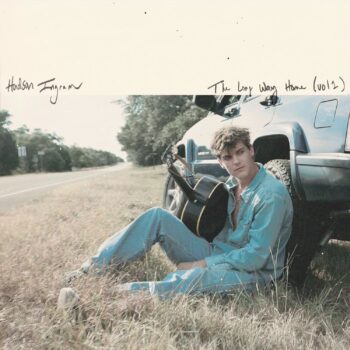
Raised in Austin, Texas before moving to Nashville at seventeen, Ingram channels feelings of nostalgia, confusion, loneliness, and hope into songs that feel diaristic in the purest sense — unfiltered reflections of someone trying to understand who they are while everything around them changes. Created alongside Aaron Dessner, the EP marks the first chapter in a larger trilogy tracing Ingram’s journey back to what he calls his “truest self.”
In conversation with Atwood Magazine, Hudson Ingram opens up about documenting uncertainty in real time, the emotional weight of nostalgia, and why making honest music still matters in an increasingly artificial world.
— —
:: stream/purchase The Long Way Home here ::
:: connect with Hudson Ingram here ::
— —
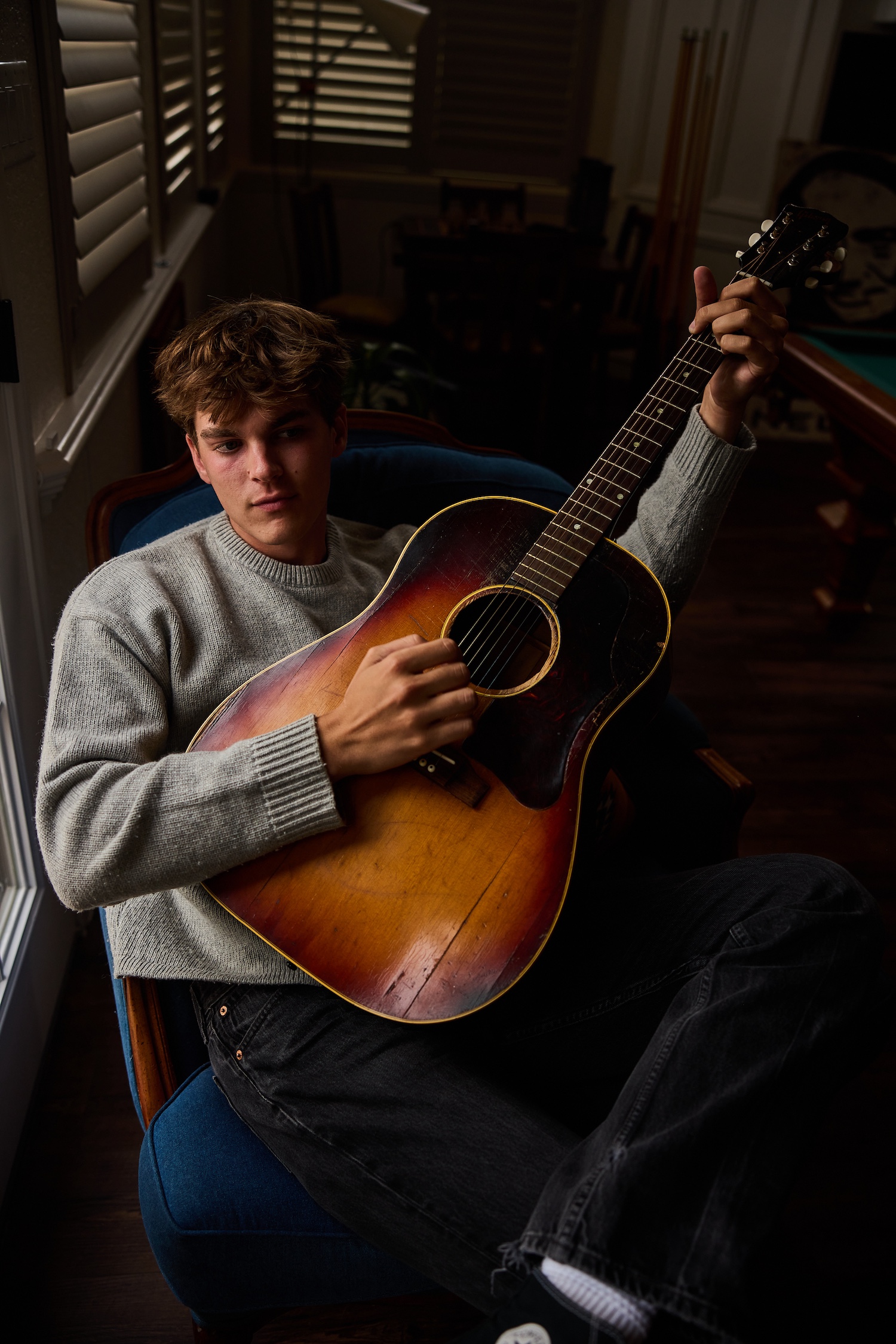
A CONVERSATION WITH HUDSON INGRAM
Atwood Magazine: The Long Way Home (Vol. 1) feels like both a beginning and a return. At what point did you realize this project was less about moving forward and more about finding your way back to yourself?
Hudson Ingram: Honestly, the making of this project, unintentionally, became what actually helped me find my way back to myself in real time. It was more of a documentation of the moment I was actually in as opposed to anything else. I think that naturally, as you grow and develop, you find yourself in new environments, and part of evolving is figuring out who you are inside of those new environments. Part of that journey for me was looking back and reconnecting with my hometown in Texas, the people there, the music. Everything that I know makes me feel like the most real and tangible version of myself
“Real Life” opens the EP with this almost pleading desire for something genuine. What does “real life” mean to you right now, especially in a world that often feels artificial or disconnected?
Hudson Ingram: “Real Life” is the first track on the EP for multiple reasons. “Real Life” is a call to action, to find yourself where you are. Thematically it sets the tone for the beginning of the project, which was intentional and really important to me. I wanted to start at square one, emotionally and sonically. It’s definitely evolved in its meaning to me, but at its core it has always held that weight of reminding yourself to be present, to stay in the room with the people that you love. I think that’s the main thing, especially right now, there’s so many reasons to drift, but you’ll never really find joy anywhere other than where you’re at.
There’s so many reasons to drift, but you’ll never really find joy anywhere other than where you’re at.
* * *
You’ve spoken about going through a period of intense change and confusion while writing these songs. How did songwriting help you make sense of that time?
Hudson Ingram: It’s that thing about documenting exactly where you are. No filler, no fluff. Whether it’s pretty or not. That’s always what I’m reaching for when I’m writing a song, the most honest stuff, because that’s exactly what I’m searching for as a listener. I tried to follow that lead when I was making this project. I literally wrote the songs like journal entries, and it showed me who I was in real time. And it also showed me that there was a world beyond that confusion and uncertainty. That’s what I hope these songs do for people.
Moving to Nashville at 17 and stepping into independence so early must have been both exciting and overwhelming. How did that experience shape the emotional core of this EP?
Hudson Ingram: It was definitely a lot. It was the first time I had lived anywhere other than my hometown. It gave me a lot of perspective, and I think that’s necessary. That’s what a lot of what the EP is about, finding your way forward. There’s a myriad of feelings that come with that though; loneliness, love, nostalgia, all of the above. I wanted to make a record that was almost diaristic in the way it explores all of those feelings. They are direct deposits of those feelings in the most pure form.

I literally wrote the songs like journal entries, and it showed me who I was in real time. And it also showed me that there was a world beyond that confusion and uncertainty. That’s what I hope these songs do for people.
* * *
This EP is part of a larger trilogy. Did you approach The Long Way Home as one continuous story from the start, or did that bigger picture reveal itself over time?
Hudson Ingram: I made this first EP pretty much chronologically. I think it just naturally unfolded that way, and as I was living through this chapter of my life, the songs just appeared. It was the only way I knew how to process everything that had been changing in my life. There are things I just naturally never felt inclined to write about because I hadn’t experienced them yet. That’s how these two following EP’s have been shaping up, and I wanted to keep them as direct and complete as the first one, almost like the trilogy being its own record in and of itself. There’s a very distinct sound and theme to each one, but they all exist in the same world. It’s all one story unfolding as it goes; that’s what I’m most excited about.
Collaborating with Aaron Dessner seems to have brought a very organic, almost analog warmth to the project. What did you learn from working with him, both creatively and personally?
Hudson Ingram: Being able to build the world around these songs with Aaron is something that I seriously never would have even thought was possible. It’s such a gift to have someone who cares just as deeply about the craft that goes into making the songs as you do, and everything I had made before this project was entirely me, from my bedroom in Texas. I think that when you work alone like that, there’s a lot that you don’t know you don’t know yet, and it’s such an asset to have a discerning voice who has the same end goal as you. That’s the thing that I love most about working with Aaron is that we share that same end goal of making something moving, and his knowledge of finding ways to get there is quite unreal, both musically and personally.
Your music carries this “old soul” quality, but it’s rooted in very present, very real coming-of-age experiences. How do you balance those two perspectives when writing?
Hudson Ingram: At 19, I had a period of time where I was writing a lot of really sad, intensely naval-gazing music (which I’m not necessarily against), but a friend of mine made a joke that she wanted to hear me make music that sounded like my age. To this day, I still overthink this comment, but it did spur on the idea of what this whole project ended up becoming; a documentation of my own story. I don’t think that just because someone is young it means that their emotions aren’t valid or warranted, nor does that mean that if their questions are complex and thought-provoking they can’t be lighthearted. I always try to find that middle ground of asking real serious questions and playing for a laugh, and whatever I write just inherently becomes of my age, because that’s literally where I’m at.
There’s a strong sense of nostalgia throughout the EP, even though you’re still so early in your journey. Where do you think that feeling comes from?
Hudson Ingram: That feeling of nostalgia and wistfulness was really important to me to convey in this project. Those were honestly the most overwhelming emotions that took a hold on my life when I was writing these songs, and that was really my only way of coping with it. I wrote a majority of this project while graduating high school, moving across the country, signing my first record deal, etc. There was a lot that had changed in my life, and a lot of people that had left my life during that time. The only way to move through it and make it all worth it is to share my story, and to realize that there are things that I was experiencing that, thankfully, weren’t specific to me. That was where the comfort came from, realizing that the overarching theme of this project is really community, and that my way of creating it was to pass on the story, and have it become something other people can use as well.
Songs like “Baby Just Be” feel almost like letters to yourself. Do you see your music as a way of documenting who you were at a certain moment, or guiding who you’re becoming?
Hudson Ingram: I think it’s both. To me, there’s no other way of creating music as anything other than a representation of how you felt in that moment. Now, with that said, those feelings and messages can definitely still ring true in a month, a year, thirty years, etc., but I think when a song is really there, in my eyes, it conveys a perspective accurately. Whether that’s how I felt, or wish I felt, or how I wish I didn’t feel – it comes in a lot of shapes and forms. That’s what I’m most proud of in these songs, that they feel like they came from the most sincere version of the person who wrote them. The funny thing about songs too is I think they can evolve meanings, and guide you into a new phase of your life, but the sincerity always comes from the moment of writing it. Everything else that happens afterwards is up to the listener.
You describe this project as part of a longer journey back to your truest self. As you move into the next parts of the trilogy, what do you hope changes – and what do you hope stays the same?
Hudson Ingram: I’ve always found it funny that when you observe and interact with people at the pinnacle of their game, whatever field it may be, and ask them about how they enjoy their craft after such a long time, more than likely they’ll always answer it with something about creating like they did when they were a kid. I think there’s something to that feeling of unrestrained creativity and honestly that can get muffled as we grow.
As the trilogy develops and expands, I know that sonically there will be natural evolution, and thematically it will dive into different worlds, but at the core of the music, I always want to make music that feels tangible and unrestrained. I got into music listening to the blueprints of that philosophy; Tom Petty, James Taylor, Bob Dylan. I fell in love with music because it felt like I wasn’t alone in what I was feeling, good and bad. It has to be a story being told, whether it’s over an 808 and a synth line or some crickets over a guitar.

I fell in love with music because it felt like I wasn’t alone in what I was feeling, good and bad. It has to be a story being told, whether it’s over an 808 and a synth line or some crickets over a guitar.
* * *
What makes The Long Way Home (Vol. 1) resonate so deeply is its sincerity.
Hudson Ingram never tries to pretend he has everything figured out; instead, he allows the songs to exist exactly as they were written – messy, hopeful, uncertain, and deeply human.
As the trilogy continues to unfold, there will undoubtedly be sonic evolution and new emotional territory to explore. But at the center of Ingram’s work remains the same guiding instinct: a desire to create music that feels tangible, lived-in, and honest enough to remind listeners they are not alone in what they’re feeling.
For Ingram, the search for authenticity may still be ongoing. But if The Long Way Home (Vol. 1) proves anything, it’s that sometimes the act of documenting the journey is what helps you find your way through it in the first place.
— —
:: stream/purchase The Long Way Home here ::
:: connect with Hudson Ingram here ::
— —
— — — —
Connect to Hudson Ingram on
Facebook, 𝕏, TikTok, Instagram
Discover new music on Atwood Magazine
© Daniel Prakopcyk
 © Daniel Prakopcyk
The Long Way Home, Pt. 1
an EP by Hudson Ingram