
Singer/songwriter Hank Heaven is coming into their own with a sharper sense of self, a killer instinct for making everyday details cut deep, and songs that give the mess of love, addiction, survival, and growing up in New York a bruising immediacy. In conversation with Atwood Magazine, Hank opens up about their dreamy, aching song “Thread” and new EP ‘Welterweight,’ tracing how ordinary reminders can become release, why getting better can still leave us tethered to the past, and how living “on guard all the time” helped shape a fighter’s record from an artist whose songwriting is landing harder than ever.
Stream: “Thread” – Hank Heaven
Memory can transform the most ordinary errand into a trapdoor – and on “Thread,” Hank Heaven makes that haunting sound dreamy, twangy, and strangely irresistible.
Released June 11, the singer/songwriter’s first track of the year is beautiful, catchy, and cathartic all at once: A fuzzy, aching indie-twang anthem about the little ghosts we carry through daily life, and the long, invisible lines that keep pulling us back to people we’re trying to release. Produced by Phil Weinrobe, the song churns with its own quiet force, rooted in the lessons of sobriety and lit by Hank’s direct, earnest voice. It’s charming without softening the hurt, sweet without sanding down the ache, and alive with the hard-won clarity of someone naming the thing that’s had power over them for too long.
Long before “Thread” turned a boxing gym into an emotional arena, Hank Heaven had already lived several musical lives. The Brooklyn-based singer/songwriter and multi-instrumentalist grew up in Garrison, New York, on the southern edge of the Hudson Valley, first cutting their teeth as a Django Reinhardt-inspired swing guitarist before hitting the road with artists including Samia, Gus Dapperton, Del Water Gap, Overcoats, and Hippo Campus. Those years spent moving between stages, styles, and other people’s songs eventually gave way to a solo project capacious enough for Hank’s own restless imagination – country yearning rubbing against electronic experimentation, sly humor breaking through real hurt, and a storytelling instinct that can make a coffee order or a southbound train carry the weight of an entire relationship.
That project first arrived simply as Hank on 2022’s Call Me Hank, a genre-blurring debut EP that introduced an artist willing to follow a feeling wherever it led. In 2024, they expanded the name to Hank Heaven – choosing “Heaven,” they explained, because it “could take on many forms as who I am as an artist changes” – and followed it with Loaded Dice, a conceptual debut album that filtered loneliness, shame, addiction, and the desire to be a good person through the rise and fall of an out-of-luck gambler. Hank came away from that record realizing how much storytelling and lyrics meant to them, saying it had allowed them to “step into myself as a songwriter.” “Thread” picks up from there with the metaphorical armor peeled further away: The characters and wit remain, but the details are closer to the skin, and the life inside them is increasingly impossible to miss.

I wanna go on a bender tonight
But I wanna be good for you baby
Go through the motions and turn off the lights
We’ve not been talking much lately
Well I went to the club, went to cut up the rug
I was sober and I needed to freak it
And they put on our song
and I screamed every word
This is the closest thing to
you and I speaking
“I wrote ‘Thread’ while being plagued by the memory of someone,” Hank Heaven explains. “It felt like no matter what I did, I was reminded of them. I saw their reminiscence in life’s most ordinary moments: Doing my laundry, walking around my neighborhood. Even the concept of getting better became a reminder of them. The song is both a declaration and an act of release.”
What a devastating place to begin: Wanting to disappear into old habits, wanting to be good for someone who is no longer there in the way they used to be.
The opening line hits so hard because it puts desire and sobriety right beside each other, letting both feelings breathe in the same room. Hank doesn’t turn recovery into a clean break or memory into a sentimental glow; they sing from the messy middle, where self-preservation still aches with devotion, and where getting better can feel like another way of speaking to the person you miss.
Well you know I’m not better yet
Better leaving things unsaid
I wonder how much heaven spent
Got me my invisible thread to you
A shirt, a bar, a plate or a spark
A thread
“To name it is to overpower it,” Hank tells Atwood Magazine. “I guess the song came from me being tired of the constant reminder and writing it all out, singing it, playing it with a band allowed all those reminders to transform into something else for me. It didn’t have to haunt me anymore.”
That transformation is the pulse of “Thread.” The song doesn’t sever the connection as much as change its weight. A shirt, a bar, a plate, a spark – Hank lets these ordinary objects hold the feeling because that’s where memory tends to ambush us. The result is intimate and tactile, a song built from tiny anchors rather than sweeping declarations. Its ache comes from specificity; its catharsis comes from watching those specifics loosen their grip.
“I like to use literal things to capture a feeling,” Hank says. “The ordinary objects always bringing you back to someone is real as hell. I didn’t just want to name the feeling like ‘I miss you!’ over and over again. So I felt like the small everyday things were the glue that holds the feeling together for me or for a listener.”

The music carries that same balance of intimacy and release. From its fuzzy opening riff, “Thread” feels warm and frayed at the edges, twangy in its pull and quietly anthemic in its lift. Hank’s voice has a beautiful rawness here – spirited, steady, and full of feeling, less like a confession whispered in private than a song finally ready to be played out loud. There’s a cathartic charm to the way it moves: The melody catches quickly, but the hurt keeps deepening with each small detail.
Well I went on a walk
Went to get some fresh air
Yeah I remember when you made that suggestion
And at first I forgot
and you were almost not there
When a car drove by
with the windows rolled down
And it was playing our song
That god damn good fucking song
I couldn’t tell if I was crying or laughing
I wiped it all off my face
And I walked to your place
And I stood there for about 30 seconds
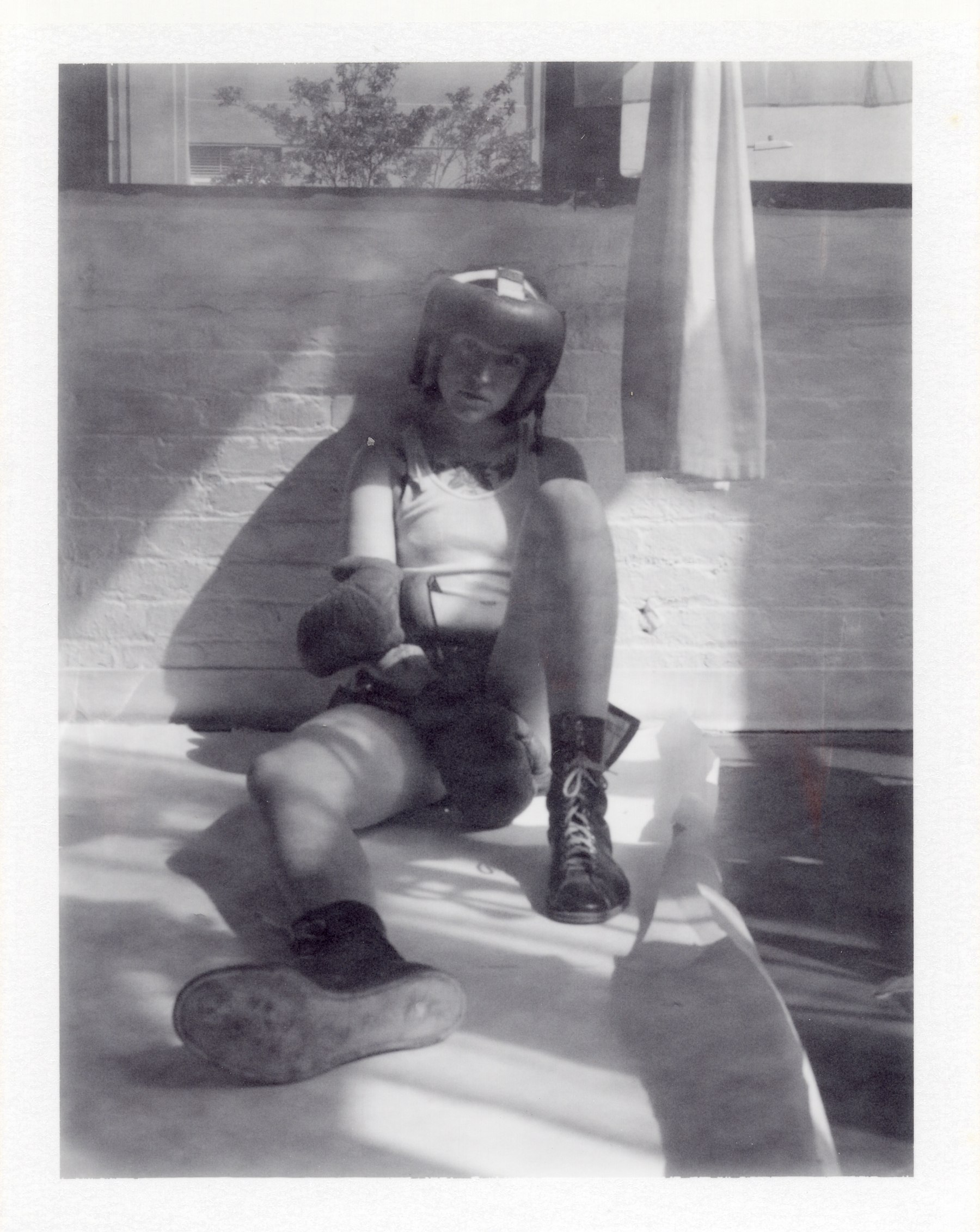
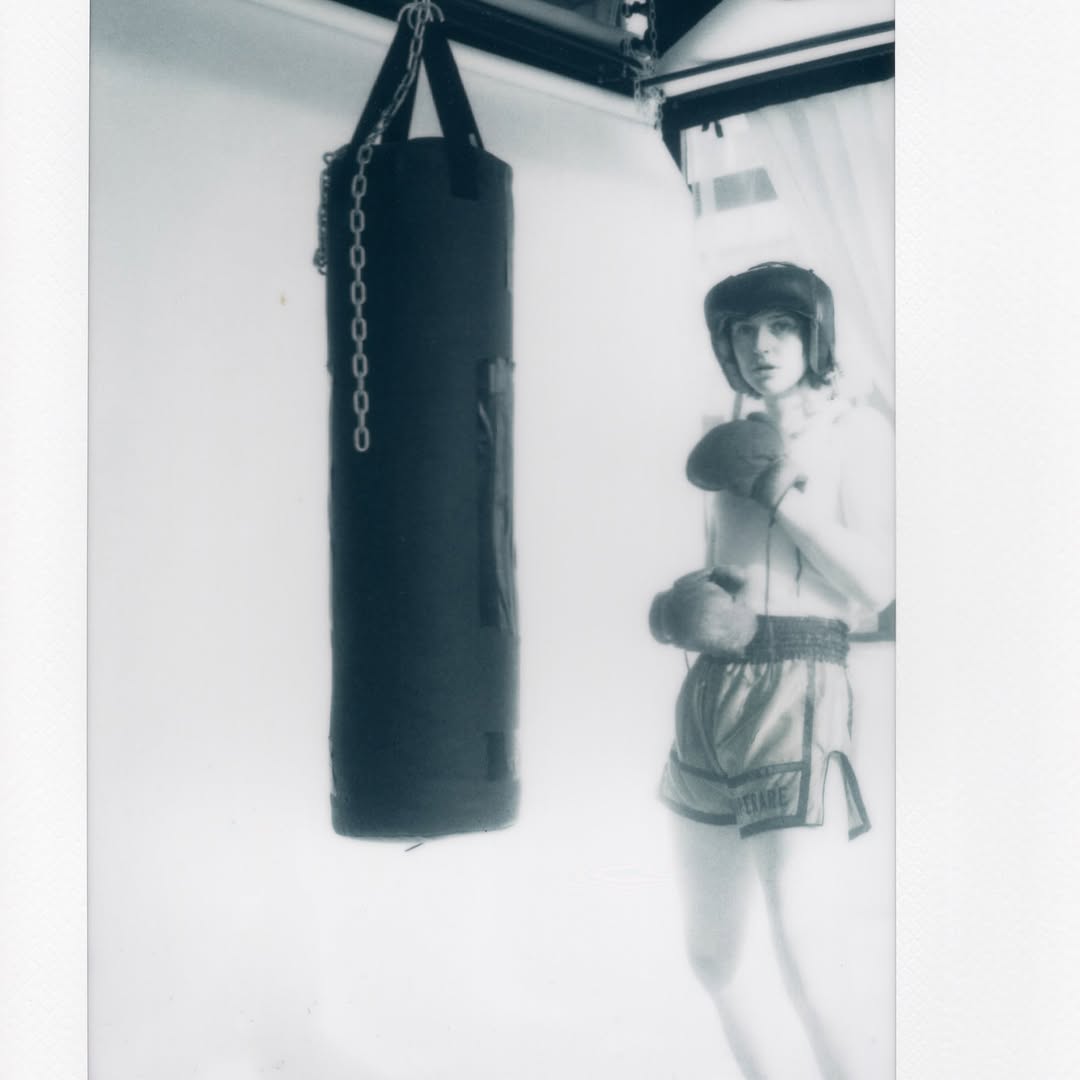
The accompanying one-shot video, directed by Weston Borg, places Hank in a boxing gym, putting the song’s emotional endurance on physical display. It’s a fitting image for this new chapter: A fighter not because they are untouched by pain, but because they have learned to keep moving through it. Hank says the songs were written while they were “sort of floating in New York,” working hard, living in strange accommodations, and carrying personal burdens that left them feeling “on guard all the time.” No wonder “Thread” lands with such gentle force. It’s not a knockout punch; it’s the breath between rounds.
By the time the song reaches the bodega, the bus line, the coffee order, and the laundromat where Hank once fake proposed with a plastic ring, “Thread” has become a map of memory’s smallest hiding places. Its heartbreak lives in the fact that love doesn’t vanish just because a relationship changes shape. It lingers in muscle memory, in neighborhood routes, in the dumb beautiful rituals that once belonged to two people and now keep showing up uninvited.
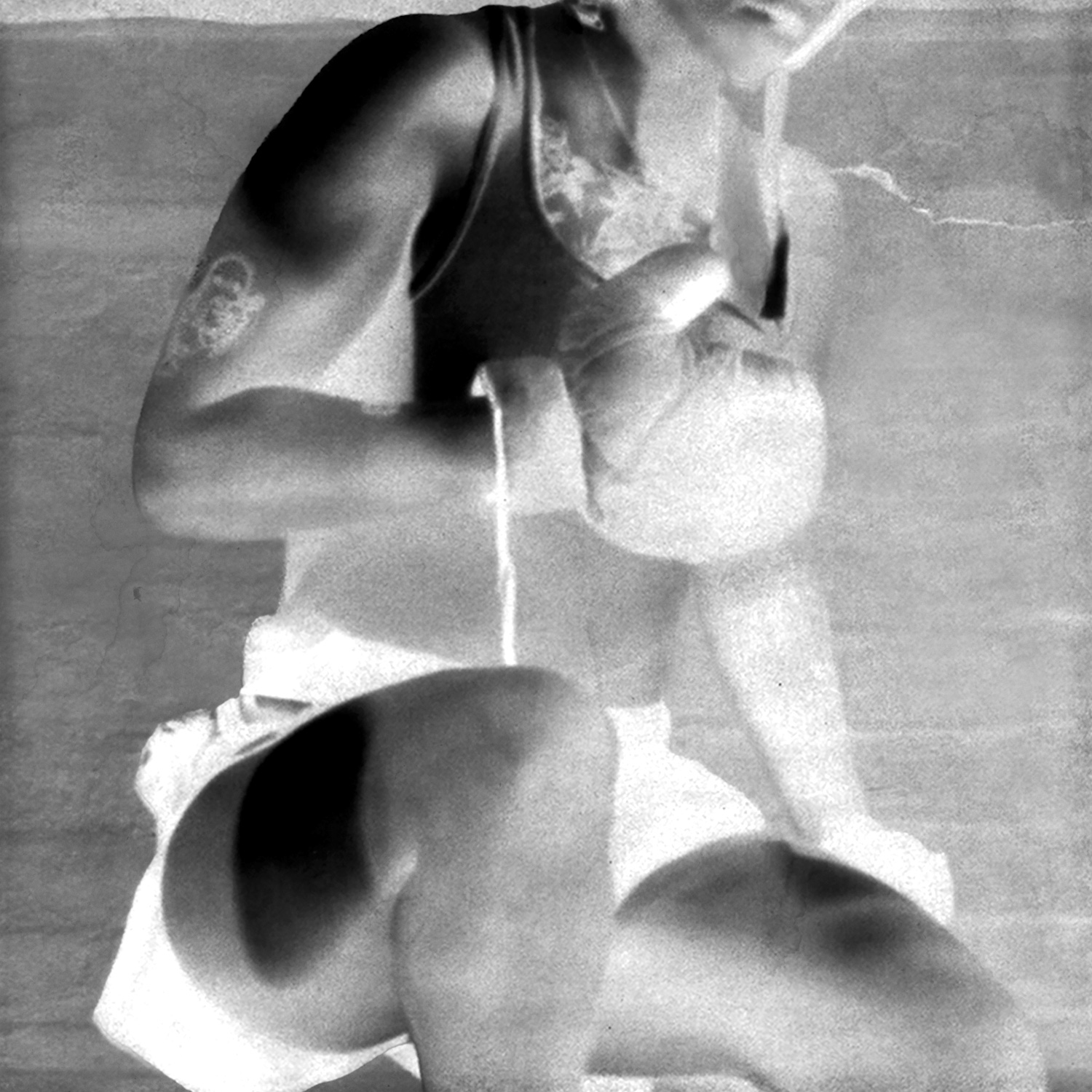
That same tug between memory and motion runs through Welterweight, Hank Heaven’s six-song EP, released August 14 via Nice Life Recording Company.
The record gives Hank’s fighter era its full shape, carrying the instability behind “Thread” into songs about falling in love, staying sober, making rent, and trying to grow into a life that finally fits.
This continuity is intentional. “I think my songs are always, always a continuation of the last one,” Hank tells Atwood Magazine. “I feel like artists explore the same themes in their music again and again because it is something they are always actively struggling with. Some of mine happen to be the struggles of living in New York, problems with addiction, my relationships etc. So yeah, super light stuff!”
Working again with producer Phil Weinrobe, Hank recorded the EP’s instrumentation and vocals live, embracing the scrape and spontaneity of performance as part of the storytelling. That immediacy suits them. Hank has described the shift as an embrace of “live organic music” and, more evocatively, “a reinscription of classic masculine Americana” – a framing that fits both Welterweight’s unvarnished physicality and the boxer persona surrounding it.
Where Loaded Dice wrapped its characters in a more conceptual world, Welterweight brings Hank closer to the microphone and lets every crooked joke, bruised confession, and sudden rush of hope land in real time.
That more immediate, live approach also gave the record’s fighter instinct a body, bringing the vigilance and strain behind these songs into clearer focus. “I wrote all of these songs when I was sort of floating in New York,” Hank says. “I was working hard to make enough cash and living in very strange accommodations. All of that paired with dealing with personal emotional burdens just felt like I was on guard all the time. And that reminded me of a vintage boxer.”
Out of that instability, Hank builds a larger coming-of-age story shaped by survival, change, and the possibility of a life opening up. “Thread” becomes one chapter in a record about learning how to live differently – and discovering how strange, funny, painful, and exhilarating that can be.
Across Welterweight, Hank swings between surrender and resistance, letting love soften their guard one moment and New York sharpen their teeth the next. EP opener “I Wanna Be Your Man” catches Hank startling themselves with the realization that love has changed the plan, its tender guitar and swelling strings carrying the thrill of wanting a future they never expected to want. Hank makes that reversal explicit: “F*** all that shit I’ve been saying / ‘Cause I can feel myself changing,” before giving in completely to the chorus: “Never was part of the plan / But now I gotta have it / I wanna be your man.”
Elsewhere, “Daddy’s Gonna Buy You a Car” snaps in another direction entirely, returning to the jangling alt-country spirit of You Can Call Me Hank as Hank skewers the mythology of the broke New York artist whose struggle comes conveniently subsidized. Its refrain makes the target unmistakable: “I don’t ever want to hear about the journey / When daddy’s gonna pay your way.” The humor bites because the resentment has real stakes: Behind the martinis, thrift-store shifts, and daddy’s credit card sits Hank crying on a stoop after a landlord changes the locks. Welterweight keeps finding those collisions between romance and survival, between the city people perform and the one Hank has actually had to endure.
And then there’s “Seinfeld,” a simply stunning centerpiece whose lush arrangement settles into a softly smoldering reverie, with warm, muted, dreamy undertones creating a soul-stirring, hauntingly beautiful expanse. Hank sings about watching the same episode in the living room and realizing, “I’m feeling light as a feather” – an ordinary domestic moment transformed into proof that ease might finally be possible.
The gratitude underneath that ease hits even harder when Hank promises, “I’ll be grateful forever / We have more time together.” The contrast with “Thread” is quietly profound: The everyday details that once carried someone’s absence now become the texture of safety, companionship, and time still waiting to be lived.
By the time Welterweight reaches its fifth round, the gloves are off. “Hank Heaven’s 113th Wet Dream” tears through the record with heat and swagger, but its bravado keeps cracking open to reveal the nerves underneath. Hank turns a hookup into a crisis of self-presentation, admitting, “I did my little show for you and I did it too well / Faking confidence is helpful ‘til you gotta show and tell,” before the prospect of intimacy sends that performance wobbling. The song’s funniest lines carry a real sting: “Got lots of experience which I think you’d see right through / Nothing’s more embarrassing than standing next to you / You’re f***ing effortless and I’m something to prove.”
That last contrast cuts straight to the song’s core. Desire becomes a spotlight, exposing the distance between the person Hank knows how to perform and the person suddenly standing there without a script. The music aches and roars around that vulnerability, radiating passion and charisma while letting embarrassment stay visible at its center. It’s a fantastic display of Hank’s growing command as a songwriter – sexy, anxious, funny, and painfully self-aware, with every flash of confidence carrying the possibility that somebody might see straight through it.
For the final round, Hank lowers their guard completely: “Dog Needs Man” closes the record as a sweet, softly spellbinding serenade. “I’m counting on your sympathy like dog needs man / I’m counting on your memory to remember who I am,” Hank sings, laying their need for connection completely bare. Its plea to be remembered lands like one final tug on the invisible thread, except Welterweight has changed what that thread can mean. Memory still binds Hank to other people, but across these six songs, it also becomes evidence that they have survived long enough to make a life worth remembering.
Taken together, Welterweight feels like Hank Heaven coming more fully into their own. The wit, ache, and plainspoken specificity that have animated their music from You Can Call Me Hank through Loaded Dice remain firmly intact, but the perspective has widened and the performances carry a new assurance. Hank has spent the past few years writing through addiction, identity, precarious New York living, heartbreak, and the strange work of becoming whoever comes next; here, those experiences sound less like forces closing in and more like material they know how to wield. The songs still carry the heart and unruly personality that made Hank compelling in the first place, only now there is greater command behind them – of the joke, of the bruise beneath it, and of exactly how much to reveal. Welterweight captures an artist growing without sanding away any of the crooked edges that make their music their own.

Dreamy, twangy, charming, and aching, “Thread” captures Hank Heaven in a moment of release that still honors the hold.
It’s a song for anyone moving through something, for anyone trying to get better while still feeling tethered to the person, place, or past that made getting better necessary in the first place. Hank doesn’t pretend the thread disappears. They sing it into view, follow it through the city, and channel the haunting into music we can hold without letting it pull us backward.
Below, Hank follows that thread back to its source, opening up about the struggles that keep resurfacing across their music – New York, addiction, relationships, and the ongoing work of getting better – as well as the ordinary details that became the song’s emotional glue and the period of living “on guard all the time” that gave Welterweight its fighter’s stance. In their own words, “Thread” becomes part of a much longer story: One about naming what haunts you, changing its power, and finding release without erasing what came before.
When the guy at the bodega asks me
If I want a large coffee
With milk
Cause I get that for you
For you
When I do my laundry at the laundromat
Where I fake proposed
With a plastic ring to you
To you
A thread
— —
:: stream/purchase Thread here ::
:: connect with Hank Heaven here ::
:: stream/purchase Welterweight here ::
— —
Stream: ‘Welterweight’ – Hank Heaven

A CONVERSATION WITH HANK HEAVEN

Atwood Magazine: Hank, when we last spoke around Loaded Dice, you talked about loneliness, shame, addiction, and wanting “to be a good person.” How does “Thread” move forward from that album’s emotional world?
Hank Heaven: I think my songs are always, always a continuation of the last one. I feel like artists explore the same themes in their music again and again because it is something they are always actively struggling with. Some of mine happen to be the struggles of living in New York, problems with addiction, my relationships etc. So yeah, super light stuff!
You’ve said “Thread” was written while being plagued by the memory of someone – in the laundromat, on a walk, at the bodega, even in the process of getting better. How did you find your way from being haunted by those reminders to making the song an act of release?
Hank Heaven: To name it is to overpower it. I guess the song came from me being tired of the constant reminder and writing it all out, singing it, playing it with a band allowed all those reminders to transform into something else for me. It didn’t have to haunt me anymore.
The opening line, “I wanna go on a bender tonight / But I wanna be good for you baby,” hits so hard because it puts desire and sobriety right next to each other. What were you trying to name in that tension – and why open the song with this double-edged lyric?
Hank Heaven: Since releasing that song, many people have had a different relationship to those lyrics. It’s cool to see. My personal relationship to it is about how when you are so plagued by the memory of someone, even the idea of helping yourself or getting better is a reminder of them. And though you don’t see them, you still want to make them proud.
The “invisible thread” keeps appearing through these tiny, ordinary details – “a shirt, a bar, a plate, or a spark,” the bus line, the coffee order, the laundromat where you fake proposed. Why did those small everyday anchors feel like the right way to tell this story?
Hank Heaven: I like to use literal things to capture a feeling. The ordinary objects always bringing you back to someone is real as hell. I didn’t just want to name the feeling like “I miss you!” over and over again. So I felt like the small everyday things were the glue that holds the feeling together for me or for a listener.


The video places you in a boxing gym, and the press materials describe this next chapter as you embodying the role of a fighter. What does that fighter image mean to you right now?
Hank Heaven: I wrote all of these songs when I was sort of floating in New York. I was working hard to make enough cash and living in very strange accommodations. All of that paired with dealing with personal emotional burdens just felt like I was on guard all the time. And that reminded me of a vintage boxer.
What do you hope listeners take away from “Thread,” and what have you taken away from creating it and now putting it out?
Hank Heaven: It seems like a lot of listeners have a different relationship to the song and that’s awesome. My only hope is that it will continue to be cathartic for people who are moving through something.
— —
:: stream/purchase Thread here ::
:: connect with Hank Heaven here ::
:: stream/purchase Welterweight here ::
— —
Stream: “Thread” – Hank Heaven
— — — —
Connect to Hank Heaven on
Facebook, Threads, 𝕏, TikTok, Instagram
Discover new music on Atwood Magazine
© Isaac Namias
 ©
©
:: Today’s Song(s) ::

 follow our daily playlist on Spotify

:: Stream Hank Heaven ::