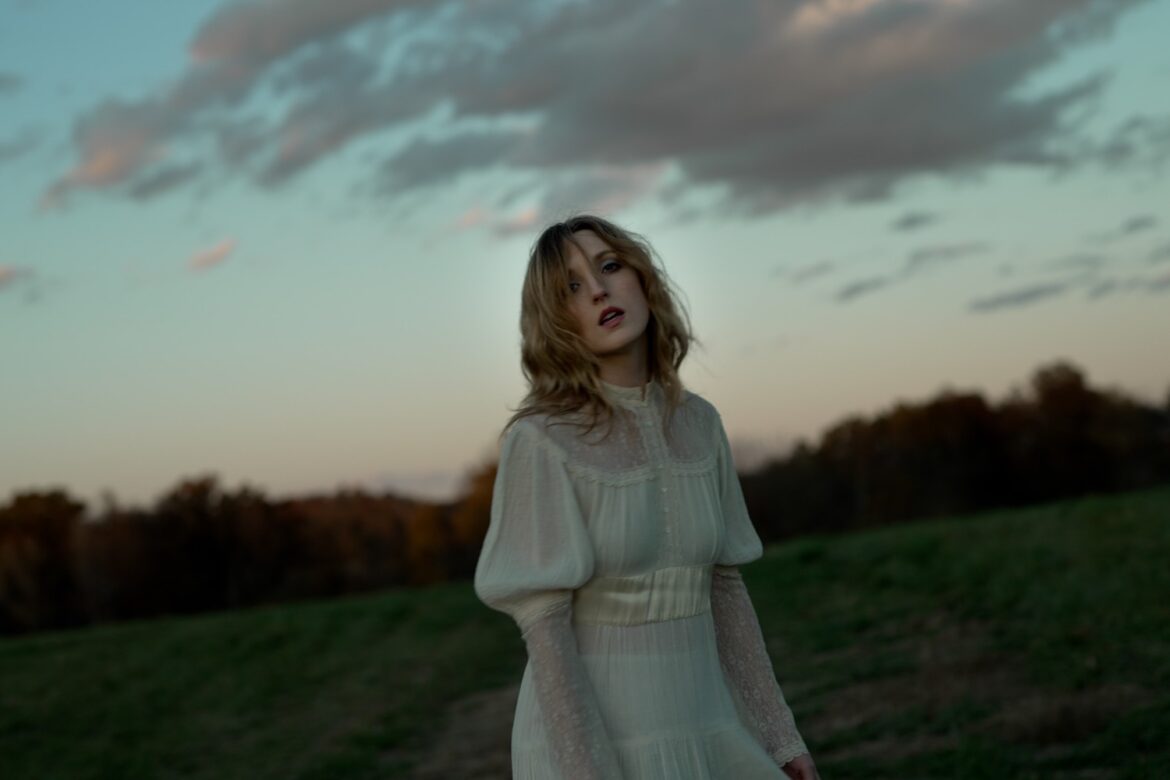
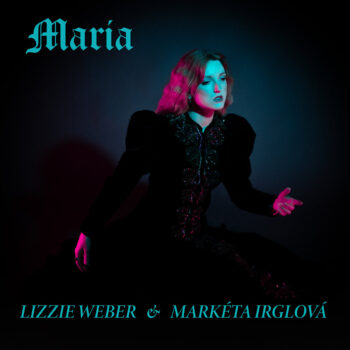
Lizzie Weber and Markéta Irglová offer a hushed, haunting act of devotion on “Maria” – a softly luminous prayer of release and renewal that blends earthly imagery with spiritual longing to create a world where vulnerability becomes its own kind of grace.
Stream: “Maria” – Lizzie Weber ft. Markéta Irglová
Smoke, shadow, and something sacred stirring in the half-light – that’s the world Lizzie Weber opens on “Maria.”
The singer/songwriter’s latest song unfurls like one long, aching breath: An offering of percussion and strings glowing softly beneath her voice, which itself stays close to the mic, warm and heavy, a soul-stirring beacon of raw, shiver-inducing emotion. Her delivery feels devotional – brooding, intimate, and reverent – as if every inhale holds a confession and every exhale carries a prayer. “Maria” is symbolic, spiritual, and deeply human; a tether to the unseen, an invocation of something maternal and mystical that listens back. The melodies are elegant and dramatic, yet soft to the touch – sweeping but subtle, achingly emotive and haunting, like flickering candlelight in a dim cathedral. It’s a song born from longing, surrender, and the desire to be unburdened.
Come to Me Maria,
My open arms await you,
I’ll leave my troubles behind,
Forget about space and time
Swim in your mediterranean,
relieve myself of any pain I’m in,
My body is a temple,
And your waters
blessed by holy land
Blue skies, seaside,
Born again in the summertime
Chateaus in meadows,
I’ll lay down my woes
Here is where you’ll feed my soul,
I’ll walk all this talk about letting go…
Atwood Magazine is proud to be premiering “Maria,” the mystical, slow-burning new single from Lizzie Weber featuring Academy Award winner Markéta Irglová.
Weber, a St. Louis based singer and songwriter known for her poetic intimacy and cinematic folk sound, has long gravitated toward songs that explore vulnerability, spirituality, and the quiet interiors of the heart. Irglová, best known for her Academy Award winning work with Glen Hansard in the movie Once and their band The Swell Season, brings her own history of devotional, emotionally searching music to the collaboration. Together, they meet in a shared artistic language shaped by stillness, reverence, and emotional truth – a convergence that makes “Maria” feel both inevitable and deeply special.
Written at Weber’s home in St. Louis and recorded across Seattle, Iceland, and beyond, “Maria” unfolds as a richly woven, otherworldly sonic tapestry. Her warm, poetic vocals blend seamlessly with Irglová’s flawless harmonies, while producer and multi-instrumentalist Nathan Yaccino surrounds them with an intimate swell of strings, bass, piano, and drums.


Beneath its sacred hush, “Maria” aches with the quiet labor of letting go.
Weber’s lyrics move like a pilgrimage inward, blending sensuality, spirituality, and self-revelation as she searches for a place to unburden herself. “Come to me Maria, my open arms await you,” she sings, stepping into Mediterranean waters that promise renewal, into meadows and chateaus where she might lay down her woes, into sunsets where a white dress becomes a symbol of rebirth.
Lyrically, “Maria” blends spiritual yearning with tactile, earthly imagery – blue skies, seaside… born again in the summertime; I’ll put on a white dress, dance beneath the sunset; I’m deep in the hills of Toscana… The narrator seeks renewal not only through the divine, but through nature, art, touch, and the simple presence of another human hand. In Weber’s writing, the spiritual and the earthly coexist without tension: Each illuminates the other. These images aren’t just scenic; they’re emotional architecture – spaces where she renegotiates her relationship to faith, love, and her own fragility. Even the lines charged with intimacy – “I’ll give you every inch of me, so light me up and set me free” – read less as romantic surrender and more as spiritual nakedness, the willingness to be seen and remade.
Come to me Maria, oh my lovely lady,
your sacred heart is just like mine,
Now, let me have a look inside
Such a sweet romantic,
A woman so imperfect,
I’ll give you every inch of me,
so light me up and set me free
I’ll put on a white dress,
dance beneath the sunset
Give my spirit fire, I’ll feel it
Deep inside of my every bone,
I’ll walk all this talk about letting go
Musically, the song mirrors that unfolding: Strings flicker like half-formed prayers, piano chords rise and fall with tidal patience, and Yaccino’s percussion gently steadies the ground beneath her. Abby Gundersen’s violin and viola shimmer with quiet intensity, Eli Moore’s bass anchors the arrangement with warmth, and Yaccino’s drums pulse gently, as if keeping time with a steadying heartbeat. The track moves with the grace of a whispered hymn – intimate, breathlike, almost weightless. When Irglová enters, her voice doesn’t simply harmonize; Weber’s and Irglová’s voices braid together like two strands of the same spirit – blending but distinct, bound by a shared reverence and a shared emotional vocabulary. Together, they create a space where vulnerability becomes sacred, and where release feels not just possible, but holy.

“Maria” is, at its heart, an act of devotion. It’s a soft invocation of the archetypal Mother – wise, ancient, deeply compassionate – and a request for guidance through the hard work of letting go.
Weber explains:
“‘Maria’ is a prayer, an homage to the Mother of all things,” she tells Atwood Magazine. “Some may call her Mother Earth, the Mother of God, or just Mother… but her presence is universal. This song is the story of someone praying to her, seeking guidance and the courage to release what must be released. It’s a reflection on the kind of divinity that only a mother can embody, and on the singular comfort that only she can provide.”
Markéta Irglová adds her own reflection on the collaboration: “‘Maria’ is a song as firm and steadfast as it is soft and wavering, just like the love we hold and the pain we overcome,” she shares. “I am proud of my friend Lizzie and so thrilled to have been a part of this creation.”
Within the song itself, this prayerful moment becomes a turning point. As Weber leans deeper into the invocation, the lyrics start to wrestle openly with doubt, desire, and the fragile work of trusting what she cannot see. A line like “So let me never doubt again in who we are or what this is” feels like someone steadying herself mid-confession, trying to believe in the shape of her own life even as it shifts beneath her. Her wish for stillness – to move “like the wind… or a cloud that is bound to rain” – suggests a longing to release control, to let her emotions take form and dissolve without bracing against them. The final mantra – let go, have faith – is both declaration and benediction, a hard-won truth sung with trembling conviction.
Come to me Maria,
I’m deep in the hills of Toscana,
Outside my door, my love, he waits,
with flowers and a hand to hold,
Poetry and paintings,
it’s a love nothing like what I’ve read or seen
So let me never doubt again
in who we are or what this is
Listen, I’ve been,
Wanting the answers to everything
Slow down, stillness,
What if I were to be like the wind?
Or a cloud on the move that is bound to rain,
Washin’ away all the worry instead…
The arrangement echoes that internal shift. Rather than building toward spectacle, the music deepens its sense of contemplation: Strings hover with a luminous calm, the piano lingers on tones that seem to hover between tension and release, and the percussion offers a quiet, grounding pulse. When Irglová’s harmonies return, they function like a gentle affirmation – not answering Weber’s questions, but softening their edges. Their blended voices create a shared emotional space, a place where uncertainty feels held rather than feared.
One of the song’s most striking moments arrives in the outro, where Weber shifts unexpectedly to a major key; Irglová’s intricately layered vocals illuminate the phrase “Let go… have faith,” which she selected for the final refrain, leaving the listener suspended in a radiant, wholly cathartic release.
Let go,
Let go, let go….
Have faith,
Have faith, have faith…
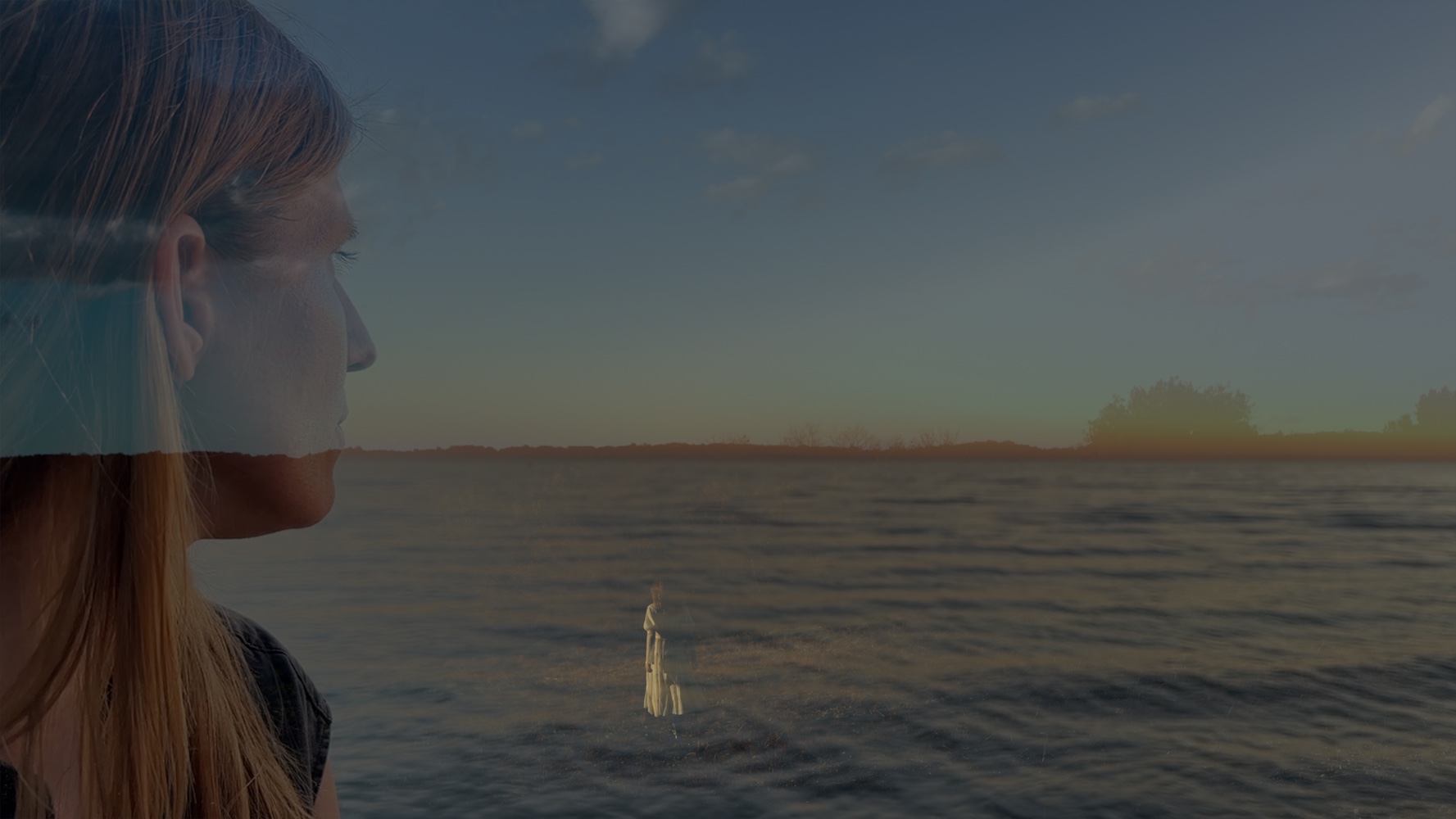
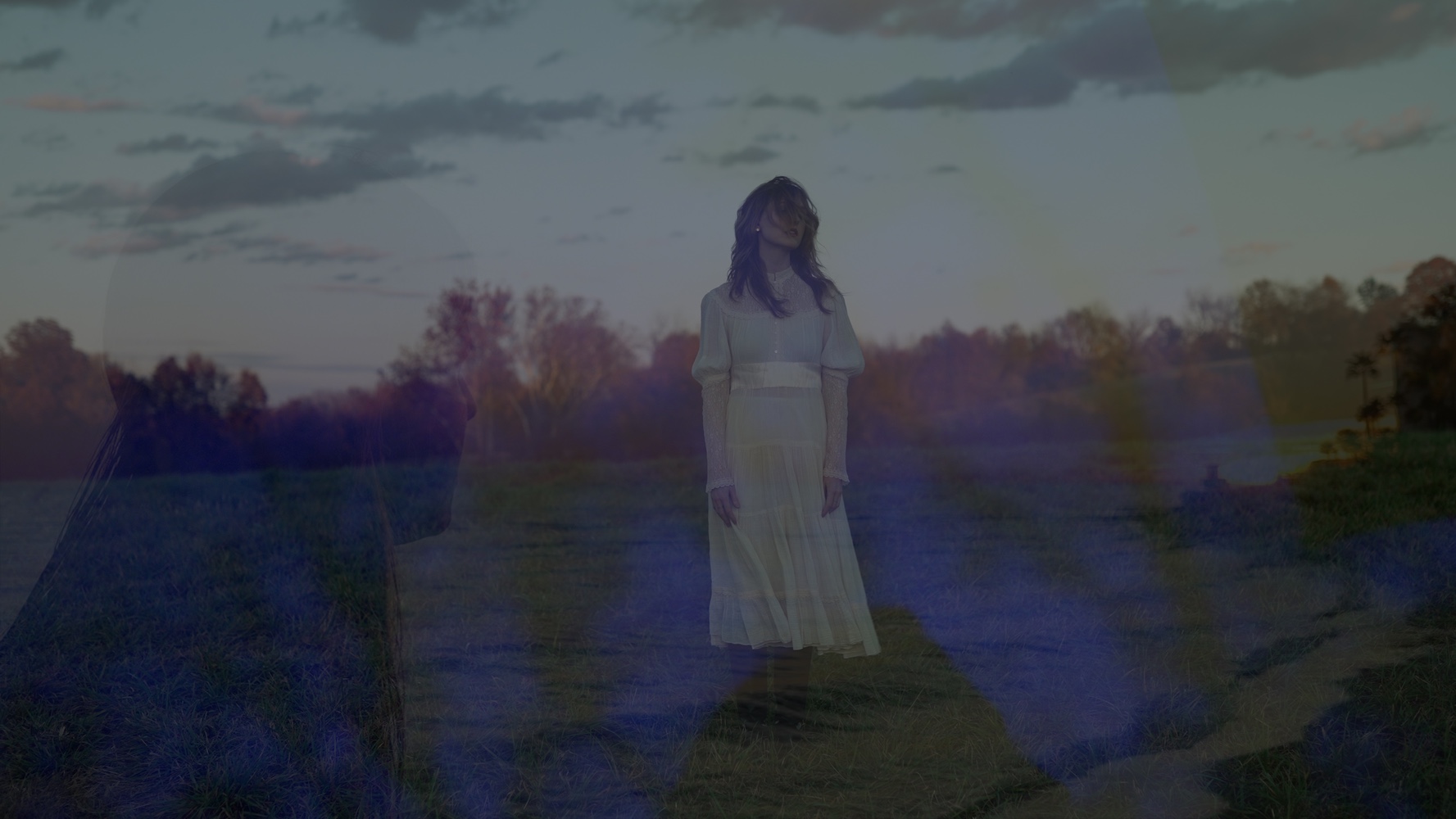
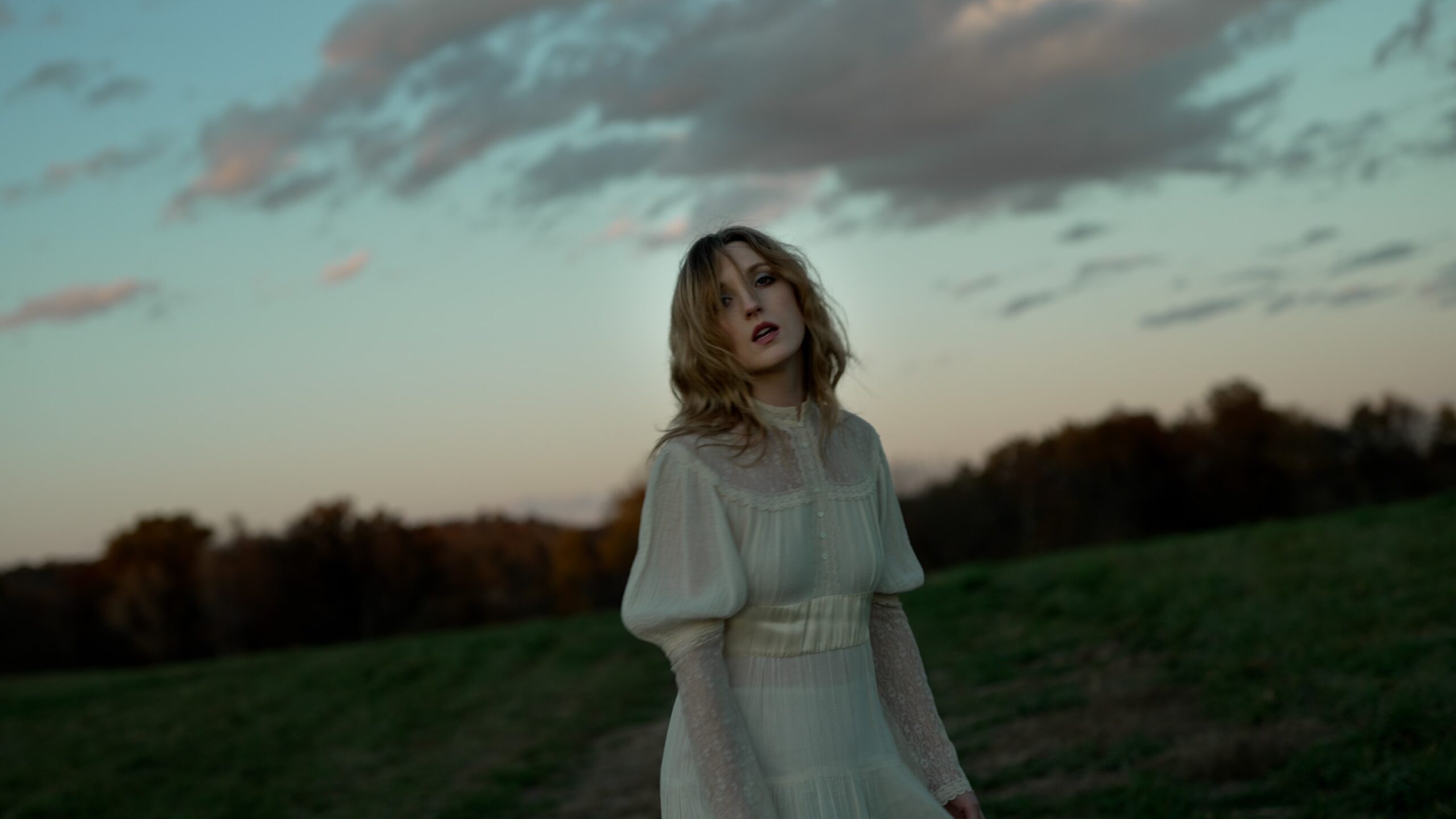
The music video deepens the song’s sense of reverence and mystery. Shot at dusk and nightfall, it captures Weber alone by the water, waves lapping at the sand as she sings into the wind, and again in a forest clearing, green grass at her feet and distant trees surrounding her like an open sanctuary. The natural world becomes a vessel for her invocation – a place where prayer feels embodied, where surrender feels possible, and where the veil between the seen and unseen feels especially thin. Irglová’s scenes, filmed by the Mediterranean, echo that same devotion in an entirely different landscape: two women, two worlds, one prayer.
A musical and emotional release unto itself, “Maria” invites stillness. It invites breath.
It invites the listener to place their own worry, grief, longing, or uncertainty into the center of the song and let it be held. Weber hopes the piece serves as a reflective, restorative space: “I want anyone who listens to feel hopeful,” she says. “When we lose something, we tend to feel so out of control. Perhaps the song is a reminder to the listener that letting go is the most important kind of peace that we can offer ourselves.”
“Maria” resonates because it refuses to rush its revelations. It moves with intention, letting each image and harmony gather weight, letting each breath land where it needs to. In a moment when so much music favors immediacy, Weber leans into patience – into atmosphere, into vulnerability, into the slow and necessary work of making sense of ourselves. The song’s power lies not only in its spiritual framing, but in how human it feels: grounded in landscapes, in memory, in the body, in the small gestures that help us find our way back to steadiness.
What makes “Maria” stand out is its clarity of purpose. Weber is not performing catharsis; she is living inside it. The song holds space for doubt and devotion, for softness and strength, for the ache of release and the quiet hope on the other side. Irglová’s presence amplifies that intention, giving the piece an added dimension of warmth and witness. Together, they craft something rare – a piece of music that does not simply gesture toward the sacred, but feels genuinely touched by it.
And that is why “Maria” lingers long after the final refrain. Its world is one of dusk light, trembling prayer, and the soft courage required to surrender what no longer serves us. It meets you where you are, invites reflection without demanding it, and leaves behind a sense of calm recognition – the feeling of having brushed against something honest and deeply felt.
Experience the full depth of “Maria” and watch the music video exclusively on Atwood Magazine, and let the combined magic of Lizzie Weber and Markéta Irglová remind you what renewal looks like, sounds like, and feels like when we finally loosen our grip – and begin to let ourselves move again.
— —
:: stream/purchase Maria here ::
:: connect with Lizzie Weber here ::
— —
Stream: “Maria” – Lizzie Weber ft. Markéta Irglová
— — — —

Connect to Lizzie Weber on
Facebook, 𝕏, TikTok, Instagram
Connect to Markéta Irglová on
Facebook, 𝕏, TikTok, Instagram
Discover new music on Atwood Magazine
© Tim Gebauer
 © Tim Gebauer
:: Stream Lizzie Weber ::