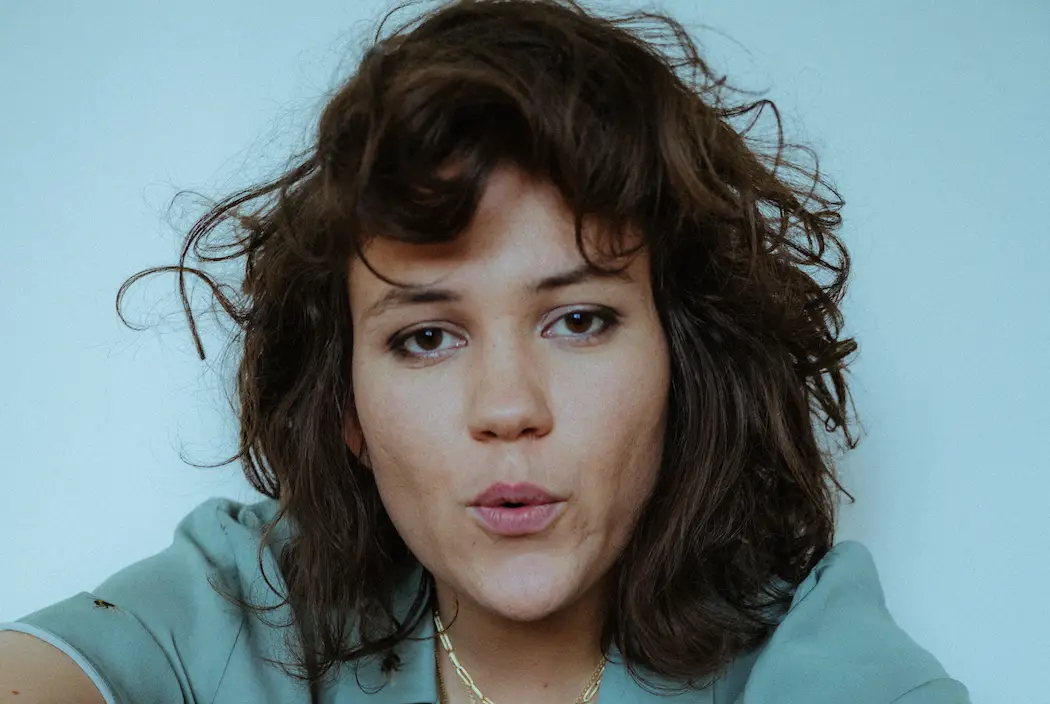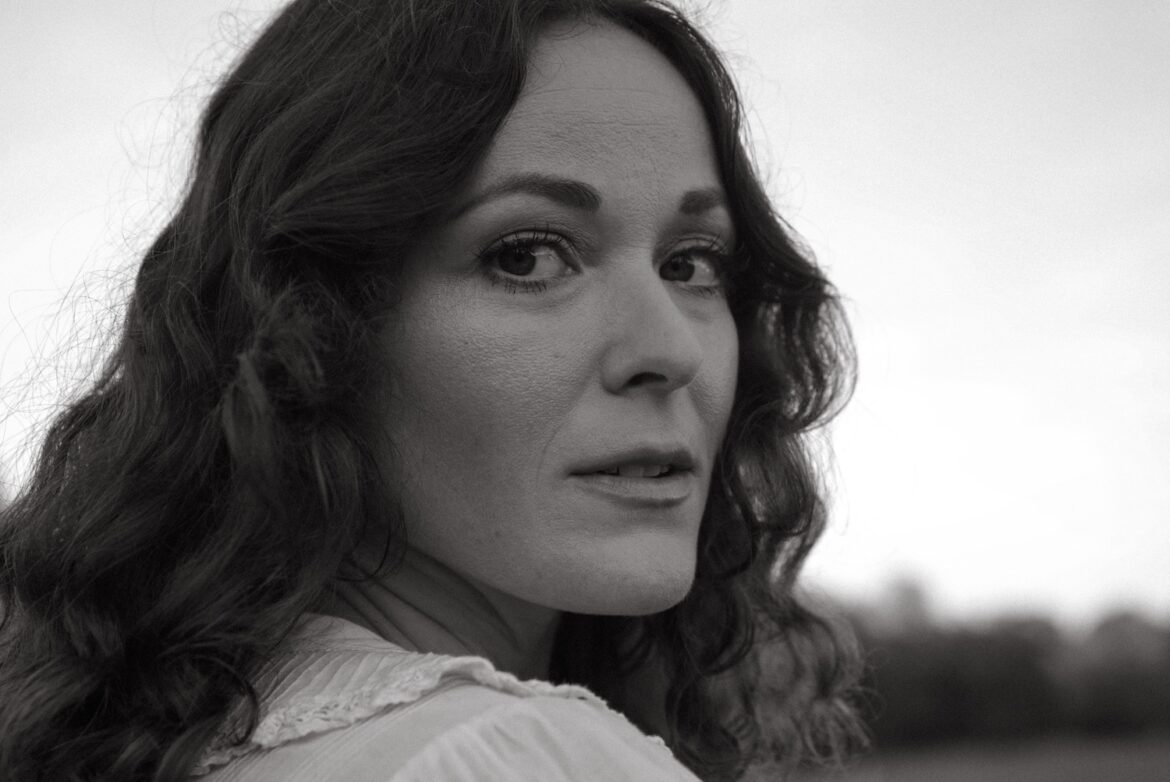
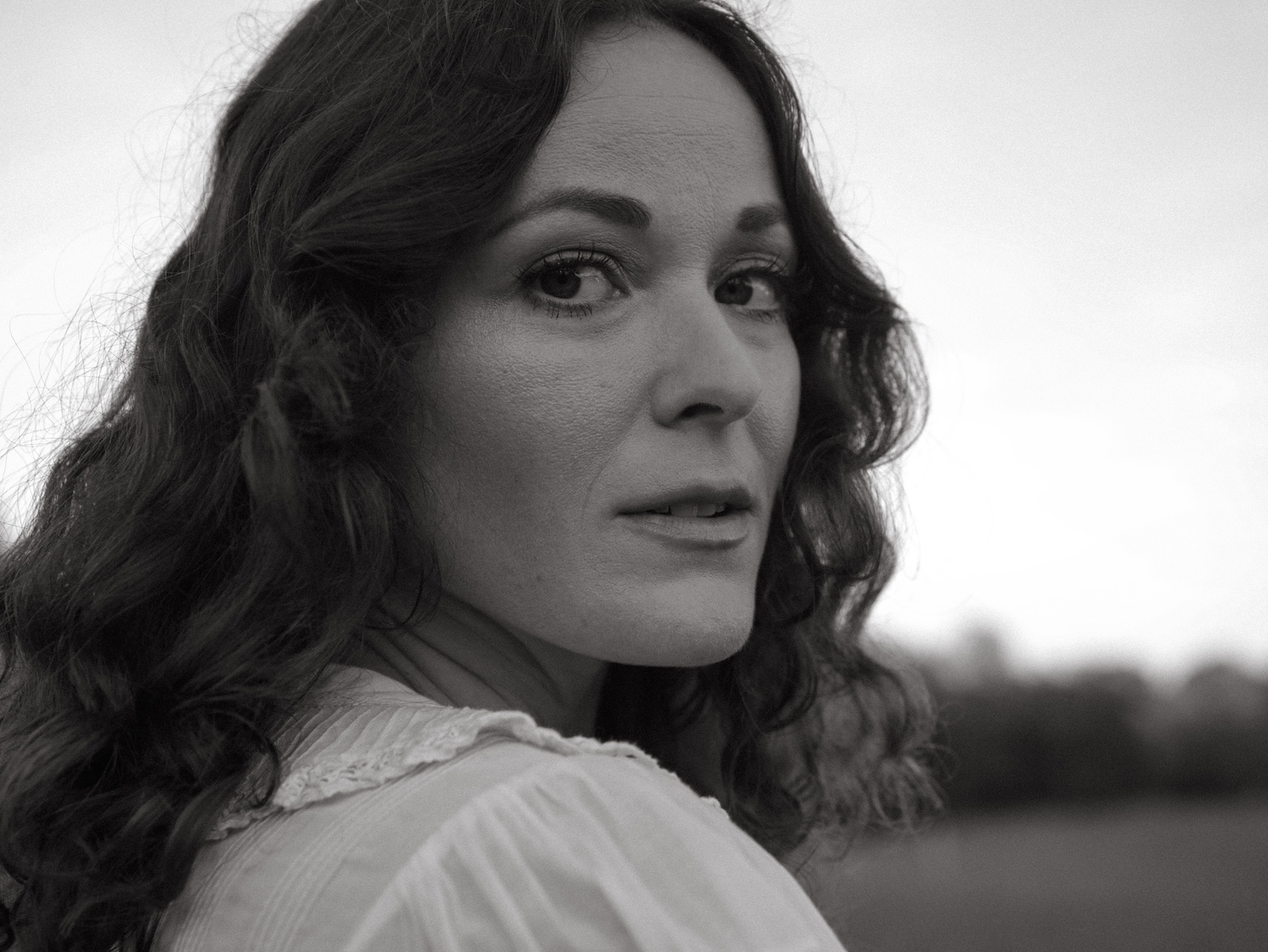
Singer/songwriter Jillian Jacqueline finds her way back to herself on the stunningly beautiful ‘MotherDaughterSisterWife,’ a cathartic exhale that sees her fully realizing her vision and at last creating the record she’s always dreamed of making.
Stream: ‘MotherDaughterSisterWife’ – Jillian Jacqueline
“This is the album that I’ve always wanted to make, but never thought that I could make,” Jillian Jacqueline tells me one September afternoon.
It’s a powerful, emotionally charged statement – and one that’s a long time coming for the singer/songwriter. Jacqueline has been making music since she was 9 years old, when Kenny Rogers signed her to his own label after hearing her singing at an audition for his Broadway play, Christmas From The Heart. Jacqueline has had many musical lives since. Forming the band Little Women Band with her three sisters, moving to Nashville to become a songwriter, launching her solo career with Big Loud, and finally becoming an independent artist with her debut record Honestly in 2022.
This past Friday, October 17, Jacqueline released her eagerly anticipated sophomore album, MotherDaughterSisterWife (via Virgin Music Group). “This record just feels like the inside of my heart, my brain and my soul in music form,” she told me when we spoke in September. If you know Jacqueline’s discography, then when you hear the new record, you will understand what she means. MotherDaughterSisterWife is 100% Jacqueline. The songwriting, the arrangements, the vocal production and the music are intertwined completely with Jacqueline the person.
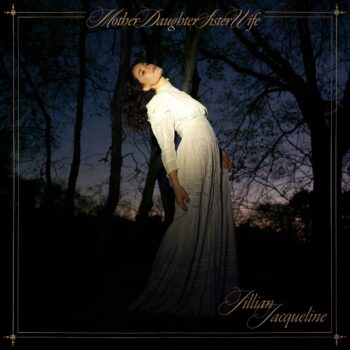
Produced by Ian Walsh, Andy Skib, and Jacqueline’s husband, Bryan Brown, MotherDaughterSisterWife is an immersive experience. On one hand, you feel like Alice getting lost in your own Wonderland, but on the other, there are some very dark themes to grapple with – depression, melancholy, self-worth, motherhood, creativity, being a woman in this current period, heartbreak and abusive relationships.
You throw around your feelings
And I dodge them like grenades
You make the room so heavy
And expect me not to break
And I know that it’s not your fault
I know that it’s not your fault
So you can be the bull
But I won’t be your china shop
– “China Shop,” Jillian Jacqueline
The songs “China Shop” and “More” explore the darker realms of romantic relationships. With each song, the narrator grows in self-love and power, who eventually shakes off the shackles of either having to tip-toe round someone else’s emotional outbursts, in the case of “China Shop,” or on “More” where the character has stayed far too long in an unloving and emotionally abusive relationship because they didn’t know they could want more. An emotion we have all had to confront.
Or maybe there’s a good explanation
For why you watched me cry in the shower
And how you always knew to turn over in bed
Right when I was about to move closer
People say hey, why did you stay
If it was so bad you really didn’t have to
But I didn’t know I could want more
I didn’t know I could have more
– “More,” Jillian Jacqueline
Jacqueline spoke about “almost reverting back to childhood optimism” on this album, which you hear really clearly on “Cult Classic,” an ode to the romances of classic Hollywood films. Jacqueline has even included a snippet from the film ‘Penny Serenade’ starring Cary Grant and Irene Dunne. The song feels cozy and warm, like watching an old film on a crisp autumn evening. The optimism and magic are palpable with the soft instrumentation and Jacqueline’s silky smooth vocals.
Sometimes it can feel like
Wanna hit the rewind
Forgetting how to romance
Supermarket slow dance
You and I are a cult classic
Kinda die hard cinematic
Keep you coming back through the static
Guilty pleasure in the attic
– “Cult Classic,” Jillian Jacqueline
The lyricism on MotherDaughterSisterWife is precise in its execution yet dreamy in how it makes you feel when you close your eyes. “Stroke Of Genius” sees Jacqueline chasing a muse even when she proves to be inconsistent and dangerous. The quickening of the strings and Jacqueline’s vocals create a place where you can disappear into the song.
Running down the halls of my mind
Scissors in my hand trying to find
Something left to say that is worthy of my tongue
Solitary fight with a canvas
Solo flight attempting to land it
Married to a muse I can’t stand but
She’s all I ever want
The title track “MotherDaughterSisterWife” is the centerpiece of this record that pulls the other songs in. Without the title song, you wouldn’t have “Fantasy Girl” or “More” or even “Eyelashes.” “MotherDaughterSisterWife” is where it all began. In Jacqueline’s own words, “I think it’s so incredibly unsettling when you start to look at what all those labels make you feel and how you’re supposed to move into those labels.”
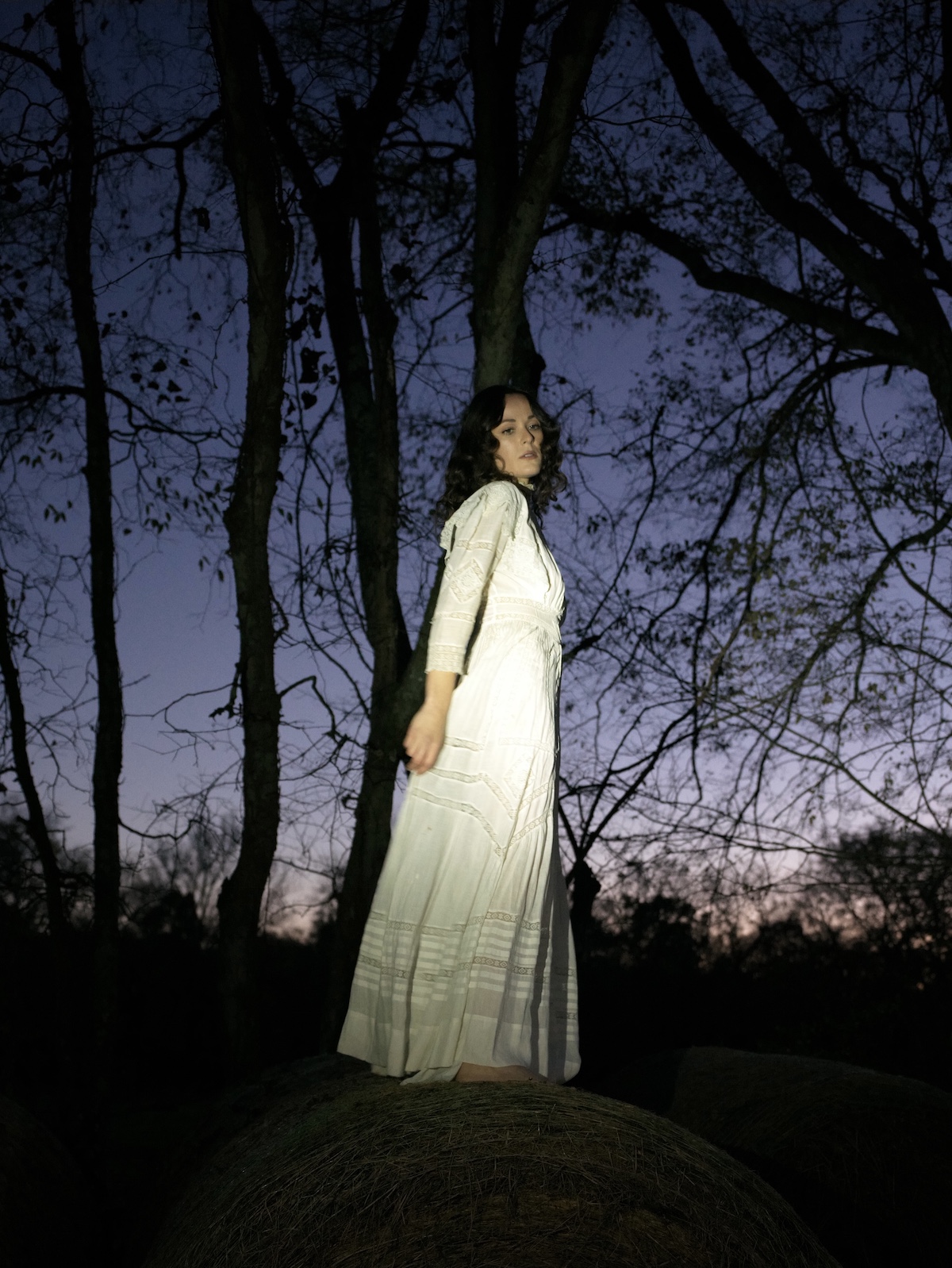
As a woman, these labels are thrust upon us and we are expected to know instinctively what is expected of us, and if we don’t, we are “bad mothers, daughters, sisters, or wives.”
How I am seen in this world is in relation to which label I occupy at any one time. I am never Emily. Jacqueline is never just Jillian. Our identity is always wound up to how we can be of service to others. Jacqueline says this quiet part out loud. Listening and mouthing the lyrics often feels like a catharsis of sorts, an exhale after being submerged under the weight of expectations for too long.
A fish out of water
The third of four daughters
When I became a mother
I still felt like a girl
From nowhere Pennsylvania
Straight into the vein of
The silent expectations
That I should hold the world
When I interview an artist, there is always an element of the unknown. How receptive will they be, how comfortable can I make them, will they be open to my questions. When I met Jacqueline on an early September balmy afternoon in her home in Nashville, I immediately felt like I’d met a long-lost friend. We spoke for over an hour about her sophomore album, creativity, self-worth, love and what we would tell our younger selves. The following interview has been refined for length and clarity. Read our intimate conversation below, and stream MotherDaughterSisterWife, out now!
— —
:: stream/purchase MotherDaughterSisterWife here ::
:: connect with Jillian Jacqueline here ::
— —
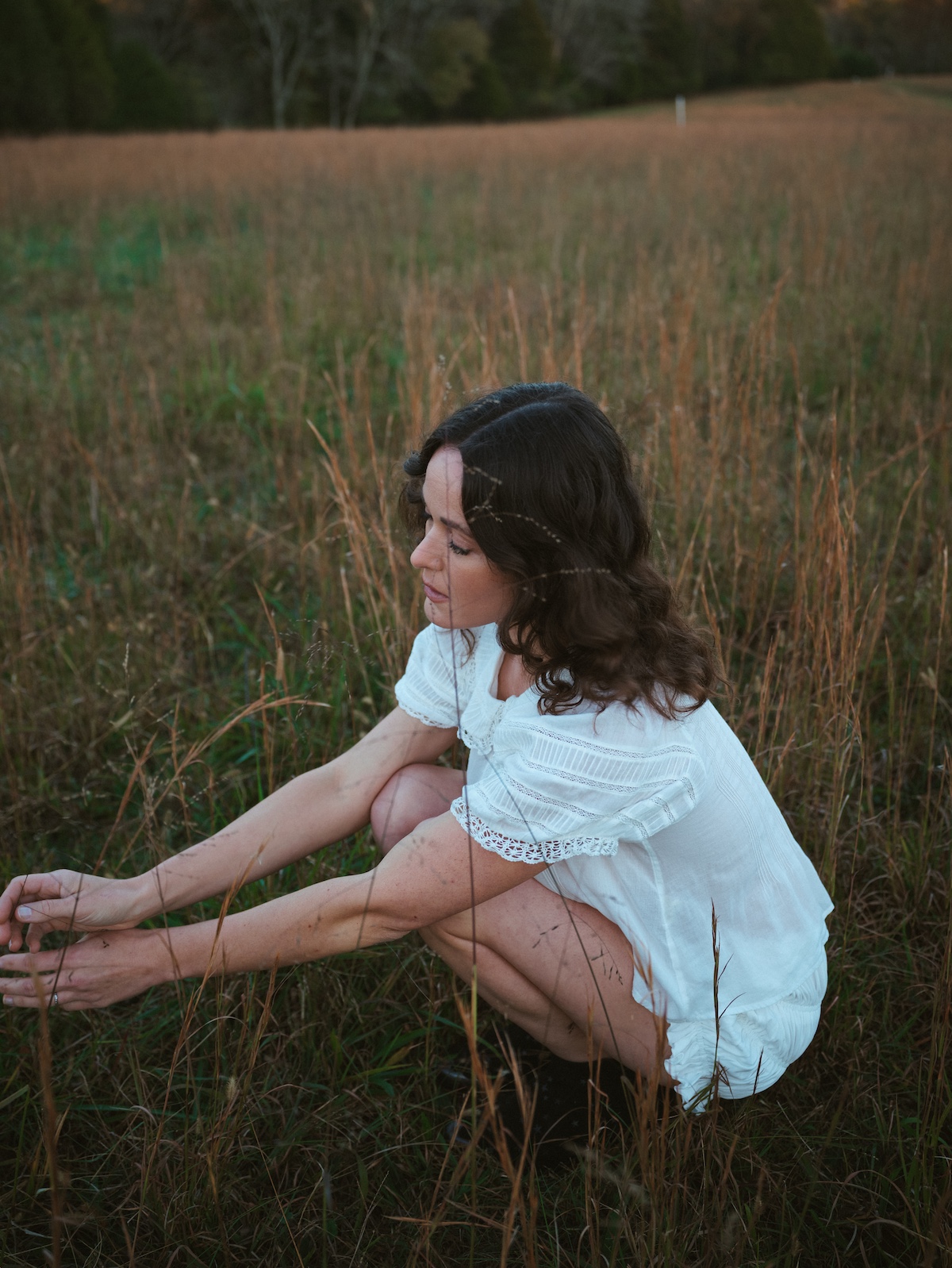
A CONVERSATION WITH JILLIAN JACQUELINE
Atwood Magazine: Firstly, thank you for agreeing to speak to Atwood Magazine about your new record. It’s an honour. Listening to MotherDaughterSisterWife the overarching theme is what it means to be a girl and a woman. You also grapple with dark themes – depression, self-worth, motherhood, being a woman in this current period, heartbreak and abusive relationships. How did this well of inspiration become the album?
Jillian Jacqueline: This record came from a very intense period of growth. MotherDaughterSisterWife is the record I’ve always wanted to make, but never thought I could make. This record is sort of this reckoning of like the death of self, the self that I thought I had built. For the first 30 years of my life, I was projecting this version of me of who I was going to be to the world. I think a lot of people go through this in their late 20s into their early 30s, where you have this weird kind of shift, ‘whoa, am I still that person or am I supposed to be doing something different?’ I had a lot of personal and professional things that culminated at the same time. My last record, Honestly, I was really in the middle of all of that. I couldn’t quite even process what was happening. I was trying to create a bridge from my younger self to where I was at the time, but honestly I felt like my eyes were still closed a little bit.
I was actually going to say this album sounds the most like you. It’s not a departure from your previous discography in terms of sound but much more you, in a soulful kind of way.
Jillian Jacqueline: It feels like an exhale. It just feels, honestly, like the nine-year old me meeting the 36-year-old me and being, “oh, did we find each other again?” It just feels like the inside of my heart and my brain and my soul in music form. This record was my quiet, peaceful corner of creativity. It is so me, it’s so personal. It was very cathartic and intimate, so in that way, even putting it out into the world feels different from any record I’ve ever released.
As I’ve been going back and listening to the record, I can see little touch-points to your other records, but I kept thinking, ‘this feels like Jacqueline.’ From what I know of you, obviously, through what I’ve read or watched or listened to. I felt like your last record Honestly, felt like you but you maybe hitting the right markers you were told to hit?
Jillian Jacqueline: Totally. I love what you said about the theme of womanhood earlier. Motherhood particularly kind of threw me into reassessing my relationship with my body. I think I ignored my nervous system and my female anatomy and how all of that’s tied into your nervous system. When you get pregnant and have a baby, you just don’t operate the same way anymore. It was the first time I really had to get in tune with my body and pay attention to what my body was telling me and why I was feeling a certain way at a certain time. I felt it brought me this deeper wisdom of how everything is synergetic and tied into each other. If you don’t pay attention to that, that’s when you get anxiety and depression, all these things I’ve struggled with for a very long time because I think I just suppressed a lot of what my body was trying to tell me.
This record is such an embrace of my womanhood in a sense of, you can be all of yourself now and you don’t have to neglect parts of yourself to survive, which, “Bright Eyed Baby” touches on. I went into the music industry very trusting and thinking people would take care of me and people would say things about how they were going to do X for my career or what they believed about me. I really used those as pillars of my own self-worth. I did not invest in ‘what do I believe about myself’ So when someone’s looking at you as if you have all the answers and you’re strong and you’re confident, and you’re not that for yourself, how can you be that for somebody else? It was all these things compounding and hitting me at once. This record to me is, like I said, a reckoning.
It almost feels like a gentle awakening too. I don’t feel like I’ve stepped into ‘I am a woman hear me roar.’ Maybe that’s like the next record. I think I’m like figuring out that I don’t want to be the person I was anymore and I want to be somebody new, and I don’t really know who she is yet, but I’m really excited to meet her.
When did you start writing for the record? Do you remember what the first song was?
Jillian Jacqueline: I technically started writing for what would become the record in the Fall of 2023. “Bright Eyed Baby” was the song I wrote that felt like the catapult moment into the mindset of creating the album, in September 2023. However, there are songs from as far back as 2021 on the record as well, like “More.”
I think I’m a couple of years older than you and I do feel like I’ve reached a certain point in my life where I’ve started to stand up a bit straighter. I can hear that in the songwriting and the vocals on this record. There’s a quiet confidence there that I don’t hear on your previous records.
Jillian Jacqueline: It’s actually weird you say what you said, because yesterday I was thinking about what would I say to my 29 year old self? Or what would I say to my 19 year old self?
I wasn’t necessarily taught or modelled what confidence looked like in myself. I don’t think my parents knew they were doing this, but it was very much like, if you do these things, people will love you. We all, I think, come to this awareness as we get older, we start going to therapy and thinking about our childhoods and our parents. We’re like, ‘oh, yeah, that was an interesting way to do it,’ you know? I’m getting more aware and confident of who I want to be in the world, but by no means do I have the answers yet. I think with that curiosity and that lifelong learning, I’m almost reverting back to like childhood optimism. There’s definitely a lot of uncomfortable messiness too, where I’m like, ‘oh man, I really thought I had it figured out and I had nothing figured out.’
Are you able to share what the recording process looked like?
Jillian Jacqueline: The recording process for this record was very different from any other record I’ve made. Because my producer lived in LA when we started working together, we did a lot of correspondence over the phone/ face-time/ work tapes/ voice memos, where we built the sonic references for the album. I shared songs and musical influences, and he would take those references and mock up these rough ideas of each track that we would then hash out and build piece by piece together.
Hiring our players who did a lot of these sessions remotely gave the record this sort of puzzle piece feeling, but I loved how deliberate each choice was because we took a lot of time communicating about what we were doing.
I made a trip out to LA in March of 2024 and that was then we started tracking vocals on the first 3 songs at my brother-in-law’s, Sean Watkins’, home studio. We paid a lot of attention to which microphones we were using as I was really wanting to hear my voice in a more intimate and raw capture than I had on previous albums. We used an AEA R44 ribbon mic on a lot of the record which has warmth and depth I really loved on my voice. We also heavily used cello, fiddle, upright bass and mandolin on a lot of these songs which is instrumentation I hadn’t previously explored in my music.
I wanted the bed of this record to feel familiar yet cinematic. So much of this music feels like something I’ve been hearing in my head for many years and finally gave concrete shape to it.
The title of the album is ‘MotherDaughterSisterWife’ (mother, daughter, sister, wife); there's no spaces between each word. I know that won't be lost on a lot of women and girls because these are the descriptors that are given to us, or imposed on us, depending on how you want to see it.
Jillian Jacqueline: I think it’s so incredibly unsettling too when you start to look at what all those labels make you feel and how you’re supposed to move into those labels. Women are born with shame in their veins. The song “Fantasy Girl” touches on a lot of those themes. I can admit that when I got married so much of the way I operated in my relationship was like a little kid. It wasn’t like a woman who was sure of herself and sure of what she deserved. It was very much, ‘do you like me? Do you still like me now? Am I okay now?’
I was like operating out of these very stunted emotional capacities and you realise like, okay, I’m an adult now and if this is going to be a healthy, long-term relationship, I need to own my own flaws, my own mistakes. I need to stop running.
It’s such an inner wiring issue, and then there’s also very bad partners who take advantage of that insecurity, which is what the song “More” is about. “More” is, was, really the final nail in the coffin of closure for me with this very, very destructive relationship that I had to work years to really uncover the darkness of it of why this person made me feel like I was so disposable, so unworthy of their love.
Sound wise, the record is really textured. It feels very ethereal and dreamy and nostalgic, but also dark and scary at times. For some reason, when I was listening to the title track, “MotherDaughterSisterWife,” it felt like I was listening to it underwater. Not that your music has ever been like one kind of genre, but the whole record feels like you were pushing the genre.
Jillian Jacqueline: Wow. I love that you felt that. This record is what I have desired and heard in my head musically for myself forever. This record is truly like the inside of my head, into music form. My producer Ian Walsh and my husband, Bryan Brown, helped me make my vision a reality. They were truly like… we were in a submarine. I love the underwater scene. We were all in a submarine, and we were driving it together, but I was the one figuring out where we were going to go.
I felt very free to do that because my label Virgin is the only distribution. They’re not involved in anything creative. I don’t even have a manager right now. I don’t have anybody telling me what the goals are to hit or what we’re trying to do. I didn’t even ask for feedback. Even my best friends were asking if they could hear the new music, and I said no. Because I just didn’t want any voices in my head. I only wanted to own.
And so everything, “MotherDaughterSisterWife,” “Cherry Blossom,” those were the songs that when I sat down with my guitar and everybody, had gone away and I felt very alone and I felt like, ‘okay, I might never make another record.’ I would just sit in this room in my house and I would just be like, ‘what’s coming out? What do I hear that I want to say?’
I hadn’t written alone in years, and I finished “Fantasy Girl” by myself and I was like, ‘oh, there I am. Okay, this feels like me.’ I finally found the sound that I’ve always been hearing in my head and couldn’t quite figure out how to make it work. This has been a long time coming for me because of everything I love musically that I’ve listened to my whole life and all the records that really inspired me while I was making this record, I just feel like it all culminated into what this record sounds like.
I feel like with this record, there's a definite story line throughout. When you get to the last track, “Gravity” which lyrically I think is very, very cool and sonically like a dirge, and then it kind of turns off with the strings. It's like a quick switch and then you go back around to track one, I think that's really cool.
Jillian Jacqueline: Thank you so much. I love that you noticed that. We haven’t even really talked about this, but my voice, I feel like my voice changed with having a baby and so many of my artist friends that have had children, we’ve all talked about this. My voice is deeper and my breath control is different and a lot of the melodies that I was writing after I had my son, I was exploring with my head voice more and just doing softer things because I could tell my body wanted to kind of do that more. My voice didn’t want to push as much and force notes.
I spoke to Christina Perri, I think you both have a similar higher vocal range, and she said until she made her last record, no one had ever produced or engineered her voice right until she worked with a woman producer and engineer.
Jillian Jacqueline: Oh wow. How amazing is that? Somebody having the intuition to know how to make you feel safe in that and draw you out in that. I think that’s amazing. I’ve actually never worked with a female vocal producer or producer at all, but I have to say the two men that I did work with on this record are sensitive souls and very artistic.
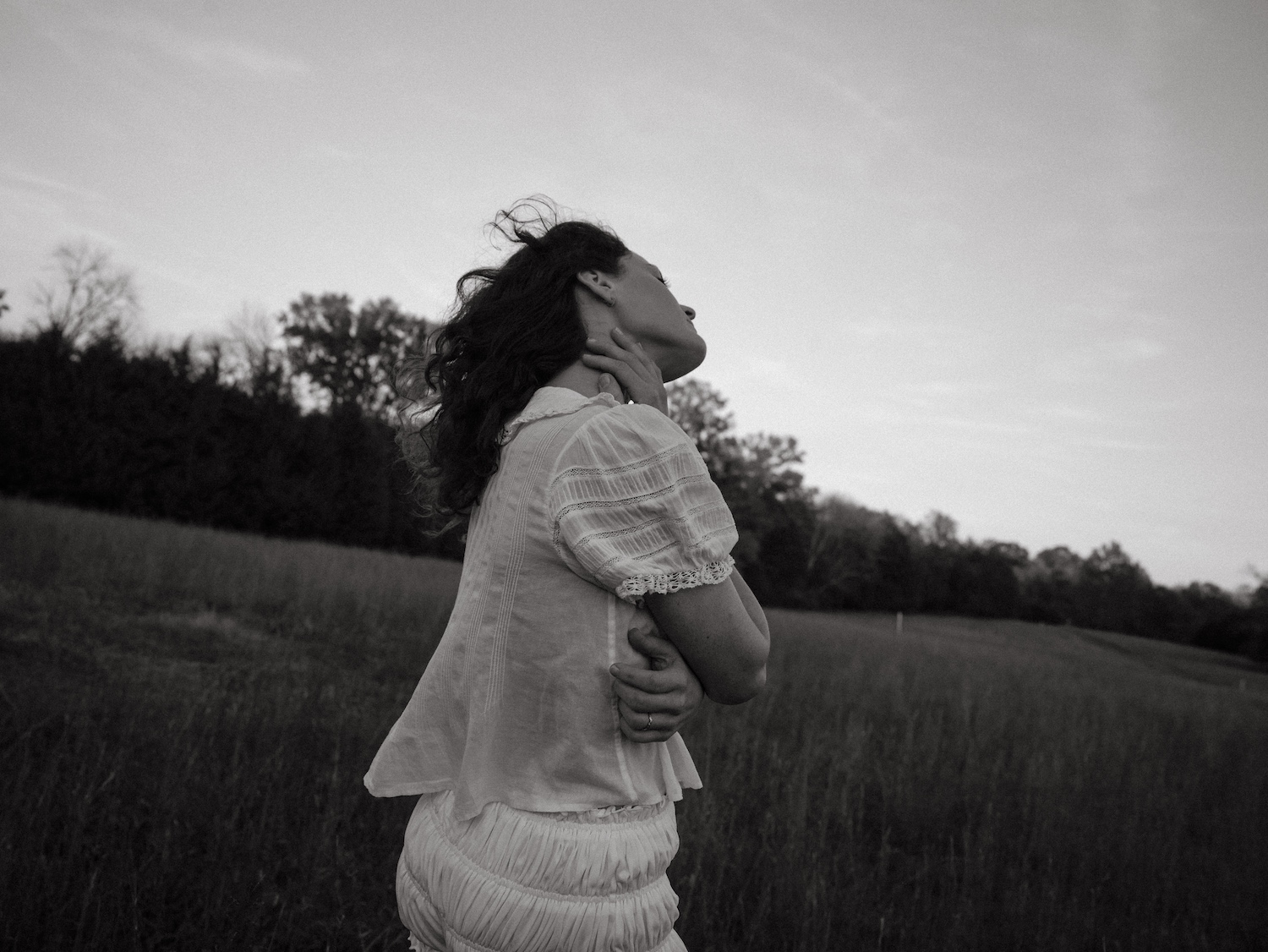
How has becoming a mother affected your art?
Jillian Jacqueline: It’s really interesting how motherhood tells its own story through the way that you are able to communicate after the fact. You’re never the same. I was just talking about this with the artist and songwriter Lucie Silvas as we put on the MOTHER show, and she’s really struggled after having her twins with her vocal chords. There’s very little medical understanding of how carrying a child affects your vocal chords. Through my own research, I’ve found that your vocal chords are directly tied to your pelvic floor, so when you have a baby, all of that changes.
I want to start advocating for this too, because with the MOTHER show, we’re trying to shed light on the lack of resources for artists who are mothers. But also, when your livelihood gets directly affected and you don’t know where to turn to get answers, that can be really scary and debilitating. Your monetary worth is tied up to your voice, literally.
Then there’s also how your worth is viewed by the industry. You start to feel the industry slowly backing away from you because you’re not a workhorse anymore and you can’t get out there and jump in the van and play a show six hours away for 500 bucks. I want to find ways for all of us to still be able to show up in whatever capacity that we have to share our music and make our art.
Because that’s a part of us that would die. That makes me so angry. I have had so many young artists who’ve reached out to me that are newly pregnant or just had their baby, and they’re terrified they might lose it all.
How do you take a very unique experience, that is also very universal but make it specific to you and your listener, without watering it down or losing the song’s essence to wanting it perform well for radio or streaming?
Jillian Jacqueline: If you stop writing songs just for that feeling of expression, you will lose your intuition as a writer of what actually moves you. I just lost my voice for a long time in that fear. I would sit down to write songs and all I could think about was, ‘are they going to like that? Is that going to mean something to them?’ It was just like I lost the plot on why I even started writing songs, so “Stroke of Genius” was like my return to that intuition, the writer’s voice inside of me.
A friend of mine who is another artist, she said a few months ago when we were talking and she said, “you know, we have to remember artists are like blue-collar workers. We are seeing the 1% that are on the award shows, but most of us, historically, the artists playing the show at the bar or at the venue, they’re not in the tour bus. They were doing blue- collar work.” You get into this because you felt compelled to turn your experiences into music and write lyrics.
I think that when you can see how much a song is streamed or how many listeners people have, it creates a frame of reference going in that really negatively impacts the artists themselves because I don’t need to know how many people have listened to the song before I hear it. I just want to hear the song.
I was thinking, given the political backdrop of what's going on in your country, I feel like it’s such a powerful thing that you're all standing there and asking why there isn’t support for mothers who make music? Why isn't there the support to enable them to produce art?
Jillian Jacqueline: Truthfully, one of the biggest things that we all know is, sex sells, right? Like, especially for female artists, especially in country music, there’s still this undercurrent of if you are not physically appealing to a man or to anyone, if you’re not sexually derivative in some way, you’re not probably going to get on those bigger stages and get the radio play. When you have a baby and become a mom, it is the most unsexy thing you could possibly do, according to the industry. I do think there’s a huge gap in the system where that version of a woman gets to exist. Being a mother is a very badass, powerful thing to be.
You said there's four more songs coming at some point, potentially on a deluxe version of the record, can you go into detail about that yet?
Jillian Jacqueline: Not yet! I’ll share more soon…
What do you hope listeners, particularly women and girls, take away from this album?
Jillian Jacqueline: Oh, well… one of the things I’ve begun to understand is that the older I get, the more I’m not afraid to admit what I don’t know. I think wisdom comes from staying curious… so I hope that anyone that listens to this, especially women and girls, will find solace in the fact that my own growth isn’t linear…it’s messy, fragmented, and doesn’t always look like growth.
These songs feel like I finally let the little girl in me throw paint on the wall in whatever way she wanted. So there’s a freedom in letting go of who you’ve been told you are, and embracing who you really want to be.
The roles we step into as women come with a lot of preconceived notions, social expectations, pressures, and toxic messages. We have to find our own definitions of what these roles mean and how we can truly thrive in those spaces. That’s what a lot of my journey with motherhood and artistry has helped me to define, and this record reflects a lot of the nuances of those personal experiences.
— —
:: stream/purchase MotherDaughterSisterWife here ::
:: connect with Jillian Jacqueline here ::
— —
— — — —
Connect to Jillian Jacqueline on
Facebook, 𝕏, TikTok, Instagram
Discover new music on Atwood Magazine
© Virgin Music Group
 © Virgin Music Group
:: Stream Jillian Jacqueline ::