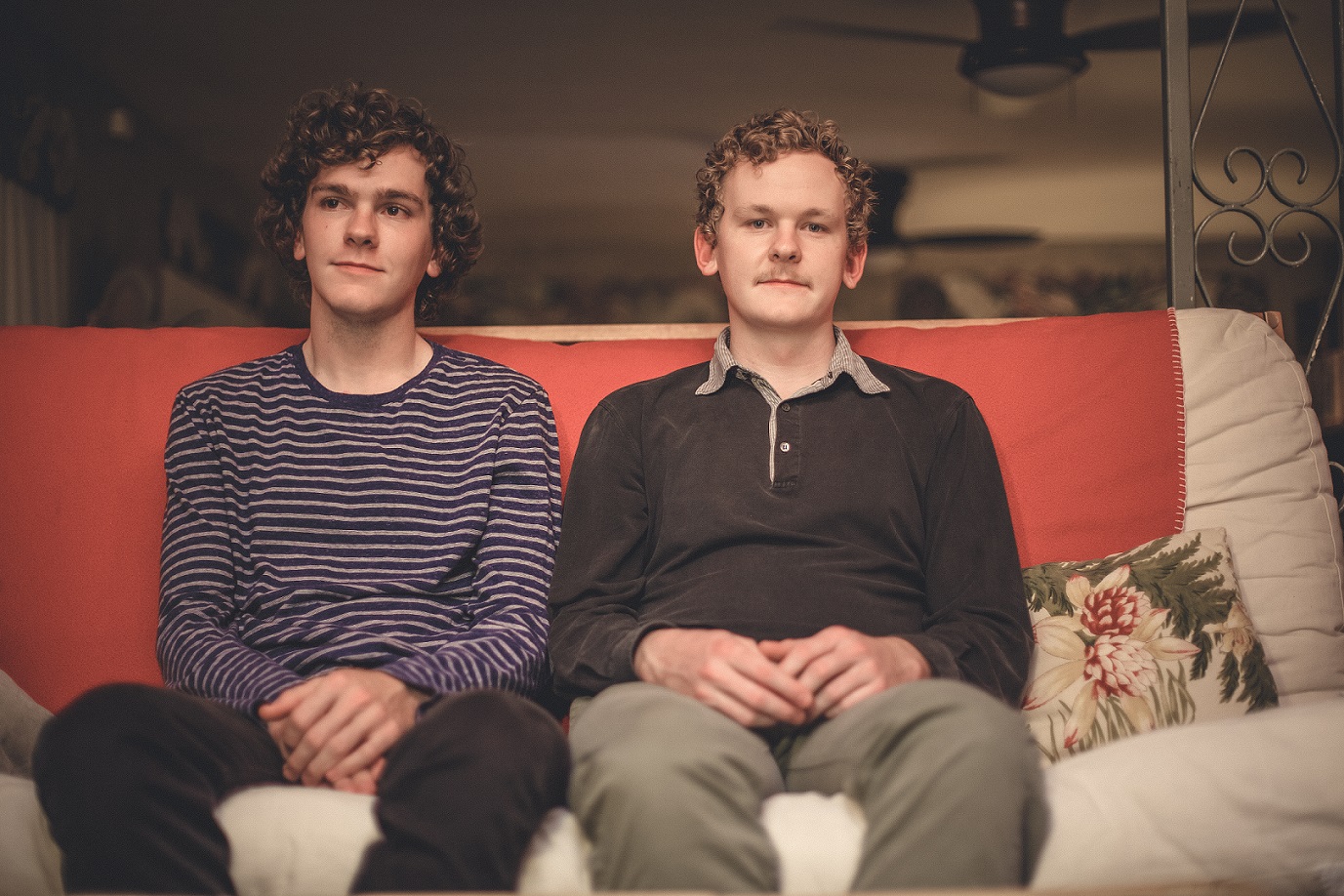
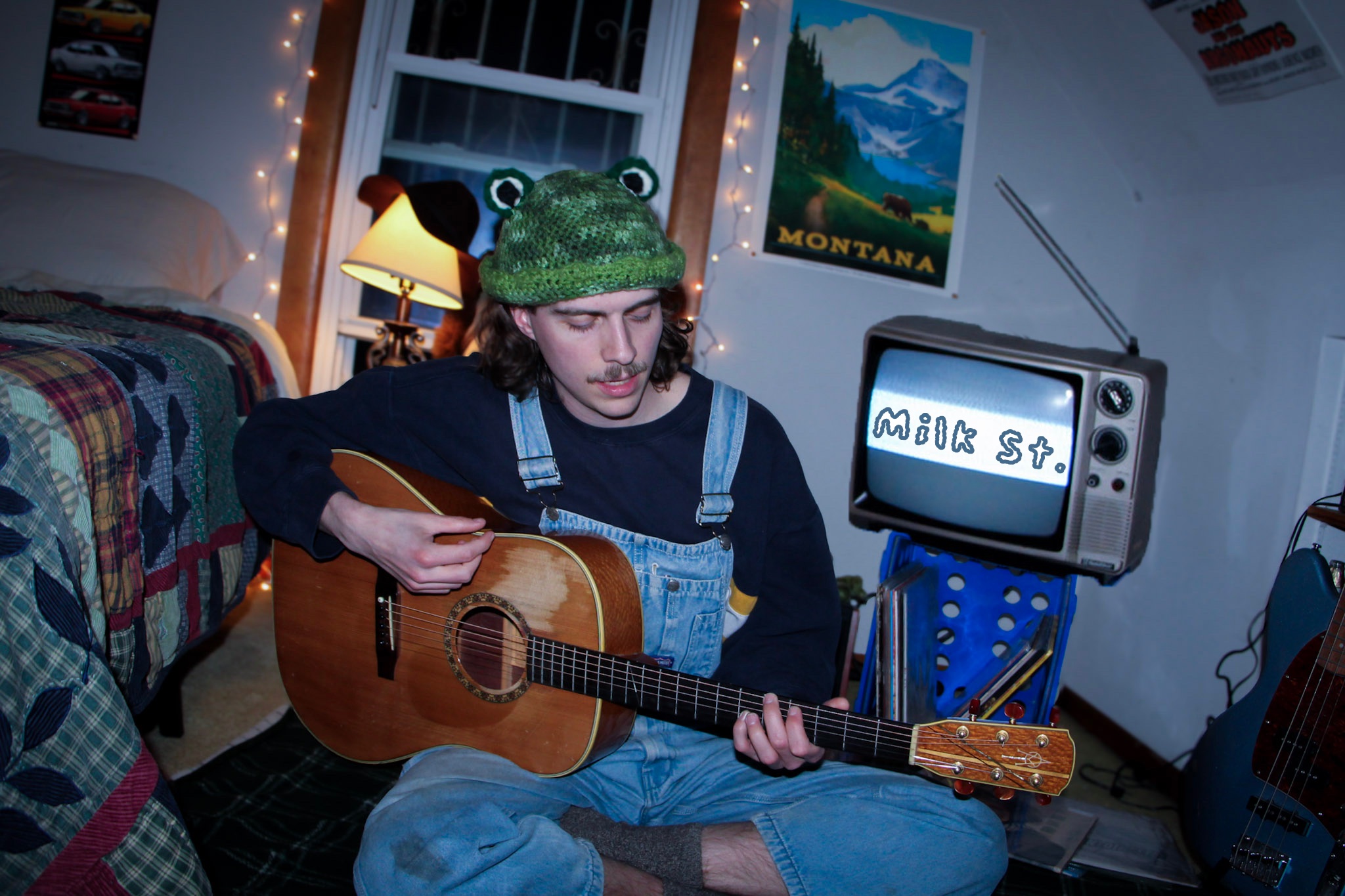
New England “hardcore soft rock” band Milk St. let everything come roaring out on ‘Good Grief,’ a bruising, combustible third album where folk punk intimacy, blown-out alternative rock, and full-throated catharsis collide with guilt, family fracture, self-doubt, and the messy work of growing into yourself. Loud, unguarded, darkly funny, and fiercely alive, it’s a record about what happens when “or whatever” stops being enough – and every ugly, complicated emotion finally gets turned all the way up.
Stream: ‘Good Grief’ – Milk St.
You can only swallow so much before it comes roaring back out.
Milk St. give all of it somewhere to go – straight through the amplifier, where shame and confusion can scream themselves hoarse and still come back kicking.
The mess is the point. Good Grief is a bruising, combustible album with its nerves exposed, making room for emotion in all its unruly contradictions: The anger that needs to be shouted, the self-loathing that curdles into a joke, the guilt that keeps resurfacing long after you thought you had put it to rest. Milk St. meet every emotional pileup with guitars pushed toward collapse and the conviction that getting through it may require making as much noise as possible.
Atwood Magazine is proud to be premiering Good Grief, the ferocious third studio album from New England’s Milk St. Arriving September 25, 2026, the thirteen-track record follows Jonah Wakefield through grief, fractured relationships, family turmoil, and the difficult work of looking inward, but its emotional weight never sits still for long. These songs lunge and thrash, crack jokes in the middle of the wreckage, and throw themselves toward release. Good Grief is Milk St. at their loudest and most unguarded – an unapologetically alive rock record that meets life’s chaos head-on and keeps pushing through.
Milk St. have long flown the banner of “hardcore soft rock,” an appropriately contradictory name for a band whose music can carry folk punk intimacy into a full-body alternative rock eruption. Good Grief pushes both ends further. Wakefield’s writing is startlingly open, but the band refuses to handle any of it delicately; distortion, sudden dynamic swings, ragged screams, and guitars built to overwhelm give these private reckonings a communal charge.
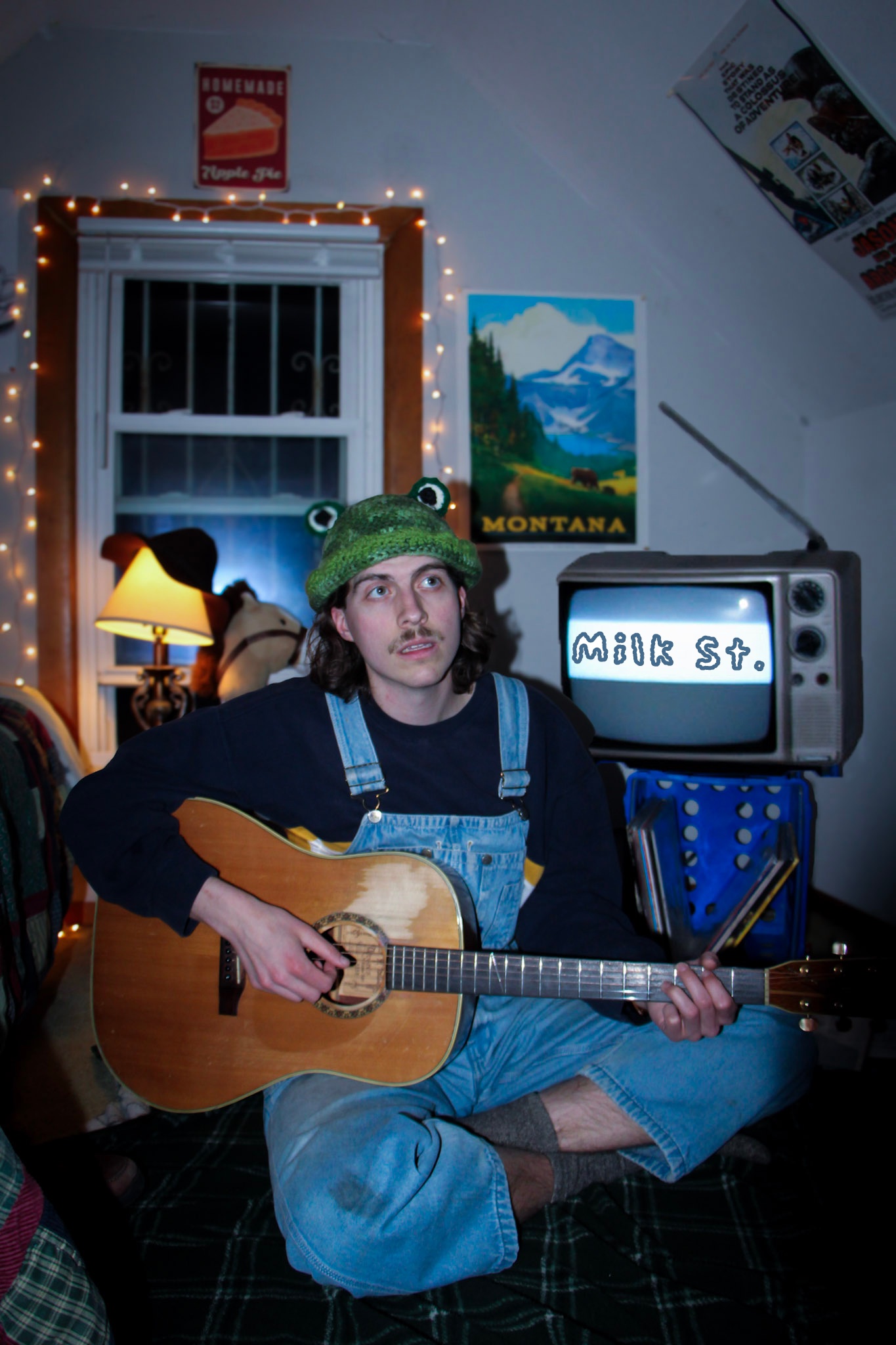
Even the album’s title emerged from Wakefield learning to take his own emotions seriously.
“The original title was ‘or whatever’ because when I explain things, I always have added that on as a tag subconsciously. Everything was sort of apathetic for me for a long time because it seemed easier, I think to tie meaningful thoughts up with a sort of open ended ‘anyways…or whatever,’” Wakefield tells Atwood Magazine. “During the writing process of the record, being almost a couple years in all, I started to appreciate the seriousness of things though. I started meditating and turning inwards more and learned to sit with things in a meaningful way, even when I didn’t want to. I think my viewpoint had to shift from ‘or whatever,’ to ‘Good Grief,’ at some point, as to say like HOLY COW this is a lot, pretty much all the time.”
Good Grief lives inside that realization. The title lands like an exclamation before it becomes an instruction: Acknowledge the weight, stop waving it away, and give yourself enough room to actually reckon with what happened. There is humor in the phrase, because Milk St. rarely stay solemn for long, but the shrug that once protected Wakefield has started giving way to attention.
“Life is typically overwhelming and art is a way to sort of make sense of it all,” he continues. “I also had to let go and come to terms with a lot of people, situations, and complex emotional structures I had built for myself to make sense of the world with my tumultuous childhood, and I did it in part through writing this record. So it’s kind of a double meaning I guess too, where the record is like a bittersweet form of grieving for all of the things I’ve had to let go, and are happier now for it.”
The record’s shape emerged in motion. Good Grief accumulated across roughly a year and a half, its songs worked through on the road, tested in rooms full of people, and shaped by the friendships holding the band together as those same relationships began to change.
“With our other records, we very much had a ‘vibe’ or concept of how it ought to sound and spent a lot of time being like ‘oh this song works or this one doesn’t.’ Good Grief, as a record, is probably the most naturally occurring piece of art we’ve made so far,” Wakefield says. “The songs sort of came out in waves super naturally, and with us touring as much as we were, we would really hash them out on stage and try them out to all the different audiences each night. The songs very much fell together on stage and in our living rooms right before leaving for whatever run we were going on, and I think they feel even more raw and genuine because of that. Even lyrically, whatever came out (whether when writing songs or poems) very much stuck.”
You can hear that lack of self-censorship throughout the record. Good Grief rarely sounds interested in sanding down the first impulse until it becomes presentable. A riff can explode because it needs to. A scream can remain a scream. A lyric can be funny, embarrassing, furious, or painfully direct without being cleaned up into wisdom after the fact. Milk St. preserve the reaction, then let the rest of the song wrestle with what it means.
The album’s loose chronology makes that wrestling increasingly visible. Wakefield sequenced much of Good Grief in the order the songs were written, allowing roughly eighteen months of personal change to remain embedded in the record itself. “I really grew a lot through that time both as a person and as a song writer, and I think you can almost hear that growth as the songs develop from start to finish,” he shares. “The album is pretty much structured in chronological order of how we wrote them as well, so from beginning to end you can hear that year and a half or so growth.”
“Henry” places us inside the record before the band even properly enters. Wakefield describes Good Grief as unfolding from the perspective of a kid alone in his room, listening to records and writing songs while his parents argue downstairs – retreating inward because the world outside the bedroom has become too volatile to hold. From there, “Just So” kicks the door open with one of the album’s most brutally simple admissions: “I’m just so / sad all the time.”
The simplicity is almost antagonistic. Wakefield had already written songs that could name specific places, people, and sources of comfort; here, language fails him. “I was frustrated because every time I went to write all that came out was ‘I’m sad’ or something similar, and I found it sort of pathetic hahaha,” he says. Rather than dress that admission up, he doubles down. “It sort of teetered between mocking myself for writing songs about feeling sad all the time, and also sort of mocking the person in me that was just sort of saying like ‘why don’t you just stop being so sad all the time.’”
Self-mockery becomes one of Good Grief’s sharpest reflexes. The jokes rarely erase the pain beneath them; they let Wakefield stare directly at it without freezing in place. “Toyota Corolla” takes that instinct into an identity crisis, measuring the person he believes others expect against the person he recognizes in himself. “In your head I am a limousine / I always thought I was more of a Toyota Corolla,” he sings, making inadequacy funny enough to say aloud before following it into far less comfortable territory.
“Boy Dinner” looks sideways at friendship and sees a mirror. Written partly from watching longtime friend and bandmate Gabe Chambers struggle with his own coping mechanisms, the song catches Wakefield recognizing pieces of himself in behaviors that initially unsettled him. When he erupts into “I’m just a man, I’m just a man, I’m just a man, and I can be part of the plan,” the repetition becomes physical – less an argument than an attempt to shout himself into belief.
“I think the most fun and cathartic to sing is in ‘Boy Dinner’ when I scream, ‘I’m just a man, I’m just a man, I’m just a man, and I can be part of the plan,’” Wakefield smiles. “That one was definitely for me and it always feels like I’m getting something out when I sing it.”
Release rarely arrives cleanly here. “Slide Off” begins with the impulse to let everything wash past, but the song’s history complicates that instinct. Wakefield first started writing it years earlier, when apathy still passed for coping; later additions reflect the harder work of regaining control over his own body and routines. A line as ordinary as “I’ll put my clothes back on this body I maintain” suddenly carries tremendous weight. Brushing your teeth, putting on clothes, breathing through panic – survival comes down to inhabiting yourself again.
“I found a lot of power, or in the song I call it ‘lethal,’ in brushing my teeth, being mindful, etc.,” Wakefield explains. “The line I always loved on this one is ‘I’ll put my clothes back on this body I maintain.’ While leaning into the themes of my actual traumatic experience, it’s also a taking back control feeling. This one always feels really cathartic and good to play live, and was one of those direct release valves for my trauma when I wrote it. I always joke on tour that this is the part of the show where I trauma dump on the audience.”
By “Milk and Honey,” control has become harder to maintain. Born during an attempt to reconcile after a breakup, the song catches Wakefield close enough to the original wound that the earliest voice memo contains him sobbing and screaming through the refrain. The full-band arrangement keeps the breakdown intact and makes it enormous.
“With ones that feel a lot more vulnerable like this, I kinda just turn on my distortion pedal and let ‘em have it, and we see where the song goes,” he says. “I had the form and lyrics there but Harry actually ended up writing the guitar parts for the chorus, because I couldn’t figure out where to go with it. Our work flow is really like us sitting with instruments and just grabbing ideas out of the air as they float by.”
The title track arrives at the album’s breaking point. Written shortly before Milk St. entered the studio, “Good Grief” gathers family upheaval, the collapse of a relationship, graduation, a totaled car, and months of deferred processing until Wakefield can no longer hold the pile together. He describes it as the moment the dam breaks, and the sequencing reflects the rupture: the songs that follow become increasingly concerned with accountability, interpretation, and what remains after the immediate blast has passed.
“I really in that moment felt a break where sort of I had maintained myself through everything that had happened in such a short period of time, and the dam kind of broke in that moment,” Wakefield says. “I’m talking like I was a total mess for a few months. On the record, this is the moment in the record where all the songs after are much more introspective and coming to terms, as opposed to the first half which is more about how I’m feeling.”
Good Grief grows stranger and more searching as it digs deeper.
“Apple Pie” forces Wakefield to consider a relationship in which he could no longer comfortably cast himself as the wounded party. “Weed and Crisco” and “God’s Dog” wrestle with his father, religion, mental illness, and the guilt of watching faith save a person you love while recognizing that the same faith cannot save you. The latter’s central image – “I’m God’s Dog / trapped in a hot car” – reduces spiritual suffocation to an image so immediate it is almost impossible to shake.
Understanding only complicates the relationships further. In Wakefield’s telling, love itself becomes more complicated once blame stops offering a clean place to stand. His father can be a source of pain and a person he fiercely loves. A former partner can hurt him while still forcing him to confront his own behavior. A best friend can need to leave the band even when Wakefield desperately wants him to stay.
“Ronkoma” brings that final tension onto the road. Gabe Chambers’ decision to step away from Milk St. gives the song its emotional engine, while the details around it are wonderfully unglamorous: stolen food, plastic forks, sleeping in a van, expensive gas, breakdowns, exhaustion. Beneath all of it sits the realization that two people can love each other deeply and still need different lives.
“It’s very much me being like, ‘this might be your last stop in this journey, but it isn’t mine,’” Wakefield says. “The line in ‘Montana’ about ‘I am an artist and no one will stop me’ kind of drives that home too.”
“Montana” may be the record’s fiercest statement of self, precisely because conviction arrives tangled up with guilt and confusion. Wakefield calls it the song containing the most of himself, and its declaration – “I am a victim / of a love based economy / and I am an artist / and no one can stop me” – captures the record’s refusal to wait for perfect emotional clarity before claiming a future.
By the end, Good Grief lands somewhere surprisingly gentle.
“And So On” was written after the album had already been recorded, when Wakefield believed one period of family crisis had finally settled only to watch new complications emerge. Instead of ending with another detonation, he closes on exhaustion, acceptance, and a line that reaches backward through the entire record: “I don’t like all the things that you do / despite it all, I still love you.”
“Where the record opens with this kid trying to escape his circumstances and dissociate somehow from the volatile conditions of his home life, the record ends later on with the same person saying ‘Despite it all, I still love you,’” Wakefield says. “I think it takes a lot more energy to be angry, and in turn makes you eventually angry towards your own kids, than it does to let things go and love through it all. That doesn’t at all mean you should let someone keep treating you poorly. You can’t help what people do, just how you interact with it, and I had decided I was done feeling guilt or shame, and was just going to focus on the fact that I love these people and want everyone to inevitably feel content and loved, including myself.”
The kid in the bedroom emerges from Good Grief carrying the wounds and contradictions with him, but willing to stay present for all of it.
Maybe that is why Milk St. sound so alive here. The volume becomes proof that Wakefield is finally willing to meet the record’s emotional weight. Every blown-out guitar, cracked-open confession, ugly laugh, and full-throated scream pushes against the old instinct to end the sentence with “or whatever.”
Good Grief answers with something louder: Holy cow, this is a lot.
And Milk St. mean every word.
— —
:: stream/purchase GOOD GRIEF here ::
:: connect with Milk St. here ::
— —
Stream: ‘Good Grief’ – Milk St.
A CONVERSATION WITH MILK ST.
Atwood Magazine: Jonah, hello and thank you for your time! For those who are just discovering Milk St. today, what do you want them to know about the band and your music?
Milk St. (Jonah Wakefield): Hey Mitch! Thank you man! I think the core of Milk St. is really trying to keep everything as genuine and authentic as possible with a focus on community. I think that a lot of everything, especially in music, is very curated now, and its not a novel idea especially with so many dope bands like Geese and This is Lorelei popping up, but we really try to keep things as spur of the moment as possible. This record really gets to the core of that I think, I really wrote it as separate songs and didn’t see a thru line till it was all done and I think that feeling of sitting in my underwear at my kitchen table early in the morning with a guitar in my hands, pouring myself onto the page really comes through in the songs.
With us being a few albums into your career, can you recommend a couple deeper cuts or personal highlights from the Milk St. catalog for Atwood’s crate-digging audience to sink their teeth into?
Milk St.: At a lot of our hometown shows, people always ask for this song we put out as a single called “Just Lust.” At the beginning I had all these random songs I had written during late high school into early college and that was one of them. Home, Spaced, and Jesus Fish Taco are some deeper cuts that we don’t play live anymore that I think we really loved a lot when we wrote them.
Who are some of your musical north stars, and what are you most excited about the music you’re making now?
Milk St.: It’s become a cliche now but everything’s always Neil Young haha. I think he has such a wide catalogue of music that I love so deeply that with most songs, I can point to him as an influence, even if usually passive. When writing this record, I was listening to a lot of Built to Spill and Modest Mouse as well and I think you can hear that love in the songs a lot. I had a pretty extensive surgery and was laid up for a month or so and just did a deep dive into both those bands and listened through their discography in order. I’ve always played an acoustic guitar, and ran I through my pedal chain to make it sound distorted and everything, and chasing some electric tone through this unique medium was really exciting for me for the new music. I’m a huge proponent of that loud-louder song writing style, but I always like to bring it back down to acoustic in the middle somewhere, and that dynamic gets me really excited. I don’t know if it’s exactly excitement, but with the new record I really wrote these songs as a coping mechanism for a lot of what I was going through at the time, and it was extremely cathartic to sort of bleed it out on the page.
Good Grief is Milk St.’s third full-length album, and you’ve described it as the most naturally occurring piece of art you’ve made so far. How do you feel this record captures where the band is right now?
Milk St.: Milk St. has always been me and my friends that I have around me at the time that are available to make music with me. That means its always sort of adapting and changing, and the through line is me, which I think keeps it all fresh and exciting all the time. At the time of recording Good Grief, I had been on tour with Gabe and Harry for the better part of two years, pretty consistently. Like pretty much two weeks out of every month were spent on the road, really fleshing out all of these songs in rooms. I really grew a lot through that time both as a person and as a song writer, and I think you can almost hear that growth as the songs develop from start to finish. The album is pretty much structured in chronological order of how we wrote them as well, so from beginning to end you can hear that year and a half or so growth.
You’ve said these songs came out in waves, got worked out onstage and in living rooms, and feel more raw and genuine because of that. How did touring shape the sound and spirit of Good Grief?
Milk St.: This was the first time any of us had ever toured, especially in a serious capacity, and we really figured it out as we went. It really was some waxing, meaningful yet salacious like Kerouac esc adventure that I thought it was going to be. From like laughing with your best friends getting drunk in someone’s backyard in West Virginia to screaming at each other at 2 am because you’ve been smelling each other feet for 30 days and its finally boiling over at some camp site in Missouri in 80 degree muggy heat. We were close enough where we were truly ourselves with each other, or better or for worse, and we were like brothers through all of it. I think I had that same relationship with Good Grief where some songs I was almost mad at the words for making me feel the way they did, and some others made me buzz with happiness. Both the writing and the touring really informed each other, and I’d like to think this record is the most honest because of that.
What does the title Good Grief mean to you?
Milk St.: The original title was “or whatever” because when I explain things, I always have added that on as a tag subconsciously. Everything was sort of apathetic for me for a long time because it seemed easier, I think to tie meaningful thoughts up with a sort of open ended “anyways…or whatever.” During the writing process of the record, being almost a couple years in all, I started to appreciate the seriousness of things though. I started meditating and turning inwards more and learned to sit with things in a meaningful way, even when I didn’t want to. I think my viewpoint had to shift from “or whatever,” to “Good Grief,” at some point, as to say like HOLY COW this is a lot, pretty much all the time. Life is typically overwhelming and art is a way to sort of make sense of it all. I also had to let go and come to terms with a lot of people, situations, and complex emotional structures I had built for myself to make sense of the world with my tumultuous childhood, and I did it in part through writing this record. So it’s kind of a double meaning I guess too, where the record is like a bittersweet form of grieving for all of the things I’ve had to let go, and are happier now for it.
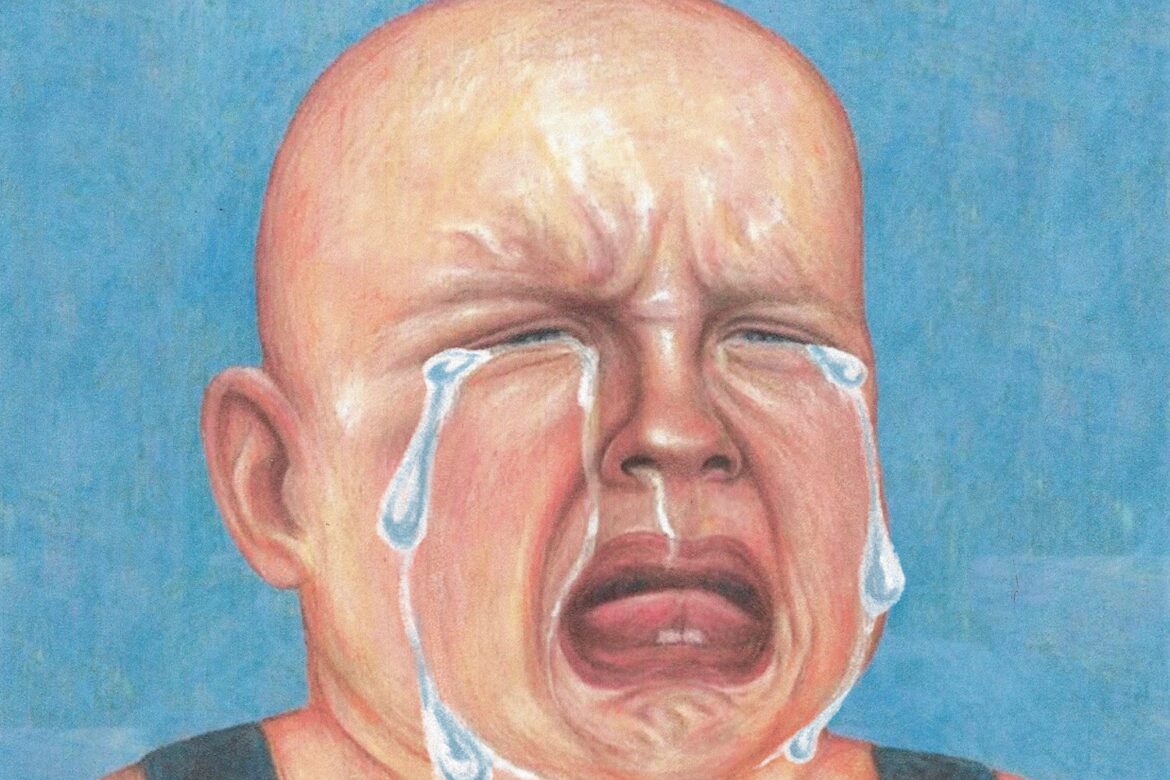
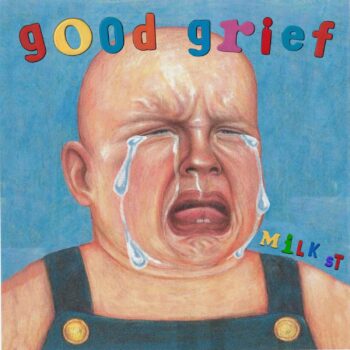
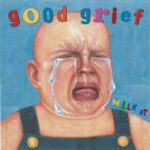
I have to ask about the album art, because it’s such an instantly memorable image: This crying baby, the colorful letters, the whole feeling of childhood innocence curdling into total emotional meltdown. How did that cover come together, and why did it feel right for this record?
Milk St.: Well my sister actually had a baby recently, and our family has a really long line of emotional struggle, depression, and doesn’t have the most amazing track record when it comes to raising children, and growing up we were always told by our parents that we were supposed to be this chosen generation to “break the cycle” so to speak. After he was born, he would always make these miserable pouty faces and my sister sent me one, and I was like oh great here we go again, another miserable Wakefield. We couldn’t stop laughing about it and I was like, “OH that’s it,” this like apathetic miserable little kid in me has been writing all these songs and this whole last couple years I’ve been sort of taking him by the hand and teaching him how to grow properly into something more than just whining all the time. Then I sent that idea to some friends in Jersey, the same ones who did the “Good Grief” music video, and one of them, Miranda Haws, drew it by hand! Then our friends Sarah Whitty, also a Jersey friend, added the texture and letters!
“Henry” opens the album with an audio recording before “Just So” kicks the door open. What did you want that opening moment to establish before the album really begins?
Milk St.: So the record is basically from the perspective of a kid in his room, listening to records, writing songs, and dissociating while his parents argue downstairs. My childhood was sort of drenched in volatility and it’s really how life was when I was younger at times.
“Just So” was the first single from the record, and you’ve said it came from a place of being sad and overwhelmed before you had clear language for why. What’s the story behind this song?
Milk St.: So I wrote Just so before we left for our first like real tour. I had written and was about to release “V3RM0NT,” which was me talking about a lot of specific situations and where I found comfort and a sense of family / community after leaving my childhood, but “Just So” felt a little more philosophical and overarching as I was writing it and I couldn’t really nail it down or make sense of it, but I was frustrated because every time I went to write all that came out was “I’m sad” or something similar, and I found it sort of pathetic hahaha. I eventually leaned into it and found something far more introspective feeling. It sort of teetered between mocking myself for writing songs about feeling sad all the time, and also sort of mocking the person in me that was just sort of saying like “why don’t you just stop being so sad all the time.” I think I deal with that push and pull of two different versions of myself a lot! My nickname growing up to my family was Joni so the whole “oh Joni, I’m so sorry, I don’t see why you can’t just be happy” is me sort of talking to myself in my head.
Musically, “Just So” turns that depression and self-mockery into a raucous release. How did you want this song to set the tone for the record?
Milk St.: I feel like it’s sort of a two parter. I think when I was organizing the order of the songs, I was like alright this sets the stage both for the boy in his room writing songs concept, but also for this record that really encapsulates the feeling of being fresh out of high school, or one stage of life in general, and not knowing exactly what you’re supposed to be doing. The one thing I did know was I was sad and over it all.
“Good Grief” is the title track and second single, and it feels like everything bad happening at once: Grief, dissociation, family rupture, relationship rupture, and this mix of confusion and release. How did this song come about, and why was it right as the album’s title?
Milk St.: Honestly this was one of the last songs I wrote for the record right before we left to record it, but it made so much sense and came out so, so fast. It’s a continuation of the ending riff for the song “Milk and Honey” and I had always felt like I wasn’t done with that progression and really wanted to play around with it more and felt like it could be its own song, so I just jammed on it on the couch and all the lyrics just came out. I quite literally had my family all torn apart, my relationship at the time fall apart, I had just graduated college and totaled my car, just so much all at the same time about a half year before I wrote it, and I kind of realized that I hadn’t processed it all. I closed my eyes and sort of went back to the place where the sort of cherry on top for that whole time period took place, which was sitting on my bathtub talking with my girlfriend at the time about some pretty heavy stuff. I really in that moment felt a break where sort of I had maintained myself through everything that had happened in such a short period of time, and the dam kind of broke in that moment. I’m talking like I was a total mess for a few months. On the record, this is the moment in the record where all the songs after are much more introspective and coming to terms, as opposed to the first half which is more about how I’m feeling.
“Toyota Corolla” served as the final single before the album, and that image – “In your head I am a limousine / I always thought I was more of a Toyota Corolla” – says so much about insecurity, expectation, and not feeling like the person someone else wants you to be. What were you trying to capture there?
Milk St.: I think it definitely started being about not living up to expectations I felt like people around me had at the time, but I sort of eventually realized some of those expectations, I was setting for myself and then felt like the people in question maybe were just the conduit I used to hold myself accountable to a toxic degree. One ex in question, in which the falling out made me really reflect on if I was actually a victim in circumstances, or if my mentality was turning me into one, actually drove a Toyota Corolla. I mean, in the end I was cheated on, so there were some clear cut “expectations” that weren’t met, at least that’s how it felt in the moment, but I think there’s lessons to be learned in almost everything and taking accountability is the major way to get positives out of the negative situations. That line at the end of the song “oh I will try like hell” is both me in the moment of a toxic relationship, bashing my head against the wall and trying to please someone who can’t be please over and over, and also me in hindsight trying like hell to “buy a house” or move on with my life and find positives in it all.
“Slide Off” feels like one of the album’s major pressure-release moments: “I am freaking out in my skin,” then this attempt to breathe, let go, and let the weight slide off. What does that song evoke for you now?
Milk St.: This is the oldest song on the record in terms of when I wrote it, and it was at first sort of meant to kind of be synonymous with the concept of “roll with the punches.” I actually wrote the first half when I was in that really apathetic state, and then the ending part later on when I realized what the alternatives to that are. I had a lot of really traumatic stuff happen growing up, from there being a lot of anger in my house, to getting pursued by an eighteen-year-old when I was 13, and I never really actually processed it all I think, and at eighteen at the time of writing myself, I think my solution was to be apathetic or let it slide off.
As I started to find meditation and coping mechanisms later, I found a lot of power, or in the song I call it “lethal,” in brushing my teeth, being mindful, etc. The line I always loved on this one is “I’ll put my clothes back on this body I maintain.” While leaning into the themes of my actual traumatic experience, it’s also a taking back control feeling. This one always feels really cathartic and good to play live, and was one of those direct release valves for my trauma when I wrote it. I always joke on tour that this is the part of the show where I trauma dump on the audience.
“Milk and Honey” sounds so in-the-moment and unfiltered, especially knowing the original voice memo had you sobbing and screaming the “I guess, I guess, I guess” line. How do you approach turning something that raw into a full-band song?
Milk St.: I think this one would’ve been even harder to turn into a song if I hadn’t been so close to my band, but these guys were with me through a lot of the experiences I sing about. We lived in a house with a lot of people in, and right after, college and I didn’t want everyone to hear me crying so I’d always go to this spot I’d get it out and think and I ended up writing this one there. With ones that feel a lot more vulnerable like this, I kinda just turn on my distortion pedal and let ‘em have it, and we see where the song goes. I had the form and lyrics there but Harry actually ended up writing the guitar parts for the chorus, because I couldn’t figure out where to go with it. Our work flow is really like us sitting with instruments and just grabbing ideas out of the air as they float by.
“Weed and Crisco” and “God’s Dog” seem to sit in conversation with each other around family, faith, hypocrisy, suffocation, and trying to understand what religion can or cannot give you. How, for you, do those songs speak to each other?
Milk St.: Well on a literal level, my father was openly suicidal and then he found God and it helped him and became his coping mechanism. I’ve always had this sort of thing where I feel the need to be the glue that helps hold my friends and family together when bad things happen, so I honestly really felt helpless as mental health issues like that aren’t something you can just fix, as someone who’s struggled with them myself. “Weed and Crisco” was me trying to see from my dad’s point of view, so that I could almost maybe help him. He was really, really big on eating healthy foods consistently, but smoked a lot of weed, and I found a little irony in that dichotomy of eating really healthy foods and then smoking yourself into oblivion and not wanting to be alive. Then when he found God, I felt a lot of guilt for not wanting to be along for that ride. I eventually even became really disdainful and annoyed, and then felt even more guilt for not finding joy in this thing that helped him in a way I couldn’t. I love my dad a lot, and he’s taught me a lot about what it means to grow and what maybe it means to “be a man,” and not in the traditional toxic sense. To have complex emotions and feel a sense to protect while also struggling with your own issues, and especially to grow and evolve from them is really hard. It’s sometimes even more tumultuous for people around you to see you in this new light and not hold the past against you. It’s all really confusing and I think that’s sort of the point of those songs. To feel suffocated by what brings someone else, whom you tried to make happy, joy, can feel really shameful, even when it doesn’t have to be. All that confusion kind of erupts into the Fugazi nod with “I’m so tired.”
“Ronkoma” feels like one of the album’s clearest road songs: Stolen food, plastic forks, sleeping in the van, expensive gas, uncertainty, and caring too much anyway. What does that song say about the reality of trying to keep a band alive?
Milk St.: This was truly the last full band song we wrote for the record, and finished it actually in the studio. Our bassist and my childhood best friend, Gabe Chambers, had decided to step away from the band to pursue his teaching career, and I was honestly struggling with that emotionally a bit. I (again) felt guilty for wanting to almost hold him back and keep him where I felt content, and it definitely inspired this song out of me. I always have loved touring so much, and it was taking a toll on him, and I was sort of trying to see from that perspective and be like “oh ya I guess it really isn’t all sunshine and rainbows all the time on the road.” We ate a LOT of Whole Foods hot bar, slept in the van, which broke down a lot. We were in the middle of tour and our friend Brook Pridemore mentioned how the last stop in Long Island on the train was famously Ronkonkoma and it sort of stuck with me and stemmed this whole song. It’s very much me being like, “this might be your last stop in this journey, but it isn’t mine.” The line in “Montana” about “I am an artist and no one will stop me” kind of drives that home too.
“And So On” closes the album in this exhausted, aching place: “I don’t like all the things that you do / despite it all, I still love you.” Why did this feel like the right final song?
Milk St.: This song was just a voice memo I recorded after I got home from the studio. I had just recently moved and I was feeling a lot of guilt about moving away when all the dust wasn’t settled within my family. I just kind of broke down one night and wrote this one in one sitting. It’s very much a love letter to my family. I think it’s easy to not like all of the things the people you love do, but you still love them no matter what. Where the record opens with this kid trying to escape his circumstances and dissociate somehow from the volatile conditions of his home life, the record ends later on with the same person saying “Despite it all, I still love you.” I think it takes a lot more energy to be angry, and in turn makes you eventually angry towards your own kids, than it does to let things go and love through it all. That doesn’t at all mean you should let someone keep treating you poorly. You can’t help what people do, just how you interact with it, and I had decided I was done feeling guilt or shame, and was just going to focus on the fact that I love these people and want everyone to inevitably feel content and loved, including myself.
I’m especially drawn to lines like “I’m not sure where we stand but / I’m pretty sure I’m still a man,” “I wanted mint and chocolate / I got coffee and gasoline,” “I’m God’s Dog / trapped in a hot car,” and “I am a victim / of a love based economy / and I am an artist / and no one can stop me.” As a lyrically forward artist, do you have any favorite lyrics across this record?
Milk St.: Honestly those are probably my favorite lines on the record as well. Especially the “I am a victim,” one. The most fun and cathartic to sing I think is in “Boy Dinner” when I scream, “I’m just a man, I’m just a man, I’m just a man, and I can be part of the plan.” That one was definitely for me and it always feels like I’m getting something out when I sing it.
I also really love “Says kid you gotta roll with the punches / someone’s always lookin out for you / with two black eyes and a caved in nose / like he’s been boxing in super glue.” There’s a lot of double meaning, bible references and stuff in that second verse and I was really proud of that one.
Do you have any definitive favorites or personal highlights off Good Grief?
Milk St.: I think “Montana” has so much of me in it that it feels like one I connect most with. It’s also the most dynamic and I absolutely love my guitar work on the ending of it. That was the most proud I’ve been of a song when I wrote it. I sort of kind of felt like all the people I listen to like Big Thief, Modest Mouse, or whomever might like it.
What do you hope listeners take away from Good Grief, and what have you taken away from creating this record and now putting it out?
Milk St.: I hope people walk away feeling seen and understood and feel like it’s ok to just sit with their guilt and that it doesn’t define them. I had someone at a show recently come up and talk to me about dissociation and ask about how I’ve dealt with it personally, and I felt more fulfilled than I have anything so far in music. Knowing that me being vulnerable makes other people feel like it’s okay to feel vulnerable, makes me so happy. Once you break down that wall of ego, you can finally start sitting with the guilt or shame or whatever and start almost having a conversation with it and realize its not YOU, and its actually entirely separate. I guess in short, I hope it helps people break down their walls, stuckness, or “ought to be’s,” that they have about themselves. People, including myself, need to give themselves a little more grace a break sometimes.
In the spirit of paying it forward, who are you listening to these days that you’d recommend to our readers?
Milk St.: I’ve been LOVING this Boston band called “Hey, I’m Outside,” as well as “Subpunch” and think they’re absolutely incredible. I’d also suggest the Maine band Gunshot Glitter. I got to mix one of their records and they’re absolutely incredible. Also bee loving Saintseneca, Greg Freeman, and rediscovering my love for AJJ lately!
— —
:: stream/purchase GOOD GRIEF here ::
:: connect with Milk St. here ::
— —
Stream: ‘Good Grief’ – Milk St.
— — — —
Connect to Milk St. on
Facebook, 𝕏, TikTok, Instagram
Discover new music on Atwood Magazine
🖼️ © Miranda Haws© Mackenzie Trikouros
 © Mackenzie Trikouros
:: Stream Milk St. ::