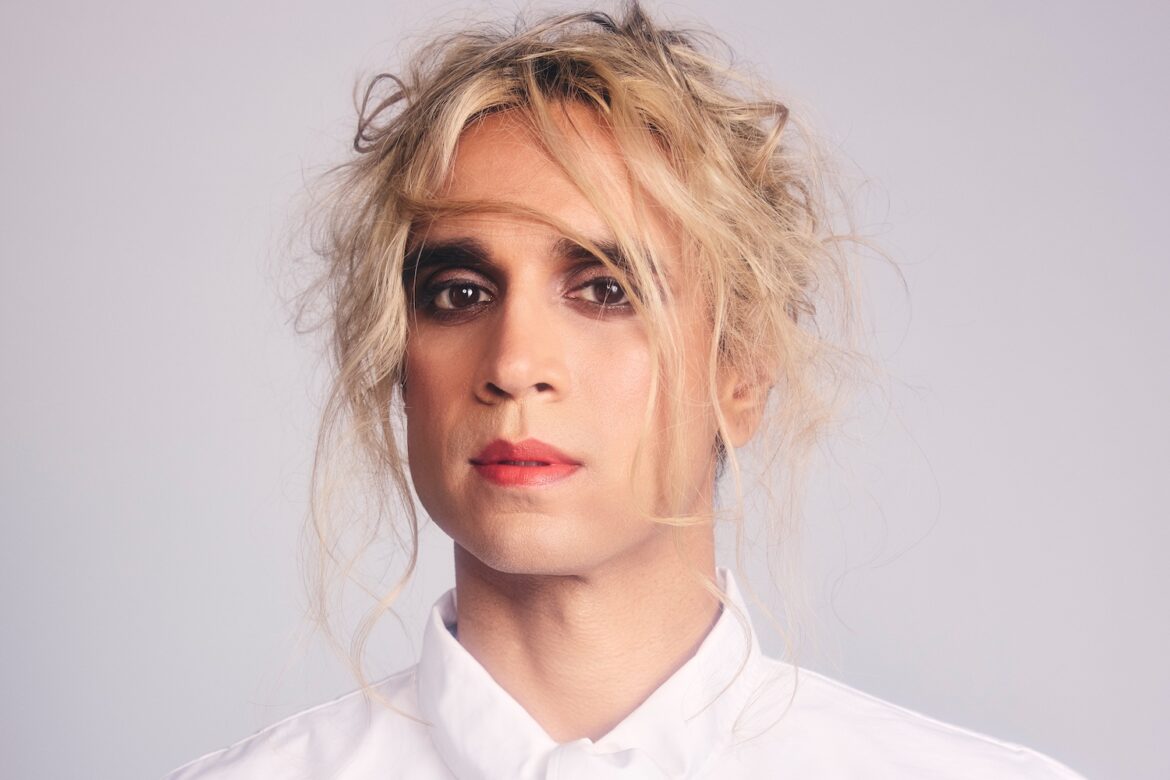
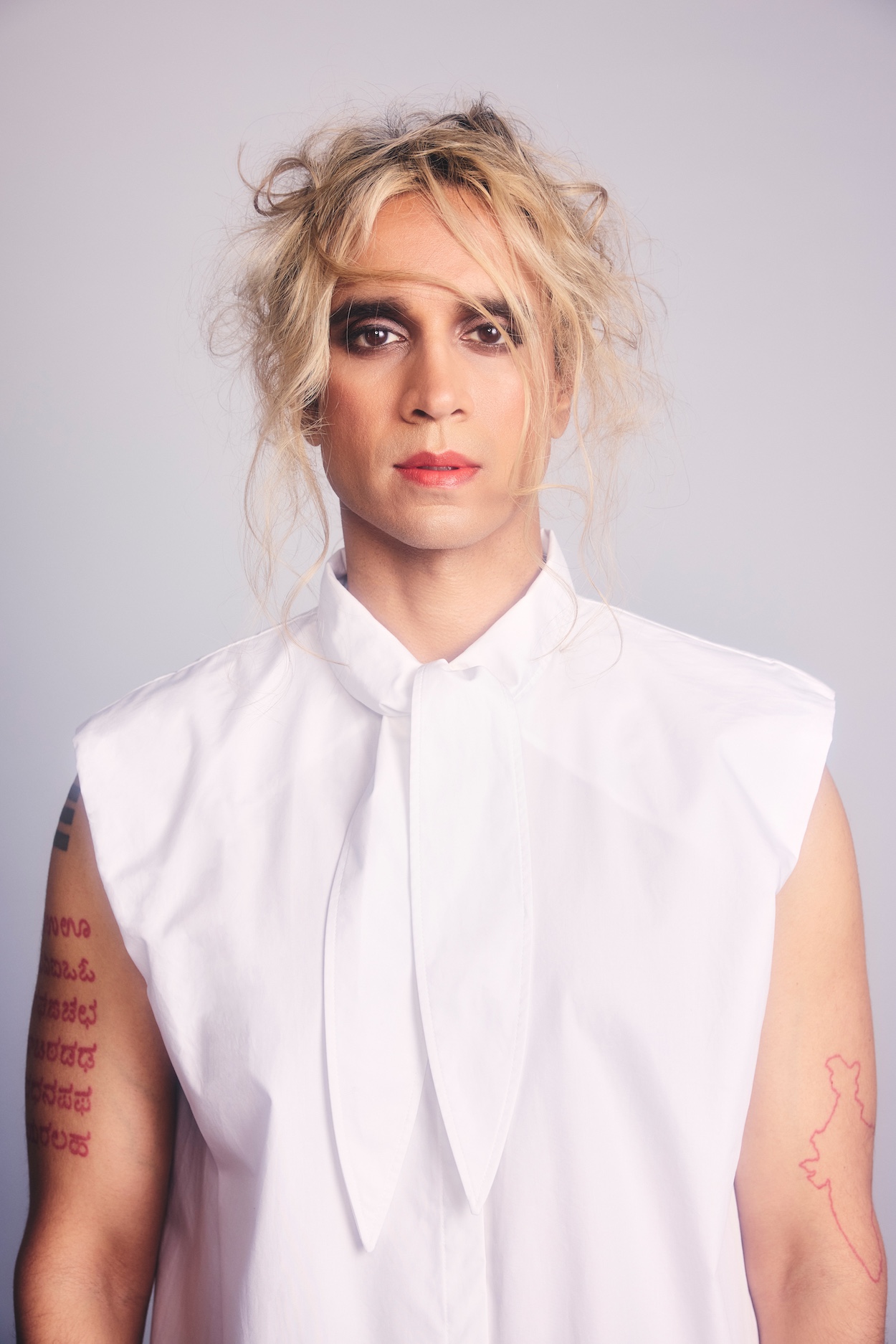
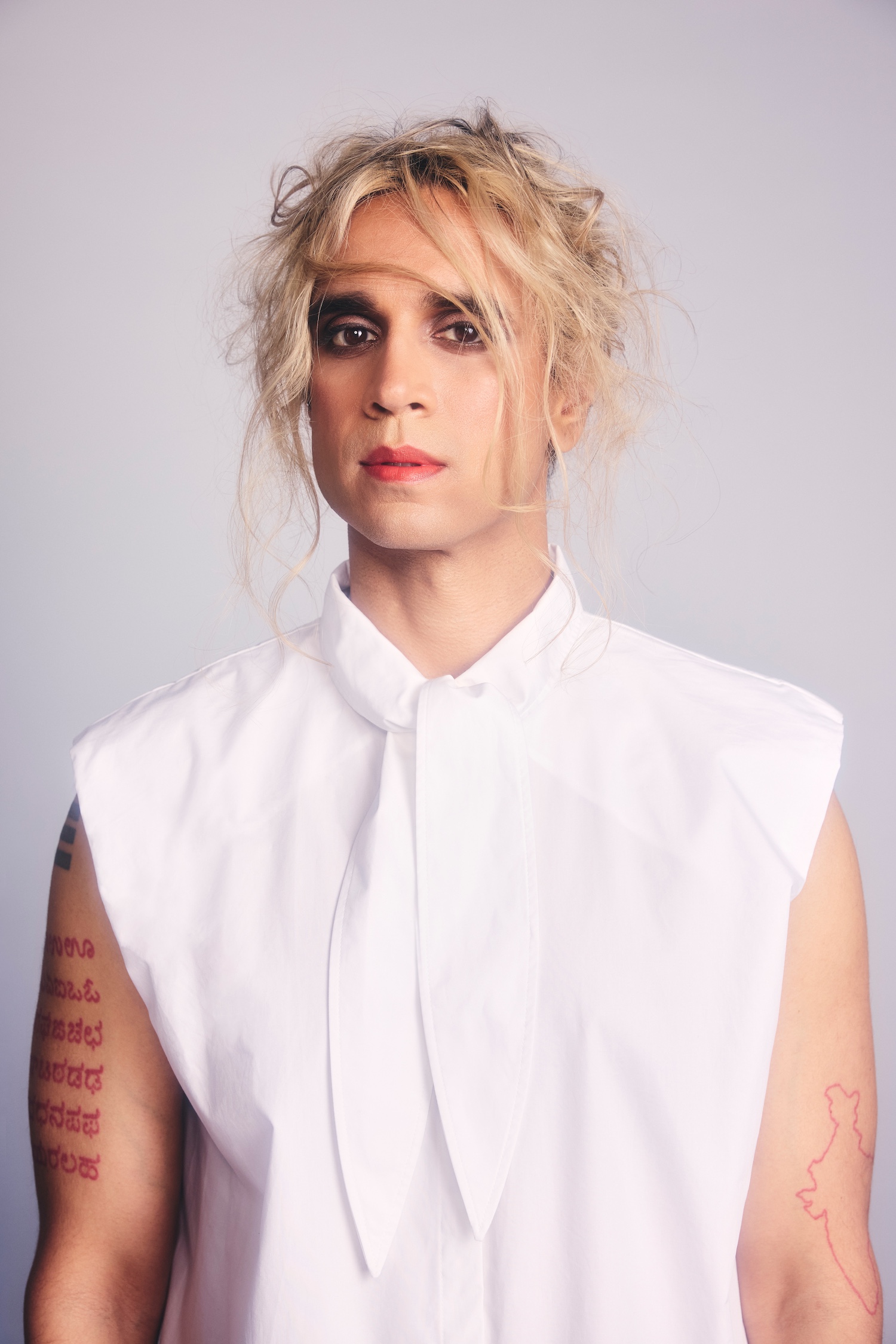
In her dystopian novel ‘The Hystericals,’ Canadian artist Vivek Shraya captures a terrifying future and the hopeful power of music, exploring resistance, hope, and the possibility of a better world.
Stream: “Lily” – Fern McArthur (Serena Ryder)
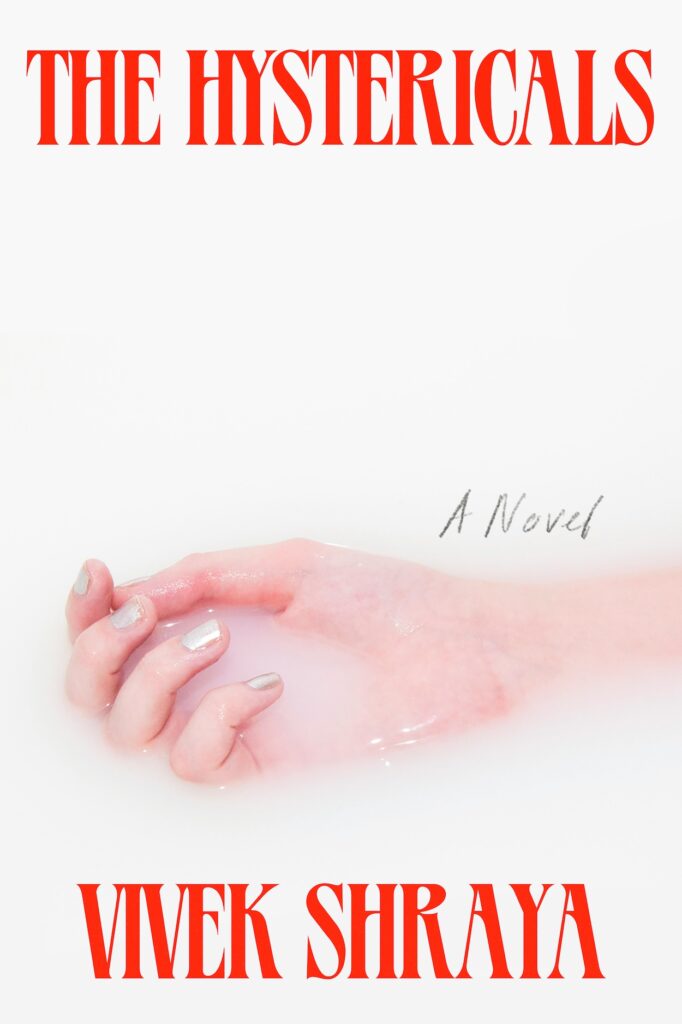
You’re not supposed to judge a book by its cover, but upon first encountering Canadian artist Vivek Shraya’s latest novel, The Hystericals, the sharp colours and soft imagery leave a deep impression.
“I really wanted the cover to be a cross between the Virgin Suicides artwork, Criterion posters and Stephen King book covers,” she tells Atwood Magazine via phone.
Or as Shraya’s mom replied via WhatsApp after seeing the image: “OMG, scary, sending blessings.”
“I was like, ‘You don’t even know, Mom,’” Shraya adds with a laugh.
Shraya’s mother may have been reacting to the cover, but her response is just as fitting for the story inside: “It’s a little bit of horror, but it’s also this strange family drama,” Shraya says.
Set in an isolationist state in a dystopian American future – one worryingly similar to our own timeline in too many ways – a young college student dies by suicide after her university dismisses her sexual assault case. Her death becomes the launch point for the #freetoo movement, which encourages other women to take the same step until equality is restored. Needless to say, things devolve from here. Both illuminating and nightmare-inducing, it demands of its reader that they not only buy into the ghastly but engrossing plot, but also be willing to use it as a mirror to analyze our own role in this. Using the example of the main character’s boyfriend, Jake, Shraya points to how most men see themselves as Jakes, even though the character refuses to use his male privilege to help the woman he loves.
“I think most men think they’re a good guy. And I think that there’s more. I think we should expect more from each other, and I think we should certainly expect more from men,” she says.
But from Shraya, this shouldn’t be a surprise.
Whether you know her for her CBC TV series How to Fail as a Popstar, her numerous books (most notably national bestseller I’m Afraid of Men) or her Polaris-nominated albums, Shraya is an artist who doesn’t mind touching a nerve. But it’s always with a purpose.
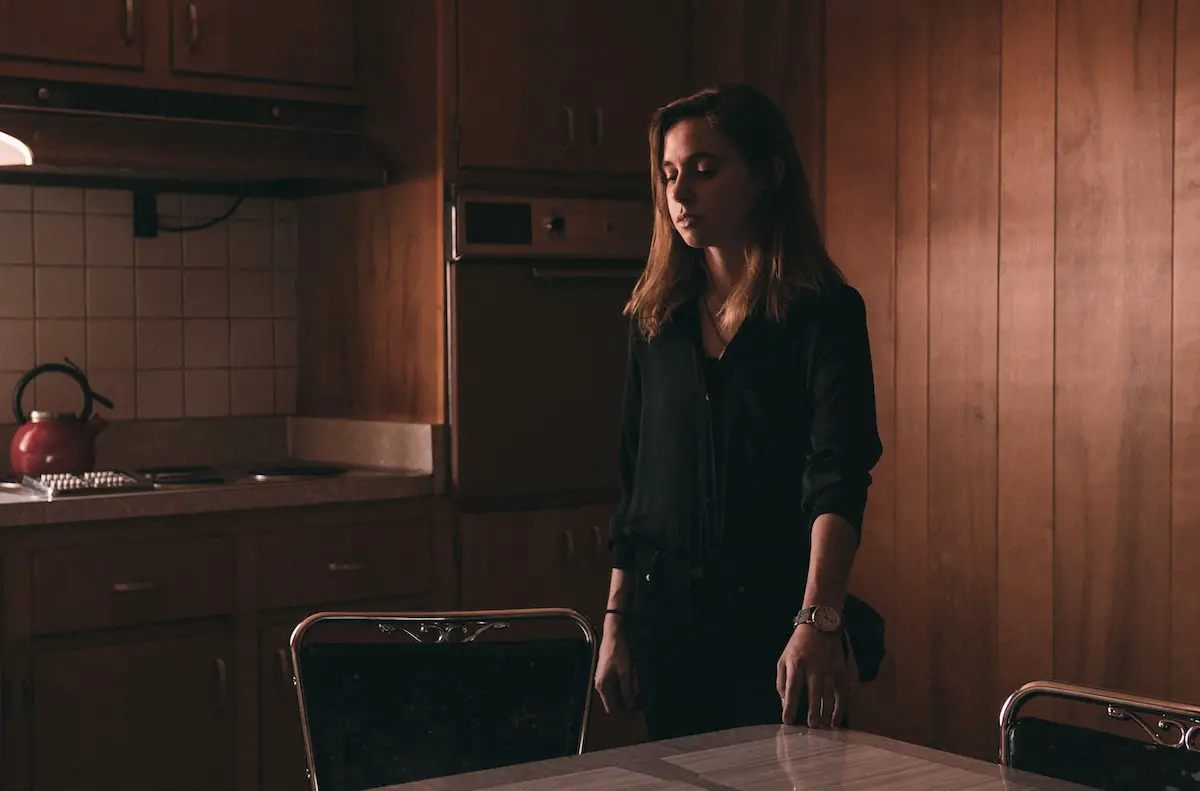
And although she’s pivoted to a different medium for this project, music still plays a central role in the book: After all, the second thing you notice in the book is an advertisement for the new single by Fern McArthur. A musician who acts as “a conduit outside of the university,” McArthur is a small but mightily important character in the book.
“Fern McArthur, like her character, and what she represents in the book, her songs, and what she means to the different characters, even her short scenes in the book, like those are so meaningful to me,” says Shraya.
So is McArthur’s impact on the plot. Not to give too much away, but McArthur’s mercurial talent and sense of justice give legitimacy to the resistance, pushing the book’s college-led #freetoo movement into the mainstream.
When asked why she created the character, the answer was simple and straightforward. “I love music so much, and I’m always trying to figure out ways to bring music into my world.”
And into yours, too.
While McArthur may be fictional, her message and potential for change through music are very real, something the multihyphenate Shraya knows a lot about.
Enter into the frame, a Canadian music icon.
“I managed to convince Serena Ryder to actually sing as Fern McArthur!” says Shraya. “So if you go on [any streaming services], you can actually hear Fern McArthur’s song but as voiced by Serena Ryder.”
I’ve never seen a shining light
sweet sunrise in someone’s eyes
Until you shared your vision
so clear as gold I almost cried
I’ve never felt a purpose so deep
in my soul as when I’m by your side
I’m never going to touch the ground
now that I’ve found Lily
On a lush bed of flutes and strings, Ryder/McArthur delivers a Tracy Chapman-esque track that is as soothing as it is uplifting.
It’s easy to see how the song helps propel the novel’s #freetoo movement. Listening to “Lily” drives the book’s already too-real-feeling plot into our daily life, merging the boundaries between fiction and reality in yet another scary way.
“I’m always seeking to make the deepest connection between art and audience and I thought that having a real life recording of “Lily” (not voiced by me) would do that in a meaningful way,” says Shraya. “I’m also hoping that it blurs the line between fiction and reality (more than the news / current events is doing) to give the book a greater sense of urgency.”
As the final notes of McArthur’s tune fade out, it’s hard not to feel like you want more from life, from each other. The same feeling lingers after you’ve read The Hystericals’ scintillating ending. This book not only imagines a horrible future so that we can learn from it, it also pushes us to get out of our chairs and make sure it doesn’t happen.
“I read this beautiful quote by Audre Lorde who said, ‘Hope is counter revolutionary. Pressure cooks,’ and I was like, ‘Oh yeah, like that’s what this book is. This book is pressure.’”
— —
:: discover The Hystericals here ::
— —

Connect to us on
Facebook, 𝕏, Instagram
Connect to Vivek Shraya on
Facebook, 𝕏, Instagram
Discover new music on Atwood Magazine
© courtesy of the author
 © courtesy of the author