St. Panther pours seven years of life in East Los Angeles into their breathtaking debut album ‘East Side Love Story,’ a mesmerizing, Chicano soul-infused record that captures the giddy thrill and complicated realities of queer romance. Speaking with Atwood Magazine, Dani Bojorges-Giraldo reflects on the neighborhood that shaped their sound, the people who inspired their songs, and the hard-won freedom of finally releasing an album on their own terms. It’s a radiant love letter to the city that gave their music its heartbeat – and taught them what it means to belong.
Stream: ‘East Side Love Story’ – St. Panther
Love is a continuum. The more you allow connections to exist in their natural capacity, the more easily love flows through you and your life.
* * *
St. Panther fell for an East Side girl, and somewhere along the way, they fell for the whole neighborhood.
On their boldly hypnotic “EAST SIDE GIRL,” the Mexican/Colombian singer/songwriter transforms a fleeting romance into a dreamy, sun-soaked love letter to East Los Angeles and the people who give it life. The enchanting opening track from their debut album, East Side Love Story, sways with the timeless sweetness of Chicano soul, its irresistible melodies radiating the giddy thrill of a new crush and the joy of finding beauty in familiar places. Seductive, playful, and effortlessly charming, it’s a celebration of queer love and belonging that makes an entire neighborhood sound like falling in love.

Never mind what baby say
Girl you know I’m fresh to death
Got me all inside your head
Time to put that front to rest
I’m not on no 2%
I’ll make you feel whole again
I think I’m going crazy
pretending our love ain’t automatic
I felt you through the static again
And I’ve been going crazy to my friends
I think I’m done pretending
This ain’t no bitter ending
Released today, November 20, via drink sum wtr, East Side Love Story is the long-awaited debut album from St. Panther – the musical home of Dani Bojorges-Giraldo, a Southern California-raised singer, rapper, producer, and multi-instrumentalist whose artistry has long moved fluidly between soul, R&B, hip-hop, and pop. Its ten songs preserve a seven-year chapter of life in East Los Angeles, capturing the people, relationships, and experiences that have shaped the artist’s world. Following 2020’s breakout EP These Days and years of artistic exploration and evolution, the record represents a hard-won personal and creative milestone, the culmination of a journey toward greater freedom, purpose, and self-expression.
Last November’s six-track Strange World offered a different perspective on that evolving artistic identity. Atwood Magazine previously hailed the EP as “16 minutes of empathy, accountability, and imagination” – a deeply intentional record that explored the relationship between empathy and activism, confronting political disillusionment and collective numbness with a stubborn faith in our capacity to care for one another.
East Side Love Story carries that conviction into more intimate territory. Where its predecessor looked outward at a world in crisis, this album unpacks the deeply personal relationships that give our lives meaning, finding extraordinary emotional depth in the everyday experiences of attraction, vulnerability, and connection. It’s a change in perspective rather than a departure from purpose, with St. Panther’s commitment to community finding a more personal, romantic expression.
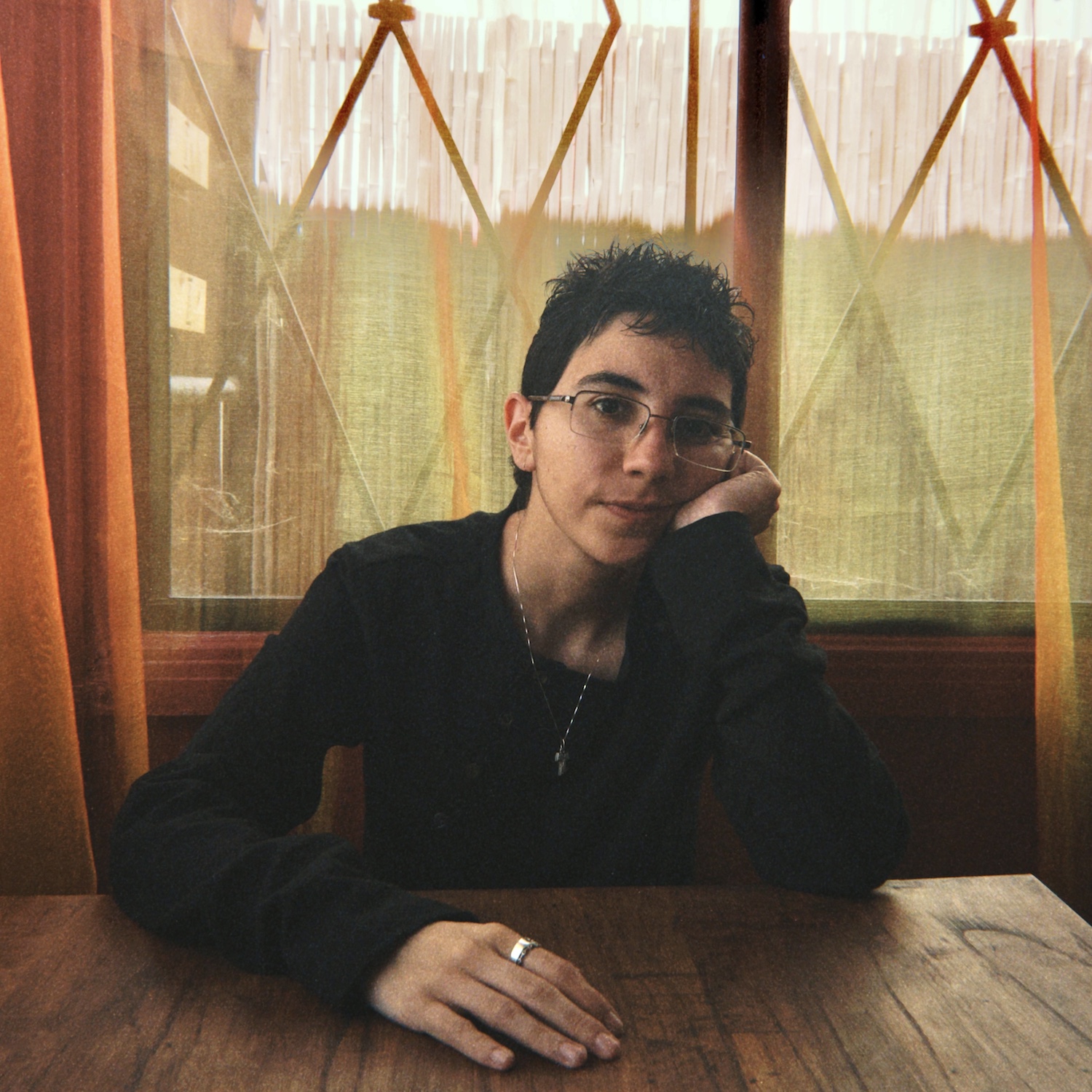
The music is irresistible from the start, with “EAST SIDE GIRL” setting the album’s unfolding romance in motion.
A wonderfully unhurried groove settles into place, with supple bass, delicate nylon-string guitar, and gently swinging drums creating a warm, intoxicating atmosphere. St. Panther’s voice glides across the arrangement with effortless charisma, their delivery floating between honeyed affection and a flirtatious, almost mischievous confidence. “Never mind what baby say / Girl you know I’m fresh to death,” they sing, letting the words roll off their tongue as though they’ve been smiling to themselves all afternoon. Every element seems to sway in the same easy rhythm, creating the delicious sensation of riding through familiar streets with the windows down, a favorite record playing, and somebody special occupying every thought. It’s dreamy and deeply soulful, the kind of melody that settles into your body before you realize you’ve started moving along.
The romance unfolds in stolen glances and playful declarations, with just enough uncertainty to make the attraction all the more exciting. “I think I’m going crazy pretending our love ain’t automatic,” St. Panther confesses, capturing that thrilling moment when two people seem to understand what’s happening between them but neither quite wants to admit it. Later, the infatuation takes an extravagant leap: “East side girl and she’s riding low / Wearing a dress I’ve never seen before,” they sing, before revealing they’ve “started having visions at the jewelry store.” One minute they’re flirting, the next they’re imagining forever. And then comes the cheeky reversal: “All she wanna say is hit the road, Jack.” It’s a whole romantic comedy compressed into a few verses, full of swagger, anticipation, and the titillating possibility that the person who has you completely captivated might feel the same way.
Never mind what baby say
Girl you know I’m fresh to death
Got me all inside your head
Time to put that front to rest
I’m not on no..
East side girl and she’s riding low
Wearing a dress I’ve never seen before
Cannot withstand one minute more
Started having visions at the jewelry store
But the woman who inspired “EAST SIDE GIRL” gave St. Panther much more than a crush to write about. Bojorges-Giraldo had already lived in East Los Angeles for several years when they began dating a Sagittarius who introduced them to another side of the neighborhood. She showed them the streets she’d grown up on, pointed out where her oldest friends still lived, and shared memories of driving through the area with her father. There was a particular King Taco worth visiting, a favorite park, and an entire personal geography waiting to be discovered. Through her stories, the neighborhood became more intimate, its familiar streets acquiring histories and meanings that St. Panther might otherwise never have known.
“She never made me feel like an outsider,” St. Panther tells Atwood Magazine. “It was actually a really beautiful brief romance that made me fall in love with the east side as a whole. She has no idea the song took inspiration from her charisma, the way she carried herself. I just personally thought that archetype of girl was the shit.”
There’s a particular beauty in the way one person’s affection for a place can become contagious.
A street you’ve passed a hundred times suddenly looks different when somebody tells you about growing up there. An ordinary restaurant becomes the setting for a memory you’ll carry long after the relationship ends. St. Panther channels that experience into a song whose romance extends far beyond the two people at its center. The East Side girl is magnetic partly because of the world she carries with her – her stories, her confidence, and the unmistakable sense of belonging that comes from knowing exactly where you’re from. Through her, St. Panther discovers another way of seeing the community they’ve come to call home. And through the music, they invite us to share in that discovery.
This sense of place runs deep into the song’s instrumentation. St. Panther had spent years listening to their neighbors’ music drifting through the streets of Boyle Heights, particularly one next-door neighbor whose daily rotation of oldies, funk, soul, and hip-hop became a kind of unofficial soundtrack to the neighborhood. Weekend mariachi performances and family parties added their own distinctive melodies to the atmosphere. When it came time to make East Side Love Story, St. Panther wanted to bring those musical traditions into conversation, finding a meeting point between the classical Spanish guitar sounds woven into East LA’s culture and the soulful records that had long accompanied their days.
“My big mission was to buy a nylon guitar to write the album,” they explain. “Thankfully, I scored the exact Cordoba model I was eyeing for years off a kid in Koreatown and brought it straight home. This was the first song I wrote on it. Classical Spanish guitar tone, but capturing the soul records on loop in the neighborhood. In my head it was about meeting those two staple genres in this neighborhood right in the middle.”
The result is remarkably transportive. St. Panther, who wrote and produced “EAST SIDE GIRL” themselves, plays nylon guitar, bass, and sitar on the recording, with C.C. Hamilton contributing drums. Together, they build a sound that draws on the enduring romance of vintage soul while remaining unmistakably contemporary. The guitar lends a delicate, almost wistful intimacy to the arrangement, its bright tones weaving around a bassline that seems to move with an easy, knowing smile. Hamilton’s drums supply an understated but infectious pulse, giving the song its relaxed momentum. St. Panther’s vocal melodies are every bit as all-consuming, curling and cascading through the mix with a sweetness that recalls the golden age of soul. There’s so much personality in the performance, from the playful phrasing to the effortless way they stretch a note and let it hang in the air. The music breathes, the rhythm seduces, and the whole thing seems suspended in an endless late-summer afternoon.
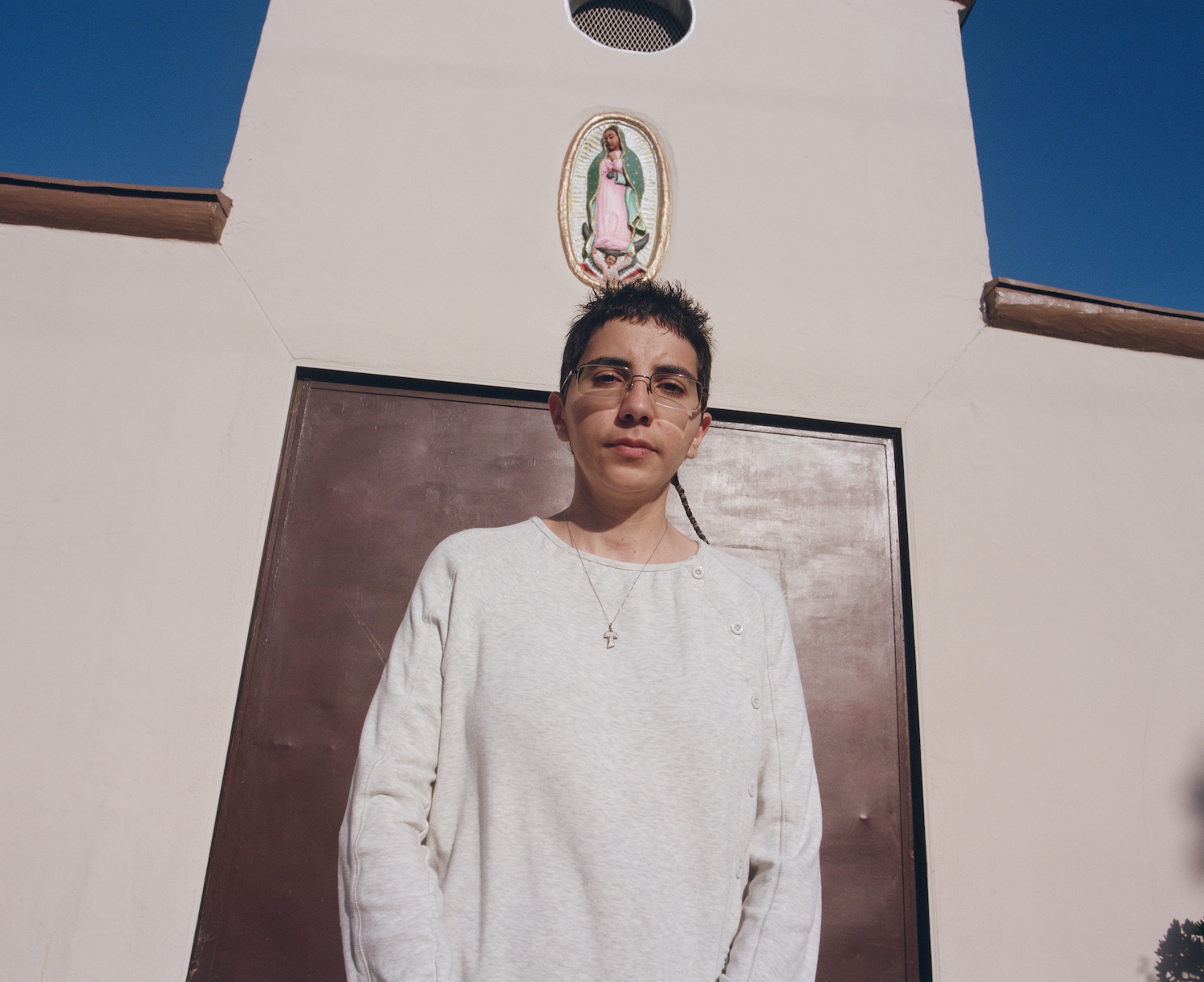
This musical warmth carries a deeper cultural intention. For St. Panther, “EAST SIDE GIRL” is an opportunity to celebrate the queer community at the center of East Los Angeles, honoring people whose influence on the neighborhood’s culture deserves to be recognized as essential rather than peripheral. Their romantic protagonist is a reflection of the confidence, charisma, and history they see in the people around them. Even the tentative dance between the song’s two potential lovers carries a larger significance. As St. Panther explains, there’s a particular coyness in queer courtship, a mixture of desire and caution shaped partly by the long history of stigma surrounding love between people who aren’t men. The song allows that uncertainty to become flirtatious and exciting, imagining a world where queer attraction can unfold with all the effortless romance and everyday possibility traditionally afforded to heterosexual love stories.
“I’m not entertaining myself as a subculture anymore,” St. Panther declares. “I’m taking up space with my artwork unapologetically and putting my community on my back in the same breath, because there’s beauty to offer, love to give, and much more art to make with us at the forefront of culture. We have enriched culture from the shadows long enough.”
It’s a declaration that gives the song’s undeniable sweetness another dimension. The easy confidence of “Girl you know I’m fresh to death” becomes a celebration of being seen and desired without apology. The fantasy of a future together, glimpsed through a jewelry-store window, becomes more meaningful when we consider how often queer people have been denied the freedom to imagine such futures openly. St. Panther allows these lovers to be coy, confident, confused, impulsive, and utterly enchanted with each other. Their story is allowed to be playful because their humanity is already a given. And in making queer love the heartbeat of this musical portrait, St. Panther honors the people who have long helped define the neighborhood’s identity, giving their lives and stories the prominence they deserve.
Too bad I don’t know how to act
All she wanna say is hit the road, Jack
But I still provide what the players lack
Maybe that’s the reason she keep coming back
Never mind what baby say
Girl you know I’m fresh to death
Got me all inside your head
Time to put that front to rest
I’m not on no 2%
The accompanying music video extends that invitation into the streets themselves. Filmed around Boyle Heights at the tail end of summer, its romantic, retro-inspired imagery preserves the season’s golden warmth while drawing attention to the local businesses that make the neighborhood what it is. St. Panther wanted those establishments to be seen and supported, particularly amid the economic disruption caused by immigration enforcement activity in the area. It’s an important reminder that the places we fall in love with are sustained by people whose livelihoods, histories, and communities deserve our care. The neighborhood’s beauty is inseparable from the lives being lived within it.
The significance of finally bringing this record into the world is deeply personal. “For me it means this long 6 years of feeling like I was on musical probation is finally over and I’m free to put my records out again,” they share. “The fullness comes from being able to invite the world in when my voice is at its most intentional and clear.”
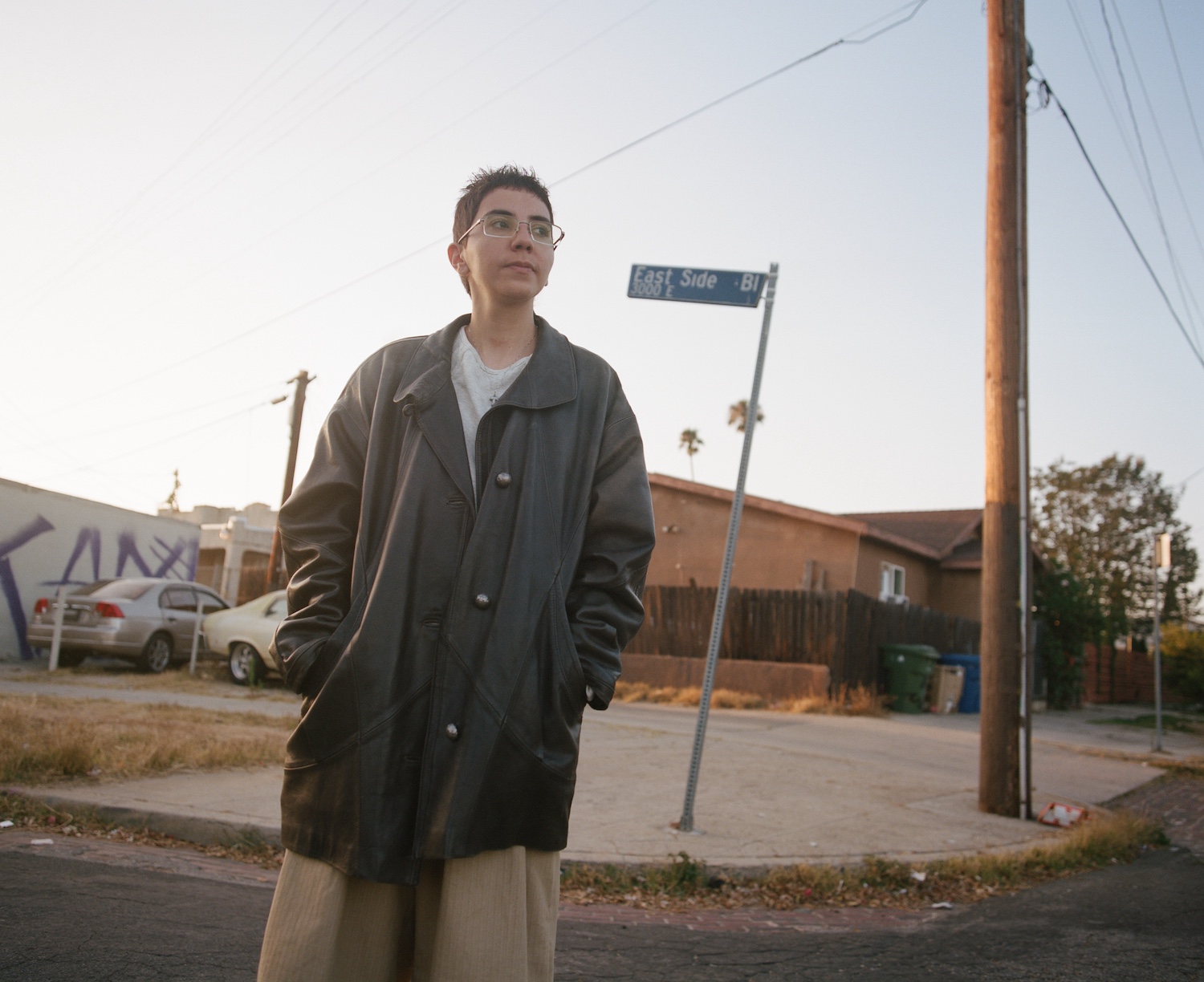
For all its irresistible romance, East Side Love Story isn’t an album content to remain inside the bliss of a new crush.
Across ten tracks, St. Panther follows love through its exhilarating beginnings and into the complicated, sometimes contradictory realities of intimacy. Drawing from Chicano soul, Motown, R&B, and the unmistakable musical character of East Los Angeles, Bojorges-Giraldo and longtime collaborator McClenney create a richly textured world whose vintage influences feel less like a recreation of the past than a continuation of it.
The spell deepens immediately with “SOMEHOW,” a bittersweet, beautifully melodic reflection on loneliness and the almost miraculous relief of finding connection. Wobbling bass, crisp hi-hats, and honeyed backing harmonies lend the track a distinctly Motown-flavored sweetness, while St. Panther’s yearning vocals give its deceptively simple chorus an enormous emotional pull. “We all need love somehow,” they sing, making a universal admission feel genuinely personal. Elsewhere, the plea to “hold me close” and the wish to stop time reveal just how fragile that happiness can feel. It’s a beautifully affecting counterpoint to the confidence of “EAST SIDE GIRL,” replacing the thrill of pursuit with the vulnerability of finally having someone to lose.
“THANK YOU LIFE!” takes that complexity somewhere even more exuberant. Featuring Houston singer/songwriter reggie, the album’s third track is a wonderfully spirited collision of self-reproach and celebration, its buoyant rhythms and infectious vocal interplay giving movement to emotions that might otherwise feel impossible to untangle. St. Panther begins with a devastating admission: “I was too high to be good to you / Too low to be good to me.” Those words establish a relationship in which neither person has escaped unscathed, yet the song keeps reaching toward reconciliation. reggie’s conversational delivery brings another personality into the mix, while St. Panther’s increasingly jubilant expressions of gratitude push the music beyond regret and toward the possibility of loving differently.
“We create so many parameters and limits and rules in relationships,” St. Panther reflects. “This song is a celebration of having the opportunity to love someone again, but from a different perspective, to love them wholeheartedly, in their allness, with more freedom to breathe and exist.”
On “OUT ON THE CORNER,” St. Panther returns to the delicious uncertainty of romantic pursuit, channeling Billy Stewart’s beloved soul classic “Sitting in the Park” into a playful, gently exasperated portrait of modern courtship. The keys dance, the melodies practically wink, and Brian Gazo’s effervescent backing vocals bring a vintage pop sparkle to the arrangement. But beneath its charm lies a familiar frustration: The person you’ve been waiting for seems endlessly distracted by somebody else. “Always playing some type of games while I’m waiting for you,” St. Panther sings, their affectionate delivery making the complaint feel almost like a smile through gritted teeth.
Those negotiations grow more intoxicating on “TENSION,” the album’s simmering centerpiece and release-day focus track. Reuniting St. Panther and McClenney as featured performers for their first official collaboration of this kind in five years, the song inhabits the electrifying space between friendship and desire, where every conversation seems to suggest more than either person is willing to admit. “Had me waiting by the phone all day / Can you even break the tension?” they ask, capturing the maddening anticipation of a relationship whose possibilities remain frustratingly undefined. The production is just as alluring: A commanding rhythmic pulse pushes against the song’s hazy, sensual atmosphere, with nylon guitar, sitar, synth bass, and live drums bringing organic and electronic textures into a compelling embrace. Additional keys from Portraits of Tracy enrich the arrangement, while the two artists’ performances give the track its emotional push and pull.
McClenney, who co-wrote and co-produced “TENSION,” describes its lyrics as coming from “real places, live experiences, and smoke break convos” during the album’s creation. The performances never feel detached from the lives that inspired them, and the production’s sophistication doesn’t obscure its emotional immediacy. What makes “TENSION” so seductive is the feeling that we are witnessing something unfinished and alive – a relationship still taking shape, a conversation still unfolding, an answer still waiting to be spoken.
“DOS NIÑOS,” their first song to feature a verse sung in Spanish, is a stirring expression of desire and reconciliation, its guitar-led arrangement and understated rhythmic pulse giving the music an intimate, almost suspended quality. “It’s been a long, long time,” they sing, asking whether two people might find the courage to try again despite everything that’s happened between them. The Spanish passage brings another dimension to the performance, drawing their Mexican/Colombian heritage into a song already concerned with the emotional languages through which people express their love. “COULD IT BE” then confronts the painful aftermath of a romance that once seemed effortless, its melancholy piano and string textures accompanying the realization that somebody else has entered the picture. “We fell in love in a flash / How could we get back?” St. Panther wonders, the question carrying both the disbelief of losing someone and the increasingly difficult recognition that returning to the past might no longer be possible.
That recognition becomes especially pointed on “FUTUREFAKER,” where the fantasies that once made romance so intoxicating begin to look dangerously unreliable. “A house of cards, or you want a wife?” St. Panther asks, exposing the promises and imagined futures that can keep two people emotionally invested long after their relationship has begun to unravel. There’s an extraordinary contrast between this song and the giddy jewelry-store visions of “EAST SIDE GIRL.” What initially sounded like the excitement of imagining a life together has become a question of whether that future was ever genuinely available. The sleek, electronically textured production brings a different kind of tension to the album, its understated keys and programmed rhythms providing an absorbing backdrop for the emotional uncertainty.
By “WHEN I THINK ABOUT IT,” St. Panther seems increasingly willing to make that distinction. The song’s easy-moving groove, textured guitars, and soulful melodic phrasing carry a newfound assertiveness as they revisit a relationship marked by disappointment and unequal investment. “I don’t think I’m designed to stay in one place too long,” they admit, before acknowledging that even choosing to move forward can’t instantly erase the past. “I still think about you sometimes,” goes the refrain, a beautifully straightforward admission that gives the song its emotional honesty. St. Panther sounds increasingly comfortable allowing both truths to coexist, neither denying what went wrong nor diminishing the meaning of what once felt right.
And then comes “LUCKY,” a breathtakingly sweet conclusion that brings East Side Love Story to a place of gratitude without pretending the preceding heartbreak never happened. Delicate nylon guitar and gently shuffling percussion give the song an almost weightless elegance, while St. Panther’s expressive vocals seem to hold the memories of an entire relationship in every lingering phrase. “You were the blessing / I’m never second guessing,” they sing, looking back on a love whose ending hasn’t diminished its value. Yet the repeated question “Can we just stay right here?” introduces one final, devastatingly beautiful contradiction. St. Panther leaves that desire unresolved, allowing the music to linger in the space between appreciation and longing.
For all the emotional turns the album takes, East Los Angeles remains its compass.
You can hear that sense of place in “EAST SIDE GIRL.” After years of honing their genre-fluid artistry, St. Panther sounds utterly at home in a musical language that embraces the traditions around them while making space for their own distinct personality.
They cite D’Angelo as a foundational influence, alongside an expansive range of artists and styles that includes vintage soul, Brazilian music, and the melodic sensibilities of early-2000s pop. Yet the most important inspiration may be the music outside their own front door. What began as a playlist of songs Shazammed from neighboring homes, affectionately titled East Side Love Story, eventually became an entire album concept. Even Pancake, their beloved cat, had a hand in the inspiration, with her revolving cast of neighborhood admirers offering a playful parallel to the artist’s own romantic adventures. Over time, St. Panther began to see the record as a photograph of their life in East LA, a way of preserving the people and experiences that had shaped them.
And that brings us back to the extraordinary affection at the center of “EAST SIDE GIRL.” The real-life romance that inspired it may have been brief, but its influence has endured in the most beautiful way. St. Panther didn’t need the relationship to last forever for it to change their life. Through one person’s generosity and enthusiasm, an entire community became more vivid to them. It’s a deeply moving reminder that the relationships we carry with us aren’t measured solely by their duration. Sometimes their greatest gifts emerge in the ways they teach us to see, to listen, and to belong.
“After 10 tracks of processing, I discovered love is a continuum,” St. Panther reflects. “The more you allow connections to exist in their natural capacity, the more easily love flows through you and your life, and that relationships don’t need to last forever for the love to. Love is a part of you no matter what stays or goes.”
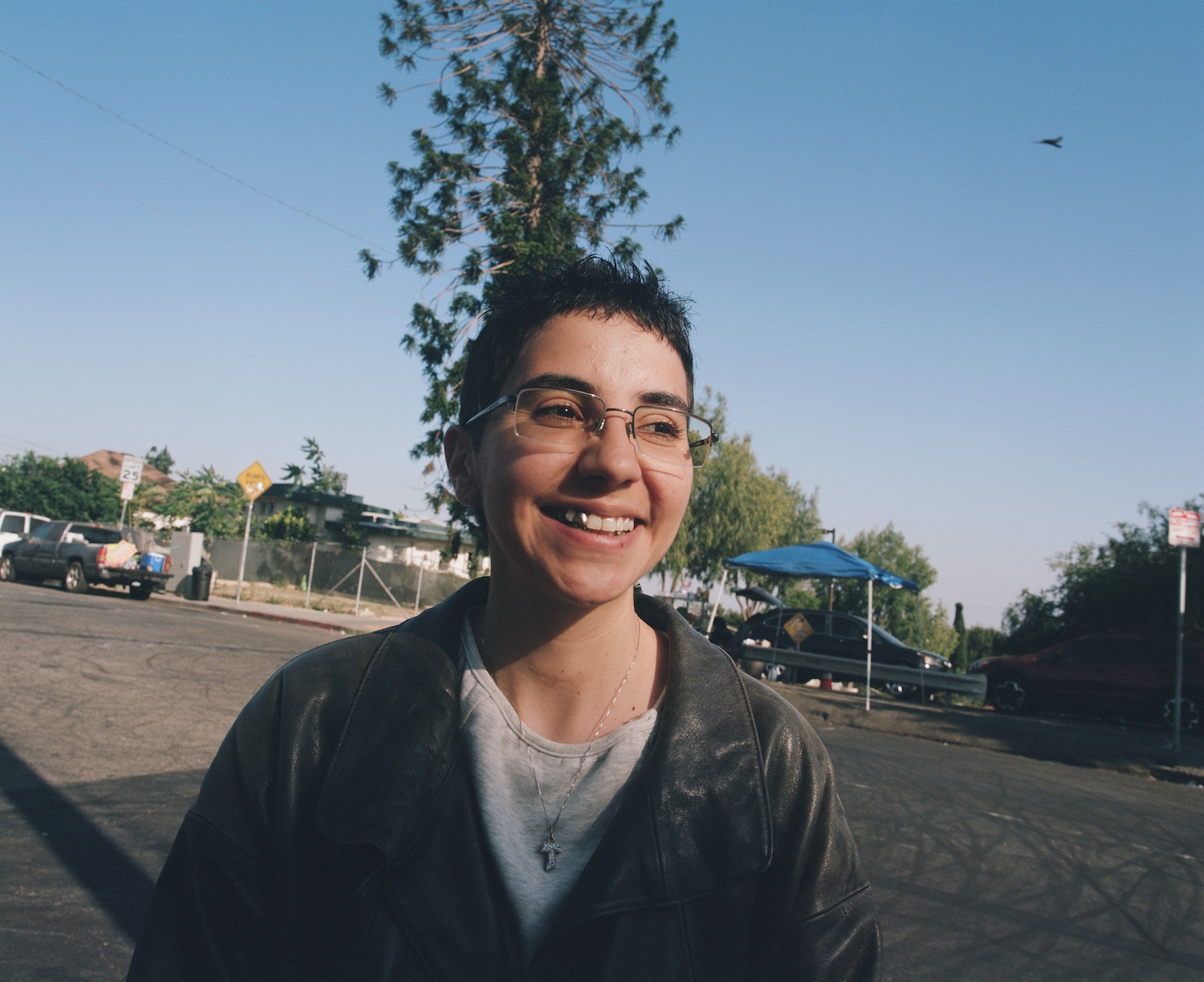
That understanding gives East Side Love Story an even sweeter resonance.
What begins with the impossibly charming infatuation of “EAST SIDE GIRL” gradually reveals itself as a celebration of everything love can leave behind. The music carries the thrill of a new connection, but it also has room for uncertainty, heartbreak, and the gratitude of having loved at all. Across ten tracks, the album’s swaying grooves and soulful flourishes preserve those feelings, tracing a life made larger by the people who pass through it.
With East Side Love Story, St. Panther has made a mesmerizing, soul-stirring debut album where romance and community are intimately intertwined. Its beauty lies in how naturally those ideas coexist – how the admiration of one person can deepen into devotion to a place, and how a record about fleeting relationships can preserve a lifetime of belonging. Even after the lovers have gone, the streets remain, forever colored by the memories they helped create. And somewhere along those sun-drenched East LA roads, the love story continues, carried in the music of a neighborhood that St. Panther has made sound like home.
Picking up where our conversation about Strange World left off last year, Atwood Magazine recently caught up with St. Panther to explore the making of East Side Love Story – from the records that shaped its sound to the people who inspired its stories, and what it means to finally release an album on their own terms.
— —
:: stream/purchase East Side Love Story here ::
:: connect with St. Panther here ::
— —
Stream: ‘East Side Love Story’ – St. Panther
A CONVERSATION WITH ST. PANTHER

Atwood Magazine: Dani, it’s so good to catch up! For those who are just discovering you (or playing catch-up) today through this writeup, what do you want them to know about you and your music?
St. Panther: No more gatekeeping this year guys, St. Panther on everything go listen! (Thank you for having me again my heart!)
When we spoke last year, Strange World had just come out and you were already recording your debut album. What’s your relationship with that EP and its songs now?
St. Panther: Still feeling proud we released that at a timely moment in relation to what was going on around us at the time, seeing people both enjoy it and critically observe the material was everything I could have hoped for. For me it’s proof of intent with concept.
Who were some of your musical north stars as you built the world of East Side Love Story, and what are you most excited about the music you’re making today?
St. Panther: We can’t ever fail to mention that I’m a student of D’Angelo, from performance technique to engineering styles. Then there was Altyrone Deno Brown, a record titled “Sweet Pea” launched me into the innocence of kids only 6 years old in the 70s putting down recordings with that level of depth, which is where the inspiration for track 2 on the album came from. The Billy Stewart piece for track 4 happened on complete accident, writing a song in the same key as “Sittin In The Park” then later in the recording intentionally drawing attention to that with a crystal clear melodic reference. Oddly enough, early 2000s writing styles, like Lily Allen “Smile,” or Sugar Ray “Someday.” When it came to singing in Spanish, Arthur Verocai came to mind particularly on his self-titled album, noting performance styles mainly.
You’ve released music as St. Panther for years, but East Side Love Story is your debut full-length album. What does reaching this milestone mean to you, and why did this feel like the record that could finally hold the fullest version of who St. Panther is?
St. Panther: Putting it plainly I was put through the wringer to get one debut album released, not the most important part of my story as an artist or an experience unique to just me, it’s really too common of a story amongst all artists I grew up admiring, to be put on a shelf and forced into positions to earn our way off. For me it means this long 6 years of feeling like I was on musical probation is finally over and I’m free to put my records out again. The meaning I’ve found in this all, is that all this time instilled so much more musical knowledge in me, allowed room for a substantial amount of time and education around how to be a useful member of my local/global community, which meant arriving at a certain creative clarity as an artist/activist existing in this time. The fullness comes from being able to invite the world in when my voice is at its most intentional and clear.
“EAST SIDE GIRL” opens the album and serves as our first real introduction to this world. What’s the story behind this song?
St. Panther: I was already living on the east side for a few years by the time I started dating this Sagittarius who showed me what I felt like was the real inner pockets of East LA. I remembered her face lighting up telling me different stories about what streets she grew up on driving through with her dad, what blocks her oldest friends still live on which happened to be the street I live on, or why this specific King Taco was the location you go to, sharing her favorite park with me. She never made me feel like an outsider, it was actually a really beautiful brief romance that made me fall in love with the east side as a whole. She has no idea the song took inspiration from her charisma, the way she carried herself, I just personally thought that archetype of girl was the shit. Inclusive, archival, it’s a nod to how the queers here aren’t a subculture at all, they’re the heartbeat. I wanted to share my own personal history here specifically through a native’s lens first.

You’ve talked about your next-door neighbor playing the same sequence of oldies, funk, soul, and hip-hop every day, and how that became part of the sonic inspiration for “EAST SIDE GIRL.” How did you go about translating the sound of your neighborhood into this track?
St. Panther: It all starts and ends at soul was my thought, and how does that relate to how we make music over here on the east side? The mariachis here for example are a staple on my street, every weekend I get home to bands rehearsing or playing neighborhood family parties. My big mission was to buy a nylon guitar to write the album. Thankfully, I scored the exact Cordoba model I was eyeing for years off a kid in Koreatown and brought it straight home, this was the first song I wrote on it. Classical Spanish guitar tone, but capturing the soul records on loop in the neighborhood. In my head it was about meeting those two staple genres in this neighborhood right in the middle.
You’ve also said you wanted “EAST SIDE GIRL” to put the queer community at the center of the culture and neighborhood you’re celebrating – not simply represented, but “the main event.” Can you share more about that? Why was this so important to you with this song?
St. Panther: Reading the comments post release has been an experience.. half are supportive and half are transphobic/homophobic/sexist in nature. All that tells me is we as trans/queer people have more space to cover. I’m not entertaining myself as a subculture anymore, I’m taking up space with my artwork unapologetically and putting my community on my back in the same breath, because there’s beauty to offer, love to give, and much more art to make with us at the forefront of culture, we have enriched culture from the shadows long enough. It was important to have that stance on the intro/invitation track.
Between “pretending our love ain’t automatic,” “started having visions at the jewelry store,” and then “all she wanna say is hit the road, Jack,” there’s a whole relationship unfolding inside “EAST SIDE GIRL.” Who are these two people to each other, and what story are you telling through the song?
St. Panther: There’s a healthy amount of coyness in our community. I think we’re all still a little cautious of approaching each other, which is all good and fun, but also a deeper story of how stigmatized it’s been for so long for non-men to love each other. These people are complete strangers at first, fast friends, potential lovers. I think the allure is in the mystery person. Who is she? What’s her deal? Where’s the cat and mouse of it all going to take us throughout the album? I kept an intent of planting these sorts of questions out the gate. Spoiler alert, they are friends turned lovers and the story is about to get a lot more interesting.
The video was filmed around Boyle Heights and leans into this romantic, timeless vision of the neighborhood. What do you hope this visual adds to the song’s experience?
St. Panther: This was a summer album to me and we shot all the visuals at the tail end of summer, so I wanted to carry a piece of East LA’s most beautiful time of year (to me) well into Fall, just a way of keeping the warmth with us while you listen, and in my heart of hearts I wanted people to notice the local businesses we were loudly highlighting in hopes some come to this side of town to support in light of recent ICE sweeps impacting many local businesses here.
Can you share a bit about the album’s second single, “OUT ON THE CORNER”?
St. Panther: I was pacing around my apartment singing the ‘oo’s’ and quickly picked up my Cordoba to try and sound out the chords. That demo was like an ear worm, it lent all the space for a Motown approach but we still needed a modern touch. After reworking it with Chris (McClenney) I called in Brian Gazo to track some “oo’s” on top of mine. There’s these isolated moments that crack a whole album open, hearing Brian’s first takes was exactly that. By the end of that session his vocals were on four songs on the album.
What was important to me was capturing this particular moment in time on a record. I think we’ll look back on records like this and be able to appreciate that from Boyle Heights to Long Beach we were a movement of brown artists, the next generation of the music we grew up loving. To be able to have him across the album felt just right, like a family photo that will be passed down for generations.
“TENSION” is the album's final single and focus track. How did this song come about?
St. Panther: This album all across was the simplicity of the moment. Tracy (Portraits of Tracy) came over on Christmas and I played her the beat, she lit up and played some keys on it and that moment fit so well. McClenney and I had talked about getting on a song together for the album. It felt important for the both of us to not only continue our co-production journey together on this album, but also show the strength of us as artists side by side as well. We captured the best of what multi-hyphenates do: We produce and we perform. The aim has always been to hybrid the home studio/formal studio environment and strike a sonic balance between the two. What comes of that always has a way of standing on its own.
East Side Love Story grew partly from you Shazamming music coming through your neighborhood and even watching your cat Pancake’s own revolving cast of neighborhood admirers. When did all of those pieces start becoming an album in your mind, and what does the title mean to you now?
St. Panther: That playlist I made titled “East Side Love Story” with all those songs started around 2022. At the back of my mind, it was always a great title, but it was only when I finished the album that I considered it being a perfect embodiment of this era of my life. The title felt like an acknowledgement of this 7 year block of my life living in East LA, the concept was to treat the title like a photograph of these years.
Across the record, you move through new attraction, loneliness, jealousy, the complications of monogamy, letting go, and ultimately gratitude. What did you discover about love by following all of those different relationships across one album?
St. Panther: After 10 tracks of processing, I discovered love is a continuum. The more you allow connections to exist in their natural capacity, the more easily love flows through you and your life, and that relationships don’t need to last forever for the love to. Love is a part of you no matter what stays or goes. By the end of the album, the person leaves, but the love for self stays, a pretty valuable discovery for me at least.
What can you tease us about the rest of East Side Love Story?
St. Panther: The kettle only gets hotter from here, rinse out those tea cups…
What do you hope listeners take away from East Side Love Story, and what have you taken away from creating this music and putting it out into the world?
St. Panther: I hope they take away a trans artist they can really grow with. What I took away was, I can really write an album from December to March. Encouraging realization for album 2.
In the spirit of paying it forward, who are you listening to these days that you’d recommend to our readers?
St. Panther: Let’s get these readers hip to a group out of Long Beach called bestie.
— —
:: stream/purchase East Side Love Story here ::
:: connect with St. Panther here ::
— —
— — — —
Connect to St. Panther on
Facebook, 𝕏, TikTok, Instagram
Discover new music on Atwood Magazine
© courtesy of the artist
 © courtesy of the artist
:: Stream St. Panther ::