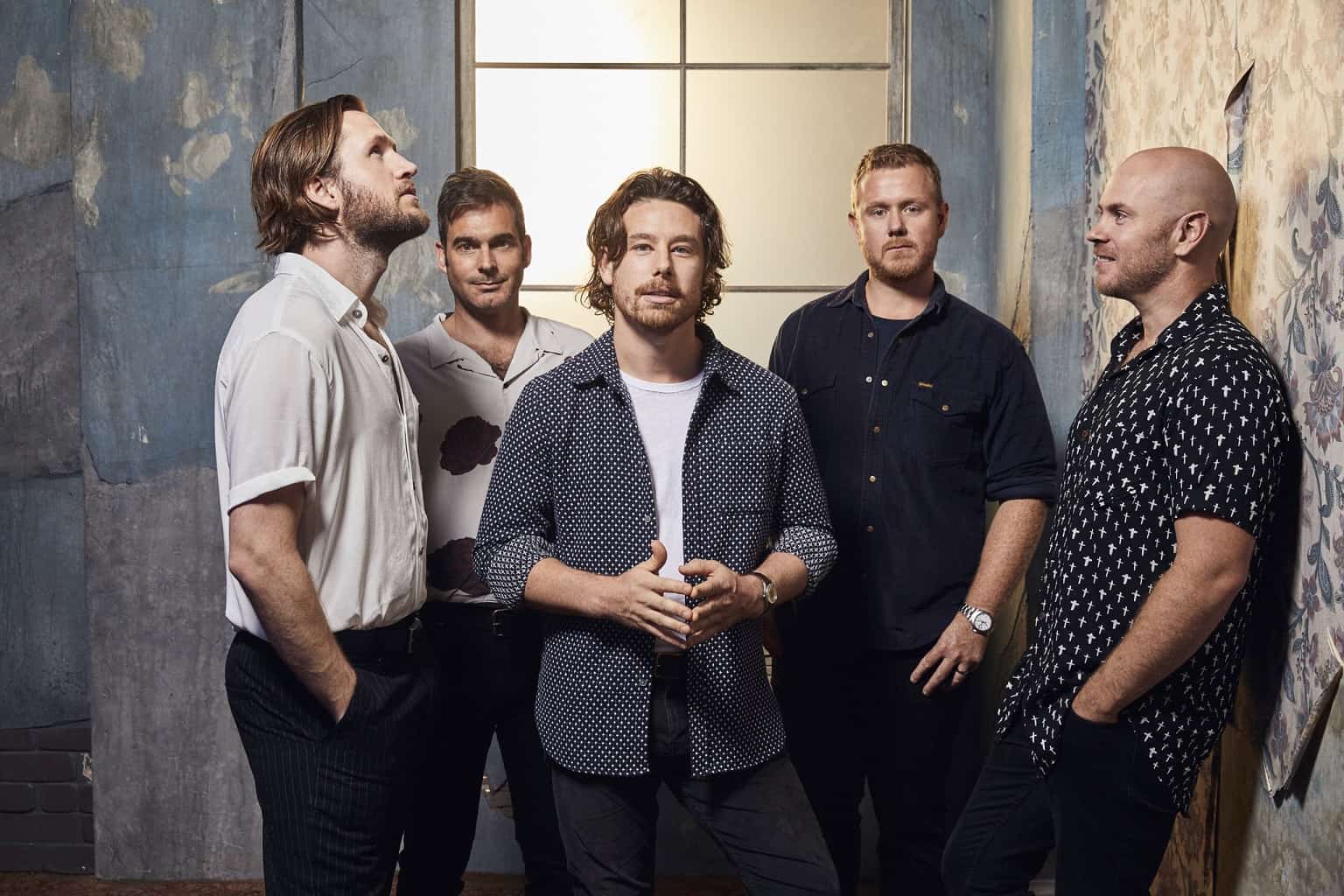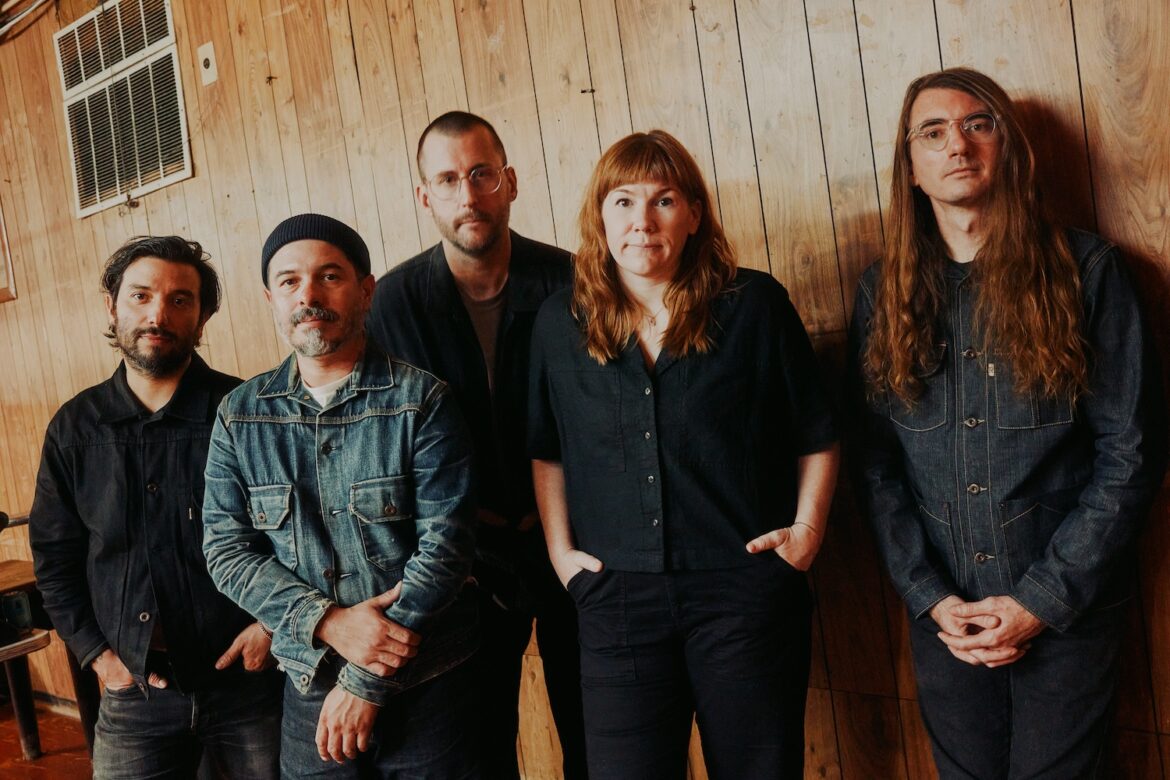
Spanish Love Songs put the American promise on trial with their furious, propulsive single “Good American,” following a veteran abandoned by the country they served while wrenching patriotism away from obedience and toward solidarity. Speaking with Atwood Magazine, frontman Dylan Slocum opens up about the anger and urgency driving the band’s forthcoming fifth album ‘Future Nausea,’ their full-throated return to ALL CAPS ROCK N ROLL, and why community still matters when the institutions we trust fail us.
 follow our Today’s Song(s) playlist


Stream: “Good American” – Spanish Love Songs
A good American gives everything. What happens when America gives nothing back?
Spanish Love Songs channel that betrayal into a full-body charge on “Good American,” a furious, propulsive rock song about service, sacrifice, and the institutions that demand both before deciding whose lives are expendable. Ringing guitars, a relentless rhythm section, and Dylan Slocum’s scorched vocal send the song hurtling forward even as its story follows a veteran abandoned by the country they served. It is angry because it has every reason to be – and communal because Spanish Love Songs refuse to let that anger end in isolation.
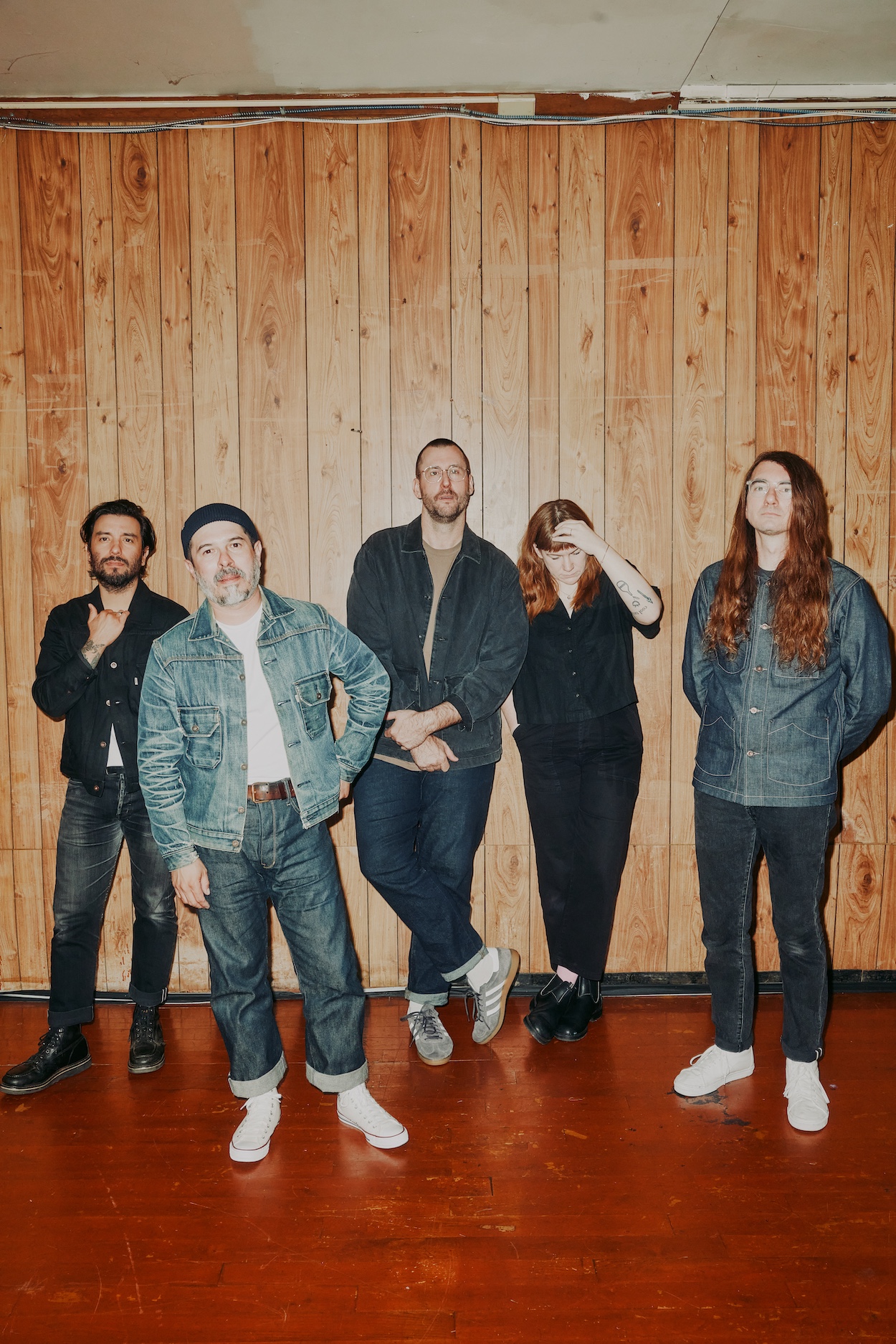
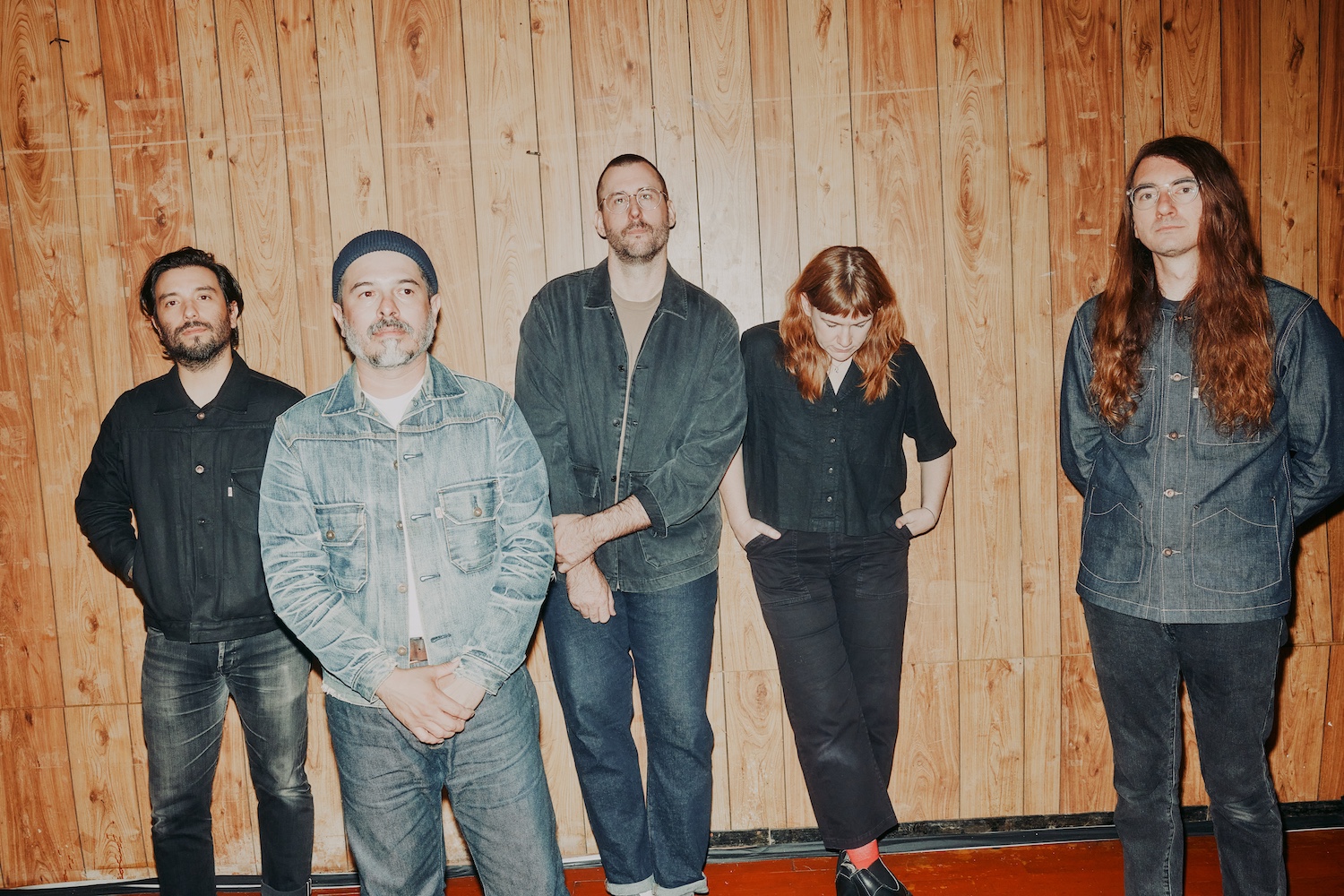
Spanish Love Songs have spent more than a decade building a home for exactly this kind of release. Formed in Los Angeles in 2013, the quintet – Dylan Slocum, Meredith Van Woert, Kyle McAulay, Ruben Duarte, and Mike Trujillo – grew a fiercely devoted community through independent rooms and records like Schmaltz (2018), Brave Faces Everyone (2020), and No Joy (2023), turning personal collapse and wider social anxiety into rock songs meant to be shouted back from a crowd. That history makes the scale of Future Nausea significant: Spanish Love Songs aren’t abandoning the intimacy that brought people to them; they’re giving all that fear, fury, and togetherness a bigger room to fill.
“Good American” arrives nearly a year after A Brief Intermission in the Flattening of Time, the collaborative four-song detour Spanish Love Songs deliberately built as its own self-contained corner of their catalog. Where that record leaned into atmosphere, restraint, and reflection, their fifth full-length, Future Nausea, out November 6 via Pure Noise Records, pushes hard in the opposite direction. Spanish Love Songs try to approach each album with as close to a clean slate as possible; this time, the direction revealed itself almost immediately.

Every day is a mountain
when you can’t tell which disaster to ignore
Turn forty in your high school parking lot
Waiting for the Mazda with your score
Talking heads on the radio say
we can live through a nuclear war
And if you could make it out
You’d start to ask
what your friends evaporated for
“‘Good American’ is the first song I wrote and showed the band for the record, and it sort of instantly clicked with everyone that we were going to make a certain type of rock record,” Slocum explains. “So compared to the EP and really No Joy, it’s going to feel a little louder, a little looser, and a bit less somber.”
Louder is almost an understatement. “Good American” barrels forward on a rolling bass line and four-on-the-floor pulse, every beat pushing toward the next impact as ringing guitars fill the space around Slocum’s voice. There is charisma in the charge, but very little polish between the listener and the feeling itself. The song sounds immediate because it needs to. Its opening line, “Every day is a mountain when you can’t tell which disaster to ignore,” doesn’t introduce a distant political argument so much as a person already exhausted by living inside one. Nuclear war hums through the radio. Forty arrives in a high school parking lot. Work becomes survival. Military service promises belonging, dignity, and purpose – until the institution that asked for everything decides it owes nothing in return.
Slocum says the character emerged almost before he understood what he was writing. He began with “every day is a mountain,” quickly realized he was following a veteran, and started thinking about stories he had read about trans soldiers confronting bans on transgender military personnel – career service members facing the possibility of leaving voluntarily or being discharged, with pensions, healthcare, and disability benefits potentially hanging in the balance. Those stories collided with memories from Slocum’s college years, when he delivered pizzas to a VA hospital and met veterans whose lives stayed with him long after the deliveries ended.
“The big question for me was, ‘why is it so hard to picture a happy ending for some of these folks?’” Slocum says. “It shouldn’t be that difficult, given our country’s vast resources. Yet, we know that’s not the case. And that’s largely the struggle of the song.”
“Good American” gives that struggle a life rather than reducing it to an argument.
“Shipped you off to practice what we preach / Like a real Samaritan / Brought you home to die out in the street / You’re a good American,” Slocum sings, the title landing like praise hollowed out into indictment. Later, economic desperation, military abandonment, and state violence collapse into one another: “Involuntarily separated / No salute for that Silver Star,” followed by the gutting image of someone being called an alien, deadnamed, and beaten against the hood of a police car. Spanish Love Songs have always excelled at making structural catastrophe legible through individual lives; here, the political becomes visceral because there is a body absorbing every consequence.
Shipped you off to practice what we preach
Like a real Samaritan
Brought you home to die out in the street
You’re a good American
You’re a good American
For Slocum, the title’s target extends beyond the military story at its center.
“The song is concerned with the treatment of veterans here, and grapples with the idea of being obedient to and wronged by the institutions we trust,” he explains. “In a broader sense, I’m probably fighting with this notion that we are supposed to shut up and take what we’re given. We’re told that so much is ‘inevitable.’ It has made me and my friends a bit cynical, and I don’t want to be a cynic!”
That last admission matters. For all its fury, “Good American” isn’t interested in cynicism as an endpoint. The title still has somewhere else to go.
“Hopefully by the end of the song ‘good American’ is a form of kinship?” Slocum says. “I see you. We’re in this together. Etc.”
Every day is a question
when you were born in the age of decline
You trip over piss jugs in your van
to pull boxes on that warehouse linе
If you don’t think about the why,
the summer in Dеcember’s pretty nice
And every day is an answer
when you ask for the grace to be who you are
Involuntarily separated
No salute for that Silver Star
And pretty boy calls you an alien
as you waste your paycheck
in your hometown bar
And they’ll use your Christian name
When they club your face up
against the hood of that cop’s car
Shipped you off to practice what we preach
Like a real Samaritan
Brought you home to die out in the street
You’re a good American
You’re a good American
You’re a good American
The music makes that shift possible. Spanish Love Songs could have dressed this story in solemnity, but solemnity would rob “Good American” of the thing that makes it hit so hard: movement. Its anger runs through the body before the mind has time to intellectualize it. The rhythm keeps charging, guitars clang and flare, Slocum pushes against every measure, and the whole recording carries the unstable electricity of a band threatening to blow the walls outward. The darkness of the story and the exhilaration of the performance don’t cancel each other out; they create the tension that gives the song its pulse.
“I love a song that feels loud and uplifting while telling a depressing story,” Slocum says. “That’s probably the biggest through-line for this band the last 5 years and all I really wanted for this song. We wanted people to feel like they were in a room that was about to explode in an outburst.”
Chris Walla helped Spanish Love Songs capture that feeling.
The band’s schedules don’t usually allow them to record live together in one room, but for “Good American,” Walla helped them find a way to build that volatile live energy into the track anyway. Sarah Tudzin’s final mix then strips away anything that might blunt the impact. Slocum’s description of her approach is almost comically simple: “Here’s the band. Here’s the song. Let’s go.” That directness is exactly what the recording needs. Nothing distracts from the forward motion; nothing gives the listener somewhere comfortable to hide.
The same philosophy runs through Future Nausea, produced by Walla and Tudzin. Spanish Love Songs set out to make their version of a big rock record, channeling the widescreen ambition of heartland rock while rejecting the nostalgic mythology that so often accompanies it. Instead of looking backward toward an imagined better America, these songs stare into political violence, late-stage capitalism, climate anxiety, and the dread of whatever comes next. Slocum wanted the record politically angry and major-key, “more angry than sad” – a significant shift for a band whose catalog has long made despair itself sound anthemic.
“It’s not a happy record by any means,” Slocum says. “But it doesn’t feel as introspective. It’s a bar record. It’s meant to be enjoyed in a crowd of people who are all feeling the same way.”
He remembers an NPR host describing Spanish Love Songs back in 2018 as “ALL CAPS ROCK N ROLL.”
“We’ve finally made that record.”
Every day is a blessing and will be
until the day that you are through
Half a pension dries up fast
They left you nothing else to do
At least every sign is pointing
to all of this being over soon
As the city’s burning down,
all I hope is you can finally see the moon
“Good American” certainly sounds like it. Its force is physical, but that physicality serves a larger purpose: Spanish Love Songs want people moving because movement means there are still people beside you. Anger becomes useful when it gets bodies into the same room, voices shouting the same words, strangers temporarily made less strange by recognizing themselves in one another.
“The tension is everything,” Slocum says. “No matter how we branch out, we still come from the DIY punk/emo scene. Community is everything. The only place I really ever want to be is on that stage with my people, shouting until we feel a little bit better. We absolutely had that in mind when recording the album.”
That commitment now extends beyond the record itself. This November, Spanish Love Songs will embark on the first-ever NIVA-certified Live Independent Tour, playing 19 shows exclusively in independent venues across the United States. It’s an unusually fitting next step for a band whose music has always depended on the alchemy of cramped rooms and collective release. These are the spaces that raised Spanish Love Songs, and the spaces where a song like “Good American” can become bigger than the recording – not because its problems disappear once everyone starts shouting, but because being surrounded by people shouting with you can make those problems feel possible to survive.

Slocum is adamant that a four-minute rock song cannot solve what “Good American” describes.
Nor does he want it to become a lecture. Spanish Love Songs’ work has always been more interested in people getting through life than in pretending art can hand them a policy solution. The song’s power comes from that humility. It names exploitation and abandonment without reducing its central figure to either one; beneath every institution and political crisis is somebody trying to make rent, keep their dignity, find their friends, and imagine a future that doesn’t end in another betrayal.
“All we ever want to do is tell stories about people getting through life, and hope that our listeners can see they’re not alone in whatever they’re feeling,” Slocum says. “That’s the best part of music for me.”
And so “Good American” ends without anything resembling an easy victory. “Every day is a blessing and will be until the day that you are through,” Slocum sings, before the song looks out over a city in flames and reaches for one last image of impossible beauty: “As the city’s burning down all I hope is you can finally see the moon.” It is devastating precisely because Spanish Love Songs refuse to confuse hope with reassurance. The system may still fail you. The city may still burn. The future may still make you nauseous.
But somebody sees you.
Somebody is standing beside you.
And by the end of “Good American,” that solidarity feels like the only definition of patriotism worth keeping.
This is where Future Nausea begins: not with reassurance, but with the possibility that anger can still become connection. Atwood Magazine recently caught up with Dylan Slocum to trace how that instinct shaped the record from the first song onward – and why Spanish Love Songs still believe a room full of people shouting together can make despair easier to survive.
Read our interview below, and hear Spanish Love Songs reclaim “good American” for the people still standing beside one another when the country has stopped standing beside them.
Shipped you off to practice what we preach
Like a real Samaritan
Brought you home to die out in the street
You’re a good American
Shipped you off to practice what we preach
Like a real Samaritan
Brought you home to die out in the street
You’re a good American…
— —
:: stream/purchase Future Nausea here ::
:: connect with Spanish Love Songs here ::
— —
Stream: “Good American” – Spanish Love Songs
A CONVERSATION WITH SPANISH LOVE SONGS
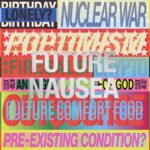
Atwood Magazine: It’s been nearly a year since the release of A Brief Intermission in the Flattening of Time, which felt like such a special, self-contained moment in the Spanish Love Songs catalog. How does “Good American” – and the new music you’re making now – compare to where you were on that EP?
Spanish Love Songs (Dylan Slocum): We always intended the EP to be just as you described, a little self-contained cul-de-sac where we could have some fun with our friends and work through some songs I loved but was never really able to crack.
I tend to be a bit reactionary to whatever work we’ve just done, but we try to approach each album with as close to a clean slate as possible. We don’t necessarily know what the record is going to be until I write the songs and we get them up on their feet. “Good American” is the first song I wrote and showed the band for the record, and it sort of instantly clicked with everyone that we were going to make a certain type of rock record. So compared to the EP and really No Joy, it’s going to feel a little louder, a little looser, and a bit less somber.
“Good American” is the first song we’re hearing from Future Nausea, and it’s been described as a thematic backbone for the album. Why did this feel like the right way to introduce this new era of the band?
Spanish Love Songs: I sort of stepped on this question! Every first single for an album is a chance to re-introduce yourself and maybe win some new people over while hopefully not alienating the people who are already on board. “Good American” has the POV and energy of the record wrapped up in it, so it felt like the easy choice.
Once Sarah sent over the final mix, I don’t think any of us doubted for a second that it needed to be the first single. It was nice to not agonize over something for once.
What does it mean, in the world of this song, to be a “good American”?
Spanish Love Songs: Oh probably too many things to list here. The song is concerned with the treatment of veterans here, and grapples with the idea of being obedient to and wronged by the institutions we trust.
In a broader sense, I’m probably fighting with this notion that we are supposed to shut up and take what we’re given. We’re told that so much is “inevitable”. It has made me and my friends a bit cynical, and I don’t want to be a cynic! I want to be there for people and try to at least hope that we can find some positives in the chaos. So hopefully by the end of the song “good American” is a form of kinship? I see you. We’re in this together. Etc.
What do you think you were trying to interrogate about patriotism, belonging, service, sacrifice, and the institutions that decide who gets used and discarded with this song?
Spanish Love Songs: I think that work lies with the listener ultimately. Stories and songs don’t often emerge for me until I’ve finished writing and can piece it together.
I started this song with the phrase “every day’s a mountain” and very quickly realized I was writing about a vet. The song specifically concerns stories I read about trans soldiers dealing with transgender bans of military personnel, being told to either voluntarily leave or be discharged and potentially lose their pensions, healthcare, or disability.
And then that story ping-ponged in my brain and unlocked some memories I had of delivering pizzas to the VA hospital when I was in college. Trying to picture how those vets might be doing now.
The big question for me was, “why is it so hard to picture a happy ending for some of these folks?” It shouldn’t be that difficult, given our country’s vast resources. Yet, we know that’s not the case. And that’s largely the struggle of the song.

Dylan, you’ve called “Good American” maybe the angriest song you’ve ever written, and the recording feels appropriately raw, loud, and immediate. How did you want that force to carry the song’s political message?
Spanish Love Songs: I love a song that feels loud and uplifting while telling a depressing story. That’s probably the biggest through-line for this band the last 5 years and all I really wanted for this song. We wanted people to feel like they were in a room that was about to explode in an outburst.
The rest lies with Chris Walla. He heard the song and my pitch for the arrangement, and he told us exactly how we could capture the moment. We’re not a band that typically gets to record live in the room all at once due to our schedules, but we figured out a way to build that energy into the recording.
And then Sarah’s mix took it over the top by just keeping it simple. Here’s the band. Here’s the song. Let’s go.
The song traces a life shaped by economic precarity, military service, abandonment, and state violence without ever turning into a lecture. How did that story reveal itself to you?
Spanish Love Songs: Okay I really stepped on this one a few questions ago! Sorry I got excited.
I will say re: lectures (because sounding like I’m wagging a finger is a huge fear) that I’m not going to pretend that we can solve any problems in a 4 min rock song. All we ever want to do is tell stories about people getting through life, and hope that our listeners can see they’re not alone in whatever they’re feeling. That’s the best part of music for me.
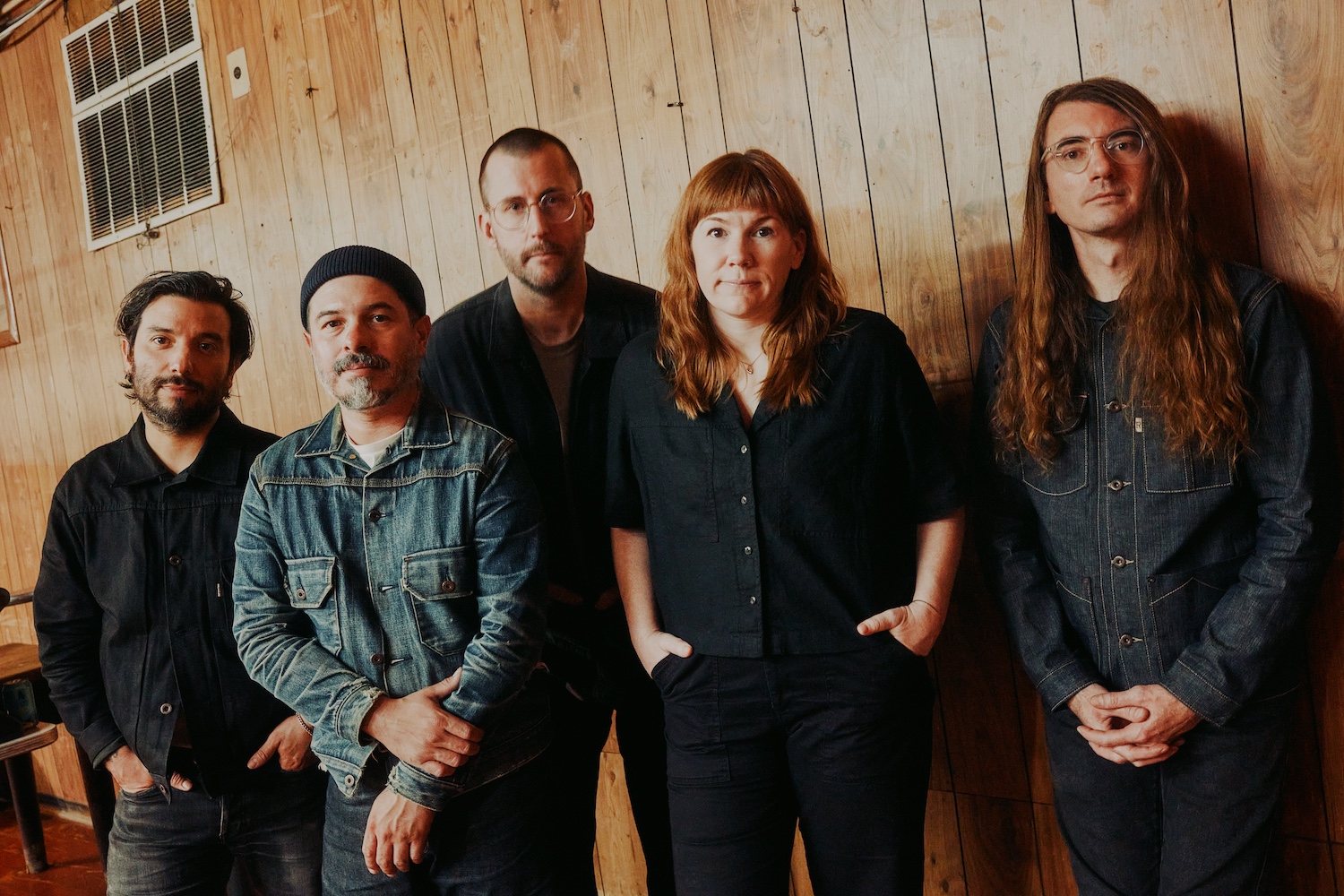
There’s something powerful about hearing a song this angry still built for movement – for people dancing, shouting, and finding one another in the room. How important was that tension to “Good American” and to Future Nausea more broadly?
Spanish Love Songs: The tension is everything. No matter how we branch out, we still come from the DIY punk/emo scene. Community is everything. The only place I really ever want to be is on that stage with my people, shouting until we feel a little bit better. We absolutely had that in mind when recording the album.
You’ve said you wanted Future Nausea to be your version of a big rock record, but also as politically angry as possible – “more angry than sad.” What can you share about the album, and what are you most excited for people to hear?
Spanish Love Songs: Exactly that! We set out to make a record that could get people riled up, and maybe shake off some of the gloom of our last few records. I don’t want to confuse anyone — it’s not a happy record by any means. But it doesn’t feel as introspective. It’s a bar record. It’s meant to be enjoyed in a crowd of people who are all feeling the same way.
I remember we had coverage of our band back in 2018 where an NPR host described us as “ALL CAPS ROCK N ROLL,” and we’ve finally made that record.
— —
:: stream/purchase Future Nausea here ::
:: connect with Spanish Love Songs here ::
— —
Stream: “Good American” – Spanish Love Songs
— — — —
Connect to Spanish Love Songs on
Facebook, 𝕏, TikTok, Instagram
Discover new music on Atwood Magazine
© Mitchell Wojcik
 © Mitchell Wojcik
:: Today’s Song(s) ::
follow our daily playlist on Spotify
:: Stream Spanish Love Songs ::