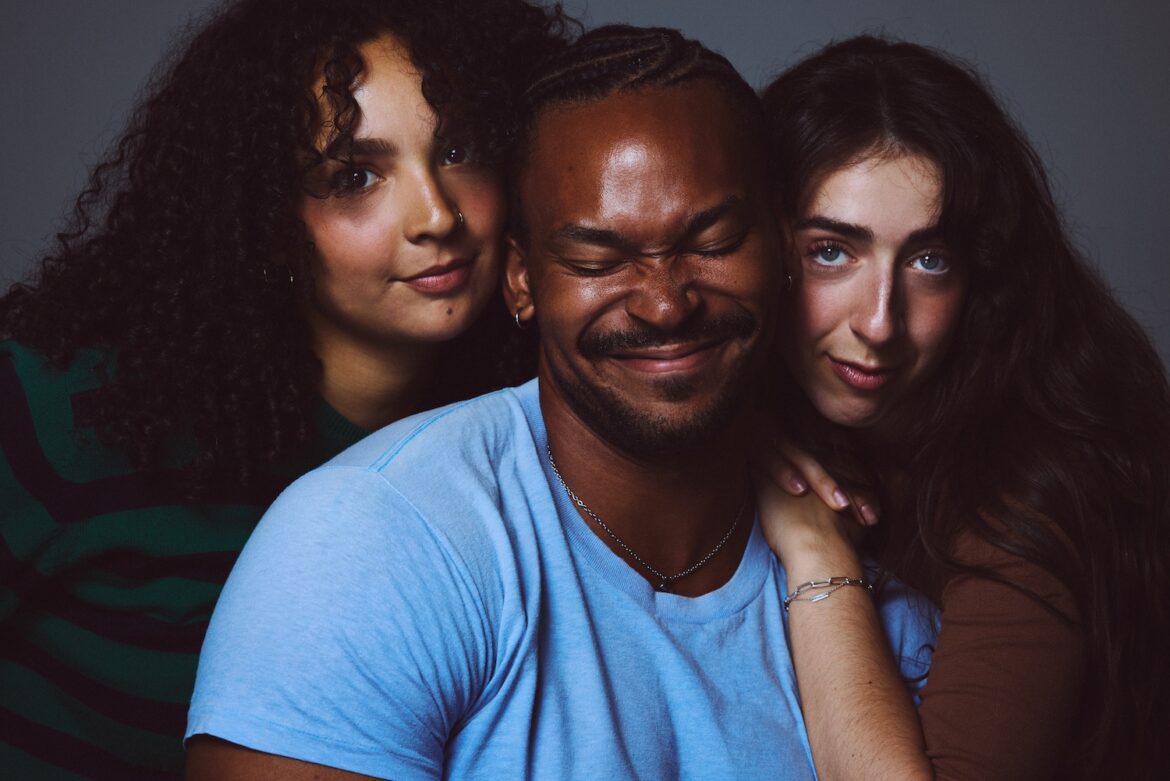
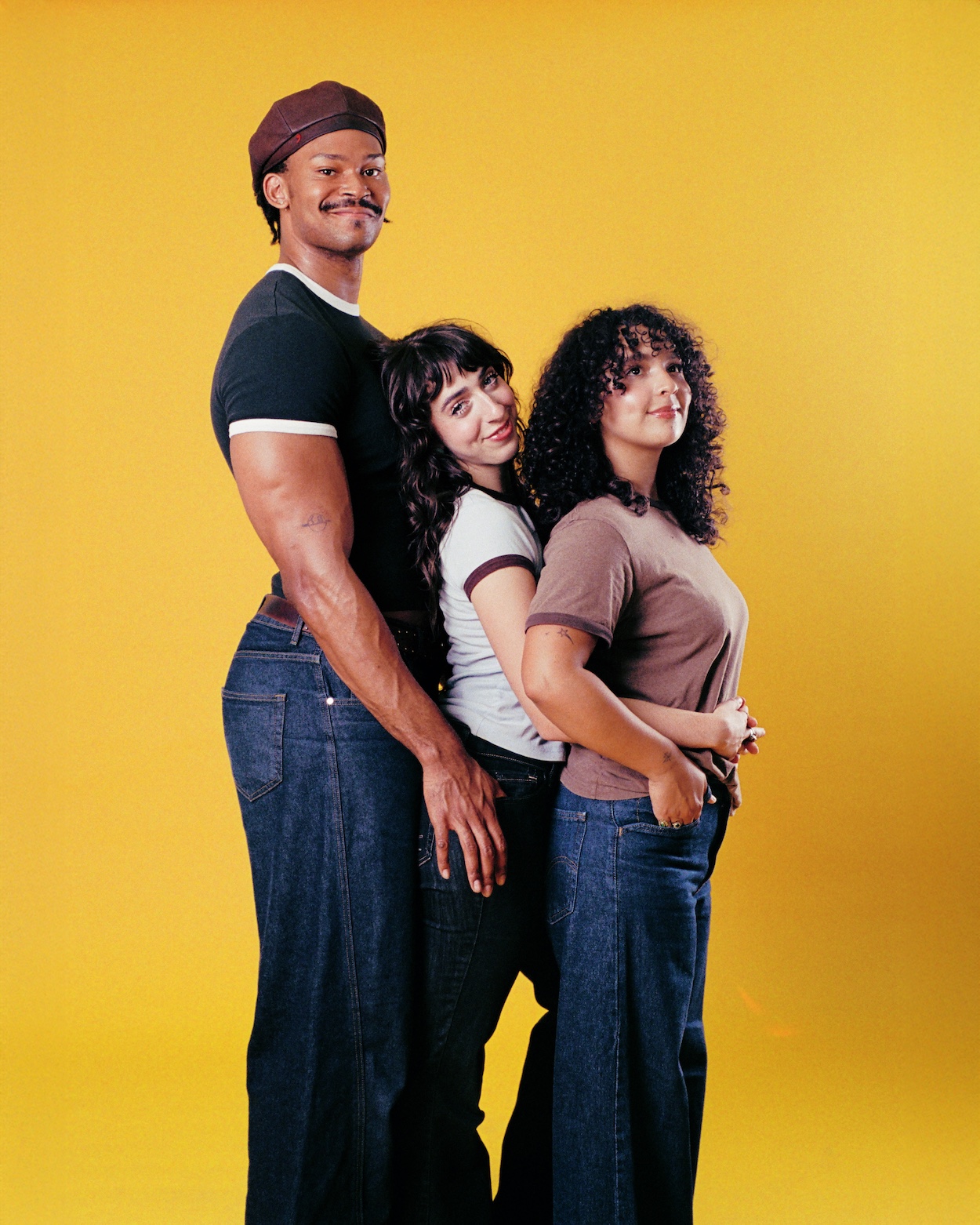
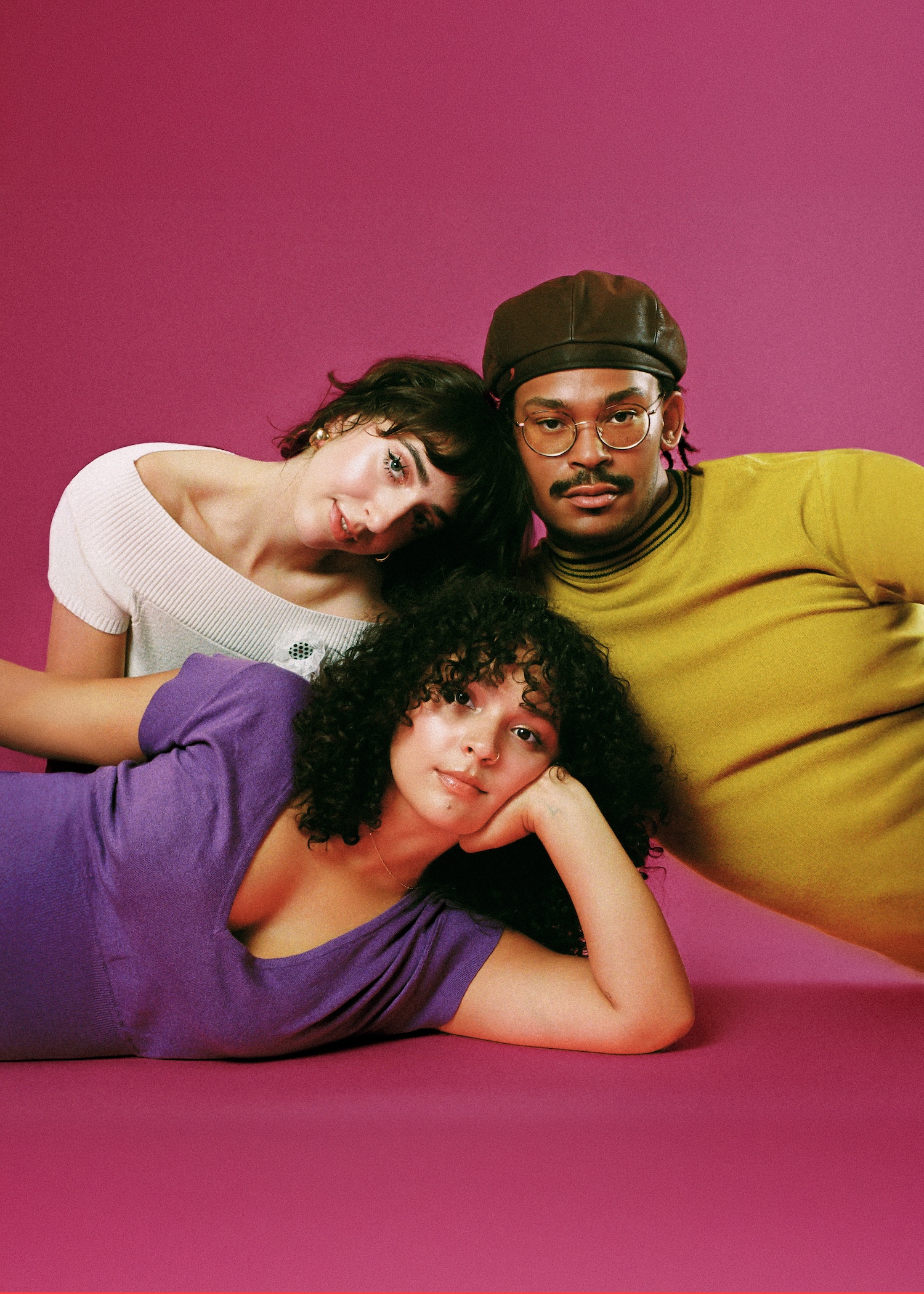
Tiny Habits are doing what they love with the people they love most. Bolder, brighter, and more playful than ever, the trio embrace a wider musical world on their spellbinding sophomore album ‘Keepers,’ carrying their exquisite harmonies into buoyant pop and soulful R&B while exploring the complications of love, family, and identity. In conversation with Atwood Magazine, Cinya Khan, Judah Mayowa, and Maya Rae open up about the intimate stories behind their songs, the creative freedom they’ve discovered, and the extraordinary friendship at the heart of it all.
Stream: “Love Ruins Everything” – Tiny Habits
A lot of friendship, a lot of laughter, and a lot of harmony.
* * *
There’s an infectious ease to the way Cinya Khan, Judah Mayowa, and Maya Rae interact.
They interrupt each other, build on one another’s jokes, and seem to take as much pleasure in making each other laugh as they do in making music together. Their affection is unmistakable, and so is the joy they find in being Tiny Habits.
Formed in Boston in 2022 after meeting at Berklee College of Music, Tiny Habits first captured listeners’ attention through intimate videos of the trio singing covers in their dorm-room stairwells. Their debut EP, Tiny Things, followed in 2023, with their first full-length album, All For Something, arriving a year later.
Those early releases revealed a band with a remarkable gift for making intensely personal feelings resonate beyond themselves. Rooted in folk pop, their songs paired intricate, intertwined harmonies with candid lyricism, finding beauty in the complications of love and the uncertainty of growing up. There was an emotional openness to their music that invited listeners closer, with three distinct voices coming together to make even the most solitary experiences feel shared.
But while their voices fit together beautifully, Khan, Mayowa, and Rae were still figuring out what it meant to create together – how to make room for everyone’s ideas while learning to stand up for their own.
“We didn’t have a lot of backbone yet, and we didn’t know how to be honest in a real way,” Mayowa recalls. “We were still catering to each other and trying to make sure that everyone was happy, but not everyone really was happy because we weren’t being upfront with each other and being like, ‘Oh, that’s actually bad. That’s actually not what we want.’”
Those first records gave Tiny Habits their footing, but the years spent making them gave Khan, Mayowa, and Rae something just as valuable: A stronger creative partnership, built on a deepening trust in one another and a clearer understanding of what they wanted the band to be. With that foundation in place, they were ready to explore just how much further they could go.
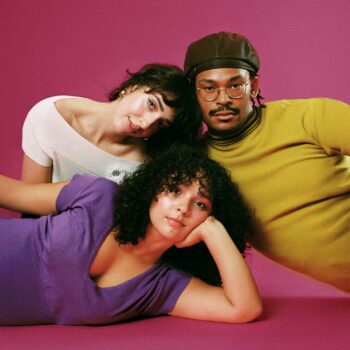
Their sophomore album, Keepers, released August 28 via Mom+Pop Music, is a colorful, adventurous, and deeply personal collection that finds the trio embracing a wider musical world without losing the intimacy that first brought them together. Across twelve emotionally charged, harmony-laced songs, Tiny Habits explore everything from vivacious pop and soulful R&B to the tender folk textures of their earliest work, bringing a newfound freedom to their songwriting and arrangements.
“With Keepers, we were all just so incredibly open to everything and every idea, and we tried everything,” Rae recalls. “Maybe in the end we’d scrap a note here and there, but we were really just throwing paint at the wall.”
The album’s musical openness is matched by an even greater willingness to explore difficult – and often vulnerable – emotions. Love and heartbreak, complicated family relationships, loneliness, and self-doubt all find their way into Keepers, alongside the excitement and uncertainty of growing into adulthood. Each member brings their own experiences and perspectives to the music, opening up about deeply personal struggles while finding strength in the understanding and support of the other two.
Even the album’s title speaks to that spirit of perseverance and connection. Inspired by an image of trees growing through concrete in Sandra Cisneros’ The House on Mango Street, Keepers reflects on what we choose to carry with us as life changes – the memories that shape us, the relationships we cherish, and the parts of ourselves worth holding onto. For Khan, Mayowa, and Rae, it’s also a celebration of the friendship that has allowed them to grow individually without growing apart.
“We very carefully crafted what songs were going on this album,” Rae explains. “Which songs are our keepers? What really encapsulates us as a band, and also us individually? What are the stories that we want to tell, and the secrets that we keep within each other and in our friendship?”
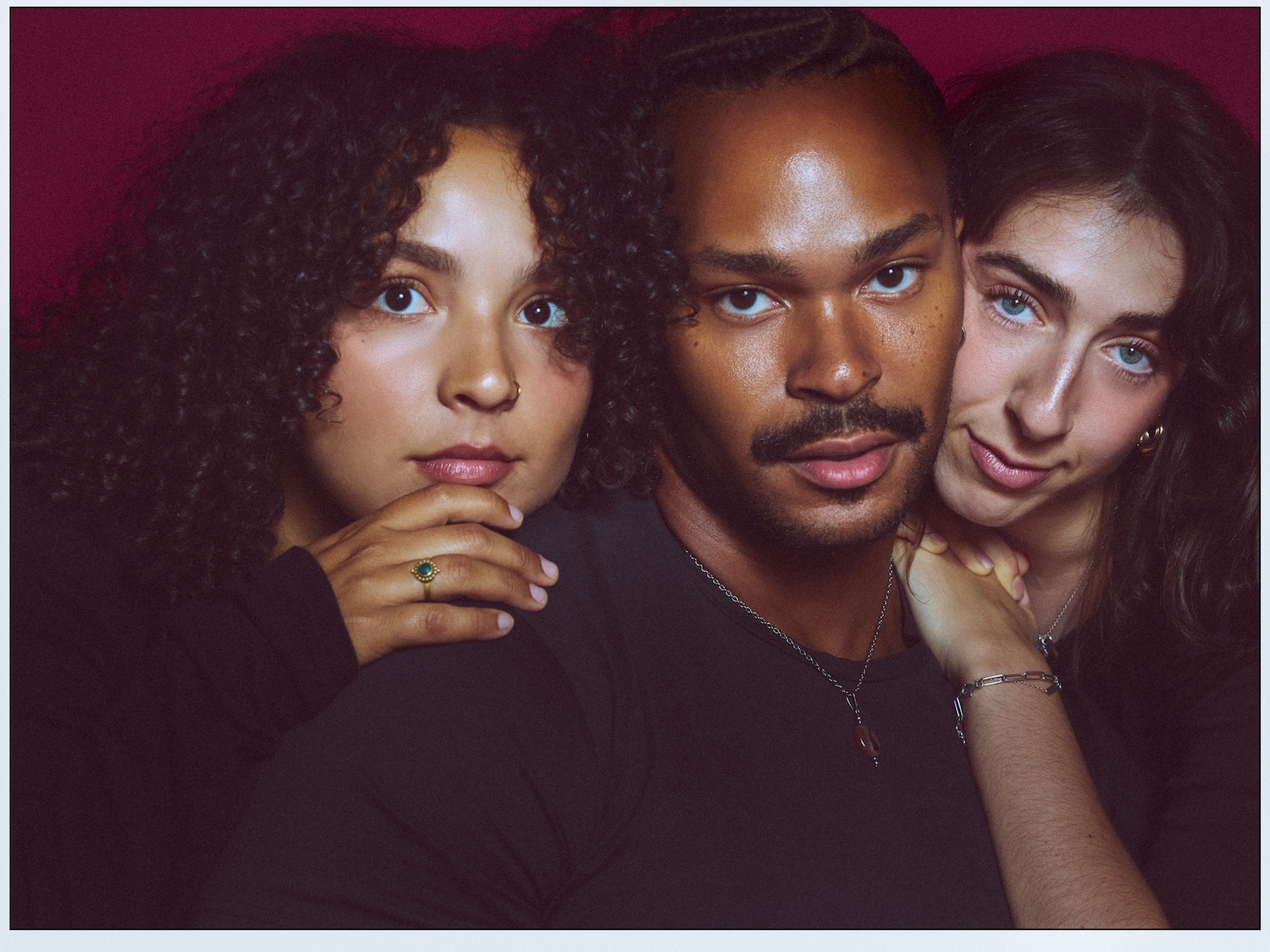
Each of those stories offers a different glimpse into the lives of Khan, Mayowa, and Rae – revealing the heartbreaks, hopes, and hard-won lessons they’ve carried into this chapter of Tiny Habits.
Album opener “Love Ruins Everything” comes bounding out of the speakers on a springy bassline, soaring vocal harmonies, and a jubilant blast of horns. There’s a seductive energy to this first track, its lively, soulful arrangement offering a playful contrast to the contradictions at the heart of its chorus: “When it’s over it was all for nothing / When it’s happening it’s that or nothing else / When you can’t have it it’s all you want.” Love, it seems, has a remarkable ability to consume our lives whether we have it, want it, or have lost it. Tiny Habits embrace the absurdity of it all, bringing their three voices together for a spirited, irresistibly catchy celebration of romantic chaos.
“My initial reason for writing that down was in a sweet way,” Khan explains. “Love ruins everything in a way that it’s so bright and vibrant and delicious that the rest of the world kind of seems gray.”
Mayowa and Rae, both single when they began writing the song, brought a more cynical perspective. Their experiences complicated Khan’s original sentiment, opening the door to a broader exploration of love’s pleasures and frustrations. Rather than settle on one interpretation, the trio embraced them all, allowing their different relationships with romance to enrich the song’s meaning. It’s a fitting introduction to an album where individual perspectives are given room to flourish.
Elsewhere, “Belt Loop” slips into a sultry, late-night R&B groove, its supple bassline and understated brass lending an intoxicating sensuality to a story of lingering heartbreak. Inspired by Rae’s experiences following a breakup, the song finds its narrator caught between the person she’s with and the person she can’t stop thinking about. The details are wonderfully vivid: A crowded party, gin on someone’s lips, a familiar car in the parking lot, and the unmistakable memory of a lover pulling her closer by the belt loop. “I’m guilty wishing it could feel the same without you,” Rae sings, revealing the ache beneath the music’s seductive exterior. There’s a bittersweet tension between the excitement of moving forward and the uncomfortable realization that part of you is still looking backward.
“Anything He Was,” featuring Matty Healy of The 1975, approaches that emotional territory from another side. Gentle acoustic guitars, softly glowing keys, and breathy harmonies surround Mayowa’s vulnerable confession of loving someone whose heart remains tethered to another person. The song’s aching refrain – “I know I can’t be anything he was to you / But I’ll try to, try to” – captures the painful willingness to make yourself smaller in the hope of being chosen. For Mayowa, the experience reaches back to a formative relationship at seventeen or eighteen, with someone who “really opened the door to my queerness.” Time has brought a more compassionate understanding of that younger self, and the song now serves as both a reminder of what it felt like to want someone so desperately and a recognition of how much Mayowa has learned about deserving love in return.
The emotional stakes reach even further into the past on “Pattern of a Person,” one of Keepers’ most affecting and deeply personal compositions. Against a delicate arrangement of acoustic guitar, piano, harp, and strings, Mayowa revisits a childhood marked by a mother dreaming of a better life and a father whose occasional visits inevitably ended in departure. These memories carry an enduring weight, shaping expectations of other people and raising painful questions about what might be passed down to the next generation. “Pattern of a person / Will it water down / Through each generation,” Mayowa sings, searching for a way to break free from the hurts and habits inherited along the way. The song is devastating in its vulnerability, yet there’s a palpable tenderness in the way Khan and Rae surround Mayowa’s lead vocal, offering their support through every difficult revelation.
“Singing that song with them supporting me is, in a way, like holding my hand and allowing me to tell my story, but also being like, ‘We got you, girl,’” Mayowa shares. “A part of my life was easier to even articulate because I had two people helping me process things that maybe I didn’t give myself time to process.”
The desire to live more fully on your own terms takes a spirited, empowering form on “Someone You Love.” Bright piano, punchy drums, and ringing guitars propel an exhilarating pop anthem that wrestles with the sacrifices we make to satisfy other people’s expectations. “I could be someone that you love / And someone I hate,” the trio sing, before arriving at the possibility of becoming someone they can love themselves. What initially sounds like a song about romantic compromise carries an additional meaning for the band: Rae recalls feeling pressure from outside voices to deliver a big pop hit, and the resistance that expectation inspired. They loved pop music, but they weren’t interested in chasing success at the expense of their own creative instincts. The irony is delightful – in refusing to force a hit, Tiny Habits ended up writing one of their most instantly appealing pop songs yet.
“We’re gonna make the music that we want to make, and if it becomes that, great, but we’re not gonna force something out of us just for the sake of checking that box,” Rae says.
A similar sense of liberation courses through “Right In Front Of Me,” a buoyant, rhythmically vibrant highlight that begins with the trio’s familiar a cappella harmonies before blossoming into a joyous, full-bodied arrangement. Its narrator is paralyzed by social anxiety, watching someone dance with abandon while remaining painfully aware of her own discomfort. The song captures that familiar frustration of wanting to participate in life while feeling trapped inside your head, its increasingly exuberant musical progression mirroring the courage it takes to finally get up and join in. Khan describes entering social situations and becoming so self-conscious that she doesn’t know what to do with her hands, while Mayowa recognizes the temptation to wait for someone else to provide the encouragement needed to feel free. Together, they’ve discovered that confidence can grow from within – and that friendship can help bring it to the surface. “We’ve all become braver because of each other,” Khan reflects.
There’s another kind of bravery in “Fragile, Too,” a sweet, wistful meditation on the work of maintaining love across time and distance. Its softly strummed acoustic guitars and graceful, rising harmonies cradle a fear that even the closest relationships can gradually lose their tenderness if left unattended. “I don’t want to lose that part of me / That reaches out for you,” the trio sing, acknowledging how easily familiarity can give way to distance. The song’s sweeping bridge has become one of Khan’s favorite moments to perform, its communal swell evoking the almost spiritual feeling of singing in church. There’s comfort in the music’s gentle insistence that strong relationships are worth tending to, and that recognizing their fragility can be an expression of love in itself.
All of these feelings find a beautiful resolution in the album’s closing “Lonely Is A Silent Song,” a tender, richly layered folk ballad that brings Tiny Habits back to the intimate musical world where their story began. Acoustic guitars, piano, and strings unfold beneath the trio’s voices as they offer a heartfelt plea for understanding: “Just want to hear / I won’t pick apart the notes / How can words be wrong / When lonely is a silent song.” It’s an especially meaningful ending because, unlike the individual stories that populate much of Keepers, this is the only track on the album where Khan, Mayowa, and Rae sing entirely in unison. After giving each other room to share their own experiences, they come together once more, their voices united in a promise to listen without judgment and stand beside one another through whatever life brings.
“Loving each other is so easy, and being there for each other is so easy,” Mayowa says. “I love that song. It reminds me of that. I got my friends.”
For Tiny Habits, the rewards of making Keepers extend well beyond the finished music.
Rae hopes listeners will find a piece of themselves somewhere within its many moods and perspectives, regardless of what first drew them to the band. She’s also discovered a freedom in letting go of the expectations that once seemed to define their musical identity. The possibilities feel wider now, and the validation they’ve received has only reinforced their belief in following wherever their creativity leads.
“There aren’t really limits,” Rae reflects. “For so long, maybe we felt we had to stay in this box, and I think it was really validating to me that, oh, we don’t have to, and people will still really like what we’re doing, because it’s just authentic.”
For Khan, the lessons have been more personal. Making the album has deepened her understanding of how important it is to ask for help, especially when the people closest to us might not realize we’re struggling. She’s never found it particularly easy to admit when she’s hurting, but the experience of sharing those feelings with her bandmates has shown her how powerful that vulnerability can be. She hopes listeners might take a little of that courage into their own relationships.
“I want people to walk away from listening to the album and maybe realize that they can lean on their community in a way that they hadn’t before,” Khan says. “I’m just not someone who is good at being like, ‘Hey, I’m really sad, and I need someone.’ So if somebody like me listens to this album and is like, ‘Wow, I should maybe talk to my friend about that,’ that’d be so cool.”
Now, with their first headline tour in two years, Tiny Habits are eager to bring that openness to the stage. The prospect is particularly exciting for Mayowa, who admits to spending too much time inside their own head while performing. These songs offer an opportunity to loosen up, move more freely, and connect with audiences in ways the band’s earlier music didn’t always allow. The band’s live show is growing to match: There are dance moves in the works, a wireless microphone for Mayowa, and plenty of the spontaneous humor that comes so naturally to the three friends.
“I’m so excited to free myself,” Mayowa smiles. “This set and this album are gonna really give me the opportunity to be a little more free and a little more engaged with people, and with my friends onstage.”
Of course, returning to the road comes with its own anxieties. Even after everything they’ve accomplished, the trio still laugh about the familiar pre-tour fear that nobody will turn up. There’s excitement in imagining rooms full of people singing their words back to them, and a certain nervous anticipation about finally sharing these songs face-to-face. But beneath those butterflies is the simple pleasure of getting to spend another stretch of their lives doing what they love alongside the people they love most.

Keepers is a remarkable achievement precisely because it allows so many different sides of Tiny Habits to coexist.
Its bright, spirited pop songs carry bruised hearts, while its gentlest moments hold revelations that linger long after the final notes fade. There’s an invigorating freedom in the way the trio move fluidly between styles and sentiments, following the emotional needs of each composition rather than conforming to any single idea of what their music should sound like. These songs are funny when life is absurd, unflinchingly sincere when the stakes are high, and generous enough to leave room for the contradictions that make us who we are. It’s a striking portrait of a band growing into its own identity in real time, discovering that the more fully each member embraces their individuality, the richer their collective artistry becomes.
And perhaps that’s what makes Tiny Habits themselves so special. Beneath the breathtaking harmonies and increasingly sophisticated arrangements are three people who genuinely delight in one another’s company, whose friendship has given them the courage to be more honest with themselves and each other. Their love is palpable in the way they laugh together, but it carries just as much weight in the harder moments – in the willingness to disagree, to listen, and to stand beside one another when the words are difficult to find. There’s a sweet sincerity to their bond, an affection that reaches beyond the music and makes you want to be part of their world. Their earliest recordings introduced three voices capable of becoming one; Keepers reveals three distinct artists who have learned how much stronger they can be together.
For all their excitement about bringing this music to audiences around the country, Khan offers one final thought that might best capture the spirit of Tiny Habits. When the conversation turns to the possibility of playing to an empty room, she considers the prospect for a moment and realizes that, this time, she isn’t all that worried.
“I’m not so scared, because I would still have fun if no one was there.”
After all, there’s already a lot of friendship, a lot of laughter, and a lot of harmony.
Read our candid conversation below as Tiny Habits open up about the making of Keepers, the experiences that shaped its songs, and the extraordinary friendship that continues to carry them forward.
— —
:: stream/purchase Keepers here ::
:: connect with Tiny Habits here ::
— —
Stream: ‘Keepers’ – Tiny Habits
A CONVERSATION WITH TINY HABITS

Atwood Magazine: Cinya, Judah, Maya, for those who might just be discovering Tiny Habits through this conversation, what do you want them to know about who the band is today, in 2026?
Judah Mayowa: We’re just a bunch of little friends.
Cinya Khan: We’re just three silly little guys.
Judah Mayowa: We’re silly little guys who love to make music together and hang out, man. Mostly.
Cinya Khan: To hang out.
Maya Rae: It’s a lot of friendship, a lot of singing, a lot of laughter, and a lot of harmony. That’s our slogan. A lot of friendship, a lot of laughter, and a lot of harmony.
Cinya Khan: Let’s do it. T-shirt.
It's been just over two months since Keepers came out. What's it been like having this record out in the world? How are you feeling now?
Cinya Khan: I feel very free. It’s so funny when you make music, because it doesn’t come out until so long after you’ve made it. I don’t want to say I feel separate from it, but I don’t feel as attached to it as when we were making it or writing the songs.
But it feels really cool to have people posting covers of it or reacting to it in some way. It’s a really cool experience to know that it’s reaching someone in a real way.
Maya Rae: It is so cool. I feel like for so long, we held onto this music and the secret of having another record and how different it was. There were so many mixed emotions about putting that out into the world, because for so long, our fans and listeners only had one record and an EP to listen to. There wasn’t a lot, and it was also a very specific thing that we were doing, along with the videos that we post.
I feel like this was maybe a bit of a – not a slap in the face, but just, “Oh, they’re really doing something different.” We were nervous and excited about that. We were so curious to see how other people would receive it, and I think it’s been so validating that people have loved it. It hasn’t been, “Oh, what are they trying to do here?” or “This is so not like them.” It’s been, “Oh, this is so Tiny Habits.” And that’s how it feels for us to sing.
Judah Mayowa: To piggyback on that, I feel like the feeling I feel the most is relief, because the comment we’ve been getting the most in regards to this album is that it’s still so us. It doesn’t feel like we’re trying to be someone else.
It is so us. It’s just another part of us that we’re allowing people to experience, and I’m glad people are receiving it that way. That’s another part of us that they’re getting to know.
I feel like what I'm hearing is a sense of anticipation, relief, and pride, all jumbled up into the same cloud. Maya, to piggyback off something you said earlier, I love when my favorite artists are forever evolving, transforming their music. They don't stay still from one year to the next. Bowie, Prince – you name the person or band, they didn't stay in the same lane, and yet you can still say throughout the entire arc of their careers that they were true to themselves. When I first heard Keepers, I thought it was a huge evolution from All For Something, but it doesn't feel like a new band. It feels like the same band growing into a new skin. To that end, it's been two very long years since the release of your debut record. What is your relationship like with that album today, and how do you feel Keepers reintroduces Tiny Habits?
Maya Rae: I feel like Keepers honestly introduces Tiny Habits.
Cinya Khan: I agree. It’s funny that the music we had put out is what people knew us for, because I feel like this is actually the closest we’ve ever gotten to truly expressing ourselves accurately.
Maya Rae: I think All For Something was meant to be what it was for us in that period of time.
Cinya Khan: It was formative.
Maya Rae: It totally was, and I think it represents where we were at as a band then. It was early on in our careers, and we hadn’t made a whole album together. There was a lot of discovery that we had to do together that maybe we didn’t necessarily have the time for.
There was a lot of demand to put something out, and we hadn’t even written that many songs. Whatever songs were there between the three of us, we put on the record because we were like, “We have to release an album.”
With Keepers, we had a lot more time to craft the record and be particular about it, which ended up with us being really proud of it. It feels like us, and representative of us as a band. And it’s so vibrant.
Judah Mayowa: We definitely needed that album process, the All For Something process, because I think it set up the amazing process we had of making Keepers.
We were still trying to get to know each other creatively and build a creative relationship with each other and the people we were working with. We didn’t have a lot of backbone yet, and we didn’t know how to be honest in a real way. We were still catering to each other and trying to make sure that everyone was happy, but not everyone really was happy because we weren’t being upfront with each other and being like, “Oh, that’s actually bad. That’s actually not what we want.”
Cinya Khan: There’s a way for everyone to be satisfied and actually like it, versus everyone being satisfied because they didn’t really say what they meant and they’re just allowing things to happen, which I feel like is what the first album was like. It wasn’t bad to me, but it wasn’t my favorite thing, I guess.
Judah Mayowa: Fair enough. I think we also took our time with Keepers, whereas we were bending to the deadlines that we had with the first one, trying to get something out for people to listen to because they only had such a small project.
I think we needed that process and a lot of lessons in order to make Keepers and enjoy making Keepers. I feel a lot of gratitude for All For Something, because I think it shaped the three of us individually, and even as a unit – how we work together, how we create, and how we enjoy the music-making process. I definitely wish we could go back with the same mindset that we have for Keepers to make All For Something the way that we really, really wanted.
Maya Rae: Even the same openness. I think we were open in making All For Something, too, but maybe a little less in tune with what we wanted. With Keepers, we were all so incredibly open to everything and every idea, and we tried literally everything. Maybe in the end we’d scrap a note here and there, but we were throwing paint at the wall.
I do feel like All For Something was maybe a little bit less that. But Keepers does feel like a second record to me. I think if it was our first record, that would have almost felt intimidating in a way. We were so excited for this to be our second record. I think it all happened the way it was supposed to. I really do. All For Something feels like our baby, and Keepers is like, okay, she’s a teenager.
What I love about this is that you can now be a band that puts out a song as muted, lush, and hushed as “Hemingway,” and be the band that owns these bigger, funkier pop songs. That's not a line a lot of artists or groups can toe. I'd say the sky's the limit. While I love the direction Keepers sees you going in, who's to say what might come next? You've given yourselves permission to throw off the guardrails.
Cinya Khan: I think that’s what we wanted to do. We wanted to be like, “Don’t put us in a box, y’all.” Be prepared for… I don’t know, we wanted to be free. We freed ourselves.
Judah Mayowa: The metaphor I would like to use is a little bowling lane. We took the little rails off, and it’s like…
Cinya Khan: Maybe it’s a gutter ball, but I threw it. I got a strike!
Maya Rae: We got all those pins! And I think we’ll always come back to the cozy, warm, quiet stuff, too. We love all kinds of things, and that’s on Keepers as well. To everyone’s point, we were just like, “Let’s do it all. Let’s try and do it all.”
I find Keepers to be funky, bold, warm, and bright. Who are some of your musical North Stars these days, and what are you most excited about musically on this album?
Maya Rae: One big inspiration for Keepers – we were so lucky to tour with James Taylor last year and his whole band. We played almost 60-something shows with him, and we listened to a lot of his records while on tour. He honestly does it all as well.
Cinya Khan: I was gonna say, he’s a good example of switching it up.
Maya Rae: We were really inspired by the way that he sings and the way that he writes. His horn section on tour was a big inspiration, and we added some horns on our record. Who would have ever thought there’d be horns on Tiny Habits music? I didn’t! But I’m so happy we did it. So he’s one, for sure.
Cinya Khan: I’ve been listening to the Sundays. I’m into the autumnal vibes. I don’t know if that’s answering the question, though. Honestly, MUNA is really inspiring to me. I’ve loved them since the beginning of college, and I feel like they had probably some sort of subconscious impact on this album. They just go so hard in a way that is so amazing to me. I love it. I’m so inspired by them.
Maya Rae: Earth, Wind & Fire was another reference we had. It’s so hard because the references were all over the map. It’s hard to even remember, because I think for every song, it was a completely different world.
Judah Mayowa: I’m going blank. Every time someone asks a similar question, I can’t think of anyone specific. I think song by song, we had such different artists or musicians in mind that we were trying to emulate or be inspired by.
Maya Rae: We actually had a few of James’ band members play on our record as well. We became buddies, and they played on our album, which was really surreal. They’re absolute legends.
I'm curious, where did the title Keepers come from?
Cinya Khan: I was looking through this book in a library, and it was a book I had read when I was younger, The House on Mango Street. She has a poem in that book called “Four Skinny Trees,” and there was a line about how the trees keep keeping in spite of the concrete, like in New York City.
I thought that was so cool. And then the word “keep,” “keeping,” “keeper” – it just felt right. We figured out so many different ways that it made sense and justified itself for the album, so we went with it.
That's an interesting segue into some of the album's themes, because stepping back, Keepers seems to be about figuring out what's worth holding onto and what we need to let go of. Obviously, that's a very broad brush I'm painting with, but at its core, what is this album about for the three of you?
Maya Rae: To Cinya’s point about the word Keepers and how it applies to the record, I think we very carefully crafted what songs were going on this album. It was like, “Which songs are our keepers? What really encapsulates us as a band, and also us individually? What are the stories that we want to tell?”
And the secrets that we keep within each other and in our friendship. I think that’s what the album became – a lot of our own personal stories being sung by that individual person, which is something we didn’t do on the last record.
A lot of the time, we split up every song – who would take a verse, who would take a chorus, whatever the main parts were. For this album, we decided it was important that each person tell their story, supported by the other two.
So that’s what this album became. What are the stories that we want to tell that maybe our fans don’t know about, and that we’ve only necessarily shared with each other? It became this secret-sharing world in a supportive way.
Would you mind sharing an example or two of that?
Judah Mayowa: Well, there’s one song on the album I wrote called “Pattern Of A Person” that’s about my parents, and how I grew up not really knowing my dad until about four years ago. It’s about how that shaped my expectations of people and myself, and the uncertainty I was feeling about doing things like falling in love and having kids of my own.
Obviously, Maya and Cinya know a lot about my life, and I share so much of it with them. Singing that song with them supporting me is, in a way, like holding my hand and allowing me to tell my story, but also being like, “We got you, girl. It’s okay to tell this and talk about something that’s so vulnerable, and know that you have people you can trust and fall on anytime you need to do anything like that.”
That was definitely a song that was very difficult. It’s obviously easier to sing than to talk about, but I feel like it became easier to sing and express because of them. A part of my life was easier to even articulate because I had two people helping me process things that maybe I didn’t give myself time to process. So, love y’all.
I’d say that’s one example of the trust we have in each other, and trust that we’re giving to even our fans – certain parts of ourselves that we’re not always telling people about or even proud of. We got friends.
Maya Rae: You got friends. There was a lot of family stuff on the album, for sure. A lot of songs about our friendship with each other, which is something we hadn’t really explored before. Or songs that were initially about something else that took shape and became about our friendship as well. I feel like that happened a lot over the course of the record.
I went through a breakup, so “Belt Loop” is about that, and navigating experiencing things with somebody else, and the guilt of that and how it stays with you. The song has a very different vibe – it’s not so sad – but there is an undertone there if you listen to it, for sure.
It's very special that you've been able to evolve into a group that is as much true friendship as it is a band making music for others. You're doing this as much for yourselves, at the end of the day. Isn't that the best of both worlds? “Love Ruins Everything” is such a fun way to open the album, exploring all the contradictions of wanting love and having it. What's the story behind that song, and why did it feel like the right place to begin Keepers?
Cinya Khan: I’ll answer the second question first, because we were going through the tracklist on one of the final days of being in the studio, and we knew that we wanted “Lonely Is A Silent Song” to be last, I think.
Then we were like, “Okay, what’s gonna be first?” And we felt like it made sense to all sing together at the top and at the end of the record, with the individual stories peppered through the rest of the album. That was definitely a deciding factor as to why it was gonna be first.
Also, energetically, it’s so much fun that it felt so right. With the last album, we’d done an interlude-y song at the top, which is totally a cool move, but I feel like this time we just had to smack it down on the desk.
So that’s why we decided, and someone else can answer the other question – the process.
Maya Rae: In terms of how the song came to be, Cinya, I think you wrote the title down beforehand? Just the “Love Ruins Everything” thing. Cinya’s in a long-term relationship, so it’s funny that she wrote that down, because being in a relationship can be so consuming and so amazing, but…
Cinya Khan: My initial reason for writing that down was in a sweet way. It was like, “Oh, love ruins everything,” in a way that it’s so bright and vibrant and delicious that the rest of the world seems gray. That was my initial idea, and then we went in a different direction.
Maya Rae: When Judah and I came into the mix, neither of us were in relationships, and we’re a little cynical about love sometimes. When writing it, we were like, “Yeah, love does ruin everything.” When you’re not in a relationship, all you want is to be in one. You’re craving that thing, and then when you are in one, the grass is always greener.
It all just fell out. I think we were in one of the first sessions we were having, and we wrote the chorus. Then we went to Judah’s house maybe a couple months later. I think we took a step away from the song, and the verses just fell out because we were like, “Well, wouldn’t it be interesting if we wrote from a completely different perspective?” Almost a bird’s-eye view of what this looks like.
I think it is funny because the title “Love Ruins Everything” sounds like such a cynical thing, and the reason for writing it, or Cinya even coming up with the title, was actually the complete opposite.
It's funny how one thing can mean so many different things, even opposites of each other. Judah, “Anything He Was” explores the painful experience of being compared to somebody else's former partner. It's such a crushingly beautiful song, and it seems I'm not alone in that feeling, judging by how many people have connected with it. What's it like to have a song like that out in the world?
Judah Mayowa: It definitely feels nice. It feels like a consolation prize for the – excuse my language – shit that man put me through. But I think sometimes I look at this one and I’m like, “Aw, I definitely was a little delulu.” There were clear signs that I was never going to be exactly what he needed, and I sort of always, deep down, knew I was filling a little void.
I think I’ve definitely grown into giving myself grace, because I think, as most people do, I cringe at memories and things that happened that didn’t feel good. I was like, “Oh, obviously I was 17, 18. Boohoo. The world is so small still.” It’s okay.
But I think, if I’m being real, he was also my first everything and really opened the door to my queerness. There’s a bit of an attachment I had, more than anything, that I feel like a lot of people can relate to. You think, because of how much this person means to you, one day something’s gonna turn around and you’re gonna be exactly what they need, and everything’s gonna work out someday.
Obviously, that doesn’t happen that way. I think the song was also good for me because it’s so plain in exactly how I was feeling at that time.
I feel a lot of grace. I feel a lot of grace for people in my life, and people who have DM’d me being like, “Thank you for this song. Thank you.”
Things really are gonna be okay. Even if someone does not choose you, that doesn’t mean there’s not gonna be someone who does one day. Even if you’re still in that situation, you’re gonna break out of it, and you’re gonna look back.
I needed to go through that situation and experience those things to know what I’m looking for in a partner, how I want to be loved, and how I want to love someone else. I’m grateful for that song, and I’m grateful for queerness.
“Right In Front Of Me” is one of my personal favorites on the album. I love how it captures the feeling of getting out of your own head and finally enjoying the moment. How did that song come about?
Judah Mayowa: It’s definitely a feeling I’ve felt many times, but I think the scenario was a made-up version of that. I was just wanting to be free.
Cinya Khan: I think the three of us have experienced varying levels of social anxiety, which is what the song is about, personally, to me. I’ve found myself in a lot of spaces where I don’t know what to do with my hands or something, you know what I mean? I’m so in my head in a way that takes me so out of wherever I’m at.
I feel like this song even sonically represents the growth of that experience, and finding out that you actually don’t have to be freaking out over nothing. You can just have fun and free yourself. You can’t wait for someone else to come do it for you.
The three of us have emboldened each other in that way, and we’ve all become braver because of each other.
Judah Mayowa: I also feel like in situations like that, where I’m imprisoned by myself, I’m always looking for this extra thing that would jolt me into bravery – alcohol, or even a friend. I wish somebody else was there to encourage me to be free and brave.
Because of each other, and also because of getting older, I’ve realized we have ourselves. Maybe I need to be the person that jolts my own self to be brave and not care about other people’s perception of me.
Maya Rae: Life is too short.
There's an empowerment piece to that. I could talk to the three of you about every single song on this record, but we don't have the time. “Someone You Love,” “Survivor's Guilt,” all these tracks sound so great, and I can tell from reading the lyrics how much they mean. Do each of you have any favorites or personal highlights on this record that we haven't talked about yet? What makes those songs special to you?
Maya Rae: I do think “Someone You Love” is a favorite for me. It’s funny, because initially, when writing that, it was sort of in spite. We were getting a lot of, “Oh, we’re waiting for that hit. We need that pop song,” whatever. And I think we were so against that. Not against pop music – we love pop music, and it’s funny now because you hear “Someone You Love” and you’re like, “This is a pop song.”
But hearing that externally, we were like, “Well, we’re gonna make the music that we want to make, and if it becomes that, great. But we’re not gonna force something out of us just for the sake of getting that or checking that box.”
“Someone You Love” was that. It was, “I could be somebody that I love and do my thing, and you could hate it.” Or I could do the opposite – I could be somebody you love, and I could hate what I’m doing just so I’m pleasing that person.
I think it’s easy to think it’s about a relationship, which is also maybe true, but the meaning behind writing it initially was from a musical standpoint. And it’s super fun to sing and perform, so I’m excited to do it live.
Cinya Khan: I think one of my favorites is “Fragile, Too,” because we’re now doing this version live where the bridge soars in this really beautiful, very spiritual way, which to me feels like the best version of singing with people – when it feels like you’re in church or something.
I’ve been loving that song, and we’re rehearsing for tour right now, so we get to sing it all the time, which is really great.
Judah Mayowa: If I had to pick one, I’d say “Lonely Is A Silent Song,” because I love my girls. It’s a moment in the set where I feel like we can remember, “This is a unit. We are a family, and we got each other in every regard.” Even when we’re onstage and can’t fart and laugh, we’re still supporting each other. There’s nothing that’s too much or too hard, because loving each other is so easy, and being there for each other is so easy. I love that song. It reminds me of that. I got my friends.
Maya Rae: Baby!
I love this so much. It feels like I've had a little bird's-eye view into a friend group over the past 30 minutes. Genuinely, thank you for your openness with all these questions. What do you hope listeners take away from Keepers, and what have each of you taken away from creating this album and putting it into the world?
Maya Rae: Oh my gosh, so much. I hope listeners can feel like there’s a little bit of something for everyone. We made this because we are so different as humans, musically and creatively, and we love so much of everything. We wanted to make this for everyone. It wasn’t for a specific demographic or music listener. It was like, whatever you find here, that’d be awesome. If you resonate with something, come to our show, listen to our music, come into our world, because that’s who we are.
I think what I’ve taken away from releasing this record, which we keep saying, is that there aren’t really limits. For so long, maybe we felt we had to stay in this box, and it was validating to me that we don’t have to, and people will still like what we’re doing because it’s authentic.
We really are who we are. We really are best friends making music together, and it’s super cool that people love that, because we love it.
Cinya Khan: I feel like I want people to walk away from listening to the album and maybe realize that they can utilize the people they know and love in a new way, or lean on their community in a way that maybe they hadn’t before. That’s been my biggest takeaway with this album, and also just being in this band.
I’m not someone who’s good at being like, “Hey, I’m really sad, and I need someone,” you know what I mean? So if somebody like me listens to this album and is like, “Wow, I should maybe talk to my friend about that,” that’d be so cool.

Two and a half months after this record came out, you're finally taking it on tour. How's it feeling getting back into the swing of things, and what are you most excited about when it comes to bringing this album to life in a live setting?
Judah Mayowa: I’m so excited. I’m so excited to free myself. I’m such a performer that’s in my head, and I feel like this set and this album are gonna give me the opportunity to be a little more free and a little more engaged with people and with my friends onstage.
I’m excited to be doing what I love with my buddies, being on the road and on a tour bus, in a new place, in a new city with new people and new friends who are probably just there to hang out and enjoy music. I’m a little nervous. It’s been two years since we’ve done this.
Cinya Khan: Yeah, I’m kind of scared, too.
Judah Mayowa: But I know it’s gonna be a freakin’ blast.
Maya Rae: Super fun. I know once we’re in that first show setting where people are dancing with us, hopefully singing with us, all those nerves are gonna go. Every time before we go on tour, especially because we’ve only done one headline tour, we’re like, “Oh, it’s gonna be empty. No one’s coming.”
Cinya Khan: Literally no one’s coming.
Maya Rae: Obviously that’s not true. We’re seeing the ticket counts, we know people are coming, but there’s that initial fear of, “Nobody wants to come to our show. It’s gonna be empty.”
Cinya Khan: But you know what? This time around, I’m not so scared, because I would still have fun if no one was there.
Maya Rae: Oh yeah, for sure. We have a blast up there. We’re always laughing, we’re dancing. It’s gonna be a great time.
Cinya Khan: But I really have more fun with people.
Maya Rae: The show’s gonna be fun. Everyone should come!
Any little treats or sneak peeks into what people can expect from the show?
Judah Mayowa: Get ready to dance!
Cinya Khan: Yeah, wear some sneakers. It’s built into the show.
Maya Rae: We got some dance moves.
Judah Mayowa: And I got a wireless mic.
Maya Rae: We’ll be moving. We got some jokes, because we’re funny like that, you know. It’s gonna be great!
Something Judah said earlier sparked a thought. It feels like this era of the band is defined by love in all its forms, empowerment, and community – the three of you leaning on each other almost as a chosen family unit. It got me thinking: What three words would you use to describe Keepers?
Judah Mayowa: I’d say colorful. Maybe a word each?
Maya Rae: I like that. Colorful’s yours. I was gonna say vibrant, but that feels too close to colorful, so let me think again.
Cinya Khan: I would say probably dynamic.
Maya Rae: I would say personal. I think it’s very personal.
Colorful, dynamic, and personal.
Maya Rae: I like that one!
Judah Mayowa: Those are good, those are good, those are good.
— —
:: stream/purchase Keepers here ::
:: connect with Tiny Habits here ::
— —
— — — —
Connect to Tiny Habits on
Facebook, 𝕏, TikTok, Instagram
Discover new music on Atwood Magazine
 © AJ Incammicia
🖼️ © Danica Robinson
 © AJ Incammicia
🖼️ © Danica Robinson
Keepers
an album by Tiny Habits