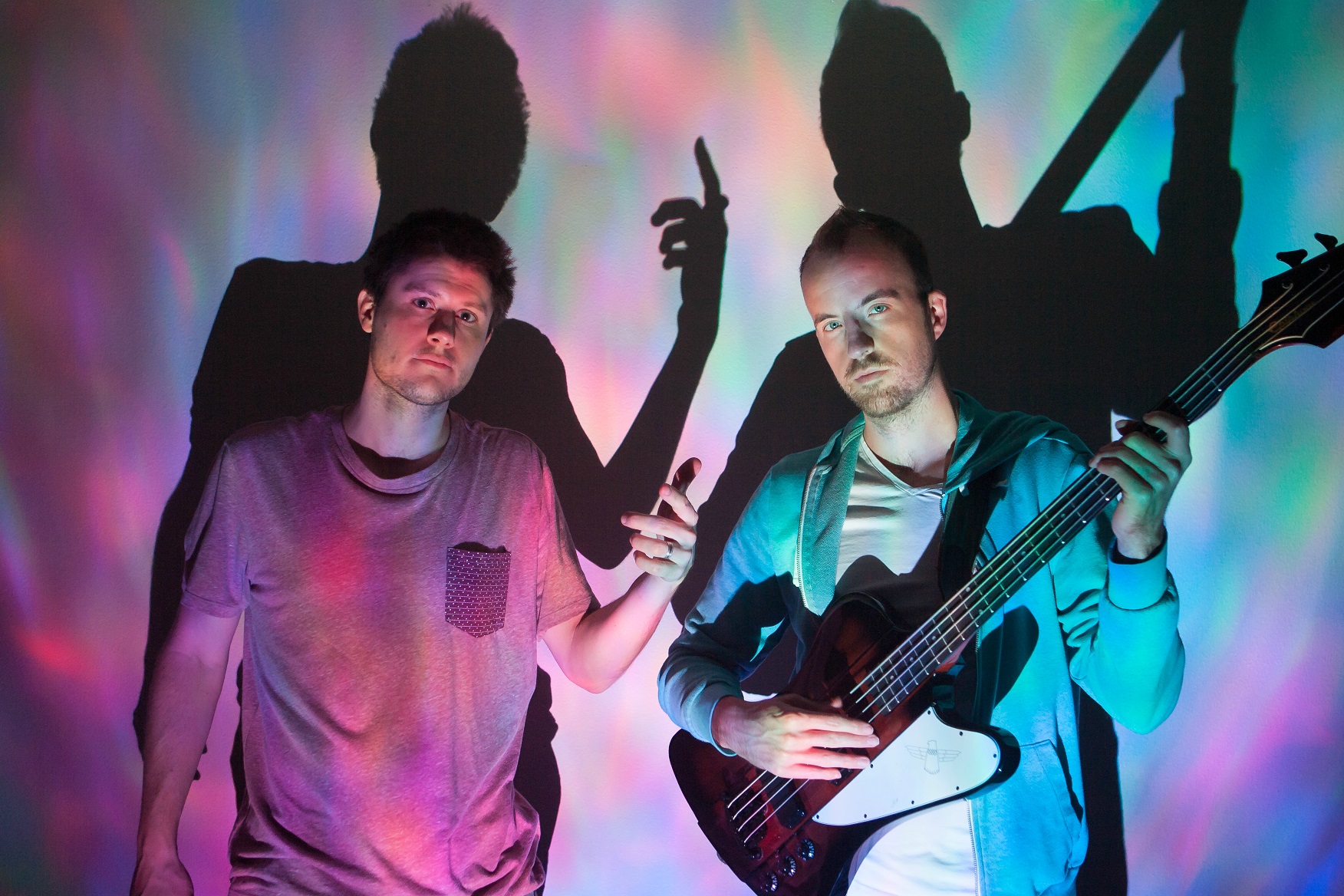
Darkwave post-punk band Social Order enter 2026 in full command of their sound – emotionally fluent, stylistically fearless, and done waiting for resolution. Across two breathtakingly bold EPs released just six months apart – ‘Miss You’ and ‘Strangers’ – the Los Angeles and Las Vegas–based trio trace an arc from exhaustion and longing to risk, brightness, and self-exposure, revealing a group no longer negotiating with doubt, trusting their instincts without apology.
Stream: “Mistake” – Social Order
I see shadows of you here every night…
* * *
In 2025, Social Order didn’t just release music – they documented emotional motion in real time.
Across the span of six months, the Los Angeles and Las Vegas–based trio released not one but two EPs, each distinct in tone yet unmistakably connected in spirit. Miss You, arriving in May, moved like a hot ache – heavy with longing, absence, and unresolved feeling – while October’s Strangers cracked that inward gaze open, trading restraint for risk and darkness for a dangerous kind of brightness. Together, both records trace a restless push and pull between sadness and energy, intimacy and exposure, control and surrender. Miss You and Strangers capture Social Order at the exact moment feelings turned into movement – when grief stopped whispering and started asking big, bold questions.
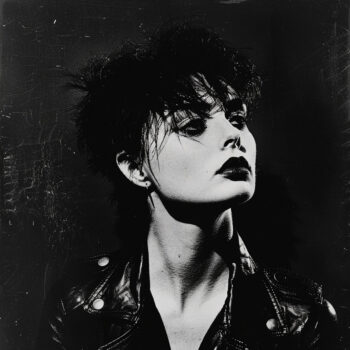
At this stage, Social Order feel fully awake to who they are. Formed by Mason Musso and Anthony Improgo (both formerly of the platinum-selling pop act Metro Station) alongside Andrew Ward (Nuwave Fighters) during the isolation of 2020, and shaped by a shared history rooted in modern post-punk, darkwave, and melodic pop, the band’s music has always thrived on tension – between nostalgia and reinvention, shadow and shimmer, the dance floor and the confessional. Their earliest releases, How to Lie (2022) and Tantalize (2023), laid the emotional and aesthetic foundation: Brooding, synth-driven, and melodically sharp, tracing themes of desire, distance, and self-interrogation that would become central to their identity. Entirely self-produced and self-directed, Social Order’s work carries a DIY intentionality that keeps even their most cinematic moments feeling intimate and human – a throughline that came fully into focus across their breakout year in 2025.
That clarity didn’t arrive in isolation. Over the course of 2025, Social Order’s vision was tested – and strengthened – in public: a major festival debut at Cruel World, a tour alongside French Police, growing streaming traction, and two releases that demanded presence rather than passive consumption. These weren’t content drops or stylistic exercises; they were moments of commitment, each one asking the band to trust their instincts a little more loudly.
As drummer Anthony Improgo reflected around the release of Miss You, “It takes a while to really find your sound – to figure out where you fit and what makes you ‘you.’ You go through a lot to get there – highs, lows, burnout, all of it. And if you stick it out, all those moments shape who you are as a band.” In 2025, Social Order didn’t just stick it out – they put that belief into motion, resulting in a striking body of work that feels breathtakingly modern, emotionally charged, unapologetically dramatic, and fully their own.

That movement first took shape in the band’s third EP Miss You, a six-track record built from exhaustion, longing, and the ache of everything left behind.
Miss You didn’t arrive as a concept so much as a response. The EP began taking shape after Social Order returned home from a difficult tour through Texas – a stretch that left the band physically spent and emotionally displaced. As they explain, “The tour was kinda rough and we were all missing home, so we wanted to work on something that encapsulated everything we missed.” That sense of dislocation – missing places, people, and versions of life that no longer quite exist – seeps into every corner of the record, giving Miss You its weight and urgency.
Rather than retreat inward, the band treated that ache as fuel. Coming off Tantalize and the runaway success of its track “Boys,” they were intent on movement, not repetition. “We definitely wanted to work on something that sounded different than our last EP Tantalize,” they say. “Our style had changed a lot over the past year, and we feel like we are constantly updating our sound. We don’t want it to ever feel like we’re making the same song over and over again.” That restlessness – emotional as much as sonic – defines Miss You. The EP pulses with energy even at its most wounded, a balance the band themselves describe simply as sad, energetic, and passionate.
At its core, though, Miss You is about confronting absence without looking away. The title isn’t metaphorical or coy; it’s direct because the feeling demands it. “It’s really about loss and missing things you probably will never get back,” the band explains. “That feeling can be very uncomfortable and painful at times, but for us, the best way to get through that is to put down what we are feeling in our music.” Emotional honesty becomes a means of survival here – a way to keep moving when the instinct might otherwise be to shut down.
That honesty takes on different shapes across the EP, as Social Order pair brooding synths and restless momentum with dark, dance-driven songs about memory, distance, desire, and the inner violence of wanting something that’s already gone.
On “Shadows,” memory becomes something spectral rather than sentimental – a song built from the remnants of someone who is no longer there, where pieces of their presence still linger long after the goodbye. “I see shadows of you here every night” isn’t just a line about remembrance; it’s a recognition that absence can be louder than presence, that what’s gone doesn’t disappear so much as linger. The band describe it as “always seeing shadows of someone you know isn’t coming back,” a feeling they call “bittersweet because you wish they were really there but at least you have this echo of them that lasts forever.” Throughout Miss You, those echoes accumulate – in the obsessive ache of the title track, the hollow transactionalism of modern connection, the quiet desperation of waiting on someone who will never quite choose you.
Even so, the EP never sinks into paralysis. The sweeping, soaring “Cross My Heart” opens the emotional field as a fragile conversation between two friends – one watching another’s life collapse, still insisting there might be a way through the wreckage. From there, the infectious title track “Miss You” settles in as the record’s anchor with a seductive strut and heated, churning vocal performance, tracing the obsessive ache of missing someone so deeply you’d do anything to pull them back, even when that longing begins to hollow you out. “Hollow” sharpens that feeling into something generational, confronting the emptiness of modern dating culture – the quiet exhaustion of searching for something meaningful in a landscape that rarely offers it.
That pulse and fervor deepens further on “Waiting,” which captures the slow erosion of self that comes from holding out hope for someone who won’t choose you back – an emotional purgatory defined by patience, denial, and inevitability. By the time Miss You reaches its closing moments, “Lights Off” cracks open a final space of secrecy and second chances, where desire and doubt coexist in real time. Built around the tension of now or never, the song lives in that suspended moment between intimacy and concealment: The urge to stay close while quietly avoiding the truth that something essential has already ended. It’s no surprise that the band cite it as a personal highlight: “We really love ‘Lights Off’ off the EP. That song always goes over really well at our live shows, and is definitely a song we think translates even better when we play than on the EP.” In performance, that push-and-pull between emotional desperation and physical release becomes visceral – proof that Miss You isn’t about wallowing, but about movement.
Taken as a whole, Miss You functions as both an entry point and a thesis statement – its songs reintroducing Social Order through lived emotion, instinctive movement, and a sound already confident in its own gravity.
“It’s a great starting point for people who haven’t heard of us,” the band reflect. “We think you can go back to any of our music over the years and it still sounds like us. We want to make music that captures emotions that many people go through and feel.” That continuity matters. Even as Miss You documents a specific moment of longing, it also establishes a broader emotional language – one rooted in shared experience, vulnerability, and forward momentum.
What Social Order ultimately want others to take from the EP mirrors everything they took from making it: Connection. “We hope listeners of our new EP get a feel for the band and where we’re coming from. We hope that it inspires and entertains and we can’t wait to continue on this musical journey with them.” In retrospect, Miss You feels less like an endpoint than a turning of the page – the sound of Social Order learning how to move with their feelings instead of sitting inside them, setting the stage for what would come next.

Where Miss You moved through exhaustion and ache, Strangers opens the windows – not to let the light fix anything, but to see what happens when it’s allowed in.
Rather than abandon Social Order’s darkness; the EP reframes it, pairing the trio’s brooding instincts with melodies that hit harder, hooks that linger longer, and a sound that courts immediacy without sacrificing emotional weight. In a scene that often treats brightness as a betrayal of depth, Strangers treats it as a provocation.
“We wanted to try to stay true to the scene that we are in with the sound and songwriting, and it’s still very ‘darkwave,’ but in a scene that loves dark, moody music, we wanted to add in a touch of brightness,” the band share.
That shift wasn’t guaranteed. In fact, it was questioned from the start. The EP’s lead single “Grave” nearly didn’t make the cut at all. “We almost didn’t release that one because we thought it leaned too pop,” the band admit. What ultimately convinced them wasn’t the sheen, but the substance beneath it. “The lyrics though, I think, make it. It’s not a happy song at all.” In that tension – between surface glow and interior collapse – “Grave” becomes a kind of rebirth: Invigorating, seductive, and quietly devastating. It announces Strangers not as a departure, but as a risk worth taking.
That risk sharpens on “Mistake,” one of the most arresting songs Social Order released in 2025 (and a personal point of pride for the band themselves). “I want to be your mistake” lands with dangerous clarity – a line that’s seductive and self-destructive in equal measure, capturing the pain of knowing a relationship is doomed and choosing it anyway. As the band explain, “We think it can play both ways with the listener. It’s kind of tragic in the sense of the relationship you know is doomed to fail, but you keep going back and don’t care if you get hurt. Who hasn’t felt that way?” It’s that recognition – painfully human, recklessly familiar – that’s helped the song resonate so deeply, both on record and onstage.
If “Mistake” embodies emotional freefall, the title track “Strangers” gives that feeling a name. It was the last song written for the EP, and in many ways, it clarifies everything around it. “Everyone we played the demos to loved that one the most,” the band recall. “The word ‘Strangers’ really summed up the EP… Like, you can know someone for a long time, but in the end do you really know them?” That question hangs heavy over the record – a realization that intimacy doesn’t always bring understanding, and that closeness can still end in distance.

All together, Strangers feels like Social Order stepping into emotional danger on purpose – choosing immediacy over insulation, exposure over retreat.
The brightness isn’t relief; it’s voltage. And in that charged space between connection and collapse, the band sound more alive than ever, willing to risk misunderstanding in pursuit of something truer.
By the end of 2025, the shift was undeniable – not just in Social Order’s sound, but in how they trusted themselves inside it. Releasing two EPs in six months didn’t just expand their catalog; it forced clarity. Each decision, each risk, each moment of doubt was answered not with retreat, but with action.
That process wasn’t frictionless. If anything, the year sharpened the band’s awareness of how vulnerable growth can feel. Looking back, they describe a cycle of experimentation and second-guessing that will be familiar to anyone trying to evolve in public. “The biggest takeaway is that it’s always great to try new things,” they reflect. “It can be a little bit of a struggle at first. You kind of question yourself like, ‘Will people like this? Is this actually good? Do I think this is good?’” Those questions didn’t disappear, but they stopped being paralyzing.
What changed was the response. Rather than letting uncertainty dictate their next move, Social Order learned to sit inside it without flinching. “The best thing though is to love what you’re doing,” they continue. “You can’t get caught up in that. Take a leap of faith and let the chips fall where they may.” Across Miss You and Strangers, that leap becomes audible – in the willingness to let pain turn kinetic, to let brightness coexist with darkness, to follow instinct even when it leads somewhere unfamiliar.
In that sense, 2025 didn’t just mark a breakout year for Social Order; it marked a recalibration. These songs aren’t chasing relevance or resolution. They’re documents of a band choosing presence over perfection, motion over fear – finding out, in real time, how to trust themselves loudly enough for others to hear it.

The eleven tracks released across Miss You and Strangers don’t read as separate chapters so much as a single, unfolding body of work – one that captures Social Order awake and in flux, thinking, feeling, and deciding in real time.
What begins as exhaustion and ache slowly opens into risk and exposure, tracing a clear emotional arc from inward reckoning to outward confrontation. Heard this way, 2025 becomes less about volume or productivity and more about articulation: A band discovering how to say exactly what they mean, even when the truth feels unstable.
What defines Social Order at this moment is that fluency – emotional, sonic, and instinctive. They understand how to make darkness dance without draining it of weight, how to let brightness in without pretending things are resolved. Their music is dramatic without being performative, intimate without being insular, cinematic without losing its human pulse. Every choice across these two EPs – from the haunted persistence of Miss You to the charged immediacy and light of Strangers – reflects a band willing to sit with discomfort long enough to turn it into something bold and alive.
That’s why these songs resonate. Not because they offer answers or clean endings, but because they recognize the feeling and let it exist. They don’t rush to replace what’s been lost or explain what can’t be fixed; they stay with it long enough to feel real.
And that willingness to stay present without resolution is what defines Social Order right now.
— —
:: stream/purchase Strangers EP here ::
:: connect with Social Order here ::
— —
— — — —

Connect to Social Order on
Facebook, 𝕏, TikTok, Instagram
Discover new music on Atwood Magazine
© courtesy of the band
 © courtesy of the band
:: Stream Social Order ::