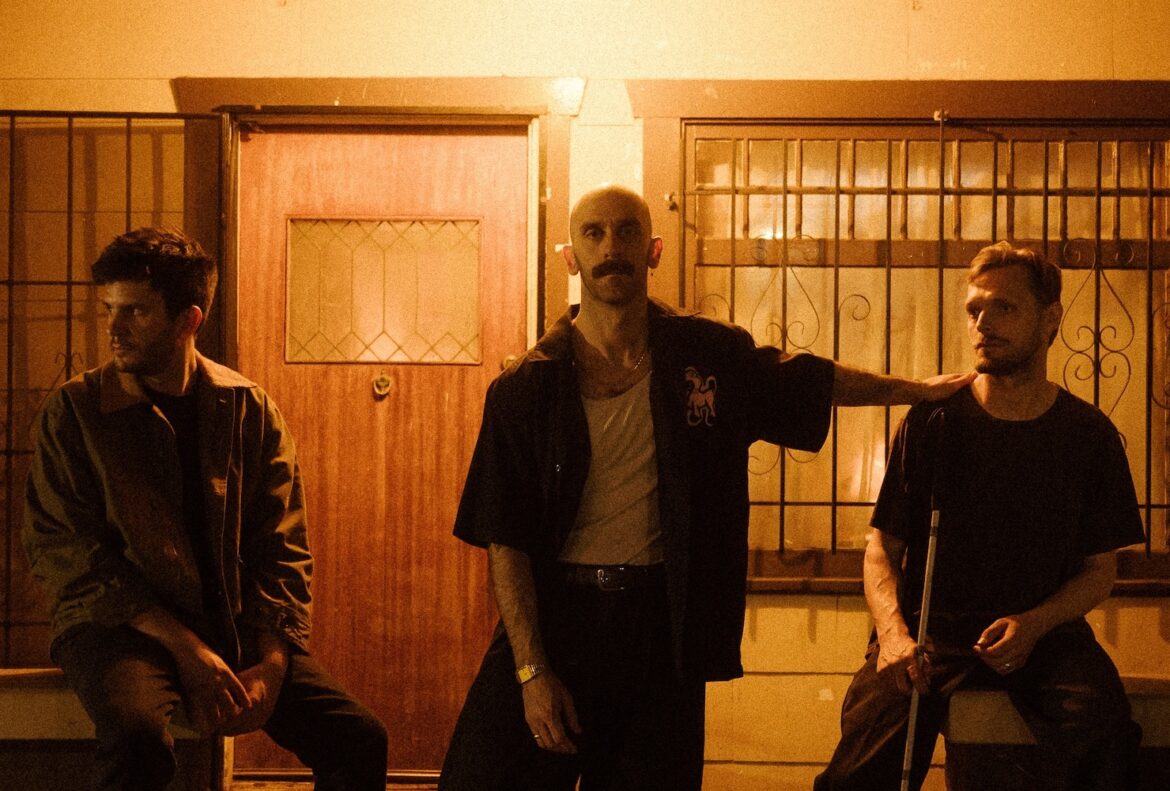
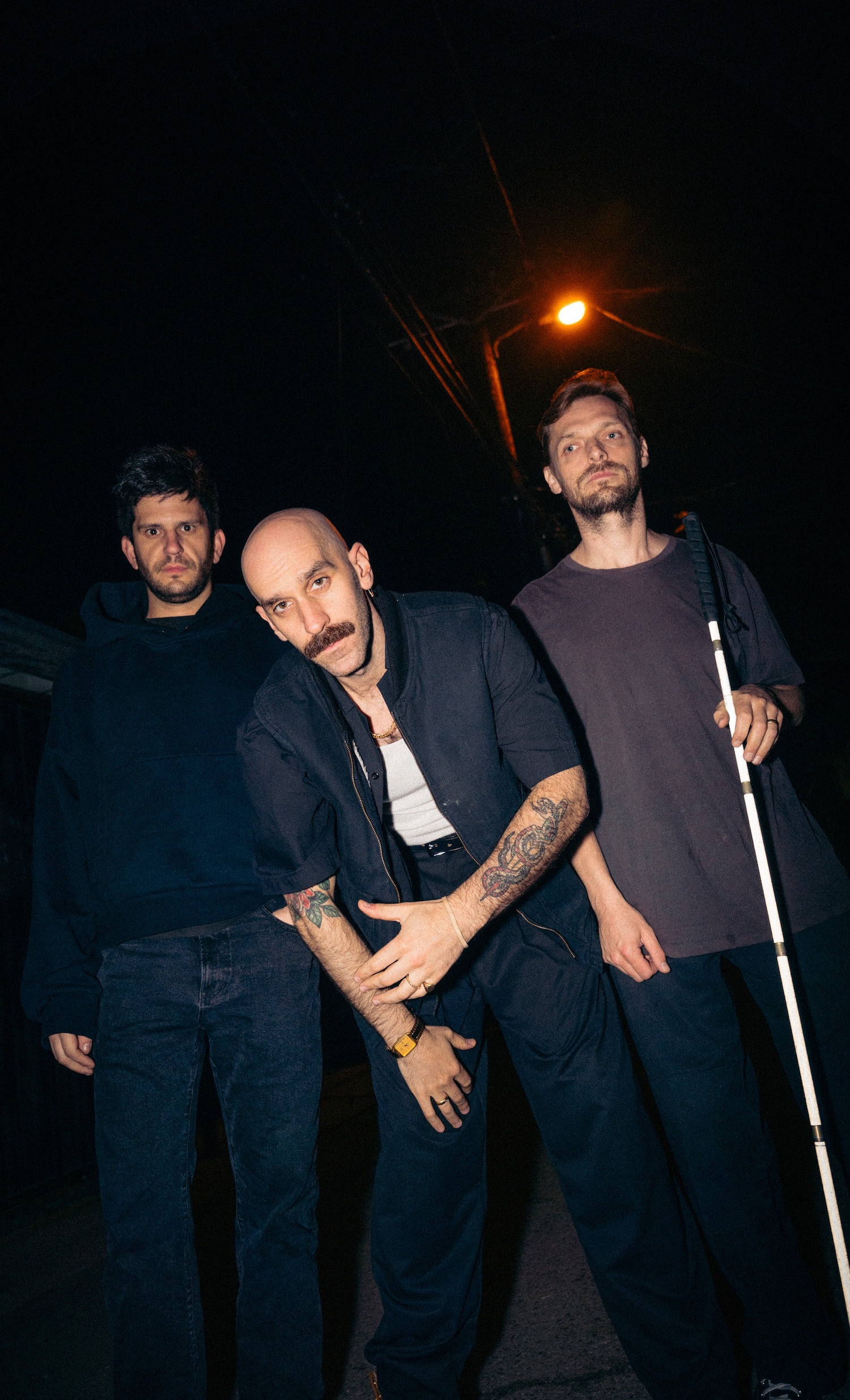
Ten years after their debut album changed their lives, X Ambassadors return to where it all began with ‘VHS(X)’ – a bold and deeply human reimagining that reclaims their past while redefining who they are today. In conversation with Atwood Magazine, frontman Sam Nelson Harris reflects on the band’s journey home, the creative renewal that followed ‘Townie,’ their evolution as independent artists, and how revisiting the past helped them rediscover their purpose through the music that made them.
Stream: ‘VHS(X)’ – X Ambassadors
“We were always first and foremost a bunch of kids in a basement making noise together, and I want to feel like this music comes from human beings.”
A decade after their debut album blew X Ambassadors sky-wide, the band have returned to that furnace – not to relive it, but to reforge it. Independence from labels, last year’s fourth album Townie, and the trio’s hard-won clarity have sharpened the lens, resulting in VHS(X) – a radical reimagining of 2015’s VHS that captures not just where X Ambassadors have been, but where they might go next. The cleverly titled VHS(X) doesn’t chase nostalgia so much as seize it, reanimating hits like “Renegades,” “Unsteady,” “Jungle,” and more with the sweat, breath, and brotherhood of a room – a living, beating reclamation of where this band came from, and who they are now.
Formed in 2007 by brothers Sam Nelson Harris (vocals, guitar, saxophone, bass) and Casey Harris (piano, keys) while still in high school in Ithaca, New York, and later joined by Adam Levin (drums), X Ambassadors have spent the past decade cementing their place as one of alternative music’s most dynamic and enduring bands. Their 2015 debut album VHS introduced the world to the explosive emotional force of “Renegades” and “Unsteady,” songs that went multi-platinum and now boast over 1.6 billion streams combined. What began as a small-town experiment in sound and ambition has since evolved into a global phenomenon, marked by headline tours, major film placements, and collaborations spanning Rihanna, Lizzo, Travis Scott, SZA, The Weeknd, and more. Across four albums and countless singles, X Ambassadors’ sound has stretched and shape-shifted without ever losing its pulse – a blend of vulnerability, vitality, and cinematic grandeur that continues to define their identity nearly twenty years on.
Released in April 2024, Townie marked a profound homecoming for X Ambassadors – both literally and spiritually. Written and recorded entirely in Ithaca, the album found the trio retracing their roots and reconnecting with the people and places they came from. “I was going through an identity crisis,” Harris told Atwood Magazine last year, reflecting on the album’s intensely personal scope. What emerged was their most intimate work to date: A self-produced, deeply autobiographical portrait of belonging, loss, and rediscovery. Through twelve vivid tracks, Townie transforms the mundane rhythms of small-town life into something transcendent – proof that home can be both a mirror and a muse. For Harris, it was also a reckoning – a record that “brought me closer to my band, my family, my town,” and one that reminded him “you don’t necessarily have a leg up” just because you left.
For both the band and their listeners, Townie remains a special moment in X Ambassadors’ ever-evolving discography – a heartfelt return that reconnected the trio to their roots and to one another.
A turning point and a touchstone, it captured the band in the act of rediscovery, transforming nostalgia and uncertainty into something quietly affirming. “This record felt like an exploration. It felt complete… It was a whole piece and that felt so satisfying to me,” Harris says of Townie. “And look, satisfaction isn’t necessarily going to pay the mortgage, but I do think as an artist, it’s what drives us and what keeps us moving forward… I think that if you put your whole heart into something and do it over and over and over again, when you do find success off of that, it will feel different. The moment you win a Grammy is never going to feel as good as the moment you wrote the song that made you cry.”
In revisiting who they were, X Ambassadors found the spark for who they could still become – and that same spirit of reflection and renewal ultimately led them to VHS(X), a decade-later reimagining of their debut album that finds X Ambassadors rediscovering old songs through older eyes, reclaiming their past not out of nostalgia, but out of gratitude.
“I’ve wrestled with this album on and off in my subconscious for a long time,” Harris admits. “To be able to face it head-on was important – to be able to move on, really, and to recontextualize it too.” That desire to confront the past directly sits at the heart of VHS(X), which he candidly calls “a rare chance to rewrite our history a little bit.”
“The original process of making this album was so chaotic and so scattered,” he explains. “It was recorded backstage in green rooms, bathrooms, in the back of our van, in apartment living rooms… but this time, we got to take our time and all be in one space working on it together, really take our time. And with no pressure on it or on us. Doing it for the sheer love of the craft, like it was when we were all still kids just playing music in our parents’ basements.”

The result is an album that still hits hard and leaves an lasting mark all over again. VHS(X) remains emotional, explosive, and larger-than-life – but this time, it’s warmer, more human, and informed by a decade of lived experience.
Reimagined through the lens of age, artistry, and endless touring, these songs carry the grit and grace of performance; they move with the muscle memory of a band that’s been playing them on and off for ten years. “I wanted people to really feel it was a group of people playing this in a room,” Harris says. “I want to feel like this music comes from human beings.” The band took that ethos to heart, stripping back layers of gloss and rebuilding each track from the inside out, guided not by perfection but by presence. The result is a record that feels less like a retelling and more like a reunion – between the past and the present, between three musicians and the music that made them.
Upon its release in 2015, VHS felt novel, fresh, and exhilarating. “Presented as if it were an actual VHS tape, with short 10- and 30-second long interludes that sound like recordings from the boys’ youth, VHS is a musical marvel – a powerful testament to rock music’s chameleonic, everlasting nature that flows naturally and feels both homegrown and authentic,” I wrote in Atwood Magazine’s Unanticipated Albums of 2015 feature. “VHS, much like the device it’s named after, feels in many ways like a relic from a bygone age – however, quite unlike the Video Home System, X Ambassadors’ debut gives new life to modern alternative rock, offering fresh licks and riffs inspired by rock music’s classics. From radio smash ‘Renegades’ to album ender ‘Naked,’ VHS offers 45 solid minutes of singalong, crisp-around-the-edges alt-rock that soars to great heights, but is not afraid of dips, either. X Ambassadors come out stronger and bolder than nearly any contemporary in the genre.”
Nearly ten years later, those seminal X Ambassadors songs still hit with the same force – and revisiting them was no small feat.
Harris and his bandmates approached each track with care and intention, balancing what to preserve and what to rebuild. “Some things stayed the same and some things changed drastically, and that was really cool,” Harris reflects. The sequencing alone tells a story of evolution and renewal: “Renegades” still kicks things off with the same heat and heart that made it a global anthem, and “Unsteady” – still performed in the original key – lands with breathtaking grace, Harris’ voice reaching those familiar highs with a new sense of ease and lived-in emotion. Elsewhere, “Naked” steps out from the shadows, now placed early in the tracklist after “Hang On.” What was once VHS’ bold closer becomes a full-throated celebration – a sweet exhale of intimacy and connection, complete with soaring vocals and smoldering horns. And then comes “Gorgeous,” perhaps the most radical reinvention of them all – its pop shimmer replaced by something slower, more subdued, and brooding, yet no less emphatic or evocative.
“I’m 36 years old right now, and these songs feel different in my body and in my chest, in my heart,” Harris shares. “They feel different when I sing them in front of a crowd of people. How do I want to think about this album again and redo it and what would that be like? It’s an opportunity as much as it was a challenge.”
Run away, away with me
Lost souls in revelry
Runnin’ wild and runnin’ free
Two kids, you and me
And I say, “Hey, hey-hey-hey”
Livin’ like we’re renegades
Say “hey-hey-hey, hey-hey-hey”
Livin’ like we’re renegades…
At its core, VHS(X) isn’t just a re-recording – it’s an act of reclamation.
For Harris and his bandmates, revisiting their debut meant confronting not only who they were, but how far they’ve come since. “Over the years, it started to feel like we were just playing covers of a band that we didn’t really know so well anymore,” he says. “But people seem to know those songs, and now we’re able to own them again.” That renewed sense of ownership runs deep: What once felt like a snapshot of youth has become a living document of endurance, perspective, and pride. By rebuilding VHS from the ground up, X Ambassadors have transformed a chaotic, career-defining chapter into something grounded and self-defined. The weight of expectation has given way to gratitude; the urgency of ambition has softened into appreciation. VHS(X) is both mirror and monument – a decade-later conversation between past and present selves, and a reminder that growing up doesn’t mean letting go.
Looking back has never felt more like moving forward for X Ambassadors. What began as an exercise in reflection has turned into a renewed sense of purpose – the sound of a band reclaiming their history, rediscovering their joy, and reigniting their drive. “There’s much more to this band than meets the eye,” Harris says. “We’ve always felt like the underdogs, and I don’t think we’ll ever not feel like that. But that’s what drives me – to keep making stuff, to keep going deeper and reaching further.”
That hunger defines where X Ambassadors go from here. With VHS(X) now behind them and a fifth studio album already in motion, the trio stand taller than ever – grounded in gratitude, still chasing evolution, and still writing their story on their own terms.
Atwood Magazine recently caught up with Sam Nelson Harris to discuss the band’s journey home, the making of VHS(X), and how revisiting the past became the key to unlocking their future. Read our interview below, as we look back, move forward, and rediscover what makes X Ambassadors who they are.
— —
:: stream/purchase VHS(X) here ::
:: connect with X Ambassadors here ::
— —
Stream: ‘VHS(X)’ – X Ambassadors
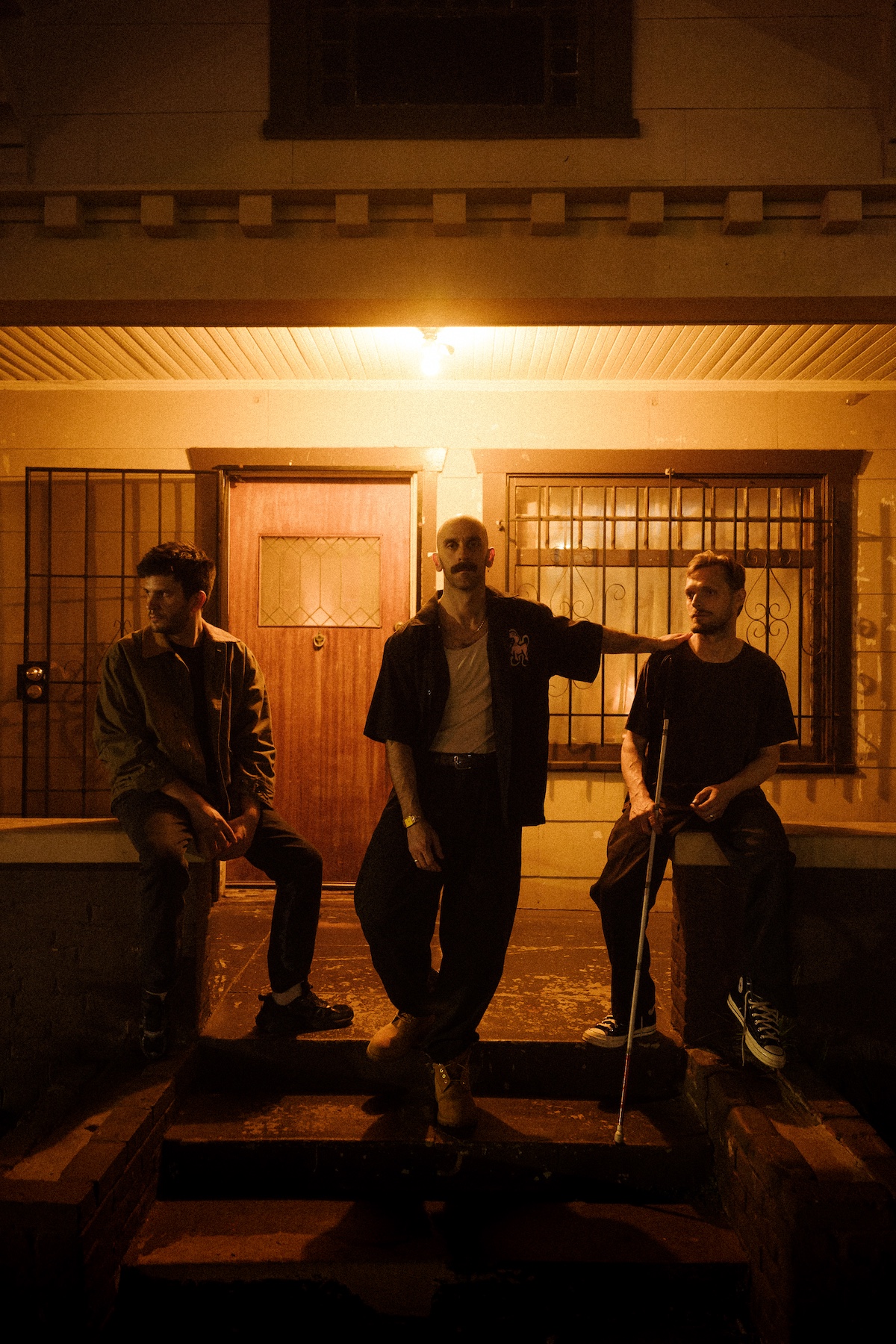
A CONVERSATION WITH X AMBASSADORS
Atwood Magazine: Sam, I want to dive right in. X Ambassadors have been in this space of homecoming, I feel, for the past few years – first with Townie and now with VHS X. What do you think sparked this reflective state for the band, and is the public perception authentic to what's going on behind the scenes with you guys?
Sam Nelson Harris: I think it’s totally accurate. I think that after the pandemic, a combination of post pandemic and then entering into a decade of our… We’ve been a band for well over a decade, but a decade since our first album. Yeah. It has forced us to do a little bit of a retrospective and take a look at where we’ve come from. I know for me too, in order to really have a clear vision for where I’m going, I think I need to know where I came from. And that was Townie for me. I had also… I was grieving the loss of a mentor of mine. I was just starting to be drawn back to this place that I fought so hard to get away from as a kid. And more and more find comfort in the older I get and also I feel like seeing all the people around me start getting older and growing up and having kids of their own and feeling a little bit like, wow, I still feel like a kid.
How is this suddenly blown by? So I had to replant myself back in upstate New York. And then for this 10-year anniversary of the record, it was like… It is a nice thing, I almost see it as a bit of an extension of the Townie era, if you will, to use a steal from Taylor Swift for a second. The doing a 10-year reimagined re-recorded version of the record was the only thing that I thought we could do. I didn’t want to just repackage the original album with some old demos or paint the vinyl a different color or something like that. I didn’t want to do something like that. I really wanted to take the time to investigate, what was this record all about? What does it mean now for us? I think for me that was also an important journey to go through because I feel such a different person 10 years later than I was when I wrote that record. And those songs are the ones that put our name on the map. And I think that has been a beautiful thing. But that has also haunted me a little bit.
As it does any artist who finds success on one thing at one point in time in their career, they go through… I definitely went through phases where I was trying to recapture that same thing again and then violently pushed myself away from it and then tried to find some middle ground. I’ve wrestled with this album on and off in my subconscious for a long time. And to be able to face it head on was important, I think also to be able to move on, really and to recontextualize it too is like, okay, we’re… We’re like, I’m 37 next month. I’m 36 years old right now, and these songs feel different in my body and in my chest, in my heart, and feel different when I sing them in front of a crowd of people. How do I want to think about this album again and redo it and what would that be like? It’s an opportunity as much as it was a challenge.
It is so wild. I was looking back through your discography earlier this week and preparing and to think that the first two full songs on your first album were the blockbusters. I wonder how many times that happens, where the first two songs are the ones that just knock off to that incredible extent… But I get what you're saying, in terms of it being a complex relationship. They're also some of the songs you've been playing for the longest and the most consistently in your lives. I think you deserve the opportunity to take another whack at them, whether you call it for old time's sake or whatever.
Sam Harris: Yeah, I also wanted to capture a bit of how they feel live. Sometimes I wrestle with the success of those two songs a lot, but also it’s such a blessing. It’s really great. And I think that I’m moving towards finding peace with just being like, “Hey, man… ” I wrote these songs a long time ago, and these are the ones that captured everyone’s hearts and minds.
Before we talk about the ‘new’ old album, I do want to give Townie the time and recognition it deserves. Your fourth album continues to be a collection of songs that I personally cherish and listen to often, especially in moments of reflection. What is the legacy of this album for you and your bandmates a year out from its release?
Sam Harris: I hope that it continues to be this solace for people like it was for me. That record not only helped me through a very muddled time in my life, but it also brought me closer to my band, brought me closer to my family, brought me closer to my town. I feel with that record, I wanted to do something that was so specific, I wanted to do something that was specifically for my little band, my little family from upstate New York, my town. And I really felt so good making that record. As heavy as some of the songs are, it felt really good to make it, it was cathartic, and it was… And it felt like a challenge and it felt like a release. And I hope that there’s a kid going to Ithaca High School one day who discovers that record and it’s like, “Oh, my God. Someone wrote a whole record about growing up in this town. And I feel exactly the same way this guy felt.” And maybe that’s a little secret that they keep to themselves, like this album that only they know about. And that’s fine. I’m okay if it doesn’t become the album that people most often associate with us. That’s fine.
A few years back, The Killers went back to their roots and they wrote a record called Pressure Machine.
Sam Harris: I love that record. It’s so good.
I do too, but they have a weird relationship with it. I was talking to their drummer, Ronnie Vannucci Jr. a few years later, and he was describing it as the failed younger brother of the collection, and then here I am telling him, please don’t give up on it, this is the best album that you guys have put out, and if your audience needs time to grow and to understand and appreciate what a great masterpiece this is, that’s ok –but to keep going with it, because it gave so many people who love your music this incredible masterpiece that is so human and special.
Sam Harris: Yeah, man. It is hard to not feel like that sometimes. I get that, but I think what making that record has taught me is that I felt so much more fulfilled making that record than I did making VHS. VHS was a more commercially viable record that it did better. I don’t know if our fans liked it more. It is a bigger record. It was a more successful record than Townie. But I felt more satisfaction making Townie than I think I did making VHS the first time. The first time when we made VHS, it was so scattered and so chaotic and we were just trying to find some way in and we had written all these songs and it was once “Renegade” started going, it was like, “Okay, let’s put an album together and get it out.”
Right, the whole, “let's try to do it 12 more times, but make it different. This is an identity. Let's see what happens.”
Sam Harris: Yeah, this record felt like an exploration. It felt complete. It felt like we had really taken the time to think about it and created all the visuals for it, the visual language for it. It was a whole piece and that felt so satisfying to me. And look, satisfaction isn’t necessarily going to pay the mortgage, but I do think as an artist, it’s what drives us and what keeps us moving forward.
And eventually, I do believe – maybe it’s naive and maybe it’s too optimistic, or starry eyed or whatever – but I think that if you put your whole heart into something and do it over and over and over again, when you do find success off of that, it will feel different. The moment you win a Grammy is never going to feel as good as the moment you wrote the song that made you cry.
The moment you win a Grammy is never going to feel as good as the moment you wrote the song that made you cry.
* * *
I think there's going to forever be a balance between commercial viability and vulnerability or personal meaning. I think that's the fight that we always have with all that we create. At the same time, I love hearing from you that there is no shame or pressure to hide that. And what I was even getting at is, I don't believe that there are any ‘Black Swan’ albums. I think that we artists should stand behind the work that we make, regardless of its reception. And for me, while Townie is not a pop or mainstream blowout, it’s a deeply human record that reintroduced me to a side of X Ambassadors I never knew existed.
Sam Harris: Oh, thank you, man. That was the goal. So hearing that from you, that makes me feel like I did my job.
Plus, I too have a complicated relationship with my hometown. You can choose where you are today, but you can't choose where you come from.
Sam Harris: Yeah. I hear that.
You guys are from Ithaca. I actually live just a few hours East, in Beacon, New York.
Sam Harris: Oh, yeah. Oh man, I have fantasies every day of resettling myself in Beacon or in Hudson…
Come through! One thing that I've learned over the past 10 years is that upstate New York has a lot of character. Before we get into VHS X, what does upstate and your hometown represent to you now?
Sam Harris: It’s a place where I was able to… I think it gave me the gift of feeling small and hating that, and realizing that I hated that feeling and that I wanted to never feel like that ever again. And that I wanted to break away from that. And I wanted to be big and I wanted to be loud and see the world and be a part of something bigger than what I was surrounded by. It makes me laugh a little bit too because I’ve been all over the world now and I have left my… Successfully left my hometown and yet I still go back there and I still… And whenever I’m back there for more than a couple days, I’m like, “I feel like a teenager again. I feel small. I need to leave.” And it’s less like… I don’t even know if it’s the place. I don’t think it’s the place. I think it’s just me. And I think it teaches you the lesson of like, you’re never going to not be that 12-year-old or 14-year-old version of yourself.
I was similarly not well adjusted in that way. There are some kids in high school, I remember who just had so much hometown pride and they just wanted to come back to where we all came from when they were older, and for me it was just the opposite. I wanted to get as far away as possible…
Sam Harris: But isn’t there something too? I’m also realizing like, after having done it, I’m like, wow that didn’t solve your problems. Maybe the people that decided to stay behind and stay in the town that you grew up in maybe they’re onto something that you’re not, dude. That’s what I had to check myself, and that’s what Townie was doing. It was like, check yourself, bro. You don’t necessarily have a leg up on anyone else or you didn’t win necessarily, right?
We're all townies, I guess, at the end.
Sam Harris: Yeah – and have pride! Have pride from where you’re from. It is a part of you, it is never gonna leave you. The gift that that town gave me was this restlessness in me, maybe that was always there, but it definitely helped add fuel to that fire.
And maybe that's why we are where we are today. You saying don't forget about your town, don't forget where you came from on that album. Does that same physical grounding transfer in some ways to your music seeing your debut album as some roots for X Ambassadors.
Sam Harris: Yeah. It speaks to what I was saying earlier how I feel this VHS(X) has been a continuation of the Townie record and that process and that tour and that rollout and I think that it was very… I’ve spoken about how panicked I was at the very beginning of making this reimagined recording of… Re-recorded version of the record. I was very daunted by it and also I was looking back and feeling like any artist I think does when they look back on their earlier work. You’re embarrassed. You’re like, “Oh God, this is so cringy.” But I think you have to force myself to look at it, really look at it and not look at it as a reflection of myself, but just looking at it as it is. It’s a very earnest record. It’s a very heartfelt record. It’s ambitious and it feels what a 26-year-old feels like, you are full of…
At least I was at the time. I was full of hope and ambition and I was starting to allow myself to be vulnerable. And just seeing glimpses of that is really beautiful in any kid. To be able to give that kid a pat on the back and be like, “Hey, good job.” That’s what I feel like we did. And that’s what I felt I eventually was able to do in re-recording this record. And also I think that it was an opportunity for us to see how far we’ve come as a band and as producers and as songwriters and be able to like, look at this and say like, “Okay.” When we made that first record, we did it all with Alex da Kid and his overarching vision for it. And that was a very dominant part stylistically of this record. And so we were like, “All right, well, now that we’re doing this on our own, what would we do with this? ” And some things stayed the same and some things changed drastically and that was really cool.
That album came out via Kidinakorner / Interscope, and you're releasing this album as independent a band as you can be. How do the structures change? How do the creative decisions change? How does making this with no strings attached compare to making this with a major label 10 years ago?
Sam Harris: It is different. When we were making it with the major label, we also had the… There was the pressure cooker of it and it’s also not a… It’s hard to compare because you’re doing a re-recorded, reimagined version of record that’s already out. But I could say with Townie we had a lot like… Alex was our label as much as Interscope was our label. And he and I worked very closely on the first couple EPs and the album. And any and all creative was running by him too, and he was very, very opinionated on stuff and for better or for worse and then for this, time around…
For sure. Here some of his creative input. If you just listen to a bunch of Alex da Kid production stuff, he has a clearly identifiable style, sound, production technique, et cetera. There's fingerprints of his all over your earlier work.
Sam Harris: Yeah, totally, totally. And that’s helpful. And then it’s also complicated. And making this record with no real… Making Townie with no overview, it was just like, here are the keys to the car. Drive it, do whatever you want to do, and we’ll support it. That was really freeing. But it is different, it is so much more of a like… I think the bargain you have to make is, okay, we’re gonna give you the keys to the car, you can drive it, but we’re not gonna really give you any direction or, you’re gonna have to really figure out where you’re gonna go with this thing. And that is empowering. And it’s also… Sometimes you’re left being like, man. I don’t know how to be a label or my team doesn’t know how to be a label. But we’re learning from that. And we’ve changed things up a little bit on our side, and I think we’re more prepared in the future for now being able to handle that. And I think also we’re in a different world now where being an independent artist can be so much more lucrative than it ever has been before and speaks more to the way that our…
The rules of shifting. There are no rules anymore. And it’s really just like what the culture gravitates around, the zeitgeist gravitates around, like the attention economy people talk about it, it’s like everything. Yeah, all this is to say that I think when you’re making a record with a major label, the stakes feel a lot higher. The pressure feels a lot greater. And sometimes it can really… Like, if it works, it really works, but it’s very rare. And if you’re working independently it’s the same thing, actually. If it works, it really, really works. But if it doesn’t… The nice thing about being an independent artist is that you’re kind of… It’s all really on you, and you still get to make what you want to make, which I think is a benefit.
It's pretty sweet! Let's talk about the ‘new’ album; you said yourself you've been going back, and that your relationship with your debut has changed as you've reacquainted yourselves with all those songs. VHS celebrated 10 years in June. What are some of the standouts from that original album for you now?
Sam Harris: Yeah. Well, we got to do a cool thing with this song called “Gorgeous,” which I think when we made it, it was very up tempo. It felt a little bit like an outlier. Very pop. And we did an acoustic version of it just for some promo thing after the record had come out, and our fans really gravitated towards that, and we really loved that version too. And it became the version that we started playing more often on the road. And it is a totally different feel to the song. Oh, sorry, did you lose me for a second there? Okay, wait. My car turned off. That’s why. All right, can you hear me? Great. The juxtaposition of the dark, brooding, sonic texture of this new version with the lyrical content in the song, I really liked. I love a nice juxtaposition. So that was a fun one. And I feel that song now has a different energy to it and different life to it. Let me try to think of another one on the record that I really loved working on again.
There’s a song called “Fear” that we did with Imagine Dragons that was a last-minute addition to the record, and that was really pushed forward by Alex. He really wanted that one on the record, for obvious reasons, because it was featuring Imagine Dragons. And Dan had this really cool hook that he wrote, and I wrote those verses over it. But the production on it, I was like, I was always just a little… I was left scratching my head. It was cool, but it was just so chaotic. And I had been listening to a lot of Turnstile around the time that we were making this re-record, and I was like, “I wonder if we can do some hardcore thing with this.” And it also felt a little ragey, Rage Against the Machine. It’s now turned into one of my favorite songs that we’re doing as a part of this new set. So that was really cool.
It's awesome to hear. Obviously I've sat with the new album for a little while now. I've had the chance to listen to it on repeat, and I was so impressed that on “Unsteady,” you're still singing in the same key!
Sam Harris: Yeah, I still am. That’s the only one that I’m really still in. There’s so much crazy head voice falsetto stuff that I was doing on that first record that I can’t really do so well anymore. And I’ve tried. I’ve gone to see so many doctors and ask about, why is this part of my voice changing? No one’s given me a real answer to it, and the only thing that I can assume is that just I’m getting older and my vocal cords are changing.
We get the book on how your body is changing when we're in our teenage years, but we don't get the update 15 years later.
Sam Harris: I know – it’s a sadder book.
You mentioned “Gorgeous,” and it was the same thing. That song, you are flying up there.
Sam Harris: Yeah, up there, up there. But I’m 37 now. I can’t really sing that high anymore. So the version that’s on this record is different.
But that's what makes this fun, is reimagining does mean recording differently. This isn't VHS (X Ambassadors’ Version). This isn't a direct one-to-one relationship with the album. And now you own the masters. This is a creative rebirth of a seminal record.
Sam Harris: Also let’s be honest, we’re not Taylor Swift. This is the second time I brought her up in this interview. She is of the moment, so. But we’re not her. Our fans are not going to stream this reimagined re-recorded version of this album more than the original, I don’t think. I mean you never know.
Never say never.
Sam Harris: Never say never. But the likelihood is very small. So what’s the point of doing this? Well, it’s for us and it’s for our fans who really, really love us and who love this record, and for us to like, show them where we are at with it, I think is really important and a nice window for them.
Let's talk about the biggest hits for a second. I can imagine you have a lot of creative liberty with songs like “Fear” and “Gorgeous” to do whatever you want. What were your approaches to “Unsteady” and “Renegades”?
Sam Harris: With “Renegades” it’s funny, because I didn’t really want to change that one that much. Even the original version, I was like, God. There was something really special about it. I think for me, I just wanted to try and feel a little bit more of what it felt live, like more live drums and structurally how we do it. And it feels like a song that could also be on Townie, right?
It has that energy. So I was like, we just did this record that felt like that, and that came from a very real, authentic place. I wonder if we infuse a little bit of that into “Renegades” and it worked. So that was the approach with that one. And “Unsteady” we tried to do a version that was very stripped down. We tried to do a version that was very close to the original and recreate everything. And we landed on this one. I was like, I just had a thought. I’m a big country music guy. I’ve been becoming more and more so over the last four or five years. My dad also went through a big country music phase when he was in his 30s. I don’t know. It’s probably in my blood, but I just love it. And I was thinking, I wonder what this song would sound like if Dave Cobb produced it or if Chris Stapleton was singing it. Like, how would they arrange it? And also, just being in Nashville and writing in Nashville, a lot of the writers I’ve written with are always referencing that song to me.
They’re like, “Oh, man, I love that song.” And I was like, wonder. I wonder if we made it feel like that. And that was the approach for that version of it, which ended up feeling so satisfying to me, because that’s just like the Music that I listen to all the time, that’s my comfort food.
Let me ask one technical, super nerdy question. I remember talking to guys from bands like Imagine Dragons and KONGOS, and we would talk about how they got their larger-than-life, stadium-sized sound by doubling and tripling the drums, etc.. I'm curious, was that part of your guys’ approach for some of these things, or a little bit less this go around?
Sam Harris: I wanted to take the opposite approach. I wanted people to really feel it was a group of people playing this in a room. I really wanted it to feel like that because that’s who we are, we were always first and foremost a bunch of kids in a basement making noise together, and I want to feel like this music comes from human beings.
I hearing that a lot. I really, really do. Out of all the tracks, what are you most excited for folks to hear?
Sam Harris: I think that I’m really excited for people to hear that new version of “Gorgeous.” I’m really proud of that, worked very hard on that one. It’s got a little bit of Phil Collins energy too, which I love.
Now you said you're in the process of shedding and preparing for tour. We talked about what you're most looking forward for people to hear from the studio version. What about tour? What are you getting most excited to play and sing live?
Sam Harris: Just to go through this record top to bottom, I think is going to be really cool. It’s a high energy show. I’ve been getting in shape again for the… I’m always in pretty decent shape but I’ve really been going hard in the paint so to speak the last couple months. Getting ready for this run and I feel really ready for that. So it’ll be nice to throw my body around and not feel fatigued and hopefully I don’t break anything.
For those in the mainstream who are like, “Oh yeah, I remember X Ambassadors,” who might be reading this, what do you want them to know about who you are today compared to who they might think you are from 5-10 years ago?
Sam Harris: That’s a good question. Oh, man, it’s so hard because a part of me is just like, I don’t really care anymore. I don’t really care anymore. If you know us, you know us. Great. I am never gonna stop doing this. I’m never gonna stop trying to push myself artistically and push this band artistically and creatively and reach for this thing that we’ll probably never get, which is just the… I want to find what our definitive sound is, and maybe we found it already. Maybe we never will. I don’t know. But I think that we… There’s much more to this band than meets the eye. And we’ve always felt we’ve got a chip on our shoulders and like the underdogs. And I don’t think we’ll ever not feel like that. And I think that’s what drives me, and drives us, and drives me to keep making stuff and keep trying to go deeper and reach further. Exactly. Like, if you don’t know us or if you forgot that we existed, come to a show. And also, I feel bad for you, because we’ve been doing some really cool shit!
100% agreed on this end. What do you hope listeners take away from VHS X and what have you and the boys taken away from creating it and now putting it out?
Sam Harris: I think that we found a new ownership of it again. It was nice to reclaim that thing again and not have it feel like this thing that was outside of ourselves. It felt over the years, more and more, we were just playing covers of a band that we didn’t really know so well anymore. But people seem to know those songs and now we’re able to own them again. And I think that that changes our relationship to them when we play them live.
Do you think that's gonna be followed by reimagined versions of Orion and The Beautiful Liar, or is this it?
Sam Harris: Definitely not. This is a one and done. I’m never doing that again.
So we can get a fifth studio album next.
Sam Harris: Yes. We are very deep into that as well right now.
Well, I hope you don't forget what we talked about today in terms of embracing the spirit forever!
Sam Harris: I really appreciate you saying that. Really. I need to hear that.
It's such a good album – and sure, I get it, there’s a need, a pull to appeal to the masses. But do you really want to keep making what you’ve already made, or do you also want to make stuff that the folks who stuck with you for ten years are going to be really loving as well?
Sam Harris: Yeah, I want to do that. And then I also want to make stuff that feels authentic to me… I remember being a 15-year-old, and I heard that Johnny Cash record that he did with Rick Rubin and I thought, here’s an 80-year-old man singing songs that feel like they relate to who he is as an 80-year-old man. And I relate to this. And he’s not trying to pander to me. He’s writing about real shit. So that’s what I’m just gonna try and do forever.
I know exactly what you're talking about. You mentioned some bands earlier. Who are you listening to these days that you would recommend just in the spirit of paying it forward?
Sam Harris: I am listening to this band called Wunderhorse. They are so good. They are so f*ing good. I’m obsessed with them right now. My brother-in-law showed me them on our… We went on a family trip to Ireland this summer and we’re driving around and he was like, he heard this. Let me put some music on. And he puts this band on and I was just like, “Who the ** is this?” This song “Superman” is out of this world. Highly recommend.
Yeah, that's from their last year's album, Midas. That was a fun record.
Sam Harris: So good, man. I love them. I’m obsessed.
That's awesome. Yeah, the new generation of rockers, they're not holding back.
Sam Harris: They’re not holding back, man. It’s really fun to see.
— —
:: stream/purchase VHS(X) here ::
:: connect with X Ambassadors here ::
— —
— — — —
Connect to X Ambassadors on
Facebook, 𝕏, TikTok, Instagram
Discover new music on Atwood Magazine
© courtesy of the band
 © courtesy of the band
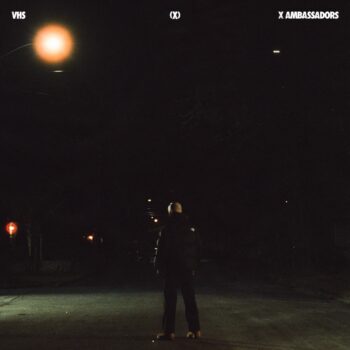
VHS(X)
an album by X Ambassadors