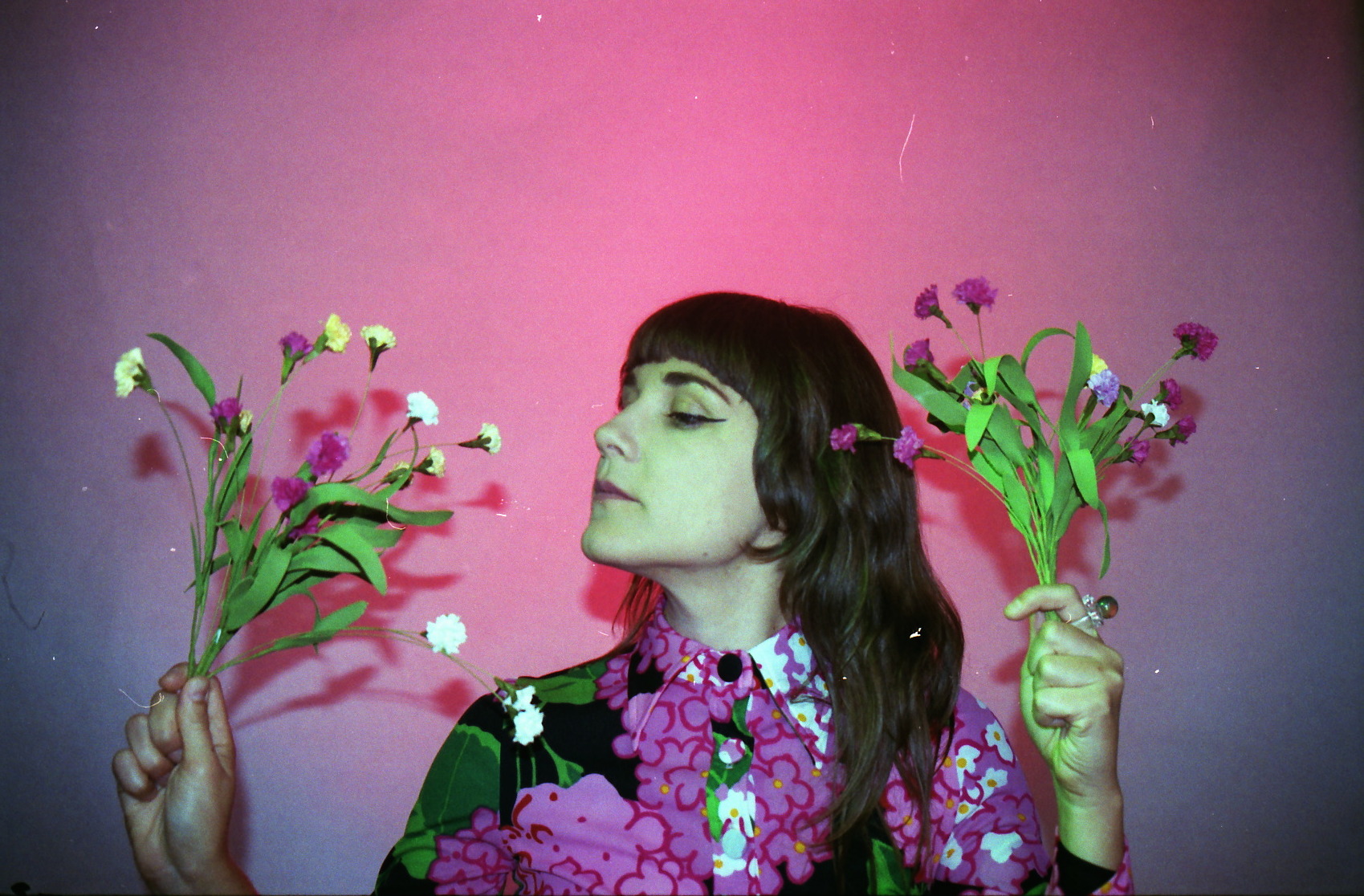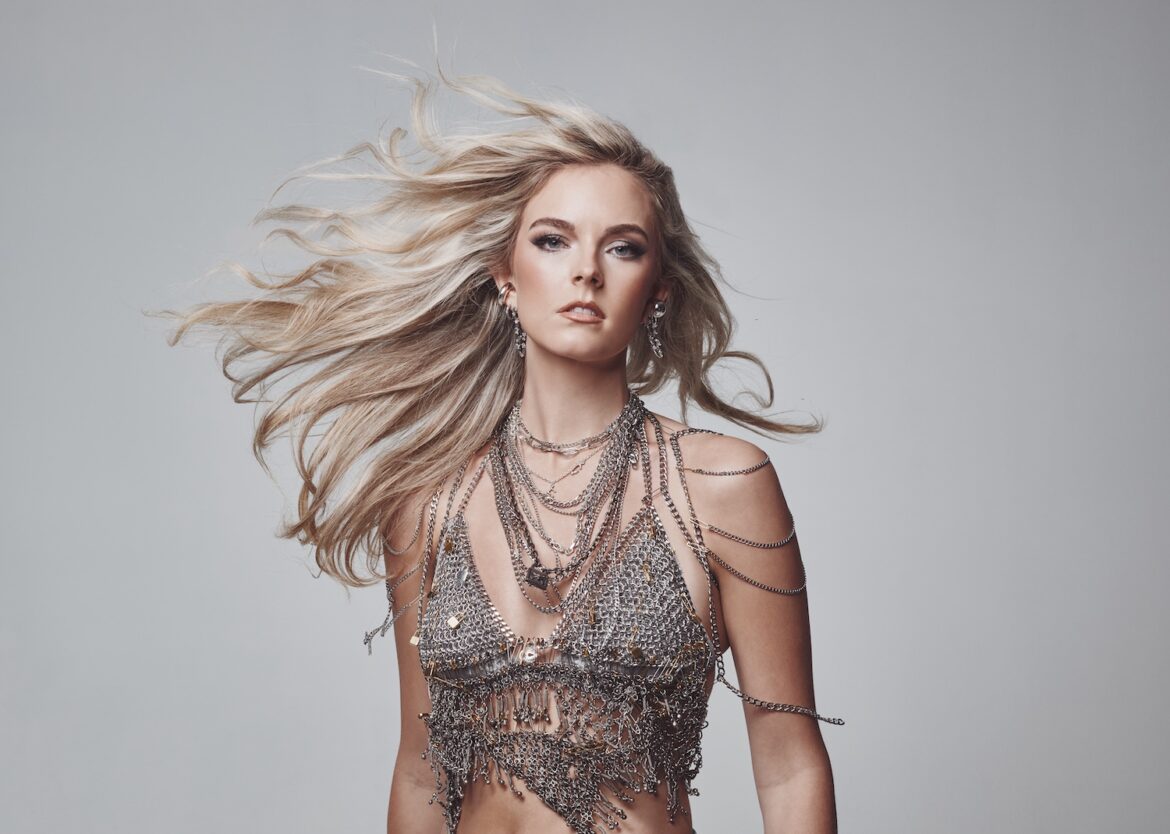
Metal meets country: Karley Scott Collins’ debut album ‘Flight Risk’ is an eclectic masterpiece, with all roads leading back to a woman who knows herself and her craft inside and out. The singer/songwriter moves through heartbreak, anger, lust, joy, fear, and the vulnerable sides of the human condition – doing so in cowboy boots, with an irresistible swagger.
Stream: “Girlfriend” – Karley Scott Collins
Karley Scott Collins’ star is rising.
A year ago, she had just released her second EP, she was about to make her Grand Ole’ Opry debut, and was still building her fanbase, all whilst furiously writing music with her producer.
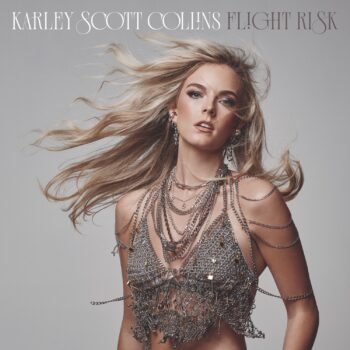
Fast forward to today, and everything has changed – which couldn’t be more evident when we spoke earlier this month. On Friday, September 26, Collins’ debut album Flight Risk drops via Sony Music Nashville – and it promises to cement her arrival as one of Nashville’s most exciting new voices.
Wasn’t a flight risk
‘Til you opened all the windows,
kinda liked it
I was so cautious
I was good at being good ‘til I lost it
Wasn’t a chaser
Driving too fast, I was safer
You made a madman out of me
Didn’t know reckless was
something I could be
Somewhere between love and insanity
Oh, you made a madman
A madman out of me
– “Madman,” Karley Scott Collins
Born in Florida, Collins was raised on Alice In Chains, Metallica, and Guns N’ Roses. Then as she got older, she began delving into her mom’s record collection of Fleetwood Mac, Tom Petty, and Bob Dylan. Her grandmother was a big country music fan and got Collins hooked on George Jones and Willie Nelson. Collins’ musical education was eclectic as it was thorough. Her songwriting pulls from country music’s storytelling sensibilities: Her low, crackly, and impassioned vocals are a cross between LeAnn Rimes and Bonnie Tyler, and in homage to her first love, heavy metal, Collins puts the drums front and centre in the mix.
In 2023, she released her debut EP Hands on the Wheel, which spawned the single “Heavenly.” Then, in 2024, Collins released her second EP, Write One, which included features from Charles Kelley and country superstar Keith Urban, the latter of whom she is currently supporting on his High & Alive Tour.
A multi-instrumentalist who never shies away from pushing her musical boundaries, Collins specifically learned how to play banjo, bass, and violin for this album, which opened up so much freedom – both for her, and for the music.
“It was a little bit more free and creative because I didn’t really know what I was doing, so I was just coming up with stuff,” she tells Atwood Magazine. “Actually, on ‘Girlfriend,’ I had picked up the banjo for the first time ever, and I just kind of started playing some notes and stuff and the riff I came up with is in the record.”
Collins co-produced Flight Risk with her long-time collaborator and friend, Grammy Award-winning producer and multi-instrumentalist Nathan Chapman (Taylor Swift, Mickey Guyton, Laci Kaye Booth, Keith Urban). All the instruments you hear on Flight Risk were played by either her or Chapman, except for the drums. Collins speaks highly of Chapman and talks of their sessions like two kids away at summer camp.
“The process of recording with Nathan is my favourite thing that I get to do,” she smiles. “My favourite part about my career, honestly, is being in the studio, and obviously playing live. I really love it. Nathan and I make it feel like summer camp because it’s just him and I in the studio and we don’t have a set time limit for completing songs. We take time to experiment and just have fun and play with things. If I wanted to learn how to play the bass on something, then we did that because I just wanted to be creative and have fun with it and try different things.”
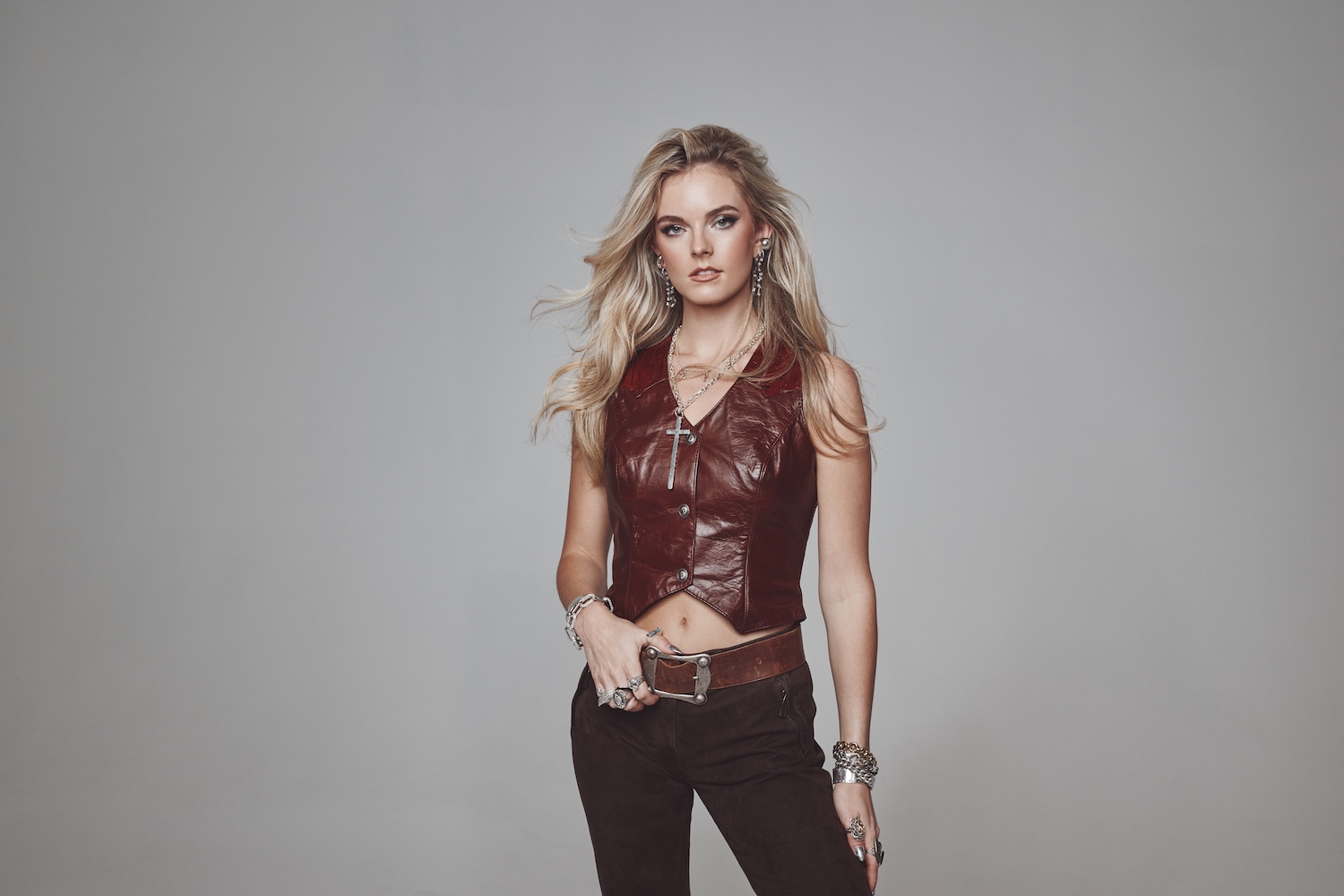
“Denim” opens Flight Risk, and it has everything you want in a track one: Sweeping soundscapes, big guitars, whiplash lyrics, and a “Hotel California”–style Spanish guitar riff. It sounds like a song that belongs on a seasoned rock artist’s record, not on the debut record of a relatively new artist. It is that well written, arranged, and produced. “Denim” begins with a guitar riff, written solely by Collins, that evokes a vast landscape of open road luring you into the unknown, the wind in your hair and your arm languidly resting on the open window.
So cool you’re a hypocrite,
a lyricist, a heartache walking
Too bad you’re a narcissistic
pistol with that sh* you talking
Little darling so charming
Yeah, I never shoulda
tried you on, like damn
Did it make you feel like a man
Wish I’d never tried you on like
“I was very angry when we wrote that song… I had just gone through a breakup, and that song is kind of a mixture of being angry at the person that I had just gone through a breakup with, but also myself for falling for the stuff that I fell for,” says Collins. That white-hot anger bleeds into Collins’ raw and powerful delivery of the lyrics, painting a picture of a person that could easily have been “the devil in disguise” that Elvis sang about all those years ago.
Got into my blood I let him
Salt into the cut
Set fire and tell me it’s raining
Good liar you had me baby
Venom
One hell of a blue jean lesson
He know that he looks like
Sweet heaven and I loved him
The devil in denim
– “Denim,” Karley Scott Collins
The sensuous and urgent “Bad Bad” shows Collins at her most unrestrained. You can tell “Bad Bad” was co-written by three women, because only women could write this way about a man they want desperately, leaving you “wondering what your eyes’ll look like in the dark.”
Two steps and then we’re out the back door
One touch and then I gotta have more
I’d die tonight to be yours
I want you so bad
Too close for comfort won’t cut it
Bet you’d look better in nothing
Don’t keep me waiting, good Lord
I want you so bad bad boy
Bad bad boy
On “I Used To Love Him,” a personal favourite of Collins’, she flexes her country songwriting and creates a story so rich in its imagery, it has you right there on tenterhooks, watching the scene unfold and just hoping the protagonist changes her mind. Listening to the song, one can’t help but imagine the Edward Hopper painting Room in New York (1932).
Somewhere across town
There’s a guy in a room with a light on
Picks up a guitar then he puts it back down
Lights up a smoke as he’s putting one out
His silhouette just paces the floor
‘til the night is gone
And we’d talk about getting old together
while we were still young
And sometimes I pick up the phone
and I put it back down
Light up a memory
then let it burn out
It’s too late now
to undo the damage that’s been done
A man and woman, sitting in a small room, both alone in their thoughts: The man bent over and fully engrossed in his newspaper, and the woman sitting on a piano stool, her fingers gently pressing down on the keys. The two characters are obviously married or in a relationship, but despite their closeness, both in distance and familiarity, they could not be further away from one another.
‘Cause I colored his eyes that sad shade of blue
And I’m probably the reason he covered that tattoo
He put the cracks in my damn broken heart
And we were so good together, we’re better apart
But I remember on nights like tonight
Somewhere across town there’s a guy
And I used to love him
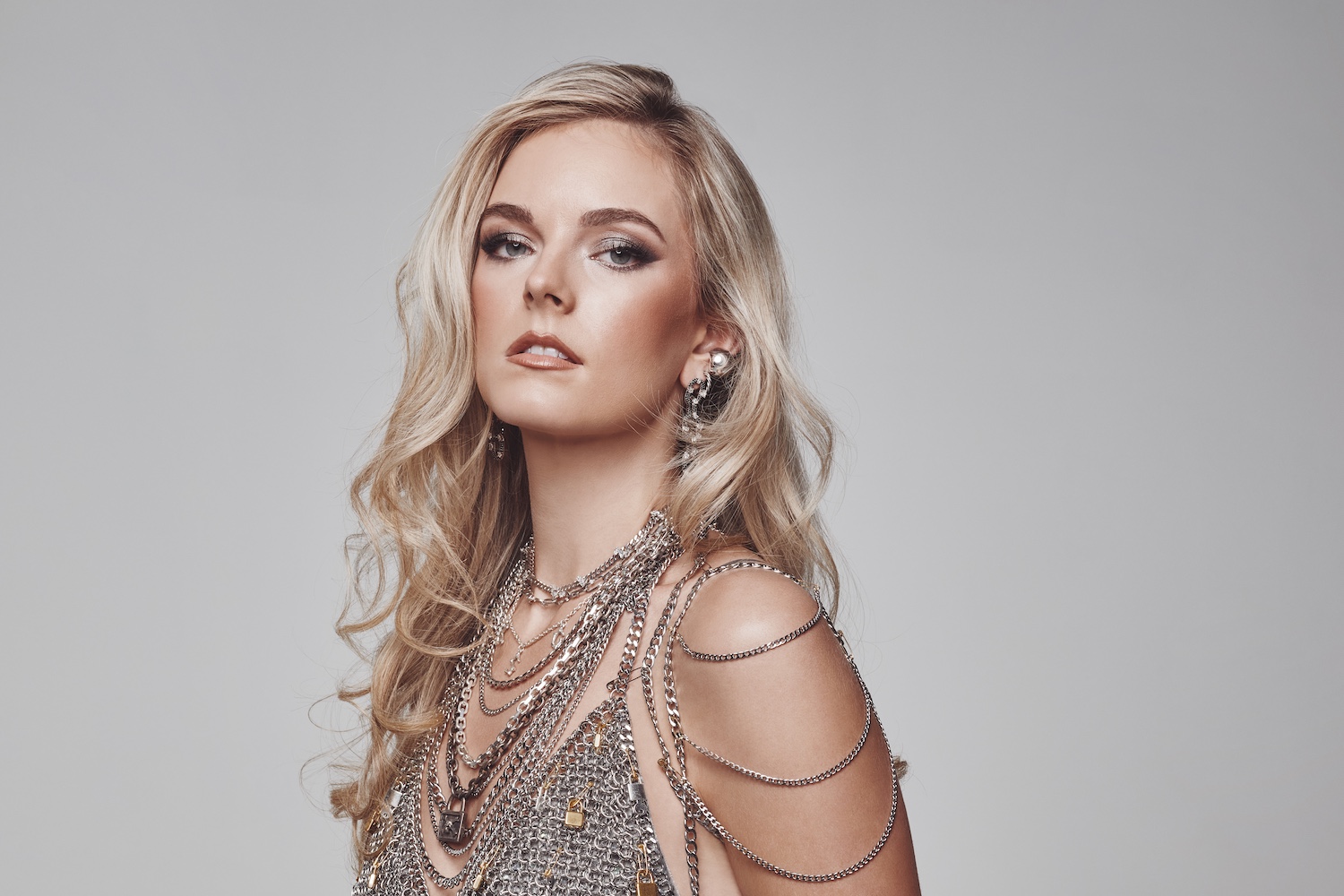
Country music is forever evolving and being rewritten. The question, “Is this real country music?” is asked of every new artist who steps onto its stage.
Collins is fully aware of the legacy she is carrying. However, instead of playing it safe or diluting what makes the storied genre unique, Collins, with her debut Flight Risk, is taking country music in a new direction of authenticity, integrity, modernity, and commercial success.
Nashville, take note: Karley Scott Collins is leading the charge.
Atwood Magazine recently caught up with Collins on one of her days off from the High & Alive Tour. It had been a year since we last spoke, and a lot has changed in her life in a relatively short time. We both went into full music geek mode, talking about the sequencing of Flight Risk, the arrangement of the songs, and why listening on vinyl will always trump streaming.
— —
:: stream/purchase Flight Risk here ::
:: connect with Karley Scott Collins here ::
— —
‘Flight Risk’ – Karley Scott Collins
A CONVERSATION WITH KARLEY SCOTT COLLINS

Atwood Magazine: Karley, thank you for speaking with me again! It’s been a year since we last spoke. You had just released your EP Write One, and you said you were working towards a longer project, which was obviously your debut album, Flight Risk! I can imagine quite a lot has changed in these last 12 months, and I wondered if there is one specific thing that you can pinpoint that has changed massively for you?
Karley Scott Collins: Oh, gosh, I mean, it seems like really everything has changed. This has definitely been a year of growing a lot in everything. I think I’ve really homed in on what I want to be saying in my music, which is why I feel like the album makes so much sense now because I know exactly who I am and where I want to go and what I want to say with the record.
I’m really excited for everyone to hear that, but being on the road as much as we’ve been, I’ve learned and grown so much. Just being on stage, I feel totally comfortable up there now. I’m a person that overthinks things a lot, and so I’ve kind of gotten to the point now with being on stage and performing, where I am just present, which is something that I really, really enjoy. Just a complete 180 since last year for sure.
I’ve listened to the album and I absolutely, 100% love it! I think it's brilliant. You’ve definitely built upon the EP. And I'm completely obsessed with the opening track “Denim.” It's so good. It's such a good opener. It has that guitar riff at the beginning and it feels and sounds like the road is opening out in front of you, and it's kind of got a dark Western feel to it. It's just so good, and it sets the tone for the whole record. Where did that song come from, and what made you decide to put it first? The whole sequencing for the record is perfect. I only realised when I was listening today that when you get to the last track on the album, the story then sends you back to the beginning of the record, and round you go again. I don't know if that was deliberate, but that's really, really clever.
Karley Scott Collins: Oh, thank you. That song was actually the last song we wrote for the record. I was sitting down playing my guitar and that first riff that’s in “Denim” where it’s like, “da da da.” That whole thing I was playing and I took the riff into my co-writers, and I had written down some of the lyrics.
I was very angry when we wrote that song. I had just gone through a breakup and that song is kind of a mixture of being angry at the person that I had just gone through a break up with but also myself for falling for the stuff that I fell for. which is kind of like the wolf in sheep’s clothing thing, where it’s like ‘it should have been so obvious, but I was just naive enough to believe all of the stuff that he was feeding me.’ I wrote down some lyrics for the song, and I brought that into my co-writers with that guitar riff and we wrote that one. When we were in the write, my friend and co-writer Alex Kline, who I’ve written, God, probably more than half of the record with, actually, she started playing some of that Spanish guitar over that riff and I immediately was like, ‘okay, this is special. I’m really excited for this.’
We gave a lot of thought to the sequencing of the record. I almost started the record with the last track, “Madman,” because the first line of the last track is where I got the title of the record from, “Wasn’t a flight risk ‘til you opened all the windows, kinda liked it.” I figured it might be cool to open it with that one, but I figured it would be kind of a cool bow on the whole project to end it with what inspired the record title instead.
You go from something that's got so many layers and instrumentally quite full, to the last track, which is quite sparse and raw. I love that juxtaposition between the two tracks, and that you can just flip the vinyl and go right back to the beginning of the story. I'm a big fan of sequencing and how it can change the story of an album by just rearranging a couple of tracks.
Karley Scott Collins: Oh yeah, I know. I thought at the beginning of making the record that maybe the sequencing doesn’t matter as much because a lot of people will hit shuffle on the record when they listen to it and then they don’t even hear the sequence you planned, but then I just figured there’s people like you out there that listen to it the way that we planned for it to be so Nathan (Chapman), my co-producer, and I went through so many different variations of like, ‘let’s put this here’, ‘well, what if we put it there?’ I wanted to make it kind of like a roller coaster, I guess, of different feelings and emotions and have it stay interesting and surprising the whole way through. I’m really happy with it too, so I’m glad that you listened to it that way and you liked it.
I'm probably quite old school in that I have to listen to an album as a whole because I feel that when you listen to singles you don't always get like the whole story the artist is trying to communicate.
Karley Scott Collins: That’s why I wanted to do a full record for so long is because that’s how my parents raised me also. I grew up listening to records on vinyl and I’ve collected vinyl my whole life, so I’m used to listening to a record the whole way through the way the artist planned for it to be listened to, and the idea of getting to plan out all the creative aspects of a record from which order the songs are in, to the cover art and even like the liner notes on the album, and all of those little things has always been so exciting to me and having a full project that’s an entire story that I’ve wanted to do my whole life, was so exciting.
You’ve mentioned your parents and their impact on your musical tastes in previous interviews, but on this record, you've got a couple of songs on there about them. Both were super vulnerable, and listening to them made me reflect about my own parents but also how this topic is not really sung about by artists. What made you decide to kind of go in that direction?
Karley Scott Collins: At the time when I wrote “Only Child,” my mom had just been diagnosed with cancer. She’s doing great, but at the time, I had a lot of emotions about it, and the way I’ve always processed anything I was going through is obviously through writing. Whether it’s just writing in a diary, writing poetry or writing music and then also talking to my friends. I am very lucky that most of my best friends now are also my co-writers and my co-writer, Alex Kline was going through the same thing at the same time, and we are both only children, which is a really interesting place to be because I loved being an only child when I was growing up. I used to tell my mom if she ever had another kid, I was going to sell it on eBay… *laughs* But I just, I love being an only child because I loved having my space, my alone time, and then I also got all my parents attention and all of their love all of the time.
I never wanted to have a sibling, and then as my parents were getting older and then my mom was sick, Alex and I were talking about how lonely that is and that you’re the only person who understands what it’s like to have your mom be sick and if you weren’t an only child, you’d have someone else to share that feeling with.
It can be a really, really overwhelming thing and so that’s what we wrote that song about. I have a lot of really close family members, but there’s just something very different about the bond between you and your parents. My family has been instrumental in my life and my career. They’ve been so supportive my whole life and I really can’t imagine doing any of it without them. It’s a tough thing to think about.
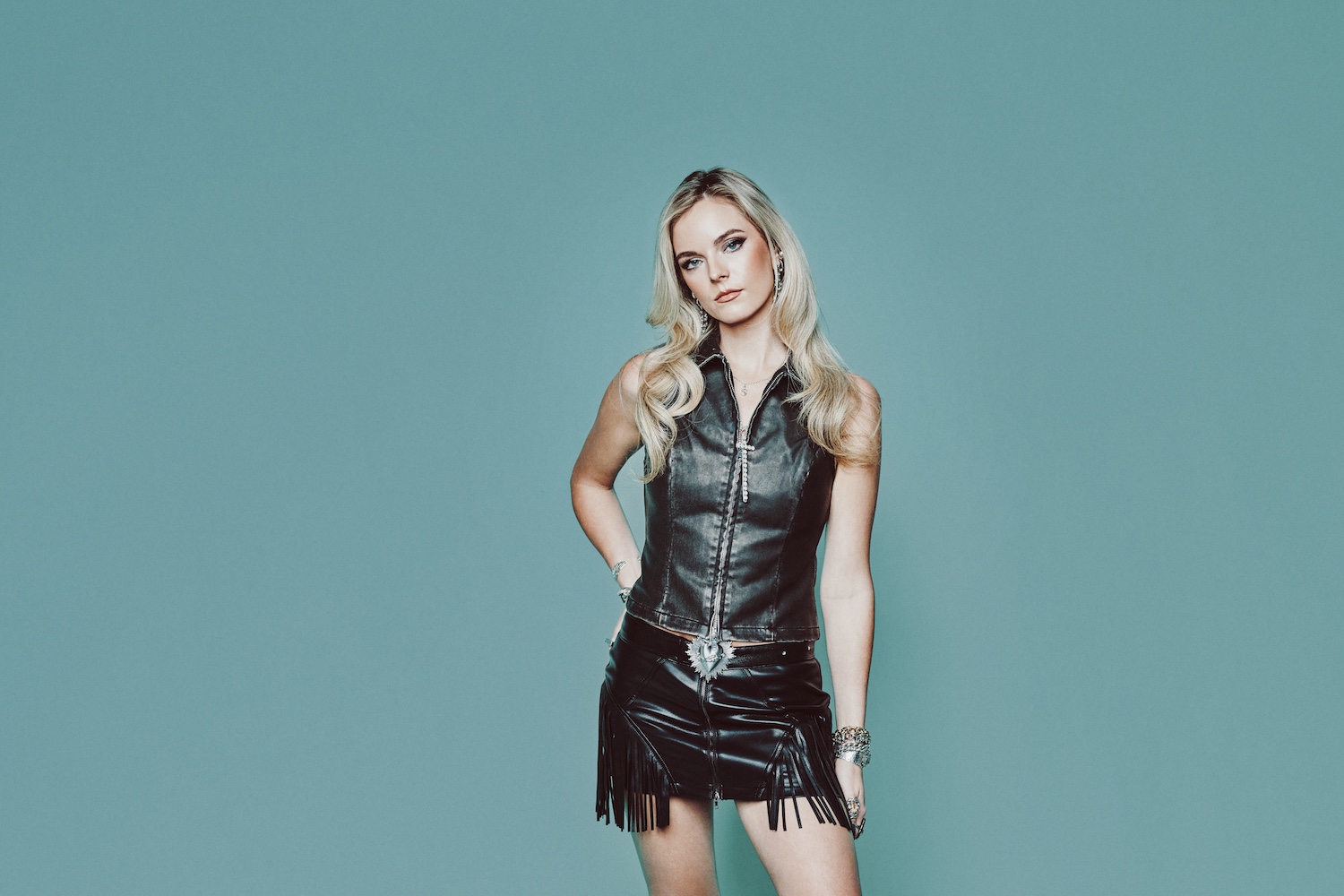
I remember saying that your dad got you into heavy metal. You can hear that influence all over this record. I saw that you put “Heavy Metal” from the EP on the album. Why that song? Not that I'm complaining, but like out of the five tracks, what made you decide to put it on the full length?
Karley Scott Collins: When I released that song, there were just so many people who related to that one, and it seems like… I mean, God, when I don’t play that song live, I still have so many people come up to me after and be like, “I really wish you played Head metal. I love that song.” I just felt like that song deserved a place on the record because of what it’s meant to so many people. It’s really special and the whole reason we release music, you know, is because we hope that there are people out there who relate to the things that we’ve gone through and that it means something to them, so I wanted to have songs on the record that I knew meant something to people, and that was that was one of them.
Flight Risk is definitely an eclectic record if you listen closely. It’s obviously marketed as a country record but there’s a lot of metal, Americana, and even ‘90s grunge influences in there.
Karley Scott Collins: I grew up listening to so many different kinds of music. I definitely didn’t grow up in household where it was like, ‘we only listen to rock or we only listen to country’ because my dad and my mom, and my grandma, and then myself, have such different music tastes that I’ve heard everything growing up, and there’s something I appreciate about all the different kinds of music, and it’s all part of part of my makeup and the things I grew up with. When I’m writing, I never put myself in a box like, ‘well, this doesn’t sound country enough, so I can’t write that song.’
I understand that you taught yourself bass, banjo and violin just for this record?
Karley Scott Collins: Yes.
I wondered if picking up those new instruments informed your writing or how you approached the record?
Karley Scott Collins: Oh absolutely! The process of recording with Nathan is, for me, my favourite thing that I get to do. It’s my favourite part about my career, honestly, is being in the studio, and obviously playing live. I really love that. Nathan and I make it feel like summer camp because it’s just him and I in the studio and we don’t have a set time limit for completing songs. We take time to experiment and just have fun and play with things. If I wanted to learn how to play the bass on something, then we did that because I just wanted to be creative and have fun with it and try different things. I think sometimes if you’ve known how to play something for a really long time, it can be limiting in some ways because you’re like, well, that’s just how it’s meant to be done.
I just picked up the banjo and thought, ‘let’s try this.’ It was a little bit more free and creative because I didn’t really know what I was doing, so I was just coming up with stuff and we were like, ‘Well, that sounds cool, let’s just put that on the record.’ Actually, on “Girlfriend,” I had picked up the banjo for the first time ever, and I just kind of started playing some notes and stuff and the riff I came up with is in the record. I also played bass on that song.
That's really cool. Are there specific songs where you picked up the violin, banjo or bass and those made it onto the album?
Karley Scott Collins: So on “Girlfriend,” I played the bass on that one. I played the banjo on that one too, and then violin on “Bad Bad,” which is kind of tucked away in there, but there’s actually a good bit of violin underneath the music.
I played violin for a little while when I was a child, but I hadn’t played it in over a decade, probably. Nathan randomly decided to bring a violin into the studio, which he also doesn’t know how to play, really. So it was just there, and I was like, ‘you know what? Let’s just do this. This will be fun.’ It took me a little while to get the hang of it again, but we put it on the record and it was really fun.
It’s just like hanging out with a friend trying things, which really is so fun. Nathan also taught me how to comp my own vocals. I learned so much making this record. I love learning. I’m a big fan of museums and reading and all that stuff, so I was in heaven for sure. I was having so much fun.
Nathan is incredible. He loves to teach and I love to learn so we have a really good relationship as far as that goes, but we’ve spent many years working together. Nathan recorded the first song I ever put out. He was one of my first ever co-writes in Nashville, so we’ve spent a really long time working on this really solid collaborative relationship, and we’ve really gotten to the point now where we both just trust each other implicitly, and if either one of us has an idea that we want to try, there’s never any ego for either of us in the room. We just try everything and I really, really appreciate that.
Do you have a favourite song off the record or one that you’re most proud of?
Karley Scott Collins: That is such a hard question. Honestly, I think “Denim” might be my favourite song on the record.
Yes!!!!! *fist pumps*
Karley Scott Collins: I love, love that song. I’ve loved it since the day we wrote it. I love playing it live. We’ve only gotten to play it live a couple of times since it’s not out yet. We just started playing it a little bit here and there, but yeah, I love that one. I also really love “I Used To Love Him.”
Oh that song is so sad.
Karley Scott Collins: I know, you know what’s crazy about that song is, I actually wrote that one while I was still in a relationship. I guess it should have been a sign that I was writing about how I used to love someone when I was in it. I knew it was on its way out. It just hadn’t ended yet. We wrote that song and… I am fully insane because we wrote that song and then I played it for my boyfriend that night. It’s very specifically about him. Like, the words are like… he knew it was about him and he was like, “wow, that’s really nice. Does this mean something?”
Oh my God, that’s so sad.
Karley Scott Collins: I had a hard time. I had a hard time singing that one for a little while after we actually ended up breaking up, but now it’s one I’m really proud of lyrically as well.
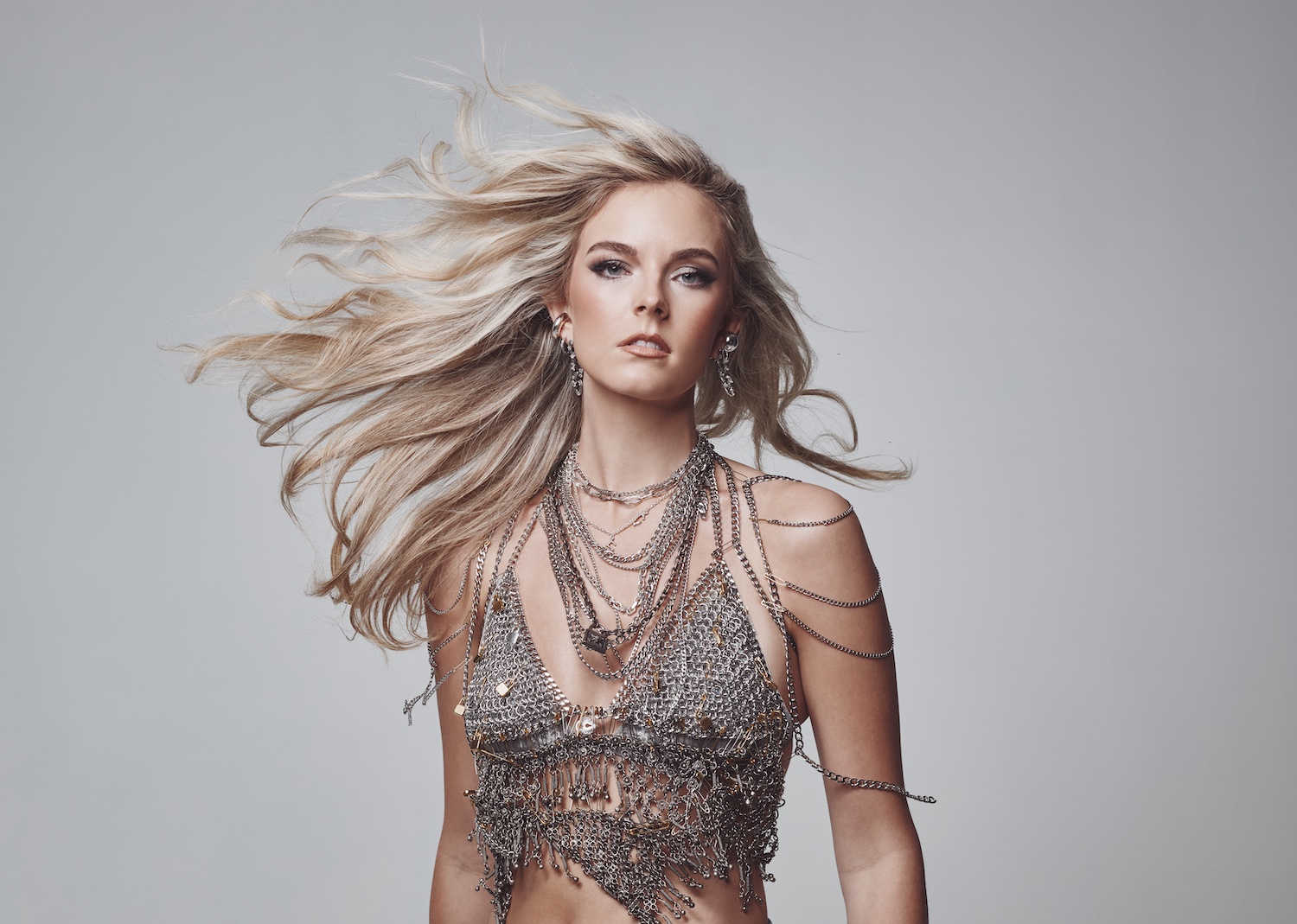
My final question is, the album’s title is Flight Risk. How would you describe the record and why do all the songs come under that one title?
Karley Scott Collins: It was kind of a little bit of foreshadowing for me, I guess, because the last song, “Madman,” which is where the lyric from the album title comes from, was probably the first song I wrote that ended up on the record. I wrote that song in 2020 over Zoom when COVID was happening. I kind of forgot about it for a little while.
Flight Risk was something that I always described myself as because I always had a difficult time really committing or giving myself to relationships and at that point it was mostly out of fear of getting hurt because I had gone through some difficult relationships in the past. I was the person who would start a relationship and feel good about it, and then when it got too close, I was like, ‘right, I’m out of here.’ and through the process of writing the record, and songs like “Runner,” I feel like I healed from that. Then the term, Flight Risk, evolved a little bit more into where I feel like I’m now not afraid of committing to things or being fully vulnerable, but Flight Risk now means that if I know that a situation isn’t right for me, then I leave the situation. I’m not running out of fear. It’s more from a place of independence and confidence, so I wanted the record to show that evolution from what the definition of Flight Risk meant to me, to what it means now.
I got to hold the record not too long ago and it is so bizarre holding your own record, so I can’t wait for you to get it. There’s a quote that I really liked, where someone answered the question of why someone would listen to vinyl records, and they said, “there’s so much surface noise.” They were effectively saying that vinyl sounded more like real life as real life has surface noise. I had never thought about it like that.
I’m so excited that you like the album. It’s a little nerve wracking to bare your soul on something and put it out there and hope everybody loves it. You are one of the only people that’s heard it so far, so it’s nice that you like it, so I really appreciate that. Thank you.
Congratulations on Flight Risk! It is a brilliant record, and thank you for taking the time to speak to Atwood Magazine!
— —
:: stream/purchase Flight Risk here ::
:: connect with Karley Scott Collins here ::
— —
— — — —
Connect to Karley Scott Collins on
Facebook, 𝕏, TikTok, Instagram
Discover new music on Atwood Magazine
© Matthew Berinato
 © Matthew Berinato
:: Stream Karley Scott Collins ::