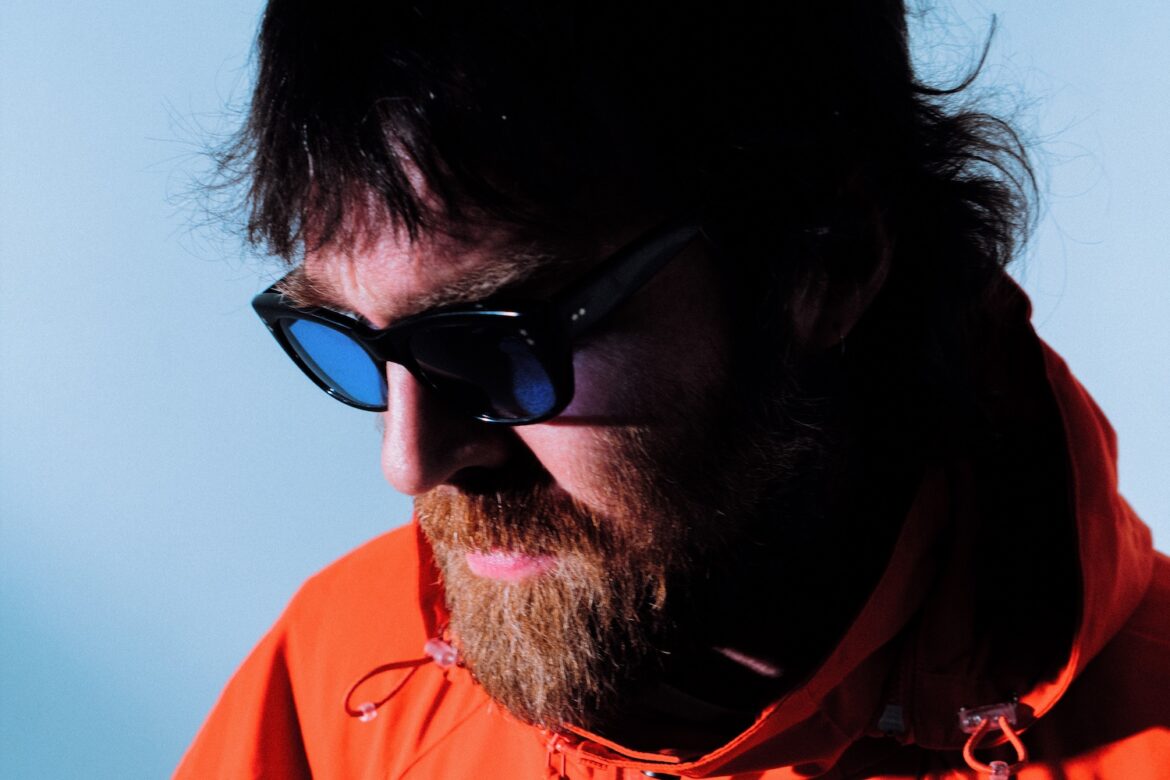
Chet Faker has come full circle on ‘A Love for Strangers,’ a love-soaked, soul-baring, and deeply human album that turns heartbreak, longing, and the fragile pull of connection into one of his most intimate and affecting records yet. In conversation with Atwood Magazine, Nick Murphy opens up about returning to instinct, following where the music leads, and making peace with the winding path that brought him back to himself.
Stream: “Over You” – Chet Faker
What does it mean to come back to yourself?
Not to rewind, not to recreate what once worked, and not to dress the past up as cleaner or more knowable than it was – but to return with everything you’ve lived through still intact. To carry the noise, the success, the confusion, the detours, and the quiet revelations forward, and somehow find your way back to the feeling that started it all.
For Nick Murphy, the artist behind Chet Faker, that journey hasn’t been linear. Monikers have changed – more than once – and his style remains as fluid as ever, but these days, he sees the path more clearly in hindsight: A full loop rather than a straight line. “I feel like the last 15 years has been one big circle,” he tells Atwood Magazine.
That circle takes shape in A Love for Strangers, a record its creator sees as a return – to instinct, to curiosity, and to the emotional core that first drove Murphy to create. Written in the wake of personal upheaval and reflection, the album – his third as Chet Faker, and sixth overall – gathers years of experience into an intimate and immediate body of work, tracing the fragile, shifting ways we connect with one another – and the distance that so often follows.
“I’ve finally sort of done this full lap… coming back to what I originally started making music for – but with all the added growth, lessons, and inspiration along the way,” Murphy says. He describes the title as both conceptual and literal: “This record is loves that I experienced sort of bottled up into song form, and I’m giving it to people – essentially strangers.” It’s an offering more than a statement, one that resists persuasion in favor of presence – songs that sit with uncertainty, intimacy, and contradiction, without trying to resolve them.
Released February 13 via BMG, A Love for Strangers is, true to its title, a searching, open-hearted, deeply human meditation on connection, distance, and the strange intimacy of finding meaning in one another. For Murphy, it arrives at a moment of rare perspective. Over the past decade and a half, he’s built a career defined less by consistency than by curiosity – moving fluidly between the Chet Faker moniker and releases under his own name, following that pull wherever it leads. “I’ve been following the same line of authenticity and instinct the whole way,” he explains. “There are periods where you resonate with a large audience, and periods where you don’t.” From the breakout success of 2014’s Built on Glass – a record that introduced his smoky vocals and genre-blurring blend of soul, electronica, and pop to a global audience – to the more experimental and inward-facing work that followed, his path has never followed a single, predictable line.

That trajectory makes A Love for Strangers feel less like a departure than a convergence.
The album comes nearly five years after 2021’s Hotel Surrender, a record shaped by retreat and recalibration, and in the shadow of Built on Glass’s 10-year anniversary – a milestone that prompted its own kind of reflection. Revisiting that debut didn’t inspire Murphy to recreate it; instead, it reminded him of what first pulled him toward music in the first place – a sense of exploration, texture, and emotional immediacy that had, at times, been obscured by scale and expectation. “There were lots of things I forgot that I liked about music,” he says. “I finally had this pause and returned to some of it… ‘Oh right – I love this.’”
In that sense, the distinction between Chet Faker and Nick Murphy feels less like a divide and more like a spectrum – different expressions of the same creative impulse, each following its own thread. Murphy resists the idea of a clean ‘reintroduction’ altogether. “I didn’t go anywhere,” he says plainly. The through line, as he sees it, has always been instinct – trusting the process, embracing inconsistency, and allowing the work to evolve in real time rather than forcing it into shape.

If A Love for Strangers traces a circle, its songs don’t move in straight lines so much as they drift, return, and reframe themselves – moments of clarity arriving only to dissolve again into feeling.
Nowhere is that more apparent than on its opening track, “Over You,” a hypnotic, slow-burning meditation on heartbreak as repetition rather than release. Built on a translucent piano figure, hushed electronics, and a gently pulsing breakbeat, the song lingers in that uneasy space between distance and attachment – the place where time moves forward, but feeling doesn’t quite follow. “I was getting over you,” Murphy repeats, each refrain landing with a quiet, cumulative weight. It’s not closure; it’s recognition – the sound of someone circling an emotion they haven’t fully escaped.
That sense of suspension takes on a different shape in “1000 Ways,” a yearning, restless track that captures the push and pull of desire just out of reach. Where “Over You” dwells in an intimate in-between state, “1000 Ways” stretches outward, its rhythm and momentum mirroring the instability of wanting something you can’t quite hold onto. Elsewhere, “Far Side of the Moon” leans into that imbalance more directly, exploring the blurred line between devotion and depletion – how love, when pushed too far, can begin to unravel under its own weight. These songs don’t offer answers so much as they trace the contours of connection at its most fragile.
Even in its lighter moments, the album resists simplicity. “This Time for Real” carries a buoyant, almost playful energy on the surface, but beneath it lies a self-aware reckoning with expectation – the pressure of being seen, of being known, and of trying to meet that image without losing yourself in the process. And on “The Thing About Nothing,” the record briefly opens beautifully outward, with aLex vs aLex’s tender voice offering a shift in perspective – a reminder that connection isn’t always singular, and that understanding often arrives through contrast.
What ties these songs together isn’t a strict narrative, but a shared approach – one rooted in performance, immediacy, and instinct. Murphy describes building each track around music he could sit down and play in full, whether on piano or guitar, grounding even the album’s most textured, electronic moments in physical expression. “The less I try to intellectually create a through line, the easier everything gets,” he reflects. That shift away from piecing ideas together and toward capturing them in motion gives A Love for Strangers its warmth – a sense that these songs are lived-in rather than constructed, discovered rather than designed.

There’s something disarmingly human about A Love for Strangers – not in a grand or dramatic way, but in how unguarded it feels.
The edges are softer, the performances looser, like Murphy is letting the songs happen instead of trying to perfect them. What lingers isn’t any one lyric or moment, but the feeling of being let in. You hear it in the gentle aches of his voice, in the pauses he doesn’t fill, in the way the production breathes instead of pushing forward. It carries the DNA of early Chet Faker – the intimacy, the heat, that late-night closeness – yet with the weight and wisdom of age and experience. It’s love-soaked and heartfelt, a sweetly sentimental record that lets us in to the shared moments, the missed connections, and life’s endless, beautiful mess.
Taken together, the album becomes less about resolution and more about presence: A body of work that holds space for contradiction, for connection that doesn’t last, and for the quiet, ongoing process of making sense of it all. Murphy doesn’t try to convince the listener of anything – he simply offers the music as it is. “If this is what you want… feel free to come on in,” he says. “This is for you.” In that way, A Love for Strangers lives up to its name as an open-handed gesture, extended outward, asking nothing in return.
It’s a philosophy that mirrors the way Murphy approaches his art more broadly: Not as a fixed identity to define, but a path to follow. In our conversation, he reflects on the cycles, contradictions, and creative instincts that have shaped his musical journey thus far – and the freedom that’s come from letting them lead. Fifteen years on, the genius behind Chet Faker finds himself in a full-circle moment, and he’s exactly where he needs to be.
— —
:: stream/purchase A Love for Strangers here ::
:: connect with Chet Faker here ::
— —
Stream: ‘A Love for Strangers’ – Chet Faker
A CONVERSATION WITH CHET FAKER

Atwood Magazine: Nick, your artistry – both as Chet Faker and under your own name – has undergone so many brilliant transformations over the past 15 years. Where do you see yourself, and that artistry, as it stands today? Who is Chet Faker in 2026?
Chet Faker: That’s a good question, Mitch. Currently, I feel like the last 15 years has been one big circle. I started with these things I liked about music and what I wanted to make, and then had this great thing happen – which was, on one hand, an interruption, but on the other, great – which was success. I started touring, and that came with a lot of distractions and new input and everything. I feel like I’ve finally done this full lap, coming back to what I originally started making music for – but with all the added growth, lessons, and inspiration along the way.
It also feels like whenever I try to define where I’m going or predefine it – whether that’s with names, labels, or projects – it sort of collapses in on itself. If I draw a line, a flower pops up on the other side of it. So where do I see myself? I see myself in the middle of all of it.
And yeah, who is Chet Faker in 2026? I don’t know. It’s all of it. I feel like it’s kind of all the same thing. They all just follow their own lines.
As much as people might want a really clear, clean-cut answer, I’m sort of out in the dark, feeling around – and that’s kind of the point of what I’m doing. Every time I define it, I end up doing something that contradicts that. So right now, I just feel very much in the middle. I feel like I’m in the middle of the past and the future. That’s profound.
Your upcoming album A Love for Strangers is billed as a return “to the sense of restless exploration” that led you to make music as Chet Faker in the first. How do you feel A Love for Strangers reintroduces you and captures your artistry?
Chet Faker: It seemed kind of fateful that the 10-year anniversary of Built on Glass, which was my first album, was around when I was putting this record together and finishing it. There was this huge theme of looking back already going on, while I was writing all this new music and exploring, trying to put together these new sounds.
I feel like I’ve gone on this great big circle, and I’m as much rediscovering myself – what I originally was inspired to do with music, and liked about music – and there were lots of things I forgot that I liked about music as well. Things got so big and I traveled the world, you forget stuff. I feel like I finally had this pause and returned to some of it. And I was like, “Oh, right!” – “I love this,” “this is something I love that I forgot” – whether that’s textures, or trying to make music that has something visceral in recorded music.
So in that sense, there is a “reintroduction.” It’s not something I think about or worry about – reintroducing myself or Chet Faker to an audience. Some people discover you randomly. It’s more just about making what I make. I see a lot of comments like, “Welcome back, Chet Faker,” or “he’s back.” But I didn’t go anywhere. I’ve actually been doing this for 15 years – I never stopped. So it’s more that people are coming back. It’s nice that people like the new music. But you could call it a reintroduction – in a way, I think people are reintroducing themselves to me.
I’ve been following the same line of authenticity and instinct the whole way, whether it’s under one name or another. And that’s just the nature of being an artist for a long period of time – there are periods where you resonate with a large audience, and periods where you don’t. Learning to personally connect and create the whole way through, regardless of that, is what I’ve been trying to develop.
So yeah, my reintroduction is without reintroduction.
Following on from 2021’s Hotel Surrender, what's the story behind this album?
Chet Faker: Well, it’s a bit obvious and cheap, but the answer is the title, which is “A Love for Strangers.” It works on a few different levels, but it’s also kind of literal. I think this record is a love that I felt, or loves that I experienced, bottled up into song form. And I’m giving it to people – essentially strangers. So in that sense, that’s what the album is. That was also the theme that inspired me to work on this record, and something I was exploring – not just in the music, but in my life.
I started thinking about this idea of love and how there are different types of it, and how we can relate to people – sometimes strangers – with that love. Whether we fall in love with someone quickly before we know them, or love someone for a long time and they do something that makes them feel like a stranger, or just trying to find a little bit of warmth and connection with a total stranger you might not even speak to. I started thinking about that for myself, and it felt like a reasonably worthy theme to share and instill in a record that feels beautiful.

When we last spoke 4-5 years ago, you described creativity as your inner child. What did your creative approach look like, in making these songs? Was it a slow burn, a quick build, or something altogether different?
Chet Faker: Well, it’s definitely still the inner child. He still writes all the music. So in a lot of ways, the important part of the process was the same – piecing the record together – but there were a few things that were different about this record from all the others I’ve done. Almost every song on the record has the skeleton of it at its nucleus through performance, whether it’s a piano part or a guitar part. I can just play that part and sing the whole song. So there’s this traditional song at the core of every track. I was thinking about that the whole time. It’s also the first record where I made it with the intention of being able to play every one of these songs live, and knowing how as I was writing it. So that was new in that sense.
In terms of new processes, songs like “Can You Swim” or “Just My Hallelujah” were the first time I’ve ever recorded anything, at least for Chet Faker, where I played the keys and sang at the same time – essentially pressing play and going all the way through. That was a big shift for me – moving more towards performance and away from heavily curating and piecing things together.
To tell you the truth, I've been blown away by all of the singles you've released for this album. Each one feels like a world onto itself – “Far Side of the Moon” is a far cry from “Inefficient Love,” which is so sonically different from “This Time for Real.” And yet, they all are true to you, and true to this album. Do you look for motifs or through lines in your art, and have you found any salient ones in these songs thus far?
Chet Faker: I really don’t look for through lines. And I think there are probably a lot of people who would say that’s pretty obvious looking at my career. When I was younger, I actually disliked how inconsistent I was, and I was always a little jealous of artists or musicians who somehow made the same kind of work consistently. But I abandoned that after a while and thought, “You know what? Create – that’s the whole point of creativity.” It’s about exploring and doing different things. So if I feel like I’m all over the shop, it’s because I’m doing what I’m supposed to do.
I’ve had this reckless abandon throughout my career where I’ve thought, “I’m not going to waste my time trying to be consistent. That’s not my job.” If it works, it works. If it doesn’t, it doesn’t. My job is to go into the unknown and lead with what I’m feeling – and to have faith that a through line will naturally reveal itself over time.
It makes me feel good to hear that you’re sensing a through line on the record. To me, that’s just proof that if I keep writing, it all works out.
But there are certain through lines of technique. Focusing more on performance has become important. “Far Side” and “Inefficient Love,” for example, were both written on guitar – in the same room, on the same sofa. So they’re all from the same place. There’s a performance that’s done by my body, rather than piecing notes together on a computer screen. And I think that helps – the less I try to intellectually create a through line, and the more I let my musicality do it, the easier everything gets.
This brings us to “Over You,” an intimately beautiful track that blends heartbreak and memory with lush beats and your own aching falsetto. I think it's an instant showstopper. What's the story behind this song in particular - its creation and inspiration (sonically and also lyrically)?
Chet Faker: Well, sonically, there’s a bit of a journey in that song. I actually forgot this until just now – the basis of that track, that piano part, if I’m correct, is almost 10 years old. I think it’s a beat I made forever ago. It’s this blend – a piano ballad, but with this quite dry, strummed guitar. There’s a reason this is the first track on the record, because it probably says everything I wanted to say for the whole album.
In a way, it’s like the cipher. I could talk forever about it sonically, but that’s kind of the core of it. In terms of writing, the song came together in two phases. I wrote the chorus first – the original version had a different bridge. I was seeing someone at the time, and we kept splitting up and getting back together, always saying, “Okay, this is the last time.”
I remember she hit me up, and I wrote the song because it felt kind of funny, even though it was sad – like, “I was almost over you, and now we’re back in the mess again.” That was during COVID. Then I went through another breakup about a year and a half or two years ago, and it kind of became a full breakup song. That ended up informing the final vocal takes.
So that’s kind of it. It’s a melancholy, sad song, but there’s also a bit of hope in it, which I like. I don’t listen to it and feel really sad – I just feel. And I like that.
How does this track fit into the overall narrative – if there is one – of A Love for Strangers?
Chet Faker: I just think it just represents everything about it – even just textually, tonally, and sonically. It was one of the earlier songs I had where I was like, “This is what the album is supposed to sound like and feel like.” Even down to just having a really long intro and a kind of long outro, which for a while I was nervous about putting at the start of the track – at the start of the album. For me, it has pretty much everything – I feel like you can find almost every element on the record in that song.
Do you have any definitive favorites or personal highlights off this new record, aside from the singles, that you can't wait for people to hear?
Chet Faker: Yeah, “1000 Ways” is probably my favorite track from the record. I had a lot of fun making that video as well. Obviously the singles are kind of my favorite songs, which is why they’re out. But I guess “The Thing About Nothing” with aLex vs aLex as well – when I listen to the record the whole way through, it always gives me a really nice feeling when that track comes on and her voice comes in, as it’s such a refreshing break after hearing my voice going forever. So that’s probably another standout for me.
What do you hope listeners take away from “Over You” and A Love for Strangers, and what have you taken away from creating this music and now putting it out?
Chet Faker: I think the record as a whole – which you could say about “Over You” – I didn’t really try to make something that was trying to convince people of how good it is. I think I just made something that was built on the assumption that if this is what you want, and this is what you like, feel free to come on in – this is for you. So I think that’s what I hope people take away: Something they want or they don’t. I’m not trying to make people like this stuff. I think it’s just like, this is something that I love, and I’m pretty sure some people do as well. So that’s my intention. It’s a bit like “A Love for Strangers,” right? It’s just like, here – have it if you want.
And then for me personally, music – every record I’ve ever made, and every song – has always been a way of processing, making sense of, and unpacking whatever’s going on in my life at the time. So what I got out of this record was unpacking a whole lot of experiences and things that happened in a period of time, and just making it make sense. Sitting with some discomfort, looking at it, processing it introspectively, and then making something better out of it – and feeling better because of that. So that’s what I got out of it.
In the spirit of paying it forward, who are you listening to these days that you would recommend to our readers?
Chet Faker: Well, recently I’ve been listening to a lot of new age music. So Gigi Masson, he’s been around for a minute. And Susumu Yokota, whom I believe, has passed away, but he has a record called Symbol that I’ve been listening to. And then for new artists, I mean, there’s so much good news music right now! Obviously Mk.gee I really like, Geese and Cameron Winter are great. And then I’ve been listening to this guy, Nourished By Time, who makes some really cool stuff as well.
— —
:: stream/purchase A Love for Strangers here ::
:: connect with Chet Faker here ::
— —
— — — —
Connect to Chet Faker on
Facebook, 𝕏, TikTok, Instagram
Discover new music on Atwood Magazine
© Sarah-Eiseman
 © Sarah-Eiseman
A Love for Strangers
an album by Chet Faker