In honor of Women’s History Month, Atwood Magazine has invited artists to participate in a series of essays reflecting on identity, music, culture, inclusion, and more.
•• •• •• ••
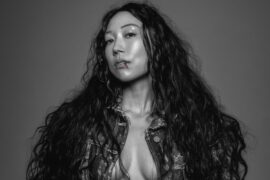
Today, Los Angeles-based artist Bei Bei traces her evolution from a traditionally trained guzheng musician in China to a multidisciplinary performer who blends music, movement, and storytelling into a boundary-pushing artistic identity. She centers on a pivotal March 2026 performance that marked a breakthrough beyond cultural expectations, affirming her growth and redefining her creative voice. Ultimately, she reflects on resilience, self-discovery, and the ongoing pursuit of innovation as both an artist and a woman balancing multiple roles.
Bio: Bei Bei is an internationally acclaimed, award-winning guzheng and guqin artist known for bringing the ancient Chinese instrument to global audiences through innovative, cross-genre work. Born in Chengdu, China and trained at leading institutions in Beijing and Hong Kong, she later expanded her studies in the U.S., blending classical roots with jazz, pop, and electronic influences. Since her 2006 debut, she has released multiple acclaimed albums, collaborated with artists across genres, and contributed to major film, TV, and video game soundtracks, including Disney’s Mulan and Turning Red. A sought-after performer, she has appeared on world-renowned stages and alongside artists like Christina Aguilera, while also working with top composers such as Hans Zimmer. Beyond performance, she is an educator, author, and founder of a music academy, continuing to inspire global audiences through both her artistry and cultural advocacy.
•• ••
EMBRACING INNOVATION, BEI BEI STYLE
by Bei Bei
Shadows drift across my face, curving into familiar outlines of a bamboo forest waving in the wind.
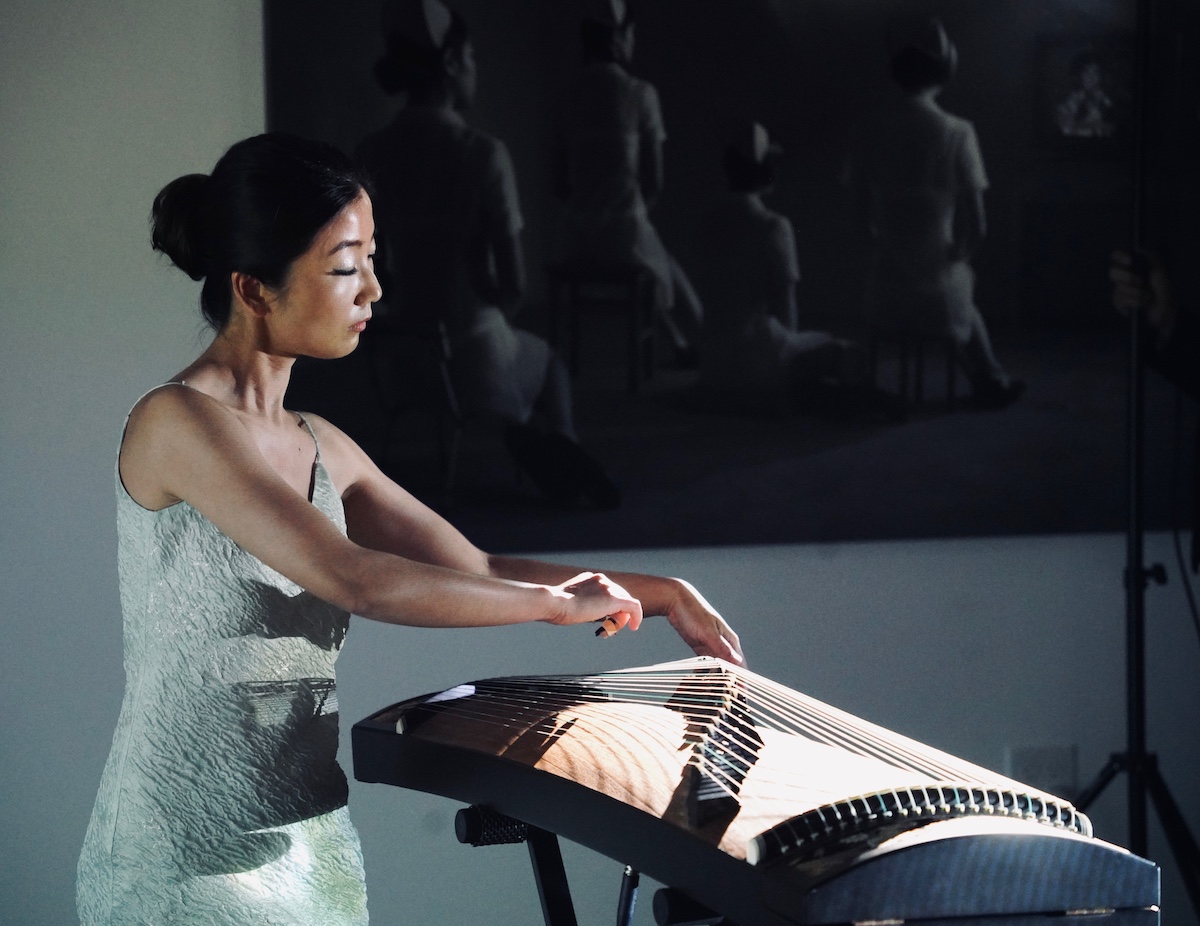
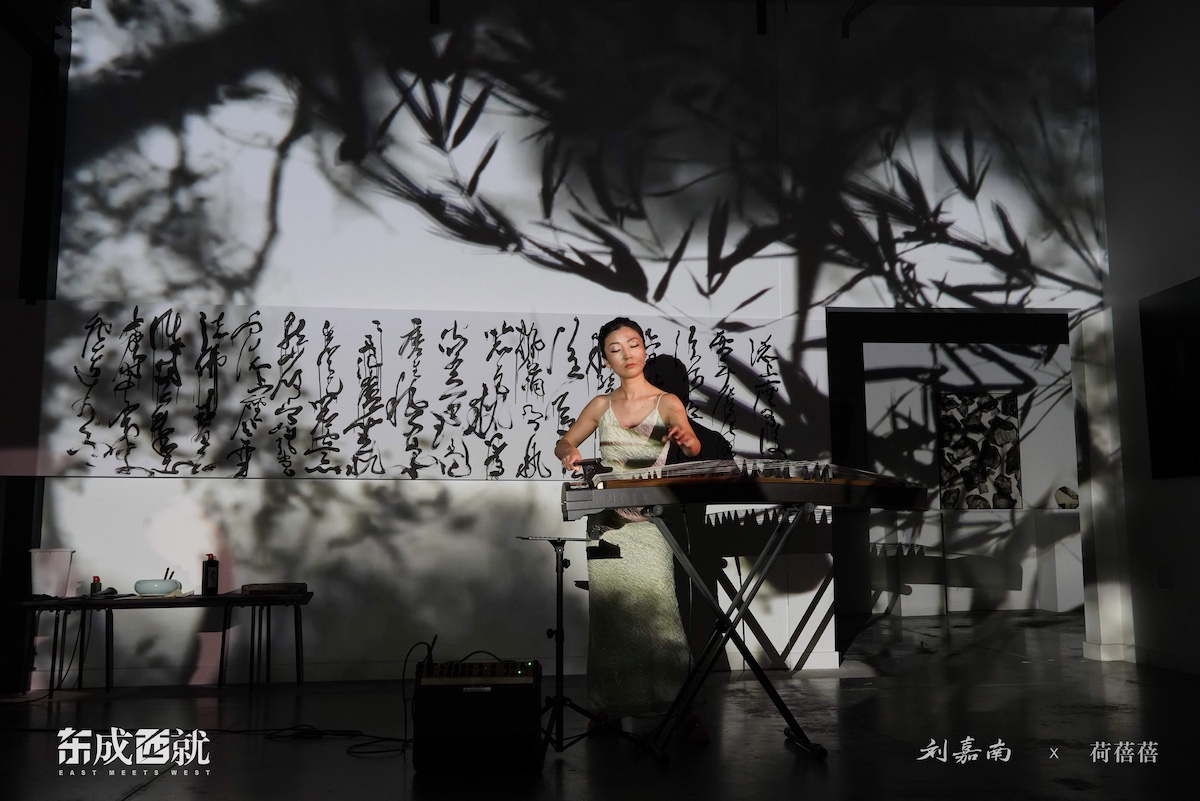
Behind me, dark slashes litter the wall, obscure phrases popping in and out with each wave of the light. I walk onstage as if in a trance, my body moving with the smooth surety of a shaman. Wearing a strappy dress, I turn my back to the audience, the light brown skin and toned muscles on my back and arms glowing under the spot light. I struck the guzheng, almost without paying attention, but a note sounded out, sure and sibilant and strong. There was no me. No obvious melody. No expectation. Just tension, drama… and the moment of becoming Midnight Bizarre*.
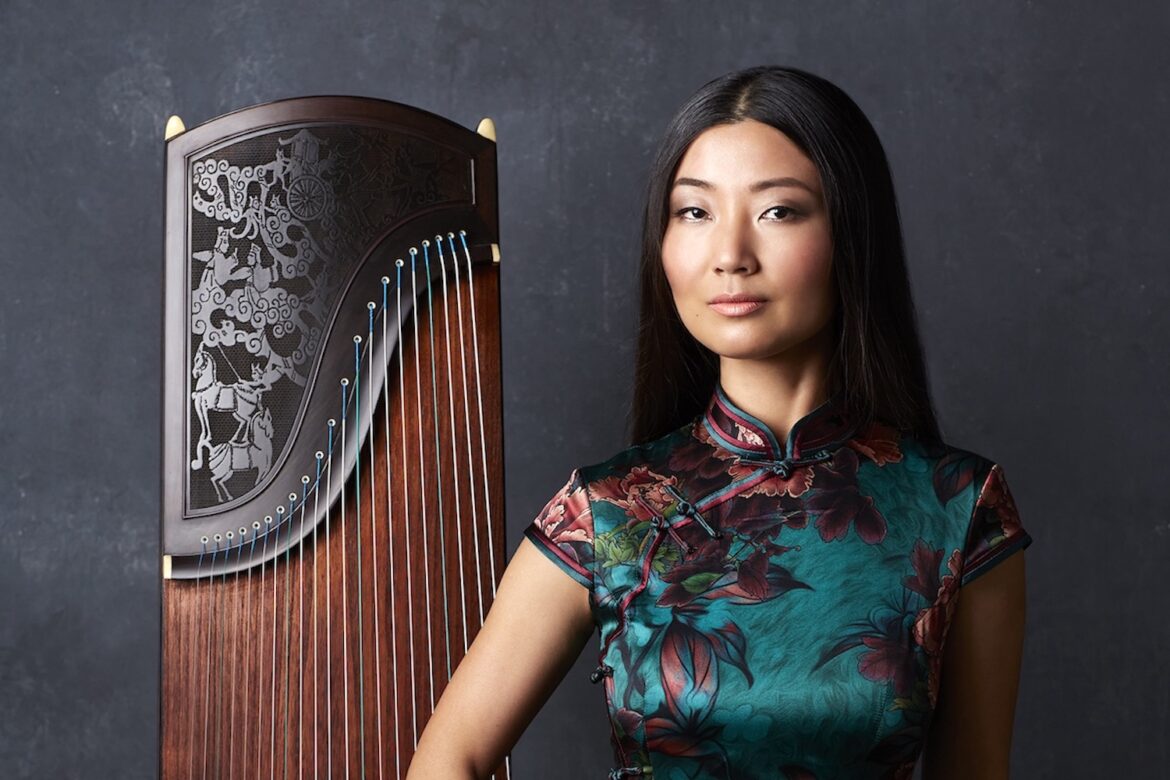
As a female musician performing a traditional Chinese instrument, I’m often invited to appear at cultural occasions such as Lunar New Year celebrations and AAPI Heritage Month events. In these settings, there is a clear expectation: to wear traditional Chinese attire and present either classical repertoire or culturally inflected fusion works. Over time, a recognizable image and sound have been shaped around me – one I have embraced and developed – earning recognition as an innovative fusion artist.
But on March 14, 2026, I stepped beyond that framework. In a groundbreaking performance, I pushed past those expectations and blurred the boundaries between music, dance, and drama, redefining what my artistic voice could be.
You might wonder, then, what training and experiences led me to this turning point?
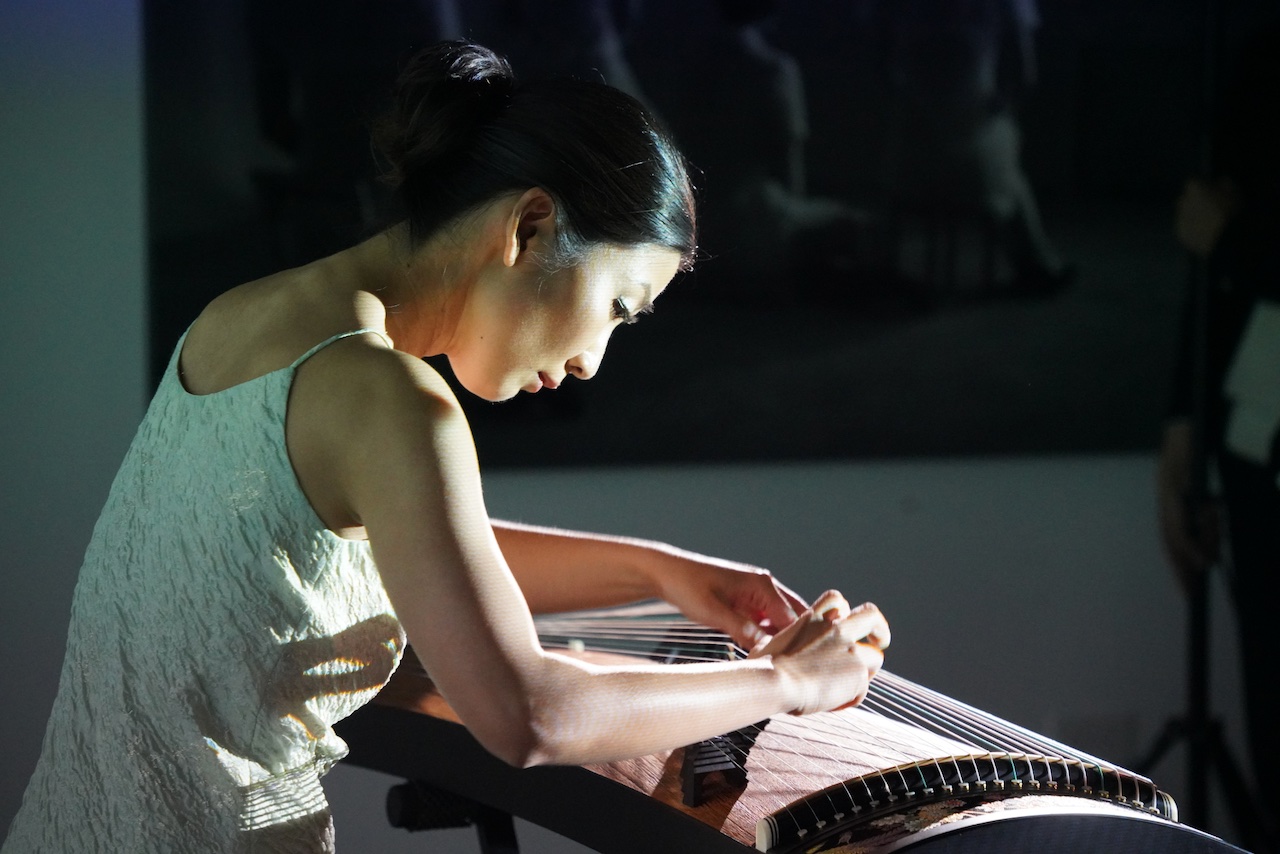
Thirty-two years before this night, I was growing up in Chengdu, the capital city of Sichuan Province in southwest China, where panda bears live and the smell of Sichuan cuisine sizzles on street corners. At 12, I left my family to study guzheng at a conservatory in Beijing, thousands of miles away, a decision that shaped my independence and resilience early on. At 18, I moved to Hong Kong to study both guzheng performance and theater technical arts, immersing myself in a new culture and learning Cantonese while discovering musical worlds like Cantonese opera and jazz.
During this time, I wrote my first stage play proposal and realized I didn’t just want to interpret music: I wanted to create it. That realization eventually led me to the United States, where I studied recording engineering and music production. Along the way, I discovered jazz and improvisation, which opened the door to composing my own work. I began collaborating across genres and released original projects, developing a voice that felt truly my own.
A decade later, I set out to expand my artistry beyond sound. I trained in ballet, Latin dance, and Chinese classical dance, studied modeling, and explored acting, learning how to use my entire body as an expressive instrument. These experiences not only strengthened my stage presence but also led to on-camera roles, where I was recognized as “the whole package.”
While I haven’t had the time to master each discipline as deeply as I’d like, these practices continue to shape me. As a mother and a working artist, time is limited, but each art form fuels my creativity, allowing me to blend movement, storytelling, and music into a performance style that is uniquely my own.
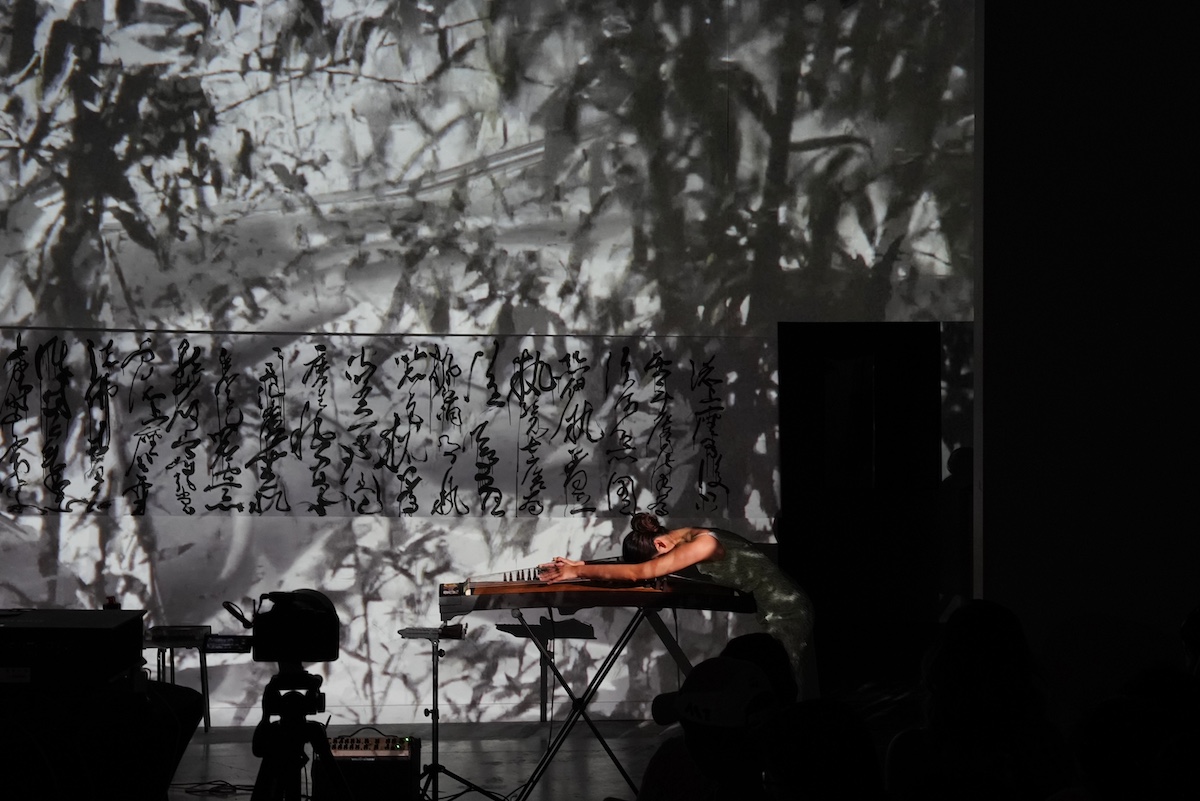
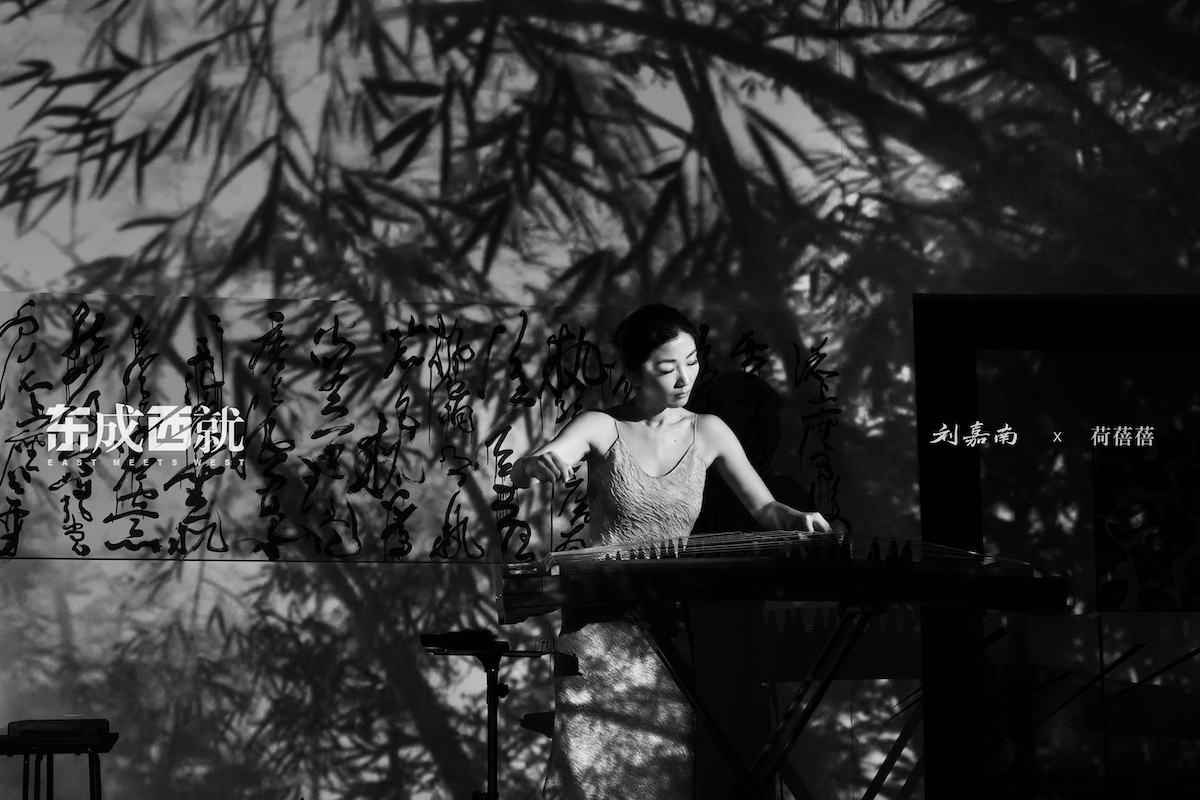
As a woman, I see it as both a privilege and a responsibility that we generally have more avenues to express beauty. This allows me to shape a complete visual and emotional experience through not just my instrument, but also my costume, hair, makeup, and accessories. While this creative freedom is exciting, it also comes with a higher expectation of time, effort, and financial investment compared to my less-costumed male counterparts.
Aging is another factor that I consider more pressing than a male artist might, but I’m determined to continue growing in all areas, from the mental to physical. Fortunately, I can see all the work I put into myself is paying off, a reflection of my self-discipline and focus. I feel mentally, emotionally, and physically strong, which is essential when I present myself on stage. It is there I open myself fully and become more than another female Chinese performer or instrumentalist. Instead, it is in those moments that I expand to become not just a musician, but also a movement artist and postmodern storyteller.
Despite the many challenges and adjustments I’ve had to make as a working artist, I find myself constantly grateful that my life is a continuous path of learning. My artistic toolbox is constantly evolving and expanding, driven by curiosity, exploration, sensitivity, and a spirit of adventure. This is part of my nature, but it also requires discipline: to keep working, challenging myself, and growing. However, it also comes at a cost – less time for leisure, rest, and even my family.
This journey and all of my self-discoveries led to my recent performance of Midnight Bizarre at Techne Art Center in San Diego. In this expanded, improvised version, I stepped into entirely new territory, bringing together musical improvisation, movement, drama, and visual elements into a single, unified expression.
Before going onstage, I felt a sense of uncertainty. Many in the audience were seasoned arts patrons, including former Bowers Museum Chairwoman Anne Shih and current Chief Curator Dr. Tianlong Jiao, individuals who have experienced some of the finest art in the world. I didn’t know how this new direction would be received.
But after the performance, that uncertainty dissolved. Their genuine excitement and emotional response affirmed what had taken place.
As Ms. Anne Shih told me passionately, “Bei Bei, 你的表演太震撼人心了!”
Your performance was deeply moving!
Another audience member exclaimed, “Bei Bei 的表演封神了!”
Your performance was legendary!
In that moment, I knew: I’d surpassed my own limits.
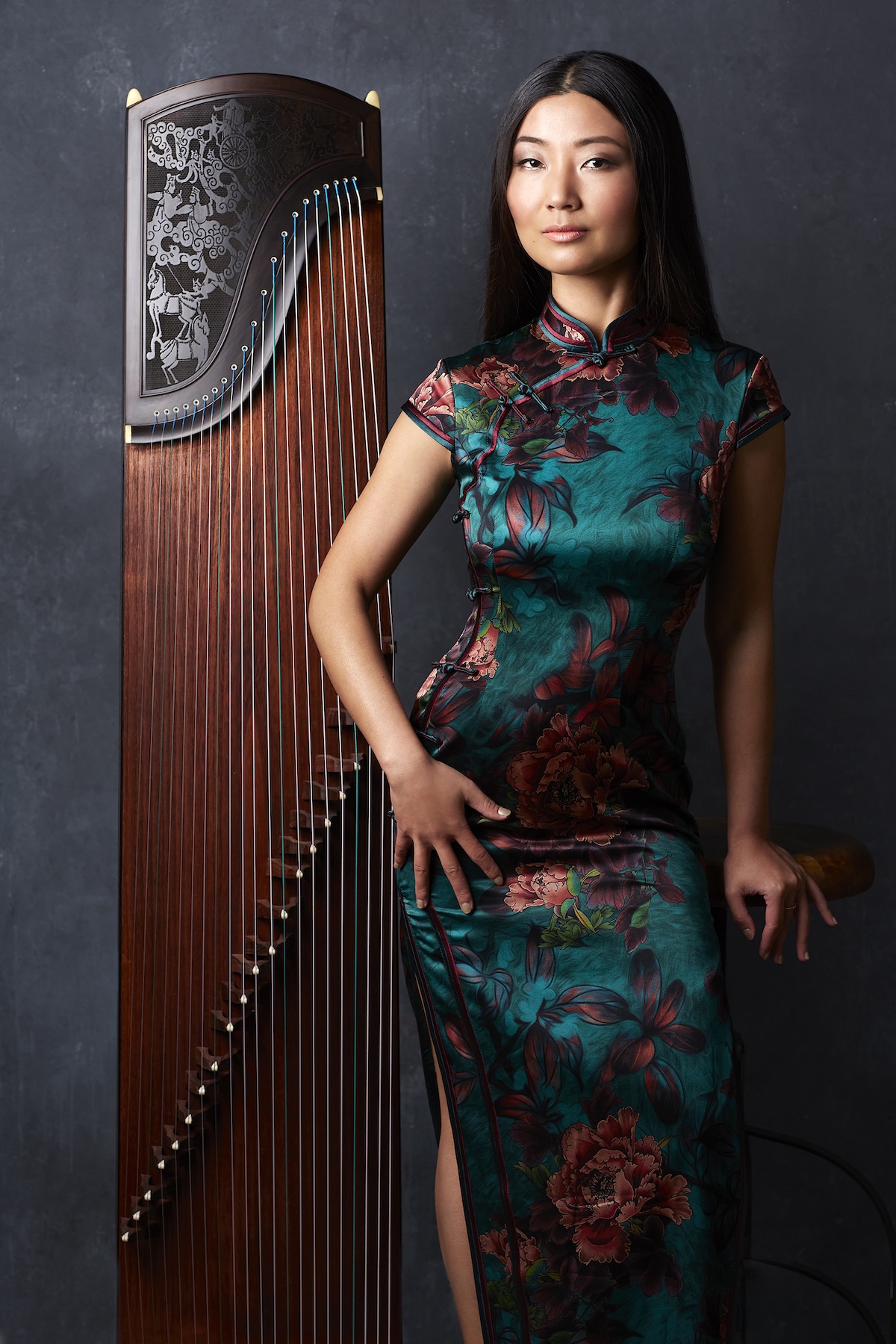
Moving forward, I want to continue exploring this new form of expression, one that synthesizes technology, composition, improvisation, movement, drama, and music. I aim to use every tool I’ve developed, including those shaped by my experience as a woman, to create work that is both personal and empowering.
I believe it is essential for artists to share our stories. To inspire audiences to learn, to feel, and to grow. For me, there is no greater honor than using my craft to uplift others. I look forward to continuing this exploration, learning to move with life’s current, and embracing whatever unfolds in both art and life. – Bei Bei
* Midnight Bizarre is an original collaborative piece composed by UK-based composer Paul Elliott and Bei Bei Monter. It was released on her most recent album, Two Moons, on February 20, 2026. The album is a collaborative project between Bei Bei (guzheng, guqin, vocals, composition) and Paul Elliott (electronic music, composition). It features seven original tracks, all co-written by the two artists, blending organic lo-fi electronic soundscapes with the timeless resonance of traditional Chinese instruments.
** The live performance of Midnight Bizarre is an expanded, improvised version that incorporates visual projections and live Chinese calligraphy by visual artist Allen Liu.
•• ••
:: connect with Bei Bei here ::
•• ••
•• •• •• ••
Connect to Bei Bei on
Instagram, 𝕏, Facebook
Discover new music on Atwood Magazine
📸 © Stefanie Parkinson
Stream Bei Bei