Fruit Bats’ Eric D. Johnson climbs the collective weight of the past on his radiant twelfth album ‘The Landfill,’ transforming missteps, old wounds, and dream-lit memories into a bold folk rock testament to the grace of seeing how far the wreckage has carried us. From inherited sayings that fail to heal to centuries-deep California ghosts, the record gathers itself in the hard-won, panoramic closing title track, where a landfill becomes a holy vantage point for what could be, what couldn’t be, and what could have been.
Stream: “The Landfill” – Fruit Bats
This is an ode to eternity / sung by an old show pony…
* * *
A great Fruit Bats song can turn a dump into a destiny.
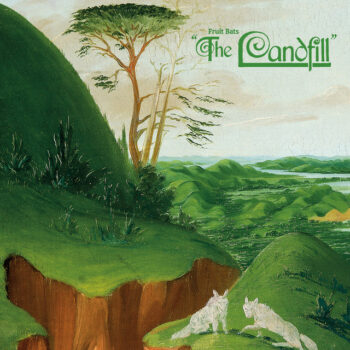
Wondrous, weathered, and wide-eyed, “The Landfill” begins on top of everything we’ve left behind. Waste, memory, history, heartbreak, failure, regret – the debris of a life doesn’t vanish just because we move forward; it gathers, layer by layer, until one day it becomes a hill high enough to see from. Fruit Bats’ title track and lead single off The Landfill turns that strange vantage point into a spirited folk rock reckoning: Refreshed and ragged, worn and invigorated, poetic and playful as Eric D. Johnson looks out over the glowing city lights and finds a “holy vision” in the wreckage. “This is an ode to eternity / sung by an old show pony,” he sings at the top, winking at his own role as entertainer and truth-teller before opening the song into something panoramic, tender, and deeply human.
This is an ode to eternity
Sung by an old show pony
In this long, slow rodeo
I’ve come to know
Lookin’ down from the landfill
I can see the city lights a-shimmerin’
And it’s like a holy vision of
What could be
And couldn’t be
And could have been
And now I’m sitting in the car
Thinking “it’s written in the stars…”
Out now via Merge Records, The Landfill is Fruit Bats’ twelfth album and one of the project’s most vibrant full-band statements to date. It arrives in Johnson’s 25th year making music under the Fruit Bats name, following 2025’s intimate solo outing Baby Man and carrying that record’s immediacy into a bigger, brighter, more communal space. After years of patient songwriting and careful fine-tuning, Baby Man cracked open a different process – stream-of-consciousness, observational, alive in the moment – and Johnson brought that spark straight into Bear Creek Studios in Washington with his longtime touring band. The result is a record that feels loose without losing shape, deeply personal without closing itself off, and full of the kind of chemistry that can only happen when musicians trust each other enough to let the room breathe.
“It started off as me just trying to create an odd little vibe and exploring what it meant to be a songwriter in the early ‘00s,” Johnson tells Atwood Magazine. “Now it’s me trying to laser beam feelings at you to the best of my ability.”
That mission comes through in “The Landfill,” a song that feels both earthbound and cosmic: An old road-trip landscape turned into a metaphysical lookout, a Midwestern image stretched until it holds memory, legacy, consequence, and possibility.
Johnson says the title came from growing up in a part of the Midwest where “the only hills are landfills,” an image that first arrived before its deeper meaning fully revealed itself. The song’s magic lives in that gradual dawning – the way a manmade mountain of refuse becomes a place to survey what could be, what couldn’t be, and what could have been. It’s funny and sad, grand and scrappy, the end of the movie and the beginning of another kind of clarity.
“The name itself, and the seed of the idea, came from growing up in the Midwest where the only hills are landfills,” Johnson explains. “It’s even a lyric on a song on ‘Baby Man.’ I came up with the idea before the deeper meaning had dawned on me. Which is common for me. Later I realized that landfills are pretty bittersweet allegories for life. They’re these mountains you can stand on and look down on the world, but we created them with our own refuse. It’s the vantage point we gather from all our mistakes and missteps and failures.”
There’s a wry sweetness in the way Johnson introduces himself here – “an old show pony singing an ode to eternity” – as if he’s undercutting the song’s grandeur before anyone else can. But that self-deprecating humor is part of what makes “The Landfill” so disarming. He’s not standing above the mess pretending to have transcended it; he’s in it, on it, made by it, still singing. The band behind him gives the song its lift: Guitars shimmer and tumble, drums drive the road forward, and Johnson’s voice carries that unmistakable Fruit Bats charisma, weathered and bright, as if the whole thing is being sung from a hill at dusk with the lights flickering below.
“That’s just my own self depreciating midwest humor on full display,” he says. “I’m the show pony, like just a dumb entertainer, but trying to present this poetic ‘ode to eternity’ at the same time. Just taking the piss out of myself but also trying to get you to pay attention.”
This is the end of the movie
“The Song of the Bawling Beauty”
It was such a sad sweet story
Maybe eventually you’ll see
So yeah, see you’ve seen into my heart
And you’ve seen what I never really could
Now I’m lookin’ down from the landfill
I see lights of your neighborhood
Yeah I always knew you would
End up somewhere good
And then, after all that cinematic sweep – the stars, the movie, the holy vision, the landfill view – the song lands in one of Johnson’s most tender refrains: “Yeah I always knew you would / end up somewhere good.” He keeps the emotional core partly hidden, and that restraint gives the line room to bloom. It can sound like a blessing sent to someone else, a note passed backward through time, or a hand placed gently on his own shoulder. That openness is the point. “The Landfill” invites listeners to write themselves into the movie – to stand on their own pile of missteps and memory, look out at the shimmer, and find a little grace in the view.
Yeah I always knew you would
End up somewhere good
And now I’m sitting in the car
Thinking “it’s written in the stars…”
“I can’t get too into the emotional core of this song because it’s personal and I don’t really want to pull the curtain back too far,” Johnson says. “I like to keep things a bit open-ended so that you can tell your own life story with it if need be. And I may or may not be singing to someone else here or talking to myself. Or both.”
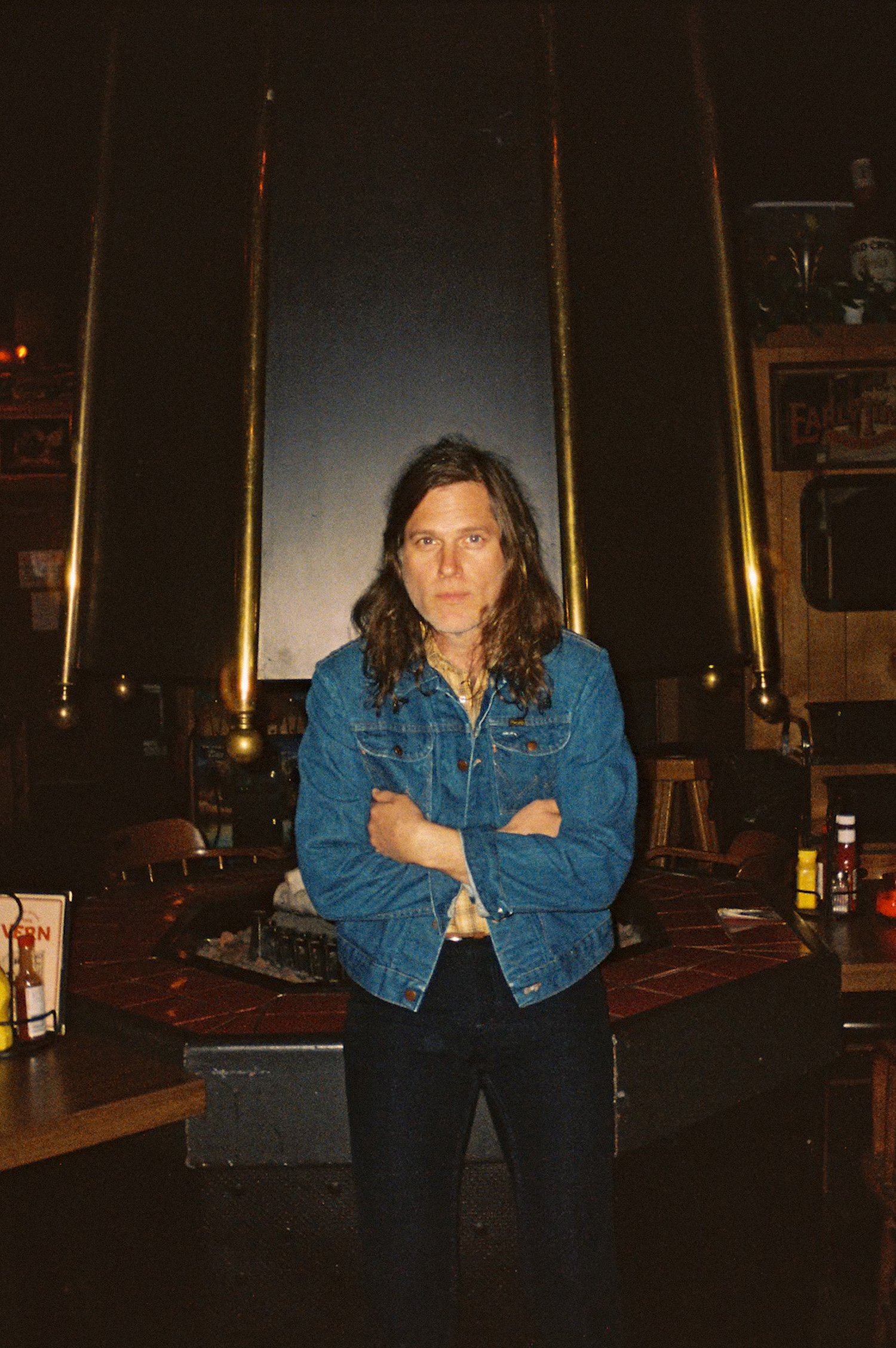
After writing lots of songs over many years, you find yourself as a writer starting to discover what your own emotional preoccupations are.
* * *
That open-endedness becomes even more resonant in the context of the full album.
Now that The Landfill has arrived in full, the title track feels less like an isolated peak than the lookout point from which the rest of the record comes into view. Johnson’s landfill metaphor doesn’t just frame one song; it becomes the album’s governing altitude – a place from which memory, regret, romance, faith, failure, and future possibility can all be seen at once, shimmering and scarred in the same light.
On opening tracks “The Saddest Part of the Song” and “All Wounds,” Johnson turns inherited wisdom inside out, pressing grief against old sayings that no longer quite soothe. “‘Time heals all wounds’ is a thing they say, but I haven’t always found it to be that way,” lands with the weary clarity of someone who wants to believe the lesson, but can’t pretend the wound has closed just because time has passed.
Even the title “The Saddest Part of the Song” feels like a wink and a confession at once – Fruit Bats leaning into the ache while refusing to make misery the whole story. “Found every little turn to take wrong / to get to the saddest part of the song / didn’t you?” he sings in the forlorn, poignant opening track, setting the scene for an album that treats sorrow less like a destination than a strange, stubborn route toward perspective. Across these songs, sadness is not an endpoint; it’s a turn in the road, a lyric you arrive at after taking “every little turn” wrong and somehow still keep singing through.
Elsewhere, The Landfill drifts into dream, light, and distance.
The charismatic and charged “Think Aboutcha” lets memories and love blur into a psychedelic haze, its golden-phone longing stretching “way beyond infinity” as if romance has become not so much a fixed place, but a signal still traveling through the atmosphere. “That Goddamn Sun” is earthier but no less haunted, waiting on light with the worn patience of a heart still asking the weather to change; its rain, poppies, bougainvillea, and North Carolina fruit make longing feel seasonal, physical, and impossible to fully shake. Later on, the feverish “Perhaps We’re a Storm” throws the frame wide open, turning existence itself into a question of becoming: “Perhaps we’re a storm / still taking form / or maybe just babies about to be born.” It’s funny, cosmic, and subtly profound – the kind of Fruit Bats lyric that sounds tossed off until it starts rearranging the room around it.
The album’s most luminous domestic vision may arrive in “Silverfish in the Sink,” a song so beautifully rendered it feels like its own short film. Radio hum bleeds through the wall, wildfire ash gathers on the windowsill, coyotes sing, the ocean gleams, and a kid dreams of running away while the whole song waits for enough strength to return to the water. Its vivid images are small enough to touch and vast enough to ache inside, transforming a sink, a breezeway, a melody, and a cannonball into a quietly devastating meditation on survival – and perhaps one of the most beautiful songs in the quarter-century-long Fruit Bats catalog.
By the time The Landfill reaches its penultimate track “Hummingbird Sage,” Johnson has stretched that same ache across centuries of land and memory – imagining towns before fire, before ghosts, before everyone we know and everything we hold – while letting love and belief flicker in and out like weather. Sometimes all in the world is right; sometimes there’s no love at all. The record lives in that tension, finding beauty not by resolving it, but by staying there long enough to see what still blooms.
Placed at the end of the tracklist, “The Landfill” is so much more than the album’s namesake; it feels like the place the whole record has been walking toward. After the old sayings of “The Saddest Part of the Song” and “All Wounds,” the dream-signal of “Think Aboutcha,” the rain-waiting ache of “That Goddamn Sun,” the soul-stirring survival miniature of “Silverfish in the Sink,” and the centuries-deep sweep of “Hummingbird Sage,” the title track arrives like a final hilltop. It doesn’t erase the wreckage that came before it. It gathers it, gives it altitude, and lets the listener look back across the album’s full emotional landscape – all its wounds, weather, memories, prayers, jokes, regrets, and half-lit hopes – from a place high enough to see how everything connects.
I write from dreams a lot. It puts you closest to that deep back-of-brain state where a lot of good poetry lives.
* * *
Taken together, these songs make The Landfill feel like a record about vantage points – the ways distance can turn pain into pattern without making it hurt any less.
It is full of people waiting for light, weathering old wounds, dreaming through loss, and trying to understand whether transformation is something we choose or something that overtakes us. Even at its most panoramic, The Landfill stays human-sized: A record of love remembered, love missed, faith flickering, and the stubborn hope that beauty can still rise from whatever remains.
Johnson’s own description of his latest record helps explain why that human scale feels so lived-in after all these years. “In a way they are all of a piece,” he says of The Landfill, Baby Man, and 2023’s A River Running to Your Heart. “Not that I’m repeating myself, at least I hope not. But after writing lots of songs over many years, you find yourself as a writer starting to discover what your own emotional preoccupations are. And then veering off down different paths of those, or concentrating them down into little dark pools.”
His phrase – “emotional preoccupations” – feels like a key to Fruit Bats’ artistry in 2026. The Landfill is not powerful because Johnson has abandoned the language that makes these songs unmistakably his; it’s powerful because he knows that language so deeply that every familiar symbol can open a new door. Suns, storms, birds, old sayings, old loves, ghost towns, golden phones, wildfire ash, dogs, ponies, and hills made out of trash all belong to the same emotional ecosystem. They return here not as repetitions, but as weather patterns – recurring signs from an artist still listening for what they might mean this time.
That’s the enduring pull of Fruit Bats: Johnson knows how to make the personal feel porous, how to turn his own strange, specific images into rooms the rest of us can enter. “The Landfill” is spirited and soul-stirring, a full-band anthem with dirt under its nails and light in its eyes, but it also speaks to where Johnson is as a songwriter now – meticulous but unprecious, seasoned but still searching, funny enough to undercut his own grandeur and open-hearted enough to mean every word anyway. It looks back without getting stuck, looks forward without pretending the past has disappeared, and finds beauty in the view from a place nobody would think to call beautiful.
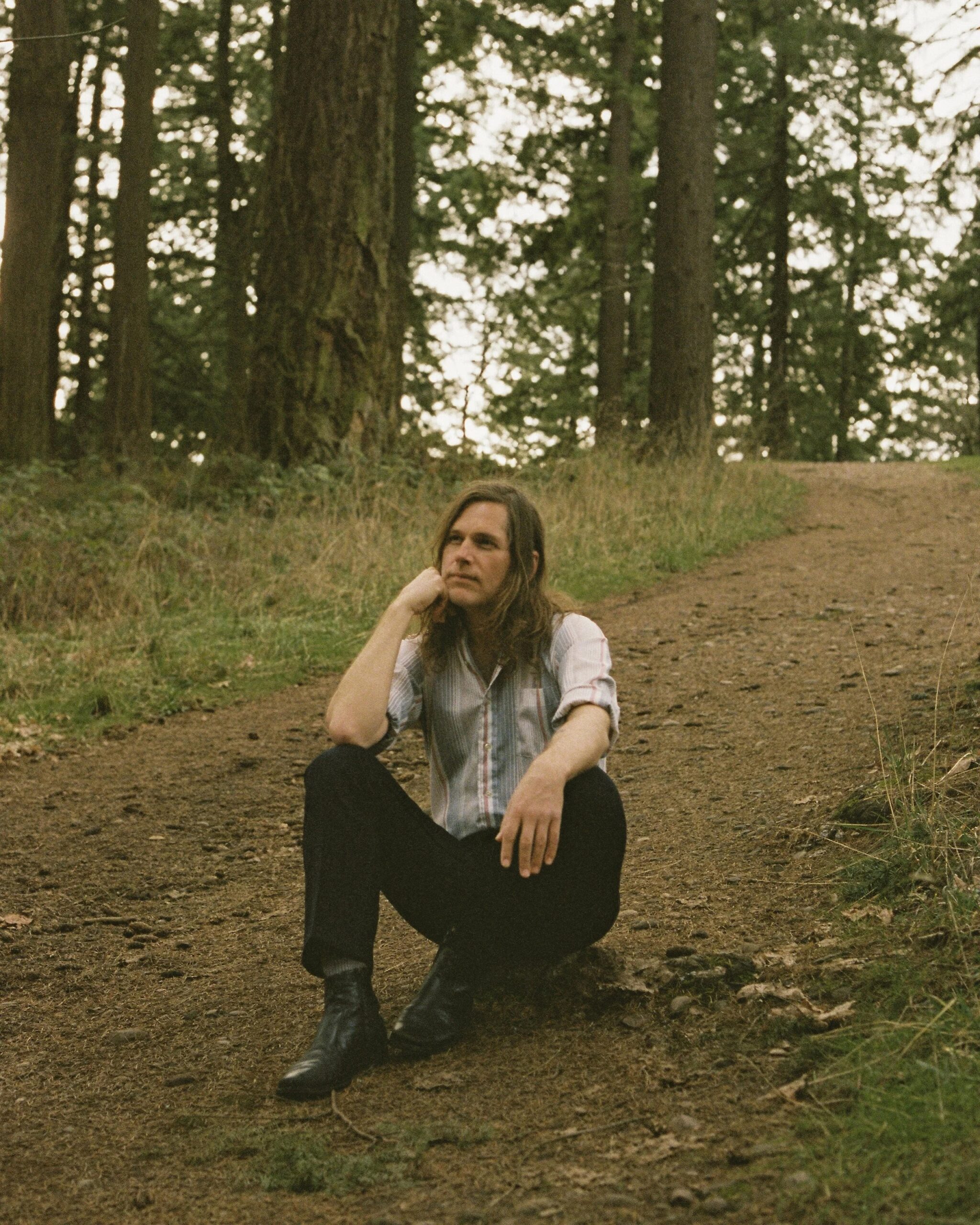
After 25 years, Fruit Bats are still climbing, still searching, still laser-beaming feeling with grace and grit – standing on the collective weight of what came before, gazing out at what might come next.
The Landfill honors the trash heap and the skyline, the bruise and the bloom, the old show pony and the ode to eternity – a warm, wistful, wonderstruck testament to what becomes possible when we finally stand on everything that brought us here and look out. To dig deeper into that view, Atwood Magazine caught up with Eric D. Johnson to discuss the strange beauty of landfills, the dream-logic of memory and heartache, and the full-band chemistry behind one of Fruit Bats’ most radiant records yet.
— —
:: stream/purchase The Landfill here ::
:: connect with Fruit Bats here ::
— —
A CONVERSATION WITH FRUIT BATS
Atwood Magazine: Eric, for those who are just (re)discovering Fruit Bats today through this writeup, what do you want them to know about who you are today – and what the band has grown into over the years?
Fruit Bats (Eric D. Johnson): It started off as me just trying to create an odd little vibe and exploring what it meant to be a songwriter in the early 00’s. Now it’s me trying to laser beam feelings at you to the best of my ability.
If I’m not mistaken, 2026 marks Fruit Bats’ 25th year, having started in 2001 – can you recommend a couple deeper cuts or personal highlights from the Fruit Bats catalog for Atwood’s crate-digging audience to sink their teeth into?
Fruit Bats: Back in 2014 I made a misguided attempt at a “solo” record, essentially retiring the Fruit Bats moniker in favor of my own initials, “EDJ.” From a career perspective it was a bad move at an already down point for me. Nobody picked up the thread from the Fruit Bats name and I lost all infrastructure. But from a creative perspective it was cool moment. It was my first real emotional outburst during a transitional moment in my life. I had just started really getting into Joni Mitchell and there are all kinds of new textures in there. I always love when an artist makes a “lost” album. This one is mine. It’s really a Fruit Bats record in disguise, and definitely my deepest cut.
Who are some of your musical north stars at the moment, and what are you most excited about the music you're making today?
Fruit Bats: I have many north stars. At different points on different albums, you can hear them. California Country Rock, British Psych Folk, 70’s and 80’s radio hits and singer/songwriters, 90’s indie and alternative country, even new age and ambient. You can probably hear all of this at different moments. It’s all just kind of in there. I don’t want to say the new record is full of genre exercises, but I feel like I really had no dogma when it came to that from song to song. It’s all on the menu.
The 2020s have been an exceptionally prolific period for you, with back-to-back records four of the past five years! What do you think has been driving this recent creative spell?
Fruit Bats: I’ve felt really confident and fired up about songwriting over the past few years. And my life, and the general times are weird and hard and thereby inspiring. For better or worse we’re in an age where pumping stuff out is at a premium. It’s just work. I’m meticulous as a writer but not precious, really, either. I like “finishing” more than I like “process.” Like, “here ya go!”
Your twelfth album The Landfill is out now! How do you feel this record captures your artistry, especially compared to Baby Man and A River Running to Your Heart?
Fruit Bats: In a way they are all of a piece. Not that I’m repeating myself, at least I hope not. But after writing lots of songs over many years, you find yourself as a writer starting to discover what your own emotional preoccupations are. And then veering off down different paths of those, or concentrating them down into little dark pools. “The Landfill” and “Baby Man” were both written in the same span of a couple of months and definitely exist in the same cinematic universe. But they are total opposites, too, in that “Baby Man” was my most “alone” album and “The Landfill” utilizes my longtime touring band in a way that no album has heretofore.
Landfills are full of waste, trash, refuse – I think I saw you call it ‘the collective weight of the past and where it’s taken us.” What does the “landfill” represent, in the context of this album and the song of the same name?
Fruit Bats: The name itself, and the seed of the idea, came from growing up in the Midwest where the only hills are landfills. It’s even a lyric on a song on “Baby Man.” I came up with the idea before the deeper meaning had dawned on me. Which is common for me. Later I realized that landfills are pretty bittersweet allegories for life. They’re these mountains you can stand on and look down on the world, but we created them with our own refuse. It’s the vantage point we gather from all our mistakes and missteps and failures.
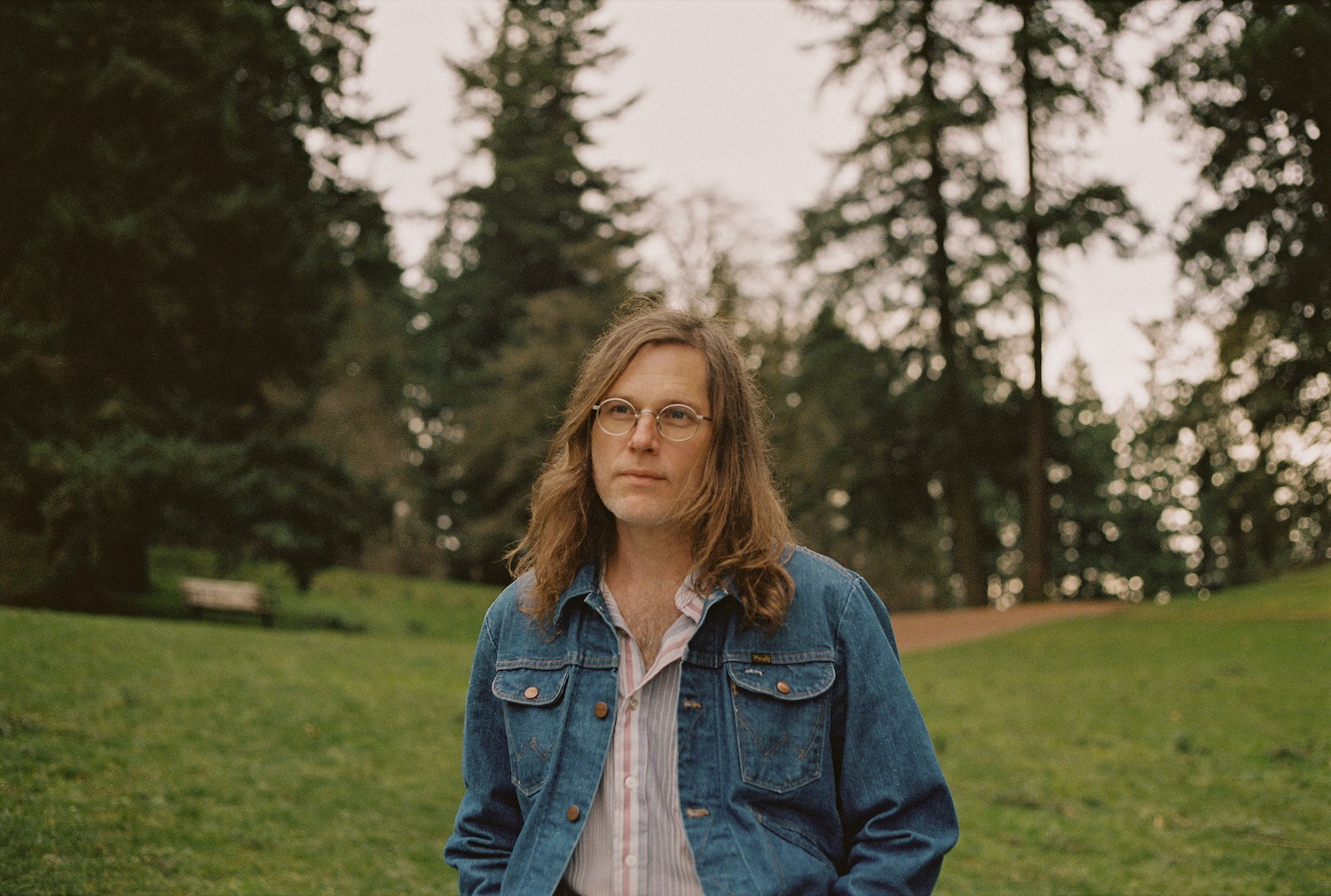
“This is an ode to eternity, sung by an old show pony,” you sing at the top of title track, “The Landfill.” What’s the story behind this song, and why lead with it?
Fruit Bats: That’s just my own self depreciating Midwest humor on full display. I’m the show pony, like just a dumb entertainer, but trying to present this poetic “ode to eternity” at the same time. Just taking the piss out of myself but also trying to get you to pay attention.
“The Landfill” starts with this grand, almost cinematic sense of fate – “an ode to eternity,” “the end of the movie,” “it’s written in the stars” – but it lands in a very tender place, with you singing, “I always knew you would / End up somewhere good.” Can you talk about the emotional journey of the song, and what that final line means to you?
Fruit Bats: I can’t get too into the emotional core of this song because it’s personal and I don’t really want to pull the curtain back too far. I like to keep things a bit open-ended so that you can tell your own life story with it if need be. And I may or may not be singing to someone else here or talking to myself. Or both.
“Think Aboutcha” lives in what you’ve described as “the liminal space in a dream where memories and love and heartache blur into a psychedelic haze.” Why do you think that dream-state place – where all these thoughts bleed into one another – keeps drawing you back as a songwriter?
Fruit Bats: I write from dreams a lot. It puts you closest to that deep back-of-brain state where a lot of good poetry lives, the kind of stuff that’s not impossible to get to in a waking state but kinda fun to find in the dream space. A side door. It’s a great question that I don’t really know the answer to – I want to draw songs from everywhere I can and that’s a really deep weird place to get them from.
What do you hope listeners take away from these songs, and what have you taken away from creating this music and now putting it out?
Fruit Bats: I always want to connect with a listener or an audience member. It’s the aforementioned thing of someone hearing these words or feeling these feelings and applying it to their own story. It’s what I do when I listen to music, all my favorite stuff. You get to write yourself into the movie.
In the spirit of paying it forward, who are you listening to these days that you would recommend to our readers?
Fruit Bats: Alan Watts lectures and ambient country music! Trying to slow the mind down in these odd times.
— —
:: stream/purchase The Landfill here ::
:: connect with Fruit Bats here ::
— —
Stream: “The Landfill” – Fruit Bats
— — — —
Connect to Fruit Bats on
Facebook, 𝕏, TikTok, Instagram
Discover new music on Atwood Magazine
© Kelsey Gallagher
 © Kelsey Gallagher
:: Stream Fruit Bats ::