Don’t Tell Iris channel the pull of the past into “Through the Gate,” a surging alt-rock reckoning whose dark DIY music video gives unresolved intimacy the texture of a recovered relic – drawing listeners deeper into the haunted 1918 world of Wakefield.
Stream: “Through The Gate” – Don’t Tell Iris
The past has a way of breaking back in long after we’ve decided to leave it behind.
Don’t Tell Iris give that unwanted return a pulse on “Through the Gate,” charging memory, longing, and unresolved intimacy with surging alt-rock urgency and grandiose baroque-pop drama. The song lives in the unnerving space between wanting an old connection back and knowing exactly why it belongs on the other side of the gate.

I stopped tearing these petals
so I could get to sleep at night
Still the yard looks a
dead girl’s grave in the daylight
What are the odds
that we’d let the moss grown
around us unwind
Atwood Magazine is proud to be premiering the music video for “Through the Gate,” the fifth single from New York/Boston-based conceptual band Don’t Tell Iris. The song belongs to the project’s larger fictional world – a 1918 asylum called Wakefield and the woman confined within its walls – while the band’s self-made video gives that history the texture of a recovered artifact, cutting between brief, emotive images like fragments unearthed from another life.
At the center of Don’t Tell Iris are Olive Martinez and Cody Von Lehmden, who write and produce the band’s music together, alongside bassist Delia Martin and violinist Chris Nelson. Since debuting with their self-titled single in January 2025, the group have spent the past year and a half building outward one release at a time. “Chamomile,” “Necklace,” and “Spider Lily” followed, each adding another doorway into a project whose ambitions stretch well beyond the music itself.
Don’t Tell Iris are currently developing both their debut album and a companion novel centered on a woman forcefully institutionalized at Wakefield in 1918.
Prescribed the Rest Cure – the same treatment made infamous by Charlotte Perkins Gilman’s 1892 short story The Yellow Wallpaper – their narrator moves through a world of confinement, observation, buried history, and letters ending with the phrase that gave the band its name. Music and fiction feed each other here, with songs adding dimension to the story and the story reshaping how those songs can be heard.
“Through the Gate” may be the clearest example yet of how organically those two sides have grown together. Martinez originally wrote the song years before Wakefield existed, in a single sitting on acoustic guitar. Its eventual arrangement came later, as she and Von Lehmden worked to balance that acoustic foundation with a fuller alternative-rock production. Strings lend the finished recording its romantic sweep, bringing a baroque drama to music already pushing forward with restless urgency.
The project’s mythology, fittingly, has never developed in a straight line.
“‘Through The Gate’ was actually written before the story of Don’t Tell Iris was conceived. The strange and somewhat mysterious thing is that the lyrics of the song inadvertently created the setting of the story itself,” Martinez tells Atwood Magazine. “Lines like, ‘Still the yard looks a dead girl’s grave in the daylight,’ ‘What are the odds that we’d let the moss grown around us unwind,’ and ‘Daze at the window, pass through the door, fall just a little bit through the floor’ largely inspired the large, old, moss and ivy covered house-turned-asylum in which our story takes place: Wakefield.”
Daze at the window
(We met up in my recurring dream again)
Pass through the door
(The one where we walk
the streets of New York and London)
Fall just a little
(Dream you said it wasn’t all in my head)
Bit through the floor
(Do me a favor and, um,
delete your recent messages)
She continues, “Similar to the narrator of ‘Through The Gate,’ the narrator of Don’t Tell Iris spends much of her time contemplating the past from within the walls of her bedroom. Wakefield even has a small cemetery of deceased patients that borders the gate around its perimeter. There is such a clear through-line between the imagery of this song and the story that it would have felt wrong to exclude it from the project, despite having been written before the concept came to life.”
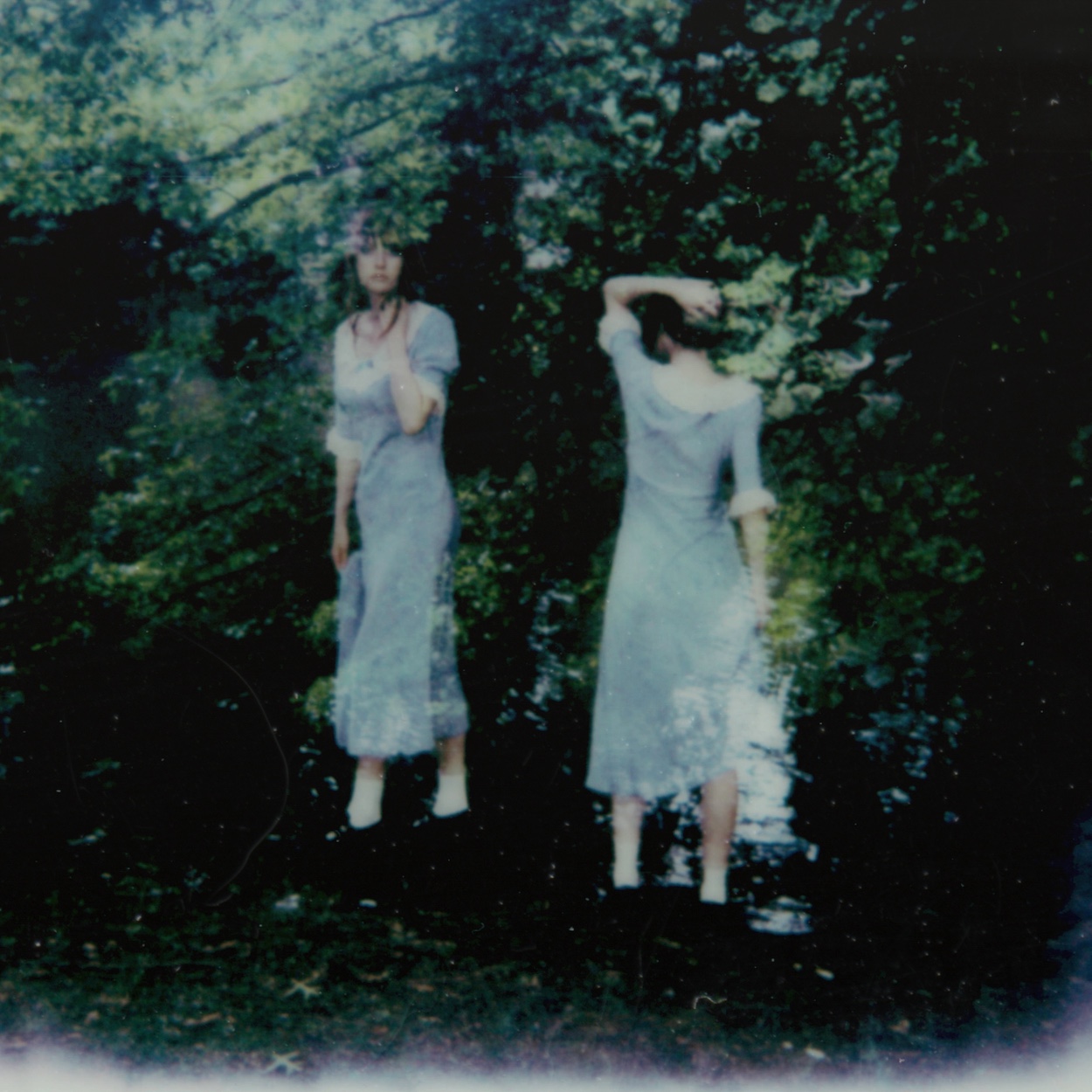
Those images already contain the bones of Wakefield before the place had a name.
A yard resembles “a dead girl’s grave in the daylight.” Moss grows around two people until even disentangling from one another becomes difficult. Windows, doors, stairs, floors, and finally the gate give emotional memory a physical architecture: the narrator can move through rooms, but the past keeps occupying them with her.
The chorus brings that haunting closest to the skin: “Stop creeping back through the gate to my past / Yeah, I know you don’t know, but it kills me.” Martinez’s voice roars over heavy, overdriven electric guitars and storming drums. What came before keeps catching the narrator off guard, resurfacing through recurring dreams, stolen glances, and the lingering habits of intimacy. “I feel stupid and sad when I’m making you laugh” cuts especially deep because the connection still works. Two people can lose trust, lose proximity, even lose each other, and still retain the private language they once built together. Here, recognition becomes painful precisely because it remains so effortless.
Stop creeping back through the gate to my past
Yeah, I know you don’t know, but it kills me
I feel stupid and sad when I’m making you laugh
It’s a sick twist of fate and it chills me
Never too far to catch me off guard
with your stolen glances
Gone with the wind,
a sin is a sin and I can’t resist
Even the song’s more surreal passages blur memory with intrusion. “We met up in my recurring dream again” arrives alongside visions of walking through New York and London, while “delete your recent messages” suddenly drags that dream-state back toward the messier evidence of real life. The past is romantic, humiliating, tempting, and invasive all at once. By the time Martinez sings, “Cross my heart, hope to die / Every time you cross my mind,” remembering has become almost ritualistic – an old promise repeating itself against her will.
Stop creeping back through the gate to my past
Yeah, I know you don’t know, but it kills me
I feel stupid and sad when I’m making you laugh
It’s a sick twist of fate and it chills me
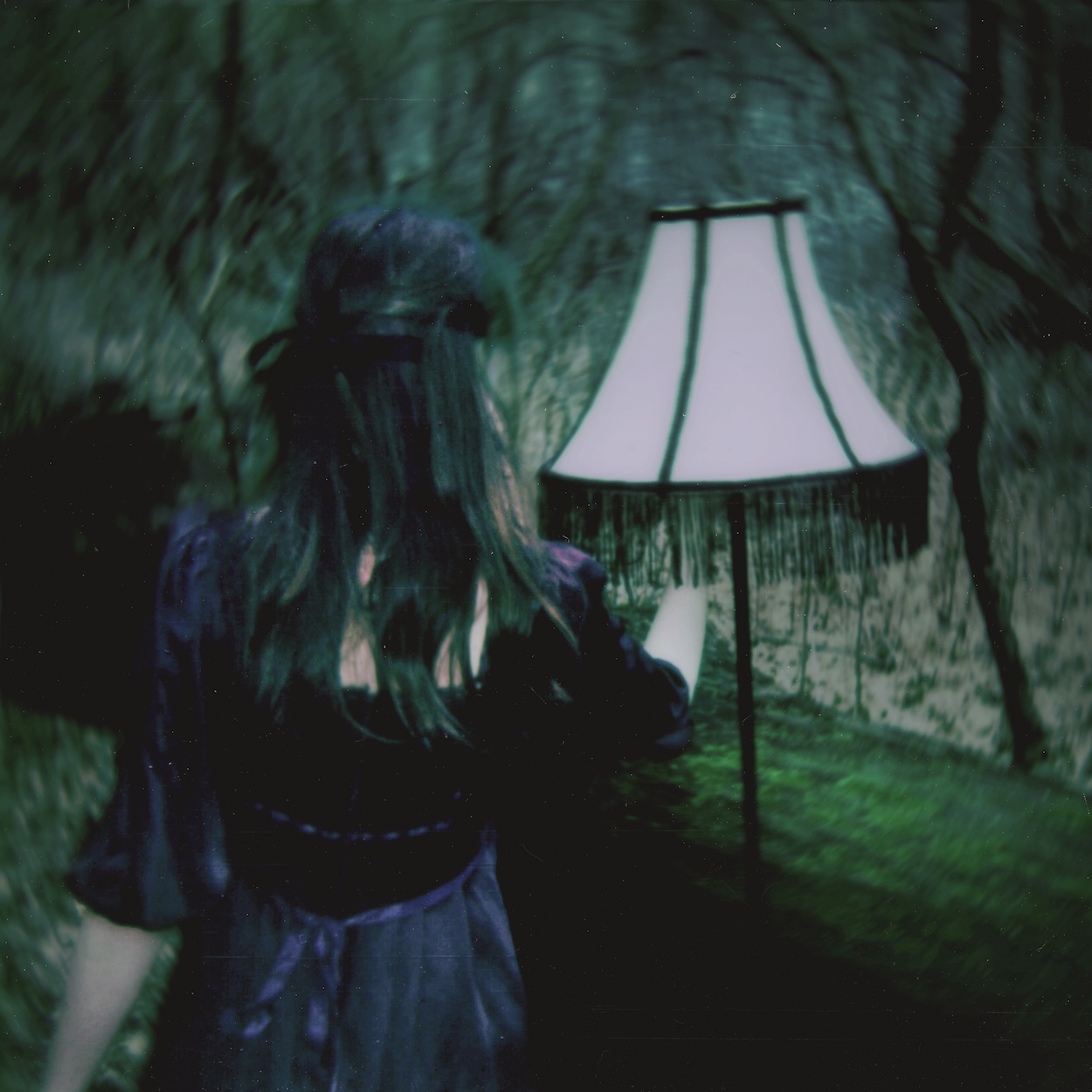
Martinez and Von Lehmden carried that fractured state of mind into a video they made themselves.
Quick cuts between brief, expressive shots give the visual a found-footage texture, as though these images have survived independently of whoever first captured them. That aesthetic belongs naturally inside Don’t Tell Iris’ world of old letters and buried histories, but the video also changes the balance of power. The woman onscreen looks less consumed by what she remembers and more aware of the person haunting her.
Martinez explains: “I think the video captures a more empowered version of the narrator than the song does in isolation. I really wanted to emote a sort of ‘I know that you know that I know that you know’ feeling in the video. This song exhibits a lot of vulnerability, which is great, but I think a more truthful version of the story, both for myself and the narrator of the book, is one that reminds the ‘you’ of the song that the narrator is ‘onto them,’ so to speak. The song states, ‘I know you don’t know, but it kills me.’ And I guess in the video, I wanted to contrast that line with a certain mischievous confidence. She knows exactly where she stands in the relationship and she knows that her power is not lost, despite being stuck in her current circumstances. It was a fun attempt at acting (coming from a non-actor), trying to get that emotion across.”
That mischievousness gives “Through the Gate” another dimension. The narrator may be trapped inside old memories, but she can recognize the machinery of them. Her awareness becomes its own source of agency: The gate may separate her from what happened, and the past may continue slipping through, but neither gets to define her as completely as before.
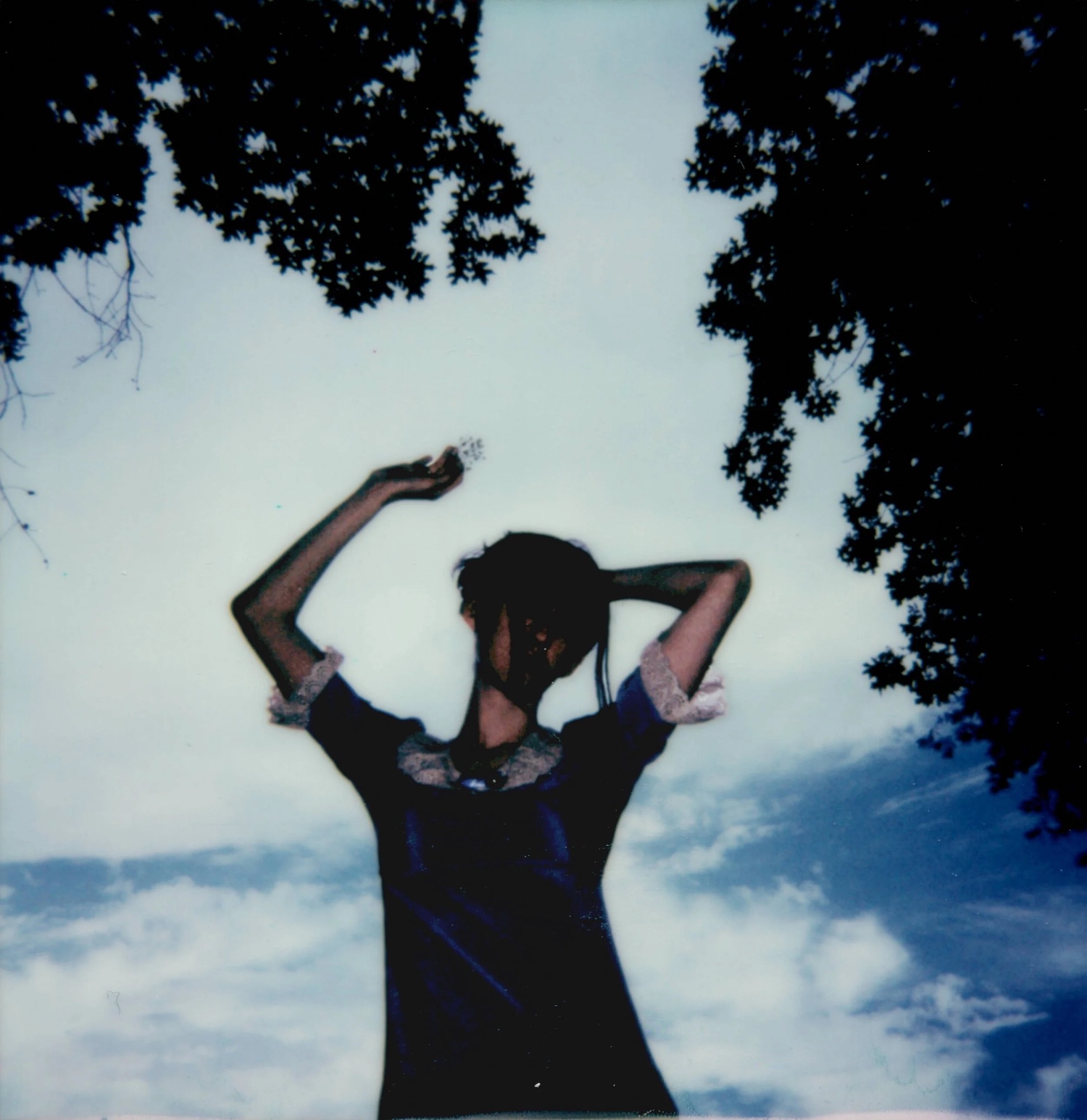
It also makes “Through the Gate” an unusually fitting entrance into Don’t Tell Iris.
A song written before the project existed wound up helping create its setting; a fictional gate grew from an emotional one; and a video about being haunted lets its narrator stare back at the ghost with a knowing look. The deeper Don’t Tell Iris ventures into Wakefield, the more its earliest instincts seem to reveal paths that were already waiting to be followed.
Watch the music video for “Through the Gate” exclusively on Atwood Magazine, then step further inside Don’t Tell Iris’ ever-growing world in our conversation with the band about the literary roots, musical obsessions, subconscious connections, and strange creative trail that brought them here.
Follow me down the stairs
Promise I’ll meet you there
Cross my heart, hope to die
One last time
Cross my heart, hope to die
Every time you cross my mind
Stop creeping back through the gate to my past
Yeah, I know you don’t know, but it kills me
I feel stupid and sad when I’m making you laugh
It’s a sick twist of fate and it chills me
— —
:: stream/purchase Through The Gate here ::
:: connect with Don’t Tell Iris here ::
— —
Stream: “Through The Gate” – Don’t Tell Iris
A CONVERSATION WITH DON’T TELL IRIS

Atwood Magazine: For those who are just discovering Don’t Tell Iris today, what do you want them to know about the band and your music?
Don’t Tell Iris (Olive Martinez): Don’t Tell Iris is a conceptual project, based around the fictional story of a woman who has been forcefully institutionalized at an asylum called Wakefield in 1918. She has been prescribed The Rest Cure, the same treatment made infamous by Charlotte Perkins Gilman’s short story, “The Yellow Wallpaper.” We are currently working on completing our debut album and companion novel, both of which delve into this fictional story. My name is Olive and my bandmate/collaborator’s name is Cody. We write and produce the songs together, then bring them to our fellow bandmates, Delia (bass) and Chris (violin). We’re currently looking for a new drummer (it’s a long story), if anyone based in Boston or New York is interested!
What’s the story behind your band name?
Don’t Tell Iris: The band name started as a random combination of words, which came to inspire an entire fictional world. Cody and I were driving back from an acoustic show in Brooklyn when I first put these three words together. We both liked them, even though we didn’t know exactly why. The next morning, I began penning what has become a sort of theme song for the band, eponymously called “Don’t Tell Iris.” A little later, Cody joined in and we had a fleshed out demo of the song by the end of the day. The lyrics describe a narrator “circling the grounds” and “tiptoeing around the hidden corridors” of an unspecified location, hiding from the watchful eye of “Iris.” Suddenly, I craved to know more about this narrator that my subconscious had devised. This led to the writing of several fictional letters, each one ending in the phrase, “don’t tell Iris,” which have come to embody our currently in-progress companion novel.
Who are some of your musical north stars, and what are you most excited about the music you’re making now?
Don’t Tell Iris: This project would not exist without Harry Nilsson, Kate Bush, and Courtney Love. My mom bought me my first record, Harry Nilsson’s The Point!, when I was a kid. For those of you who don’t know, Nilsson wrote a short children’s picture book which accompanies the songs and was included as an insert within each vinyl. To me, this concept was revolutionary. Afterall, it combined my two favorite things: music and books. I decided then that I would write a companion novel to go with my own music someday; I just had to wait for the right story. Kate Bush taught me the inverse pattern of the same idea. She wrote songs like “Wuthering Heights” and “Cloudbusting,” which were inspired by literature and history, weaving her own emotions and observations into the lyrics. She also finds unique ways to incorporate baroque elements into her production, which inspires us greatly. Courtney love is just a total rockstar. She truly does not care what anybody thinks and that is something to which I will always aspire. Also, her songwriting skills are top-notch. I believe a good way to spot a misogynistic music fan (if anyone’s curious) is when someone tries to discredit her talent or, worse, attribute it to her husband.
“Through The Gate” is your fifth single, and your first of the year. Can you share a bit about these early releases and what they mean to you as the first chapter of Don’t Tell Iris?
Don’t Tell Iris: It can be really difficult trying to plan the release of a concept album. I hope that the existing singles we have released work as standalone songs, but I am so excited for people to give them another listen within the context of the album and the story! If anyone reading this is interested, you can gain access to a free excerpt of the story by attending a Don’t Tell Iris show in person and asking us about it at the merch booth. If you read it carefully, this excerpt will give much more meaning to our single “Chamomile,” which is already out.
“Through The Gate” has a real alt-rock urgency, while its lyrics keep circling memory, longing, and the pull of the past. What’s the story behind this song?
Don’t Tell Iris: This song was on the backburner for a few years – something I had written in a single sitting on acoustic guitar. The lyrics honestly came from that mysterious creative well that transforms feelings into phrases without the writer having to do much thinking for herself. Much of Don’t Tell Iris has felt like a strange amalgamation of inspirations that got lost in my subconscious and alchemized themselves into something new that blended together years later. As for the alt-rock urgency, Cody and I knew we wanted to flesh out the instrumentals to give the song a really full production. We wanted to lean heavily on acoustic and alternative elements and it took a while before we found the right balance between those worlds. I’m really happy we pushed through some trial and error in order to get the song sounding like it does today.
You’ve said the song explores the story behind Don’t Tell Iris. How does “Through The Gate” connect to the larger world of the band?
Don’t Tell Iris: “Through The Gate” was actually written before the story of Don’t Tell Iris was conceived. The strange and somewhat mysterious thing is that the lyrics of the song inadvertently created the setting of the story itself. Lines like, “Still the yard looks a dead girl’s grave in the daylight,” “What are the odds that we’d let the moss grown around us unwind,” and “Daze at the window, pass through the door, fall just a little bit through the floor” largely inspired the large, old, moss and ivy covered house-turned-asylum in which our story takes place: Wakefield. Similar to the narrator of “Through The Gate,” the narrator of Don’t Tell Iris spends much of her time contemplating the past from within the walls of her bedroom. Wakefield even has a small cemetery of deceased patients that borders the gate around its perimeter. There is such a clear through-line between the imagery of this song and the story that it would have felt wrong to exclude it from the project, despite having been written before the concept came to life.
I love the chorus lyric, “Stop creeping back through the gate to my past.” What does that “gate” mean to you?
Don’t Tell Iris: The song’s titular lyric had the greatest impact on the story’s setting. Shortly into the writing process of the Don’t Tell Iris companion book, “the gate to my past,” became a literal gate surrounding Wakefield through which the rest of society is held at a safe distance from our narrator. While, for me, this song was more about longing for the past, our narrator is tormentedly haunted by it. The wrought-iron gate which surrounds Wakefield is a symbolic separation between herself and the traumatic experiences which landed her in this situation. To learn more about her past, however, listeners will have to stay tuned and read the companion book.
There’s such an aching in the line, “I feel stupid and sad when I’m making you laugh.” What were you trying to capture there?
Don’t Tell Iris: This line was one that came naturally and without too much thought, but retrospectively it reminds me a bit of Greta Gerwig’s famous monologue from Frances Ha about the secret world that can exist between two people at a crowded party. For me, that secret world is most evident in the brief moment after you’ve said something subtly funny and the humor of your comment is only caught by one other person. However, this feeling can become bittersweet after that person has hurt you or when a wall has come between you in real life. It doesn’t negate the existence of this secret world, but it makes you feel like an outside observer to your own experience, as though the world has been gated off from the inside out.
The song blends alt-rock and baroque pop in a way that feels theatrical and delightfully dramatic. What drew you to that mix of sounds?
Don’t Tell Iris: I’ve always been a huge fan of classical strings. Maybe because I grew up doing ballet and listening to the classical radio station? Regardless, when I started getting into rock music, I was immediately drawn to baroque rock tunes. I loved when bands like The Beatles and Nirvana incorporated violin, cello, or even harpsichord into their production. Don’t Tell Iris has provided a perfect opportunity for us to blend these sounds into our own music. Cody’s willingness and dedication to learning how to record and incorporate strings into our songs is something I am deeply grateful for, as it has helped a childhood musical dream of mine come to fruition. We recently started playing live with violinist, Chris Nelson, who has elevated the energy of our show immensely. Playing songs like “Through The Gate” without him would feel so empty to me now. On “Through The Gate,” I think the strings add a really romantic, grandiose quality, whereas on other songs of ours, they add a more spooky, chilling effect.
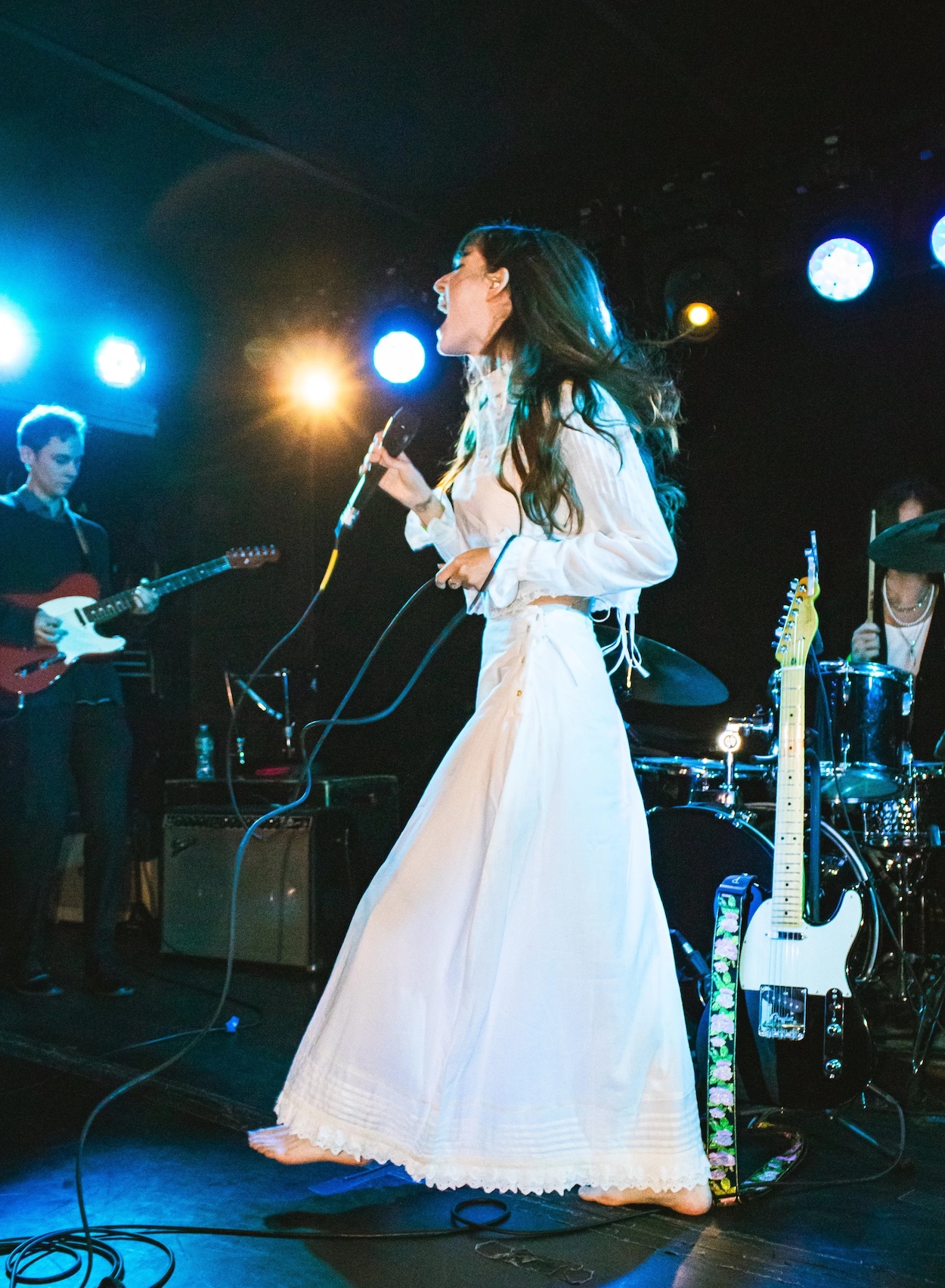
You made the music video yourselves, using quick cuts between short, emotive shots to create a found-footage-esque feeling. What do you feel the video brings to the song’s experience?
Don’t Tell Iris: I hope the found-footage-esque feeling of the video adds to the central theme of the song, which is about being haunted by the past. Whether you are literally watching a horror found footage film like The Blair Witch Project or our significantly less scary music video, the found footage medium creates a sense of having stumbled over an old relic in the viewer. Whereas most music is written to be experienced in the present moment, I would really like our music to feel as though it is a long lost artifact from the past, seeing as the story takes place in 1918 and is written in the form of long-lost letters which the reader might have found in an old attic.
Additionally, I think the video captures a more empowered version of the narrator than the song does in isolation. I really wanted to emote a sort of “I know that you know that I know that you know” feeling in the video. This song exhibits a lot of vulnerability, which is great, but I think a more truthful version of the story, both for myself and the narrator of the book, is one that reminds the “you” of the song that the narrator is “onto them,” so to speak. The song states, “I know you don’t know, but it kills me.” And I guess in the video, I wanted to contrast that line with a certain mischievous confidence. She knows exactly where she stands in the relationship and she knows that her power is not lost, despite being stuck in her current circumstances. It was a fun attempt at acting (coming from a non-actor), trying to get that emotion across.
What do you hope listeners take away from “Through The Gate,” and what have you taken away from creating this song and video?
Don’t Tell Iris: I hope this song can act as an entry point into the world of Don’t Tell Iris for new listeners. I think it serves to place the listener into the proper headspace from which to consume the rest of the story. For me, this song and video were both good reminders to trust my subconscious, both creatively and emotionally. My subconscious is often busy processing feelings and information without me even realizing it, until one day I wake up with unexpected clarity.
In the spirit of paying it forward, who are you listening to these days that you’d recommend to our readers?
Don’t Tell Iris: I’m really into the song “Call U Back” by TTSSFU right now. The alt-rock band mary in the junkyard just put out a great debut that we’ve been listening to as a band. If you’re in a dancier mood, Lime Garden released a really cool album in April!
— —
:: stream/purchase Through The Gate here ::
:: connect with Don’t Tell Iris here ::
— —
Stream: “Through The Gate” – Don’t Tell Iris
— — — —
Connect to Don’t Tell Iris on
Facebook, TikTok, Instagram
Discover new music on Atwood Magazine
© courtesy of the band
 © courtesy of the band
:: Stream Don’t Tell Iris ::