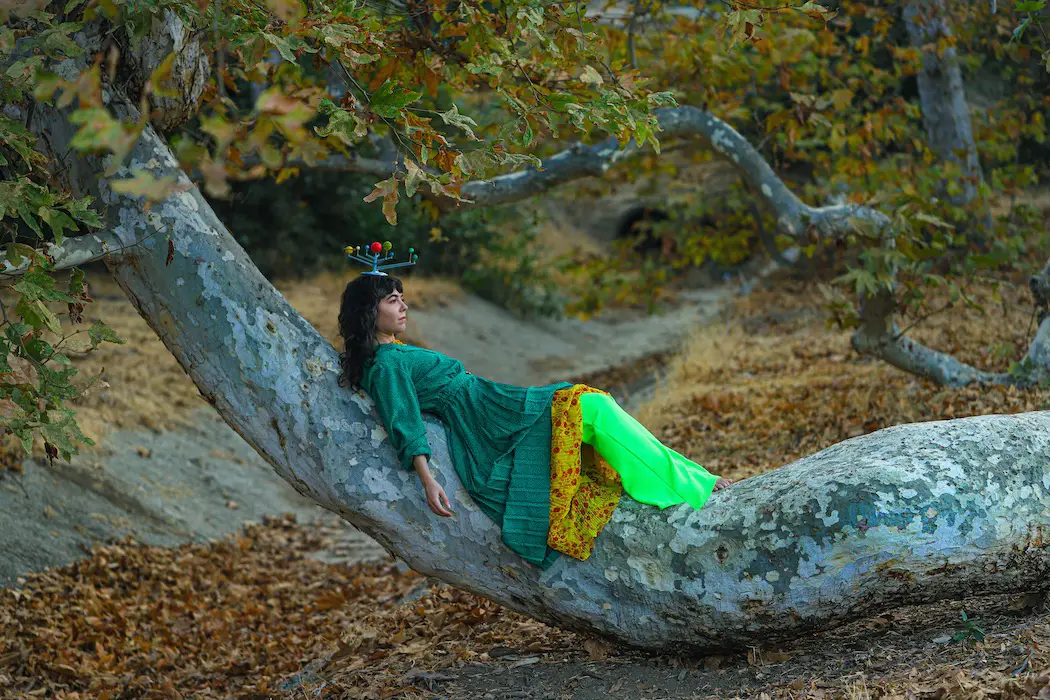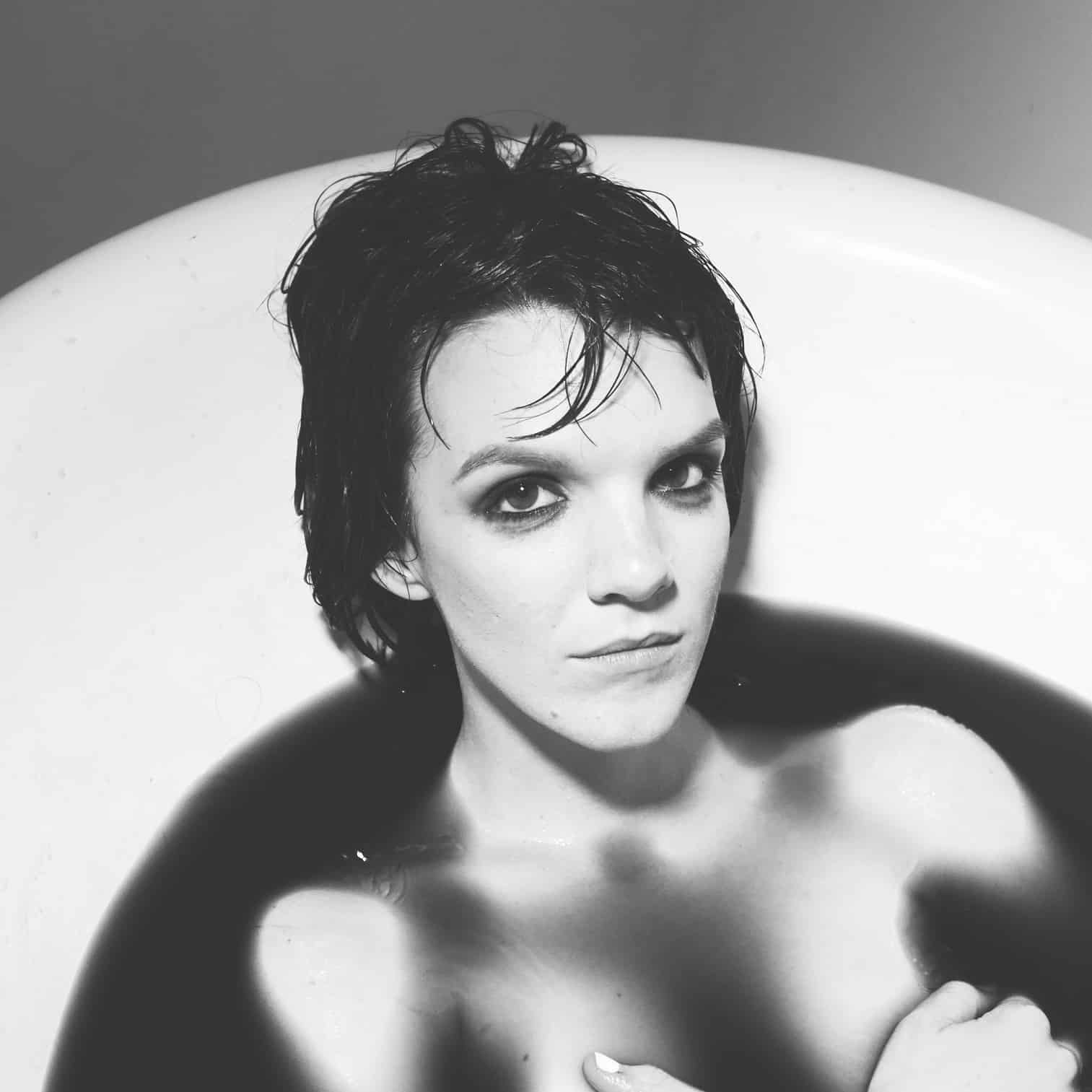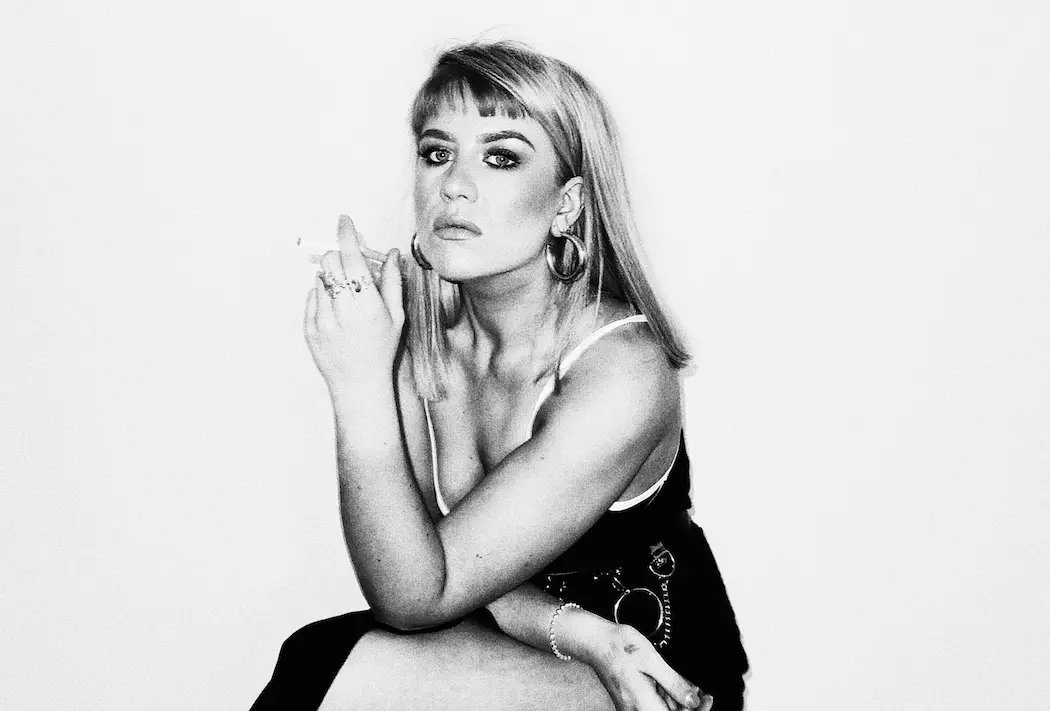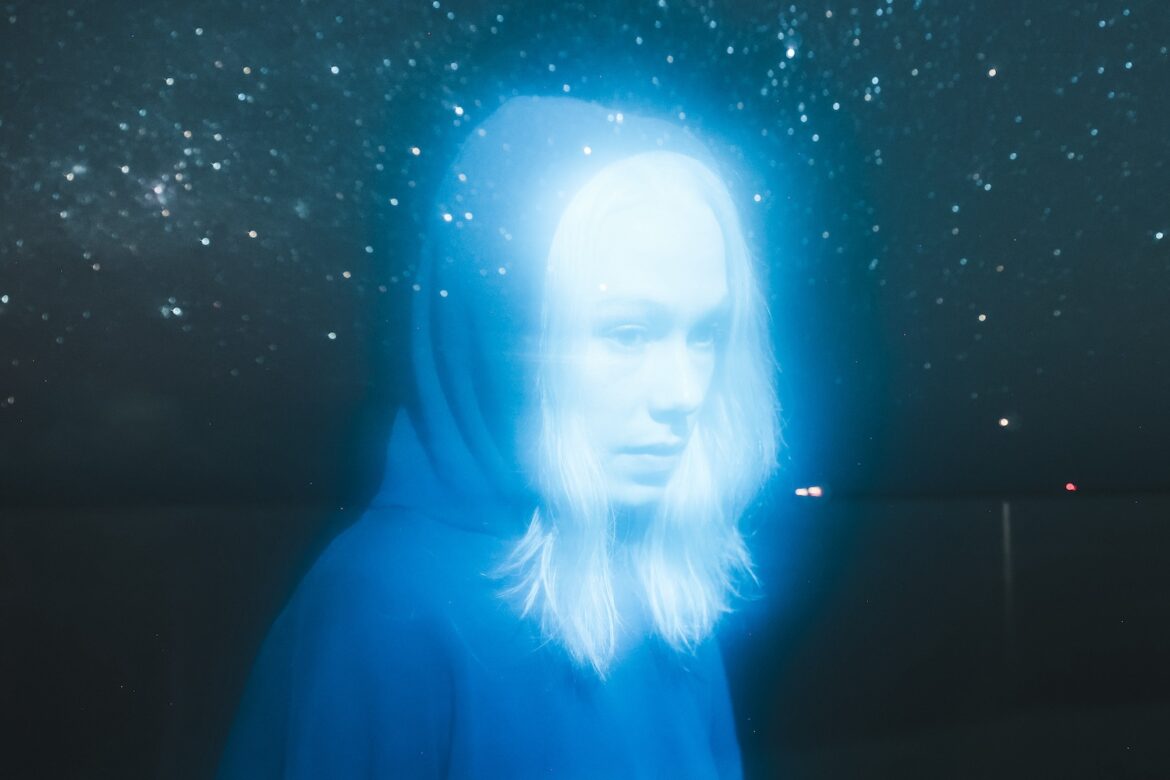
Phoebe Bridgers’ discography has long found her reflecting from the moon, a spaceship, or as a ghost. On her third studio album ‘Lost Weekend,’ she comes down to Earth and finds fulfillment in the present.
Stream: ‘Lost Weekend’ – Phoebe Bridgers
When Phoebe Bridgers released Punisher in 2020, she ended the album with a warning: “I’m not afraid to disappear.”
After a meteoric rise that landed her four Grammy awards in one night, she did just that. Coming more than two years since her retreat from the public eye, her third studio album Lost Weekend makes up for those missing years and brings us closer to Bridgers than ever.
Released August 14 via Dead Oceans, Lost Weekend opens at her father’s funeral. Over an ambient drone, Bridgers watches his casket get carried away while frozen in another memory where she watched him (metaphorically) get carried away. She’s nearly unrecognizable, distorted by a vocoder and autotune. “I am frozen in place, but not afraid,” she sings, until the effects disappear and her voice surfaces “… when I am on the outside.”
In the next verse, she’s crowdsurfing at a show in Ohio with her fist in the air. It should be a euphoric moment, but it appears no different from the funeral: she’s absent from both.
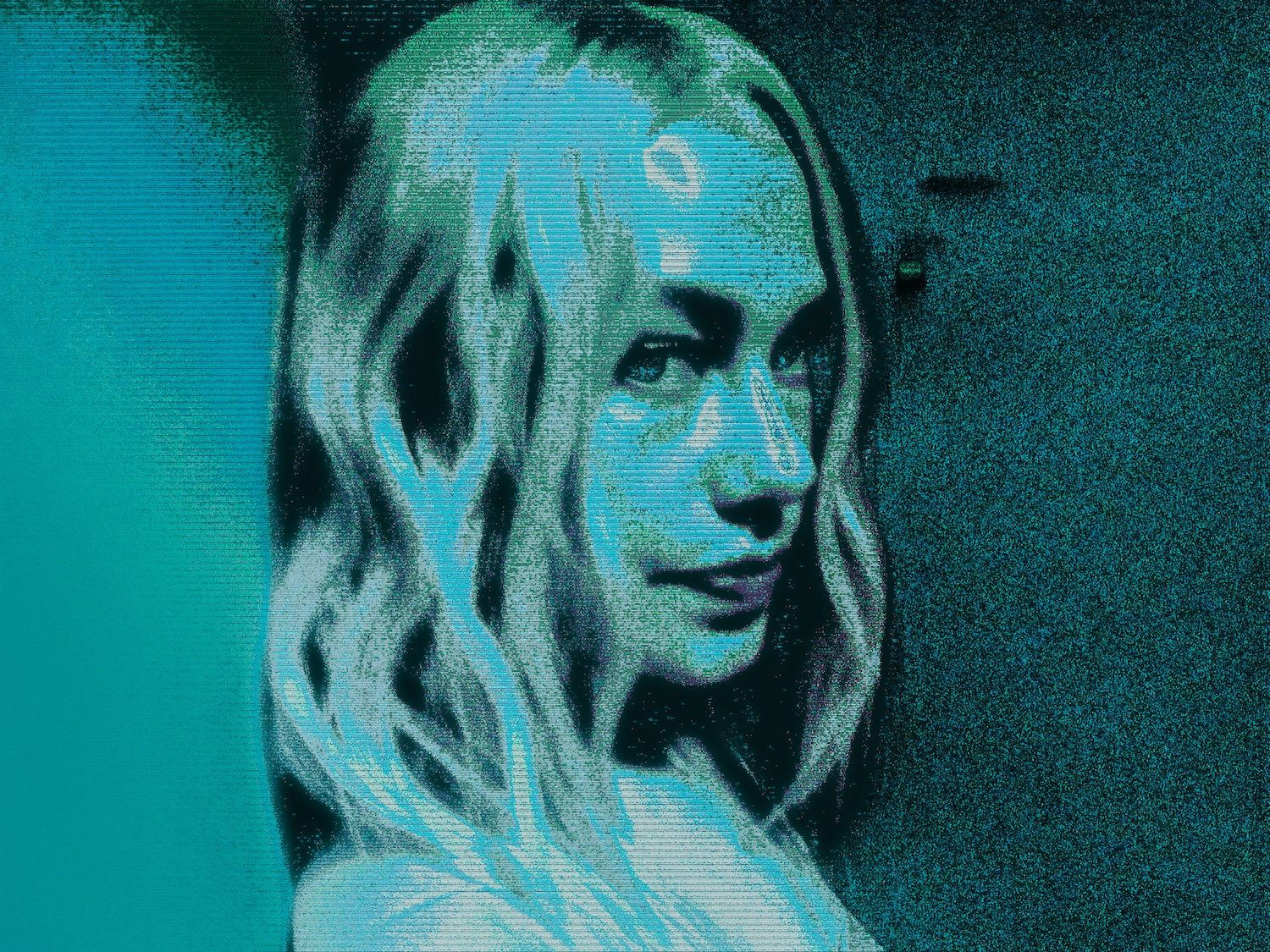
Bridgers has spent much of her discography fantasizing about some form of disappearance, whether that be an escape into imagined conversations with Elliott Smith, or the apocalypse, death, and unreachable love.
On Lost Weekend, she faces the other way, plunging into the experiences that made escapism feel so appealing in the first place, and discovers that she actually wants to stay right where she is. As she slowly traces a difficult past and allows herself to fully inhabit the feelings she once ran away from, what surfaces is her most hopeful record to date.
On vinyl, the album is separated into three sides, and the intentionality comes across on the recordings. The first side of the record provides a glimpse into what was happening before her disappearance. On “The Governor’s Waltz,” she describes a day at 2021’s Governor’s Ball, “hiding in the bathroom like Shelley Duvall.” Duvall’s performance in The Shining was famously the product of dozens of grueling, Kubrick-mandated takes that left her exhausted and in tears. The song ends with a verse about Bridgers watching her ex-fiancé replace her.
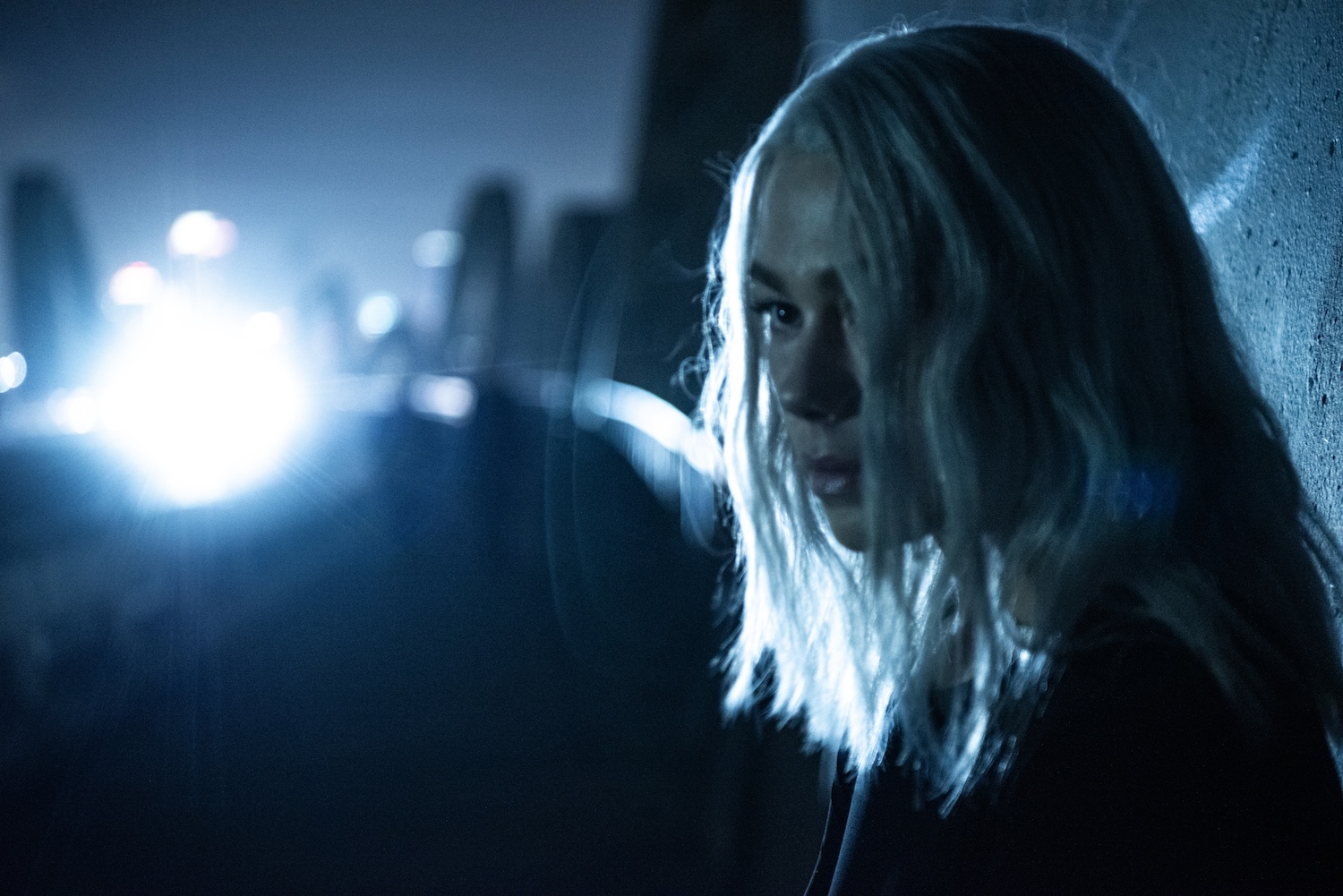
It should not come as a surprise that Bridgers decided to take a massive step back from the world.
Two years after the Governor’s Ball in question, more and more people were piling up at Bridgers’ door. In January 2023, photos circulated online of Bridgers at an airport with Burnham amid public speculation regarding her personal life. She was photographed and mocked online for what fans didn’t know was a trip to her father’s funeral. Though she retreated from public life, Lost Weekend contains a level of transparency that is consistently impressive.
While the album is full of familiar faces from Bridgers’ past, Side A offers an introduction to “Bobby” (referencing her current partner Bo Burnham) as a motif that represents something new. The song titled “Bobby” sounds like it could be from the “girl so in love” side of Olivia Rodrigo’s latest record. She is lit up with infatuation for “Bobby,” going so far as to say “if you didn’t like either one of my friends / I’d kill them.” The pathways to love and loss are once again laid out before her, but something inside her recognizes that this could unfold differently than it has in the past. “This could be the end of wanting… this could be the end,” she sings, in a nod to Punisher’s closing track, “I Know The End.”
On Side B, the album gets stranger. If the first side reconstructs some of what preceded Bridgers’ disappearance, the second collapses time to reveal the unpredictable and odd mechanics of memory itself. “Learning the same lessons over and over,” Bridgers sings on “Lost Weekend.” The song begins with sparse production, building on Bridgers’ longstanding love for ambient music, before gradually becoming more disorienting.
Heavy breaths enter the mix; voices and sounds materialize and disappear; there’s a sample of sample of “Notjustmoreidlechatter” by Paul Lansky and the track eventually explodes into ecstasy. From here on out, the arrangements rarely offer any remaining sense of predictability, magnifying the sensation of returning to a memory and finding that it has changed shape yet again.
The best moments on Lost Weekend surface when Bridgers commits to living in the gray, refusing to reduce things to “good” or “bad,” even when it’s uncomfortable for the listener.
“Still Standing,” the centerpiece of the album, is one of the most notable examples of that. In it, Bridgers captures the conflicting feelings of grief from her father’s death along with the darker memories of him from her childhood: “I found her bleeding over the sink / But when you said sorry / You were looking at me.” A few songs later, there’s a bittersweet voicemail from her Dad.
Though many of the tracks find Bridgers standing in the middle of her worst memories, the lack of escapism lets her begin to fully embody reality. When Bobby reappears on “Liberty Tree,” Bridgers remarks that even the past is beginning to look brighter. At the end of the song, she sings “Don’t die, Bobby / Before I die.” For a split second, it’s reminiscent of the desperation that clouds over some of her previous work. But when she finishes the closing line with “it feels so good to have you in my life,” the simplicity of her gratitude and her wish for things to remain as they currently are is a hard-earned moment of tenderness.
Across Lost Weekend, the fog of dissociation lifts and we are in the room with Bridgers and her collaborators. On “Haunted,” her voice is raw and earnest; she’s singing with her boygenius bandmates over a country arrangement. With the instruments in the foreground, we can hear the intricacies of fingers on a guitar string and the acoustics of the room in which it was played – a compelling change from the underwater-feel of much of the production on Punisher.
By the time Side C begins, it’s clear that Bridgers is no longer driven by an unconscious tendency to repeat the past.
“The way it used to be is not the way it is,” she repeats on “Never Going Back,” again and again. Her delivery here, alongside other album cuts, departs from her signature Elliott-Smith-esque almost whisper in favor of more unfiltered and ambitious performances. On Punisher, Bridgers and her co-producers Tony Berg and Ethan Gruska built her vocal tracks using a heavy amount of composite recording and layered micro-edits, stitching together small recorded phrases from multiple passes rather than relying on single continuous recordings. Several tracks on Lost Weekend forgo that style to lean into the impurities. Bridgers is at her most raw on the title track and its reprise: her vocals sound like they were recorded in one take, with the intimacy and atmosphere of a demo she might have recorded in her car and shared with her friends. Still, the vocal production never sounds clumsy – Bridgers worked with Berg and Gruska across Lost Weekend while pulling in Jack Antonoff and Alex G for additional production.
That vocal shift is matched by the direction of her lyrics on the album’s final tracks. “Other Plans” finds her admitting that she never anticipated her current relationship to last; “I Can’t Wait” feels like the culmination of her accepting all of the different parts of herself and her life. On the final track, “Lost Weekend (Reprise),” she sings about her Dad: “You’re not coming back as a bird / you’re not coming back.” The dead bird has long functioned as a motif for dead, dying, or broken relationships that continuously find their way back to Bridgers. On Punisher, she either killed them, pitied them, or offered them, but they all signaled a tendency to reach towards the dead. As Lost Weekend reaches the end, she has let go of that futile hope and returned to reality. “When a dream comes true, a fantasy dies,” she sings, “but we’re gonna be alright, me and you.” By the end of Lost Weekend, even the stars have disappeared from the sky. When there is nothing left for her to wish for, all she can do is turn her attention to the relationship that’s in front of her.
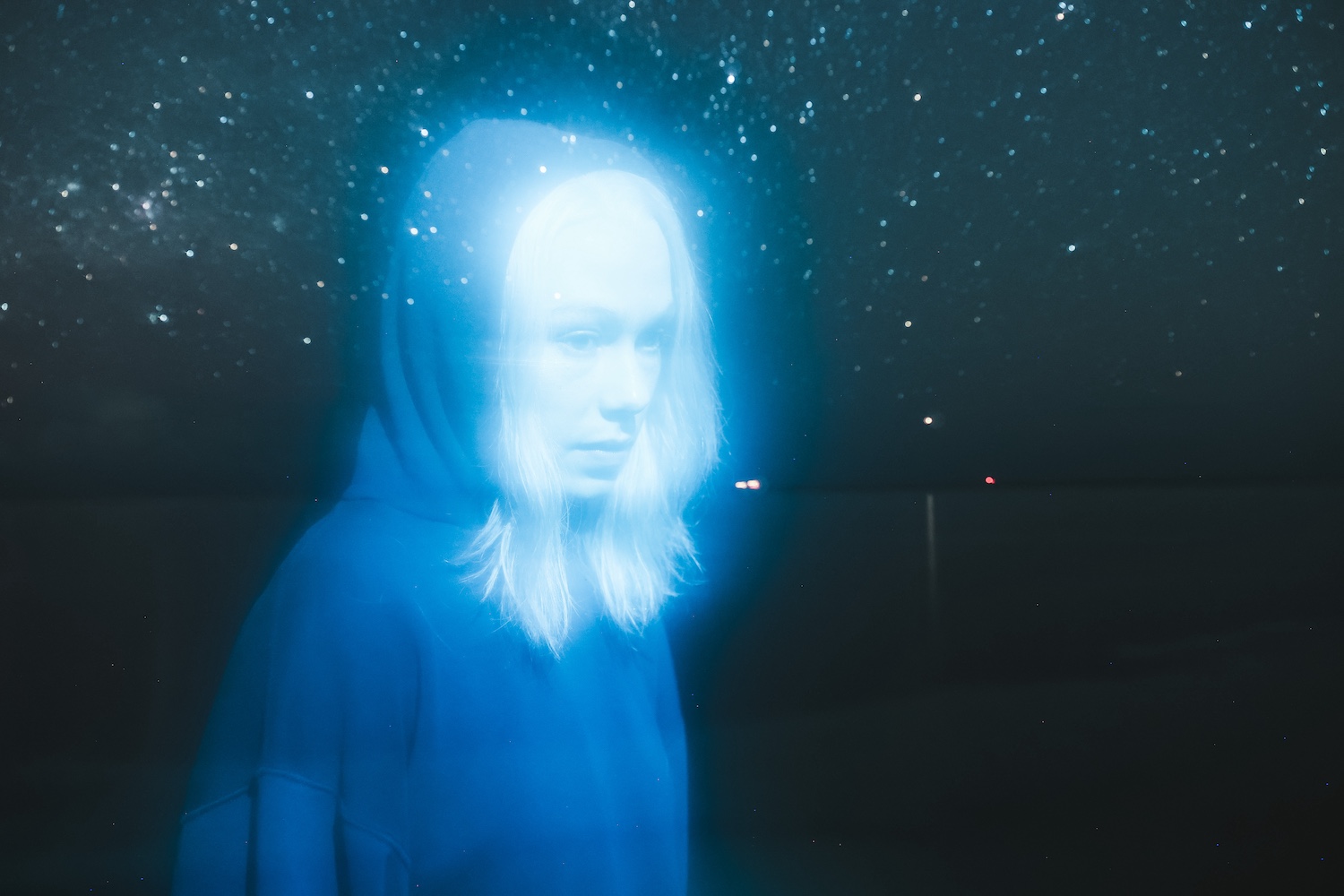
There’s an urge to compare Lost Weekend to a slew of other works: The panting on “Lost Weekend” recalls Adrianne Lenker’s on Dragon New Warm Mountain; the repetition of “Never Going Back” echoes Fiona Apple’s chants across Fetch the Bolt Cutters; there’s a trace of Elliott Smith’s vocal delivery on Figure 8, and plenty of moments sound like descendants of the strangest instances on The Beatles’ White Album. Whether or not Bridgers had any of these records in mind, they share a throughline with Lost Weekend: Each functions as a living photograph, catching its artist at the height of their powers as they choose to lose the map and lean into the joy of getting lost.
— —
:: stream/purchase Lost Weekend here ::
:: connect with Phoebe Bridgers here ::
— —
Stream: “Lost Boys” – Phoebe Bridgers
— — — —
Connect to Phoebe Bridgers on
Facebook, TikTok, Instagram
Discover new music on Atwood Magazine
© Frank Ockenfels
 © Frank Ockenfels
Lost Weekend
an album by Phoebe Bridgers