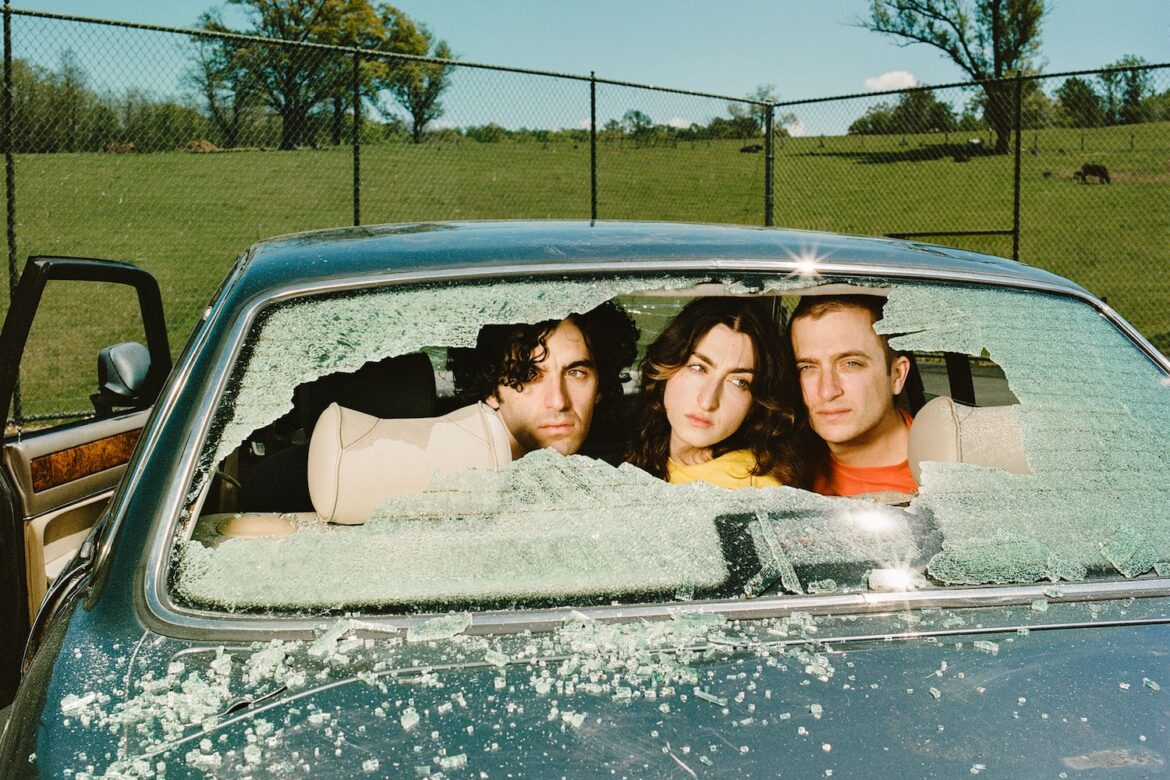
NYC sibling trio BAILEN ignite their independent era with “SWIM!!!,” a full-throttle indie rock anthem born from a near-death experience and the courage to burn the bridges holding them back. In conversation with Atwood Magazine, Julia, Daniel, and David Bailen trace how a decade of experimentation and sibling growth taught them to trust their instincts – and how the community they built along the way is carrying BAILEN headfirst into their next chapter.
Stream: “SWIM!!!” – BAILEN
Especially in this new age, when the power structures are so stacked against you and we have oligarchs, we have to believe in ourselves and stay true to ourselves, because that’s all we have in the end.
– Daniel Bailen, BAILEN
* * *
“Burn that bridge, say ‘f*** it’ I know how to swim”: BAILEN’s “SWIM!!!” is the sound of a band choosing motion over fear.
Scrappy, self-reliant, and newly independent, the New York City sibling trio have returned with a breathtaking rush of indie rock adrenaline – charged, dramatic, and emphatically alive. Their first release since 2023’s sophomore album Tired Hearts, and their first since parting ways with their label, “SWIM!!!” doesn’t just introduce a new era; it throws itself headfirst into one. Julia, Daniel, and David Bailen have always had a gift for making heavy feelings feel communal, but here, that gift comes roaring back with a full-body jolt: Not a plea for survival so much as a declaration that survival was already inside them.
“‘SWIM!!!’ is about breaking away from systems and relationships that make you believe you can’t survive without them,” BAILEN tell Atwood Magazine. “It’s the freedom of jumping into the deep end and discovering you can swim. This song is our summer anthem. As we reflect on the past and look to our future, this song embodies the courage and freedom of new beginnings.”
Sometimes I believe in
Old dogs changing
But I’m chronically honest
And you’re chemically cold
And I sleep better when I sleep alone
And it won’t kill me if I let you go
The first verse cuts cleanly through the kind of attachment that disguises itself as necessity. BAILEN don’t waste time softening the blow: “I sleep better when I sleep alone / And it won’t kill me if I let you go” lands like the first honest breath after holding one for too long. The song’s emotional charge comes from that realization – not that leaving is easy, but that staying small for someone else’s comfort is no longer an option. By the time the chorus arrives, “SWIM!!!” has turned self-preservation into a ruthless battle cry.
The line itself had been waiting for the right moment. During a conversation with producer John Congleton about wanting to get out of a deal without “burning bridges,” Congleton offered the band advice: “some bridges are meant to be burned.” Daniel’s response came fast – “f*** it, I know how to swim” – and the phrase stayed with them. Years later, after Julia survived a terrifying hit-and-run crash on I-95 with her parents, the song’s verse came pouring out of her on a guitar that had been damaged in the wreck. The experience left her with a new sense of urgency – a sign, as she put it, that it was “time to keep going and push through.”
So burn that bridge
Say f*** it I know how to swim
Yeah I’m lucky I know
how to live without you
I’ve done it before
Burn that bridge
I don’t have another second to give
Yeah I’m lucky I know
how to live without you
I’ve done it before
I’ve done it before
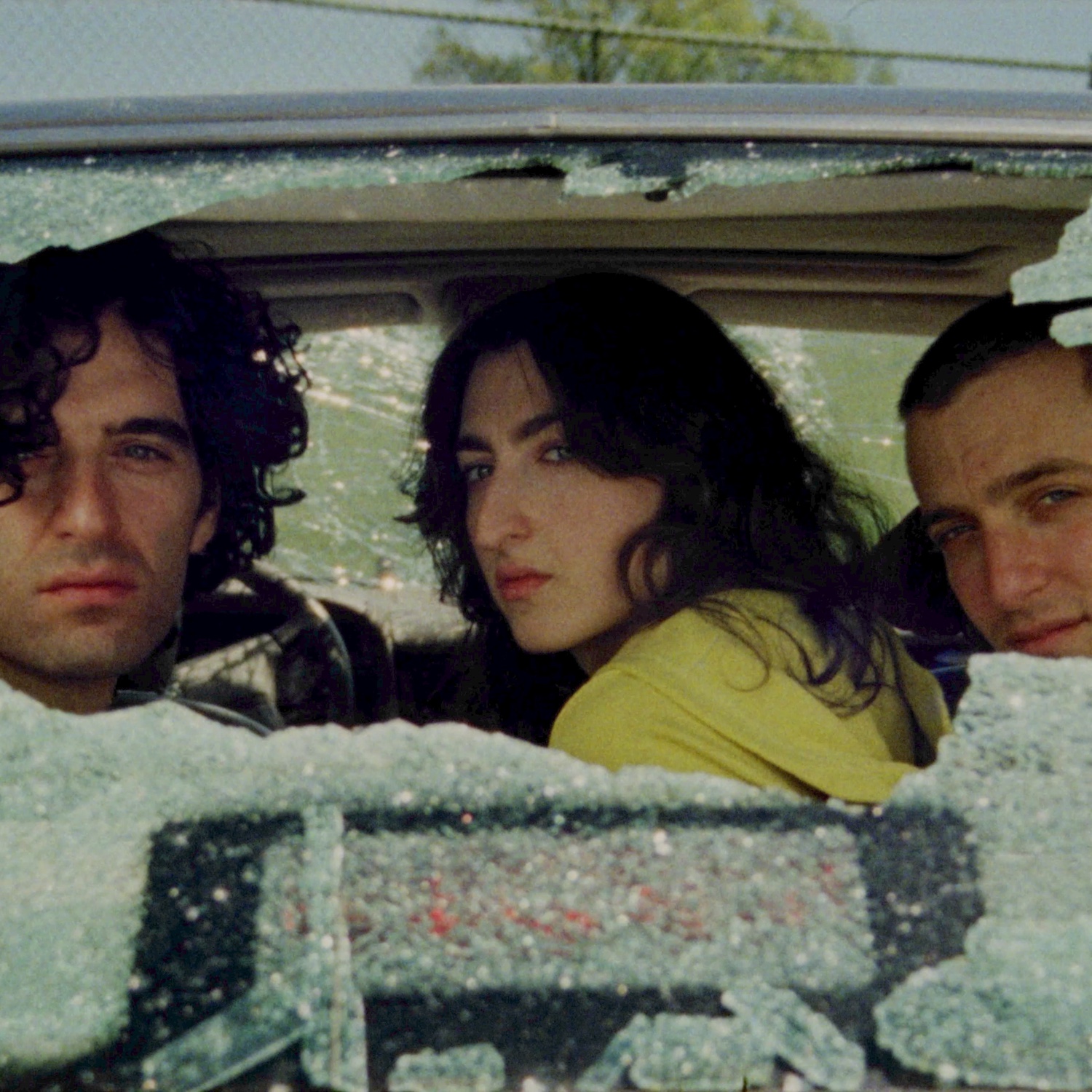
That chorus is pure release: Fierce, visceral, and built to be shouted back by a room full of people who need to believe themselves when they sing it.
“SWIM!!!” is an independence anthem on multiple levels – personal, professional, emotional, and creative – and BAILEN meet that freedom with a full-throttle performance that reminds us what only this band can do. Their voices lock in and lift off, the rhythm charges forward, and the song’s whole body seems to tense and then burst open, like a dam finally giving way.
“It doesn’t feel like we’re trying to be anyone else besides ourselves on this record,” Daniel says of this new chapter. “And that’s refreshing. And maybe that’s a product of being independent.” Julia puts it even more directly: “We really stuck to our guns on this, and did everything pretty much ourselves, and the people that we worked with were our friends.”
You can hear that freedom in the song’s scope. BAILEN wanted “SWIM!!!” to feel big, and it does – alive with grit, muscle, and a little bit of beautiful chaos. Even its making carries the song’s do-it-anyway spirit: The band retracked the basics in a condemned Gramercy church, pulling the room into the chorus until the drums seemed to open up with the architecture around them. That physical largeness matters. “SWIM!!!” doesn’t sound polished into submission; it sounds lived-in, fought-for, and fully inhabited.
Sometimes I wait all day
For the crumbs of what little’s left
you let sink down my way
And we’ve been in this fishbowl
getting livid at the glass
And I keep waiting for the storm to pass
But am I happy if I have to ask?
That question – “But am I happy if I have to ask?” – is one of the song’s quietest gut-punches. Around it, “SWIM!!!” explodes with color and force, but underneath the adrenaline is a brutally simple truth: When you have to beg for crumbs, when you have to keep testing the glass, when you have to keep convincing yourself the storm will pass, you already know the answer. The song’s triumph is not that it denies the fear. It just refuses to let fear make the decision.
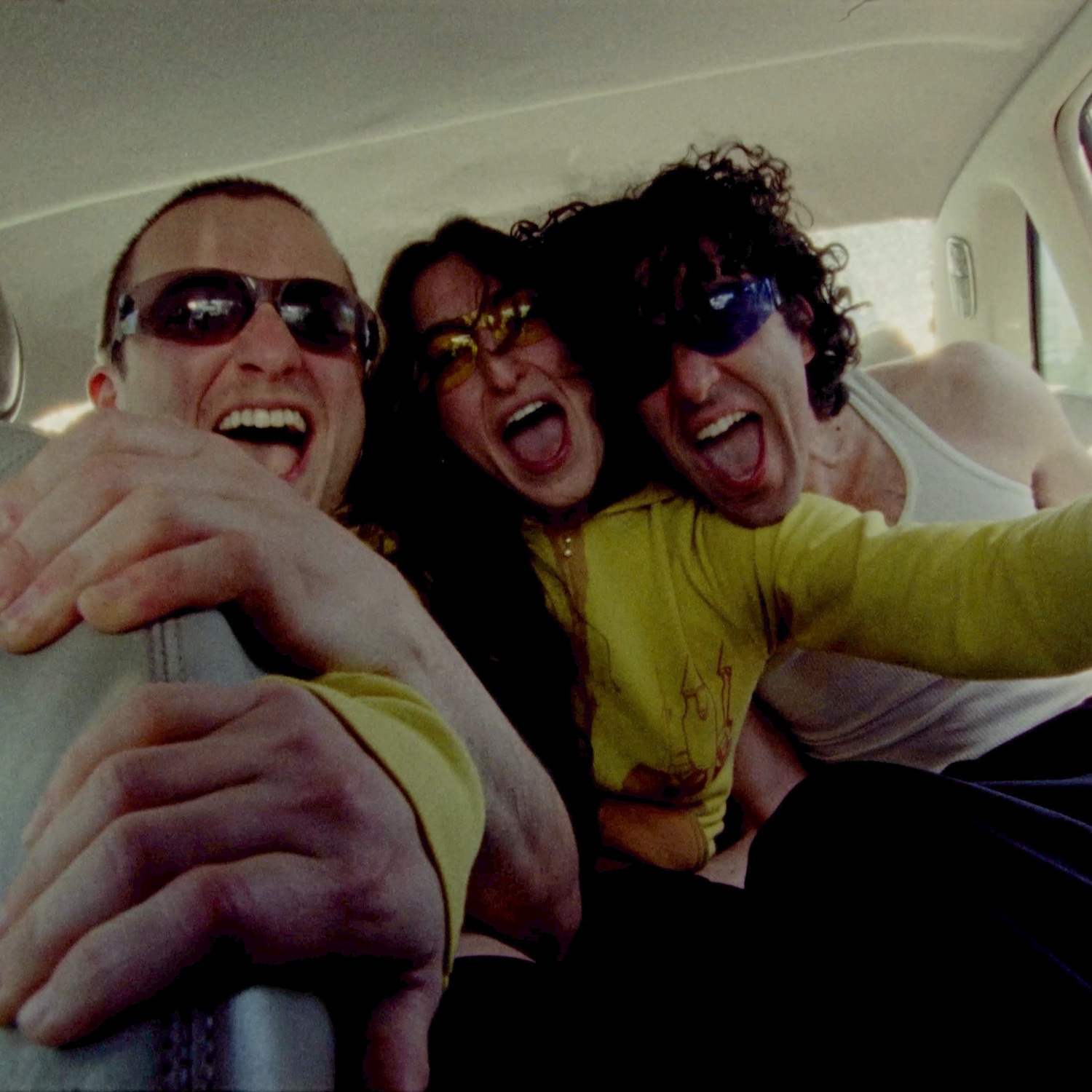
Julia says the song feels like “what summer used to feel like,” and that’s exactly right: It carries danger and freedom in the same hot breath – late-night air, bad ideas, open roads, the electricity of doing the thing because you are finally done waiting.
By the bridge, BAILEN sharpen the song’s release into a full-on reclamation: “You got the house / You got the friends / You got the money / Go drive a Benz / I fell for the sellout / I guess that’s on me / You’re no badge of honor I’d rather be free.” It’s messy, funny, furious, and liberating – the sound of cutting the cord and realizing the water won’t swallow you whole.
You got the house, you got the friends
You got the money, go drive a Benz
I fell for the sellout
I guess that’s on me
You’re no badge of honor
I’d rather be free
(as a full moon on a Friday night)
That release reaches far beyond the relationship at the center of the lyric. Independence has given BAILEN the freedom to choose every collaborator, every room, and every risk. They tracked much of the record live in their grandparents’ Connecticut basement, built a garage reverb chamber, invited friends into individual songs, and financed the record’s production and marketing with a small group of longtime supporters who believed in the band enough to invest. The whole process treats self-reliance as a form of community: BAILEN can swim on their own because they spent a decade building a circle strong enough to meet them in the water.
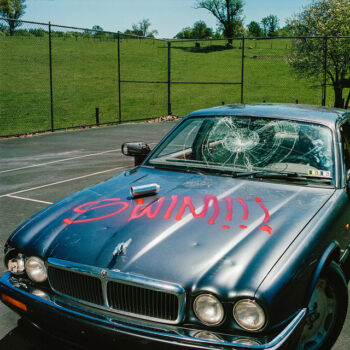
The “SWIM!!!” video gives that circle its wildest expression. Zacc Bang and director Danny Gevirtz shot the band on 16mm amid fireworks, an abandoned pool, a freezing hot tub in the bed of a pickup truck, and a 1999 Jaguar destined for demolition. David, who usually directs BAILEN’s videos, handed over creative control and let the day become exactly what the song promises: Shenanigans and surrender, charged by the thrill of trusting the leap. Julia’s phrase – “what summer used to feel like” – lands even harder once the band are literally speeding through that memory together.
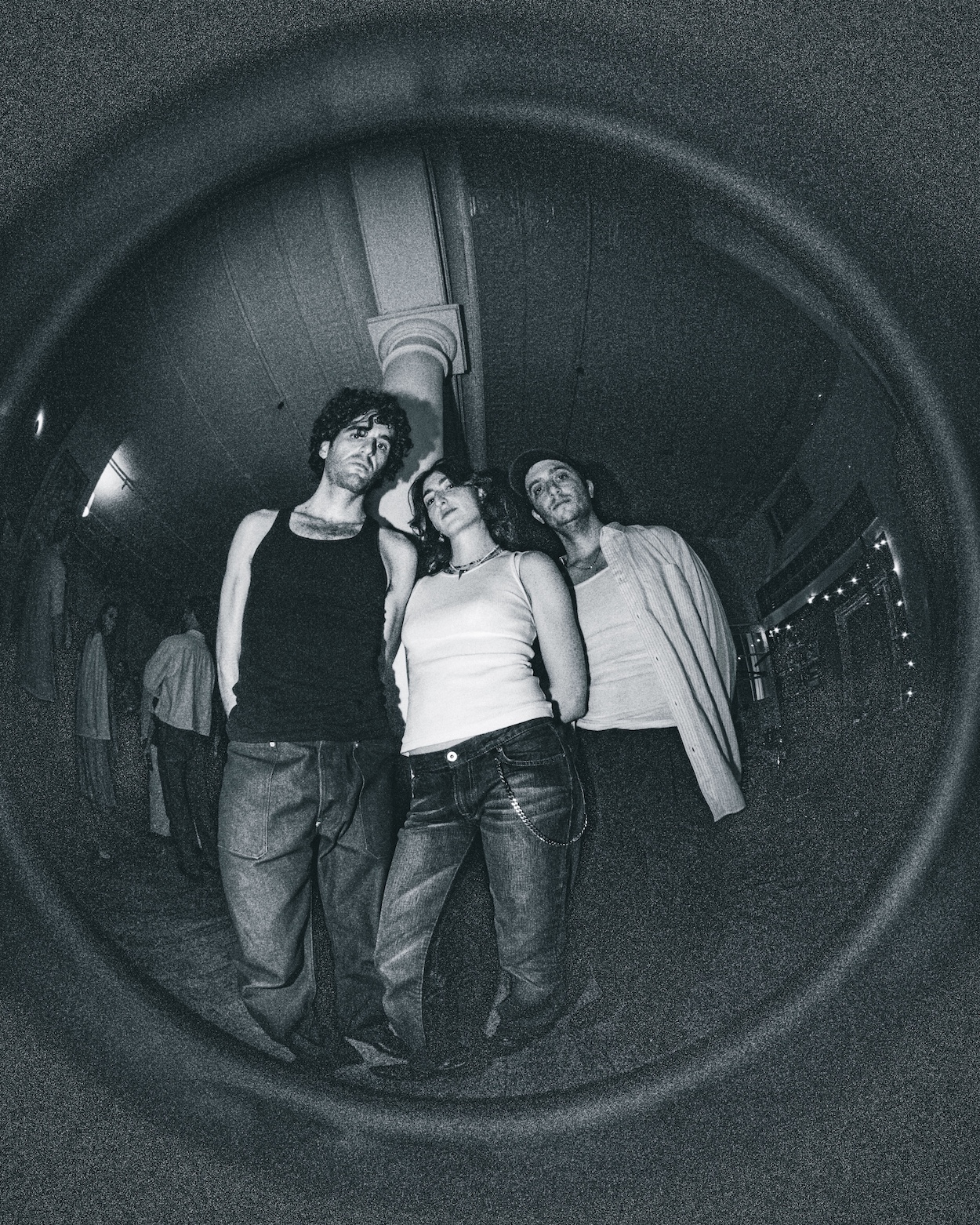
As resilient as it is emphatic, “SWIM!!!” is BAILEN at full force: Three voices, three bodies, one band giving everything they have.
The song walks away from whatever taught them to doubt their own strength and carries a decade of work, family, and hard-won community into the next chapter. It’s a powerful display of BAILEN doing what they do best – turning pressure into harmony, heartbreak into momentum, and uncertainty into a reason to sing louder.
In conversation with Atwood Magazine, Julia, Daniel, and David Bailen unpack the near-death experience that ignited “SWIM!!!,” the decade of work that taught them to trust their own ears, and the fan-built community carrying their independent future.
F*** it, BAILEN don’t just know how to swim – they’re doing victory laps in the deep end.
So burn that bridge
Say f*** it I know how to swim
Yeah I’m lucky I know
how to live without you
I’ve done it before
Burn that bridge
I don’t have another second to give
Yeah I’m lucky I know
how to live without you
I’ve done it before
I’ve done it before
— —
:: stream/purchase SWIM!!! here ::
:: connect with BAILEN here ::
— —
Stream: “SWIM!!!” – BAILEN
A CONVERSATION WITH BAILEN
Atwood Magazine: For those who might be discovering BAILEN today through this interview, what do you want them to know about who you are and your music?
Julia Bailen: We’re a sibling band and a power trio. We play guitar, bass, and drums, and we sing with three vocalists.
David Bailen: We’re a ragtag, scrappy sibling band from New York City, making our bottom line work in 2026 as a touring band.
Julia Bailen: We don’t play to tracks. It’s just us, and it’s a great show.
David Bailen: What you see is what you get. No banter is planned.
Julia Bailen: Most of it is really weird.
Daniel Bailen: We are the product of what happens when you’re raised by New York City freelance musicians. We are three siblings and a concise, ragtag trio. Onstage, all you’re hearing is our three voices, our six hands, our six feet, and everything those can do – nothing else.
David Bailen: Your feet don’t have any part in this, Daniel.
Daniel Bailen: What do you mean? I have pedals – and I dance!
David Bailen: You have one pedal. We have five feet between the three of us.
Julia Bailen: I only have one foot, too.
Daniel Bailen: We stayed in New York during the pandemic, so we are really New Yorkers – not like Olivia Rodrigo, who is in L.A.
Julia Bailen: We’re not like HAIM coming in for the Knicks game. We’re born-and-bred New Yorkers, and we have never left. We’re out here canvassing for Mamdani. You can’t come out here and pretend New York City is cool again. We’ve been here. We put in the work.
David Bailen: We were born in Upper Manhattan. We invested early. We’re angel investors.
Daniel Bailen: Only on tour do we leave New York City.
Today is literally 10 years to the day since Atwood published our review of “Something Tells Me,” your debut single. What does it feel like to be starting a new chapter tomorrow with 10 years of this band under your belts?
Julia Bailen: I feel really, really good about this record. I think it’s extremely BAILEN. It feels like us in a way that feels like a homecoming. Releasing music is always really hard. It’s kind of like that part of Game of Thrones where Cersei has all of her hair cut off and walks naked through King’s Landing. It’s very exposed and vulnerable. But I feel really confident in what we made, and that is very comforting.
Daniel Bailen: It doesn’t feel like we’re trying to be anyone else besides ourselves on this record. That’s refreshing, and maybe that’s a product of being independent. You’re not listening to the suits on top saying, “The BPM on this is all wrong. We need a higher BPM.”
Julia Bailen: We really stuck to our guns on this. We did pretty much everything ourselves, and the people we worked with were our friends.
Daniel Bailen: If it bombs, there’s no one else to blame.
Julia Bailen: It’s totally our fault.
Daniel Bailen: We only have ourselves to blame, which feels kind of great.
When you look back at your first single – those harmonies and that early version of the band – what do you hear? What do you think about now?
David Bailen: I feel like there is a throughline. If we had an empty backpack when we started and looked into it right now, I feel like we have all the tools we’ve gleaned over these years, and we used them all on this record.
We engineered and recorded it ourselves. We used all the knowledge we gained from the last two records – working with other people, what we hated about those processes, and what we liked. I mixed it. I feel like we took all the positive experiences we’ve had creating music together over the years and put them into this record.
Even the way we’re putting it out draws on the scrappiness of our band and the fan-to-fan connection we’ve built over the years. We’re funding the record with our fans. We’re leaning on the community we’ve built over the last 10 years in a way that feels very much like family. If we are a family, we’ve extended that to the whole community we’ve found over the last decade.
It feels very right. Daniel, Julia, and I are in a good place. If there’s any kind of win from this record, it’s that we’re getting along in a really nice way. Then what else matters? It does well, it does badly – who cares, really? We’ve done all the positive things for this.
Julia Bailen: That was really well said, David. I agree with that.
Daniel Bailen: David mixed the whole record and engineered most of it. We also had friends guest-produce a song here and there, which goes along with the idea that it takes a village. We didn’t have one producer. We produced a lot of it, and then we had friends who wanted to be a part of it whom we invited into the circle.
David Bailen: We made them get their names changed on their birth certificates.
Julia Bailen: We also didn’t record it in one space. We tracked a lot of the record in a makeshift home studio that we built in our grandparents’ basement in Connecticut. We wanted to track everything live as much as possible because there’s no way to replace that core trio feeling and the things that happen when you’re making a song work as a trio.
Daniel Bailen: David and I are a twin rhythm section that has played together longer than probably any rhythm section. We’ve been playing together since the womb, and we wanted to capture that.
Julia Bailen: It makes me play differently. You discover so much more when you’re that exposed, and you have to make sure the parts are interesting. I think that’s much more fruitful than doing everything one by one in isolation. It was also really fun. We set up the live room, and the computer was in another space. We were taking a wireless keyboard over to the drum kit and pressing record. My amp was patched through the workshop into a different room.
Daniel Bailen: Through the bathroom.
David Bailen: I made a reverb chamber in the garage.
Julia Bailen: Some of the drum parts on this record are my favorite drum parts we’ve ever made. They’re so good, and it was so fun.
Daniel Bailen: Talking about the community, we had this fan who said he had been signed to Sony in the ’80s because he was driving a cab, picked up Steven Tyler, and sang for him. Steven Tyler signed him on the spot from the cab. I looked it up, and it’s true. It checks out. He also has all this vintage gear from the ’70s.
David Bailen: He also said he had been a curator at the Met Museum. He said all these things, and we were like, “Yeah, right.” Then we looked it up, and it was all true.
One day, he told us, “If you ever need preamps, I have all this old gear from my recording days.” Before we made this record, we called him and asked if we could try them. He brought over these cream-of-the-crop Neve 1064 preamps from the ’70s.
Daniel Bailen: For an engineer, it’s like finding the diamond from Titanic in the ocean.
David Bailen: They were beautiful representations of this preamp. They’re probably worth about $15,000 each. We recorded our record through them, and it was so fun to use gear that has a story.
Whether people hear the difference gets into the whole argument about analog gear versus working in the box, but there is something inspiring about it.
Daniel Bailen: There is a mojo to it that inspires the artist. It’s like the reason classical musicians play old instruments: The wood is mature, and there’s a certain mojo to it. I don’t know whether the common ear can tell the difference, but there’s something about the history in an instrument, and we found that to be the case with this recording equipment.
David Bailen: They sound really good.
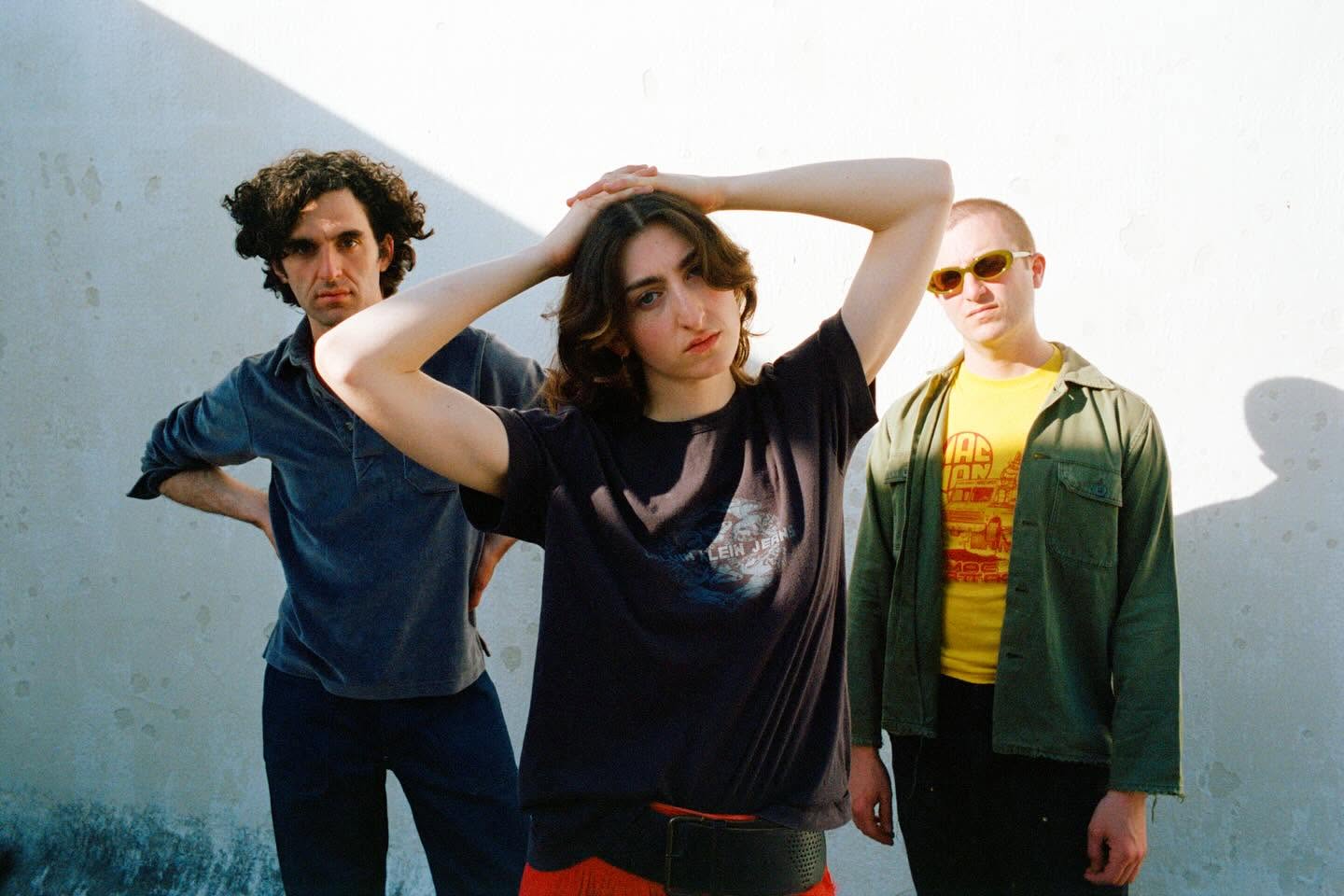
“Something Tells Me” circles self-doubt, confusion, and the possibility of finding someone who understands you anyway. Ten years later, “SWIM!!!” feels like it’s saying, “I know how to survive on my own.” Does this feel like a full-circle moment for you as a band?
Julia Bailen: I hadn’t really thought of it that way. Lyrically, I had not put that together, but it definitely feels like a full-circle moment.
You spend so much time looking at other people, wondering about all the analytics: “Is that working? What’s working? Who am I? Why don’t people like me? Maybe if I just change this…”
I feel like we’ve gotten to a point where I think we’re the best band in the world, and if people don’t get that, that’s on them. I feel that way now, and I’m trying to hold on to it despite all the difficulties of releasing music and the emotional rollercoaster of it, because it’s a really good feeling.
I’d rather live in that delusion. It’s a pleasant delusion, and I think that’s really important as an artist. Cherish your delusions. Enjoy that.
Daniel Bailen: But be kind in the process.
Your last album, Tired Hearts, came out in May 2023. We talked a lot then about struggle, closeness, adulthood, and finding hope inside all that weight. What’s your relationship with that album and its songs today?
Julia Bailen: Once the music is out, I never listen to the recordings again. Right now, I’m able to listen to this new record because it’s still private and mine. Once it belongs to the world, it belongs to the world. My relationship to Tired Hearts is through what we play live, and those arrangements are really different. The way we discovered that record as a live record became something very different from the recordings.
It was made during the pandemic. We weren’t writing together. We were writing in our respective homes or over Zoom. We weren’t in the same space in the same way, so it was interesting to rediscover those songs as a trio playing them live. They changed a lot.
David Bailen: That record was hard for us in terms of how we recorded it. It was also simply a hard time.
Julia Bailen: Sophomore records are a curse unto themselves.
David Bailen: There are songs on that record and pieces of songwriting that I really love. The approach to this new record was informed by Tired Hearts from a recording standpoint – especially what we didn’t want to do.
We tracked our first record live, and there’s an energy to that. We didn’t do that on the second record. With this record, we came back to form. That’s how we should make records. That’s what our band is.
Maybe it was necessary for us to go through that process on the second record and explore different ways of approaching things. Ultimately, we found that approaching this one in a more organic, live way was truer to our band and to how the recordings represent us.
That said, there are songs and lyrics on Tired Hearts that are beautiful and that I still feel strongly about.
Julia Bailen: We also went through such a heavy writing and A&R process on that record. We wrote so many songs, and the label kept telling us to write and putting us in rooms and Zooms with people. A lot of those songs were chosen for the record, and I think they’re great songs, but it can be hard to include another voice and have it communicate with everything.
We wrote all of the songs on this new record ourselves, save for two co-writes with somebody we’re very close to.
David Bailen: We have two co-writes with someone who looks exactly like me, is Jewish, and lives upstate.
Daniel Bailen: We’ll write with non-Jews. We don’t discriminate.
Julia Bailen: Every time Devin and either David or I are together, people ask whether we’re siblings. They’ll say, “Is this your sister?” and we’ll say, “No.”
Daniel Bailen: Our producer on “Kansas Tornado” also looks exactly like David.
Julia Bailen: Lee Falco.
David Bailen: He played on the co-write and produced “Kansas Tornado.”
Julia Bailen: The people we brought into the fold on this record were really natural choices for us – people we were close with and could be ourselves around.
Daniel Bailen: Or people we kept saying, “We need to hang,” and then decided, “Why don’t we write a song and hang?”
Julia Bailen: It didn’t feel like A&R. It didn’t feel like, “We need to write the next hit.” It felt like, “Let’s write something fun. Let’s do something cool.”
How does the new music we’re going to hear this year compare with Tired Hearts? What excites you about this new material sonically?
Julia Bailen: The approach feels more alternative than folk or some of the rootsier music we’ve done. The emotional content is still very intense, and it’s a very dynamic record. It’s also very fun. Tired Hearts was a fun record in a more subdued way. This record is definitely not shy or contained. We let ourselves be as loud as we are and as quiet as we can be. We didn’t temper the dynamics to create something more easily boxed.
Daniel Bailen: I want to clarify that the last record has some of my favorite songs we’ve ever written. We’re talking more about the overall approach to recording. “These Bones” was not a co-write, and “Love You Blind” was not a co-write.
Julia Bailen: Anything Mitch liked was not a co-write.
David Bailen: It’s true. All of our favorite songs on that record were the ones that came from us and were really our songs. That says a lot about why we resonate with them.
Daniel Bailen: There are no regrets about the last record. That’s how we did it. But in this day and age, with tracks, click tracks, and computers, what we have as a live band is special, and we should embrace that when we record. We’re real singers. We don’t Auto-Tune anything. What do we choose to embrace about our sound? Is it whisper-singing, or is it us actually singing? Nothing against whisper-singing. If we needed to sing softly, we did, but there weren’t any rules.
Julia Bailen: Everybody was so worried about being cringe in 2023. Everyone was worried about being perceived as enthusiastic. God forbid you’re enthusiastic about something. We let ourselves be that on this record.
Working with John and Brad on the last two records taught us so much about ourselves. They highlighted things about us. It’s like when you invite somebody into your house and suddenly notice it’s kind of dirty because someone else is there. They taught us about our instincts – where we should poke at them, question them, fight them, or trust them.
David Bailen: There were so many instances on the last two records where we were trying new things, bending ourselves in different ways, and stretching ourselves in good ways. We also weren’t always totally trusting ourselves.
We trusted ourselves on this record. With mixing, we started out thinking we needed to hire a mix engineer. Then I thought, “No. I know what I like. I know what I want. If I trust myself and my ears, I can get there.”
That was very freeing. I’ve mixed records for a long time and mixed some material on our previous records, but I never felt like a professional mixer until now. The thing separating me from feeling that way was trust in myself and my ears.
There are so many people bullshitting in this industry who wear big sunglasses, tell you they know everything, and have impressive résumés. The only thing that matters is what you like – your taste.
Julia Bailen: I loved working with both John and Brad. At the same time, I was looking to them to tell me who I was because they had authority, experience, and had made great records. It’s important to have the confidence to say, “No, that is the DNA. That’s what it is.”
“SWIM!!!” is your first fully independent release, and it sounds like freedom musically, emotionally, and professionally. What does independence mean for BAILEN right now?
Julia Bailen: Reinventing the wheel. We’re trying to do the industry differently. We’re looking at it and saying, “This is so broken. Let’s fix it for ourselves. Let’s do it differently.”
Daniel Bailen: Our whole career, we’ve been told, “That’s not how it’s done,” or, “That’s not how it works.” Now we hear that and say, “Let’s do exactly what we think we can do.”
Julia Bailen: Since the dawn of recording technology – and even before that – people have tried to convince artists that they don’t have the literacy, intelligence, or know-how to advocate for themselves or say what is right and just. It’s bullshit. Artists know. You’re smarter than you think you are.
A lot of these systems are built to trap and abuse artists and to make everything opaque, complex, and difficult to navigate. That’s all on purpose. You have to give yourself more credit and grace as an artist. When something doesn’t feel right, it probably isn’t right.
I have to imagine the word “swim” holds a lot of weight for the three of you. What’s the story behind this song and this name?
David Bailen: We had a conversation with John Congleton at a coffee shop in L.A. We were telling him about some of our woes and maybe asking him to therapize us a little.
Julia Bailen: We were asking, “How do we get out of our deal?” He suggested some truly unhinged things that I cannot repeat here – taboo industry things that would have gotten us totally blacklisted.
Daniel Bailen: You’ll lose your record deal.
Julia Bailen: They’ll drop you immediately.
David Bailen: Get arrested or do something crazy.
Daniel said, “We don’t want to burn any bridges,” because we’re very nice. We don’t like breaking up with people. We want everybody to be friends, and we don’t like bad blood. Our instinct is to make everything okay, fix the situation, and figure it out.
Julia Bailen: We’re people pleasers.
David Bailen: John looked at him and said, “Some bridges are meant to be burned.”
Julia Bailen: Daniel said, “F*** it. I know how to swim.” We said, “That’s a pretty good lyric, man.”
David Bailen: That sat in our back pocket for a while.
Daniel Bailen: For a couple of years.
Julia Bailen: Then, as the story goes, I was in a car accident with my parents in November 2024. It was the day after Thanksgiving. We were driving to a family function when we were hit by someone I assume was a drunk driver. He swerved into us and hit the right side of our car, and we crashed into one of those concrete medians on I-95 at about 65 miles per hour.
Daniel Bailen: He had been driving erratically. People had reported him over the previous 10 minutes, and they were the unlucky car that got completely nailed.
Julia Bailen: He drove off. It was a hit-and-run. It was a come-to-God moment. Everybody got out of the car relatively unharmed.
Daniel Bailen: Our parents had some neck injuries.
David Bailen: It was pretty miraculous. Crashing headfirst into a median at 65 miles per hour is serious.
Julia Bailen: We didn’t even hit our heads. We had a little whiplash, and that was it. The car was totaled.
My dad’s cello was in the car. It’s literally from the 1700s. We checked it, and it was totally fine – it was still in tune, which was the crazy part. One of our guitars was messed up.
Daniel had been on the phone with our mom before it happened.
David Bailen: The most traumatic part may have been Daniel’s experience. He was talking with our mom on the phone when it happened. All he heard was everyone scream, and then the phone cut out. He checked Find My, and their location was stopped on I-95. There was red traffic behind them and blue in front of them. It took our mom about 20 minutes to call him back, and during that time, Daniel was hyperventilating.
Julia Bailen: He thought we were all dead. Because we were okay, EMS came and had us sign release forms saying we were refusing medical service. I looked down as I started spelling my name for the EMS worker, and he had spelled BAILEN perfectly. I said, “Oh, you got it.” He said, “Yeah, you’re in a band, right?”
I said, “What? Yeah.” He told me, “I listen to you guys all the time.” I thought, “Okay, you made my day.” I took that as a sign that it was time to keep going and push through. We were in a slump. We had finished the second record cycle, the deal had ended, and we were adrift. Figuring things out was really difficult. I took that moment as a sign.
Daniel Bailen: Talking to Julia afterward, she sounded like a new person – very powerful and excited about the future. The next day, she sent us a voice memo.
Julia Bailen: I had a new lease on life.
Daniel Bailen: She recorded it on the guitar that had been in the car and was partially broken, so it was buzzing and everything. She sent us the verses to “SWIM!!!,” and we thought, “Wait, you just wrote this after a car accident?” It was pretty cool. We finished it together and added the “swim” lyrics.
David Bailen: The chorus came from Daniel. He lives in Brooklyn, and our parents’ place, where the studio is, is uptown in Morningside Heights. It’s about an hour away.
Daniel Bailen: I have a long commute. I ride the bike; you take the train.
David Bailen: He sits on the back of some dude’s bike. Sometimes Daniel writes while he’s biking. He sang that chorus fully through and thought, “Holy shit, that’s really cool.” Then he brought it home to us. It was one of those great moments when you’re writing a song and you don’t want to stop singing it.
Julia Bailen: You don’t want to stop singing it.
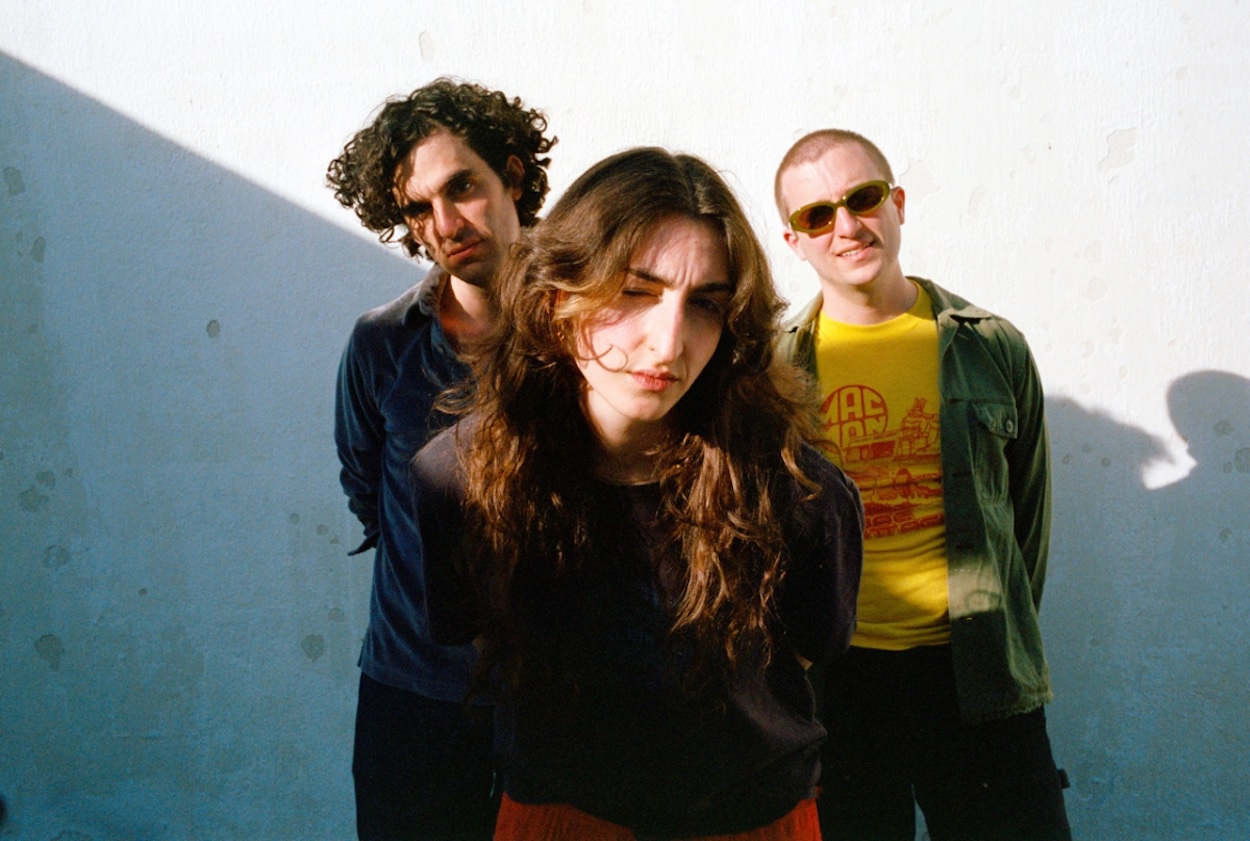
The song is about breaking away from relationships and systems that make you believe you can’t survive without them. How much of “SWIM!!!” is personal, and how much of it speaks to where you are as a band right now?
David Bailen: The verses are pretty personal. The sentiment of the chorus is super present in how we approach every decision on this record. It has become a reference point: “Does this stay true to that sentiment? No? Then we’re not doing it.” “SWIM!!!” gives us a self-check. When you feel yourself doubting or being swayed, it’s a mantra: “F*** it. I know how to swim. I can do this.” You have to trust yourself.
Julia Bailen: Living by your words is sometimes harder to do.
Daniel Bailen: Taking it beyond the band, as cheesy as it is, it’s permission to follow your heart. It’s a prayer to follow your heart and your instinct. Especially in this new age, when the power structures are so stacked against you and we have oligarchs, we have to believe in ourselves and stay true to ourselves, because that’s all we have in the end.
I’ve come to accept that one day Atwood may review a song made entirely with AI and never realize it. Before anyone hears a song, somebody had to struggle, put emotions to paper, turn those words into melodies, and live through the process of making it. That whole life of the song gets lost with AI. How does that make you think about the value of the human process behind this record?
Daniel Bailen: It’s not just the click of a button. There’s a lot that goes into it. There’s a subscription requirement. There’s a hard drive required. I don’t know if you’re right that it sounds like crap. It sounds pretty f*ing close.
Julia Bailen: It puts a premium on things sounding like shit.
David Bailen: That’s funny, because that’s part of why I don’t like releasing music. The part that’s important to me is the journey – the process and the struggle of getting it to sound the way we want. Once I feel like we got it there, I think, “Why do we have to give it to people now?” That’s not the fun part. Sometimes it is, but the process is the part that matters most to me.
Daniel Bailen: It’s fun to have people respond to it and sing it at our shows.
Julia Bailen: This record is so much fun to play live. We have most of it together, and from top to bottom, it is such a fun record to play. I’m excited to have it in a space with people. That is irreplaceable. You cannot make that with AI.
Julia, you said AI puts a premium on things sounding like shit. Where did you preserve imperfection on this record?
Julia Bailen: We didn’t make a particularly lo-fi record, but we kept some things that were out of tune or imperfect.
Daniel Bailen: Like the piano on “SWIM!!!”
Julia Bailen: We didn’t even comp the piano on “SWIM!!!” We thought, “That sounds great. Jake crushed it. Let’s not even comp it.” He was figuring things out as he played.
Daniel Bailen: We were sitting in the studio, twiddling our thumbs and asking, “What does this need?” We thought it could use some piano. We all play piano, but we wanted an actual professional pianist. Our friend Jake Pinto texted us. He was visiting from L.A. and in our neighborhood. He asked if we wanted to get coffee.
David Bailen: He came over and recorded the piano part.
Daniel Bailen: We hadn’t tuned the piano or anything.
David Bailen: We did it, and it was messy, awesome, and great. I started trying to comp it and realized I liked all the mistakes.
Julia Bailen: Comping it was killing the vibe, so we said, “F*** it. Let’s leave it.”
Daniel Bailen: Jake had texted me while Julia and David were sitting in the studio asking what the song needed. I said, “What if Jake Pinto played on it?” They said, “That would be great, but he lives in L.A.” Then I opened the door, and Jake Pinto appeared, transported from L.A.
Julia Bailen: He’s also about seven feet tall, which adds to the hilarity. Everyone who worked on this record is named Jake.
We also retracked the basic tracks for “SWIM!!!” with our friend Jake Sinclair, who is a wonderful producer. He had just moved to New York from L.A. and made friends with the musical director of a church in Gramercy, right on Gramercy Park.
David Bailen: He heard the first version of the song. We had recorded the basic tracks in our grandparents’ basement, which has low ceilings and sound tiles. It’s a very dead room.
He said, “This song is awesome, but the basic tracks need space. The chorus needs to be big.” I had started mixing it and was having trouble making it pop the way I wanted, so when he said that, I knew he was right.
Julia Bailen: He packed up his whole studio rig, and we put it on a bunch of carts.
Daniel Bailen: Three massive carts. I was so pissed. I thought, “What am I doing today? I’m moving three heavy carts across the city.”
Julia Bailen: We walked about 10 city blocks to this church and loaded everything into the loft. The church was condemned and not in use. There was definitely a lot of mold. By the end of the day, we were all virtually high from it.
David Bailen: Our sinuses – the Jewish thing.
Julia Bailen: We thought, “It’s game over. We’re dying.”
We set up the drums and the studio among all these extra crosses. It was three Jews and Jake, who was raised in the church but has Jewish spirit.
The drum sound was iconic – huge and enormous.
David Bailen: The loft is off to one side of the main cathedral. This is a big cathedral. It looks like Notre Dame, and you wouldn’t expect it in Gramercy.
The loft itself is a little lower and more contained, so the drums sound dead when you’re up there. Then you can place microphones along the balcony and turn the whole church into a reverb chamber that you can mix in and out.
On the verses, you hear the dead drum sound. On the chorus, all the microphones from the church come up. It becomes huge.
BAILEN has always had a gift for making heavy feelings feel communal. Julia, you talked about wanting the audience to dance-cry when we spoke around Tired Hearts. What does “SWIM!!!” evoke for you, and what do you want it to evoke in listeners?
Julia Bailen: I’ve been thinking that the song feels like what summer used to feel like. There’s this really intense nostalgia, but also hopefulness. The music video feels that way, too. When you see it, you’re going to think, “That is what summer used to feel like.” It’s true shenanigans with your friends. There’s something so specific about the way it cools off at night.
As an independent band, every penny counts, and you still made a music video for “SWIM!!!” What made this video worth doing, and how did it come together?
David Bailen: Everybody in the industry says music videos are out and everything is short-form content now. They tell you not to spend money on a music video. We f*ing love music videos, and we wanted to make one. I’ve directed all of our music videos. That’s part of what we do.
I didn’t direct this one. We met a fan named Kelly at an outdoor gig in 2021, during the pandemic. He came up afterward and said, “Anything I can do, I want to support you guys.” He used to have a band with his brother. He isn’t a musician now, but he’s in a field where he can be generous.
We kept in touch. When we were figuring out how to make this record happen, we reached out. He said, “I’m all in with you guys. Anything you need, I’ll help.” He became an executive producer on the record. He also told us his brother-in-law was a filmmaker and would be down to make a video for us.
Julia Bailen: Why not?
David Bailen: I usually direct the videos, but I was mixing the record, so we decided to put all our trust in his brother-in-law, Zacc Bang.
David Bailen: We thought, “What do we have to lose?” We met Zacc, and he was the funniest guy ever. It was the best experience.
Julia Bailen: He is a guy for everything.
David Bailen: He said, “We’re going to have fireworks in the background. We’re going to build a hot tub in the back of a pickup truck. We’re going to get you into this abandoned pool. It’s going to be awesome.” Everything he said, we answered, “All right. Sure. We’ll do that.” He also had a filmmaker and director with a lot of followers on YouTube who was willing to direct pro bono under one condition: We had to shoot everything on 16mm film.
Julia Bailen: We said, “Sorry, no.” His name is Danny Gevirtz, and he’s a legend. He did a great job.
David Bailen: As someone who usually makes our videos and thinks, “If there’s a way I can make it, I’ll do it,” this was a release. It was letting go and relinquishing control.
It was so much fun. We let them do whatever they wanted. We were the band who showed up, got into a freezing hot tub in the back of a pickup truck, and let them make the video.
Julia Bailen: We were on a tennis court in a 1999 Jaguar.
David Bailen: Zacc called us and asked, “How do you feel about smashing up an old car?” We said, “Sure.” He had gotten a Jaguar from an old guy who had kept it in the woods for 10 years. He paid $500 for it. All this stuff came together.
Julia Bailen: We asked, “Are you sure we should destroy this? This is a cool car.” It still ran. We totally shouldn’t have done it, but it was so much fun.
Daniel Bailen: We felt bad about smashing it, so Zacc took the first hit.
David Bailen: We knew it was irresponsible.
Daniel Bailen: We donated it to charity afterward. Pete Townshend is the one smashing a guitar every night because he has the publishing. Roger Daltrey doesn’t have the publishing, so he isn’t breaking anything up there.
Going fully independent means more ownership over your art and more say in every decision. It also means you get to choose who you bring into the club that is BAILEN. What has that opened up for you?
Julia Bailen: We get to be much more generous because we’re in control of how we spend the money, the points, the ownership, and the IP. We’ve also been totally floored by the generosity of the people around us. People have been so sweet to us. There was a before Zacc Bang, and now there’s an after Zacc Bang. Danny Gevirtz, who directed the video, was also incredible to work with. He was chill, thoughtful, and methodical. It was so much fun, and you can tell. The video looks like fun. It’s awesome.
You’ve funded this record with a group of fans and people who believe in you. How did that model come together?
David Bailen: Kelly, the fan we met at that gig, became an executive producer on the record. Daniel has spent a lot of time connecting with fans over the years and developing relationships with people. This whole record is funded by a group of our fans.
From a business-model perspective, we didn’t do a Kickstarter. We approached some of our most sincere fans and people who wanted to be invested in this journey. We funded the whole production and marketing budget through a group of people who believe in us – people we stay with on tour.
Daniel Bailen: I wouldn’t call them super fans. They’re people who believe in us.
David Bailen: They’re people who believe in us who aren’t our parents, because our parents did not invest.
What’s up, Sharks? We’re Daniel, David, and Julia, and we’ve got a pitch for you.
Daniel Bailen: Exactly. We treated the album like an indie film or a musical. You get investors, and you sell shares of the royalties. We thought, “Why don’t indie bands do that?”
We approached people who had been fans for a while and believed in us, without knowing whether they would be interested. Everyone seemed overly eager to be a part of it.
The music business does not guarantee success or a return, but people want to support the good things in the world. Getting that support was a profound experience.
The people who helped fund the album and the release are going to be named on the record and in the packaging.
David Bailen: We’ll definitely put them on our website, too.
I keep seeing you post these beautiful cover snippets on social media. What are a couple of your favorite songs to cover, and what are a couple of wishlist songs you’d love to take on someday?
David Bailen: We just did “King Harvest (Has Surely Come)” by the Band and made a little video for it.
Julia Bailen: That had been on the wishlist for a while. Our Black Rebel Motorcycle Club cover is one of my favorite things we’ve done.
David Bailen: We love the Band. “Acadian Driftwood” is the first song that comes up on all our phones.
We’re trying to do the social media thing and go hard on all platforms. The difference now is that nobody is telling us what to do. Nobody is saying, “Let’s have a meeting with 20 label people who have to decide what you should post.”
Now we’re doing what we want. If it feels right and it’s fun for us, we do it. There’s no point in spending time on something we don’t think is worthwhile.
We’re choosing songs that feel relevant to the world and songs we can reimagine in a way that allows us to take some ownership rather than simply doing them.
Julia Bailen: “Ohio” felt very relevant, unfortunately.
David Bailen: The songs we choose feel like they could have come from us in an alternate reality. It would be nice if we had written many of them. There’s a lexicon and history in them that feels like part of the foundation of BAILEN. You can put those influences together and get BAILEN.
Julia Bailen: I would love to do some Beach Boys songs. We’ve done “God Only Knows,” but it would be fun to do “Good Vibrations” or something like that. I love that song.
Daniel Bailen: Or “Suite: Judy Blue Eyes.”
David Bailen: The problem is that we’re only doing 30 seconds of these songs because we think, “Why spend the time?” Then we get comments from Cary Elwes from The Princess Bride saying, “You should release the full version,” and we think, “I guess we have to do it now.”
Julia Bailen: Social media is so time-consuming. At least we’re covering songs and making videos that are fun for us, because most of the time it is totally unrewarding. You don’t always see the returns, and that’s fine. You have to be resilient. But it is incredibly time-consuming.
Daniel Bailen: I don’t like the song, but Alex Warren said, “I posted ‘Ordinary’ 250 times before anything clicked.” That does not sound like a journey I want to go on. We’ve played over 1,000 shows, though, so that’s more.
Julia Bailen: The tendinitis is already taking shape.
Daniel Bailen: Every time something has gone viral for us, we’ve all been excited about what we made.
Julia Bailen: We’ll say, “Play that again.”
After everything you’ve lived through together as a band over the last decade, what feels most exciting about BAILEN right now?
David Bailen: We’re in a good place as the three of us. It’s hard to be on the same page, but of any point in our band’s trajectory, we’re finally on the same page pretty much all the time.
Julia Bailen: We’re not really disagreeing about things right now, which is crazy.
David Bailen: We all feel like we’re in a good place. Maybe that isn’t rock and roll. We don’t have any addictions right now, which may not be good for the lore.
Julia Bailen: My phone.
Daniel Bailen: David and I are both addicted to the iPhone.
Julia Bailen: I’m so addicted.
David Bailen: We’re all addicted to the iPhone.
Julia Bailen: We have this personal momentum right now. We’re on the same page, and there’s a workflow synchronicity that I don’t know whether we’ve had before. There’s a real maturity to it. It’s really fun right now.
David Bailen: It’s hard enough to be in a band. It’s harder to be in a band with your family. If there’s any family band that does pretty well as a family band, I think we’re doing pretty well.
Julia Bailen: We’re not one of those annoying family bands that claims they never fight. We still fight.
David Bailen: We’re not some weird, culty sibling band.
Daniel Bailen: In this age of clicks, likes, and algorithms, the “SWIM!!!” mentality – fueling the faith that we can swim on our own – has been built into everything. It’s in the way we funded the record, made the music video, and recorded the album. Our label gave us great connections and did many good things for us, but at the end of the day, we went to every city and made one fan at a time over the past decade. We feel like we can finally swim on our own because we built that. That is very different from building something on Mark Zuckerberg’s app. It feels very real to us, whether you can see it on the internet or not.
Couples message us and say they used one of our songs for their first dance at their wedding. We see people get tattoos. You can’t measure that in algorithm-speak. You can feel the community we built.
Julia Bailen: People come up and tell us we saved their lives.
Daniel Bailen: This is an embracing of that.
David Bailen: I was feeling a little down about streaming numbers, and a friend told me, “Dude, people have had sex to your music. Think about that. That’s a win.”
Julia Bailen: Ew.
In the spirit of paying it forward, who are you listening to these days that you’d recommend to our readers?
Julia Bailen: Rhett Madison is a favorite. Elizabeth Moen. Elliott Skinner is a generational talent. Becca McCartney. Aggie Miller.
Daniel Bailen: Those are my plays right now.
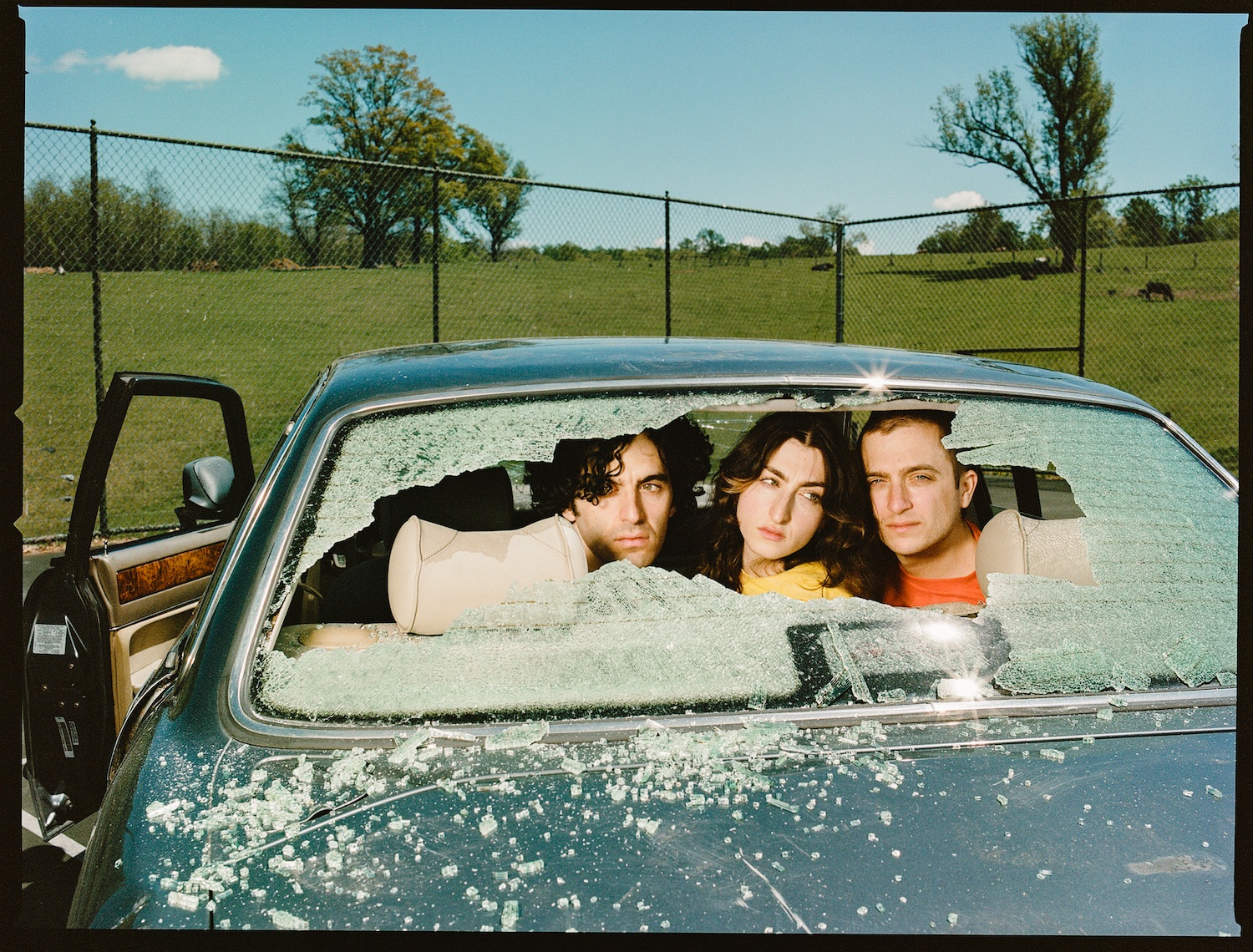
What can people look forward to over the next half year? What’s on the BAILEN 2026 bucket list?
David Bailen: We want to release more music, make some cool new videos, build our following, get some new fans, and play sold-out shows in the fall. Hopefully, next summer, we’ll do some cool festivals we haven’t done before.
Julia Bailen: Our goal is to do more festivals with this record.
Daniel Bailen: How high are we aiming? Sell out Madison Square Garden?
David Bailen: I want to be on the New York Knicks. My goal for 2026 is to be on the Knicks’ starting roster.
Daniel Bailen: What about the Yankees? I’ll still take the Yankees.
David Bailen: The Knicks feel more fun right now.
Julia Bailen: Honestly, I want to be in a space with as many of our people as possible.
Daniel Bailen: Be in space.
Julia Bailen: I want to chart on the moon charts.
David Bailen: Julia is early on the SpaceX IPO.
Julia Bailen: I want to be in a space with as many people as we can. I want to have real experiences with people and play music.
Daniel Bailen: We want to bring more people into this cool community we’ve built.
Julia Bailen: I want it to be as IRL as possible.
Daniel Bailen: We want to extend the community center and add a performing arts center, a gym, and a pool.
Julia Bailen: It’s this thing we’re calling the JCC.
David Bailen: We’d like to thank the Rabinowitz family for donating the tulip garden.
Daniel Bailen: We want to add a pool to the JCC. That’s all we want.
David Bailen: And we’re trying to make it a nonprofit.
Daniel Bailen: Pickleball court, please.
— —
:: stream/purchase SWIM!!! here ::
:: connect with BAILEN here ::
— —
Stream: “SWIM!!!” – BAILEN
— — — —
Connect to BAILEN on
Facebook, 𝕏, TikTok, Instagram
Discover new music on Atwood Magazine
© Alex Brown
 © Alex Brown
:: Today’s Song(s) ::

 follow our daily playlist on Spotify

:: Stream BAILEN ::