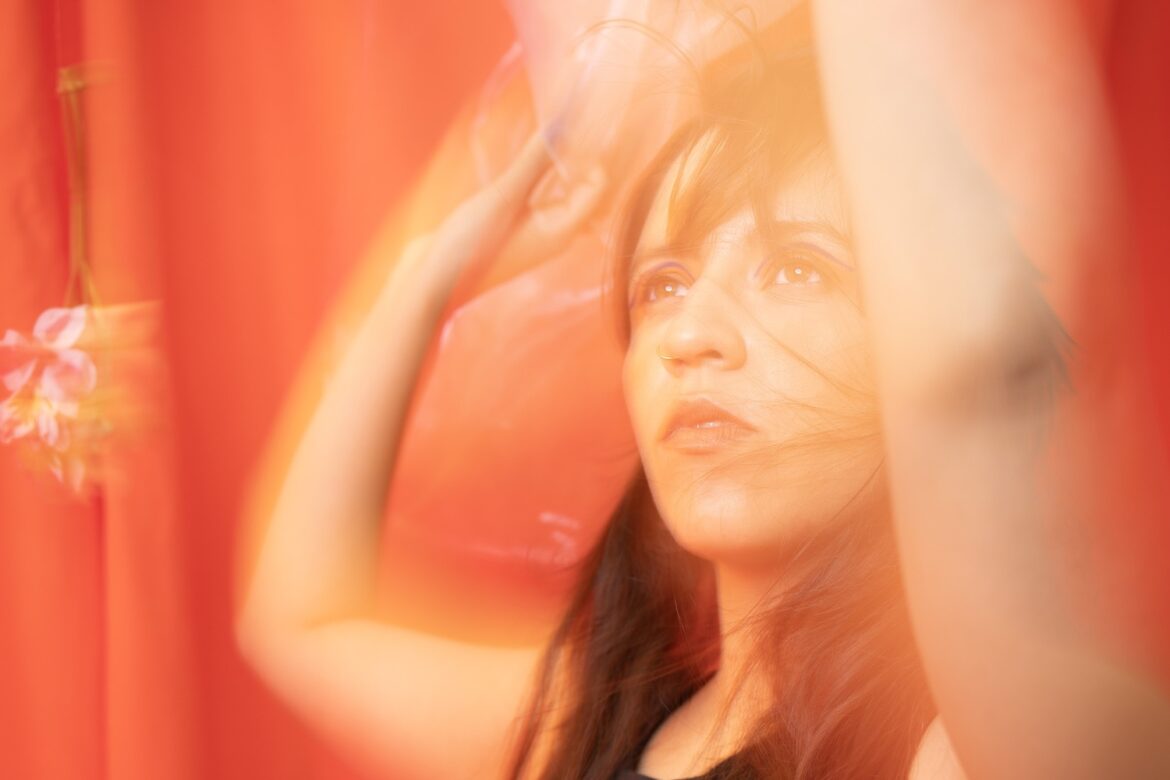
On her adventurous, experimental sophomore album ‘metamorfosis,’ Mexican electronic artist Nnux sonically chronicles the trials of a shape-shifting deity through layered vocals and imaginative soundscapes – a vivid metaphor for her own artistic evolution and a powerful exploration of femininity’s many forms.
Stream: “Tormentas” – Nnuux
Metamorphosis sure is something Ana E. López has experienced over the years.
For one, there’s her name – these days, she prefers to go by her pseudonym, Nnux. Then there’s her lieu de résidence: She’s originally from Mexico City but came up to Boston to study performance and composition at the New England Conservatory. After a few years of navigating the vast music scene of New York City, Lopez finally made her way to Germany, where she enrolled in the Master’s program in Sound Studies and Sonic Arts at Universität der Künste Berlin.

What’s more, her go-to musical style has evolved. Nnux was originally trained in classical piano-playing, but eventually made the shift to modern electronica music. This transition was originally manifested in her 2020 debut, Ciudad, and now is on proud display once more in the form of Metamorfosis, released on June 12th via cmntx records.
Inspired by her love of mythology – a lore in which many deities take different forms and even transform into parts of the natural world itself – Nnux constructed the main storyline of the album around “a shape-shifting deity who, in each chapter, embodies a different being or natural phenomenon, learning more about herself in each form she takes.” These different tribulations are hinted at by the names of each track – “Nacimiento,” “Incendios,” “Fertilidad,” and so on – and are more strongly embodied by the vibrant music contained therein. The nine tracks here feature Nnux herself in full form as an EDM producer, with valuable contributions from her fellow Mexican music-makers such as the choir of AVAJI, which specializes in Georgian polyphony music, and vocal improviser Sarmen Almond.
With some colorful and visually inventive music videos by her friend Martha Maya (also known as LVSTVCRV) thrown in the mix, Nnux’s new album makes for an especially absorbing and creative project. Here, Ana E. López describes how she managed to transform into the most technically accomplished version of herself to-date via Metamorfosis.
— —
:: stream/purchase Metamorfosis here ::
:: connect with Nnux here ::
— —
Stream: ‘Metamorfosis’ – Nnux

A CONVERSATION WITH NNUX

This interview has been edited for purposes of length and clarity.
Atwood Magazine: Can you talk about your hometown, Mexico City? How did growing up there put you on the path to being a musician? What sort of influences did you have there, and what were you exposed to?
Nnux (Ana E. López): I think it’s the big city experience. Mexico City is a huge city, and you are exposed to many different sounds and influences from other places all the time. I also grew up in a time where we were getting music from all over the place – a lot from the US, of course, and from many other places – but the city still had its own sonic identity.
I also grew up playing music. I played piano from a very young age. I was enrolled in piano lessons, playing classical piano, and also listening to music from many different places. So, in the end, my music is a combination of all these different sounds that were part of my soundscape as I was growing up.
Very cool. I'm glad to hear that. And now I've learned that you're in Berlin, so can you talk about how being there has also broadened your musical senses? How has being able to spend time both in Europe and in Mexico influenced you creatively more than it would have if you had just been in one or the other?
Nnux: I’ve only been in Berlin for a few months, actually, so I don’t know if I’m at a point where it has had a deep influence in me. But I lived in the US for six years, and I think that’s also something that changed many things for me. I’m in a time of my life where I’m experiencing different cities and social dynamics, while also experiencing music in many different contexts. I think Berlin is very interesting right now. There’s a very strong experimental music scene that has a big audience, and that’s been very interesting to see.
I’m also here doing a Master’s in Sound Studies and Sonic Art, so that that has been a very interesting perspective as well. I think my experience over the years has been influenced by the cities I’ve lived in. I grew up in Mexico City, then I lived in Boston for some time, then New York City and now Berlin. And now I’m realizing I have a particular interest in cities and the cultural phenomena that happens in these big places.
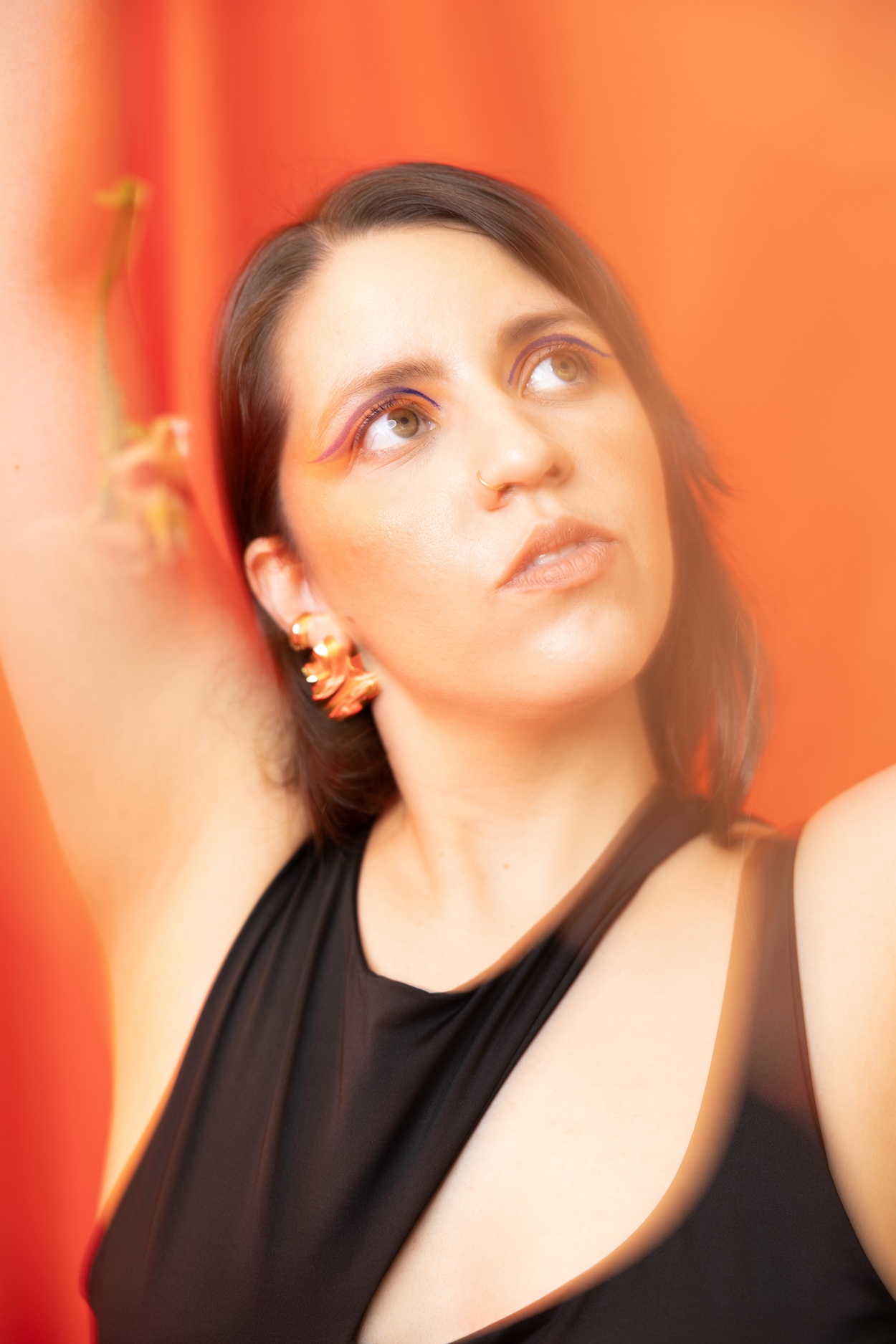
Was there any instrument or style you were focusing on when you started studying music at the New England Conservatory?
Nnux: I came in as a composition student, but then I switched to the Contemporary Improvisation [since renamed the Contemporary Musical Arts] Program. What I ended up doing there was part composition, part performance, and part just creativity. And it was interesting. I got to study composition during my time there with people who were in the classical composition world. I also studied voice, played keyboards and synthesizers in ensemble, and started with a bit of electronic music. So, it’s a place that allowed me to explore different things. It was quite interesting to be there.
Since you love cities, I guess it makes sense that your first album was called Ciudad. It came out six years ago in 2020. Looking back, what are your thoughts on it? How do you see it now that some time has passed and you've had a chance to reflect on it? And what do you think of some further creative advancements you've had in the years since then?
Nnux: I’m still very proud of that album. I have a lot of love for it. I think it was a very important exploration for me. I got to develop a lot of the language that I wanted to work with. And I think I’ve really found myself in that.
It’s called “Ciudad,” and I was thinking of Mexico City [while I was making it], but I don’t think it sounds like Mexico City too much. So, maybe if I were to look back and have a critique for myself, I guess it’s that the album’s identity became a bit blurred. But I also understand where I was coming from. It was more about nostalgia because when I worked on that album, I was living in New York City. And I think I was feeling some sort of nostalgia for Mexico City and the people there that I cared a lot about.
I cared about who we were in Mexico City. We had just had a big earthquake, and it was very strange for me to be away at a time like that. Anyways, I understand where I was coming from, but the sound identity of the city – I don’t think it’s quite there.
It's okay! The album is called “Ciudad,” not “Ciudad de México,” so it could be any city. Don't beat yourself up too much, in other words. As for your new album, Metamorfosis – my understanding is the theme you went for was basically following a character who can infiltrate the world because of its shape-shifting abilities. How is it you were able to come up with and construct your album around this particular theme?
Nnux: I think it’s an album that’s started more as a process of thinking about the feminine and femininity, but it developed into something way deeper for me. I ended up understanding a lot more about myself and the ideas that I wanted to work with. In the process, I also understood that femininity can be many, many things. I was interested in exploring how the feminine was portrayed across time and different cultures; I tried to [look beyond] more recent visions on femininity.
When you look into that, you end up with a way more complex vision of it. You find these representations that are sometimes quite aggressive, powerful, even monstrous, and very, very complex. It’s this concept that has many different possibilities and shapes. I was very interested in exploring that within myself and not staying with the simplified version of what femininity means. So, it was an interesting process because I went deep into that and into my own self-reflection.
What started as an exploration of the feminine ended up being some deep self-reflection on our potential as humans to inhabit these different shapes and to create but also to destroy them – to be fragile but also aggressive, and to understand ourselves and others in those different shapes that we can take.
Quite the concept! I like it. I'm also interested in the collaborations you have here. It looks like you worked with the choir of Wajih, the vocalist Sarmen Almond and others. So, can I just ask: how did their input influence your own vision for the project and the final outcome?
Nnux: I knew from the beginning that I wanted to work with my voice a lot, and for some time that meant just overdubbing myself many, many, many times. I just recorded layers and layers and layers of my own voice. I wanted to work with the idea of shapeshifting through the voice. And that’s where Sarmen came in. She’s a great vocalist and improviser who has crazy capabilities with her voice. She can just do a lot of things. So, she came to my studio and I told her about the concept and what I was thinking of – this process of changing forms. And she recorded the track that gives the name to the album, and she gave me this whole palette to work with. For that track, I only used either her voice or my own. Anything that sounds like a beat or a synth is made with her voice.
Later in the process, I ended up meeting this choir based in Mexico City that sings Georgian polyphonic music. And that music is amazing. I ended up joining the choir and singing with them, and that’s also been really great. It helps me to remember the community in music-making. I wanted them to be a part of it, so they also recorded with me. I think the project took a whole other dimension with their voices in it, and I’m really happy that I got to record with them.

The first two singles of the album were “Tormentas” and “Fertilidad.” How would you see these two singles represent the rest of the album? And what are some ways in which you'd have to go beyond these two singles to get like a broader sense of what you've achieved on the album?
Nnux: The first single, “Tormentas,” is also the first track in the album. I had this idea of a character that is going through a process and taking different shapes. “Tormentas” is the Spanish word for “storms,” so the first shape she’s take would be that of a violent storm. And that’s where she’s get to know her potential, her power, or what she’s kind of capable of. And that can be either creative or destructive for us. So, it’s like an introduction to what’s going to be on the rest of the album.
The second single, “Fertilidad,” is kind of the climax of the main character’s creative potential. And in that case, it’s life, but also symbolically just the potential to create something. I’ve read many myths where there’s a deity whose body is the world itself. I thought about that analogy, and we made a music video for the song with my collaborator, Martha Maya (also known as LVSTVCRV). She’s an artist who’s also from Mexico, and you can kind of see those relations between body, creation, and nature in the clip. I think she did a great job with those parallelisms. These two tracks were good examples of what the album was about, and I think they connect well to the other songs on the album.
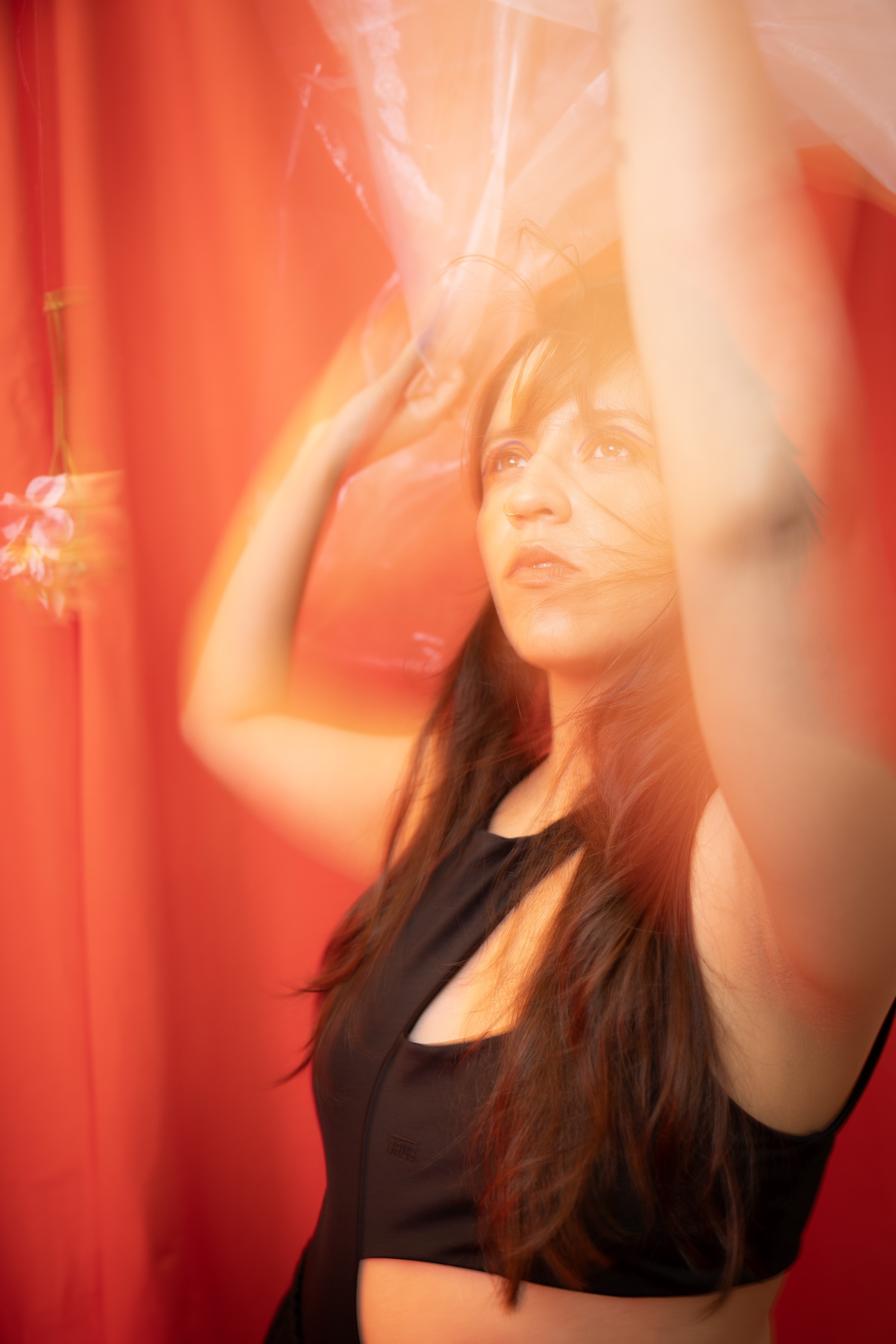
Yes, and when I watched those music videos, I thought, “Oh wow, that's some cool stuff.” How did those videos come about and how did they bring more life to idea of metamorphosis, which is the theme and title of the album?
Nnux: Martha Maya is a great visual and digital artist. We’ve worked together a lot, and she’s one of my favorite people to collaborate with. She always has great ideas, and she’s also easy to work with because she’s always willing to try stuff. She’s great.
I was telling her about the concept of the album, and we just shared ideas. We kind of wanted to tell a story based on the many myths that I was reading of these deities whose bodies become the world. You see many myths that are like that – gods or goddesses who disintegrate and then their bodies become the grass or the ocean. We were thinking about those images, and she brought that to life in the video for “Fertilidad.” The other video, for “Tormentas,” is just a visualizer. It’s a little experiment that I did for myself using TouchDesigner. I’ve been experimenting with audio-reactive visuals, and I have these images of storms which I processed into a video.
Now that the album has been released, what are your hopes for it? What do you hope fans will get out of it? Do you plan to do any live performances in support of the album, and what are your hopes and thoughts about that?
Nnux: For now, I just hope to be able to perform the album live and share it. Right now, I’m working on booking the live performances, and we’re going to do a concert with a full choir and audiovisuals. I would love to always perform the album like that, but it’s just not possible. I hope to perform at least a few times with that setup, but it’s quite hard to bring it all together. But I’m also planning on touring myself with a smaller setup.
I just hope to be able to share the music. I think it means a lot when people listen to it. It’s been a lot of work, effort and dedication. It’s taken a long time and it’s been a whole process for me. It’s been really beautiful that some people get in touch and tell me that it means something to them. So, that’s very nice. And I just hope that whoever listens to it can connect with that.
Any final words you'd like to share with your readers?
Nnux: Thanks for giving yourself the chance to listen to the new music. I think that’s very great. And it’s cool to have spaces where you are open to expose yourselves to new stuff. So, thank you.
— —
:: stream/purchase Metamorfosis here ::
:: connect with Nnux here ::
— —
— — — —
Connect to Nnux on
Facebook, 𝕏, TikTok, Instagram
Discover new music on Atwood Magazine
© Martha Maya
 © Martha Maya
Metamorfosis
an album by Nnux