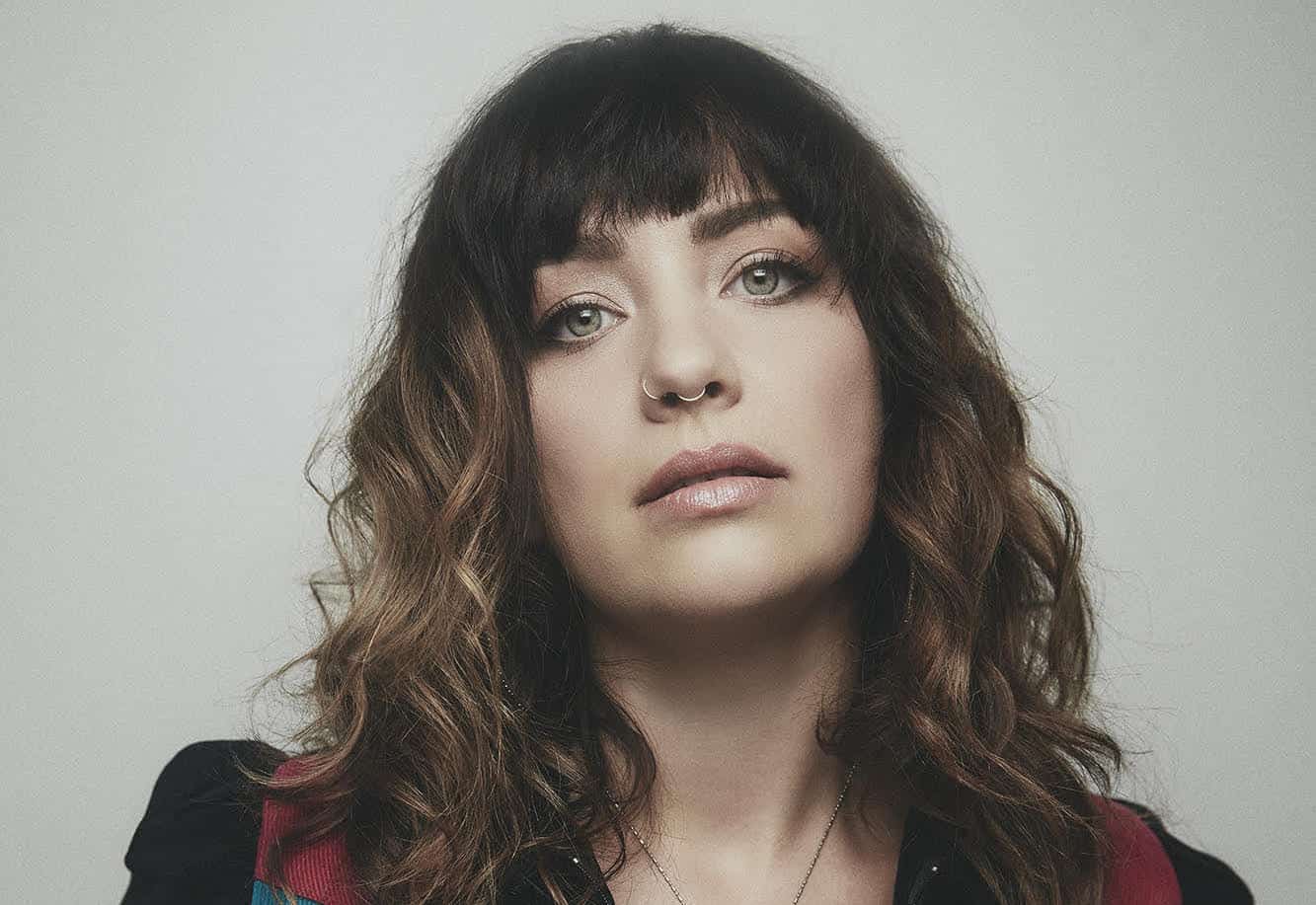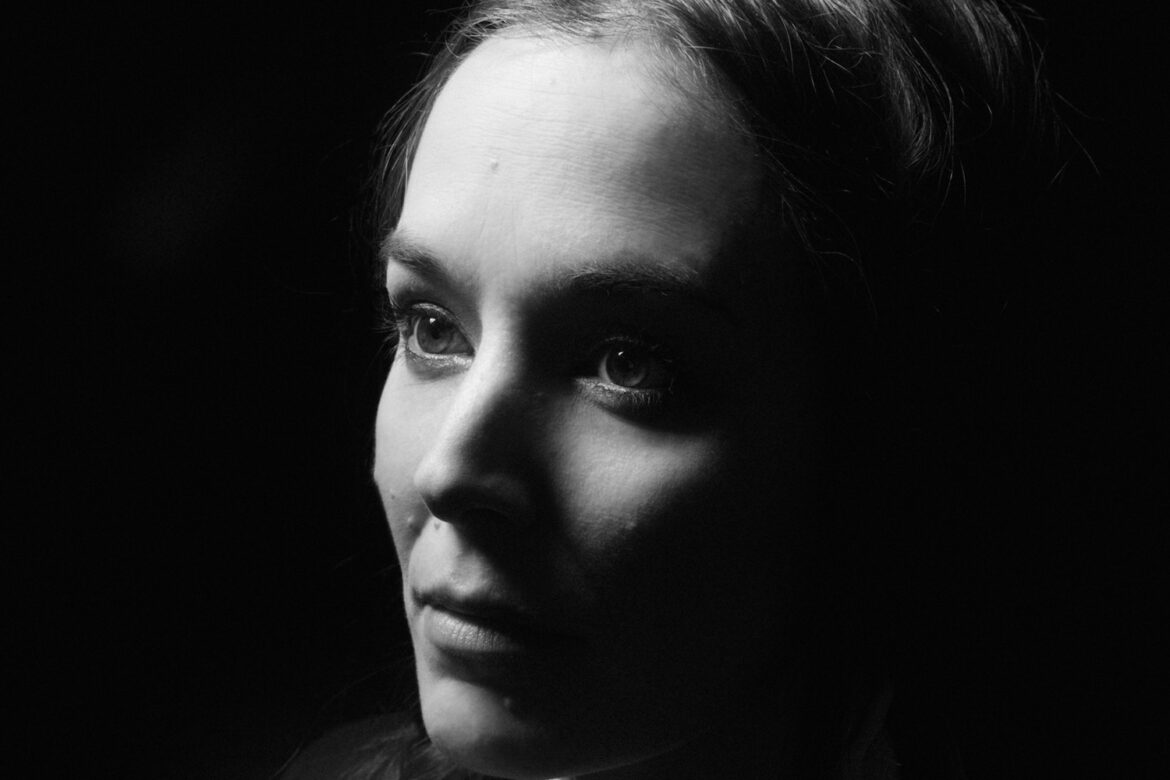
Singer/songwriter Margaret Glaspy discusses stepping away from social media, rediscovering “original thought,” embracing contradiction, and making her fourth studio album ‘I Am Both’ on her own terms.
Stream: ‘I Am Both’ – Margaret Glaspy
Margaret Glaspy is interested in what happens when no one is watching.
Over the past decade, the singer/songwriter and guitarist has made a name for herself with songs that pull from indie rock, folk, blues and classic American songwriting, carried by expressive guitar work and a distinctive voice in which tenderness often brushes against something rougher. Since her 2016 debut Emotions and Math, she has resisted settling into one sound, following her curiosity through the electronic turns of Devotion, the guitar-driven Echo the Diamond and now I Am Both (out now via ATO Records).
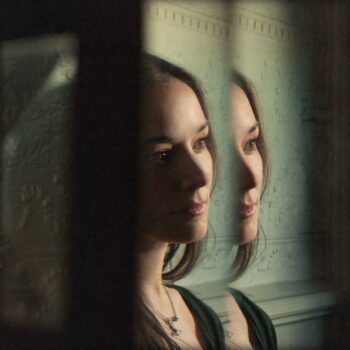
But when Glaspy talks about where she is now, the conversation reaches far beyond the making of a record. She has spent the past few years questioning how technology affects the way we think, what constant exposure to other people’s opinions does to creativity, and whether it is possible to hear your own mind clearly when an audience always seems to be somewhere nearby. She stepped away from social media, picked up a pen and turned to a typewriter, and discovered that being physically alone was different from actually feeling alone. Without a screen in the room, she felt freer to take risks. “I realized that I was alone and I was allowed to,” she tells Atwood Magazine.
In our conversation, Glaspy follows that idea into some unexpected places. She talks about trying to give her brain the same conditions her musical heroes had before social media existed, and why she now wants to learn from Bob Dylan and John Fogerty rather than sound like them. She unpacks the political meaning behind the blood and “clown makeup” of “Reminder,” considers why adulthood has made moral certainty less interesting to her, and explains what happened when she stopped telling musicians exactly what to play. She also discusses working with Joe Henry, the strange freedom of relinquishing control, and why live music still offers something a screen cannot: A room full of people figuring out how to exist together.
For Glaspy, getting away from the noise has become less about retreating from the world than deciding how she wants to participate in it.
— —
:: stream/purchase I Am Both here ::
:: connect with Margaret Glaspy here ::
— —
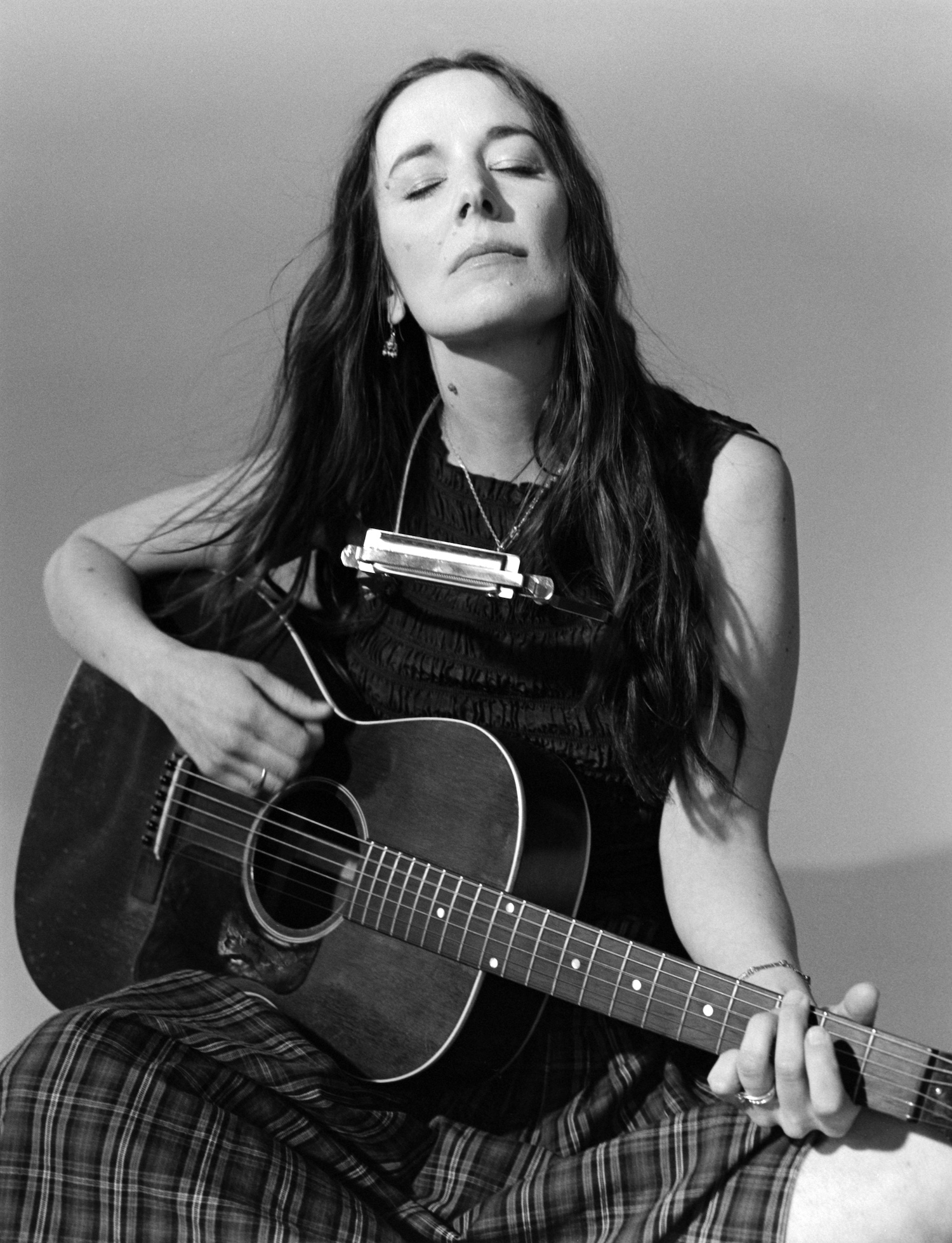
A CONVERSATION WITH MARGARET GLASPY
Atwood Magazine: You stepped away from social media while writing I Am Both. Was there a specific moment you realized you needed that quiet in order to hear your own voice again?
Margaret Glaspy: I think that there was. I think I had been feeling that for a really long time, far before I had actually done it. I think, probably over the last five to ten years, I have been feeling like technology was maybe creeping in a little too much into my life.
I feel like the nature of social media, it just feels bothersome while feeling delightful at the same time. And so I felt that I needed to get away from it far before I actually did it. But probably about three years ago is when I really seriously started to step away from it. So, yeah, about three years, I think, was the timeline.
You returned to physical mediums while writing, drafting lyrics by hand and revising them on a typewriter. How did that change your relationship with your own words?
Margaret Glaspy: I think it made me dig a lot deeper than I had in the past. Not to say I haven’t always been digging deep, but I think in this context, the feeling of having devices around makes you feel like you’re in the company of someone else, and there’s a phantom feeling of having people around you.
So when that went away and I realized, like, I’m actually just in – I was always alone in a room, but it felt more like reality, like I was alone in a room – I think I felt a little more adventurous because I didn’t feel like I was being monitored or something.
There’s a slight surveillance quality to having 21st Century technology around me, at least. So I think I allowed myself to maybe take more risks than I was used to in the past because I think I realized that I was alone and I was allowed to.
You’ve spoken about this album helping you return to original thought. Can you talk a little bit about that?
Margaret Glaspy: I think when I was referencing original thought, maybe it was what I was saying in my previous notion of feeling like, “Oh, I think I might be actually alone, and I’m allowed to just make work and not have it make sense to anyone else but me.”
And then I think that started to spark real engagement within my own brain, with myself, of realizing that I think I thought that I was kind of subconsciously making things based on what I thought people wanted at times, in a very subtle way, in my own mind.
And then once I started to spend time with less 21st-century technology, I realized, like, wow, I think I might be cooking with my own gas, you know, with my own thoughts and feelings and with my own notions about the world, my own observations, rather than it maybe coming from more of a feedback loop from what I was being given by an algorithm or by my phone or by YouTube or by my computer.
I was in the privacy of my own observations that were happening in front of me spontaneously in real time. So that, I think, started to spark thoughts for me that felt a little more of my own mind than the collective thought, if that makes sense.
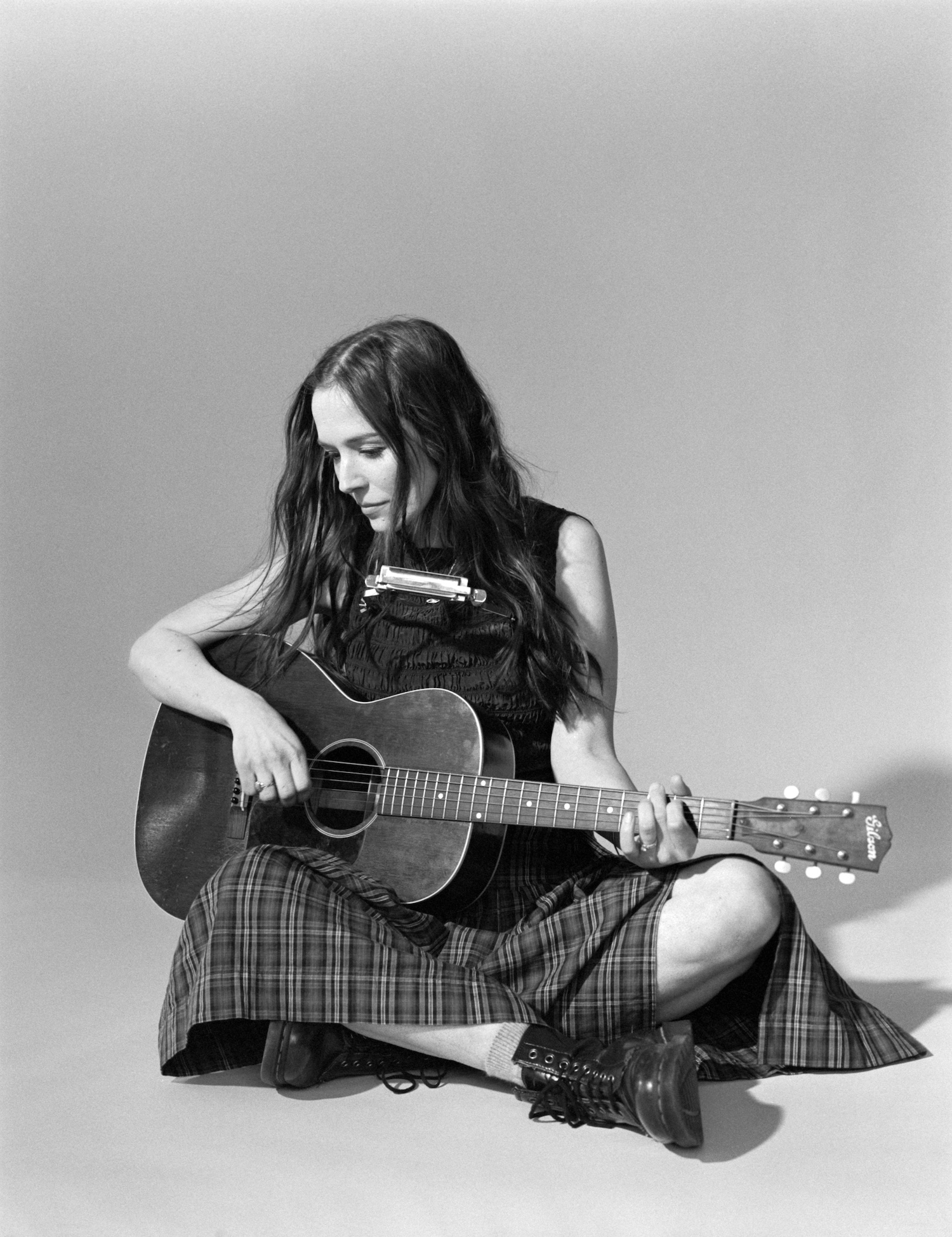
The closing lyric of “Reminder,” “Even if I fall on my face and hit the ground / Blood on my face is better than clown makeup,” is such a vivid and unforgettable image. What did that metaphor come to represent for you while you were writing the song?
Margaret Glaspy: That it might be better to try and fall than to not try and appear to have it together in some way.
And then I think that there’s also probably some reference to the current president in some way, of clown makeup. You know, feeling like blood on my face is better than clown makeup.
It kind of felt like to me that it’s better to try than to just roll along with the status quo at the moment. And I think that maybe if I’ve learned anything from the current presidency, it brings a lot of self-awareness to myself.
I think maybe that’s one of the gifts of watching something so kind of scary happen, is that you realize if you continue to just roll along and roll along and not maybe wake up within your own life, scary things can happen. You can make some pretty bad decisions.
I have empathy for that and compassion for that movement because I’m capable of making really bad decisions. I just have to be responsible for my own, you know? So before I point the finger at someone else, I need to make sure that I’m making good decisions and I’m looking at my own track record before I start pointing fingers to say, like, so-and-so is doing it so bad and this is terrible. It’s like, what am I contributing? I’m not quite sure.
And then I think I started to see that, yeah, it’s better to have bloody knees or look a little bit knocked around than to have no battle scars at all.
Both “Have You Ever Seen the Rain” and I Am Both seem interested in living with contradiction. Did you notice any emotional or thematic connections between recording that cover and writing your own songs?
Margaret Glaspy: That’s a really good question. I think this record, for myself, is probably the most obviously rooted in the music that I come from and the music that I love. So I would say someone like John Fogerty or Creedence Clearwater Revival, someone like Bob Dylan, The Band, Joni Mitchell, Jeff Tweedy, Ray Charles, Aretha Franklin, Sam Cooke. I think all these artists are completely immersed and intertwined into this music.
I think I had a little bit of a come-to-Jesus moment when making this music that maybe being referenced at times as an indie artist in the past, it always felt a little lonely, maybe, because that moniker always felt like you were sprouted from the earth without any roots somehow. You kind of felt like you just appeared interesting and fully conceived, and there was no reference to where it came from.
Which is also, there’s such a place in the world for it. There’s modern art. There’s a lot of stunning, shocking, cool ideas that happen that feel like they are just created from nothing and are meant to feel that way.
And I think I’m enjoying connecting my own dots to the roots and the people that I come from and the ideas that have come before me, and then just trying to do it in my own way.
So, I think that’s a good observation. I feel like something like “Have You Ever Seen the Rain,” you know, “coming down on a sunny day,” it’s a really good example of something that is contrary to the norm, a thought that’s kind of contrary to the norm.
So it doesn’t make me want to write a song that is just like it. It makes me want to write a song that achieves that feeling, you know? And so that’s definitely my inspiration often. Listening to something like Bob Dylan’s “Idiot Wind,” it makes me want to write a song that is scathing and really well written, you know?
And I think that’s what I get now. Rather than wanting to sound like my heroes, I want to achieve these things that they were able to, the ideas that they were able to achieve. I want to achieve my own ideas like they did. And that is inspiring to me these days.
I can hear a lot of that Bob Dylan sort of influence in your music. What draws you to that era of music in particular?
Margaret Glaspy: Well, I think there were a lot of artists firing on all cylinders at that time. I think there are now, too, but I think there might be a really different structure in the way that we listen to music, and so it highlights a lot of different priorities maybe in the music industry.
So, I’m not sure that the same artists that are diving so deeply into writing and thought in that way that they were are getting as much airplay now. That’s beside the point to me.
I think that another connection I started to make is that all my heroes, a lot of them are older now or not with us anymore, and they come from that era. And one of the lines I started to figure out was like, “Gee, they didn’t have social media then.”
And so I’m never going to be able to touch these heroes of mine. Their music is in the stratosphere, in a completely different standard. And yet, if there’s one thing that I can do to try and just even scratch the ice with them, it’s to at least just get off social media and maybe be playing within the same terms, you know, so that at least my brain can maybe be operating under similar conditions.
And so I thought that might be the bigger step to try and see what I’m capable of. And I think I’m still really reaching and trying to figure that out for myself. I think, as every artist, to try and figure out what your potential is, what your priorities are.
I started to see that that’s one thing I can just easily get rid of, just to try and see what the conditions might be like for the artists that were writing my favorite music when they were doing it, or when they are still doing it.
I don’t know if some of my heroes are still on social media or not, but I know that for a lot of their records that they were writing when they were younger, they certainly weren’t. It just wasn’t a thing. And so that was another inspiration for me to get off of it, for sure.
You wrote the title track around a woman you deeply admire, someone you’ve described as containing multitudes and seeing reality very clearly. What does embracing your own multitudes look like in everyday life?
Margaret Glaspy: I think it’s what I’m doing now. Making art is that, for sure. Making music is.
You’d like to think that it was black and white, and it’s just not. I think, again, making this record in particular really revealed that to me, and it really revealed just the nature of being alive and being a human. It’s really gray. There’s a lot of gray area.
I think that we’re able, you know, in regard to character or morals, for the most part, I think that stuff is pretty low-hanging fruit. Like, be nice. Don’t be an asshole. Just sweet things that are kind of kindergarten-level things that we learn. Don’t hit people. Let someone go ahead of you if they really need to. Whatever that might be. Don’t be impatient.
But then there’s also a level of life and humanity that isn’t that simple. And sometimes you have to make hard decisions in order to do the right thing. And sometimes you have to be forthright in order to actually be nice. And there’s a lot of things that aren’t just black and white.
So I think that the multitudes, or this duality, it shows up all over the place. And I see myself as an adult and as an artist reckoning with that a lot more.
I think I used to be maybe a lot more excited to find black and white and really exploit it and have fun with it as a songwriter, to say, like, this is amazing and this is all bad and let’s just have a party about it.
And now I think what I’m really the most interested in is exploring the gray area and diving into it and making characters that really revel in those places. Likable people that make bad decisions. I think that’s a fun realm.
“Reminder” is an intriguing title. What conversation were you hoping that song would start, either with yourself or with listeners?
Margaret Glaspy: I think “Reminder” is just that. That was what it was for me. It was like the reminder to go through this checklist.
Like, you gotta be nice, but you also need to have boundaries and you need to fight for what you believe in. You also need to be understanding. Money’s good to help other people, but it’s not good to be selfish with. And you can buy your house, you can’t buy your family.
There’s a lot of things that I think, again, I guess there’s a lot of dualities in there. But I think there were some things that I needed to be reminded of on a daily basis, especially when you’re feeling thin-skinned or a little spread too thin or things are challenging. That reminder is helpful for me.
And yeah, it just spilled into a song and was something I would not have written if I – that’s just a fact, honestly. I see that sometimes in certain songs. I wouldn’t have written that song if I was plugged into technology the way that I had been before.
Because it was just a little too outside the lines of what I was comfortable with when I was a little younger, in terms of rhyme scheme or topic or whatever. It just was something that lived at heart that I just wanted to come out.
So I made it, and I really thought that that song was probably not going to be something of note. And now it’s one of my favorite songs on the record, for sure.
What drew you to work with Joe Henry as the producer of I Am Both?
Margaret Glaspy: Yeah, Joe is a dear friend. I met him when I was asked to do a tribute to Bob Dylan at Town Hall in New York City that was produced by T Bone Burnett. Joe was playing in it, and he was the master of ceremonies as well.
And we just really hit it off. I sang with him at that event, and then he went on to produce some of my husband’s records, Julian’s records, and then I got to be in the studio for those.
I really liked the way that he worked, and he and I just get on really well. He’s a songwriter, too, and he and I, we see eye to eye on how to make records and the priorities with the songwriting, our influences. And so it was kind of a no-brainer.
So, yeah, we got to make this record together, and so much of that sonic signature is in this record. And the cast of characters that we got to work with, Jay Bellerose, Patrick Warren, Ross Gallagher, those were all his people that he had been working with for a long time.
So I felt lucky to get to be a part of the family and make that with them.
What did each of those musicians bring to the sessions that helped shape the album?
Margaret Glaspy: They are such song wizards through their instruments, which is pretty wild. I had never experienced that before, working with instrumentalists that had this kind of foresight to know what a song needed.
I think I was most used to telling people what to do, and in this situation it was so not like that.
I think that everyone had recordings of the original demos, which is just me and my guitar, and they had them to listen to leading up to the session. And then everyone was able to independently create their own notion of what the song needed.
And then we got in the studio and we would start to play it together in the wild to see, like, huh, I wonder what everyone’s instincts are. And they would all often be just perfect and stunning and cool, and they had ideas of where we should lay in and lay out.
And so, yeah, the cast was really well – it was well cast, I would say, for what felt like the movie. That was often the notion for the people playing on it, and mine, too. It just feels like we’re in a movie of some sort.
And we all wanted to get the scenes right and have the score be right and get the tone right and the script right. And so that’s how the musicians operated with it. They were contributing, trying to get the story right.
They didn’t want to rob it of anything. They didn’t want to starve it of anything, give too much. They just wanted to tell the story right, which I felt so grateful for.
What about “Michigan” made you think it would be a good choice as one of the first singles from the album?
Margaret Glaspy: I just like that song. I think that song somehow, once you start playing that song, it feels like it perpetuates itself. You just want to be in it and roll around in it.
It feels like rolling in the grass or something like that, like your dog rolling in the grass. It just feels fun to do, and it has a life of its own.
And so I enjoy playing that song. I played it at a few shows before we released the record. It always felt like there’s just something that captured my attention and the listeners’ attention in a very particular way.
And it also felt like the sonic landscape of it, it was a taste of what the whole record had in store. So it felt appropriate to be the first single.
You’ve described writing “That Rose” as feeling like running down a mountain. Was there another song on the record that seemed to arrive with that same sense of momentum?
Margaret Glaspy: Probably “Michigan” was like that, too. I had the idea for “Michigan,” like a verse of it, a long time ago. And then once I was really writing for this record and all the songs came in, the rest of it wrote itself pretty quickly.
And somehow that story just wanted to come out of me.
“James and Marie” was slow. “James and Marie” happened a little more like that, just spilled out, and I had to do it quick and not mess it up because it was just coming quick. So, yeah, there are a few like that.
Is there a song on the album that evolved the most during the recording process? Ending up somewhere different than you originally imagined?
Margaret Glaspy: Probably “I Thought She Was a Song.” I just didn’t know what it was gonna sound like, and that one really took its own shape, and the guys really ushered that one in.
And “James and Marie” was also like that. I thought that there were gonna be some different moves we were gonna pull, and yet it just happened. It ended up the way that it is now, and I’m so grateful for it.
So, yeah, the notions I came in with were very different than what we came out with, which was the most exciting thing about it. At first I was kind of turned around, and then I realized, oh, what’s actually going to happen is so much cooler than what I thought was going to happen, which was a delight. I felt lucky to have that situation.
As you’ve continued touring over the years, has your relationship with live performance changed? What motivates you to step onstage now?
Margaret Glaspy: It’s definitely changed quite a bit. I’ve always loved putting on a show, and I’ve always loved the feeling of just a lot of people congregating to be present together. That’s what I feel like live music is. It’s just really special.
I think now what I crave as a performer and just as a human being is quiet a little bit more. I mean, I’ll probably change and evolve again and want to just plug in with an electric guitar and cause a lot of noise soon.
But right now, I’m enjoying creating environments that feel like we have to pay attention and lock in and be quiet. Yeah, that’s what I think my nervous system craves. And so then I want to create shows that demand that.
This record cycle and this touring cycle, I had to figure out, how do I want to tour this record? And for this fall touring, I’ll be playing solo, and it’ll demand attention, you know, for myself and from the audience to engage with the songs and be able to watch it go down.
Looking back over I Am Both as a complete body of work, is there anything that you hope listeners come away with?
Margaret Glaspy: I think, no matter the content – it’s funny, the word “content,” the actual definition, I think, has changed. But I mean it in the genuine sense. The actual content of the music, not content as in social media or something.
The actual content of the music, I think, could be a lot of things. But I think the thing I enjoy the most about live music is people congregating and feeling like, you know, I was present somewhere for a good amount of time and that makes my life feel better because of it.
I think that music and live music is such a beautiful socialization tool. We all have to be together and deal with each other in a sweet way. You know, somebody’s talking a little too much, you have to say, “Can you please be quiet?” or whatever, and get along and coexist together.
And I think that live music is such a perfect canvas for that because it’s a fun thing to do, and it also reminds you that you’re here with other people on the planet and we get to do it together. So it’s like, cooperate and do it together.
So, I always wish for that, that you come out of it reminded that we’re okay and that humanity’s okay, and that there’s a lot of positivity to be had and it doesn’t have to be upsetting and sad 24/7, like it feels sometimes.
So, yeah, I hope that we can come out of it feeling a little happier on some level, or maybe just a little more thoughtful.
— —
:: stream/purchase I Am Both here ::
:: connect with Margaret Glaspy here ::
— —
— — — —
Connect to Margaret Glaspy on
Facebook, 𝕏, TikTok, Instagram
Discover new music on Atwood Magazine
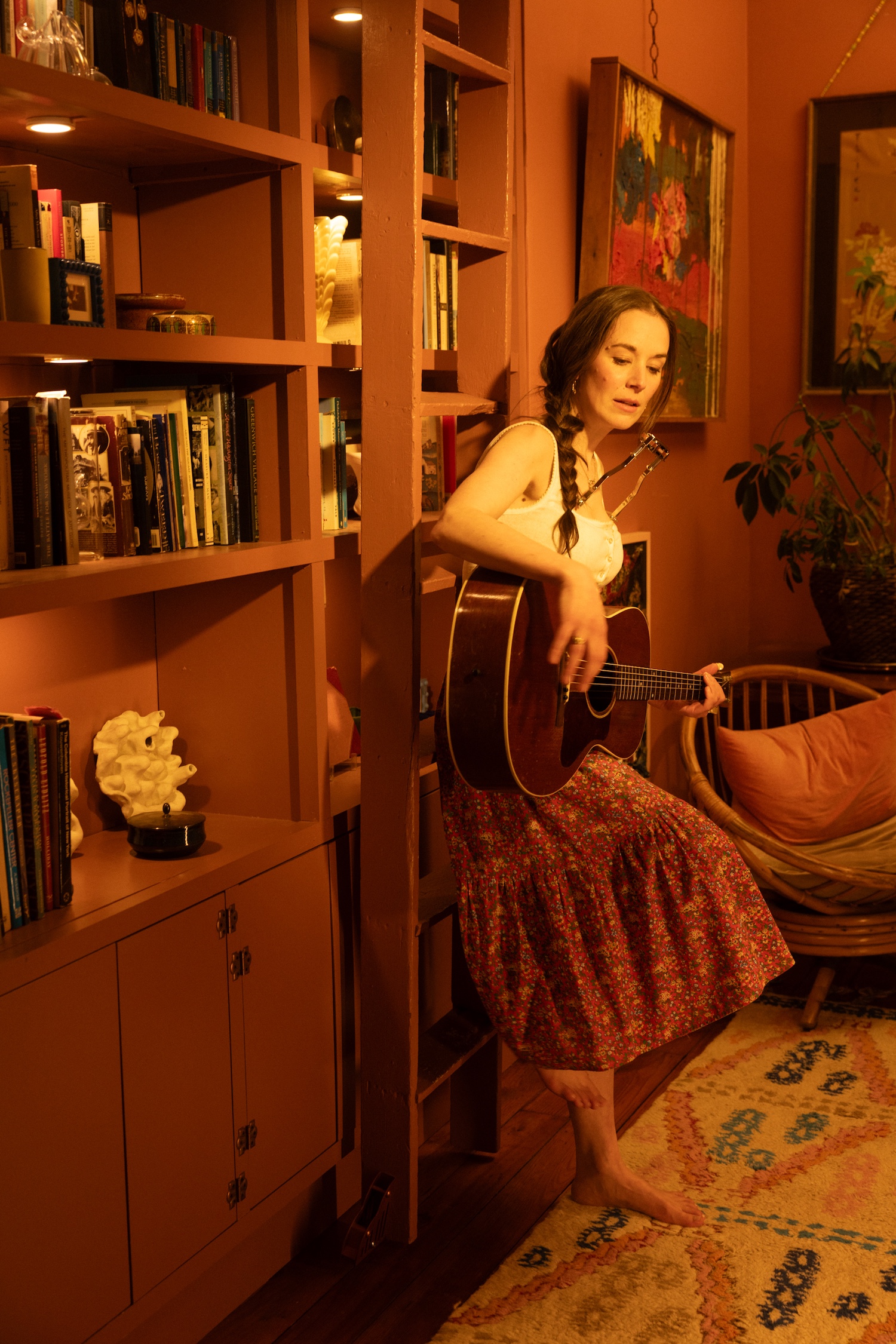
© Ebru Yildiz
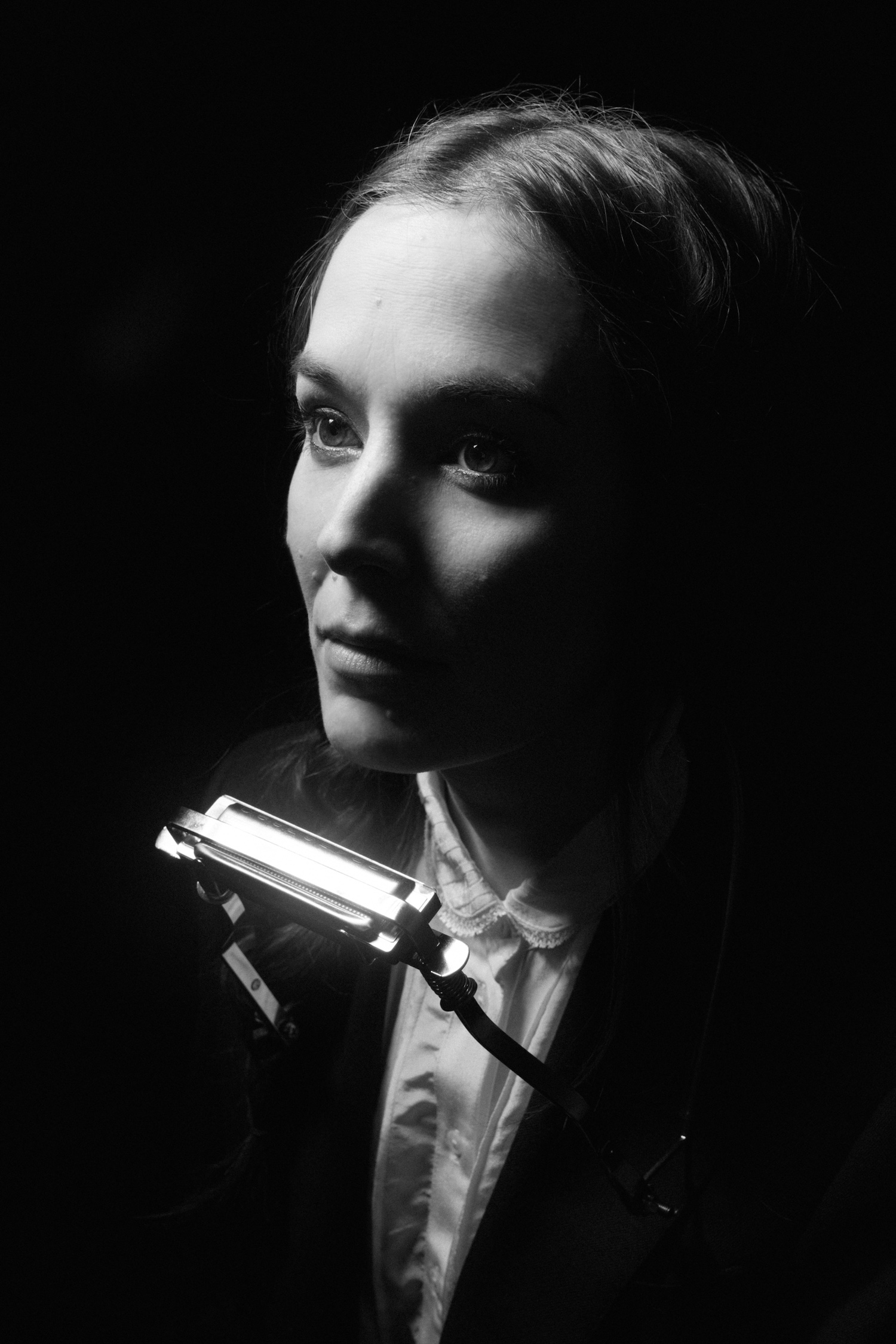
 © Ebru Yildiz
I Am Both
an album by Margaret Glaspy