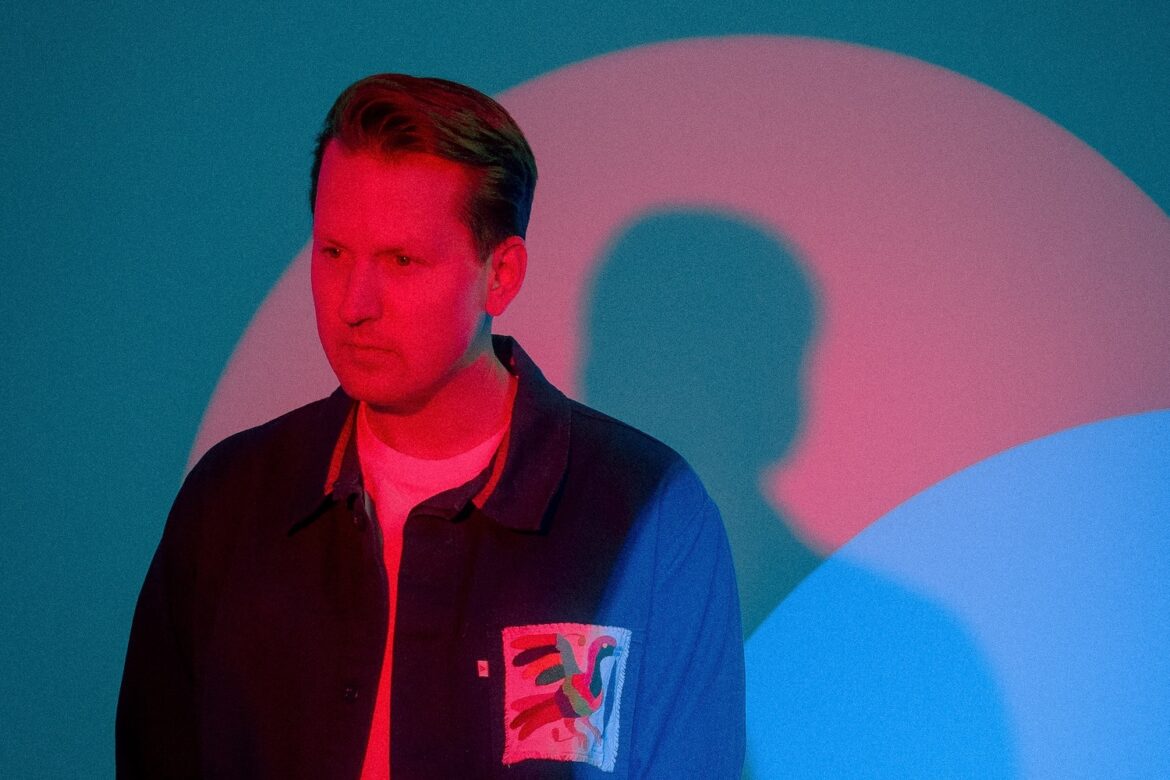
Canadian singer/songwriter Ken Yates is right where he always wanted to be on his beautifully self-assured fifth album, ‘Total Cinema,’ stepping beyond the grief and into the richness of ordinary life as he turns his attention toward the people and ordinary moments that make a life worth living. In conversation with Atwood Magazine, Yates opens up about redefining success after 15 years of incremental growth, learning to trust his own instincts, and finding new joy in the craft of songwriting as his life expands far beyond the tortured artist myth. For a self-described late bloomer, Yates has never sounded more at peace with his art – or more at home with himself.
Stream: ‘Total Cinema’ – Ken Yates
Sometimes we want to turn our life into a movie and make it very dramatic, but sometimes the very plain, ordinary days are the best days.
* * *
“I used to go searching for the darkness,” Ken Yates told Atwood Magazine in 2022. “With this record, the darkness found me first. This is me finding my way out of it.”
Three years later, making his fifth album Total Cinema, he found himself trying to do almost the opposite.
“I wanted to find something nice to say.”
The distance between those two statements contains a great deal of Ken Yates’ story. By the early 2020s, the Canadian singer/songwriter had already learned what it cost to make a record from grief. Cerulean, his fourth album, was written as Yates reckoned with his mother’s illness and death while the world around him seemed to be collapsing inward. It was the first record he described as something he needed to make, rather than simply wanted to make – a deeply personal collection whose songs traced fear, anger, insomnia, and eventually the small moments of peace that helped him move forward. It was also a creative breakthrough. After three albums, Yates had finally made a record that sounded wholly like himself.
Yates was hardly new to the work by then. The acclaimed Ontario-bred artist had already spent more than a decade writing and recording, moving from the folk-centered sound of his earlier releases through 2020’s Quiet Talkers and into the more atmospheric, less strictly defined world of Cerulean. Atwood Magazine hailed the album as “a breathtaking triumph of the human spirit,” praising Yates for channeling “pain into beauty and grief into hope.” The record later earned a Contemporary Album of the Year nomination at the Canadian Folk Music Awards. In 2024, he showcased at both SXSW and Americanafest; on the road, he has opened for artists including Madison Cunningham, Passenger, and Kathleen Edwards.
Yates thought he had found his way out of the darkness. Then he discovered how hard it was to leave the record that had carried him through it.
Yates has always considered himself prolific, but after Cerulean, the songs stopped. He lived inside the album for years, eventually returning to it with a six-song extended edition in 2023. “I had my grip so tight on that record,” he reflects now. Its emotional weight was part of the problem, but so was its success on his own terms: Cerulean had given him the artistic language he had spent years searching for. The question became what to say with it next.
Total Cinema answers by opening the windows.
* * *
* * *
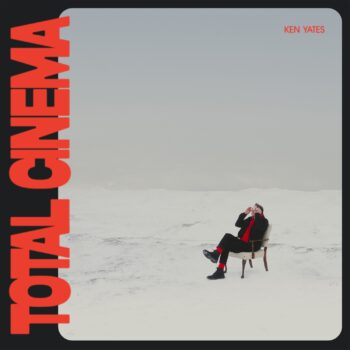
Released June 6, 2025, Total Cinema is Yates’ fifth studio album and his first full-length since Cerulean.
Produced, engineered, and mixed by Daniel Ledwell at Echo Lake Recordings in Lake Echo, Nova Scotia, the album carries forward the atmospheric detail and richness Yates unlocked on Cerulean, but gives that sound more warmth, movement, and contrast: The folk foundation remains, now stretched by pop immediacy, bits of rock muscle, and even some subtler flashes of country. And unlike its predecessor, grief is no longer the main character – Yates is learning how to keep writing honestly when pain is no longer the loudest thing in the room.
“To me, Cerulean is that one shade of blue the whole album,” Yates says. “With Total Cinema, I wanted to have all the different shades of life versus this one heavy shade of blue.”
Those shades arrive quickly. Total Cinema opens with “Sidewinder,” a song Yates originally wrote as a ballad before he and producer Dan Ledwell pushed it somewhere faster and more physical. Drummer Joshua Van Tassel gives the track a restless pulse while layers of guitar build around Yates’ voice, turning what might once have settled into familiar singer/songwriter territory into a propulsive opening statement. Yates calls the old instinct “stock Ken.” “Sidewinder” sounds like him refusing it.
The song’s tension lives in the details. Lavender days, leftover wine in a Styrofoam cup, cars pulled off the street after midnight – Yates sketches a life through flashes of time passing and somebody watching the highlights of their worst nights. Then comes one of the album’s clearest declarations: “And in the meantime, we’ll survive in between the lines of what is living and what’s just life.” That dividing line runs beneath much of Total Cinema. Yates has spent years writing about survival. Here, he is increasingly interested in what makes survival worth the trouble.
“Greatest of All Time” pushes that idea further with one of the most deceptively radical moves in Yates’ catalog: He lets himself be happy. The song is breezy and loose, carried by a chorus he initially worried was too plain-spoken. “It’s the kind of song I always want to write, but I avoid writing it because it makes me feel queasy,” he admits. He calls it what it is – a love song – and lets the directness stand. “When it’s time it’s time / To admit when we’re just fine,” he sings near the end. For a songwriter whose breakthrough record was forged in grief, admitting things are fine may be more exposed than admitting they are broken.
“Superimposed,” another of the first songs Yates wrote for the album, carries that outward gaze into his marriage. Its central image is one of two lives laid over each other until the problems of one inevitably belong to both – a promise to move through them together.
“Under the Cover of Light” brings the emotional sensitivity of Cerulean into this brighter, more kinetic setting. At its core, Yates says, the song is a country ballad. In the studio, he wanted to know how to make it “sound like a banger.” Ledwell and Van Tassel help him split the difference: The song moves with a firm rhythmic push while Yates directs his attention toward somebody else’s unraveling, hoping they sleep better, go easier on themselves, and find their way back toward connection. Where Cerulean often documented Yates trying to understand his own pain, “Under the Cover of Light” redirects that hard-earned sensitivity outward. The center of gravity has shifted.
By the time the title track arrives, Total Cinema has already announced its broader range. Then “Total Cinema” quietly reveals what all that expansion is for.
The song begins with a guitar figure that seems to contain its own momentum, a repeating line around which the arrangement gradually settles. Yates’ lyrics take stock of growing older beside another person, of the little rituals and compromises that accumulate into a shared life. “These little movies in my mind / They’re still playing all the time,” he sings. “And if I’m lucky when I’m done / I’ll have an audience of one / That’s what we call total cinema baby.”
There is a joke embedded in the grandeur of that title. “Total cinema” suggests spectacle, immersion, a life rendered at impossible scale. Yates’ version lands somewhere more intimate. He was approaching his mid-30s when he wrote the song, assessing his career and asking himself a difficult question: If nothing changed from here, would he still be happy? The answer surprised him.
“I’m right where I always wanted to be,” he says. He writes songs for a living. He lives where he wants to live. His marriage is strong. At the time of our conversation, he and his wife were weeks away from welcoming their first child. The path had not looked the way he once imagined, but the destination was beginning to resemble what he actually wanted.
At the center of Total Cinema is that realization. Yates remains cynical, and he still knows how quickly an ordinary moment can curdle into an existential crisis. Darkness simply no longer carries the burden of proving that a song matters.
* * *
You said man it’s been so fun
Changing with someone
Wake me up in solidarity
I keep the lights off when inside
To preserve the natural light
It’s the halogen severity
These little movies in my mind
They’re still playing all the time
But you know all the darkest corners of myself
And if I’m lucky when I’m done
I’ll have an audience of one
That’s what we call total cinema baby
* * *
“Perennials” makes that shift painfully clear.
Written for Yates’ mother, it is the tribute he says he could not write while he was still buried in immediate grief. He had wanted a song like it on Cerulean, but at the time every attempt kept circling back to his own pain. Three years had to pass before he could write about her rather than his loss of her. “When you become a memory you can never lose a fight / Empty out your closet but keep all the clothes you like,” he sings, capturing grief after its first violence has subsided and ordinary objects have taken on impossible weight. Later, perennials bloom. A table is set with her silverware. Life has moved forward without severing the connection.
If “Perennials” shows how Yates’ relationship with grief has changed, “The Great Resolution” shows how comfortable he has become letting his darker instincts misbehave. The song spills out in six long verses with no traditional chorus, moving through social exhaustion, political absurdity, bad behavior, suburban posturing, and Yates’ own urge to retreat from all of it. “I’m in Toronto writing love songs to other cities / Subliminal messaging myself to find somewhere that better suits me,” he sings before offering one of the record’s most revealing lines: “You’ve gotta keep some romance for the second part of life.”
“The Master” follows as a comedown. Piano strips the arrangement back, and Yates gathers himself after “The Great Resolution” runs wild. The world remains ridiculous; people remain capable of making it worse. But there is laughter in the room, someone beside him in the morning, and a growing sense that recognizing what is good may matter more than cataloging everything that is wrong. The album ends there – not with a grand solution, but with perspective.
Yates points to “Total Cinema” and “The Great Resolution” as “the two sides of me.” Together, they represent the two things he values most in making a record: Attention to lyrical detail and the creation of a sonic space that pulls the listener in. He is not sure he had fully accomplished both until this album.
The balance is what makes Total Cinema such an undeniable triumph. It fulfills the promise of Cerulean without trying to recreate the circumstances that made that record possible. The precision remains. So does Yates’ instinct for lines that can make a mundane object suddenly carry the weight of an entire life. What has changed is the size of the frame.
Ledwell’s production gives Yates more room to move within it. Van Tassel’s drums supply muscle and momentum; Ledwell adds bass, piano, synths, woodwinds, and horns; Kinley Dowling brings strings; Breagh Isabel and Jenn Grant contribute additional voices. Yates himself plays more guitar than he has on previous records, arriving at the studio with demos already shaped by fuller arrangements. The result is an album that can move from the brisk pulse of “Sidewinder” to the pop charm of “Greatest of All Time,” then later settle into “Perennials” while remaining recognizably of a piece.
Ken Yates’ musical world has become fully and unmistakably his own. Its defining quality is not scale so much as observation. His songs fill themselves with midnight drive-thrus and Subarus, morning plows and Yeti cups, gas station coffee and houses with dogs. A BMW X5 can sit beside a joke about a porcupine; a desk job can open into a question about how much anybody really needs. Yates keeps placing ordinary objects next to enormous questions until the distinction between the two begins to collapse. The cinematic quality comes not just from the heat and scale of his music, but from the way he notices – the camera trained closely enough on daily life that a passing image can suddenly reveal the whole picture.
* * *
* * *
Maybe that is what Yates had to spend 15 years learning.
He calls himself a late bloomer. He did not start writing songs until he was 20. His first records taught him how to make records, how to work with producers, and eventually how he did and did not want to sound. Cerulean felt to him like his introduction to the world. Total Cinema arrived with a different confidence: “the exact record I wanted to make.”
Growing at his own pace gave Yates room to reach that point without being forced to repeat an early success. Yates and longtime friend Brian Dunne joke about spending years waiting for one of them to break through enough to pull the other along. Instead, both have built careers gradually, learning in public without being locked into a blueprint made in their early 20s. Yates calls his own path “a nice incubation process.” Then he laughs and translates: “This is my positive way of saying it’s been great to fail for 14 years.”
Small wins aren’t failures. They accumulate.
His creative circle has widened alongside the records. In recent years, Yates has written with artists including Lori McKenna, Katie Pruitt, Tiny Habits, Trousdale, and Jenn Grant, extending the same patient growth that shaped his own catalog into a broader songwriting community. The career may have developed incrementally, but it has hardly stood still.
Total Cinema has continued expanding, too. This past May, nearly a year after its original release, Yates returned with a 17-track deluxe edition featuring new songs “A Perfect Dive,” “Waiting in Line,” and “Northern Accent,” along with alternate versions that bring Lori McKenna and Mariel Buckley into Yates’ orbit and a live arrangement of “Perennials” with Lockeland Strings. It is the second consecutive Ken Yates album to grow beyond its original track list – another record whose world apparently needed more room than release day could give it.
Now Yates is back on the road, opening for Medium Build as Total Cinema enters another phase of its life. That makes this conversation, recorded shortly after the original album’s release, land differently with a year of distance behind it. At the time, Yates was standing at several thresholds at once: He had just released the record he had spent years learning how to make, he was weeks away from becoming a father, and he was rethinking what success was supposed to look like in the first place.
The funny thing is that Total Cinema had already supplied an answer.
By then, the big picture had grown beyond fame or fortune. It was making songs he believed in, building a life worth returning home to, and keeping enough romance for whatever comes next.
What follows captures Yates at that threshold – Total Cinema newly out in the world, fatherhood just ahead, and a 15-year music career finally beginning to look less like a destination he was chasing than a life he had already built. Below, Atwood Magazine catches up with Ken Yates to trace the road from Cerulean to Total Cinema, dig into the songs that shaped his fifth album, and talk about late blooming, friendship, fatherhood, creative growth, and the life waiting beyond the tortured artist myth.
Once, Yates went searching for the darkness. These days, he seems far more interested in everything else life can hold.
— —
:: stream/purchase Total Cinema here ::
:: connect with Ken Yates here ::
— —
Stream: ‘Total Cinema’ – Ken Yates

A CONVERSATION WITH KEN YATES

Let’s start at the top, Ken. What has it been like to have Total Cinema, this record that you’ve been working on for quite some time, finally out in the world?
Ken Yates: It feels good. It’s always a little bittersweet when the album actually comes out because there’s so much lead-up to it that, by the time it comes out, you’re already starting to move on to the next thing. It triggers this transition immediately once it’s out in the world of, “What’s next?” Which is crazy when an album just came out, but that’s the process.
It’s been a really enjoyable release, which I was just saying to you doesn’t happen that often to me, where I actually enjoy the process of putting music out. We did a long release – we started releasing singles in January and the album came out in June – which I was skeptical about, but it turned out to be great. We released six singles, which felt like a lot, but it’s nice to give every song its moment, or at least most of the songs their moment.
It turned out to be a really enjoyable process, and it seems like people are digging it. I can’t complain.
We’re going to dive right into the hard-hitting questions. What about this process has been more enjoyable for you compared to past albums? Does it speak to the music? The rollout? Or are the meds finally working and we’re all in a different space?
Ken Yates: A little bit of all that, to be honest. I think where I’m at in my life made it more enjoyable in terms of tempering expectations, having released five albums now and knowing how it’s going to go, and settling into the joy of writing and making music versus these huge, grandiose goals of success in the music industry and whatever that even looks like.
I think having those expectations managed, being a little more settled in my personal life, and musically being in a more settled place all contributed. I’ve found something that I feel like I’ve been looking for since I started writing songs in my early 20s – I think I found a style and genre that suits me. A lot of those personal factors contributed to enjoying all of it, from writing to recording to releasing – not managing expectations and just putting it out there and trying to enjoy the process.
I had written about you before it, but we really got to know each other during the years that Cerulean was at the forefront. That album was born from grief. We talked about working through your mother’s passing and coming to terms with that, and I can only imagine living with songs that had so much real, raw human emotion behind them takes a toll – you’re living them, thinking about them, talking about them, trying to get them airplay. This new album isn’t shaded with those same darker colors. Taking a step back for a second, what is your relationship like with Cerulean these days?
Ken Yates: That record still means a lot to me. I consider it to be my breakout or breakthrough record. It was technically my fourth record, but it felt like the first time I released something that felt like everything I wanted to say as an artist.
It was the first time people seemed to really get it. All the Atwood coverage was amazing, and people seemed to really connect with it. But I think it was a really hard album for me to move on from. I consider myself fairly prolific – I’m writing all the time, and usually by the time an album comes out, I’m already at least halfway through another one. But with Cerulean, I couldn’t really move on from it. I had zero songs written after the release, and I don’t think I wrote a song for another year after that.
I lived in that space for three years, I think, and I was squeezing it so tightly because I really wanted that album to be something and do something, which it did to a certain extent. I had my grip so tight on that record, and it was hard to let go and move on to the next thing. Obviously, it was a heavy record. My world was very insulated at the time, so it was hard to get out of that space. But that record means a lot to me.
If I’m not mistaken, “Consolation Prize” is now your most streamed song. It overtook what I imagine was “Quiet Talkers” before that. It sounds like you took as much time as you needed to sit with and live in Cerulean before you finally found the headspace to start writing again. What did the transition between these two albums look like? Did you have a vision for what you wanted to do after Cerulean, or was it more about continuing to write and seeing what came out?
Ken Yates: “Consolation Prize” got on one of the big algorithmic playlists. I didn’t have a vision early on. With every album, you just start writing. A lot of times, the first few songs are not great, or they’re very similar to the album you released before. Then it takes a while to figure out, “What is going to be the theme of the next record?”
Listening back to Cerulean, it’s a very heavy record, but now I also think it’s hopeful in a way. It was me moving through all my shit, really looking inward and trying to emerge out of it. The songs that started coming well after Cerulean were more outward-looking, which I think is the natural transition of facing up to some of your own shit and calling out some of your own bullshit, and then looking more outward to the rest of your relationships – not just your relationship with yourself, but with the world, the people in it, and the people closest to you.
I found myself writing more about the people in my life and not so much how I’m personally feeling about everything. I broadened my view a little bit instead of looking so inward. I’ve thought a lot about myself, I’ve sung a lot about myself, and I’ve really played the tortured artist thing for a while here. There’s only enough space for that before you have to start acknowledging how your behavior is affecting other people and how you can help other people.
I think that’s hopefully the healthy transition of trying to deal with some of your shit – broadening that to the rest of your life.
That’s a thoughtful vision, and I can see how it applies to a number of songs on this record. Was that something where, once you picked up on it, you started fitting puzzle pieces into place? Did you write any songs with that perspective explicitly in mind?
Ken Yates: No, I think it was subconscious when I started doing it. The first few songs I wrote for the album were “Sidewinder,” “Superimposed,” and “Greatest of All Time,” which I felt really shaky about at first because all three of those songs are me trying to find something nice to say.
The hardest thing to say in a song is something nice and plain-spoken to somebody else. I felt a little uneasy about those songs. I think sometimes I try to be too clever in the songs I’m writing. Especially a song like “Greatest of All Time” – I felt like it was a bit too plain-spoken, and it made me feel kind of queasy with how plain-spoken it was.
But I love a lot of songs with those sentiments, and I wanted to try to write more stuff like that. To me, Cerulean is that one shade of blue the whole album. With Total Cinema, I wanted to find something nice to say, and I wanted to have all the different shades of life versus this one heavy shade of blue, if that makes any sense.
Total Cinema has this expansiveness to it – this full spectrum of vision, sound, and color. The title obviously comes from the song, but what does Total Cinema mean to you?
Ken Yates: The title is inspired by the song, which was one of the last songs I wrote for the album. It felt all-encompassing of the other songs because it was me hitting my mid-30s, looking at my life and my career, doing an assessment of where things are at, and acknowledging that there are a lot of parts of my life that I love that aren’t related to my music career. Those are the things that I should be nurturing, whether things change in my career or not.
I was asking myself, “If nothing evolved in my music career from today, would I still be happy with where I’m at?” And the answer was yes, which was a great realization. I’m right where I always wanted to be. The path to get there didn’t look like I thought it would, but I always wanted to write songs for a living. I always wanted to live where I live right now. I have a great relationship with my wife, and we’re starting a family. It’s all good.
Sometimes the career stuff is the only thing that turns you back into the tortured artist.
That’s interesting – how much are we playing a part versus who we really are?
Ken Yates: You just summed up the song “Total Cinema” in that short statement. That was my long-winded way of describing it.
I think sometimes we want to turn our life into a movie and make it very dramatic, but sometimes the very plain, ordinary days are the best days. I’m trying to lean into that a little more and stop turning every part of my music into that tortured artist zone.
You mentioned that you and your wife are starting a family. Congratulations – that’s incredibly exciting!
Ken Yates: Thank you, yes a couple of weeks and she should be here.
Oh my goodness. So everything is baby-proofed? I see the guitars are very far up on the wall.
Ken Yates: We’ll keep this door closed to the studio. It’s a disaster. Do you have kids?
I do not. I have one rascally dog who’s enough for me.
Ken Yates: That was the start for us. We’re in the last stages here where we’re nesting.
That’s incredibly exciting. A lot of this album was probably written and recorded before you were at this point, which makes it something of a transition album at a very big pivot point in your life. How much were thoughts of becoming a father – or deciding whether you wanted to become one – part of the mindset around this record?
Ken Yates: Definitely. I feel like I was already heading toward the elder statesman thing my entire life. My entire life, I felt like a 35-year-old man.
Did everyone call you an old soul when you were younger?
Ken Yates: Exactly. It’s like, “Oh, he likes birds and fishing. He’s an old soul.”
The album was written and recorded before my wife and I made that decision, but I think the whole process of writing that album, and what I just described to you with the theme behind Total Cinema, led us to that point.
I don’t think anybody under the age of 35 should be allowed to make any grandiose statements about having kids because it just changes, right? I didn’t want a kid my whole life. My whole 20s, I didn’t want one. My early 30s, I didn’t want one. The answer was no. Every year, once you hit that point, you check in with yourself, and it was no for both my wife and me.
Then it just changes. You change. You start looking at the rest of your life and you go, “I feel like I have a pretty good idea of what the rest of my life would look like if I didn’t have a kid.” You get to this point where you think that experience might be a really cool thing to give myself – to allow myself to have this purely new experience. You get more and more comfortable with the idea until, all of a sudden, you’ve got one on the list.
A lot of it for both my wife and me is always career stuff, right? How is it going to get in the way of your career? Again, it’s been about coming to terms with what I actually want a music career to look like. I love making music and I love making records, so having a kid is not going to change that. I’ve always found a way to do that.
Yes, there are going to be days where I’m questioning my sanity and everything seems way harder, but I really don’t think it’s going to affect my music career that much. Coming to terms with that was the big moment.

That’s awesome. Congratulations to both of you! You’ve called Total Cinema “the exact record I wanted to make,” which is such a beautiful sentiment to hear any artist say. Four full-length records preceded it, but this is the one where you feel like you got the sounds, emotions, and words you wanted into the air. What is it about this album that makes you feel like you got it right this time?
Ken Yates: I think I’ve always been a late bloomer with everything, especially with music. I didn’t start writing songs until I was 20, which is a lot later than most people who are songwriters. Most people start when they’re teenagers. I didn’t know what I was doing for my first few records, and I didn’t know how I wanted to sound. I didn’t know how to make records. I think I had the tools as a songwriter, but I didn’t have the life experience to write about. I wrote a lot about cliché songwriter things – songs about being on the road, being more of an observer, making relationships up, and finding inspiration. I still had inspiration, but it wasn’t related to my personal life.
I also really needed the assistance of a producer. I was bringing songs in that I had written on the acoustic guitar, and I needed that outside presence to help with arranging, help with parts, and figure out how the record was even going to sound.
That was a process for me. Some artists find “their sound,” for lack of a better word, really early on, and I applaud them for it, but I wasn’t one of them. That’s a hard thing to come to terms with when you’re in your early 20s. Obviously, you can’t recognize it because every album you’re making, you think is the one. But I acknowledge now that those albums were stepping stones to get to where we are now.
Cerulean was the first record where I found something and went, “Oh, okay. Something about this feels right, and something about this feels unique to myself.” With Total Cinema, I had the clarity I got from making Cerulean of being like, “Okay, I have a thing that I do now. I have a way of making records that I like, and I have a way of arranging songs that I like.” I didn’t need quite as much handholding from other people.
I worked with a new producer on Total Cinema, Dan Ledwell, who had mixed some of my former releases, so it was a bit of a fresh start. But I feel like I already had the groundwork laid out to make his job a little easier. I played a lot more guitar on this record than I did on my past records. The demos I brought in were a lot more arranged. I had added drums and different parts on the demos. Before that, I wouldn’t know what the song would sound like with a drummer on it until we got in the studio and a drummer played something. That was always hard for me to figure out in real time – what kinds of parts I wanted.
I just needed the experience to get here. It took me 14 or 15 years, but here we are.
I’ve seen you call yourself a late bloomer throughout this process – I think it’s even written in your bio – and I admire the embrace of the phrase. I think of you and another folk artist we’re mutually friends with, Brian Dunne.
Ken Yates: My best friend. We’re adult best friends.
There’s nothing wrong with that – it’s beautiful. I’ve watched both of you grow over the past couple of albums, and I listen to you guys and think, “Goddamn, they are aging like fine wine.” There’s something exciting about not putting all the eggs into the debut basket and recognizing that growth takes time. I admire what both of you have done to keep the dream alive, keep going, and keep making objectively great music.
Ken Yates: Brian and I have been together on this from the start, and it’s amazing how similar our trajectories have been. We’ve been waiting for one of us to pop off so they can pull up the other. We went to Berklee together, and we started touring together. We just did a tour last month called the Adult Best Friends Tour. We used to tour almost purely together for the first few years of our first records. We were always booking shows together, and then decided we needed to try to do our own thing.
I wouldn’t be doing this – I don’t think I’d still be here – without him, for sure. He’s a huge part of the process, even if his name isn’t credited on anything. He’s the first person I send a song to for feedback, and vice versa. His hands are on everything I do.
Inspiration-wise, too, it’s been amazing having him send songs to me. Some of the songs I’ve written are a direct response to something he’s sent me where I’ve gone, “F***, gotta f***ing pick up a guitar now, you asshole.” Having someone like that is invaluable.
I don’t know how I would have been able to navigate even writing songs without having a person to send them to who would give you honest feedback. You can get so lost and so influenced by everything in a negative way.
The beauty of both of us not really having our first few records take off is that my first record was heavily folk-influenced and very influenced by the producer I was working with. It wasn’t really the music I enjoyed listening to. I’m glad I didn’t get stuck in that. If that record had taken off, that would be the blueprint for me. It’s been nice to have this incubation process of being able to develop as an artist without the pressure of a label or an audience. This is my positive way of saying it’s been great to fail for 14 years.
Small wins aren’t failures.
Ken Yates: Exactly. Both of us have had these milestones along the way. It’s been incremental growth, and that’s been the best way to do it because now every new thing that happens, I’m so appreciative of.
I think it’s hard when you see artists who are 21 immediately take off, because it makes you feel rushed for time – like, “I have to do this all now while I’m young.” I don’t feel that way anymore. Like you said, so many acts find success later on. You just don’t really hear about those stories, or it’s the first time you’re hearing them, so they seem new to you.
Cerulean was my fourth record, a decade in, and to me it kind of feels like my introduction to the world.
I actually enjoy getting to know an artist later in their career because it means I have stuff to dig into. I spent a lot of time diving backward after Cerulean, and I had a great time doing it. I also somehow had no idea that you and Brian went this far back together. Have you guys collaborated or played on one another’s songs?
Ken Yates: Oh, yeah. Brian is playing and singing on my first three records. He’s all over “Quiet Talkers,” playing guitar and singing. He’s very prominent on Huntsville. On my first record, which I have now removed from the face of existence, he’s very much on that one.
I’m singing and playing on Bug Fixes and Songs from the Hive. He was part of the recording process for a long time. Then, for whatever reason, we started working with different people for the last few records. But he’s always a part of the process.
So if Fantastic Cat ever needs a fifth member, you might get dragged into the mix?
Ken Yates: If they ever need a really sad fifth member – a sad, melancholy sound.
I thought we just talked about moving away from that.
Ken Yates: We’re moving out of it. We’re moving out of it.
I admire the forward motion in what you’re talking about. We’re in our 30s – the hairline is moving, the body is changing, the world is still moving fast, and we’re still moving with it. You start to wonder, “Am I locked in? Am I doing what I want to be doing?” I reached 10 years with Atwood recently, so this is very much on my mind too. It’s refreshing to talk to somebody who has contemplated those same things and continued to find optimism in them from a professional and creative standpoint.
Ken Yates: Oh, cool, man. I think you have to think of it like any career. It takes a good decade to actually get good at anything, right? It’s not a shameful thing to say that I had to spend a decade honing in on what I wanted to do, and now I feel like I’m just getting good at it. That’s a very normal thing.

Can we dive into some of these songs? You open the album with “Sidewinder,” which you mentioned earlier was one of the first songs you wrote for the record. I’ve been fascinated by it since I first heard it, and it’s become an early favorite for me. What inspired you to make it the album opener, and what is its significance as the introduction to Total Cinema?
Ken Yates: We decided on the album opener because of how it turned out sonically, I think. When I play that song solo, it’s a ballad – it’s a love song ballad. We messed around with a lot of different drum sounds. We tried a bunch of different snares and tried to get away from what I call “stock Ken.” To me, that’s a song where I’ve written a version of that song many times. In the studio, I was like, “I don’t want to arrange it the same way I would arrange this song.”
We sped up the tempo, messed with the drum sounds, layered all these guitars on, and all of a sudden it turned into a completely different song than how I would play it solo. It felt like a nice opening statement to be like, “Here’s something new.”
I don’t think Cerulean has anything close to that tempo on it. It felt like a nice way to introduce the new Ken album.
You go from there into “Greatest of All Time,” which is another personal favorite. You mentioned it was another early song that helped shape the record, and it has such a lovely message. What inspired this one?
Ken Yates: It was addressing some of my personal relationships and showing a little gratitude toward the people in my life – my wife most specifically. It’s the kind of song I always want to write, but I avoid writing it because it makes me feel queasy to write a song like that. It’s a love song, right? It’s a plain-spoken love song.
I like the idea of somebody being the GOAT of your life – the Michael Jordan of your personal life. I was very self-conscious about this song because it’s a bit of a bop, so it’s unlike anything I’ve put out. But it felt like a really fun, breezy track, which I don’t think people expect from me.
You gave me the distinct honor of premiering “Under the Cover of Light” earlier this year as one of the six singles off this record. That song has really had legs for me. I called it “as lyrically vivid as it is breathtakingly vulnerable.” What significance does that song hold for you?
Ken Yates: I think that song is everything I found with Cerulean. At its core, it’s a country song. When I play it solo, it’s a country ballad love song.
When I write these songs in my bedroom, it’s fun for me to figure out, “How do we make this sound like a banger?” I think it’s fusing those two things. At its core, it’s this country song with very introspective lyrics, but I want to find a way to get your toe tapping to it a little bit.
When I wrote this song, I immediately thought, “That definitely feels like a single.” I hadn’t written a chorus like that for anything on Cerulean. I wanted to lean into writing some catchier choruses for this album, and that was one of the first choruses where I went, “Okay, this is a true chorus.”
When I listen back to Cerulean, I don’t think there is a chorus on that record. Maybe “Honest Light” is the only one with a real chorus. I was conscious of that, especially with this song – let’s lean into writing a chorus that someone might be able to sing along to.

That brings us to “Total Cinema,” the title track. I love that lead guitar line – as a songwriter myself, I know how hard it is to find something that truly fits, and that riff feels inseparable from the song. Can you tell me more about the process of making “Total Cinema” and the place that song holds for you?
Ken Yates: A lot of my songs, especially on this record, start from a riff. I realized that if you can find that riff before you’ve even written anything, then you’ve won half the battle because the bones of the song are there already.
That one started with the riff, as did many on this record, and grew from there. I actually had the lyrics to “Total Cinema” as one of the many choruses I wrote for another song on the album called “My Love for You Is a Straight Line.” I already had that chorus mapped out and didn’t use it for that song.
This is the excruciating part of my journey as a writer – sometimes I’ll write five different choruses for one song, frustrate myself, and then end up using the first one I wrote. But the beauty of that is I have lyrical ideas for other songs.
So you can start a songwriting boot camp – no lyric left behind.
Ken Yates: Exactly. I try not to waste one. I loved the idea of the title Total Cinema, so I knew I was going to use that for something. Then it fit perfectly into that riff.
That was the last song I wrote before we started recording, which is always funny. I always feel like I write the title track right at the end, when you’ve got that deadline, you’ve set the recording date, and you’re trying to squeeze in another song. That was this song. It was Cerulean. It was “Quiet Talkers.” You always get one good one right before you go into the studio.
With the riff, it was the song that came together the quickest because all you need is a guitar riff and drums and it’s kind of there already.
“I have these little movies in my mind / They’re still playing all the time / But you know all the darkest corners of myself / And if I’m lucky when I’m done / I’ll have an audience of one / That’s what we call total cinema, baby.” It’s so tongue-in-cheek and sardonic. The meaning of “Total Cinema” fascinates me. Where did that chorus come from?
Ken Yates: I think it was looking at my career and doing a little self-assessment, a little check-in, and looking forward. When you start a career as a songwriter, when you’re young, the only metrics you have for success are fame and fortune. Those are the goals. Even if they’re subconscious, those are the goals you set out with when you start a career as a songwriter.
Somewhere along the way, I realized those actually aren’t the goals. The goals were to write songs for a living, have meaningful relationships with people, and be happy, for lack of a better word.
Sometimes those grandiose goals get in the way of actual happiness and fulfillment and working on your relationships. I think a music career, especially if it takes off, makes it easy to ignore your relationships and ignore nurturing them because you don’t have to – because you’re, on paper, quote-unquote successful.
I think the best part of not being successful for me is that it forced me to nurture my relationships because the career side of it wasn’t going well. So what else can you do, right? You have to look at the rest of your life and go, “Well, let’s make that part good.”
That’s the song in a nutshell – in a very long-winded nutshell. I’ve nurtured the rest of my life to the point where I’m really happy with it.
If that’s all it is going forward, then great. If I died today, then I’ve accomplished a lot in not just my career, but my whole life. It feels like I really worked on a lot of those things.
I’m still having trouble describing that song in a small way.
I researched the phrase “total cinema,” and it dates back to this idea that cinema could so completely recreate the world that it becomes a total illusion of everything it reflects. We can get super heady here, but your “Total Cinema” almost breaks the narrative of what total cinema looks like for a songwriter because you’re rejecting the idea that you need fame, fortune, and everything that glows. And that lyric, “In the theater of living, there’s a superficial prison of the things we try not to become” – that really gets at it for me.
Ken Yates: Oh, thanks, man. I don’t know why I have so much trouble describing this song, but everything you’re saying about it feels way better to me than how I’m describing it. I just need to take your book.
I’m just riffing, but that brings us to “Cataclysmic End.” A lot of these songs don’t necessarily feel like they would have fit on Cerulean. This one, to me, feels like it could have been a Cerulean holdover – not because of any references to world endings, but because it’s so lyrically rich and has a similar storytelling quality. Where did this song come from?
Ken Yates: I do feel like the title is a little misleading in terms of, “Oh, here he goes writing about the end of the world again.” It does have a little bit of that nihilistic thing to it, acknowledging that the world is going to end.
But really, it’s about digging into the people you surround yourself with in your life, digging into some of your friendships, and trying to find your people and keep them close.
It can be hard to figure out who your real friends are in a very social media-based world. That song, to me, is calling somebody out and saying, “Hey, man, when shit hits the fan, I’ve got your back. Do you have mine?”
It’s as simple as that. When the end is here, will you be there? Because I certainly will for you. It’s a callout to those people in your life.
That doesn’t sound so different from ‘The Big One.’ How do you see the distinction between the two?
Ken Yates: It is very similar to “The Big One.” “The Big One” is more of an acknowledgment of, “We’ll be together at the end,” and finding comfort in that. Whereas this one is more about how, as you get older, you let go of some of the people you maybe don’t have the strongest friendship with, and you start questioning those things.
Everybody thinks that’s another end-of-the-world song, but to me, it’s not really.
You go from that into “Superimposed,” which feels like it fits perfectly on this record. I’m fascinated by the storytelling here. This felt to me like you were stepping out of your own head and your own story to tell someone else’s – there’s almost a Springsteen-esque quality to the way you color other people’s worlds. Can you tell me about this song?
Ken Yates: It’s funny you say that because I feel like this one is fairly personal to my relationship with my wife, except for a few lines. It’s always tricky when I say that it’s a personal story because it’s not always the full truth. I always say I try not to let the truth get in the way of a good song. I had this melody and these chords for the longest time, and I wrote all these different versions of it. I think the worst part of songwriting purgatory is having a good melody and not knowing what the lyric is yet.
With this one, that lyric wasn’t coming. I kept revisiting it and revisiting it, and eventually I stumbled on this idea of “superimposed” and somebody knowing somebody so well that they are a part of you, and you are now inheriting their problems in a good way – being like, “Of course we are going to navigate this together. Of course nothing is separate now. We now move as one entity.”
I really liked that idea as the tagline of the chorus, and it grew from there – we’re a unit. Every problem you have is now my problem, and we’re going to move through this together.
Maybe it was the second person that tripped me up there. I like that it doesn’t always have to be explicitly stated. Even if all these songs are and could only be written by Ken Yates, it sometimes sounds like there are 25 different Ken Yateses, each a different character on the record.
Ken Yates: Sure, yeah.
It wouldn’t be a Ken Yates album without a soft folk song, and “Perennials” is beautiful – that word almost feels too simple, but it also feels perfectly fitting. The guitars are majestic, and then you have lyrics like, “Your brother hid the bottles in the corner of the couch / Always had a way of looking a gift horse in the mouth.” It still makes me smile every time. What does this song represent for you?
Ken Yates: This is a song I wrote for my mother, who passed in 2021. When I first wrote it, I went, “Well, that won’t make the album because it was clearly meant to be on Cerulean.”
It was the song I was dying to have on Cerulean. While Cerulean is very much based in the grief I was going through at the time with losing my mother during the pandemic and all that shit we don’t need to go back into, I hadn’t written a song specifically for her. They were all about me. They were all very much looking inward.
I was trying so desperately to give her that song on Cerulean, but I was still so deep in the grief that I couldn’t get away from my own feelings. I wanted to write her a tribute. I didn’t want to write her a song of me suffering from her loss. I wanted to write a song as a tribute to her.
That’s why it took three years to write it. I had to live those three years to be able to write that song.
I always tell this story because it was so frustrating. At her celebration of life, I realized halfway through that everyone showed up expecting me to have written this song within three days of her death. I saw everybody hanging around and realized they were waiting for a show from me.
It pissed me off so much to think that people came expecting a performance – and not only expecting a performance, but expecting me to have processed all of that quickly enough to have written a song.
It made me so mad because I hadn’t even begun to process that.
Three years later, that song arrives. I didn’t think it was going to be on the record, but, like you said, it’s a soft folk song. It felt like this album really needed it. By the time we started working on “Perennials,” it felt like a breath of fresh air to have this in the middle of the record.
It also felt too meaningful to leave off.
You go from there into “Paincaving,” which picks up the energy of the album’s final third. The most striking thing to me is that I don’t know what “paincaving” means. Can you elucidate that for me? What does that term mean to you?
Ken Yates: I feel like I made it up, but I have a friend who always talks about being in the “pain cave.” He’s referring to the physical pain cave in terms of pushing your body. He’s a fitness guy, and I always laugh when he talks about the pain cave. But it felt like a good metaphor for pushing yourself out of your comfort zone to a level of pain where the pain is enlightening, makes you learn something about yourself, and teaches you about your resilience.
I had always written down “Paincaving” as a title, and the song grew from there. It’s the most black-and-white pop song I’ve ever written. It’s this Beatles-y, two-and-a-half-minute pop song, and it felt like a nice little pick-me-up from “Perennials.”
You dive from there into “My Love for You Is a Straight Line,” which you mentioned earlier. Can you tell me about that track?
Ken Yates: That’s another one I was very self-conscious of. It was actually Brian Dunne who convinced me to even bring it into the studio, let alone put it on the record.
I had written all these choruses for it, and it all felt very cheesy to me. Finally, he said, “Dude, it’s the f***ing first chorus you wrote for it. It’s good. Trust me. Just bring it in. At least release it as a single or a B-side or whatever.”
I brought it into the studio thinking, “We may not even get to it. Let’s just see.” On the last day, we had an hour left in the studio, and I was like, “Let’s try to get this down and see how it feels.”
Then I started liking it so much that it was hard not to put it on the record. Initially, I thought it was going to be a single before the record came out but not on the record. Then I decided, “No, I think I like it. I like it enough to put it on.”
It was the first single. I released it with “Cataclysmic End” as the first two singles, and that felt like a great way to say, “Here’s a side of me that you’re familiar with, with ‘Cataclysmic End,’ and here’s another side that you’re very unfamiliar with,” which is a loose, happy love song.
You go from there into “The Great Resolution.” “Elegant” is the word that comes to mind for the music – there’s such a graceful quality to the production. It feels grand and gentle at the same time. I love how your songwriting can be completely sincere and aware of its own melodrama at once, and this song feels like both. I especially love the line, “Now I’m in Toronto writing love songs for other cities / Subliminal messaging myself to find somewhere that better suits me.” Can you tell me about this track and its significance for you?
Ken Yates: It wouldn’t be a Ken Yates record if there wasn’t a certain amount of cynicism and nihilism in there. That’s always a part of my writing, whether I’m intentional about it or not.
When I wrote that, it felt more like an exercise than me writing a song. I wrote all these verses, and they were very cynical. I was worried about it being too cynical. It didn’t really go anywhere – it didn’t have a chorus or anything. It was these six distinct verses that I thought, “I really like these, but it’s not a song.”
Again, I sent it to my buddy Brian, and he was like, “This is how you should release it. Just as this long run-on sentence – these six distinct verses.”
In a way, it was an experiment in free writing – turning the editor off in my brain and letting the cynical thoughts flow. But there’s always an element of, like you said, being melodramatic while trying to acknowledge it – being aware that I’m being melodramatic.
There is a tongue-in-cheekness to it.
To me, it’s about the struggle I think a lot of people are dealing with these days: “I need to get out of the house and engage with the world or I’m going to go crazy.” Then you go out and engage with the world and go, “The world is crazy. Let me get back to my safe space.”
It’s about this balance I’m always having. I’m dreaming about moving further into the country, but I’m also afraid that, especially as a songwriter, my world is going to get too small and I’m no longer going to be engaged.
I think you have to stay engaged. Especially when I look at some of our parents’ generation, you see their worlds getting too small, and that’s a problem on its own.
I’m always trying to find that balance of staying engaged without letting it completely ruin me. That’s the balance of that song: “I’ve got to get myself out of the house. Okay, eff this. I need to go home.”
It’s a fun push and pull – I feel like I do it every weekend. That brings us to the final track, which ends the record on a very pensive note: “If you hold it in, the darkness wins / I know I’m the master.” Tell me about this finale and why you closed Total Cinema on “The Master.”
Ken Yates: To me, it felt like the coda of “The Great Resolution.” Those two songs always went hand in hand. It’s the comedown of the cynicism and nihilism of “The Great Resolution” – this comedown of being like, “Wow, okay. I really just went nuts there. Let’s regroup.”
That song is, “Man, the world is f***ing insane, but we’re okay here. We’ve got our thing. We’ve got each other. It’s going to be okay. Everything feels like it’s going to shit sometimes, but we’re going to be all right.” It was that natural conclusion after “The Great Resolution” – and a resolution to it, if you will.
I’ve also always wanted to end an album with a piano. I’ve never had a solo piano song on a record, and I’ve always loved records that end that way. To me, it felt like a nice little coda to the end of the record.
It creates a beautiful journey from start to finish. What I admire about this record and your past records is the effort put into creating that musical journey – the ups and downs, the highs and lows. You feel it when you listen to these songs. Now that we’ve gone through the record, are there any personal highlights or favorite moments you especially want to mention?
Ken Yates: That’s a really good question. To me, “The Great Resolution” and “Total Cinema” are the two sides of me.
If I was going to showcase the two things I value in releasing a record, those are the two things: an attention to detail in the lyrics, but also a sonic space that I want to put you in.
That sounds a little pretentious, but that’s everything I try to accomplish with a record. I don’t know if I’ve accomplished that until this record, to be honest – or at least I don’t feel like I’ve accomplished that. With those two songs, I was like, “These are songs I’ve always wanted to have.”
Like you said, I naturally think about everything in terms of how it fits in an album. I like telling that story if I can and creating a theme.
But at the end of the day, I had maybe 18 songs going into it, and you narrow it down to the ones you think are the best songs. A song like “Perennials” is just too meaningful not to release.
I’ve regaled you with plenty of your own lyrics today. It must be funny having somebody quote you back to yourself multiple times in the same hour. Do you have any favorite lyrics that particularly stand out or resonate with you?
Ken Yates: One of the lines from “Perennials” is one of the most meaningful things I’ve written, to me: “When you become a memory, you can never lose a fight / Empty out your closet, but keep all the clothes you like.”
When someone is removed from your life, the drama is gone. They become this special, happy memory. But there’s still a part of them that’s there. Their clothes are there. Their stuff is there. How do you get rid of it all? It’s hard to let go of those things because it feels like you’re letting go of that person.
That line resonated with me.
I was also happy with a line from “The Great Resolution”: “He showed up with his collar facing high / Smoking an e-cigarette in a BMW X5 / And then you asked me, ‘What’s the difference between that and a porcupine?’ / The pricks are on the inside, and one’s welcome in my house.”
That’s the tongue-in-cheekness you’re talking about. I feel like it tells you how I feel about the world without me hitting you over the head with it. It’s like, “Here’s where I stand on a certain type of person, but I’m not going to spell it out for you.”
These lyrics could be a book. They really could. As we close here, thank you again for all your time today. What do you hope listeners take away from Total Cinema? And what have you taken away from creating it and now having it out in the world?
Ken Yates: Oh, man, that’s a good question. With this record, I was asking myself, “What’s important to me, and what do I love?”
Even within this conversation, it’s revealing to me how much of a songwriting nerd I am. That’s what I am at my core. I don’t always feel like somebody with a vision or a message to the world that I want to get out. I just really, really love the craft of writing songs.
Everything I say sounds super pretentious to myself, but I tried to enjoy that and not think about what people would think of it. I think those are the pitfalls I’ve had in the past – creating music that you think people will like.
I’ve stopped doing that. I’m creating now because I like to create, and that has made it more fun to create for me. I think it has evolved into me creating better things.
I’ve seen that resonate with people with Cerulean and with this record, and that’s a really cool thing to see. I find that a lot of the people coming to my shows are songwriters, and that’s really cool to me.
The best compliment I could get as an artist is other artists recognizing what you’re doing. Those are the hardest people to please. That’s been a really cool thing to see.
It sounds like getting out into the world has actually brought you a lot of joy with this music, which is great because what is music but the ultimate connector, whether we’re sitting at home or out and about?
Ken Yates: Absolutely. I’ve recognized the importance of being engaged with everything – finding that balance between being in my creative space and engaging with people in the world and staying locked in with that.
I’m trying to find more joy in the actual process of making music. Because if I can’t find joy in that, what am I doing this for, right? It’s certainly not a great career choice.
I asked you this question a few years back about Cerulean, and I hope you’ll indulge me asking it again: If you were forced to, could you describe Total Cinema in just three words?
Ken Yates: Oh, man. Obviously not. I’ve been so long-winded. Just three words. Do they have to be all connecting words, or just three random words? I would say it’s vibrant compared to some of my past work. It’s honest – I would say it’s more honest than a lot of things I’ve done. And it’s groovy. I feel like it’s got groove to it.
Vibrant, honest, and groovy. There you go. In the interest of paying it forward, who are you listening to these days that you would recommend to our readers?
Ken Yates: I’m listening to a lot of stuff, but I really love Charlotte Cornfield. She’s a Toronto-based artist, and I love her record so much. She’s such a great songwriter.
Mariel Buckley, another Canadian artist – a really cool Americana artist out of Edmonton.
I love Leif Vollebekk. I’ve been listening to him nonstop.
His last album blew me away. Revelation is still on repeat in my house.
Ken Yates: Since about three records ago, he’s consistently been my most-listened-to artist. I have him on all the time. I love the sonic world he creates.
We did a big interview for that album, and one of the greatest honors that still sticks with me is that he told me he likes to check out my writing just to see what I’m listening to these days. That meant so much coming from him because of the respect and admiration I have for him. It’s pretty cool to know he’s one of your favorite artists.
Ken Yates: Oh, man, yeah. He’s probably someone I reference the most in the studio, even though our records don’t really sound that similar.
I love the idea of creating this world that you want to live in all the time. Whenever I’m picking a record to put on in the house, I consistently pick his records because I want to be in that space all the time. I think he’s amazing.
Is it Revelation that you go back to, or do you dig into New Ways and Twin Solitude too?
Ken Yates: Starting with Twin Solitude. Some of those songs, man – “Vancouver Time” and “Elegy” – I put those songs on all the time. But every record he puts out gets a million spins for me. It’s just good. My wife is actually making a birth playlist, and it’s basically all Leif. She loves him too. It’s easy – it’s that perfect calming groove. With my stuff, I’m always conscious of, “Let’s make it as groovy as possible.” He’s the best.
Ken, what a pleasure it’s been. Thank you for taking the time today to catch up and chat. It’s been such a pleasure going on this journey with you over the past several months, and I’m excited to have this full record out in the world and get to talk about it even more.
Ken Yates: Yeah, man. Thank you for sticking by my music for the past few records. It’s been very, very much appreciated. I always feel like what you say about my music is how I wish I could put it into words, which is why you’re the writer and I’m not. Every time I read something you write about the songs, I’m like, “I wish I thought of that.” It’s a funny experience to be like, “Yeah, that describes that song so well. I need to steal that.”
Please do!
Ken Yates: Which we have been doing very much. We’ve been pulling your quotes for everything.
I’m flattered! Thanks again and congratulations, Ken!
* * *
Ken Yates has spent much of his career calling himself a late bloomer, and Total Cinema makes that description sound less like an apology than an advantage.
Every record, tour, collaboration, false start, small win, and hard-earned lesson has brought him closer to the songwriter he was trying to become. He knows his language now – the tiny details that make a life recognizable, the melodies that linger without announcing themselves, the jokes that cut through heavier truths, and the instinct to make even his most intimate writing reach outward.
And there is plenty still opening up around him. Total Cinema has already grown beyond its original release, his creative community continues to widen, and Yates is stepping into fatherhood with a clearer sense of what he wants his music career to give him – and what he refuses to sacrifice for it. For an artist whose best work has arrived through patience rather than acceleration, the possibilities ahead look unusually wide.
And perhaps that is the most exciting thing about meeting Ken Yates here, in this moment: For all the ground he has covered, there is still so much road ahead. Yates may have needed 15 years to arrive at this version of himself, but there is every reason to believe he is still only getting started. If Total Cinema captures an artist learning to embrace all that life can hold, then the next chapter gets to begin from there.
And for a late bloomer, that sounds an awful lot like perfect timing.
Catch Ken Yates on tour with Medium Build this fall!
— —
:: stream/purchase Total Cinema here ::
:: connect with Ken Yates here ::
— —
— — — —
Connect to Ken Yates on
Facebook, 𝕏, TikTok, Instagram
Discover new music on Atwood Magazine
© Brittany Farhat
 © Brittany Farhat
:: Stream Ken Yates ::