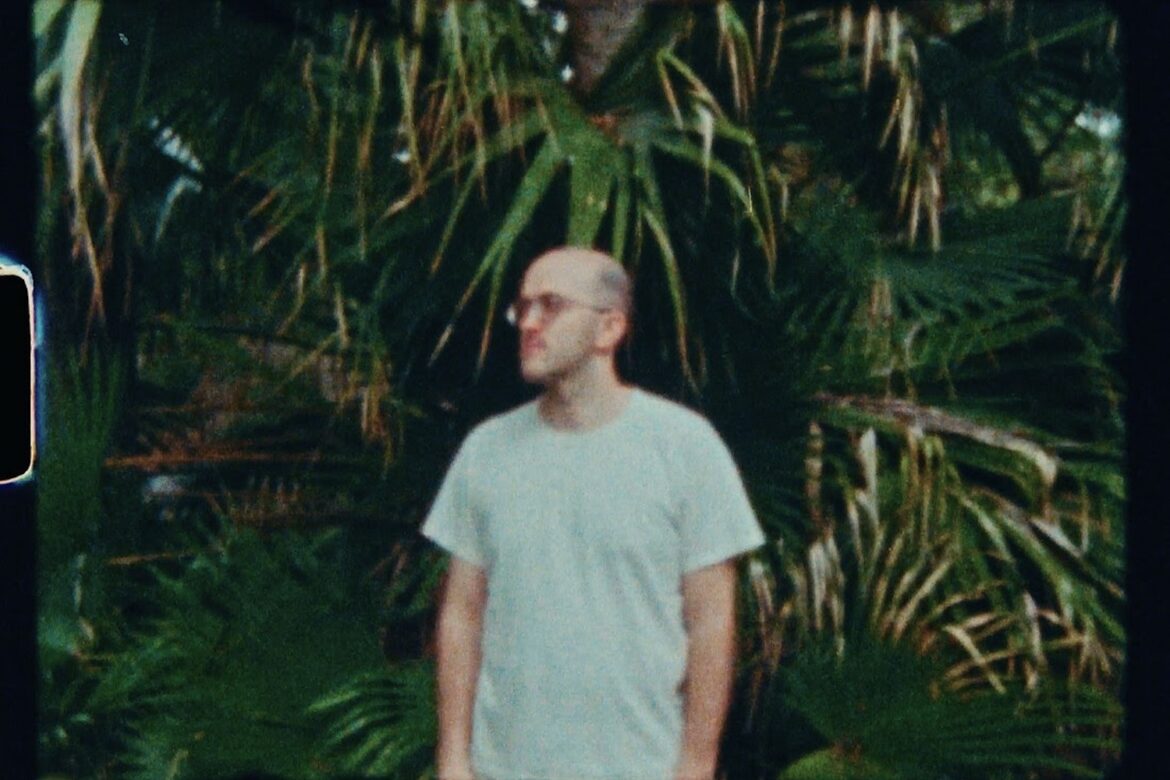
Convinced Friend holds on to a disappearing Louisiana hometown on ‘Nowhere Songs,’ a spellbinding sophomore album whose roaring guitars and aching alt-country melodies give extraordinary life to the people and memories that time threatens to erase. In an intimate conversation with Atwood Magazine, songwriter Austin Wilson reflects on fatherhood, the complicated pull of home, and the creative freedom he found in making music that feels as fiercely alive as the stories it preserves.
Stream: ‘Nowhere Songs’ – Convinced Friend
I think that ambivalence towards home – both loving a place and wanting to leave it – is pretty universal, but takes on its own character for the specific kind of desolation you can find in America’s hinterlands like where I grew up.
* * *
How do you hold on to a home that’s disappearing long after you’ve left it?
For Austin Wilson, that question is painfully real. The songwriter behind Rhode Island indie rock outfit Convinced Friend grew up in Houma, Louisiana, an oilfield town south of New Orleans where the land is sinking and the coastline steadily receding. Wilson has since built a life in New England, but the prospect of becoming a father brought his hometown into sharper focus. Suddenly, the possibility that the place that raised him might disappear within his son’s lifetime gave new urgency to the memories, relationships, and experiences he carried with him.
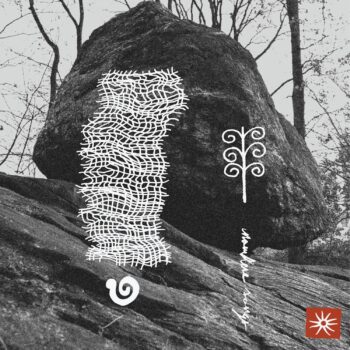
This sense of longing and impermanence runs deep through Nowhere Songs, a record that wrestles with the complicated ties that bind us to the places we come from, even after we’ve moved on. Wilson looks back on his Louisiana upbringing with equal parts affection and disillusionment, honoring the people and experiences that shaped him without romanticizing the circumstances they lived through. Released independently August 28, 2026, Nowhere Songs is Convinced Friend’s spellbinding sophomore album, a stirring collision of rock, alt-country, and slowcore that transforms memories of a vanishing hometown into a fiercely alive portrait of love, loss, and belonging.
You take a hammer
To all your longing
A busted feeling to wear away
Well you can keep it
I’ve got some bad ideas
Do you wanna hear them
Before the weight comes bearing down?
The light is dimmer
Another diamond day
To think it over and settle up
What do you call a river in drought?
It’s evening now in my little hell
– “Big Score,” Convinced Friend
Where Convinced Friend’s self-titled 2024 debut took shape largely in isolation, as Wilson settled into New England and explored questions of faith and commitment, Nowhere Songs marks a significant creative evolution. This time, Wilson found his footing alongside a full band featuring guitarist and multi-instrumentalist Nate Halda, drummer Casey Belisle, and live bassist Mike Dantowitz, spending months developing the songs through rehearsals and live performances before recording the bulk of the album in a single day at Rhode Island’s Big Nice Studio with returning producer Bradford Krieger. The difference is palpable: These songs breathe, smolder, and occasionally erupt, their ragged guitars and aching melodies lending tremendous emotional force to Wilson’s intimate storytelling. It’s a record haunted by everything time threatens to take away, yet brimming with the energy of musicians who have never sounded more alive.
Even the album’s title carries a pointed irony. Wilson recalls that when he tells people he grew up south of New Orleans, they’re often surprised to learn there’s anything farther south at all. To call these Nowhere Songs is to expose the distance between how a place appears to outsiders and how deeply it can inhabit those who grew up there. What might seem like nowhere to the rest of the world is, for Wilson, a place full of personal histories and peculiar details, populated by people whose lives deserve to be understood on their own terms.
“I think a lot of it boils down to focusing on characters rather than big, abstract themes. Most of these songs are written in the first or second person, and try to blur the lines between being an observer but also a participant in what I’m describing, and hopefully that keeps it from dissolving into a figure of speech,” he explains.

Nowhere Songs aches and quakes in equal measure, its churning electric guitars giving way to gentle acoustic passages and slow-burning melodies.
Wilson’s weathered Southern drawl carries the listener through a world of bruised emotions and unexpected beauty, where frustration can sound exhilarating and even the smallest memories carry enormous weight. From its most explosive moments to its intimate confessions, the album finds remarkable depth in life’s contradictions, balancing the sorrow of what slips away with the stubborn joy of everything that remains.
“Big Score” opens the record with a tremendous roar, its surging guitars and aching vocal delivery crashing headlong into the exhaustion of a life spent longing for more. “You take a hammer / To all your longing / A busted feeling to wear away,” Wilson sings, establishing the frustration and resignation that haunt so much of the album. The song’s sheer force gives that weariness an almost physical presence, as though years of disappointment have finally found their release. “On Fire” carries the momentum forward with a smoldering, combustible energy, its blown-out guitars and relentless groove embodying the friction between wanting to escape and feeling forever tethered to home. “We wanted the rhythm to feel as restless as the lyrics themselves – like a long drive trying to outrun yourself – and we indulged our inner Crazy Horse with the blown-out guitars,” Wilson explains. The result is exhilarating, with the band’s charged performance giving even the bleakest sentiments a pulse of defiance. Yet the song’s opening image – “When you dig out my heart / From all the rusted burned-out car parts” – reveals a vulnerability beneath the fury, as though Wilson is searching for some part of himself still buried in the wreckage.
Little small-town gothic
The ghost’s just talk and talk
and never do shit
But they’re always asking
why your time is spent
Prostrate and kneeling
‘Cause no one’s ever calling
To give all our rites a meaning
To hold every moment longer
I thought I’d feel heaven there
But I’m on fire
I’m reaching out beyond the West
You want a reason
Some holy garbage glistening
– “On Fire,” Convinced Friend
Elsewhere, Nowhere Songs trades its thunder for a more intimate kind of reckoning. “Bitter in the Taste” settles into gentle acoustic textures and a brooding, close-held atmosphere, finding weary wisdom in the passage of time. “I got over myself / And the hole is a well now,” Wilson sings, transforming an image of emptiness into one that suggests unexpected depth. “Boulder,” meanwhile, brings a wonderfully offbeat sensibility to the burdens of domestic life, finding absurdity in the endless repetition of household chores and the imperfect ways people share their lives. “Sisyphus, licking the boulder clean,” he declares, borrowing from Greek mythology to give the smallest frustrations an almost cosmic weight. Together, these songs reveal the breadth of Wilson’s writing, where the mundane becomes extraordinary without ever losing its recognizable, earthly character.
Perhaps the album’s most devastating portrait arrives in “Robitussin,” a song rooted in Wilson’s memories of evacuating Louisiana during Hurricane Gustav. Sheltering in a hotel with a childhood friend who had taken cough syrup, he recalls a surreal experience that seemed unremarkable at the time but grew increasingly poignant with distance. The song captures the uneasy intersection of youthful escapism and real hardship, tracing the aftermath of a storm through the image of a damaged home and the missionaries who repeatedly came to rebuild it. Its power lies in Wilson’s refusal to sensationalize the circumstances or the people caught within them. “It was one of those experiences I didn’t make much of at the time but, looking back, feels both sad and tender – an image of the way our lives would lead away from each other,” he reflects. What emerges is a portrait of friendship and separation, a memory whose significance only becomes clear after the lives it briefly joined have drifted apart.
Robitussin, baking in the sun
You skim the top
and have some real fun
It was the summer
when the hurricane would blow
Your house to the blocks
You had enough
Of the missionaries
building you a new one
‘Til you could barely stand
to see their van roll up
But when the drugs would hit
All the spiders and shit
Would start scrawling out a message
On the walls above our hotel bed
You told me what it said
But not exactly what it meant
Too banal to mention
Exactly what it said
How “every evening
is fading in the West.”
Sweltering with heavy, reverb-laden lead guitar lines and thunderous drums, “Shrine” turns that uncertainty toward faith, its religious imagery and searching questions revealing another facet of Wilson’s disillusionment. “Just wanted to make good on something,” he sings, a disarmingly simple confession that cuts through the song’s spiritual turmoil.
Hauntingly nostalgic and gently hypnotic, “Oilfield” offers another window into Wilson’s past, trading the turbulence of displacement for the peculiar beauty of adolescence. Over a soft, slow musical pulse, he remembers practicing guitar with friends, sneaking rum from a closet, and playing a teenage band’s first show in a venue with dancers in cages. Elsewhere, goths drive hearses through a strip mall parking lot while fireworks burst around them. The details are funny, affectionate, and strikingly specific, capturing the unruly spirit of growing up in a place that could feel both impossibly small and endlessly full of life. Wilson has spent much of his adulthood trying to write a song that captures this experience, and “Oilfield” feels like a small act of preservation, holding onto the sights and sounds of a childhood whose physical surroundings may someday exist only in memory.
By the time “Little Life” arrives, the album’s accumulated weight gives way to an extraordinary final release. The closing track is sweeping and deeply moving, its dusty atmosphere swelling into a dramatic surge of guitars that seems to gather every unresolved feeling the record has carried. There’s an almost triumphant conviction to its soaring lead guitar, even as Wilson’s words acknowledge the uncertainty that remains. “If everything goes under / Well, I’m still holding,” he sings in the album’s final moments. Where “Big Score” opened with the desire to hammer longing into submission, “Little Life” ends with an insistence on carrying it forward. Wilson cannot stop time, restore the past, or promise that the place he loves will survive unchanged. But through Nowhere Songs, he has given its memories a life beyond the landscape that holds them.

For all its bruising memories and churning guitars, Nowhere Songs is, at heart, an act of love for the people and place that shaped Wilson.
His memories remain complicated, his characters resist easy judgment, and the music follows their emotional contours wherever they lead. “I’m feeling freer in songwriting than I ever have, less burdened by what I think I want to communicate and more easily able to let songs be what they want to be,” he says. That openness is one of Nowhere Songs’ greatest strengths. Wilson allows humor to coexist with heartbreak, finds unexpected beauty in imperfect circumstances, and trusts that the smallest details can reveal truths far greater than themselves.
I’ll get hell
Whenever you leave me to dry
Made my home out there
Now it’s a desert, my life
I got older now
I get tired of running around
I got over myself
And the hole is a well now
– “Bitter in the Taste,” Convinced Friend
Perhaps that’s why Nowhere Songs resonates so deeply beyond the particular stretch of Louisiana coastline that inspired it. Wilson captures the peculiar way our earliest experiences continue to shape us, how old friendships linger in memory, and how the places we leave can remain inseparable from who we become. His songs are deeply personal yet remarkably inviting, full of the messy contradictions and overwhelming feelings that make a life worth remembering.
“I’m grateful for any time a listener is taking their time with these songs, and I trust they’ll take away whatever they need to from them – that’s the mystical part of music,” Wilson reflects. He has given us a record that rewards that attention, one whose emotional power grows from the compassion and conviction with which he tells these stories. Long after the guitars fade, what lingers are the people, their imperfect lives, and the memories that might otherwise slip away with time. In Wilson’s hands, a place the world barely knows becomes impossible to forget.
Atwood Magazine recently caught up with Wilson to discuss the complicated pull of home, the friendships and characters behind his songs, and the creative freedom he discovered in making Nowhere Songs – an album that finds extraordinary beauty in the act of remembering, and an enduring reason to hold on even as the world changes around us.
— —
:: stream/purchase Nowhere Songs here ::
:: connect with Convinced Friend here ::
— —
‘Nowhere Songs’ – Convinced Friend
A CONVERSATION WITH CONVINCED FRIEND
Atwood Magazine: Austin, hello and thank you for your time! For those who are just discovering Convinced Friend today, what do you want them to know about the band and your music?
Convinced Friend (Austin Wilson): Hmm, what’s a good sales pitch – oilfield alt-country? Indie rock with petrochemical preoccupations?
Who are some of your musical north stars, and what are you most excited about the music you’re making now?
Convinced Friend: If one North Star, Low – no other band has shown me more about the worlds songs can conjure. For a constellation: Jason Molina, Archers of Loaf, Grouper, Vic Chesnutt.
What I’m most excited about the music I’m making now: I’m feeling freer in songwriting than I ever have, less burdened by what I think I want to communicate and more easily able to let songs be what they want to be. If I’m honest, most of the music I’ve written throughout my life has been in this general direction, so it’s a nice feeling to keep trying to do the same thing over and over again and realize that you’re actually making some progress.
It’s been about two years since the release of Convinced Friend’s self-titled debut. What’s your relationship with that record and its songs today?
Convinced Friend: Making the first record was a much more isolated experience compared to Nowhere Songs. I wrote and arranged all of it during the early days of moving to New England, without ever playing them live or having much in the way of musical community or external collaborators. I’m extremely proud of that record, and yet can also hear myself grasping at various threads that only came together more fully with these songs. These songs have been lived in, and I think you can feel it.
Where that debut found you making sense of faith and commitment, Nowhere Songs reaches back toward Houma, Louisiana, home, memory, and the people you grew up among. How do you feel this album compares to the self-titled record?
Convinced Friend: While I’ve often drawn on my own upbringing and hometown in my songwriting, I made a conscious effort with this record to make that a throughline, and to me feels like a much more cohesive statement as a result. I would not call it a concept record in any stretch of the imagination, but probably the closest I’ll ever come.
What does the title Nowhere Songs mean to you?
Convinced Friend: When I tell people I grew up south of New Orleans, the most common response is “I didn’t know there was anything south of there” – so, an ode to my home being largely illegible and “nowhere” to the people outside in, and the particular mindset living with that illegibility can create.
You’ve said that learning you were going to become a father changed your relationship to home: its erosion felt more pressing, your separation from it more permanent, and the whole thing more tender than expected. How did fatherhood shape the urgency of this record?
Convinced Friend: Well, it was a very concrete deadline for finishing! I was already writing songs in this direction, but it made me reflective about my own upbringing and what I carry from it, both the light and the heavy things. In particular, the idea that my own home could very well be underwater or uninhabitable in his lifetime weighed on me, and made me want to make my own attempt at capturing my life in a place he might outlive.
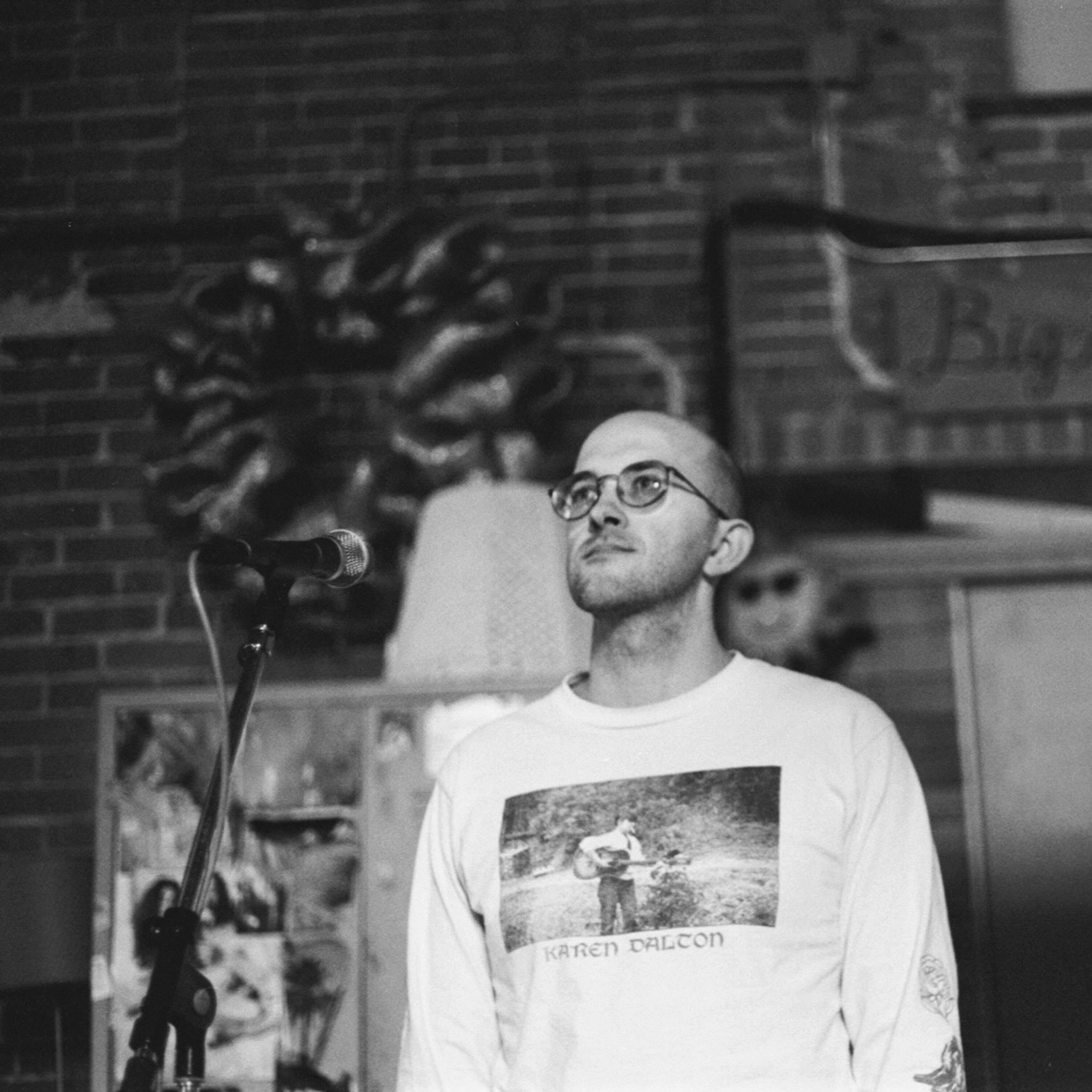
These songs are rooted in a place that is literally disappearing. How do you write about Houma without turning it into a metaphor too quickly?
Convinced Friend: Really great question and something I thought about a lot. I think a lot of it boils down to focusing on characters rather than big, abstract themes. Most of these songs are written in the first or second person, and try to blur the lines between being an observer but also a participant in what I’m describing, and hopefully that keeps it from dissolving into a figure of speech. I think this also gets to just respecting the freedom of a song to go where it wants, even if it goes somewhere I didn’t initially intend.
Nowhere Songs feels full of intimate portraits: People who stayed, people who left, people trying to make meaning inside difficult circumstances. How did you think about writing alongside those characters rather than simply writing about them?
Convinced Friend: There’s always the risk of voyeurism for sure, or leaning into something purely for its shock value in a song – I think too much writing about the South does that. I obviously draw on some of those Southern Gothic elements, but I also think it’s important to leave space for complexity and uncertainty, and not let characters just become metaphors for something I’m driving at.
“Big Score” opens the album with so much force and resignation: “You take a hammer / to all your longing / a busted feeling to wear away.” Why did this feel like the right opening scene for the record?
Convinced Friend: “Big Score” felt right as the opener in establishing the world these songs revolve around – the persistent sort of exhaustion or defeatism that can come with hanging around a small town too long where nothing ever seems to change, particularly one slowly sinking underwater.
“Big Score” also has this line that feels like it could haunt the whole album: “What do you call a river in drought? / It’s evening now in my little hell.” What does that line evoke for you now?
Convinced Friend: It’s funny, I’ve always thought of those lines as somewhat sarcastic, just driving around at the end of another long day gesturing at the place you love to denigrate but yet will never leave. I think that ambivalence towards home – both loving a place and wanting to leave it – is pretty universal, but takes on its own character for the specific kind of desolation you can find in America’s hinterlands like where I grew up.
“Robitussin” is one of the album’s most vivid and devastating portraits, and by your own account, helped set the course for this album. What’s the story behind this song?
Convinced Friend: It’s more or less autofictional, from time spent sheltering in a block of hotels while evacuating from Hurricane Gustav with a dear friend I’ve since lost touch with after leaving Louisiana, trip-sitting while he dissolved on cough syrup. It was one of those experiences I didn’t make much of at the time but, looking back, feels both sad and tender—an image of the way our lives would lead away from each other. That same sense of distance also captures a bit of my relationship to home as well that shapes my perspective in a lot of these songs.
“On Fire” explores the friction between loving where you come from and needing to leave it, and the band sounds especially raw and restless here. Can you share a bit about your mindset when writing this track?
Convinced Friend: Sonically, “On Fire” was a big breakthrough for me in figuring out how I wanted the record to sound. Like I mentioned, the first record was very much a layered studio project, but this song made me realize I wanted to focus on direct arrangements with the band and keep it loud and loose.
“Boulder” has been described as your attempt at Suburban Gothic, where love, labor, domestic life, and dead skin all blur together. How did this song come about?
Convinced Friend: The main image in the chorus riffs on this line from the Mark Leidner poem “Returning the Sword to the Stone” that has lived in my head for a long time: “It’s like Sisyphus making direct eye contact with you while sarcastically kissing and licking the boulder.” Placing that into a domestic scene felt pretty perfect to me.
“Oilfield” feels like one of the album’s clearest returns to adolescence. What does that song mean to you now? And as a lyrically forward artist, do you have any favorite lyrics in these songs?
Convinced Friend: Lyrically, I think “Oilfield” is a song I’ve honestly been trying to write for most of my adult life, trying to capture my own experience growing up where and how I did, and also ties together a lot of the threads other songs on the record pull at. I’m particularly proud of this image: “A Friday night at the strip mall / Just watching all the goths / Driving hearses with their friends / Lighting fireworks off ‘em.”
“Little Life” closes the album with this devastating final gesture: “If everything goes under, well, I’m still holding.” Why did this feel like the right final song?
Convinced Friend: Sonically, “Little Life” is a song where we swung for the fences and felt like a natural closer because of that, and lyrically attempts to land the plane of the album in a place with some tenderness and affection. I didn’t set out to write it in that way, but pleased with the symmetry it makes with the rest of the songs.
The album was largely tracked live in a single day at Big Nice Studio with Bradford Krieger. How did that pressure shape the performances?
Convinced Friend: Unlike the first record, all of these songs had a long time to gestate in a live setting, and having the limited time helped to lean into that fact and keep the songs feeling as immediate as possible rather than overthinking too many alternative arrangements. All love to the band as well for being ready to bang it out.
Do you have any definitive favorites or personal highlights off this record?
Convinced Friend: “Boulder” is a song I’m quite proud of, and also love how locked the band sounds in “On Fire.” Both have elements I want to drill down into with future albums.
What do you hope listeners take away from Nowhere Songs, and what have you taken away from creating this music and now putting it out?
Convinced Friend: I’m grateful for any time a listener is taking their time with these songs, and I trust they’ll take away whatever they need to from them – that’s the mystical part of music. Personally, writing these songs was an important way for me to reckon with my own relationship to place – while I don’t think anything would really be a final definitive statement, it feels close enough to me. Also made me realize I love singing loud songs with a loud band, so I hope to keep doing it.
In the spirit of paying it forward, who are you listening to these days that you’d recommend to our readers?
Convinced Friend: Great question. The self-titled Jana Horn record that came out this year is incredible and criminally underrated – the rhythm section on these songs is just unbelievable. Find the Gyres by False Berries, beautiful tape-collage songs; and the new Tubs record Hard Life is just so much fun.
— —
:: stream/purchase Nowhere Songs here ::
:: connect with Convinced Friend here ::
— —
— — — —
Connect to Convinced Friend on Instagram
Discover new music on Atwood Magazine
© Shawn Tabor
 © Shawn Tabor
Nowhere Songs
an album by Convinced Friend