
Antonio Miguel Areia makes losing control sound downright irresistible on his spellbinding debut single “Zugzwang” ft. Thirdy, a hypnotic, exhilarating collision of mounting desperation and his self-described “evil bossa” sound that captures the maddening paradox of having to keep playing when every move makes matters worse. Its mischievous music video brings that predicament to the streets of New York City, where a chess match with a real Union Square hustler spirals into chaos and a frantic dash for the subway.
Stream: “Zugzwang” – Antonio Miguel Areia
The only thing worse than being trapped by your own choices is knowing you have to make another one.
One postponed conversation leads to another, one small lie demands a bigger one, and before long the mess has a life of its own. The clock keeps ticking, every possible way out looks worse than the last, and you’re still expected to make your move.
Sooner or later, you have to face the music and keep playing, even when you know you’re losing.
On his spellbinding debut single “Zugzwang,” Portuguese-born, New York-based artist and producer Antonio Miguel Areia gives that sinking sensation a gorgeous, sinuous bossa nova groove, threading nimble nylon-string guitar through an unrelenting pulse and increasingly gritty, distorted textures. Seductive, hypnotic, and utterly exhilarating, it’s a dazzling first impression – a thrillingly inventive collision of musical beauty and mounting desperation that keeps dancing even as the world around it threatens to collapse.

dodging, postponing
slipping past
I talk around it
every time
say the same thing
let it slide
the same conversation
on a different night
Atwood Magazine is proud to be premiering “Zugzwang,” the gloriously mischievous music video for Antonio Miguel Areia’s debut single. Featuring Taiwanese artist 黃老三 (Thirdy) and arriving ahead of the song’s October 15 release, the video introduces an exciting new voice whose musical instincts are as adventurous as they are infectious. Born and raised in a small Portuguese town, Areia began playing guitar at an early age before moving alone to London at 20, where he studied music production and sound engineering. Years later, he relocated to New York to pursue a master’s in Songwriting and Production at Berklee NYC, bringing with him a wealth of musical influences and an appetite for experimentation that would eventually crystallize into a sound he affectionately calls “gritty indie bossa nova” or, even better, “evil bossa.”
“Zugzwang” is the first taste of his forthcoming debut EP, DISCOMBOBULATED, a collection born out of personal upheaval and a period of profound uncertainty. The record traces the aftermath of experiences that challenged Areia physically and emotionally, capturing the complicated work of picking yourself back up when life has knocked you off your feet. Its title is fitting: Here is an artist making sense of disorder through music that embraces its own wonderful unpredictability, balancing the elegance of traditional bossa nova with the restless possibilities of contemporary production.
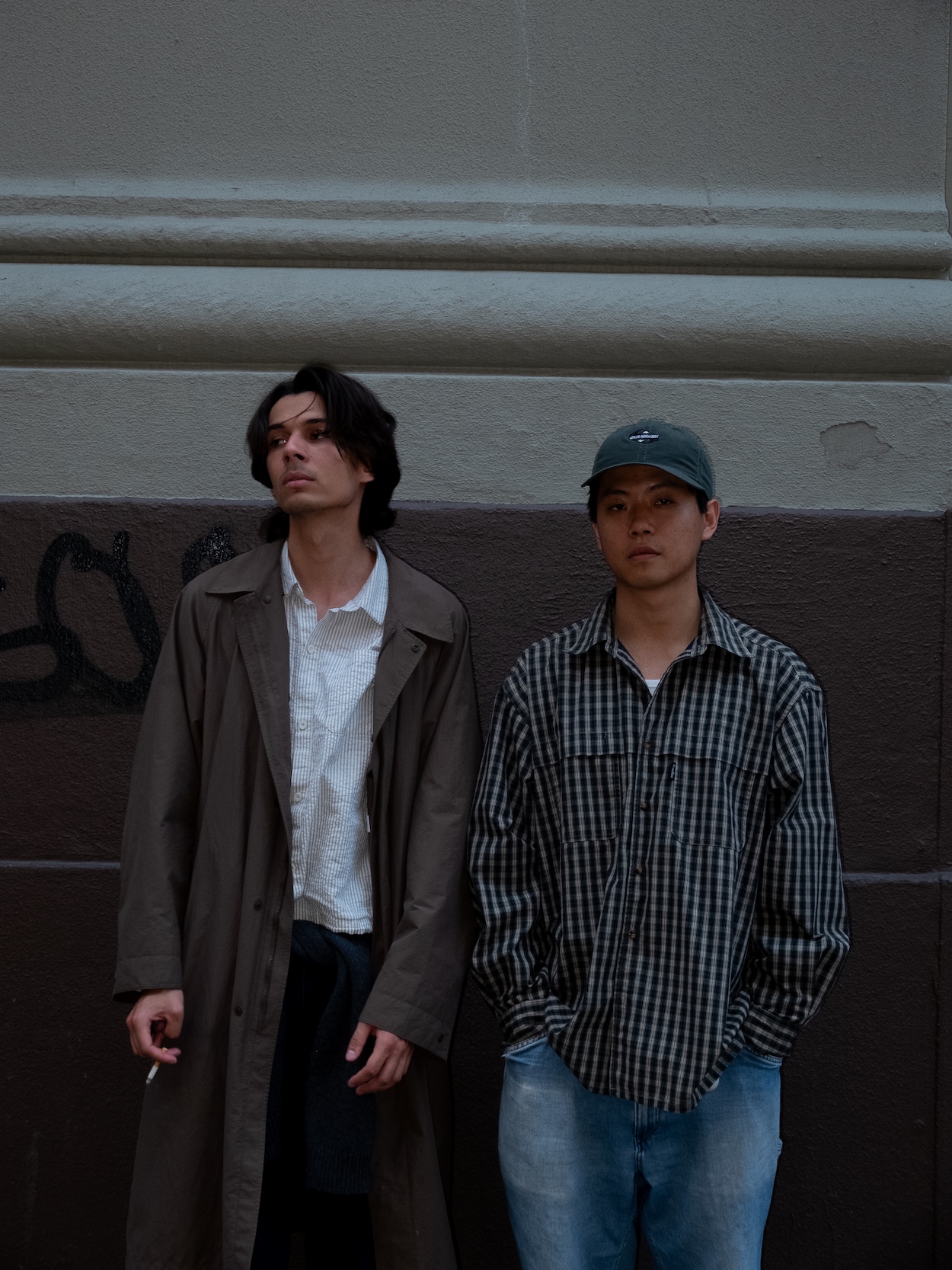
For Areia, the chessboard offered a particularly compelling way to reckon with the consequences of decisions made, avoided, and regretted.
“Well, zugzwang is such a cool word, and its meaning within chess is so interesting that I suddenly felt a spark of creativity and decided I wanted to make a song around it. My whole upcoming EP is about a personal battle and the lessons I learnt by overcoming everything. In January last year, I had a pretty serious accident where I slashed 80% of my quadriceps and ended up not walking for 5 months. During that time, I also ended a long relationship. This song has a bigger meaning, which is that when things get to a certain point, no matter what you do after, you will always fall. Similar to the concept of zugzwang in chess, all of your available moves will leave you in a worse position, but you still gotta play.”
The circumstances behind “Zugzwang” lend its deceptively playful arrangement a striking emotional gravity. Areia sings of “dodging, postponing / slipping past” and repeating the same conversation on a different night, caught in an exhausting cycle of avoidance that only tightens its grip with time. There’s an almost conversational candor to his delivery, an understated intimacy that makes the words land with disarming immediacy. He sounds like someone trying to talk his way out of trouble even as the floor disappears beneath him. “Word by word / I keep sinking myself,” he admits, recognizing the terrible irony of his predicament: Every attempted escape threatens to bury him deeper.
I’m standing in quick sand
every step I fall
qualquer passo eu caio
(every step I fall)
And then comes the chorus, where the whole dilemma collapses into one devastating refrain: “Qualquer passo eu caio” – “Every step I fall.” Sung in Portuguese, the phrase is as haunting as it is hypnotic, gathering force through repetition until it becomes an inescapable mantra. Considering Areia’s own experience of losing his ability to walk, those words carry an additional, deeply personal resonance. The fear of taking another step becomes both a physical memory and an emotional reckoning, binding the song’s central metaphor to the life that inspired it.

Musically, however, “Zugzwang” is an absolute delight – an intoxicating, rhythmically rich collision of elegance and instability that practically demands movement.
The nylon-string guitar provides an irresistibly supple foundation, its intricate, syncopated figures weaving around a persistent beat that seems to gather momentum with every passing measure. Areia’s vocals drift across the arrangement with a breezy, almost nonchalant ease, while the production gradually grows more feverish, introducing saturated percussion and abrasive electronic textures that complicate the song’s otherwise graceful contours. There’s an incredible tension in the way these elements coexist: The melody beckons, the rhythm insists, and the whole arrangement threatens to spiral out of control. Yet through it all, the groove remains gloriously alive.
word by word
I keep sinking myself
lies and lies
dragging in quick sand
qualquer passo eu caio
(every step I fall)
Areia has a wonderfully apt name for this peculiar musical alchemy, and the friction between its organic roots and its digitally manipulated edges is central to the song’s identity.
“The production style is the main driver that gives this genre the name ‘evil bossa,’” he laughs. “The never-ending melody line with the complex guitar groove we can find in the chorus really translates this feeling of losing control.”
The influence of Antônio Carlos Jobim is unmistakable in Areia’s affection for intricate guitar voicings and melodic understatement, but his musical imagination also draws from the adventurous production worlds of artists like Saya Gray and FKJ. “Zugzwang” thrives in the space between those sensibilities, marrying the sensual sway of Brazilian-inspired rhythms with a contemporary appetite for distortion and disarray. It’s deliciously unpredictable, almost feverishly alive, with each new instrumental detail pushing the arrangement further into unfamiliar territory. Even as the song’s narrator loses his footing, Areia’s command of the music grows increasingly apparent.

Thirdy’s contribution brings another dimension to this beautifully unruly performance. The Taiwanese artist, whom Areia met at Berklee NYC and has since collaborated with on two EPs, shares his instinct for experimentation despite working in a different musical sphere. His appearance adds fresh momentum and urgency, pushing the song toward its most frantic passages as the words begin to tumble over one another. The increasingly breathless delivery captures a mind racing through every possible outcome, desperately searching for an exit while the music barrels onward. There’s humor in the chaos, but also an unnerving recognition of how quickly a bad situation can become absurd.
stop my body from moving as it stops time
looking out the windows tryna find a silver
lining cloud,
somehow, there’s no way out,
at least that’s how I’m feeling
no surrender till I’m fully baked,
so disturbing, the scene that I made,
can’t fast forward till end of the day
my calculation, wrong place,
wrong shit, f*** fate end game,
strangled, with a yoyo string
at this point just grab on to anything
tangling, dangling, badly operate
freestyling, flickering flame,
that’s me in a blink,
put me in a sink,
losing, ruin every single bit,
every single hit, take it tank it, face it
without a f***ing single cig
I’m dying
Thirdy’s verse is a spectacular unraveling, its breathless stream of consciousness tracing the increasingly desperate logic of a mind coming undone. He opens by trying to stop time itself, searching for a silver lining before his calculations collapse into curses, frustration, and wildly surreal imagery. Even the language seems to buckle under the pressure, with tumbling internal rhymes and rapid-fire wordplay giving way to the bizarre image of being strangled by a yo-yo string. There’s a deliciously manic quality to his performance, the cadence darting between exasperation and delirium as he struggles to regain his footing. Yet beneath the verbal acrobatics lies a genuine sense of exhaustion: By the end, he’s absorbing every blow, desperately trying to hold himself together, and practically begging for a cigarette. The comedy cuts deeper because the desperation is real, and Thirdy’s spectacularly unhinged contribution gives the song’s central predicament a brilliantly chaotic voice.


The accompanying music video embraces that absurdity with gleeful abandon.
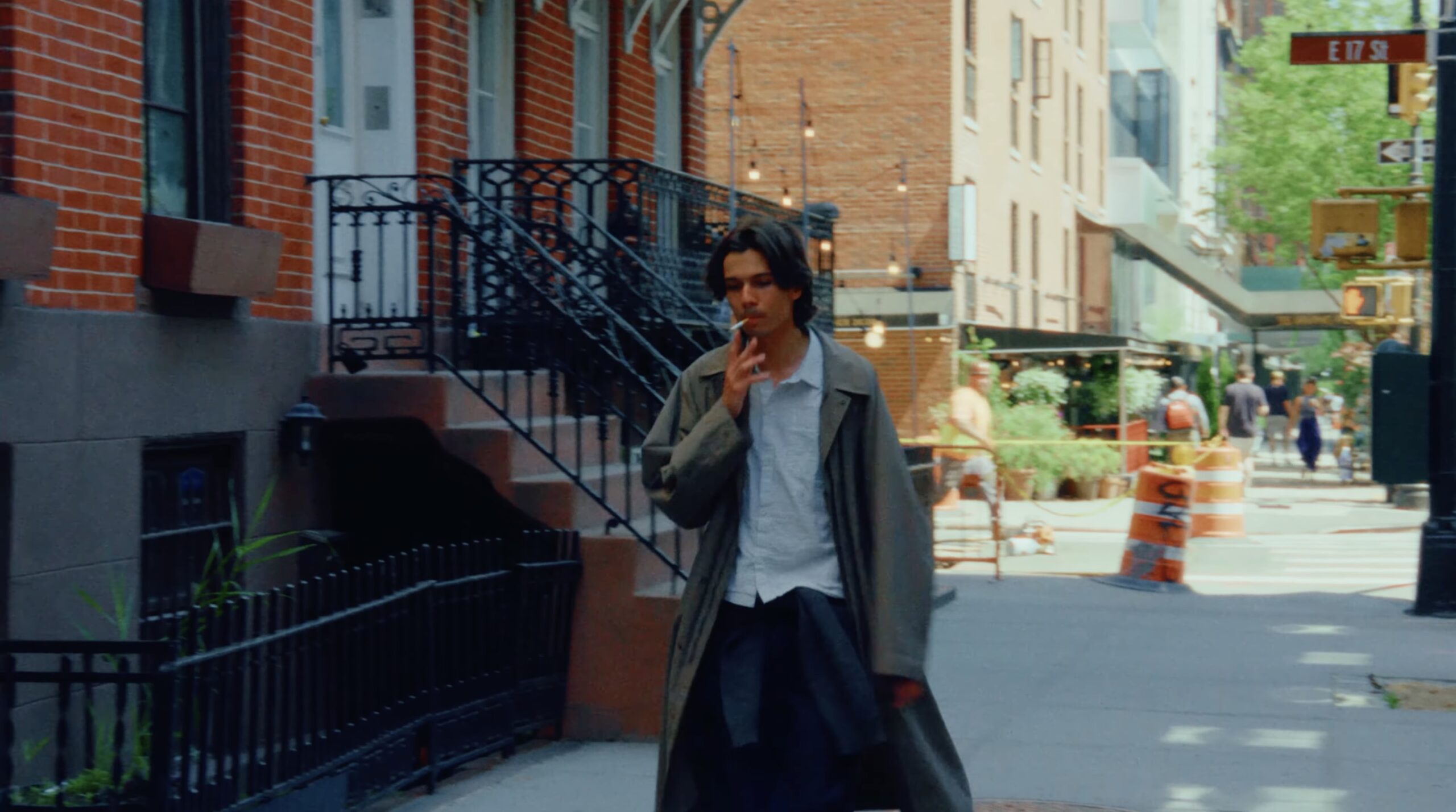
Directed by Karl Sommerville, the visual takes the song’s chess metaphor onto the streets of New York City, where Areia sits down across from a real Union Square chess hustler for a game with money on the line. What begins as an ordinary afternoon in the park quickly becomes a wonderfully ridiculous spectacle: Areia starts cheating, the game unravels, and before long he’s making a desperate dash for the subway. The result is playful, kinetic, and irresistibly entertaining, using the city’s unmistakable personality to give the song’s existential predicament a mischievous, distinctly New York twist.
For Areia, who only recently took up chess himself, the video also represents another significant first: his debut as a music video creative director.
“I moved to New York a year ago, and that was around the same time I started picking up chess (which I still play daily),” he shares. “The music video idea kind of came at the same time, during the writing process. I wanted to make a music video in this city and with the community. Before this, I had already been to Union Square Park a few times to play chess against the hustlers. I think this video brings a less serious lens to the song. Above anything else, this music video also helps introduce me to the world as an artist. Also, as I had never done a music video before (or creative-directed one), I wanted to try it out for the first time!”
It’s an inspired introduction, and one that reveals just how much personality Areia brings to his work. The video embraces the ridiculousness of its premise while the music beneath it remains charged with genuine anxiety, allowing the two to play against one another in fascinating ways. There’s a wonderful sense of abandon to the entire affair, from the spirited musical arrangements to the increasingly outrageous antics onscreen. Areia clearly has an eye for the unexpected, and an ear for making it irresistible.


For all its nervous energy, “Zugzwang” ultimately captures a distinctly familiar part of being alive:
The uncomfortable knowledge that we cannot always undo our mistakes, outrun their consequences, or calculate our way into a better position.
Sometimes the next move is ours to make, however terrible the odds. Antonio Miguel Areia has taken that raw truth and given it an astonishingly colorful musical life, making an inspired first impression with a debut that brims with ingenuity, rhythmic sophistication, and a contagious sense of possibility.
“Zugzwang” arrives October 15, offering a wonderfully tantalizing glimpse into the world of DISCOMBOBULATED and the singular musical imagination behind it. Watch its delightfully chaotic music video exclusively on Atwood Magazine, and get to know Antonio Miguel Areia in our conversation below!
qualquer passo eu caio
(every step I fall)
— —
:: stream/purchase Zugzwang here ::
:: connect with Antonio Miguel Areia here ::
— —
Stream: “Zugzwang” – Antonio Miguel Areia

A CONVERSATION WITH ANTONIO MIGUEL AREIA

Atwood Magazine: Antonio, hello and thank you for your time! For those who are just discovering you today, what do you want them to know about you and your music?
Antonio Miguel Areia: Hey! Also, thanks for your time and this opportunity. I am a Portuguese artist and music producer, and I moved to New York last year from London, where I spent several years of my life. The past year I’ve really been trying to explore and discover my sound, which, funnily enough, came at a time when I went through a severe accident that left me unable to walk for several months, and at the same time I was also going through a breakup. I had lots of fuel to write and it really helped me cope with everything that was happening. Through trial and error, and also the year I spent at Berklee NYC, I started feeling really confident about the pieces I was producing and the sound that I had just unlocked for myself.
You’ve described your sound as “gritty indie bossa nova” or “evil bossa.” What does that mean to you, and how did you arrive at that sound?
Antonio Miguel Areia: I have been making music for a long time, and even though I felt like I had a “sound” for a while, I had never really been able to pinpoint exactly what it was. Until now, I consider that I have simply been developing it, and even though I feel like I still am, when I finished writing and producing “ZUGZWANG” I felt something unlocking within me. I made quite a few demos last summer (2026) and I felt myself gravitating towards what I call “Gritty Indie Bossa Nova” or “Evil Bossa,” and “ZUGZWANG” was one of the first successful attempts in this genre! There are more songs coming out this year that I feel are a more obvious representation of this genre.
Who are some of your musical north stars, and what are you most excited about the music you’re making?
Antonio Miguel Areia: My main musical north star is Antônio Carlos Jobim. One of the things that inspires me the most about him is the fact that someone so legendary, especially as a songwriter, is not known to be a “great” singer, and nevertheless he is still my favorite singer in the world. What Jobim does is something really pure: his incredible songwriting with his raw voice, devoid of any showing off of technique, makes his music sound so real and genuine.

“ZUGZWANG” is your debut single, so this is the first time most people are meeting you. Why did this feel like the right song to introduce yourself with?
Antonio Miguel Areia: I feel like the overall sound, the nylon guitar, the lyrics, the overall concept of the song and turning it into a music video are the best way to present myself. Not only as an artist, but also as a producer and a creative in general.
You’ve said “ZUGZWANG” is about realizing you’ve talked yourself so deep into something that every possible move seems to make things worse. What’s the story behind this song?
Antonio Miguel Areia: Well, “zugzwang” is such a cool word, and its meaning within chess is so interesting that I suddenly felt a spark of creativity and decided I wanted to make a song around it. My whole upcoming EP is about a personal battle and the lessons I learnt by overcoming everything. In January last year, I had a pretty serious accident where I slashed 80% of my quadriceps and ended up not walking for 5 months. During that time, I also ended a long relationship. This song has a bigger meaning, which is that when things get to a certain point, no matter what you do after, you will always fall. Similar to the concept of zugzwang in chess, all of your available moves will leave you in a worse position, but you still gotta play.
The chorus reduces that whole feeling to “qualquer passo eu caio” – “every step I fall.” Why did that line become the center of the song?
Antonio Miguel Areia: That line clearly states the climax of the song and of the whole concept: every move I make now is going to leave me in a worse spot.

There’s such a sharp contrast between the bossa nova influence underneath “Zugzwang” and the increasingly frazzled, distorted feeling of the production. How did you want the music to mirror that sense of losing control?
Antonio Miguel Areia: The production style is the main driver that gives this genre the name “evil bossa” ahah. The never-ending melody line with the complex guitar groove we can find in the chorus really translates this feeling of losing control.
Thirdy appears on “ZUGZWANG” and you’ve also produced two EPs with him. What does he bring out of your music, and how did this collaboration come together?
Antonio Miguel Areia: I met Thirdy last year at Berklee NYC and we immediately got along, both personally and musically, because our music has a very similar vibe, even though we work in really different genres. Making music together over the course of several months also brought us much closer, and Thirdy is one of the artists I like working with the most.
The video takes the chess metaphor literally: You sit down with a real Union Square chess hustler, start cheating mid-game, and eventually end up running for the subway. Where did that idea come from, and how do you feel the video adds to the song?
Antonio Miguel Areia: I moved to New York a year ago, and that was around the same time I started picking up chess (which I still play daily). The music video idea kind of came at the same time, during the writing process. I wanted to make a music video in this city and with the community. Before this, I had already been to Union Square Park a few times to play chess against the hustlers. I think this video brings a less serious lens to the song. Above anything else, this music video also helps introduce me to the world as an artist. Also, as I had never done a music video before (or creative-directed one), I wanted to try it out for the first time! 🙂
“ZUGZWANG” is also the first glimpse of your forthcoming debut EP DISCOMBOBULATED. What can you tell us about the larger record, and how does this song open the door to that world?
Antonio Miguel Areia: As I previously mentioned, “ZUGZWANG” is one of the first times I feel like I nailed the “evil bossa” genre, but even so, some other songs on my upcoming EP feel like a better interpretation of this genre than this one. This is a first glimpse of what’s to come, but it’s also my personal favorite from the EP, so I really wanted to start with the best thing I’ve done in my artistic journey.
What do you hope listeners take away from “ZUGZWANG,” and what have you taken away from creating this song and now putting it out?
Antonio Miguel Areia: Something that’s always on my mind is how to do something that hasn’t been done before. How to keep experimenting with sounds, production styles, lyrics, concepts, etc. I hope people look at this track and think that I managed to create something unique and creative (without being bad ahah). I also wrote this song based on my personal interests, life experiences and things that I just simply find cool and wanted to experiment with.
In the spirit of paying it forward, who are you listening to these days that you’d recommend to our readers?
Antonio Miguel Areia: Recently I have been listening to a lot of different artists and genres. Alongside the Bossa Nova greats, I’ve been listening a lot to corto.alto, Raquel Martins, Saya Gray, FKJ and Tom Misch. Some of these artists have been my greatest inspirations for years. The UK music scene still has a great influence on me, especially considering how much time I was immersed in that scene, so I’m always on the lookout for what people are doing there.
— —
:: stream/purchase Zugzwang here ::
:: connect with Antonio Miguel Areia here ::
— —
Stream: “Zugzwang” – Antonio Miguel Areia
— — — —
Connect to Antonio Miguel Areia on
Facebook, Threads, Instagram
Discover new music on Atwood Magazine
© Thirdy
 © Thirdy
:: Stream Antonio Miguel Areia ::