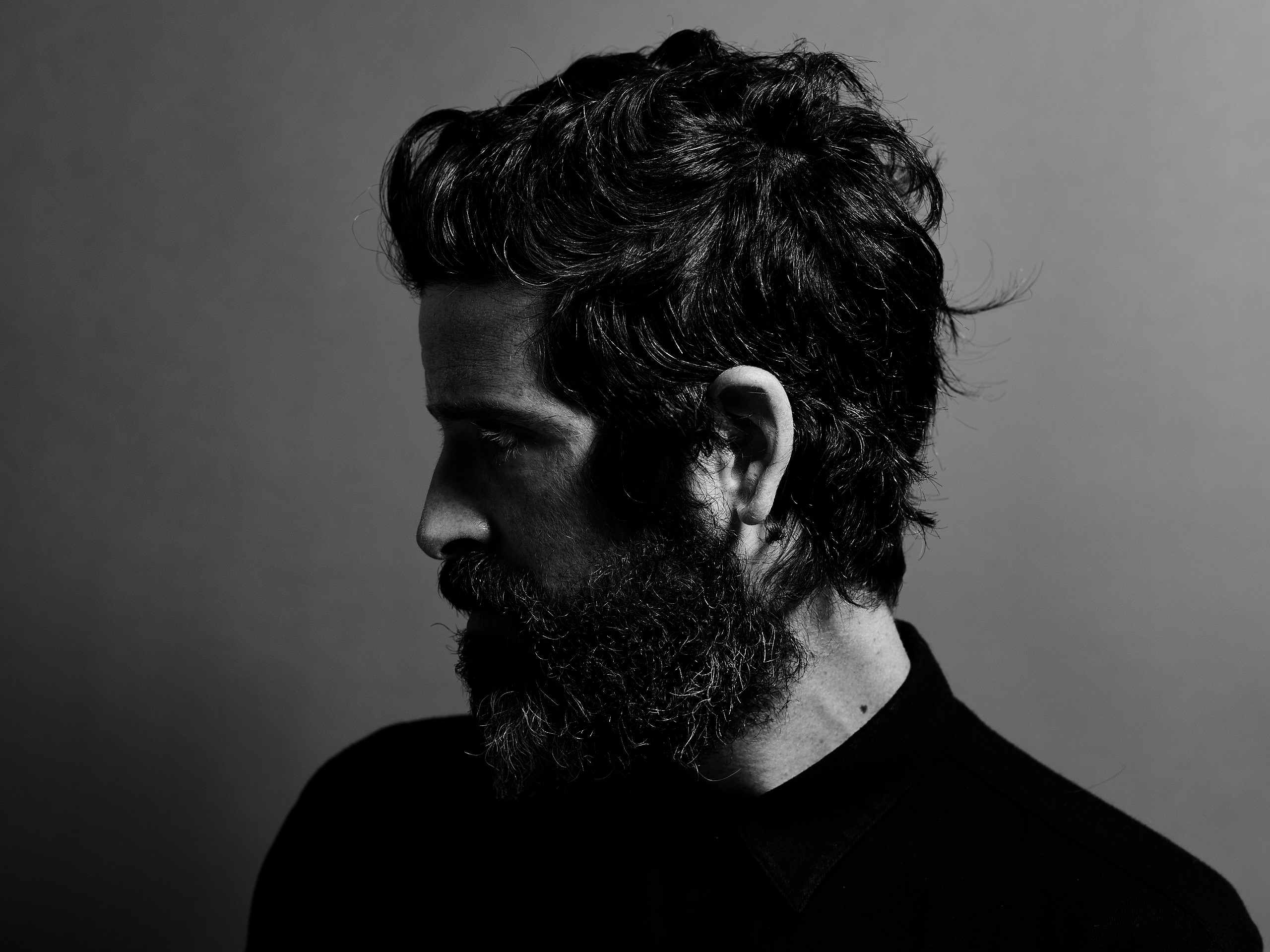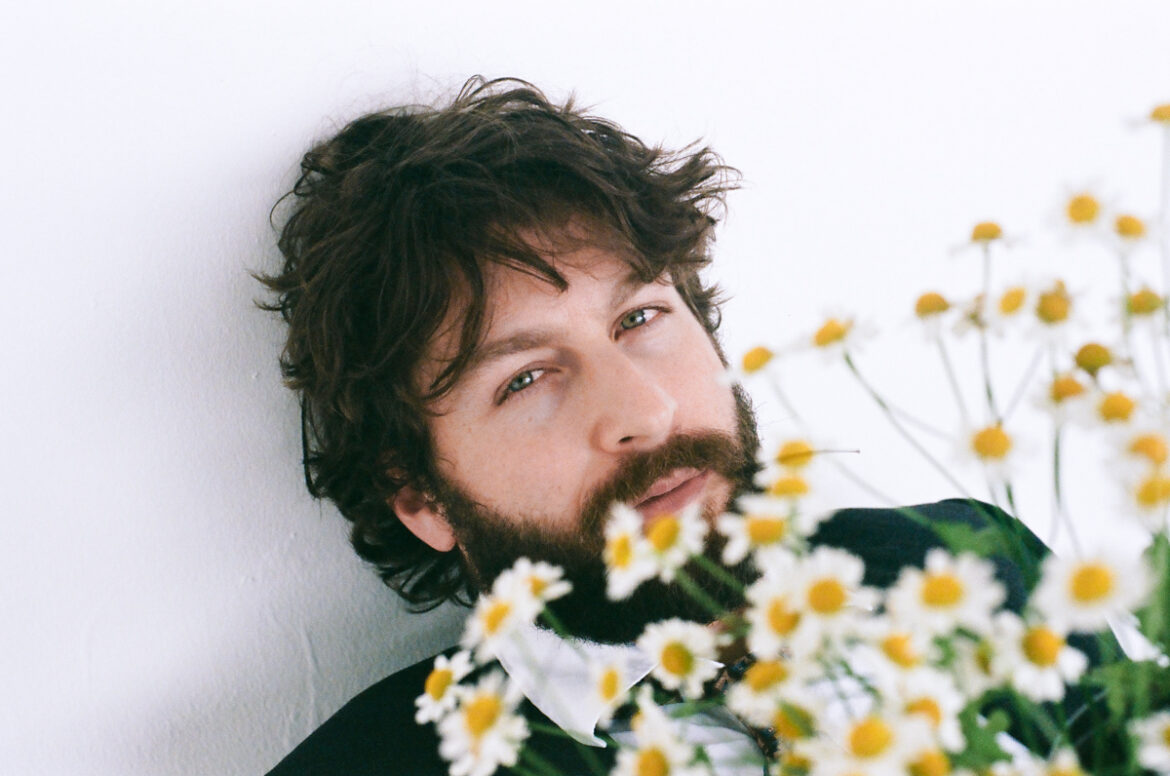
Noah Weinman’s sophomore studio album as Runnner, ‘A Welcome Kind of Weakness’ is a bright, punchy testament to heartbreak, isolation, and gradual healing.
‘A Welcome Kind of Weakness’ – Runnner
My restlessness was somehow the thing that propelled these songs into being so much more high energy than previous records sounded.
* * *
Noah Weinman’s music, released under the stage name Runnner, is a blend of comfort and uncertainty, channeling mundane moments into trembling drums and gentle strings.
From folksy reflection to ambient albums, Weinman has explored a unique blend of sounds and instrumentals to craft narrative stories with each release. His newest project, A Welcome Kind of Weakness, unleashes a new side of himself, lyrically and sonically. Motivated by a breakup and recovering from a torn Achilles tendon, his grief becomes almost feral, backed by a full band and produced in high fidelity for the first time.
“I feel a lot more naked and exposed,” Weinman admits to me. Alongside heavily layered blankets of sound, A Welcome Kind of Weakness boasts bold, confident vocals that makes Weinman feel more exposed than when he was drawling over the acoustic guitar in a dark bedroom.
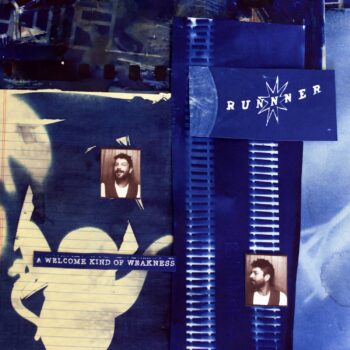
Released August 29 via Run for Cover Records, Runnner’s sophomore studio album is a long time coming. Having spent five years in the LA music scene, Weinman has produced work for the likes of Skullcrusher, Gigi Perez, Odie Leigh, and Horsepower while simultaneously refining his own craft. He is constantly going, whether that be scribbling down half-thought out lyrics or carefully engineering a track, but in spring of 2023, riding the high of his recent tour, Weinman’s life came to a screeching halt.
He tore his Achilles tendon and was suddenly bedridden, ripped from the hectic life he had become so used to. He credits the sheer force of his latest album to this isolation and reflection. “My restlessness was somehow the thing that propelled these songs into being so much more high energy than previous records sounded,” he tells me. Typically, Weinman works to condense the heyday of his life into mellow meditations, but this time, he was straining to be heard.
After Weinman’s recovery, he was launched into two tours, armed with developing demos and no studio to refine them in. Even before the injury, he knew he wanted to make something that encapsulated the feeling of a late-90’s CD – flashy, concrete, and unyielding. Influenced by weeks on the road listening to the likes of Liz Phair, Death Cab for Cutie, and Radiohead, Weinman both taps into a nostalgic sound and modernizes it with flashy production that deviates from his DIY roots while keeping true to the genre.
Though he attempts to steer away from the guiding force of ambient interludes that he’s known for, the album begins with “A Welcome,” a delicate track that slowly dissolves into the wrenching “Achilles And.” With a few clacks of the drumsticks, the song dives straight into a heavy, bright beat that lifts Weinman’s wistful vocals. “I’m still in my bed / Writing the same songs over again,” he spits, chastising himself for an accidental injury with the resolve of someone who is used to being firmly in control. As the album progresses, some tracks tease a few gentle chords before launching into fierce instrumentals, while others dive right in without a moment of hesitation.
One of the standout tracks is the latest single off the album, “Claritin.” Inspired by feeling groggy on a hot summer day and lifelong allergies, Weinman almost explicitly poses the question that runs through A Welcome Kind of Weakness – “is it better to feel pain or to feel nothing?”
“I left my shirt back in my room / And I spread myself in dying bloom / ‘Til the sun came up and dried me out / And I held my tongue and quiet down,” the song begins, with Weinman’s voice muted and a bit removed, as if you are eavesdropping on him from the other room. With the chorus, a twangy lead comes into the picture thanks to Weinman’s car keys and a single string guitar.
“It was just what was in the studio that day, and it’s so perfectly out of tune to me,” he laughs.
For an artist so concerned with perfecting each sound, this happy accident is a marker of a change in Weinman, both as an artist and an individual. He is willing to relinquish more control despite the level of care put into each and every creative decision.
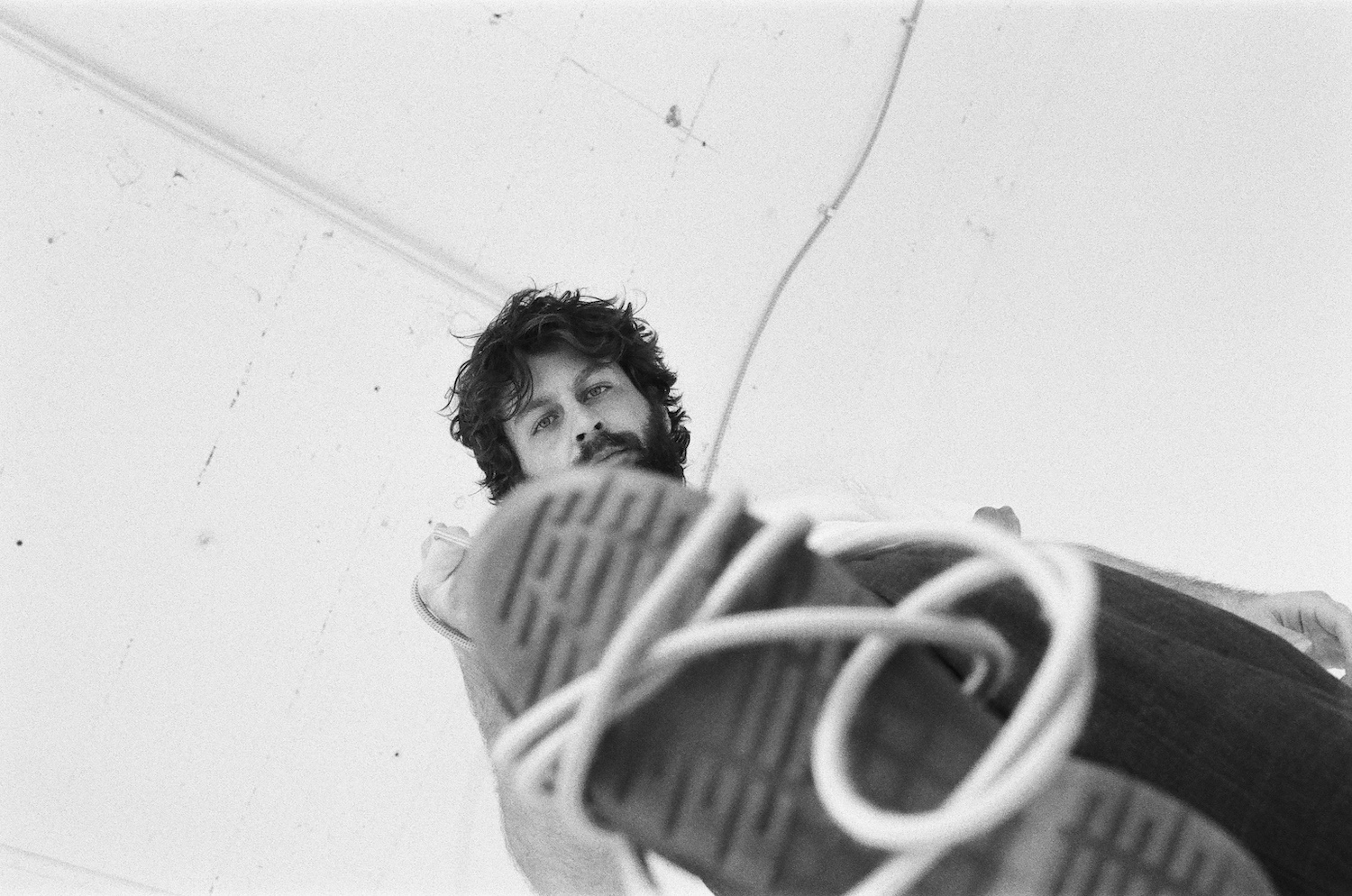
Now I feel a lot more naked and exposed, coming in in high fidelity with vocals right down the middle. I think it’s that fear that makes it exciting.
* * *
As for “the biggest stylistic departure on the record,” Weinman identifies “PVD” as a bit of an outlier. Compared to the cheery sounds of previous tracks, “PVD” is dark and heavy-handed. It’s sharp and relentless and, in a word, epic. “PVD” feels like the biggest testament to what Weinman can, has, and will do, from the trill of the trumpet to thundering drumbeats. He admits he’s both excited and scared for its reception, expressing a duality that also emerges as a consistent theme within this record.
Weinman is dipping his toe into a large United States tour by starting off with gentle acoustic sets in UK record stores. He views these performances as more of a conversation, while being onstage is predictable and planned. You can catch Runnner on tour from September 12 to October 11, and if there’s one album that was meant for the stage, it’s A Welcome Kind of Weakness.
Noah Weinman’s latest Runnner record proves that you never know where he might go next – you just hope you can come along for the ride.
— —
:: stream/purchase A Welcome Kind of Weakness here ::
:: connect with Runnner here ::
— —
Stream: “Claritin” – Runnner
A CONVERSATION WITH RUNNNER
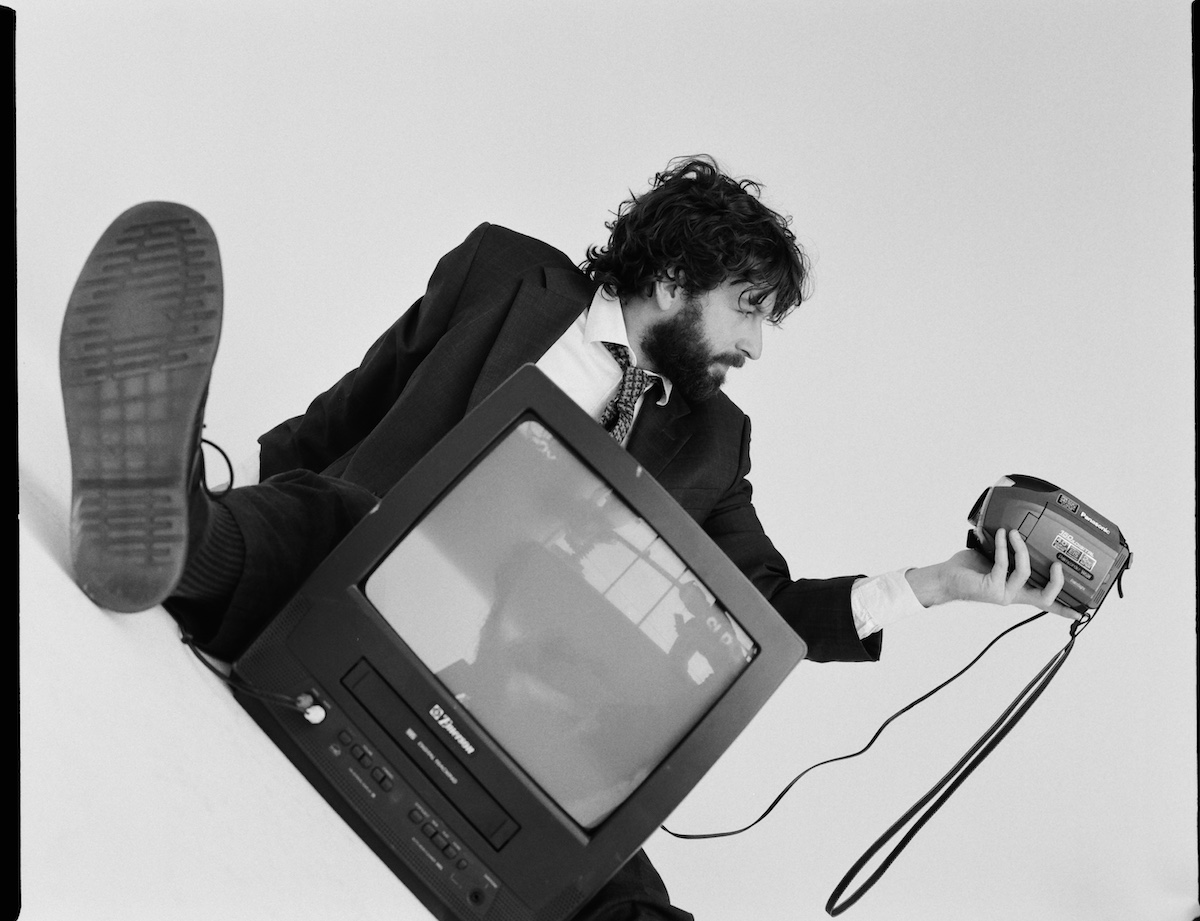
Atwood Magazine: How does releasing A Welcome Kind of Weakness feel different from your debut?
Runnner: It feels scarier, I think because it’s simultaneously more different from my previous releases and more straightforward. I’ve hidden in semi ambient lo-fi production. Not in a bad way, just in a way [where] that’s how I liked working. And now I feel a lot more naked and exposed, coming in in high fidelity with vocals right down the middle. I think it’s that fear that makes it exciting. That reassures me that it’s a creative leap because if I felt safe about doing something, then it probably wouldn’t necessarily be worth doing.
What was it like to produce this album in a studio for you, as both as a producer and as a musician?
Runnner: It stretched my imagination in different ways. I’d say in the past where I’m self engineering, there are definitely certain ideas that I wouldn’t have entertained because I wouldn’t know how to begin to do that on an engineering level. I think that even if I did know how to do it, I wouldn’t have the equipment or the space to do whatever idea I had justice. Part of the idea of coming and doing this record in a studio was that I wasn’t going to concern myself with the practicality of so many ideas that I was having for this record. I wanted to just be almost like a bratty child in a way. Being like, I want this thing and I don’t care how difficult or arduous it is, we’re in the studio, we’re gonna make it happen, which is very liberating creatively. I think I’m someone who really thinks practically about things sometimes to a fault so I was really eager to try to undo some of that, as the producer of this album, but not the engineer.
How does producing differ for yourself versus when you're producing for others?
Runnner: I think it’s harder to do for myself, honestly. Because I lose certain perspectives when it’s my own voice, when it’s my own song, when it’s easier for me to get caught up in details. That feels significant to me. But then I do think that it’s the job of the producer in so many scenarios to kind of keep that broad perspective and help facilitate the artist in that direction where you’re like, these things don’t really matter in the grand scheme of things. I think not having an engineer helped me get to that point, but there were still many leaps I had to take. I think that it’s fun to produce for other people because I get to be that third person perspective of really remembering the whole shape of the song.
What do the words “A Welcome Kind of Weakness” mean to you?
Runnner: They’re taken from the end of “Get Real Sleep.” The idea there is, you can’t put up a fight forever. Falling asleep is a welcomed kind of weakness a lot in your life. But then I think in the context of the album title, even though I was dealing with unfortunate circumstances in my life in terms of the end of my last relationship and tearing my Achilles, I think that it made me grateful for everything else in my life in a way. Honestly I was kind of grateful for the time in my life to just sit and breathe and reflect for a while because I was going at a pretty fast clip and this time, it had its peaks and valleys.
But definitely there were some bright spots in there and I think it kind of reaffirmed for me going forward that I have an emotional resilience that I don’t always trust myself to have. The title kind of just means that this shit’s gonna happen, but I can welcome it into my life and embrace it all as a net positive. I think it’s also important to say that in the song that it’s taken from, it’s posited as a question, and I think that carries over to the title as well. You’re not always going to accept every setback in life with graciousness, but we can try.
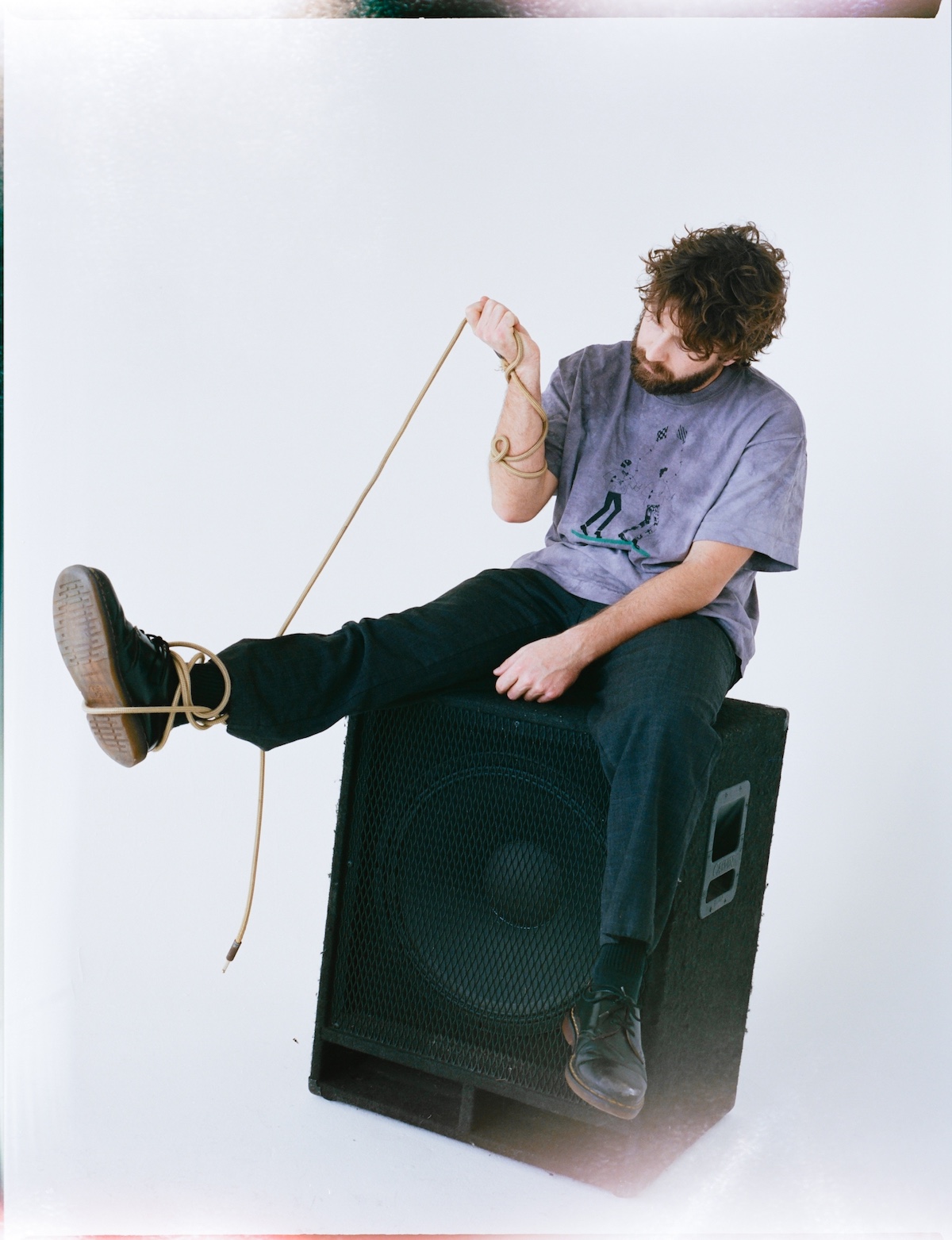
You can’t put up a fight forever. Falling asleep is a welcomed kind of weakness a lot in your life.
How did the songs evolve throughout your recovery process?
Runnner: I think the production and the style of the songs was always going to be that fuller, live band sounding stuff, because even before I had the songs, that’s the vibe I wanted for the next record. Being on bedrest and having all that time to reflect, it was the push-pull of writing these contemplative, sad, bedridden songs, but knowing that the carrot on the other end was, when I was well again, I was going to get to make these songs how I had originally envisioned them before I got hurt. My restlessness was somehow the thing that propelled these songs into being so much more high energy than previous records sounded. I think if anything, the bedrest put more restless energy into the songs because I wrote the songs and then as soon as I started walking again, I had to go back on tour. I was still delayed from going into the studio and working on these songs. So it wasn’t until I finished two more tours after tearing my Achilles that I finally got to go to the studio. It’s so much pent up energy in all of these songs.
That definitely translates very well, and is different from some of your other stuff, which is a bit more muted. It's really exciting to hear this sound coming from you.
Runnner: Yeah, and I think the muted stuff is because I’m living in my hectic life and pulling myself out to make records is a more meditative practice. So it gets reflected there. This is the inverse of that. Mm-hmm.
While you were on tour before you really started this album, you were only listening to CDs from your childhood and your goal with this was to make something that felt like a CD. I would love to hear more about that thought process and also what main musical influences you had from this experience.
Runnner: The CDs that we had… I guess like the heaviest rotation would’ve been “Final Straw” by Snow Patrol, “Rush of Blood to the Head” by Coldplay, “In Rainbows” by Radiohead, “Transatlanticism” by Death Cab [for Cutie], “Lost in Space” by Amy Mann and ”Exile in Guyville” by Liz Phair. Those were all kind of the CDs we had floating around. I wanted something that felt like it was in conversation with those. Those were the CDs that first introduced me to music. Oh, one more: the the first Fountains of Wayne album. Self-titled, that one’s huge for me. And I was just thinking, these records sound so big and live and immediate. They’re all from the same era and it’s definitely a bias of my age probably, but there’s something amazingly unstylized about these records. I know that’s not the case, but if you ask me what a band record sounds like, just “no production,” [there’s] this idea that it’s just the way a song and a band exists. No one has come and decorated that up. I think that’s what I wanted to do, because usually my process is, I write a song and then I find all the different ways I can dress it up with production. But this was, I just want it to feel like a regular song in some way, if that makes any sense.
Then in terms of building it like a CD, I think that my previous attempts or my previous records, I was attempting to do something narratively driven with these interludes. There’d be something that I consider a more complete song structurally, and then songs that are more vibey tracks that help give the feel of the record without necessarily pushing itself as a single or a standalone track. But the way all of these records seem to be built was just banger after banger. No interludes, nothing like that. And that was hard for me to let go of.
There’s like one small interlude at the very beginning of the album, but then I was like, everything just needs to be a complete song, like three minutes, and feel like a standalone song. Then throw them all together on a record and it becomes explosion after explosion, like a big record in that way.
And I think that’s what I mean by like a CD.
I would love to talk a little bit about the visuals for “Claritin” and the stop-motion/collage elements going on.
Runnner: I think I’ve always been inspired by collage and stop motion. All of my album covers have been collages of some sort, with the exception of starsdust, but as an ambient record that feels slightly different. Between Always Repeating, Like Dying Stars, and A Welcome Kind of Weakness, they’re all collages. I’ve made my own stop motion music videos before, but this one was made by Jess Lamworth. I think I’ve always been drawn to animation of all sorts, but because I am so terrible at drawing, doing a collage/stop motion style felt more accessible to me. If I wanna participate in the creation of it or lend assistance, I feel more adept doing it in that way. And then I guess there’s something about collage album artwork that feels like it reflects how I write songs in a nice way. The album cover is made by another artist named Maya Ragazzo.
I think that I write songs by piecing together little bits of lyric or music that I just collect over a period of time, and then synthesize them into one song, and that kind of feels like making a collage. I’ve always felt that connection between the two.
In “Claritin,” you managed to make such an emotional, gut-wrenching song about allergies. What was this process like, pushing yourself lyrically and sonically to communicate that?
Runnner: Lyrically that song just came out. I don’t think I was even having real allergies that day, but it was a really hot summer day and I was laying out in the sun just feeling weak and drowsy. Claritin was a convenient PG metaphor, I guess for this idea of, is it better to feel pain or to feel nothing. And in this instance, is it better to suffer through your allergies or take drowsy allergy medication, which you can then apply to any sort of substance that you might do something similar with, or any kind of vice.
Nowhere in the song do I really talk about having bad allergies or taking Claritin except for “that plastic taste hangs in my mouth.” I think it went from the ground up in that way. I was just sitting outside, idling in the sun, wilting a little bit, and feeling very sensory. I thought that Claritin would be a cheeky way to button the whole thing up. Sonically, I guess it’s different. I was obsessed with this Boards of Canada song called “Dayvan Cowboy,” while I was writing it. I didn’t really know how it was all going to click together for a little while, but I had this song that I could play on guitar and sing and I had this whole template from the Boards of Canada song that I wanted to be pulling from, and then the two just came together.
I think the happiest accident with that song was that the instrumental lead is played with my car keys on a guitar with one string. It was just what was in the studio that day, and it’s so perfectly out of tune to me.
I think that I write songs by piecing together little bits of lyric or music that I just collect over a period of time, and then synthesize them into one song, and that kind of feels like making a collage. I’ve always felt that connection between the two.
You still have a few tracks left. Which of the tracks that are still yet to release are you most excited for people to hear?
Runnner: I think “PVD” will be perhaps the biggest stylistic departure on the record. It’s very dense, it’s very dissonant. It’s very noisy, and it’s right in the middle of the album. It’s the last song on side A, so if you’re listening on vinyl, it’d be like the last thing before you flip it. I wanted it to be there because it feels like the pit of the album. There were days of being stuck in bed, of real despair and uncertainty, and I think this represents that, even though there’s almost no lyrics to that song. I’m excited for people to hear that because I’m really proud of how it turned out and I’m curious how people are gonna respond to it.
There were days of being stuck in bed, of real despair and uncertainty, and I think this represents that, even though there’s almost no lyrics to that song.
In “Split” you sing, “All my worst songs are all my softest truths, but I don't play them anymore.” Were you thinking of any song in particular when you wrote that?
Runnner: I was thinking of a lot of songs, but a lot of songs that aren’t recorded and don’t actually exist to people who aren’t me. I think that’s a little bit of a reflection that my raw songs, straight from the diary, are not always my best songs. I don’t think that I necessarily can translate it into my best work, and I need a little bit of emotional distance to be able to craft the song out of it. But I am always writing. There’s always a first few songs when I’m working on a new batch of songs that are really on the nose in terms of the themes of everything that I’m gonna be writing about for the next 20 songs that I write, but do so in kind of a ham-handed way that I just need to get out before I can start writing the good stuff.
The, “but I don’t play them anymore,” is a little bit of the embarrassment that I feel sometimes at how much navel gazing I have to do in this job. Sometimes it feels really good to be able to channel these things in my life into art and sometimes it feels so egocentric that I just want to curl up and disappear.
In a TikTok you posted, you shared some of your diary entries from during your recovery and you mentioned the demos for the album. You said, “They sound bad, but I think that's the point. Like they'll force me to improve on them in the studio instead of falling in love with their middling qualities.” How do you navigate, demos in general and, not getting too attached to them when they first are created?
Runnner: I think making them bad is part of it, including like an impossibly small time window that I get to even make it in, like 10 minutes or something. Because I tend to be a relentless finisher, and if I start pulling the thread on something, I’m going to want to keep going and keep going. Even if I haven’t let the idea percolate enough, I’m very impatient in that way. So for this album, I was really trying to practice patience because at first I was stuck in bed. Then I was back on tour and couldn’t record. I just wanted to have these dangling threads of ideas that would all help in service of that stored up, pent up energy that we were talking about earlier. But it’s a very uncomfortable place to live in, and I’m not sure if I would do it again, to be honest. I had a hard time with it emotionally, sitting with that.
I think that when I wrote that journal entry, I had just made those demos and I was happy to have done my work and had a reason for half-assing it the way that I did. But then two months later, when the only like proof of concept of these songs are these really like rough demos that I’ve made, I’m mad at myself because I haven’t pushed the idea more. Then when I get in the studio, it’s almost like there was almost too much of a release. I had stored up too many ideas and then I had to start calling them just as quickly as I was laying them down. And that was kind of a frustrating place to be also. I’m not sure if I learned the best way to navigate it, but I tried some way to navigate it this time and I have a little bit more of a roadmap for how I’m gonna navigate it in the future, which is to make more extensive demos, but try to be more mature about improving upon them.
There’s so many beautiful imperfections that it can be hard to know where the line is between something that is well executed that also has some beautiful imperfections or just something really sloppy that you have a very strong bias towards. I think what I really wanted on this record was polish. And I knew I was only gonna get it if I went in with very few ideas set in stone.
I would love to talk about your tour which kicks off in a few days.
Runnner: I’m in London right now and I have my first in-store performance tomorrow. I have three record store shows over the next three days. That’s more of a tour the way that, like a book tour is a tour. I’m in a small record store, I play a short acoustic set, and then I meet people and sign records and stuff.
So it feels like a tour, but it’s hard to lump it in with the US tour, which starts on September 12th. That’s more of a traditional, full band in the van, four weeks on the road, 20 something shows in 20 something cities.
What’s the difference between these two formats? Are there strengths and weaknesses to them both?
Runnner: Yeah. I think that there’s a cool flexibility and immediacy to the in-stores. I have nothing planned, I barely make a set list. It’s very much in conversation with the audience, which always feels fun. We’re in a tiny record store. I’ll talk to people, we’ll see what people wanna hear and take requests and play stuff that maybe I’ve never played before and there’s a really fun flexibility to it all.
But it is maybe not as big and tight as a full band show. And we’re gonna be a five piece band on the road for the US shows. It’s a longer set with a set list that we’ve been rehearsing from top to bottom and just more of a performance. And less of maybe, I don’t know what you’d call the other one, like an interaction.
That sounds like a very beautiful experience to have with your listeners as well.
Runnner: Yeah. It’s cool to be that intimate, and not that the shows aren’t also intimate. And I think in the past it’s been hard. I guess one thing is it is hard to engage with the audience if I’m speaking into a microphone. That just feels like a weird extra thing. I’m fine to sing into a microphone, but speaking into one makes me clam up. A goal that I’ve set for myself for this tour is to be better about keeping that level of engagement, even though I’m up on a stage with a microphone.
Do you have any other goals for this tour?
Runnner: Nothing that’s as personal, you know? I want to play well, I want to hopefully sell a lot of tickets, which are not always romantic and fun goals, but kind of that practical touring mindset. I am always trying to drink less on tour is something that I’m more in control of.
It’s hard to tour, there are so many variables. It’s hard to really put goals on anything outside of what’s very immediate, but I am excited to explore new sonic territory. I haven’t done most of these songs. We haven’t toured with a saxophone player ever.
Even though we’ve done so many LA shows and recordings with horns. And this will only be my second tour playing an acoustic guitar instead of an electric guitar, which really has changed a lot for me, more than I thought it would. So I’m very excited to be continuing down that path.
— —
:: stream/purchase A Welcome Kind of Weakness here ::
:: connect with Runnner here ::
— —
— — — —
Connect to Runnner on
Facebook, 𝕏, TikTok, Instagram
Discover new music on Atwood Magazine
© Maya Ragazzo
 © Maya Ragazzo
:: Stream Runnner ::