Atwood Magazine is excited to share our Editor’s Picks column, written and curated by Editor-in-Chief Mitch Mosk. Every week, Mitch will share a collection of songs, albums, and artists who have caught his ears, eyes, and heart. There is so much incredible music out there just waiting to be heard, and all it takes from us is an open mind and a willingness to listen. Through our Editor’s Picks, we hope to shine a light on our own music discoveries and showcase a diverse array of new and recent releases.
This week’s Editor’s Picks features Medium Build, Heathers, Spanish Love Songs, Carrie Okay, INOHA, and Celia Grace!

 follow EDITOR’S PICKS on Spotify

Nick Carpenter has spent a decade making Medium Build out of the thoughts most people would rather hide.
On King of Having Fun, he finally turns that same unflinching gaze toward the habits that kept him alive – and the ones that were keeping him from living. The singer/songwriter’s sixth album, out now via slowplay/Island Records, is explosive and intimate in equal measure, channeling panic, desire, self-loathing, humor, family history, romance, and hard-won freedom into a world that feels unmistakably his. It’s also an immediate album-of-the-year contender – not because it ties any of those contradictions into a neat bow, but because Carpenter lets every one of them stay messy, loud, funny, painful, and human.
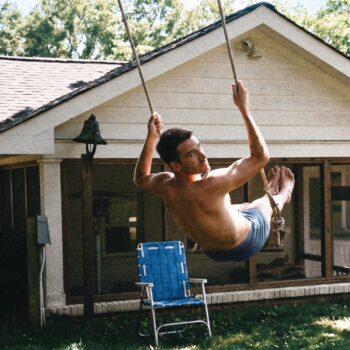
For Carpenter, the record arrives with the weight of an ending as much as a beginning. “This feels like a letter from rehab,” he tells Atwood Magazine. “Even though I didn’t go to rehab, it feels like a postscript a little bit.” Later, he goes further: “Don’t quote me – well, do quote me – but this might be the end of the Nick who doesn’t think he belongs.” King of Having Fun lives inside that possibility – not erasing the person who made all those earlier Medium Build records, but looking at him clearly enough to decide what still deserves to come along.
“This album is maybe the best and most important thing I’ve ever made. I got all my favorite people in a room and we had fun. It’s a celebration of life,” Carpenter shares. Few songs capture the record’s intensity better than “Do Something Productive,” one of King of Having Fun’s most viciously funny and unsettling moments. Carpenter begins with the familiar choreography of self-improvement – wake up, run, meet a friend, eat well, clean the house, write a song – only to watch the whole routine collapse beneath the compulsions it was supposed to control. The song is relentless because Carpenter’s mind is relentless: Wellness becomes another benchmark, another performance, another way to discover he still hasn’t fixed himself.
“Wake up, go for a run, coffee with a friend
Go home and make some lunch
Do something productive,
clean the house, and write a song
But you know it won’t be long,
you know it won’t be long
’Til I gotta get super f**ed up…”
“I think I was fed up with myself,” Carpenter says of the song. “No one’s meaner to me than me. That’s my rule.” The cruelty is part of what makes “Do Something Productive” so difficult to shake: Its humor doesn’t soften the spiral so much as expose how absurdly easy it is to disguise punishment as discipline. Beneath the running, supplements, clean house, and carefully managed routine is the same person still trying to outrun himself.
“Perceived” cuts even closer to the bone. Here Carpenter turns his attention toward Medium Build itself and the strange bargain at the center of an autobiographical career: He has built a life by saying the private thing out loud, only to realize that constant exposure can become another form of confinement. “So I turn my private life into entertainment / Commodified all the thoughts I’d ever had,” he sings, before the song reaches its bruising refrain: “I don’t wanna be here / But I don’t wanna be gone / No I don’t wanna be perceived at all.” It’s one of the album’s sharpest contradictions – wanting the stage, the songs, and the connection while recoiling from what it costs to be watched.
Carpenter understands exactly what that bargain has given him – and what it has taken. “I recognize that what Medium Build offers people is I say the thing out loud that people haven’t said,” he explains. But somewhere along the way, the refuge he created began demanding its own performance. “As part of creating my character, I started selling Nick up the river,” he says. “So when Medium Build started being my own oppressor, when I created my own handcuffs, it’s like, we’re out.” “Perceived” gives that reckoning a pulse: a song about craving connection while wanting desperately to disappear from view.
That push and pull gives King of Having Fun its astonishing range. “Bird Woman” churns and erupts with raw, almost feral release, Carpenter seeing himself in the mockingbird making noise because it wants something. “Home Depot” brings twangy charm, empathy, and genuine ache to its portrait of a man who can fix nearly anything except himself. “It’s Not Easy (Falling In Love)” burns with heat and romantic urgency, while “In My Gut” glows dreamily as Carpenter traces learned behavior and family conflict backward through generations. “Chill” smolders until its electric fuse catches, complete with a guitar solo that hits exactly where it should; “Downpour” barrels forward with emotional and musical force; and “Armor” turns intrusive thought into pure catharsis: “There I go again / Projecting on you / And I hate myself / So, I turn it into art.”
Even at its most bruising, though, King of Having Fun wants to move. These songs surge, strut, crack open, and occasionally combust; Carpenter’s confessionals arrive inside arrangements built to be felt physically as much as processed intellectually. “Armor” races ahead of its own intrusive thoughts. “Bird Woman” thrashes against the stillness its narrator covets. “Downpour” pushes anxiety through a full-bodied rush, while the guitar break in “Chill” seems to burn off whatever words can’t. The catharsis here isn’t merely lyrical. Carpenter and his band give all that interior noise somewhere to go.
The vitality running through these songs is no accident. Carpenter made much of King of Having Fun in the room with the musicians who have become central to Medium Build’s live identity, allowing drums, guitars, bass, mistakes, laughter, and friendship to shape the music from the beginning. Where earlier Medium Build recordings often started with beats and were later translated for the stage, these songs already seem to know what they’ll become in a packed room. Carpenter describes the difference simply: “So much less loneliness. Informed by laughter and friendship.” That communal pulse is everywhere – even at the album’s darkest, it rarely sounds isolated.
“Almost everything was recorded live,” Carpenter tells Atwood. Overdubs inevitably followed, but, as he puts it, “the bones were all live.” You can hear those bones throughout King of Having Fun: people reacting to each other, guitars allowed to snarl and soar, drums pushing songs forward, and a singer who sounds increasingly comfortable sharing the weight with the people around him. For an artist whose music has so often emerged from solitude, that change feels profound.
And then there is “King of Having Fun” itself, the album’s emotional center and the song that feels like a capstone to an entire era of Carpenter’s writing. He looks backward toward the curious, rambunctious kid he was before fun became partying, before approval became currency, before every experience came with an awareness of how it might look from the outside. The memories are wonderfully specific – bikes, DVDs, a PSP, stuffed-crust pizza, Mountain Dew – but the real ache comes from recognizing how naturally that younger self once inhabited his own life.
“I was a curious kid and that curiosity led me to the deep woods, not only of Dire Dire Docks or Vice City, but of my own physical world. That curiosity led me to call my local radio station and ask what that song they just played was. It was ‘Two Princes’ by Spin Doctors! That curiosity got me second place in the rocket building class at camp and had me riding the bench during my only season as a basketball player. That curiosity enabled me to take risks and fail and laugh. That curiosity revealed a zeal for life that wasn’t much concerned with how I was perceived. That curiosity is very much the DNA of a kid who could wear the robe and crown, the king of having fun.”
In conversation, Carpenter reduces that whole world to one devastatingly simple distinction: “The king of having fun was me before I learned to mask and code-switch and posture.” The title track reaches backward toward that kid without pretending adulthood can be undone. Its real triumph comes in the song’s movement from “I used to be” to “I could be” and finally “Baby, I’m still the king of having fun.” What initially sounds like mourning slowly becomes recognition.
That child isn’t simply an object of nostalgia. Across King of Having Fun, Carpenter is trying to recover some of his freedom without pretending he can undo everything that came afterward. As he tells Atwood, “Fun is not concerned with safety. Fun knows it’s safe. Survival is a chokehold on control and safety.” That distinction runs beneath nearly every song here: the difference between pleasure and escape, work and presence, attention and connection, making it through the day and actually being inside it.
And perhaps the most affecting change is that Carpenter no longer seems willing to outsource the final verdict on who he is. “Historically, for me, I have given people everything to approve of me,” he tells Atwood. “And now I’m giving myself the gift of approving myself so I don’t have to go seek it.” That freedom remains imperfect and ongoing – exactly as it should. Elsewhere, Carpenter puts the transformation in wonderfully ordinary terms: “I’m chilling. I’m having fun. I’m laughing. I’m taking the stairs. I’m eating more ice cream than ever… I don’t feel scared anymore.”
King of Having Fun succeeds because all of that self-examination still results in a record you can scream, dance, cry, laugh, and lose yourself inside. Carpenter hasn’t made an album about arriving at some perfected version of himself; he’s made one about being alive enough to keep looking, loving, failing, playing, and trying again. It’s blisteringly catchy, emotionally overwhelming, deeply funny, and full of the kind of writing that makes a private thought suddenly feel communal. For a project that has always thrived on turning inner chaos into connection, King of Having Fun feels like Medium Build at his most complete – and one of the year’s most special records.
There may be no cleaner way to describe that arrival than Carpenter does himself: “This isn’t a comeback. But somehow it feels like my comeback to myself.”
“I Believe in You”
by HeathersHeathers make devotion sound like a car flying off the rails.
“I Believe in You” is exactly that kind of beautiful wreck – a jangling, feverish indie rock rush held together by spectacular acoustic guitars, raw nerves, and the stubborn conviction that somebody else is worth believing in even when your own life feels like it’s coming apart. Heath Michael Thomas’ voice doesn’t so much glide over the song as tear through it, roaring and straining against arrangements that shimmer one second and churn the next. “In my head, I’m driving a car / It’s flying off the rails and it’s falling down / like a shooting star, but I don’t care,” he sings, and somehow the whole thing feels both perilous and radiant. Heathers’ lead single from his debut album Awesome is tender enough to bruise and raucous enough to shake the walls – a love song with its teeth bared.

That tension is what makes “I Believe in You” so immediately arresting. Underneath all the noise and motion is a remarkably simple gesture of devotion.
“My girlfriends a speech pathologist and she always says she believes in me,” Thomas explains. “But her job and school is so much harder than anything I’m doing, so the songs kind of me saying it back to her.”
The music refuses to sentimentalize that devotion. “I Believe in You” keeps buckling and surging, its acoustic guitars layered until they seem almost electrically charged, radiant one moment and ragged the next. The rhythm presses forward with restless momentum while Thomas’ vocal grows increasingly emphatic, every repetition of the title sounding less like reassurance than something he needs to shout into existence. By the time he reaches “I feel this pressure building up and it’s / crushing me into a pulp, but I don’t care,” love and overwhelm have become inseparable. The pressure is real. So is the devotion. Neither cancels the other out.
The pressure in that lyric came from a particularly low stretch in Thomas’ own life.
“At the time I was out of a job and it was just sort of rock bottom for a bit,” he says. “I don’t remember exactly what I was thinking but, it was probably just me being moody that day.”
Yet “I Believe in You” never sinks into self-pity. Its most affecting move is the way it keeps pushing outward, redirecting anxiety into affirmation. Even the refrain complicates itself beautifully: “I believe in you / I believe in me but I also believe in you.” Self-belief and belief in somebody else coexist here as mutually sustaining forces, each one giving the other a little more room to breathe.
The emotional directness was intentional. “I think once I came up with the riff I knew the lyrics had to be sort of personal and touching,” Thomas says. “I write a lot of songs with giberrish lyrics and I knew I shouldn’t waste this riff on dumb words.”
That riff is worth protecting. Heathers’ sound has the looseness of something caught before anybody had time to sand down its sharpest edges – guitars jangling, scraping, blooming, and colliding around melodies that somehow remain unmistakably catchy. Thomas makes much of the project himself, often without expensive gear, and that homemade foundation matters to the way these songs move. There is a rough physicality to “I Believe in You” that feels preserved rather than manufactured, the performance still carrying the excitement of the moment it first took shape.
For Awesome, Thomas brought in engineer Lars Stalfors (Wisp, The Mars Volta).
“He did a good job not making it all sound too shiny, which I was worried about,” Thomas says. “I wanted people to hear what these songs sounded like when I first put them to tape, and he did a good job of cleaning it up while still keeping it loud.”
That philosophy suits an artist who seems most interested in chasing whatever excites him next. Thomas grew up in Cape Girardeau, Missouri, where he started experimenting with his father’s guitars and home-recording setup at 11 before playing in bands throughout high school and eventually focusing on Heathers. His reference points stretch from Big Star and Todd Rundgren to Gram Parsons, while his current listening includes Geese and black midi – a mix that makes sense once you hear the way “I Believe in You” lets melody, abrasion, folk-rooted guitar textures, and near-chaotic rock energy occupy the same space.
Awesome, out October 30 via Warner Records, takes that instinct and runs with it. Thomas describes the record with characteristic economy: “I’d like to think it’s pretty explosive. I’m a young guy and I gotta lot of fast songs in me right now, maybe that’ll slow down in the future.”
“I Believe in You” captures that youthfulness without confusing speed for shallowness. Its beauty comes from how exposed everything remains: the pressure, the uncertainty, the gratitude, the affection. Thomas doesn’t dress love up as salvation. He simply recognizes another person’s effort and care, then answers with everything his voice and guitar can carry.
The song begins with a car flying off the rails and ends up somewhere unexpectedly steady. Maybe that’s what belief can do. It doesn’t stop the fall, quiet the pressure, or make life suddenly manageable. It gives you somebody worth shouting for while everything else is still in motion.
And on “I Believe in You,” Heathers shouts beautifully.
“Good American”
by Spanish Love SongsA good American gives everything. What happens when America gives nothing back?
Spanish Love Songs channel that betrayal into a full-body charge on “Good American,” a furious, propulsive rock song about service, sacrifice, and the institutions that demand both before deciding whose lives are expendable. Ringing guitars, a relentless rhythm section, and Dylan Slocum’s scorched vocal send the song hurtling forward even as its story follows a veteran abandoned by the country they served. It is angry because it has every reason to be – and communal because Spanish Love Songs refuse to let that anger end in isolation.
“Good American” arrives nearly a year after A Brief Intermission in the Flattening of Time, the collaborative four-song detour Spanish Love Songs deliberately built as its own self-contained corner of their catalog. Where that record leaned into atmosphere, restraint, and reflection, their fifth full-length, Future Nausea, out November 6 via Pure Noise Records, pushes hard in the opposite direction. Spanish Love Songs try to approach each album with as close to a clean slate as possible; this time, the direction revealed itself almost immediately.

“‘Good American’ is the first song I wrote and showed the band for the record, and it sort of instantly clicked with everyone that we were going to make a certain type of rock record,” Slocum explains. “So compared to the E.P. and really No Joy, it’s going to feel a little louder, a little looser, and a bit less somber.”
Louder is almost an understatement. “Good American” barrels forward on a rolling bassline and four-on-the-floor pulse, every beat pushing toward the next impact as ringing guitars fill the space around Slocum’s voice. There is charisma in the charge, but very little polish between the listener and the feeling itself. The song sounds immediate because it needs to. Its opening line, “Every day is a mountain when you can’t tell which disaster to ignore,” doesn’t introduce a distant political argument so much as a person already exhausted by living inside one. Nuclear war hums through the radio. Forty arrives in a high school parking lot. Work becomes survival. Military service promises belonging, dignity, and purpose – until the institution that asked for everything decides it owes nothing in return.
Slocum says the character emerged almost before he understood what he was writing. He began with “every day is a mountain,” quickly realized he was following a veteran, and started thinking about stories he had read about trans soldiers confronting bans on transgender military personnel – career service members facing the possibility of leaving voluntarily or being discharged, with pensions, healthcare, and disability benefits potentially hanging in the balance. Those stories collided with memories from Slocum’s college years, when he delivered pizzas to a VA hospital and met veterans whose lives stayed with him long after the deliveries ended.
“The big question for me was, ‘why is it so hard to picture a happy ending for some of these folks?’” Slocum says. “It shouldn’t be that difficult, given our country’s vast resources. Yet, we know that’s not the case. And that’s largely the struggle of the song.”
“Good American” gives that struggle a life rather than reducing it to an argument. “Shipped you off to practice what we preach / Like a real Samaritan / Brought you home to die out in the street / You’re a good American,” Slocum sings, the title landing like praise hollowed out into indictment. Later, economic desperation, military abandonment, and state violence collapse into one another: “Involuntarily separated / No salute for that Silver Star,” followed by the gutting image of someone being called an alien, deadnamed, and beaten against the hood of a police car. Spanish Love Songs have always excelled at making structural catastrophe legible through individual lives; here, the political becomes visceral because there is a body absorbing every consequence.
For Slocum, the title’s target extends beyond the military story at its center.
“The song is concerned with the treatment of veterans here, and grapples with the idea of being obedient to and wronged by the institutions we trust,” he explains. “In a broader sense, I’m probably fighting with this notion that we are supposed to shut up and take what we’re given. We’re told that so much is ‘inevitable.’ It has made me and my friends a bit cynical, and I don’t want to be a cynic!”
That last admission matters. For all its fury, “Good American” isn’t interested in cynicism as an endpoint. The title still has somewhere else to go.
“Hopefully by the end of the song ‘good American’ is a form of kinship?” Slocum says. “I see you. We’re in this together. Etc.”
The music makes that shift possible. Spanish Love Songs could have dressed this story in solemnity, but solemnity would rob “Good American” of the thing that makes it hit so hard: movement. Its anger runs through the body before the mind has time to intellectualize it. The rhythm keeps charging, guitars clang and flare, Slocum pushes against every measure, and the whole recording carries the unstable electricity of a band threatening to blow the walls outward. The darkness of the story and the exhilaration of the performance don’t cancel each other out; they create the tension that gives the song its pulse.
“I love a song that feels loud and uplifting while telling a depressing story,” Slocum says. “That’s probably the biggest through-line for this band the last 5 years and all I really wanted for this song. We wanted people to feel like they were in a room that was about to explode in an outburst.”
Chris Walla helped Spanish Love Songs capture that feeling. The band’s schedules don’t usually allow them to record live together in one room, but for “Good American,” Walla helped them find a way to build that volatile live energy into the track anyway. Sarah Tudzin’s final mix then strips away anything that might blunt the impact. Slocum’s description of her approach is almost comically simple: “Here’s the band. Here’s the song. Let’s go.” That directness is exactly what the recording needs. Nothing distracts from the forward motion; nothing gives the listener somewhere comfortable to hide.
The same philosophy runs through Future Nausea. Spanish Love Songs set out to make their version of a big rock record, channeling the widescreen ambition of heartland rock while rejecting the nostalgic mythology that so often accompanies it. Instead of looking backward toward an imagined better America, these songs stare into political violence, late-stage capitalism, climate anxiety, and the dread of whatever comes next. Slocum wanted the record politically angry and major-key, “more angry than sad” – a significant shift for a band whose catalog has long made despair itself sound anthemic.
“It’s not a happy record by any means,” Slocum says. “But it doesn’t feel as introspective. It’s a bar record. It’s meant to be enjoyed in a crowd of people who are all feeling the same way.”
He remembers an NPR host describing Spanish Love Songs back in 2018 as “ALL CAPS ROCK N ROLL.”
“We’ve finally made that record.”
“Good American” certainly sounds like it. Its force is physical, but that physicality serves a larger purpose: Spanish Love Songs want people moving because movement means there are still people beside you. Anger becomes useful when it gets bodies into the same room, voices shouting the same words, strangers temporarily made less strange by recognizing themselves in one another.
“The tension is everything,” Slocum says. “No matter how we branch out, we still come from the DIY punk/emo scene. Community is everything. The only place I really ever want to be is on that stage with my people, shouting until we feel a little bit better. We absolutely had that in mind when recording the album.”
That commitment now extends beyond the record itself. This November, Spanish Love Songs will embark on the first-ever NIVA-certified Live Independent Tour, playing 19 shows exclusively in independent venues across the United States. It’s an unusually fitting next step for a band whose music has always depended on the alchemy of cramped rooms and collective release. These are the spaces that raised Spanish Love Songs, and the spaces where a song like “Good American” can become bigger than the recording – not because its problems disappear once everyone starts shouting, but because being surrounded by people shouting with you can make those problems feel possible to survive.
Slocum is adamant that a four-minute rock song cannot solve what “Good American” describes. Nor does he want it to become a lecture. Spanish Love Songs’ work has always been more interested in people getting through life than in pretending art can hand them a policy solution. The song’s power comes from that humility. It names exploitation and abandonment without reducing its central figure to either one; beneath every institution and political crisis is somebody trying to make rent, keep their dignity, find their friends, and imagine a future that doesn’t end in another betrayal.
“All we ever want to do is tell stories about people getting through life, and hope that our listeners can see they’re not alone in whatever they’re feeling,” Slocum says. “That’s the best part of music for me.”
And so “Good American” ends without anything resembling an easy victory. “Every day is a blessing and will be until the day that you are through,” Slocum sings, before the song looks out over a city in flames and reaches for one last image of impossible beauty: “As the city’s burning down all I hope is you can finally see the moon.” It is devastating precisely because Spanish Love Songs refuse to confuse hope with reassurance. The system may still fail you. The city may still burn. The future may still make you nauseous.
But somebody sees you.
Somebody is standing beside you.
And by the end of “Good American,” that solidarity feels like the only definition of patriotism worth keeping.
“High in a Drugstore”
by Carrie OkayCarrie Okay weren’t supposed to be a band.
LØLØ, salem ilese, and Alna walked into a writing session intending to make a song for somebody else and came out with “High in a Drugstore,” the kind of debut that makes the whole accidental origin story feel almost inevitable. Dreamy guitars bloom around an immediate, insistent beat; their voices ache, shimmer, and lock together with startling ease; and the chorus hits with the force of a thought you’ve been trying all night not to have. What begins as post-breakup disorientation quickly becomes something exhilarating and all-consuming – messy, funny, self-lacerating, and impossibly catchy. Carrie Okay may have started by accident, but “High in a Drugstore” already sounds like the work of a band that knows exactly who they are.

The certainty is especially striking because all three members came to Carrie Okay with established creative lives of their own. LØLØ, salem ilese, and Alna had already spent years writing, releasing, collaborating, and pitching songs when “High in a Drugstore” gave them a reason to build a new world together. What was supposed to leave the room in somebody else’s hands suddenly sounded too personal, too natural, and too distinctly theirs to surrender.
“We’re all songwriters and are constantly in sessions writing and pitching for others, but something about this song just felt…different!” LØLØ shares. “We couldn’t really put our fingers on it, but after it was completed, we all listened through and knew that we could NOT give this song away. It just felt like us, before there even was an us.”
You can hear that instinct all over “High in a Drugstore.” Produced by Andrew Goldstein, the track pairs acoustic guitar with lush, dreamy textures and a beat that lands hard enough to keep the whole thing in motion, even as its narrator comes spectacularly undone. A night out meant to provide relief instead becomes a chemically amplified tour through everything she has been trying to suppress: She thinks she sees her ex at Denny’s, drinks too much, takes a gummy, winds up wandering a convenience store, and discovers that heartbreak has followed her straight beneath the fluorescent lights. “I went out / I was looking for heaven / but I found myself at the 7-Eleven,” the trio sing, turning a bleak little detour into one of the song’s most irresistible images.
The chorus makes that unraveling enormous. Their achingly beautiful voices layer and converge until private embarrassment becomes communal release, while the guitars glow around a melody designed to lodge itself immediately in the bloodstream. And Carrie Okay never clean up the uglier parts of the spiral. “My mind is a drunk whore / And she’s lonely without you,” they sing – blunt, ridiculous, wounded, and painfully lucid all at once. The line works because the song understands that heartbreak can make us pathetic and self-aware at exactly the same time; sometimes recognizing the absurdity doesn’t stop the hurt, but it does give us permission to laugh while we’re inside it.
“We loved how ironic the idea of being high in a drugstore was and we all related to it,” Alna explains. “Some of us were newly single at the time, and we got to talking about how tough it is to try feeling like yourself again after the end of a relationship. Particularly the first time you go to a party because you think it’ll be good for you to go out and see people. And at first it’s fun, maybe you have a drink or three… and suddenly the feelings you were suppressing flood back tenfold. We just wanted it to feel like you were there with us at the diner, lured like a moth to the 7/11 lights, wandering around the aisles looking for snacks, and trying to hold back the unrelenting urge to call somebody you still love.”
Carrie Okay wrap that emotional chaos in a sound indebted to the alternative music they grew up on without letting nostalgia become the point. You can hear that lineage in the contrast between haze and impact – sweetness rubbing against abrasion, gorgeous vocal harmonies floating above drums that refuse to stay politely in the background.
“We didn’t try to reference anyone specific, but I believe you are what you consume, so our childhood favorites inevitably shine through,” salem says.
Among those favorites, she cites Hole, Mazzy Star, The Sundays, and Alanis Morissette, alongside a streak of punk drawn from Green Day and blink-182. The result feels familiar in texture but immediate in execution, less like three solo artists meeting in the middle than a fourth identity emerging between them.
That new identity may be the most exciting thing about “High in a Drugstore.” Each singer has a distinct voice, yet none of them seem to be competing for the center; they trade, stack, and blur into one another until the harmonies become part of the song’s emotional architecture. LØLØ describes the chemistry simply: “Even though we have distinct voices, we all share the same emotional language around our lyrics and melodies.” That shared language lets Carrie Okay make a low point sound enormous without robbing it of intimacy. The song can be intoxicating and embarrassing, dreamy and in-your-face, achingly sad and wildly fun because the band understand those impulses as parts of the same experience.
Alna hopes that messiness is precisely what listeners recognize in themselves. “We hope ‘High in a Drugstore’ makes someone going through a messy breakup know it’s okay to feel those feelings, to miss somebody you’re not supposed to, and not be perfect. We’ve all been there, and we can confidently say it will pass. Having an outlet to write about these experiences has been cathartic, and while it’s a little scary to put out music about a low point, it’s well worth it knowing that sharing our most personal moments means someone else might not feel alone in theirs.”
“High in a Drugstore” thrives because Carrie Okay refuse to make heartbreak prettier than it is. They let it stumble into Denny’s, get too high, lose its dignity beneath convenience-store lighting, and still somehow emerge with a chorus you want to scream at full volume. Three songwriters walked into a room planning to give this song away and discovered a band instead. What started as a track too good to lose now sounds like the beginning of a band too good to ignore.
“Everything Is Nothing”
by INOHAThe fastest way to give up on your own life is to believe everyone else is doing it better.
INOHA’s “Everything Is Nothing” stares straight into that trap – the impossible standards, endless scrolling, dead-end comparison, and creeping conviction that maybe you’ll always be exactly where you are. “I wanna be Jackie Chan / but I can’t kick like he can / I wanna be like Bruce Wayne / but I’m stuck in a job I hate,” Keanu Bicol sings, distilling the absurdity of comparison into a verse that is funny until it suddenly hurts. Yet the San Antonio band refuse to let despair dictate the music. “Everything Is Nothing” hits with an immediate jolt of electricity: Cheerful, jamming guitars race forward, the rhythm stays buoyant and busy, and Bicol’s emphatic vocal gives every line the charge of an anthem meant to be shouted back. Nihilism has rarely sounded this invigorating.

That contradiction sits at the center of INOHA’s sophomore album, This Might Be Useful, out now. Formed in San Antonio in 2022, INOHA – Bicol, drummer Ricky Juarez, bassist Christian Young, and lead guitarist Gavin Gonzalez – built their audience through local shows, touring, and online discovery before 2024’s “Seventh Heaven” exploded, eventually earning an RIAA Gold certification and becoming the defining breakthrough of their debut album, ALOHA INOHA. Success opened doors, but it also introduced a new question: What do you do once the thing you were chasing actually happens? This Might Be Useful answers by examining pressure from every direction – ambition, relationships, responsibility, comparison, and the expectations that arrive alongside growth.
“The struggle we went through to get to This Might Be Useful came from the pressure of having such a great response to that first album,” Juarez explains. “I love that record, but the question became: How do we expand from there? How do we elaborate?”
“Everything Is Nothing” attacks that pressure at its most internalized. Jackie Chan and Bruce Wayne become deliberately outsized models of greatness, raising the song’s comparison game to impossible proportions. The rest of the lyric zooms in on the life beneath those fantasies: Hours lost scrolling, struggling to get out of bed, isolation, self-loathing, a hated job, and the sinking belief that repeated failure must mean permanence. “Everything is nothing / thought I would turn to something / but I just keep on messing up,” Bicol sings, before the language grows grotesquely physical: “I’ll rot until I’m coughing blood.” The melodrama works because the thought behind it is painfully recognizable. When every comparison tells you that you’re behind, ordinary frustration can start masquerading as proof that your life has already been decided.
“The second verse actually came first: ‘I wanna be like Jackie Chan, but I can’t kick like he can. I wanna be like Bruce Wayne, but I’m stuck in the job I hate,’” Bicol shares. “I think that led into the chorus and the idea that ‘everything is nothing.’ The song really fits the theme of optimistic nihilism because it’s very happy and poppy sounding, while the lyrics deal with much darker themes.”
That brightness is what keeps “Everything Is Nothing” from collapsing under its own exhaustion. The guitars keep grinning through the spiral, the drums push instead of drag, and Bicol sings with enough force to make resignation sound strangely communal. The chorus is huge because INOHA understand the release hiding inside the phrase itself. Everything is nothing can mean nothing matters, so why try. It can also mean nothing matters, so why keep living by standards that were never yours in the first place. Their own explanation frames those two possibilities as the song’s central tension: Pessimistic nihilism against optimistic nihilism, “When nothing matters, WHY TRY!” versus “When nothing matters, WHY NOT!”
Juarez connects that tension directly to the comparison machine in our pockets. “Social media adds another layer to that,” he says. “You’re constantly seeing people and influencers who can inflate what greatness or ‘good’ looks like without showing you the full picture of how they got there. You can end up measuring yourself against something that isn’t realistic.” The song’s video brings that idea down to human scale: A character lies in bed scrolling and sinking further into demotivation before eventually cleaning his house and taking out the trash. “That’s the optimistic nihilism of it,” Juarez explains. “I may not be able to reach this fake thing I’m seeing, but I can do what I can. I can do what I must.”
That small act of agency gets at why “Everything Is Nothing” matters. This Might Be Useful begins with “Figure It Out,” where responsibility becomes a reluctant superhero’s burden, and ends with “Burden,” where surviving pressure creates the strength to help someone else carry theirs. “Everything Is Nothing” lives closer to the breakdown in between – the point where expectation has become paralysis and the fantasy version of your life makes the real one look worthless. INOHA answer that crisis with motion. The song races, jumps, and sings through the ugliness until nihilism loosens its grip enough to become freedom: You may never be Jackie Chan. You probably won’t become Bruce Wayne. You can still get up. You can still make the call, clean the room, leave the job, chase the thing, or simply try again tomorrow.
Bicol puts it considerably more succinctly: “The big takeaway is: Shit happens. Live your life the way you want to live it.”
“Everything Is Nothing” makes that freedom sound electric. When nothing matters, INOHA decide that might be reason enough to live like it does.
“In the end”
by Celia GraceWhen Celia Grace thought she might be dying, she pictured her childhood bedroom.
That image sits at the center of “In the end,” a tender, heartrending song about what remains when life is stripped down to its barest essentials. Written after a terrifying reaction to a blood transfusion left Grace struggling to breathe as the hospital room began to go dark, the track reaches past fear toward the simplest forms of safety: a stove light on a cold night, the sea outside her window, the back garden in summer, the remembered warmth of home. Dreamy guitars glisten beneath Grace’s exposed, aching vocal, letting every detail hang in the air until “Heaven is my childhood bedroom / I’ve seen it” lands with almost unbearable force. “In the end” is brutally beautiful because its answer to mortality is so intimate: When everything else falls away, Grace reaches for the places that taught her how to be alive.

“In the end” closes Grace’s sophomore EP, A Way Of Life, out now – a five-song reckoning with change, acceptance, becoming, and what comes afterward. The Hartlepool singer/songwriter spent most of 2024 undergoing intensive chemotherapy for blood cancer after being diagnosed at 19, an experience that severed her connection to music and upended nearly every part of her life. Remission brought its own disorientation. Grace emerged from treatment trying to rebuild a self she barely recognized, and A Way Of Life became both her return to music and a record of that reconstruction. Produced by Rhys Jiang and mixed by Daniel Alvarez de Toledo, the EP pares back the indie pop of her earlier work, giving memory, uncertainty, and hard-won perspective more room to breathe.
“I’m 22 and I’m going through a weird time at the minute – currently my life is post-everything. Post-cancer treatment, post-breakup, post-graduation. The list goes on!” Grace shares. “It has been an absolutely crazy couple years but this year I’m beginning to feel like I’m on steady ground.”
“In the end” took shape across roughly a year, changing as Grace did. Its first verse begins in physical distress – “In the middle of the night / I get up feel sick / and I try, always try / but I am losing my grip” – before memory opens a door out of the room. The arrangement moves with the same suspended quality, intimate and brooding yet flecked with light, while Grace’s vocal carries a fragile steadiness that makes every image cut deeper. Then the song walks outside. “I wanna talk to the real me so I / go to the beach / and she’s waiting for me / watching the sea be the sea,” she sings, allowing the natural world to exist without explanation before arriving at one of the EP’s loveliest gestures of surrender: “So I let June be June / and wash over me.” After so much time spent having change forced upon her, acceptance here sounds less like giving in than finally loosening her grip.
As Grace recovered, the song kept changing with her, its meaning stretching beyond the memories that first brought it to life.
“But also, on a wider scale I find myself relating to it now in the way of just wanting to go home,” Grace explains. “Not really ‘home’ in a physical sense, more like coming home to myself and the things I love doing and just tending to my nervous system. I like how the meaning has developed as I’ve gotten better.”
That evolution gives the EP’s closing position its weight. A Way Of Life begins at a breaking point, moves through lost love, release, and self-recognition, and ends here with Grace no longer asking life to return to what it was. “In the end” is the record’s arrival, though Grace wisely leaves the destination unfinished. Rain threatens all day and finally falls. The seasons move. The sea remains itself. Grace sits with the knowledge that survival has changed the scale by which ordinary life is measured, and the song’s dreaminess lets that realization arrive gently instead of declaring itself as revelation.
Perspective, Grace says, has become one of the greatest changes of all. “It’s been quite an anchor through its creation and release, because it always reminds me of that. Now that I’m relatively healthy and cancer-free I can find myself sometimes getting caught up in menial things as everyone does. But this song reminds me of what’s really important and that I actually already have everything I need.”
The answer Grace carries with her is smaller, and perhaps more durable, than certainty. “In the end I just wanna go home,” she sings again and again, until home stops sounding like a place she can point to on a map. It is the stove light. The childhood bedroom. The beach where the “real me” is waiting. It is the ability to recognize what matters while she is still here to hold it. “In the end” aches because Grace came terrifyingly close to losing all of that; it heals because she can hear those ordinary things calling her back. After everything, she knows where to return.
— — — —

Connect to us on
Facebook, 𝕏, Instagram
Discover new music on Atwood Magazine
Editor’s Picks
follow EDITOR’S PICKS on Spotify