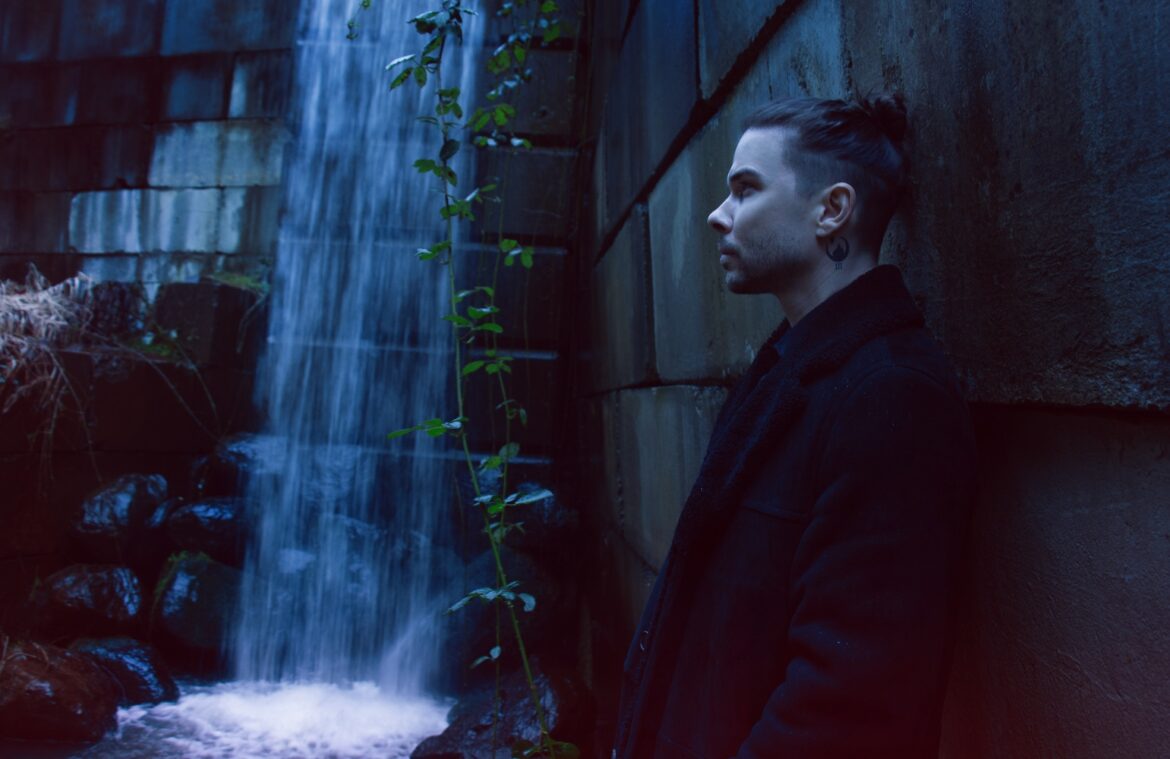
A deeply immersive portrait of Seven Lions’ evolving creative world, tracing how Jeff Montalvo moves beyond genre, expectation, and nostalgia to shape his sophomore album ‘Asleep in the Garden of Infernal Stars’ as a living myth of artistic freedom, restlessness, and self-trust.
by guest writers Jeff Montalvo and Jack Batt
‘Asleep in the Garden of Infernal Stars’ – Seven Lions
There is a house on the outskirts of Seattle that may be haunted.
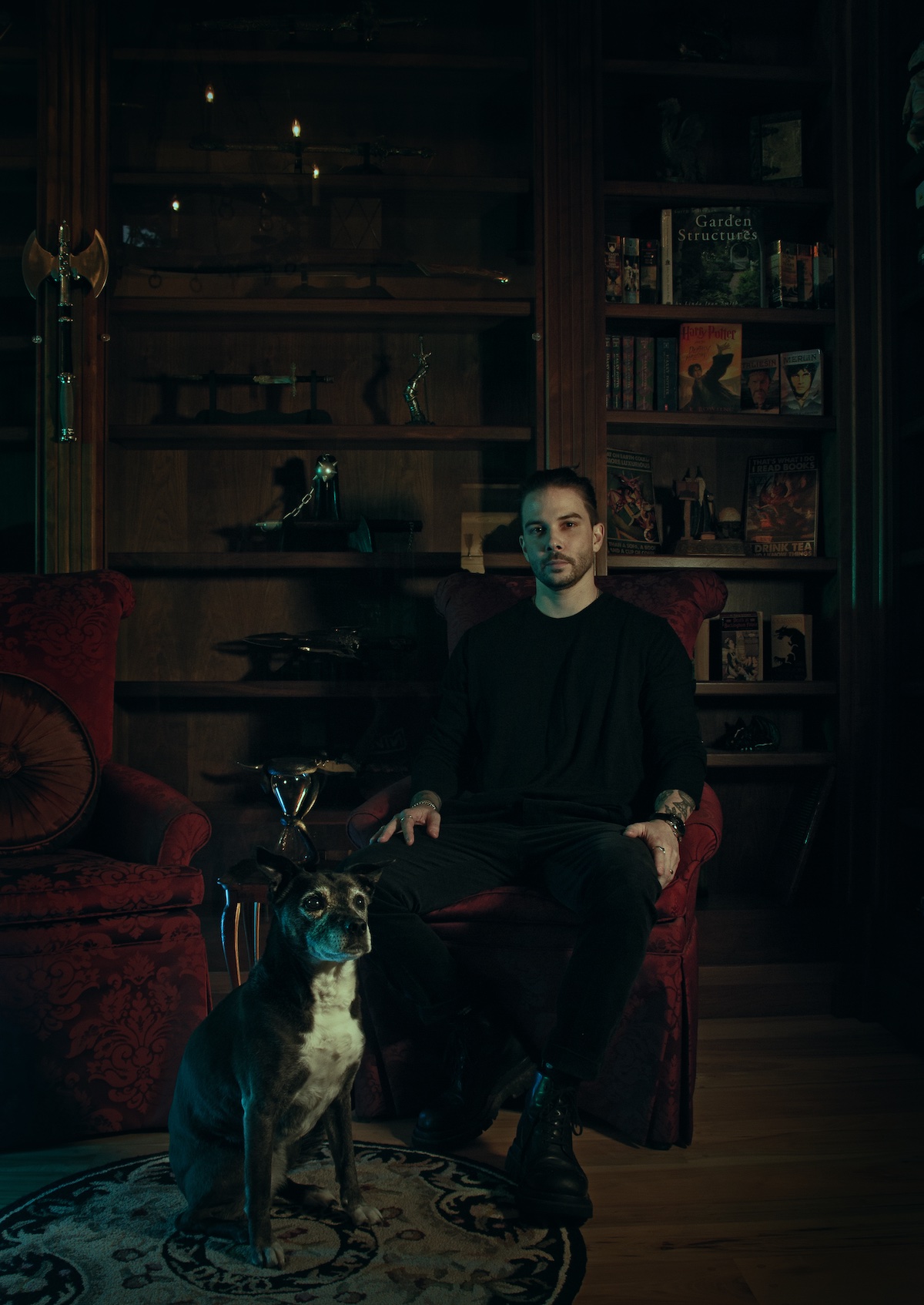
Inside are warped mirrors, a taxidermy collection, weathered bookshelves, crystal balls, dozens of candles, gothic wallpaper, tarot cards, and a home studio lit by lava lamps and shades of amethyst, with aged world maps and occult relics on its walls. In the back of the room, there is a leather couch that appears to be black or brown or purple. The windows overlook a garden and a yard that disappears into the woods. A dog is asleep in the grass.
This studio is where Jeff Montalvo, better known as Seven Lions, recently wrapped production on his sophomore album, Asleep in the Garden of Infernal Stars. Unlike the tightly woven sonic narrative of his debut, Beyond The Veil, his latest record is a portrait of the long and winding story of Seven Lions.

Since the inception of the Seven Lions project in 2011, casual listeners and festival goers have been converted into a passionate (almost cult-like) fanbase at various points along the journey. Some have been around since his contest-winning remix of Above & Beyond’s “You’ve Got To Go,” others discovered him playing trance on an art car at Burning Man, and more stumbled in when he launched his independent record label Ophelia in 2018. All of them can confidently describe Seven Lions, but none of them will do so in the same way.
In her essay Bluets, author Maggie Nelson describes the phenomenon of color. She talks about the mechanics of perception: how we tend to wrongly interpret color as an intrinsic quality of objects. In other words, Jeff’s leather couch is not inherently brown. It is only brown because of the lamps that are switched on, the angle in which the lights hit the couch, and the eyes that observe it. When Nelson’s therapist challenges her idealistic perception of somebody, she draws this comparison: “She is trying to get me to see that although I loved this man very completely for exactly who he was, I was in fact blind to the man he actually was, or is.”
Asleep is a commitment to rejecting the projections and cutting through the noise – choosing authenticity over being seen in the right way, contorting a brand to fit social media trends, or settling on just one (or any) Beatport genre.
“This album is about feeling increasingly out of place in the current media landscape and just really turning away from the noise and focusing back on what I love about music. It’s definitely a statement of individuality and acceptance that I have no “place” in EDM other than the one I make for myself.”
I: The Noise
The music unfolds like a fantasy novel.
Characters and sounds introduce themselves, disappear, and come back years later like they’ve never left. When Kerli’s vocals first reappear on “By the Light of the Moon,” her voice glows in the same celestial melancholy as it did a decade ago on “Worlds Apart.” It is instantly recognizable, as is the chemistry between her and Montalvo. Time has very clearly not driven a wedge between them: they’re back in space, Kerli is singing about the stars, and walls of synths rip through the drops like Montalvo’s earliest work.
“Nostalgia is an interesting thing. People are connected to those old songs and I know I’m never going to recreate something that’s going to hit them in the same way. The hard part is finding something that people can still connect to, and that’s incredibly challenging to do in the studio.”
When the track first premiered at North Coast Music Festival, fans online wondered if it was a “lost track from 2014.” Others were impressed that he was willing to revisit the style, affirming that “it’s such a beautiful sound that should’ve never gone away, and despite how many have tried to replicate, [Montalvo] still does it best.”
He also did it first. Though the exact origin of melodic dubstep is still debated, with some disagreeing as to whether it was Seven Lions or Xilent or Gemini that released the first track, his remix of “You’ve Got To Go” is often credited as the beginning of a genre. As a whole, the melodic bass scene did not exist before Seven Lions, melodic bass record labels did not exist before his flagship Ophelia Records, and his dedicated event series Chronicles was the first of its kind to enter the festival market. While Seven Lions, Ophelia Records, and Chronicles have all grown beyond melodic bass, the impact on the wider electronic music scene cannot be understated.
For a while, it was easy to define Montalvo as the architect standing in the center of a growing genre, and many still do. The structure, tempo, and sound design behind his “You’ve Got To Go” remix became the blueprint that producers and labels would strive to perfect. But replication and perfection miss the point, and the more that a certain expectation was placed on what Seven Lions should sound like, the more Montalvo resisted the idea that it was ever supposed to sound like any one thing at all.
When his remix turned heads, it wasn’t because it sounded like a trance fan’s favorite Above & Beyond song. It was because it didn’t. His approach blurred the lines between dubstep and trance, euphoria and aggression, melody and chaos in a way that entranced listeners enough to climb its way to #2 on Beatport’s Dubstep chart (second to Skrillex’s remix of Avicii’s “Levels”). The philosophy that has carried Seven Lions from the remix contest submission box to headline festival slots is less make a formula, perfect it, and more make a formula, smash it to pieces, and make another one.
“I feel like with genres, there are only certain things that feel acceptable [to each of them]. Every genre is guilty of it, where it’s like, if you make drum and bass, it needs to sound like this, otherwise, it’s not drum and bass. Dubstep has the same thing. When you stick to all the tropes of a genre, it’s really, really boring.”
Festival lineups, playlists, and algorithms have turned predictability into the currency of dance music. Each genre tag has a set of expectations attached to it: what it should sound like, who it’s for, where it’ll be played, and what the crowd will be wearing. But Montalvo has never been interested in playing by the book. Growing up, he was drawn to metal bands that refused to restrict themselves to a subgenre – citing Alcest, Blood Incantation, and Opeth as major inspirations – and it shows. His discography weaves between metal-sounding instrumentals, pop-infused radio hits, and the many sounds of electronic music. At its best, like on the new album cut “Cold as Snow,” all of those elements make it into one track.
“The bands that I like always exist on the edge of a genre. I like bands that incorporate black metal and shoegaze or, you know, jazz and death metal. So the idea of just making 100 melodic bass only songs has never been interesting to me. I don’t think I will ever do that.”
This is the mindset that Montalvo embodies on Asleep: both across the album as a whole and within each individual track. “Delusional” is a vocal house track (for the first minute), “From Beyond” transitions from melodic dubstep to machine-gun-like drumming, and somewhere under the static, there’s a distinct Tool reference he says fans of the band will catch right away.
Montalvo generally hopes that this album will help to bridge the gap between the dozens of dance music sub-genres that have become increasingly segregated over the past decade. For a scene that prides itself on inclusivity, it’s ironic that many of its Reddit comment sections are flooded with commentaries as to why a certain artist’s take on a genre isn’t really that genre.
“In 2025, when I look at it, it’s like you’ve got your dubstep kids who only like dubstep, and your techno kids who only like techno, but there’s not a lot of experimenting and crossover. It just felt important to plant my flag in the ground and be like: I like to do things that don’t really fit into your box.”
II: The Process
When Montalvo began production on Asleep, he revisited the project files for “Days To Come” and “Worlds Apart” for the first time in years.
“I think looking back at those files and how I used to produce, the main thing that I took away was how I didn’t question anything. Like, I would make a sound, I would bounce it to audio, and I would move on. Whereas now, it’s a lot more like… fiddling with things until I feel like it’s perfect. Maybe I should just kind of go back to the it’s done kind of vibe.”
Montalvo grew up playing guitar, bass, and drums throughout the early 2000s, but eventually got tired of waiting around for his bandmates to play and decided to pursue music on his own. His friend introduced him to FL Studio, and he began producing dance music under the moniker Seven Lions in 2011. Though he strongly values self-sufficiency, he’s constantly challenged and inspired by the relationships he’s grown with singers and songwriters over the years – many of whom make their return on Asleep. “Cold as Snow,” the album’s most metal-inspired cut, started as an instrumental that transformed into his sixth joint effort with longtime collaborator Kelly Sweet (HALIENE).
“I wrote ‘Cold as Snow’ with the intention of it being an instrumental, but then I thought it’d be interesting to hear a vocal over it. The only person I knew who could do it justice was HALIENE and she absolutely crushed it.”
Back in 2016, Montalvo and Sweet collaborated for the first time out of Sweet’s Los Angeles apartment, recording various vocal takes and melodies that would become “Rush Over Me” and “The End.” Since then, their working process is mutually challenging but seamless: Montalvo says Sweet nails the vocals on the first go.
Sweet doesn’t consider herself a metal head, but she was inspired by the uniqueness of “Cold as Snow” and quickly turned around a demo that honored the track’s sweeping structure and unusual time signature that sets it apart from traditional dance music. “Anytime I get a track from Jeff, even since day one, I feel like I’m in the world of his mythos when I hear it,” Sweet says. Montalvo’s instinct to take something unwieldy and invite someone else to reshape it is what defines his most rewarding collaborations.
“[We] have a really good relationship where we’re very honest with each other if we want changes, and sometimes we don’t always agree on stuff, which is actually, I think, a really good thing when it comes to creating art. I had some changes that I had suggested for the vocal, and she just wrote back, nope. And now that I listen to it, I’m super glad that we didn’t make any of those changes, because I think it’s absolutely perfect the way it is. My very obscure metal influences and then her voice made something brand new and unique.”
Sweet isn’t the only collaborator who feels especially connected to the world of Seven Lions. A few weeks after “By the Light of the Moon” was released as a single, Kerli posted a video that revealed she was brought to tears as she listened to the demo for the first time. Montalvo hadn’t realized she was so moved by the track until after it was out in the world. At the time she recorded her video, he was just hoping that she liked the track at all.
Montalvo wasn’t always planning on a full length album, let alone two. Five years ago and over a decade into the Seven Lions project, his attention moved between producing, touring life, collaborating, and leading his new label Ophelia. Every few years or so, there’d be enough of a lull to allow for a full EP to take shape. And then the world came to a screeching halt.
Written between long walks in the woods of Seattle, Washington, his debut album quietly came to life during the pandemic in 2020. It is a slow-burning record that begins and ends quietly with solitude as its scaffolding. Ambient drones and space-themed synth pads echo throughout; the lyrics of nearly every song revolve around longing, death, or not knowing what comes after. Of course, there are highs, lows, and anthemic vocal performances, but still (or stopped) is the undercurrent. Looking back on it, Montalvo says, “I feel like maybe I wasn’t as respectful as I could have been of people’s time, and it was a bit of a meandery album.”
Beyond The Veil is certainly not as snappy or adrenaline-fueled as Asleep, but neither was the time it was created in. While nearly all of the world was at home in 2020, the creation of Beyond The Veil was the antidote to the rise of short-form content and the demands of near-constant output from the internet. Five years later, it still serves as a reminder to slow down and listen to the quiet beneath a very loud world.
“I think for me, music has gotten me through a lot of really tough times, especially growing up, you know, high school, all different kinds of times. Even now, when I feel like I need to escape, music has always been that for me. So I think to be a part of that process for somebody else is really special, and I’m always very grateful.”
From the beginning, Beyond The Veil was made with the intention of being an album, and it shows. The attention to detail and cohesion is astounding (bordering on obsessive). Each track sounds like it went through an ungodly amount of iterations and tweaks and ideas before landing on their final forms – because they did. It is the kind of record that could have only come to fruition when an artist like Montalvo has the time to sit down for a year, disappear into the woods, and create a meticulously layered body of work. The creation of Asleep went nothing like that.
“When I finished Beyond The Veil, I swore that it was going to be my last album ever. Not because I hated the process, but it just felt like I had said what I needed to say in a long form kind of way. Even honestly, at the beginning of the year, [Asleep] wasn’t supposed to be an album.”
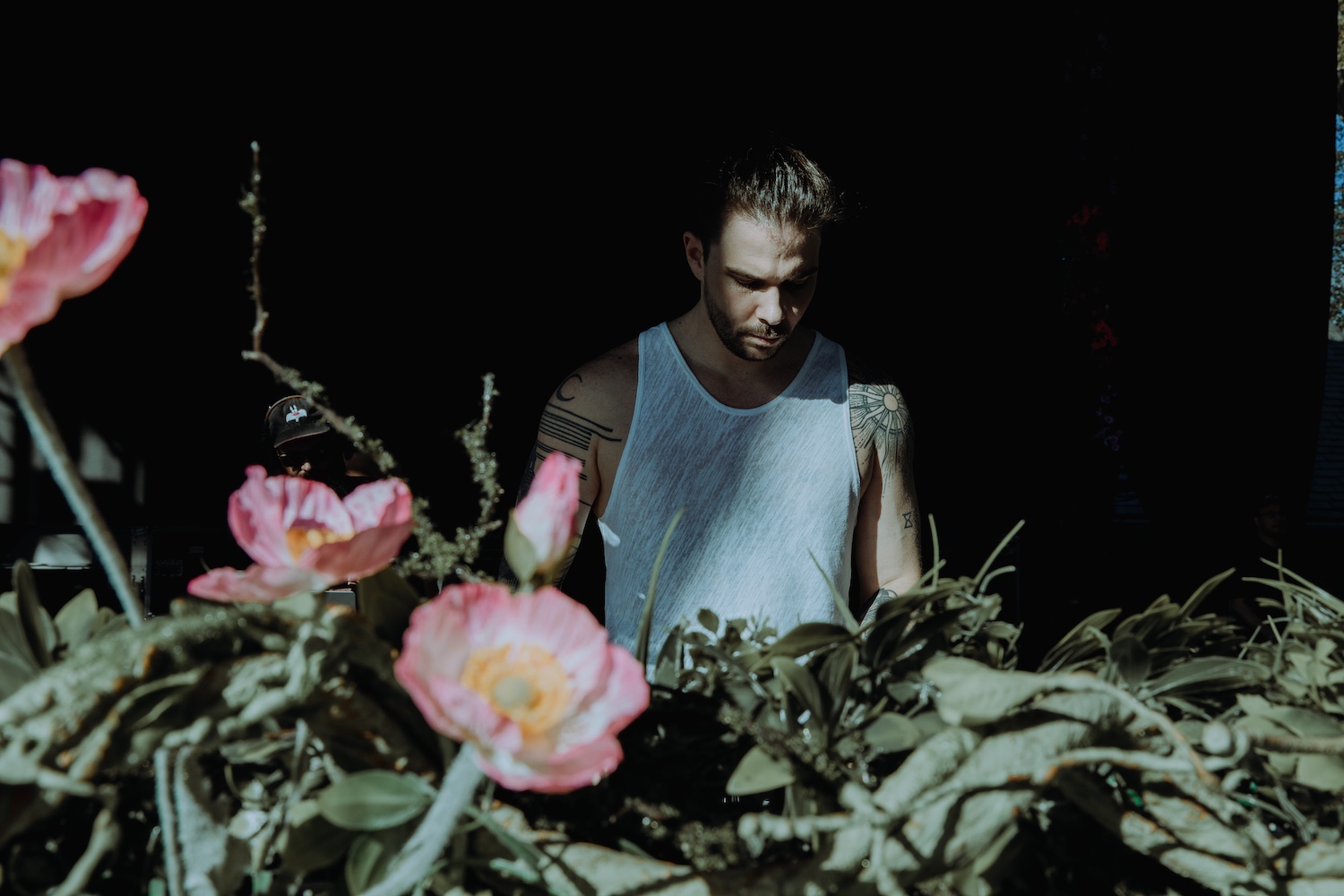
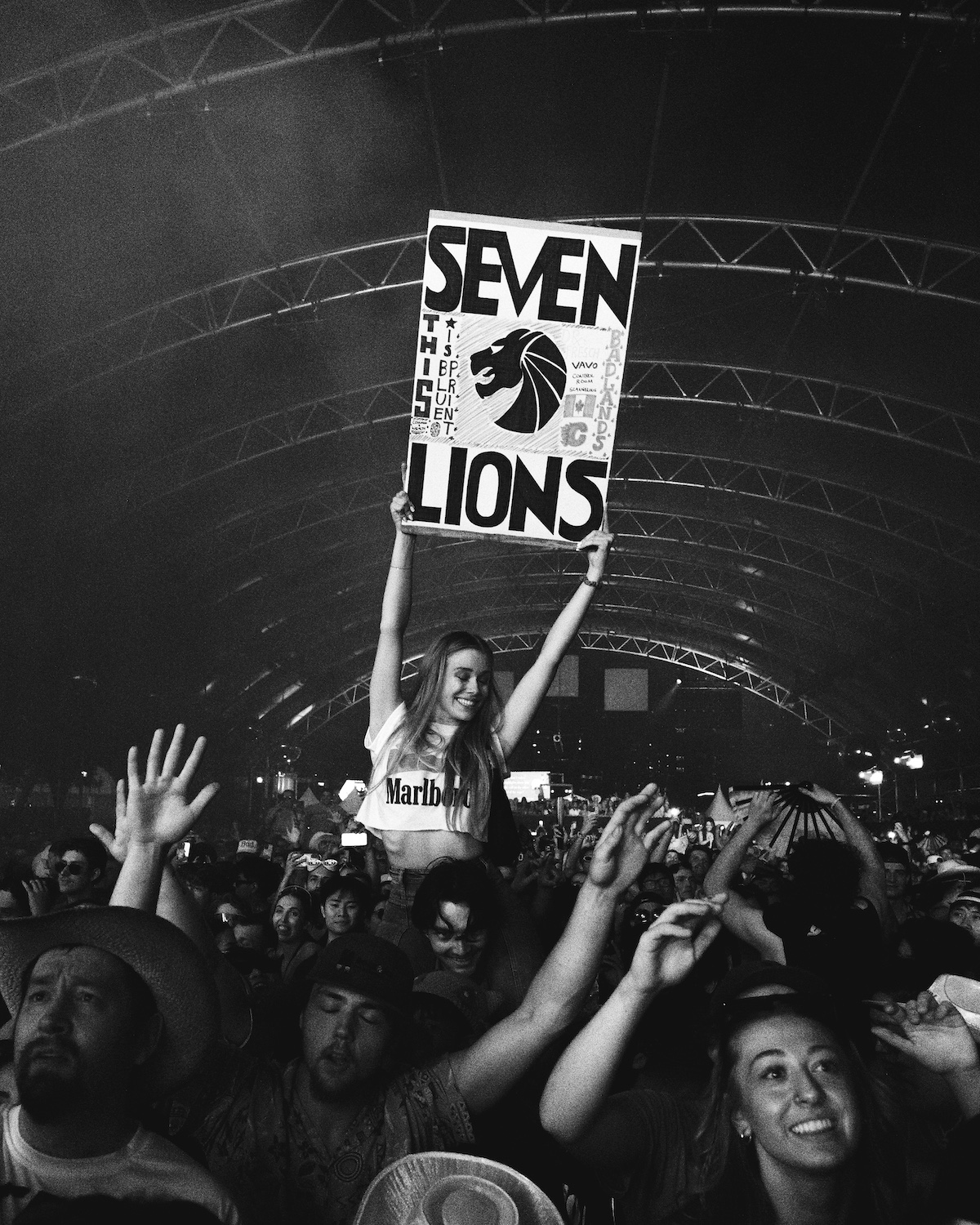
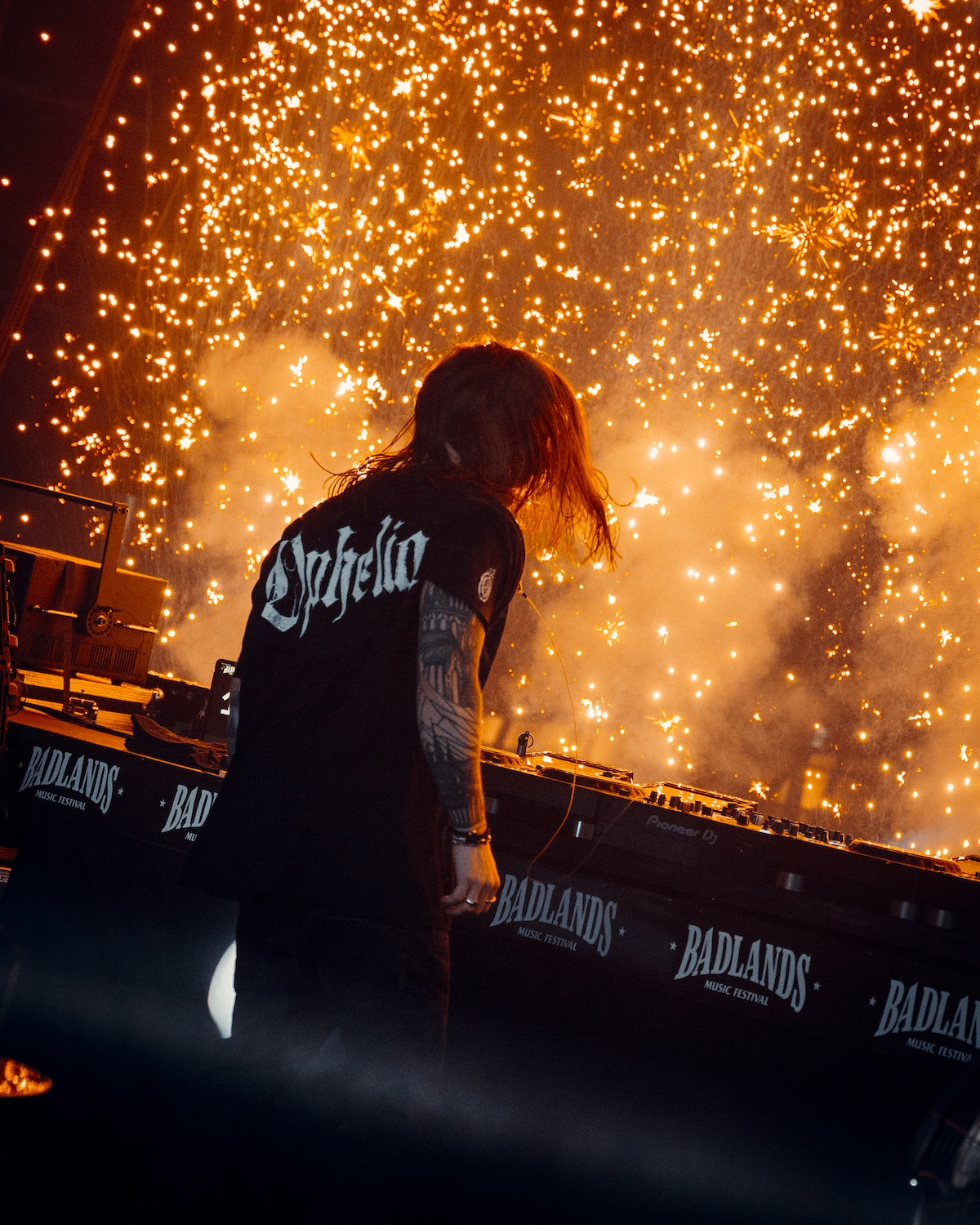
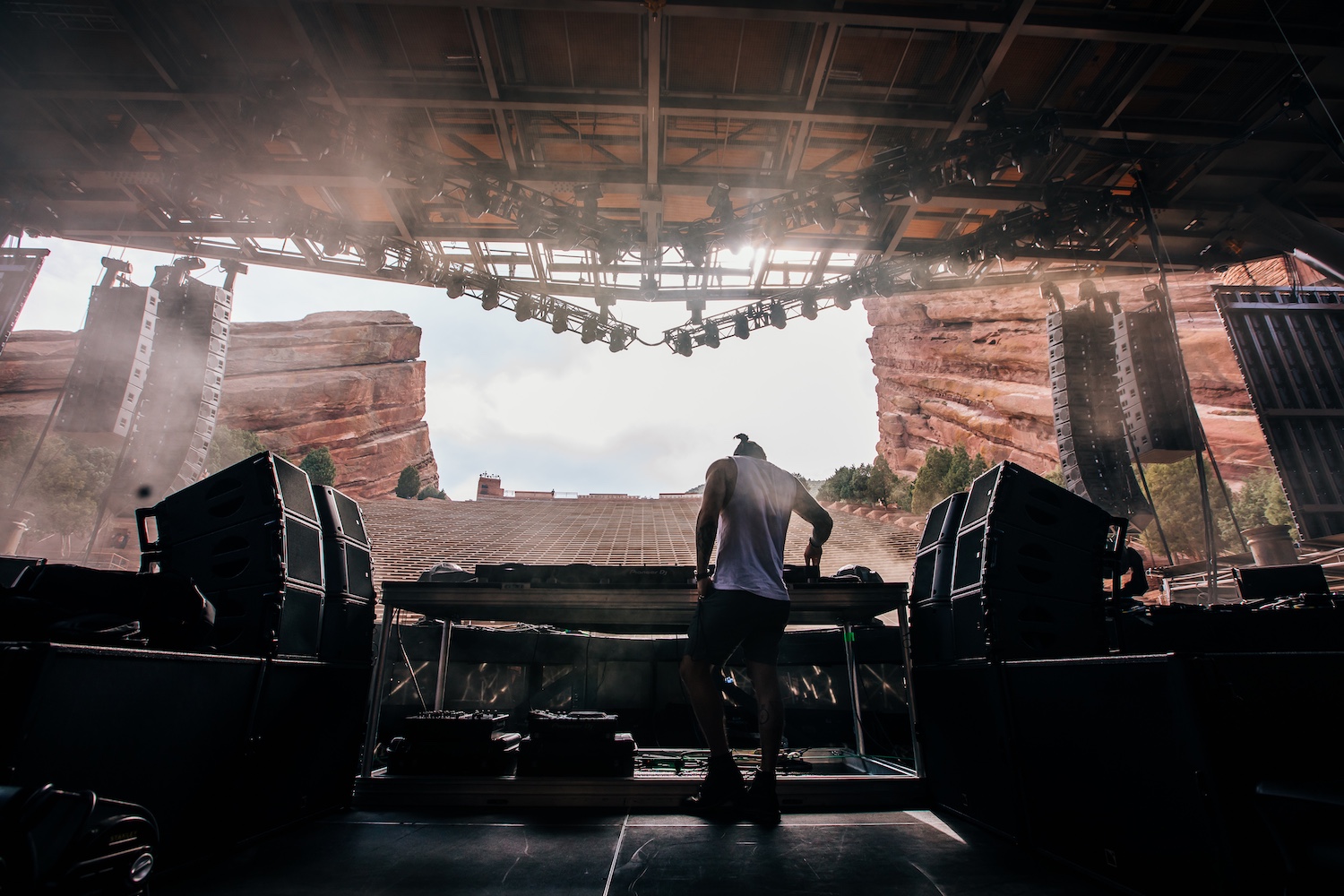
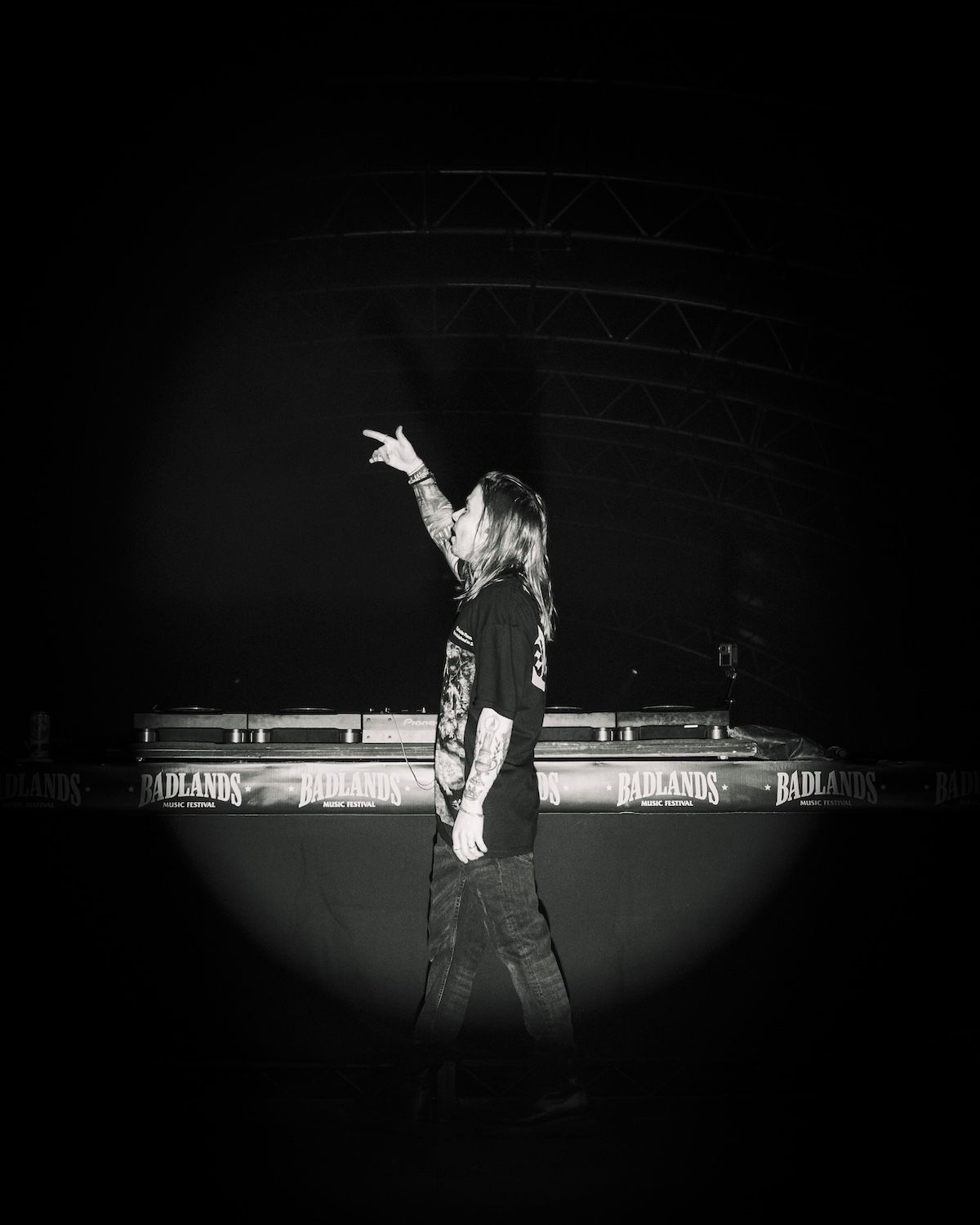
Montalvo was in the middle of a festival run when Asleep began to take shape. Like the music, his shows are loud – sonically, visually, and creatively – transitioning from a 2000s trance deep cut to a dubstep drop in a split second. His stage uniforms are consistent: he tends to wear Doc Martens, a sleeveless shirt, shorts or cutoff jeans, and maybe a new tattoo or piece of jewelry. His hands control the tempo of the crowd. His left hand holds the fader and his right lingers in the air, flickering to the beat of the buildup. When the tension breaks, his palm turns to a fist and waves of bass engulf the crowd. Some fans headbang while others quietly watch in awe as the visual world of Seven Lions unfolds across the LED walls. Montalvo doesn’t speak a word into the microphone, but he’s drenched in sweat by the end of the set. During an especially busy festival season, he’ll go directly from the stage to a flight that will bring him to the next performance.
This lifestyle is ingrained into Asleep. Formed in the cracks between obligations, the album is built around peaks and valleys that erupt into chaos and melt back into stillness. The solitude from Beyond The Veil is still there (at times), but it’s less like walking alone in the woods, and more like looking out the window of an early morning plane ride with bloodshot eyes. The quiet has a looming expiration date.
“I think, for me, leaning into just doing exactly what I want, actually, I did a lot of these songs a lot quicker than I normally would. We just had so much music that I was like, this has got to be an album. Beyond The Veil was a little more of like a concept album about death and remembering that life is fleeting and very important. This was more just straight diving into fantasy. I’ve really enjoyed this process more than the last time.”
Where his debut is deliberate and meditative, Asleep naturally gives way to the unpredictability of life and lands on something impulsive, fresh, and alive. It is a reminder that creativity lives within the twists and turns of life.
III: The World of Seven Lions
The rest of Seven Lions has always been as immersive as the music.
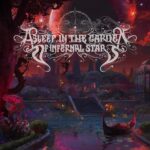
The artwork for his debut EP Days To Come depicts a foggy landscape with massive, moss-covered objects floating in the sky, which became one of the first of many recurring characters in the sweeping universe of the Seven Lions mythos. For Asleep, Montalvo worked with illustrator Chris Dreher, who is also behind the artwork for Days To Come (2012), Start Again (2018), and Find Another Way (2020) among others.
“With this album, I spent a lot more time talking to a lot of the artists who were creating the visuals – whether it was some of the motion graphics stuff that we did, or just talking to Chris about the cover art. I think it just created a more cohesive kind of piece, because there’s a lot of art on this project. It’s not just like an EP where there’s one piece of artwork – there’s a ton of video, there’s cinematic stuff. For this artwork, I had a pretty specific vision of what I wanted: a cosmic garden with this kind of HP Lovecraft tint that felt overwhelming was kind of the idea. Incredibly lush and alien without being too alien.”
Montalvo’s commitment to transporting listeners goes far beyond the music itself. Co-written with art director Daniel Jung, the decade-spanning Seven Lions mythos has become a world of its own. Dozens of characters, places, and storylines have been woven into everything from the artwork and live visuals to merch pieces, music videos, and vinyl products. Over the years, fans have become co-authors of the mythos, decoding hidden clues and cryptic texts scattered throughout each release.
On Facebook alone, there is a community of 17,000 superfans in his group Codex Leonis – many of whom are known to sift through the vinyl artbooks with a magnifying glass, and come back with a multi-page analysis that was somehow uncovered through latin riddles and hieroglyphics. In a sea of content that demands attention and quick validation, he has purposefully crafted a world that is designed to be lived in, interpreted, misinterpreted, and remembered.
“Immersion is always key. Things, at least to me, can only feel immersive if you are invested. And to be invested in good art takes effort. So I think creating a piece of media or a world that takes effort to step into, through puzzles or little hints, and trying to figure out what it all means, I think that’s really important to immersion. And that was what I was going for.”
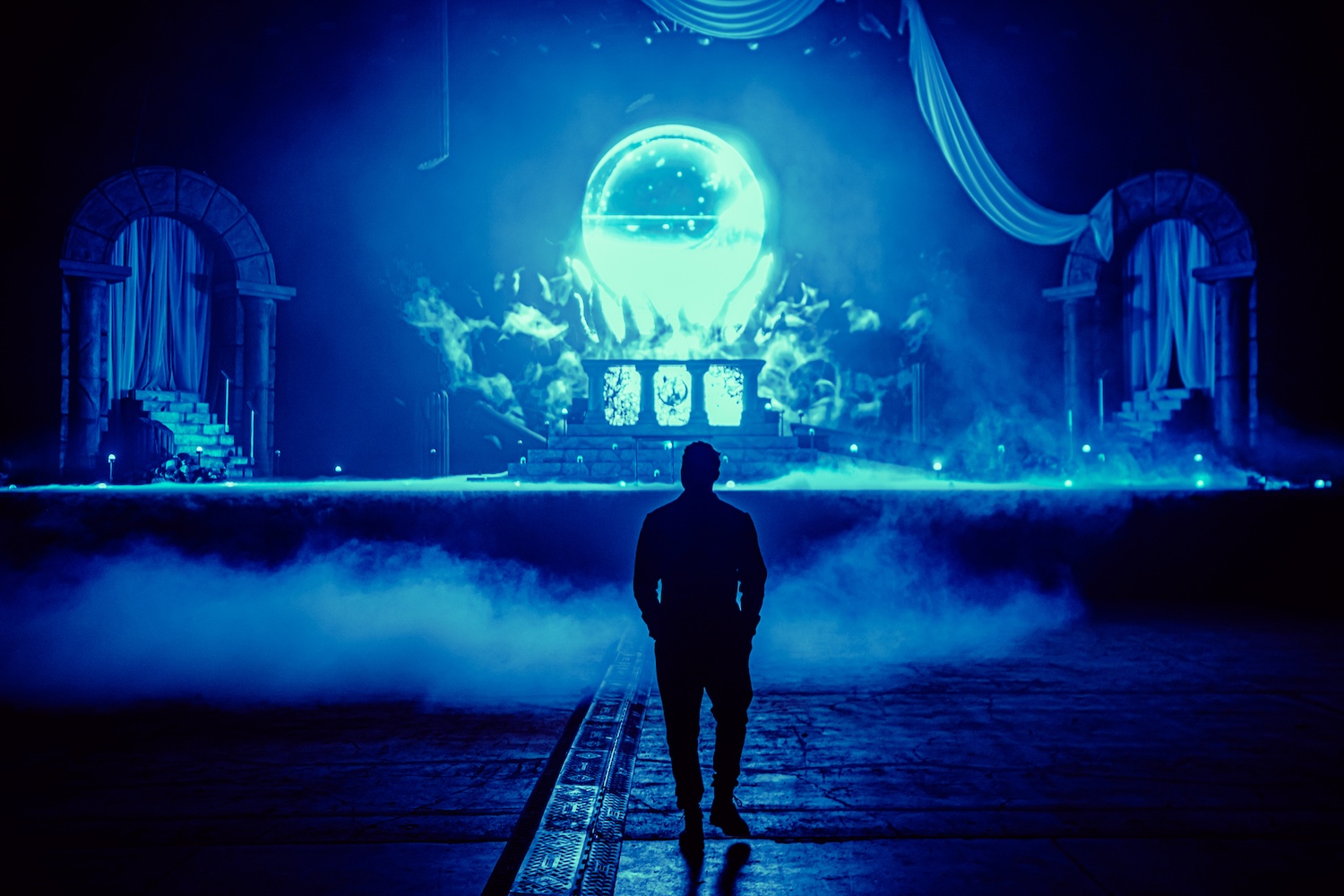
When it comes time to bring the album on the road, Montalvo plans to translate the world of Asleep into handcrafted stage designs that go beyond LEDs. The imagery will draw from the album artwork: a moonlit garden washed in deep reds and violets with a canal running through its center. In a clear nod to Shakespeare’s Ophelia, a woman lies in a boat beneath the celestial sky – either dead, asleep, or dreaming. His rollout strategy for Asleep has followed a similar approach of favoring artistry over content.
“I wanted to kind of reveal that album name in the most obscure possible way. So we made a tape and then I put on the B side some static with Morse code, revealing the album title. And you would be surprised how quickly some people figured it out. The response to the rollout has been incredible so far. It’s been really cool seeing people you know, really engaged with the puzzles and be really active on, you know, Instagram and just social media. And yeah, connecting with the not so straightforward rollout campaigns that a lot of people do, I think it’s been really interesting.”
On the other side of the music industry, Fiona Apple has spent decades resisting the noise and carving out her own lane. On “Fetch The Bolt Cutters,” she traces her journey from a young artist struggling to fit into the zeitgeist to eventually finding (and trusting) her own voice. In the second verse of the song, she sings specifically about being compared to others in the industry, hearing that she was too emotional and not stylish enough.
In the context of the record, she is still absorbing those criticisms because she hasn’t yet built the self-esteem to filter them out. Comparatively, on the other album cut “Shameika,” she uses the voices of her collaborators – and a classmate – to anchor her sense of worth. She’s “pissed off, funny, and warm,” she “has potential,” and suddenly the very traits she was once punished for reveal themselves as the signature qualities of who she is.
When Montalvo talked about Beyond The Veil as being “long and meandery,” he also happened to be describing the very thing that has given his project such staying power and resonance over the years. Beyond The Veil may not be an easy listen – it has quiet moments that linger, and it isn’t suited for background music at a pregame – but that is exactly what has drawn fans who have listened a hundred times over, and then a hundred times more. In the same vein as his artwork and live visuals, small details are bubbling under the surface and slowly revealing themselves on each play.
“For me, art is always first. We’re in 2025, so for a lot of people, social media is first. We live in the age of the internet, and a lot of things don’t feel real.”
Cutting through the noise is one of the most difficult tasks an artist must take on in order to create authentically. When the radio wants a three-minute hit and the metal-heads want a deranged instrumental, the only voice worth listening to is your own. Some artists are able to do this naturally: Apple lives a quiet life and doesn’t tour; Montalvo wanders through the woods with his dog. But the pace of electronic music makes solitude hard to come by. With constant touring and festival cycles, few artists ever get the time or distance to ask themselves what they truly want to make. Not what might top the Beatport charts, but when they’re alone in the studio and no one else is listening, what do they want to hear the speakers play back to them?
The Seven Lions project is unique in that it is not a total alter ego, but it is also not “Jeff Montalvo.” The boundary between the two is constantly moving: some eras pull him closer to his private instincts – quiet walks and long studio sessions – while others ask him to become the face of Seven Lions and its mythos. Over the last decade, the tension between these two opposing forces has become the engine of the project.
Asleep is a testament to this sort of authenticity, remembering that Seven Lions is at its best not when Montalvo performs a fixed identity, but when he embodies the one that naturally emerges by staying true to himself.
The identity of Seven Lions will likely never be revealed in full. It lies somewhere between the radio hits and the dubstep deep cuts; the vast landscape artwork and the minimalist single covers from 2024; the performer and the fantasy reader; the mainstage set and the “Cold as Snow” demo that came in from HALIENE on the plane ride home.
Though it would have been easy for Montalvo to lean fully into nostalgia, “By the Light of the Moon” is the only track on the record that sounds like it came from the early 2010s. It would be nice, in theory, to return to the beginning of melodic dubstep: Montalvo cutting trance in half and remixing Florence Welch; everything feeling new and emotional and unrepeatable. But the song also serves as a reminder that there is no going back, and the short burst of nostalgia ends up registering as more of a nudge toward gratitude for the present: Kerli is back, a tour is looming, and a new Seven Lions record is here.
“I’d say this album is the last one I’ll ever do. I mean, who knows what the future holds. I think it’s always hard to look forward and say what I’m going to do next, but I’ve really enjoyed this process more than the last time, so maybe we will do another one. I’m going to take a decent little break after though, for sure. I’ve been so in the studio, it’ll be nice to touch grass again one of these days.”
Like all Seven Lions projects, Asleep will not stand still for long. Soon it will blare through the speakers of packed venues and linger quietly in headphones after midnight; songs will attach themselves to memories of its listeners; lyrics will be sung loudly, misremembered, and inked into tattoos; the visual world will be unwoven and decoded as a canon part of the Seven Lions mythos; the new sounds will become familiar. In Montalvo’s studio, they’re already ghosts: Shifting shapes, finding new forms, and beginning to haunt what comes next.
— —
:: stream/purchase Asleep in the Garden of Infernal Stars here ::
:: connect with Seven Lions here ::
— —
— — — —
Connect to Seven Lions on
Facebook, 𝕏, TikTok, Instagram
Discover new music on Atwood Magazine
© Ashley Von Helsing
 © Ashley Von Helsing
Asleep in the Garden of Infernal Stars
an album by Seven Lions