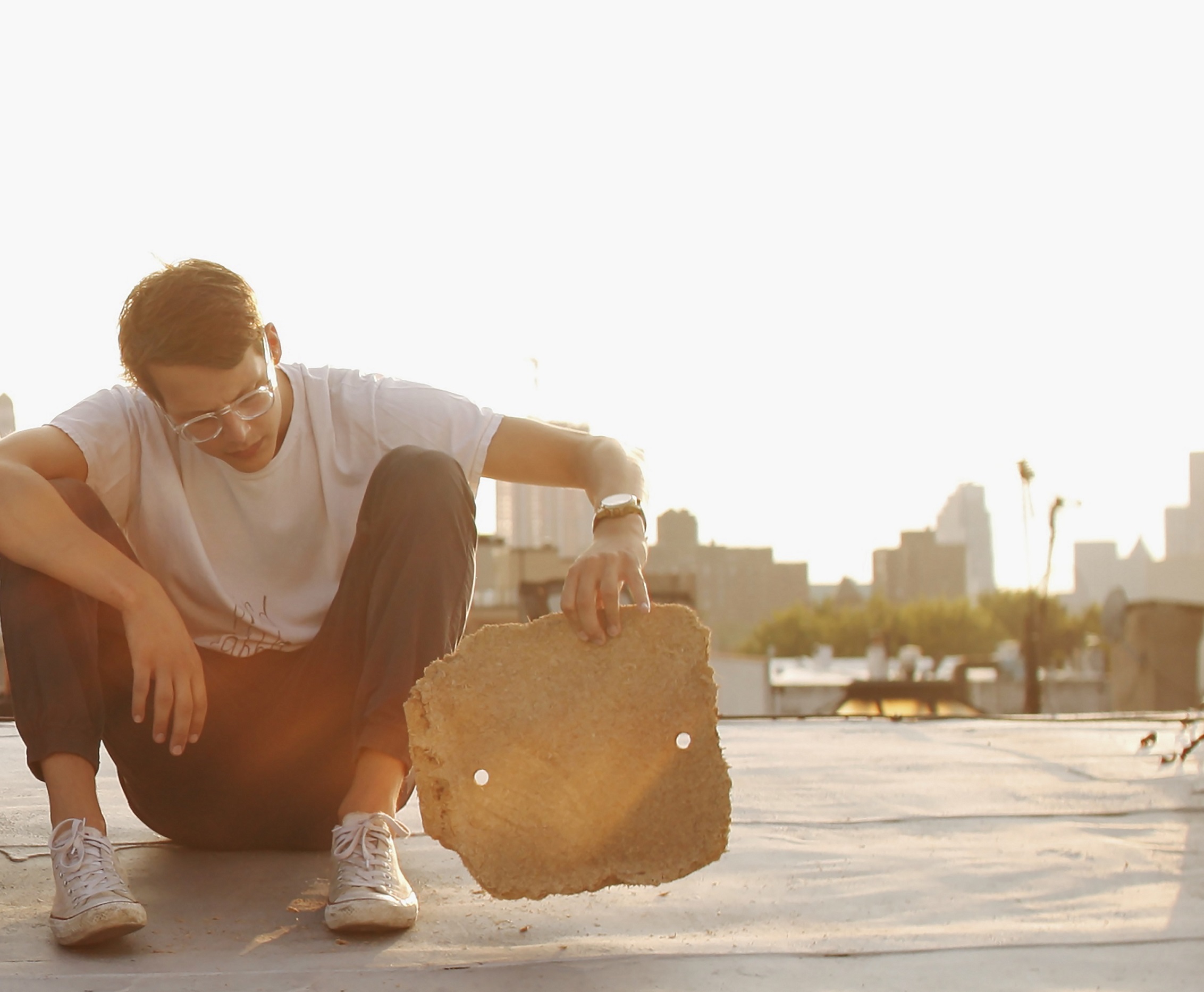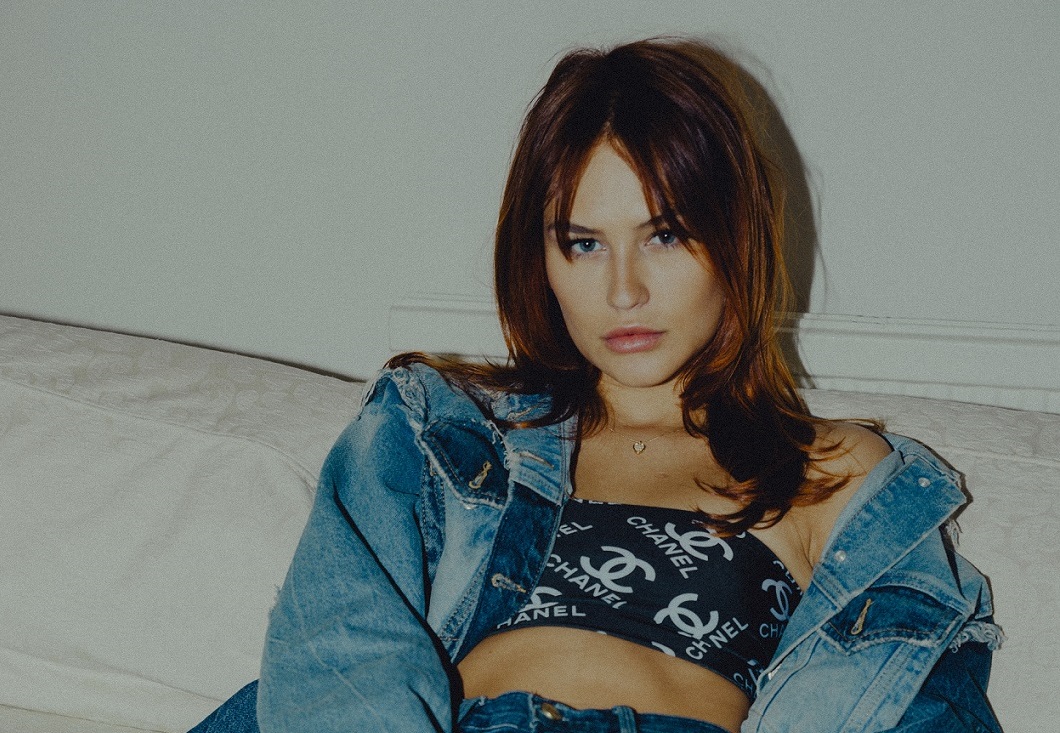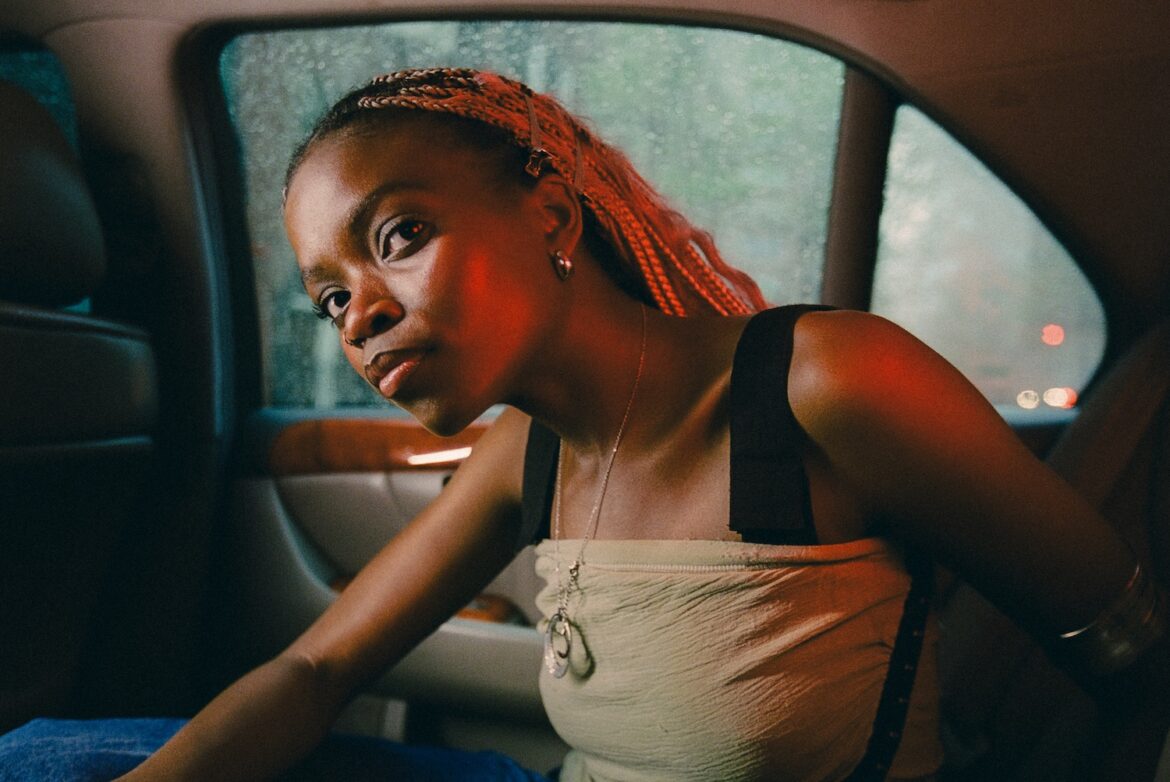
In her sophomore album, ‘Describe,’ Hannah Jadagu crafts a refuge for listeners grappling with the nuances of love, longing, or inner return in an experimental blend of the analog and the modern.
Stream: ‘Describe’ – Hannah Jadagu
Two years after the release of her debut album, Aperture, 23-year old Hannah Jadagu ‘knows where she is in life.’
Having graduated from college, relished in the celebration of her initial album release, and performed across the U.S. and Europe, the past two years of the singer-songwriter’s life have been marked by self-growth. Released in late October, Jadagu’s sophomore album, Describe, is “a love album” – but more than that, it is a testament to coming home to oneself. Guided by Jadagu’s own words: “being in love has taught me a lot of things, but the biggest thing it’s taught me is myself.”
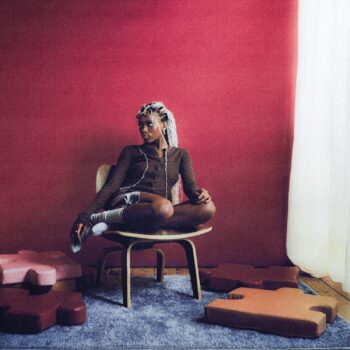
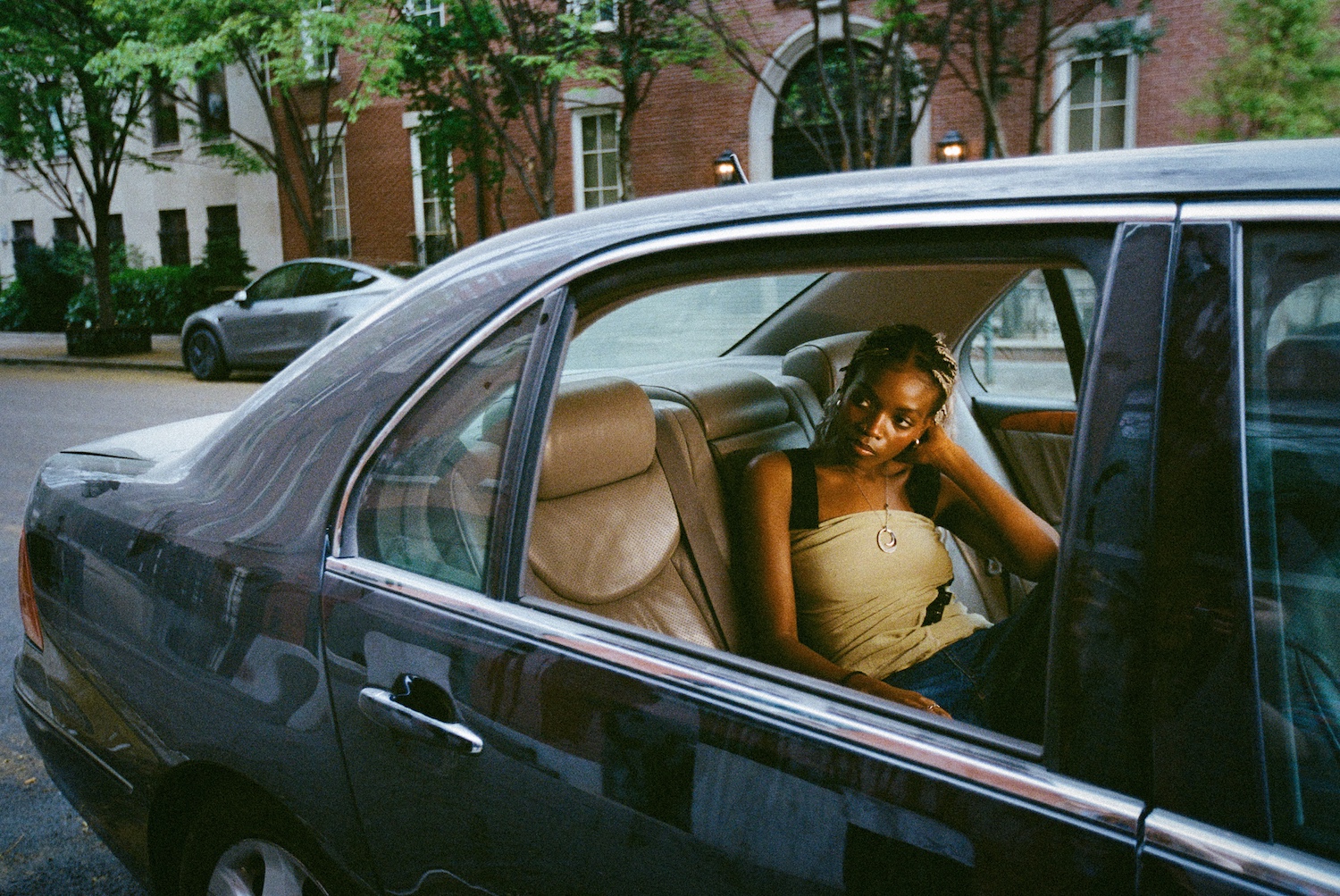
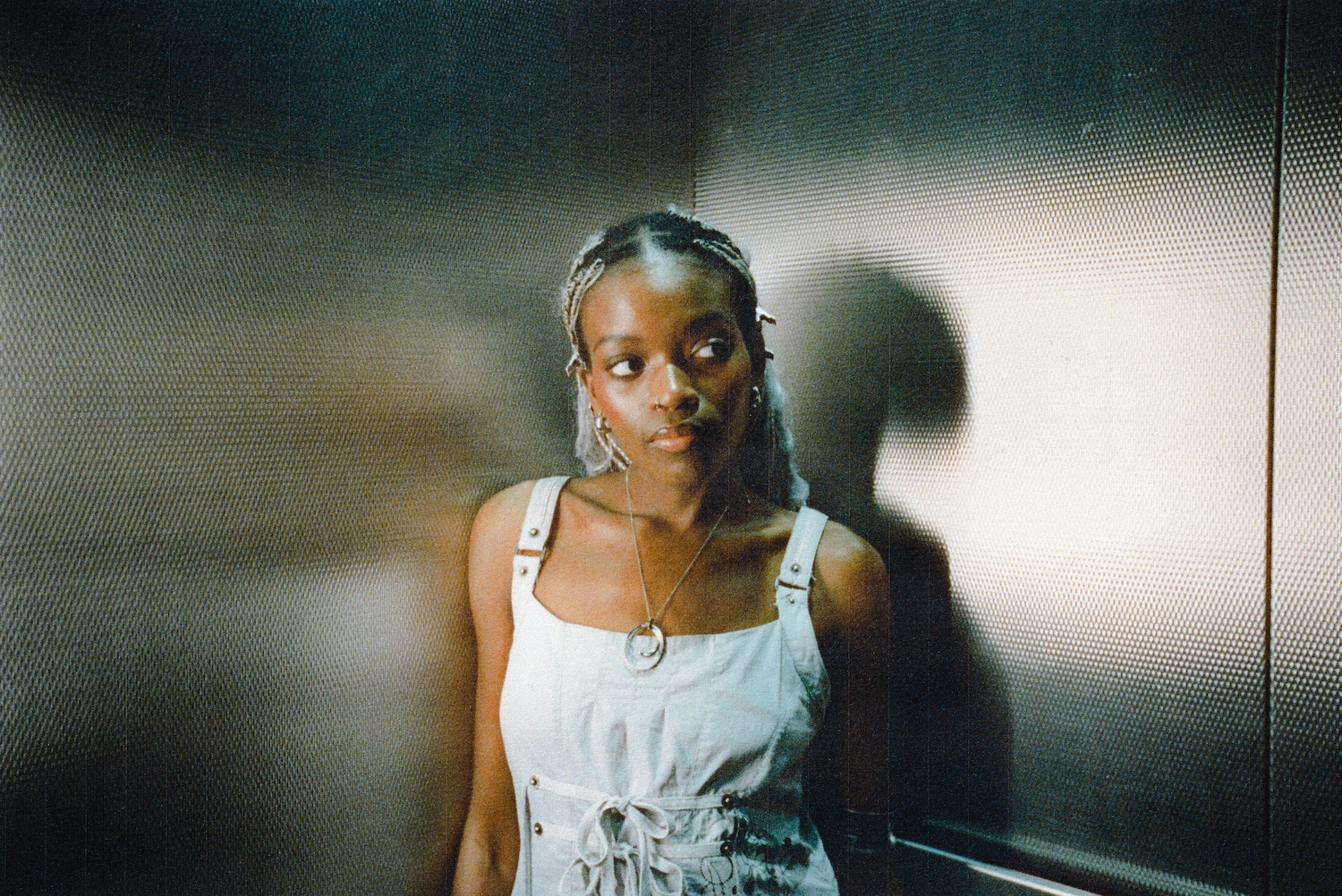
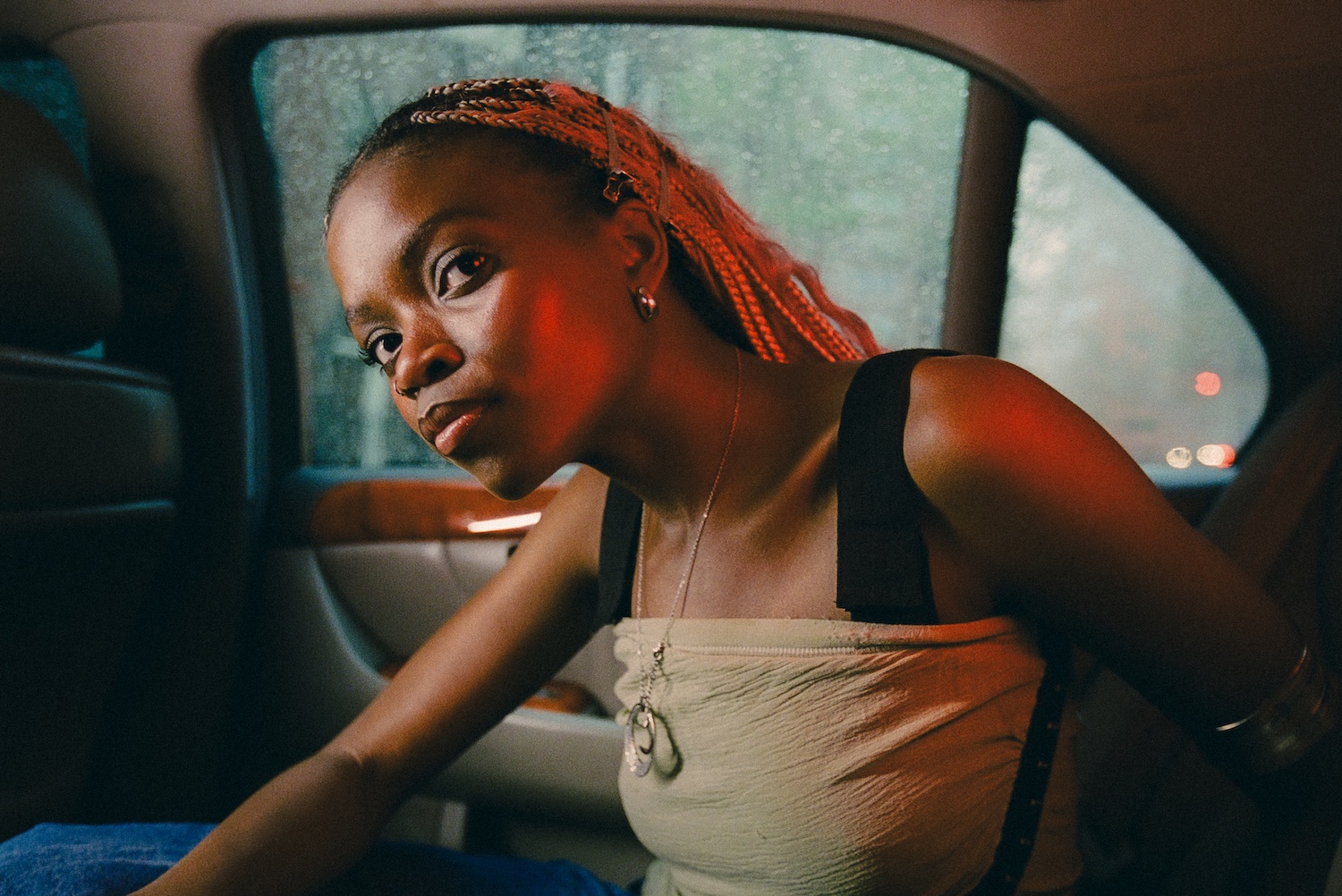
With a troll doll’s bright pink hair peeking into frame as I enter our Zoom call, Hannah Jadagu immediately gives off the warm, welcoming energy of a homecoming. When asked to visualize what Describe’s home may look like physically, Jadagu analogizes the album to “a living room”: a common space for growth and reflection, equally shared by both listener and artist. As she puts it, her work is meant to be “a whole world that listeners can live in and grow with.” Fittingly, Jadagu’s music feels like that world incarnate – a living, breathing sonic tapestry that embodies the same warmth and comfort she radiates in person (and virtually.)
Building off of her debut album, Describe is a layered terrain that combines fresh experimentations with the self-realizations she has experienced since her debut. Drawing from her childhood musical roots in Dallas, her education in New York City, and her experience on tour across the U.S. and Europe, Jadagu’s lyrics on Describe carry motifs of loneliness, longing, and the search for sanctuary, forming a refuge for anyone navigating their own growing pains.
— —
:: stream/purchase Describe here ::
:: connect with Hannah Jadagu here ::
— —
A CONVERSATION WITH HANNAH JADAGU
Atwood Magazine: You reference your Texas upbringing on Describe. How did growing up in Dallas shape your creative process?
Hannah Jadagu: Yeah, I think it does. Growing up in Dallas, I was in a children’s chorus: The Children’s Chorus of Greater Dallas. And it’s very serious. You sing hymns and choral pieces and you perform symphonies by Leonard Bernstein with the Dallas Symphony Orchestra, stuff like that. Also, Texas is huge for marching bands – I was also in drumline and I played marimba…I definitely think it influenced the way in which I write, and the melodies that feel instinctual to me, and the harmonies or the rhythms that I use. When I’m making a record, one of my favorite parts is doing the drum [sounds], and I think that comes from having a percussion background. But that wouldn’t have been possible if I wasn’t in Texas or another big marching band state.
You mention singing hymns in the choir. Do you have a religious background?
Hannah Jadagu: Yeah, I grew up religious, which could be guessed because I grew up in Texas, where, like, everyone is Christian. So I grew up Christian as a child, and it was kind of lit. The best part was going to church camp. That was awesome. The best part about church camp is it’s like, yeah, like you talk about God and stuff, but you also get to run around. That’s also when I knew like, hmm, maybe I’m not actually Christian, because why is my favorite part just like playing basketball outside of the church? Another one of the coolest parts about [being raised religious], though, was being in the church choir. It was kind of weak for a church choir, no shade, but we got to sing songs and we got to do plays, and they let you do a little bit of artistic stuff at the church that I went to, so that was pretty cool.
Were you still involved in the church by the time you were in high school? I know that’s when you were first signed.
Hannah Jadagu: Great question. That’s actually when I kind of stopped being involved in the church and really just focusing on a life without it. That’s when I started making music and that’s when I got really into making music and stuff for me – that became my church, waking up every day and making a song. It just felt very cathartic and therapeutic, and it felt without judgment. Even though when I first started making music, I actually kept it a secret. I don’t think people in my house knew I was making music. I don’t think my mom realized that I was really making music and stuff until I told her I was getting label offers. I was 17 and in high school when COVID-19 happened…she would help me record music videos [during quarantine]. It was kind of cute.
How did you start getting label offers? Were you posting on social media?
Hannah Jadagu: You know, what’s funny is, no. That was also – and I have so much to say about this – but that was the pre-TikTok era.
I almost feel like that time period was the biggest initial boom in the TikTok era.
Hannah Jadagu: It’s crazy because I was on TikTok around that time, and I was dancing to Don Toliver and Doja Cat while I was also taking meetings [for my music]. TikTok became a platform that accelerated the success rate of songs. However, at that time, it was not the primary music discovery platform. It was still a music exploration platform, and it could help you chart, but it wasn’t like labels were finding kids on TikTok. I think that [shift] happened in 2022 and forward. But I got lucky, because in 2020, we were just dancing on there. I was putting music on SoundCloud. I was a music business major, so I could talk about that forever – it’s super interesting how TikTok has completely changed the industry; the way in which artists create, the way in which artists are discovered, the way in which it influences a career. It’s really insane.
How do you feel like your background in music business has influenced your creative process?
Hannah Jadagu: That’s a good question…I think I’m a lot more cautious of where I go, where I work, the things I do, the things I say yes to, the things I say no to, which I think can have an influence on your creative process. But overall, I think I’ve been very lucky to have a background that allows me to take a step back when it comes to decision making. I think I’ve just been lucky, too, though. I feel like I still make songs the same way, with the same intention, just that I want to make a song and then I hope people hear it.
In a few interviews, you mentioned that your intent for Describe was to create something “timeless.” What are the artists or influences that you look to for representation of that timelessness, and how would you define that?
Hannah Jadagu: Oh, my gosh. Rosalía. Y’all might cringe when y’all read this, because it might seem very obvious, but timeless artists are artists that are very well known and very well loved. So I’m just gonna come out and say it: Frank Ocean. Imogen Heap, I think she’s timeless. I think she’s an innovator too. And I think that all of those three artists who I’ve named so far have that in common. They’re timeless, but they’ve also heavily influenced the way in which people not only consume music, but make music.
I think timelessness means, for me, to be somehow sticky with the melodies. You have to be unforgettable in that sense, where people hear your songs and they don’t forget what they sound like. There are some artists out there where I look at my phone and I’m like, ‘okay, I want to play this song – how does that song go again?’ But I’ve never done that with a Frank Ocean song, with an Imogen Heap song, with a Rosalía song. I know what each song sounds like, because a lot of times, too, across their albums, each song has such a distinct identity, but is still cohesive to the project. Another thing about that is being album-based – not singles-based – because you’re really throwing people into a whole world that they can live in, and that they can live with, and grow with, and have it soundtrack their lives. So I think those are qualities: sticky melodies; creating a world in which the listener can live in and grow with.
Oh, you know, f* it, Lorde, too. So many people have grown up with Lorde. Like when I was making “My Love” – people could probably go back and hear this – I was listening to a lot of Melodrama. The first single that I released was “My Love.” I was so inspired by Lorde. I listen to a lot of Lorde… in every life phase, there’s a Lorde album listeners can attribute it to. Pure Heroine: preteen. Melodrama: teen, young adult. She’s there for those moments, whether you love it or you hate it. I was also inspired by Blood Orange. I think he’s timeless. I’m also a really big Clairo fan, which everyone knows.
How would you describe Describe’s and Aperture’s life phases?
Hannah Jadagu: You know what’s funny, is that so many publications labelled Aperture as a “coming-of-age album.” Mind you, I made that when I was 19 – I don’t know how “coming-of-age” that is. They love that album, the critics. They love guitars…Wait, why is this becoming one of my most controversial interviews?
Aperture: it’s definitely giving teen album, because the way I made that album and the intention I had with that album was so clear. I went in and wrote every song before I brought it to my producer, Max, and was like: ‘this song is gonna sound like this.’ I had a whole plan, and I think that’s such a teen thing – to think you know it all and to have it all up here. I think, more on the actual side of what the songs sound like, I talk about unrequited love, religion, friendships, familial things. I feel like that is what you go through as a teenager: ‘what’s the meaning of it all? Where do I fit in?’
But by the time I got to Describe, I already knew where I was in life and what wasn’t working… Somebody called Describe a breakup album. It’s a love album. My purpose, when I made Describe, was to make a love album – but not in the ways in which we’re so used to hearing from pop music. I kind of wanted to take it from a nuanced angle – the nuances of what it means to be in love, and how much work it takes, and what that can look like. And I think to me, that is what love is. Like, are you gonna wake up every day and choose this person? And how are you gonna do that? So, Describe, I guess that’s giving early 20s. We’ve come out of our teens. We’re working, and we’re trying to make things work, and, you know, we’re lover girls. I think the difference between Aperture and Describe is that Describe feels more mature, and I think it could really live with someone a little bit longer. But I think Aperture feels nostalgic. It’s cute.
Having songs like “Doing Now” on a love album does feel so layered, because it's a reminder that you can't have love without those challenges and fight. That reminder feels so present on the album, and it’s a really refreshing highlight on those in-between moments.
Hannah Jadagu: I like what you said about “Doing Now.” On Describe, I made it a goal to put that sort of duality: “Doing Now” is like, there’s distance there, but there’s a happy sort of longing within it. There’s a lot about calling. There’s a lot about, ‘how do I be in the same place as you,’ whether that’s literal, physical, figurative, whatever. I don’t know if a lot of people caught it, but the first side of the album, the A side, track one through five, basically – that’s all longing, and setting up the turmoil, the distance, and the yearning. And side B is lowkey celebration. It’s lowkey gratitude. And it ends with “Bergamont,” where it’s like, ‘we’re kind of parting ways, but I hope we can find our way back to each other.’ Boom: Describe. I feel like nobody caught that.
You’ve said that if there was a song that represented a future you on Describe, it would be “My Love.” Do you think “My Love” will be the closest in sound to your third album?
Hannah Jadagu: I think so. You know why? Because I feel like, “My Love,” in terms of sound – and I like that you specify sound – those elements feel fresh to me, and it feels like I still have a lot more to explore in that sound. I’ve already started working on the third album and I’ve been talking to my producers about how curious I am to keep pursuing that sound – not to milk the hell out of it, but to see what more I can get out of it, because I think we barely scratched that surface with those production elements. And it felt really fresh to me, and I think to a lot of people, it felt fresh in a way. I’m curious to keep doing more songs that sound like that. I don’t know what the lyrical content is gonna be, but the elements of what we were going for [in “My Love”] feels timeless.
What was it about creating Describe that made you want to do something more experimental?
Hannah Jadagu: When I was in the studio, that’s just what was calling out to me. I also think, because it is a love album, I didn’t want to be so conventional. If I wanted to make a conventional pop song, I think I could, but I’m just not intrigued by that. But the simplest answer is that the music I listen to is experimental, and I’m so inspired by a lot of the modern music makers of today. I’m always trying to figure out how to make it myself. It’s so funny, my producers always make fun of me, Max and Sora. We’ll be in the studio and they’ll lay down a beat, and then they’ll do something weird and I’m like, ‘yeah.’ They’re always like, ‘you love that weird stuff.’ When it’s kind of weird and f*ed up, they’re like: ‘that’s a Hannah beat.’ And you know why? I just think it’s inspiring to me. Not like the typical beat that you could have gotten next door.
Do you feel like the lyrical repetition on Describe is part of that experimental process?
Hannah Jadagu: Yes. “Tell Me That !!!!” for example. I think repetition is a good way to be confident, and to be sure of yourself. It’s not always the brightest idea to just repeat the same line, like 25 times. But I think sometimes it shows, like, ‘this is what I’m feeling and the beat feels good here and don’t.’ Don’t fix what ain’t broke. I’m confident in the catchiness of this. I’m confident in the feeling that this gives me. And also, I think it’s fun too. I’m the number one hater, but I’m also the number one ‘lets have fun’ girl. I think we gotta live a little, but I love repetition. I think repetition also stands to really drill in a point, and to really create emphasis in a simple way. And I’m all about creating emphasis in a simple way.
Period, pooh.
Hannah Jadagu: Yeah, period, pooh.
Describe feels like it’s able to balance both seriousness and fun. Another part that Describe balances well is the analog and the modern. What is your take on that? How did you gain the ability to balance those?
Hannah Jadagu: Oh my gosh, just being in admiration of these artists that we keep calling back to. One, they showed me that it was possible to do weird stuff with your vocals, and to also have a timeless feat. I think Imogen Heap is really cool about that – her vocal product. Caroline Polachek is really good at that – she’s another world builder, honestly. I gotta shout out my producers, because before I was in the room with Max – who was all over Aperture and quite a bit on Describe – I didn’t know how much you could do with these analogs. Mind you, I used to make music on my phone, then on my computer. I’m really a laptop kid. Same thing with Sora. He showed me a whole world where you can work with these sounds. So I really have to credit that to my producers…they helped me understand that that’s what I’m seeking out. I like to mix the electronic with the acoustic, to put an acoustic guitar on something that has an 808. You might come up with something really cool.
I know you talk a bit about using cello on Describe – was there cello on Aperture?
Hannah Jadagu: I did not. We had fake strings on Aperture, though. You know who plays cello is Sora, my co-producer on Describe. That’s him. He is a classically trained cello player. The thing that I love about cello is that it feels so intimate. But it also knows how to lift a song, and create such strong emotional depth. I think it has so many cool qualities about it. I really don’t think you can go wrong, especially when my guy Sora is playing the cello. I think it’s so cool to have strings on an album. It creates a juxtaposition. I grew up loving symphonic stuff. So I’m just a nerd in that sense.
Do you think that's because of your introduction to music in a church setting?
Hannah Jadagu: Yes, and also doing the choir that I did. Because I would have never known that world was out there had I not done my children’s chorus in downtown Dallas. We were singing with the Dallas Symphony Orchestra. How cool is that? Not every kid gets to experience that. But that’s where I think I got an appreciation for it, for sure. Also film scores. You know, the usage of strings on a film score can do so much, and I’m a crier. Like, if I watch a movie, I’m gonna cry, but you know why I’m crying? It’s the strings.
If we’re looking at Describe as a love album, how do you feel like the experience of being in love has influenced your writing process or your process of creating music?
Hannah Jadagu: Oh, my goodness. I feel like it’s influenced so much. The biggest thing: I think you learn so much about yourself through loving somebody else. I didn’t know how much there was to understand about myself until I devoted myself to somebody else. And I think somebody that you’re in love with can really bring out the best in you, but also parts of you that you’re like, ‘yeah, I don’t like her. I didn’t know I had that.’ But I think that the right person looks at that, sees that, and accepts that, and helps you move forward from that. So, you know, being in love has taught me a lot of things, but the biggest thing it’s taught me is myself. Understanding myself. I was a person who thought I knew myself very well, because – well, I’m the youngest. I grew up observing people. I was kind of quiet as a kid. So I felt like I was pretty in tune with myself, but falling in love with my bae just made me realize, like, ‘damn, there’s so much more to learn.’ When I was in college, finishing up school – I just got my degree – I started taking a lot of classes that were psychology-related, mental health-related, and romantic relationship-related. I just realized, like, ‘damn, relationships teach you so much,’ whether that’s [familial or platonic] – but a romantic relationship can really bring out demons, but it can also bring out the most beautiful things about you. And it shows you how far you can go, how much you have to give. It just teaches you so much.
In talking about world building: if you were to step into the world of Describe and step into the world of Aperture, what would those worlds look like visually?
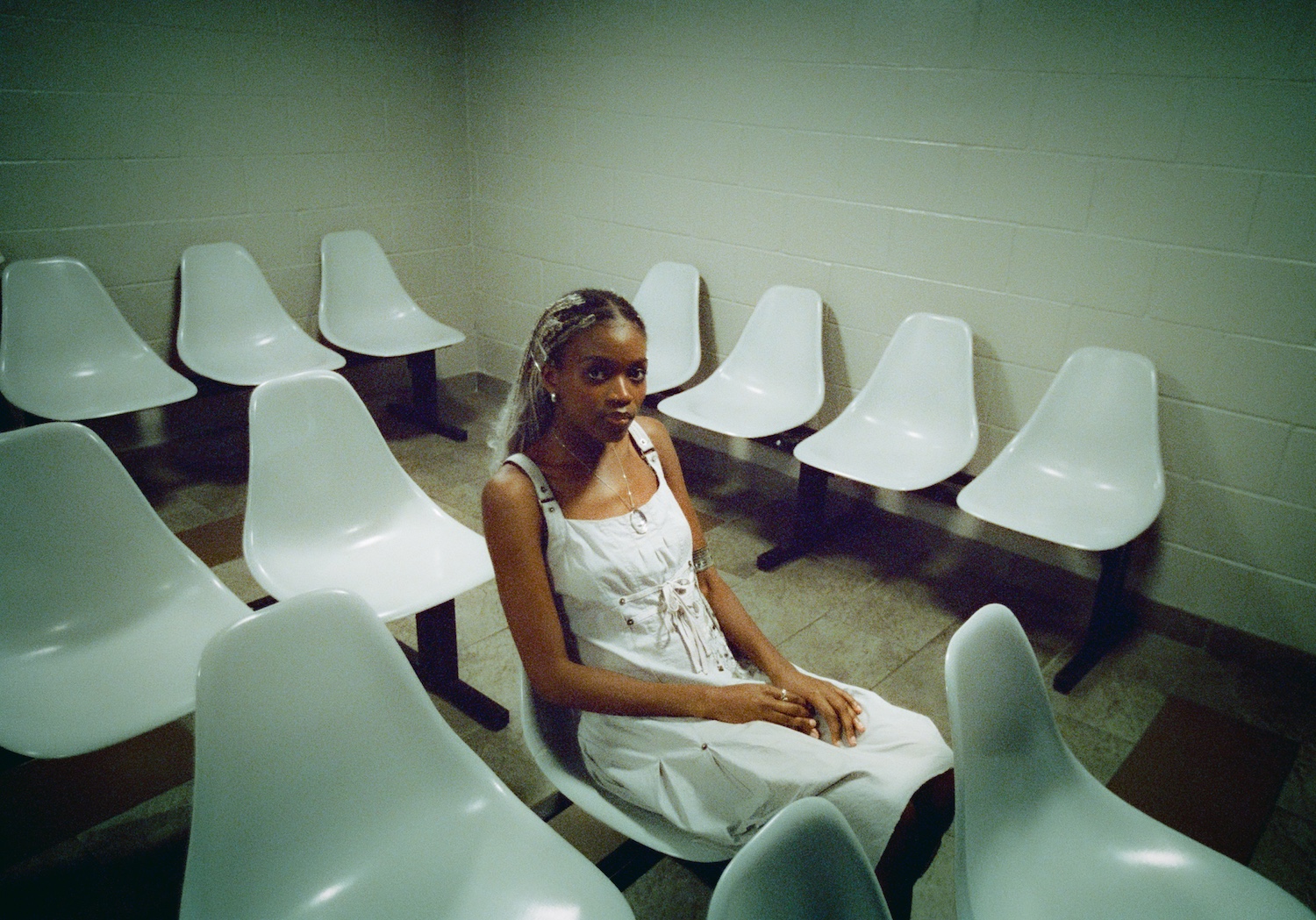
Hannah Jadagu: Ooh, ooh, ooh. Well, Describe is so obvious to me. I’m seeing reds, I’m seeing pinks, I’m seeing browns. Describe: I’m seeing a nice couch. Fluffy. I’m seeing my pink, fuzzy slippers. I’m seeing a lot of phones, but I’m also seeing a lot of, like, brochures. A lot of ways to communicate – I’m seeing laptops, phones, computers, whatever. When I look into the Aperture world…damn, what am I seeing in Aperture? Well, Describe feels like a room that you go to if somebody’s really rich – like, their second living room. When nobody really uses their first living room, but everybody always crowds in the second living room. Aperture? I’m seeing more of a bedroom, for sure. Not a living room, not a common space. I’m seeing a place where not too many people can fit in there. And it’s kind of cozy. I’m seeing a pair of headphones. I’m seeing oranges. I’m seeing greens.
How has it felt playing Describe live?
Hannah Jadagu: Oh, my gosh. Scary. You wanna know why? We’ve been doing so many support tours, so we’ve just been playing the hits. So the singles from Describe, and the singles from Aperture, and then like a few others sprinkled in from my EP, and a standalone single. Even playing the hits on the support tours and festival slots, stuff that people can really get down to and want to go look up the music. So anytime we go into the deep cuts of Describe, I’m like, ‘wait, wait, wait.’ It’s so new, it’s fresh, and the album is vulnerable. People always ask me, ‘what’s your favorite part of playing the shows and going on tour.’ I’m like, ‘wait, I’m scared, girl, I’m faking it up there.’ My favorite part is being in the studio. I gotta let that be known. Yeah, it’s scary up there. But I love playing “Bergamont” live. It’s such a vibe, and people get really into it. The crowd feels really still, but in a way that’s present. And I’m like, ‘okay, it feels like I did my job on that one.’ “My Love”is incredible to play live.
What was your favorite song to record in the studio?
Hannah Jadagu: Oh my goodness. “More” was really fun because there’s cello on that. There’s 808, there’s electronic drums, there’s vintage analog. “D.I.A.A.” was super fun, because it’s mad loud and I picked up the guitar for that one. The riff is really fun. “Perfect.” The interlude that comes before “My Love” was a lot of fun. Some songs were headaches. People don’t know “My Love” was a headache. “Normal Today,” headache.
What made them headaches?
Hannah Jadagu: You know what makes them headaches is that they just go through so many walks of life, and you can’t force this song to be something. You have to kind of let it reveal itself to you. And those took a few tries. Which I’m so grateful for, because those are some of my favorite songs to play live, and obviously other people love them. So it kind of shows, you really cannot force the song. It will come to you. But it can be tough to be patient when you’re making stuff. But I think they were headaches just because I thought they were one thing and they wanted to be something else.
You'll be touring with Del Water Gap starting in January. I know you’ve mentioned feeling nervous, but are you also feeling excited?
Hannah Jadagu: I’m so excited for our tour. I actually just met up with Holden the other day in person. He is so kind and sweet, and he’s making an effort to get to know me before we start our tour. So shoutout to him. I want everybody to know that you’re a really nice guy. It’s gonna be lit. I know I’m like, ‘oh, I get up there and I’m nervous.’ But I just know Del Water Gap fans, “the guppies,” are gonna be awesome. So I’m hype. I’m really hype.
Do you have a name for your fans?
Hannah Jadagu: No, I need to. So if you think of anything, just hit me up.
You're obviously getting back in the studio and recording new music. Are there any learnings from making Describe that you're going to apply to your next album?
Hannah Jadagu: Oh, definitely. One of them that Sora showed me was that there is power in bringing in musicians, because they can really take the song to the next level. I’m quite precious with my songs, because I take this shit so serious to a fault. I get really in my head, and I’m like, no, I don’t want too many cooks in the kitchen. I always say that to Sora, but we brought in a friend of mine, Liza, to play piano on “My Love,” “Couldn’t Call,” and it really helps lift the song. And I think the best thing to do is surround yourself with people that are better musicians than you, so you grow a lot. And even if it doesn’t work out, you learn and you’re like, ‘okay, we tried this with these musicians and the song didn’t turn out what it needs to be, but now I’m for sure certain that I’ve tried everything.’ Describe taught me the art of trying everything and doing many versions of things that I’d never done before. It leads to the best songs.
It's crazy to go from recording on your phone to then recording in a studio with a cello and so many other musicians.
Hannah Jadagu: It’s so different. I’m so blessed.
— —
:: stream/purchase Describe here ::
:: connect with Hannah Jadagu here ::
— —
— — — —
Connect to Hannah Jadagu on
Facebook, 𝕏, TikTok, Instagram
Discover new music on Atwood Magazine
© Sam Wilbert
 © Sam Wilbert
Describe
an album by Hannah Jadagu