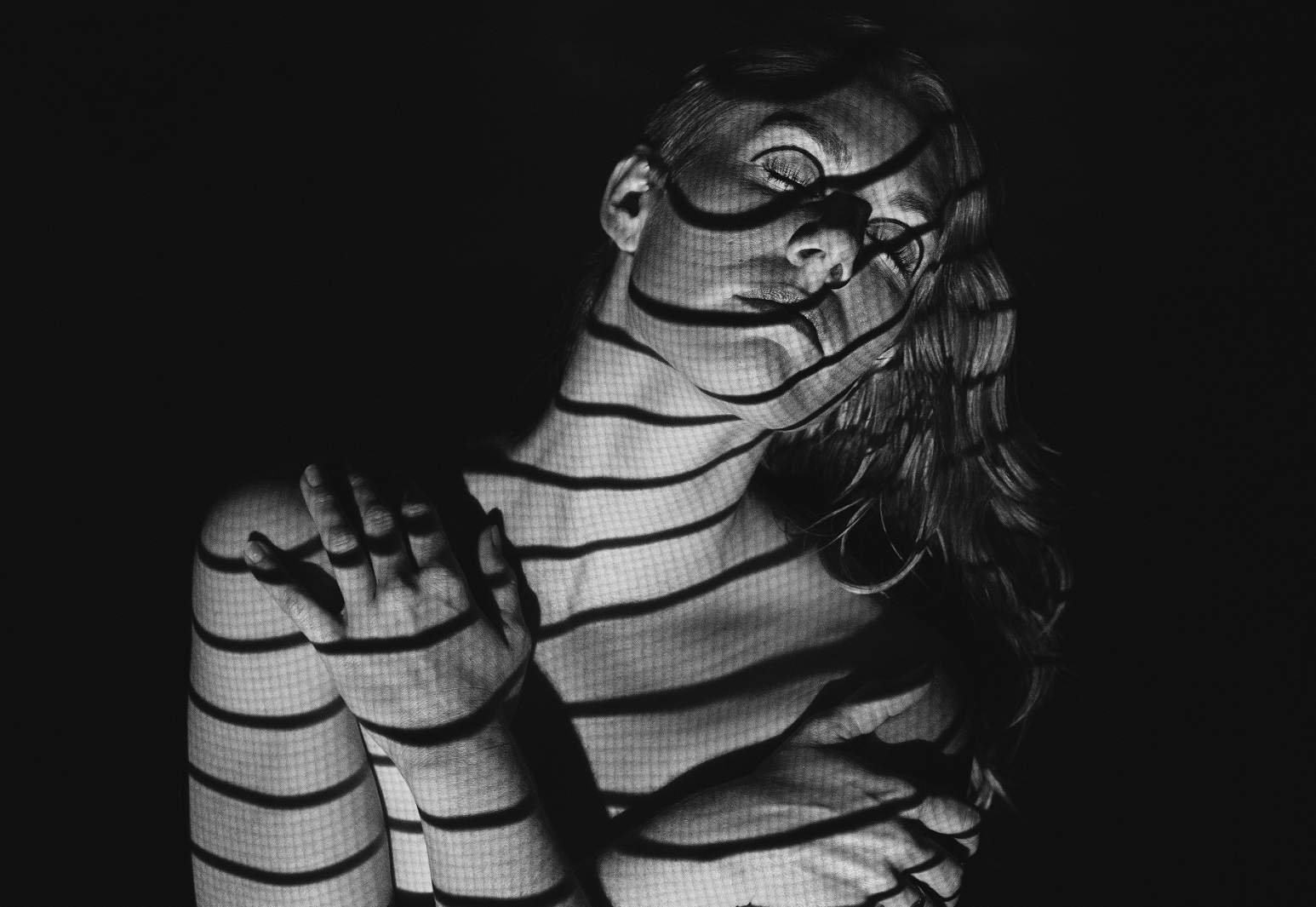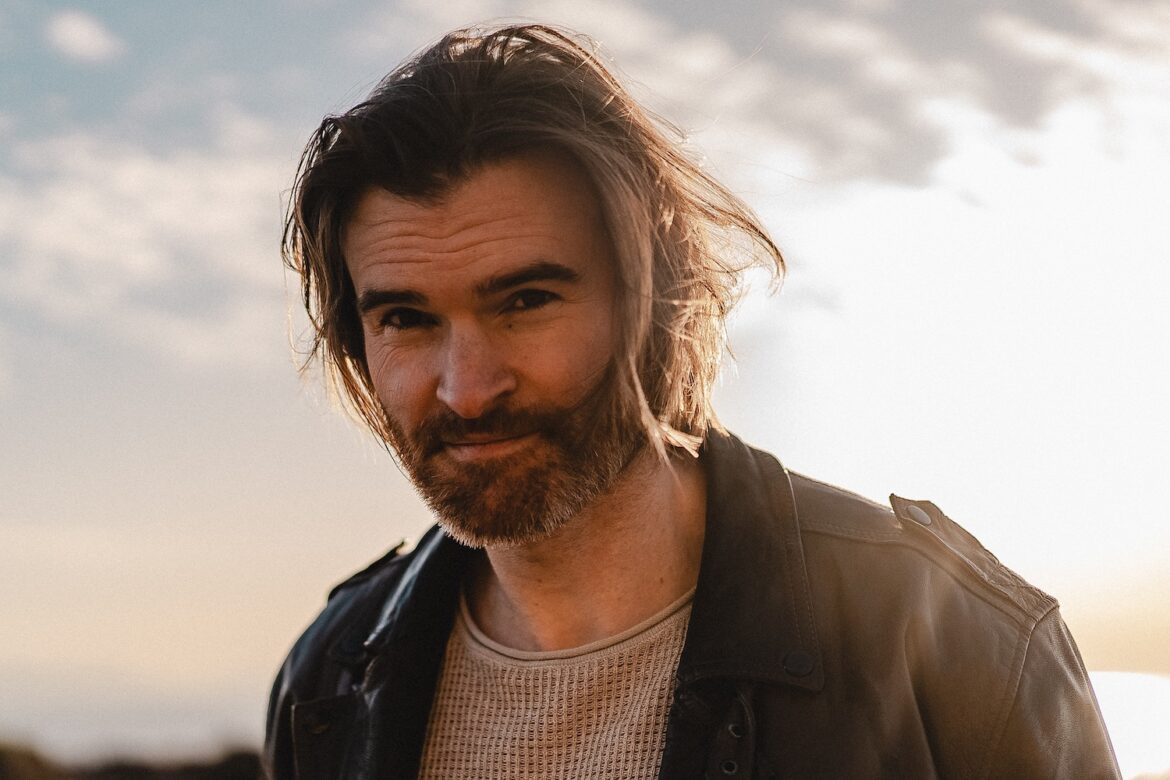
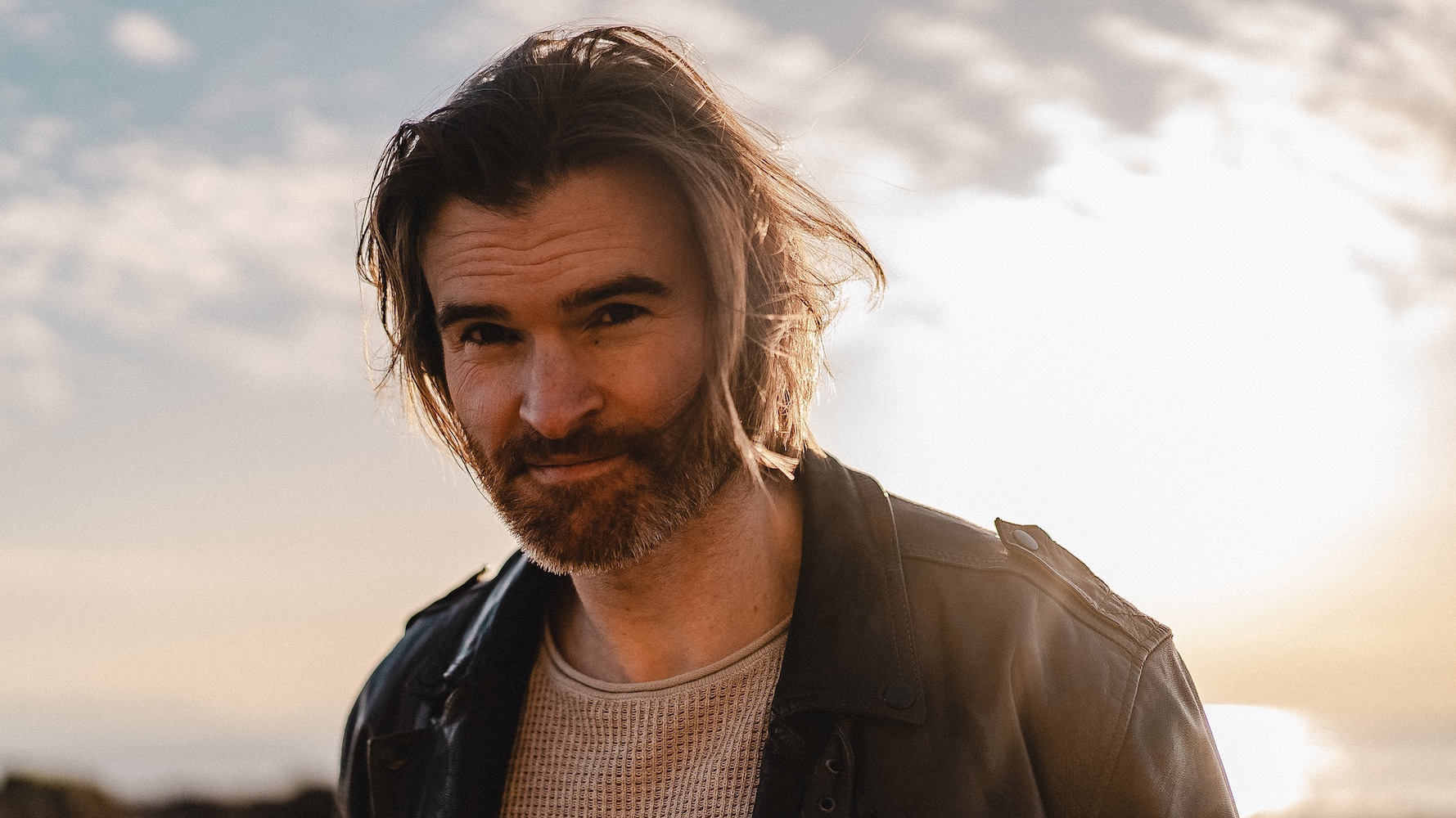
On his deeply personal new album ‘Therapy Notes,’ Canadian singer/songwriter Jon Bryant turns life’s messiest moments into tender, soul-searching songs that feel like pages torn from a private journal.
Stream: ‘Therapy Notes’ – Jon Bryant
Listening to a Jon Bryant album can feel like eavesdropping on a private therapy session – except you’re welcome to stay, feel, and maybe breathe a little easier.
His latest record, Therapy Notes, is a raw, soul-baring collection of songs that navigate grief, growth and the fleeting nature of life. It reads like a journal cracked wide open.
The Canadian folk singer/songwriter has been making music for over 15 years, carving out a space for emotional storytelling wrapped in rich acoustic textures and warm melodies. But this chapter of his career feels different. More urgent. More vulnerable. And maybe that’s because his life is shifting in big ways – he’s about to become a father.
“It feels like I’m in a waiting room, waiting for this next life to start,” Bryant says.
It’s made songwriting harder, not easier. “I have to stop having expectations about what I think it is and just tap into what is going on right now, which is just chaotic.”

Still, the chaos seems to be a creative catalyst for Bryant,
who recently returned from an intense three-day writing trip in Mexico City that yielded six new songs, including a heartfelt collaboration with UK singer-songwriter Rose Betts.
His music has always been deeply personal, but tracks like “Best Part” and “Visiting Hours” go a step further, wrestling openly with mortality and regret. The latter was written the day before Bryant fulfilled a dying woman’s final wish by playing a house concert in her honor. Co-written with a friend whose own husband was unknowingly facing terminal cancer, the song became a shared expression of loss, and an anthem for presence.
Whether he’s mourning lost time, poking fun at himself in “Dolly,” or contemplating the dreamscape of “I Wanna Die in LA,” Bryant threads everything together with a quiet reverence for what it means to be human in a complicated, digital world.
Atwood Magazine spoke with Bryant about the emotions behind Therapy Notes, the surreal side of online fame, what his future child might think of his music… and how, through it all, he’s learning to let go of the myth of control.
— —
:: stream/purchase Therapy Notes here ::
:: connect with Jon Bryant here ::
— —
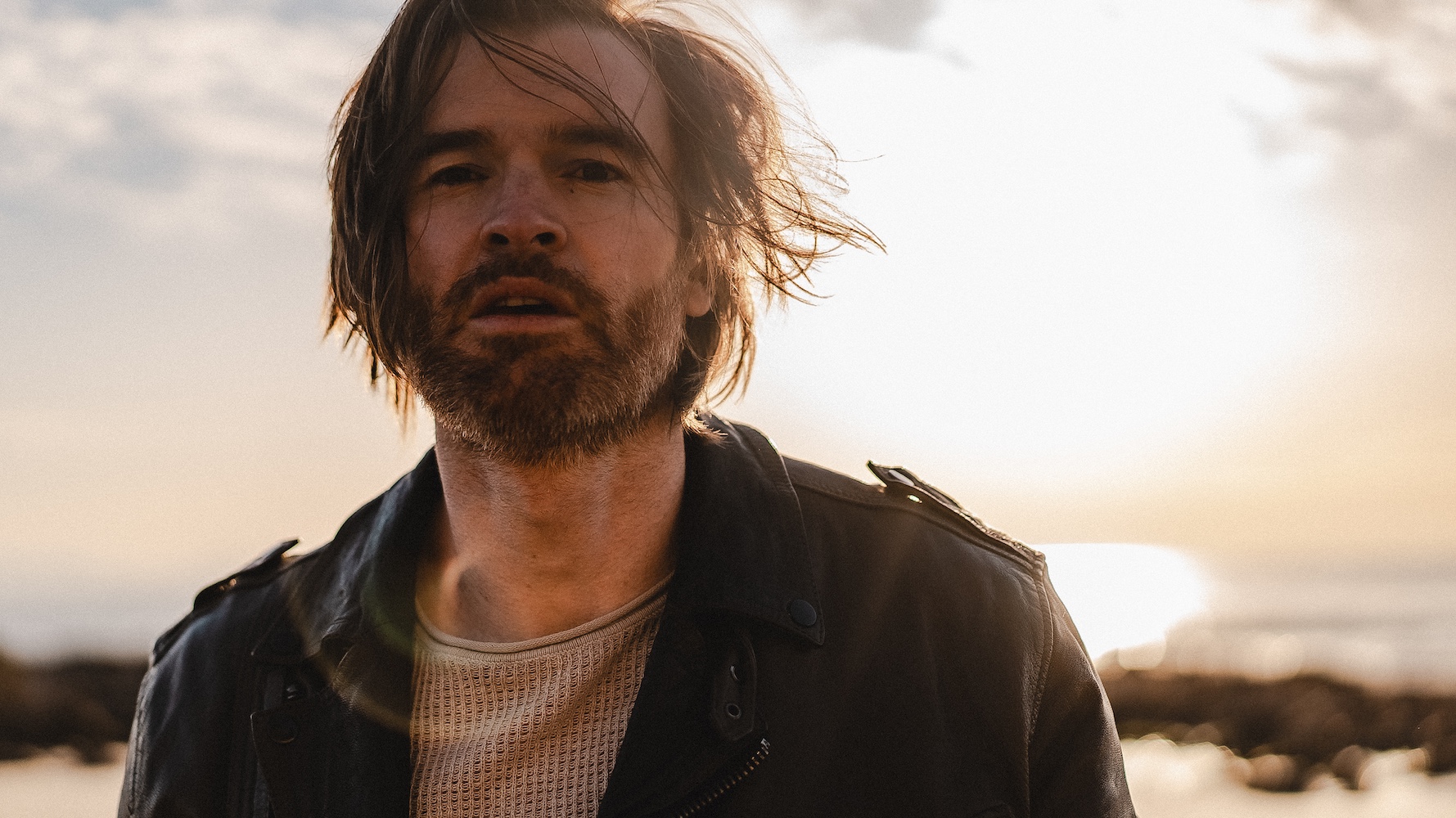
A CONVERSATION WITH JON BRYANT

Atwood Magazine: Congratulations! I hear you’re going to be a dad soon. How has this whole experience changed you – as a person and as a songwriter?
Jon Bryant: It’s definitely making it harder because it’s like I’m trying on a new identity in a way as a future dad, but not yet a dad. So, it feels like I’m in this waiting room, waiting for this next life to start and honestly, it’s been kind of challenging to write songs from that perspective. I have to stop having expectations about what I think it is and just tap into what is going on right now, which is just chaotic. It’s hard to find that space and time in my mind.
Do you start thinking about the lyrics, the messages or the stories you want to tell based on your child hearing these songs?
Jon Bryant: Yeah, I think so. I want them to like my music someday. They’ll hate it. They’ll probably think it’s cringe, I’m sure, when they turn 14. I didn’t necessarily love the music my dad listened to when I was a kid.
What did your dad listen to – coming from the East Coast of Canada, was there some Rita McNeil and The Rankin family?
Jon Bryant: He did like some of these. He was more partial to Southern gospel and, he liked Il Devo. And my mom liked listening to Fleetwood Mac and the cooler music, I think of the 70s, Hall and Oates. And so I got a bit into that stuff, but I rebelled and went to punk and metal and like Rage Against the Machine. But then, I came back to some cool gospel music. So yeah, I wouldn’t say I loved it when I was a teenager, but I’ve come to appreciate a lot of it.

I saw that you were just in Mexico City for a songwriter's workshop. Rose Betts was also there, whom I adore. Can you tell me about that?
Jon Bryant: I adore Rose as well. It was amazing. I got in late on a Thursday night and then we wrote for three days straight, and we came away with six songs. I wrote with Rose the first day and we got a really beautiful song. I was just chatting with her today. We finished the song that we started, finished earlier today. And yeah, she’s a lovely, lovely human.
I love your songwriting, but there are a couple of lyrics in some songs, especially in “Best Part,” that knocked me off my feet: “Why, oh, why did it take so long to realize life’s too short to waste on closing doors” and “I'm tired of my bullsh*t / tired of my bluffs.” What kind of soul-searching was going on to make that song happen?
Jon Bryant: It’s funny how that that song came together – it just sort of came out one day. I was just playing around with this really simple chord progression, and it just sort of came out all in one piece. To be honest, I can’t really take credit for it. It was like this stream of consciousness. I was really, really lucky to have tapped into it for a minute. It’s the most honest song I think I’ve ever put out.
All of your songs seem deeply personal and very honest. How do you decide what to share and what to keep to yourself?
Jon Bryant: I know this songwriter who told me, if you’re having trouble writing songs, try to write five songs with the intention that no one will ever hear them. That’s how raw and real and vulnerable they need to be. And then if there’s a way to pull back on some of the stuff that’s a little too jarring and personal, you can get to a place at a song where it’s exactly what the world needs to hear. It’s a fine line.
“Visiting Hours” seems like a very personal song. Do you want to talk about that one? You don't have to if you don't want to.
Jon Bryant: Yeah, absolutely. It was right around the time when I got asked to play someone’s, basically for someone’s death bed in Dallas. It was for a TikTok/Instagram doctor’s teacher from Med school. She was dying of breast cancer.
Her and her husband hosted house concerts for years and she had a wish list of artists, like a moonshot list of artists that she would love to have play – Bob Dylan, Ben Folds, a few other artists and then me. I had about 1,000 people message me in one day and it was just chaotic to get back to everybody and say thank you. Because I’m really intentional about connecting with everyone that writes me and just trying to try to make everyone know that I see their message, that it doesn’t just go into some void.
And so wrote back to the doctor and said, ‘hey, put me in touch with the family. I’d love to make this happen.’ And the next day I was in a writing session with my friend Scott [Effman] and Rosi [Golan]. We wrote that song. And then I went and played the show. But I didn’t know until a little later that Rosi, the co-writer of that song, her husband, three weeks later, got diagnosed with a very aggressive cancer. He passed away eight months later, and it was basically a week before we released the song. So that song just hits in a different way. It’s all about embracing the very limited time we have with everyone.
I was going to ask you about that because it seems to be a theme on the album – there are a couple of songs that reference the “life is short” kind of thing and I was wondering where that was coming from. Is that something you think about a lot?
Jon Bryant: Oh, I think about it a lot. I’m just cognizant of how fragile life is, I think when you get to travel and you get to see the world, and I’ve met so many people just by doing this job … you’re reminded about it all the time. I just count the blessings I have, and I call my mom and I’m just very intentional about trying to be in touch with all the connections I’ve made over the years.
Is there significance to the album title, Therapy Notes? Because when you start really listening to the lyrics, it sounds like it could be a therapy session.
Jon Bryant: I would do therapy, but it’s expensive. So music and writing became it for me and post-COVID, there was a lot of mental illness people were dealing with. Like if you’ve been able to push it down all your life, COVID was the great opener; it cracked open everybody. Some people needed that. That album was my whole post-COVID therapy.
What role do you think music plays in helping people get through difficult situations?
Jon Bryant: I think with music, we are entering this new phase of existence as human beings where we’re faced with either becoming more human or less human. You can either stay human or you can advance in this like direction that is completely AI and you don’t have to think anymore – you can just let a bot do it for you. I think for music, people are looking for a human connection. I think that’s what it always has been, but we’ve sort of forgotten that. I think the role of songwriters is to kind of make sense of this crazy f*ed up situation we’re finding ourselves in right now.
You recently posted something about an AI band that got a lot of attention.
Jon Bryant: It was an AI generated band that was generated a couple months ago, and it came across my Reddit feed. I did a little research and figured out it was a fake AI generated band that’s making money, and getting playlist priority and taking playlist spots from human beings. And so I just did a post on it and then it became the most viewed post I ever posted by almost a million and a half.
And didn't somebody create a fake account in your name and message your wife? Is it weird that you've reached that level of fame where people are pretending to be you?
Jon Bryant: I’ve kind of gotten used to the fact that there are scammers out there, but it’s the degree or the quantity of scammers that has just somehow accelerated. It’s a bit infuriating, really. There are about 70 to 80 on TikTok now, and then they’ll change the name, find a new account, do the same thing over again. And I get one or two people every day telling me about it.
Back to the music... I love that you go from something like “Visiting Hours” to “Dolly.” Was that very intentional to create these sort of emotional peaks and valleys?
Jon Bryant: Yeah, always. And in my shows, it’s the same thing. I try to make it a comedy show with like Shakespearean sort of emotion – betrayal and sadness, depression and love and all that.
You get your money's worth at a Jon Bryant show. Is that what I'm hearing?!
Jon Bryant: That is it. I’m a solo artist, so I’m on my own up there. I love the one-man band thing. But yeah, “Dolly” was just a fun song. I was like, I need people to know that I’m not incredibly depressed and that there is hope for me.
He does smile. I can verify that. “Dolly” is one of my favourites, but there's also a song that I want to ask you about – “I Wanna Die in LA.” It sounds hopeful, but also a bit melancholy to me. And there’s this line about dreamers trying to find their way. What is the Jon Bryant dream?
Jon Bryant: Good question. I thought it was LA. Yeah, it’s funny – after I wrote the song, all this stuff started happening in LA that made me not want to live there anymore. I’ve always loved being in LA and I still do, but in terms of living there, it’s just changed so much. And so as a song, it sits in a strange in-between of a dream I had and a dream I’m happy to move on from, too.
And the song can be interpreted in two ways in that some people when they’re there, they want to die; they’re just like, I hate this place. So, there’s an interpretation there that could be taken both positively and negatively. I’m kind of neither now, so it doesn’t even feel like my song in some way. That usually happens at some point with songs years down the road. This one, it was kind of quick. I was like, ‘oh, maybe I’m happy to stay where I’m at or to move somewhere else. Maybe it’s not about LA. Maybe the dream of LA is somewhere else now.
I have heard a lot of artists say that once the song is out, it's no longer theirs.
Jon Bryant: Yeah, it’s the world’s and if you write from an honest place, it’s hard to take credit for a lot of the songs. Sometimes it doesn’t feel like you worked on it – it feels somewhat like an idea came out and you’re just lucky to have the language to interpret it.
What do you hope people take away from your music?
Jon Bryant: Well, I think with the last record and kind of falling in line with that, just that life is short and embrace those connections you have and cherish them. I always say that at shows, too. Just call your friends that you haven’t talked to in a while and connect. I hope it reinforces old connections and creates good connections. I think that’s what you want music to do. I feel very fortunate and lucky to get to help people kind of get through life and make sense of their emotions.
— —
:: stream/purchase Therapy Notes here ::
:: connect with Jon Bryant here ::
— —
— — — —
Connect to Jon Bryant on
Facebook, 𝕏, TikTok, Instagram
Discover new music on Atwood Magazine
© courtesy of the artist
 © courtesy of the artist
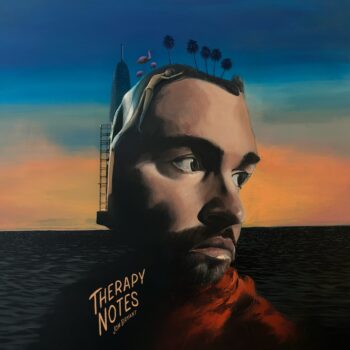
Therapy Notes
an album by Jon Bryant