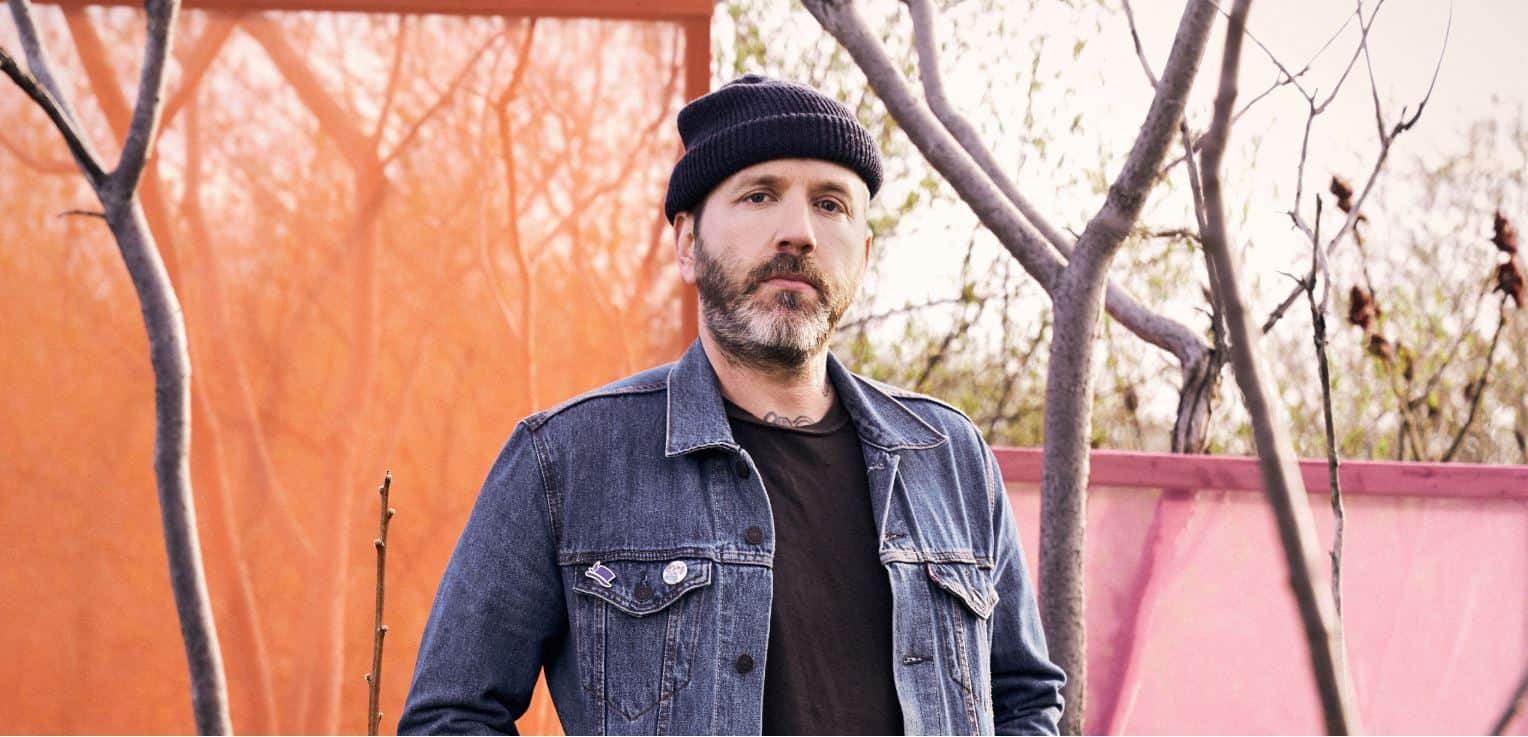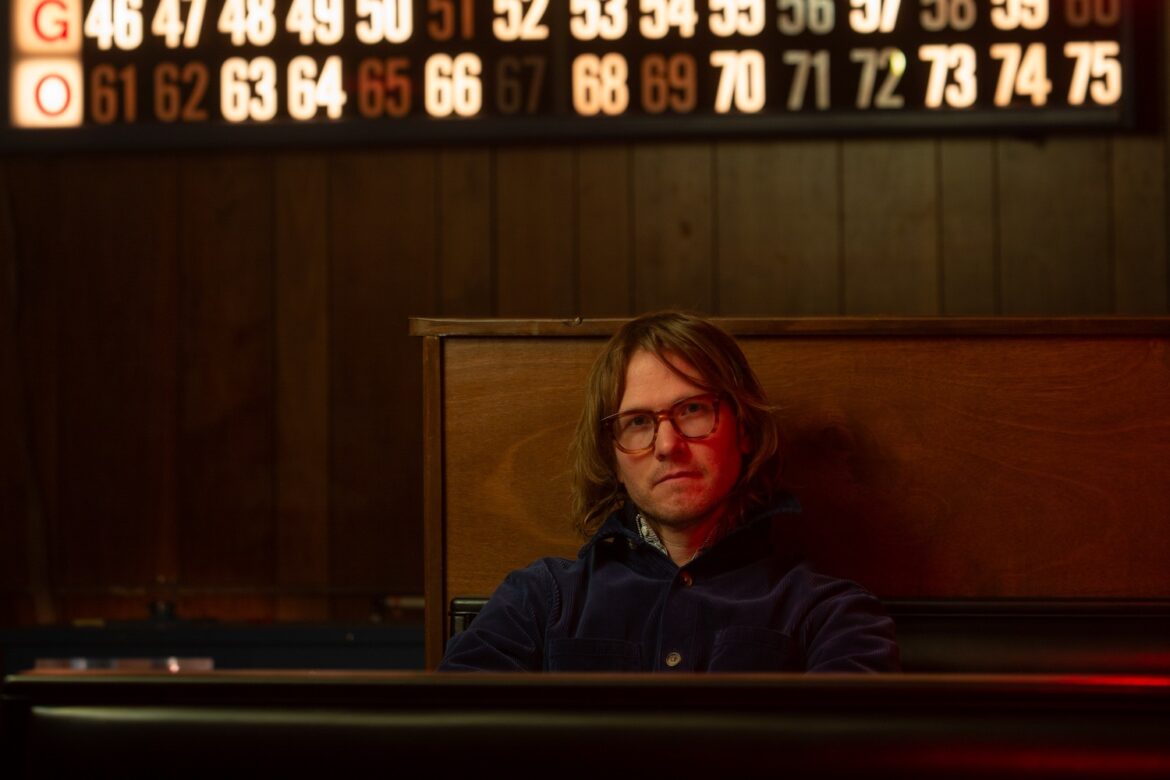
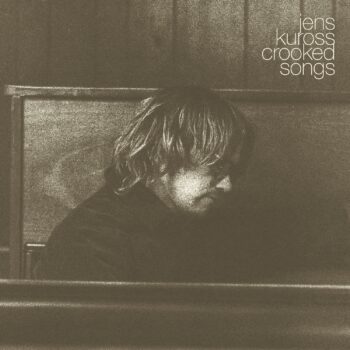
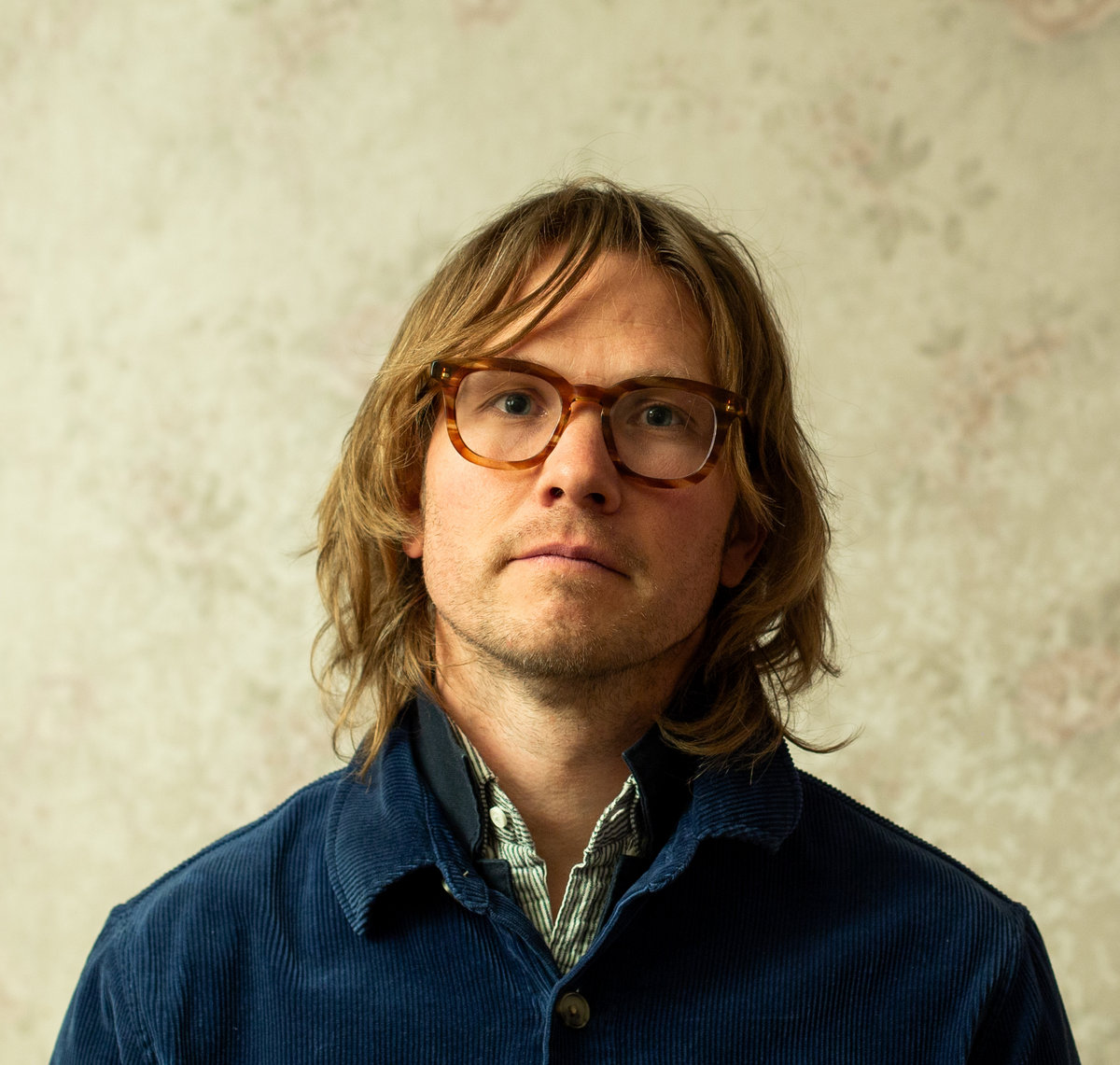
With a soft, unhurried voice and lyrics full of uncertainty, singer/songwriter Jens Kuross returns with ‘Crooked Songs,’ an album that leans into emotion rather than easy answers.
Stream: ‘Crooked Songs’ – Jens Kuross
Jens Kuross doesn’t offer solutions.
He’s not trying to give you closure, or clarity, or the kind of lyrics you can cross-stitch onto a pillow. What he offers instead is far less tidy… and much more intriguing.
On his latest album, Crooked Songs, the Idaho-based singer/songwriter leans all the way into ambiguity. The songs are beautifully melodic, emotionally raw, and just cryptic enough to make you lean in closer. Some sound like late-night confessions; others read like unsolvable riddles. All of them feel like someone speaking their truth while still figuring out what it means.
“The songs are both extremely personal but also not personally specific,” Kuross says. “I’m more interested in what the listener might learn about themselves through them.”
That tension between intimacy and abstraction has always been part of Kuross’ artistic DNA. After years of performing with The Acid and collaborating with Ry X, he stepped out on his own, releasing a handful of solo EPs before delivering his full-length debut in 2020: Art! at the Expense of Mental Health, Vol. 1. It was a record that wore its vulnerability on its sleeve, a slow-burning dive into emotional honesty.
With Crooked Songs, Kuross, a former LA session musician, sharpens that vision. This album, which was written, recorded and mixed in his home in Boise, marks a noticeable shift: It’s less structured, but more emotionally precise. He leaves space to interpret, without ever fully spelling things out – like a conversation cut off mid-sentence, it leaves you wanting more.
Co-producer Hayden Pedigo once described Kuross’ sound as “Arthur Russell-meets-Harry Nilsson,” which captures the avant-garde detours and the classic pop heart beating underneath. Kuross doesn’t shy away from that comparison. In fact, he leans in, clearly amused by it.
“I think Hayden also said I sounded like ‘Randy Newman-meets-Grouper,’ which I might love even more,” he says.
It’s fitting. Crooked Songs lives in that hazy space between storytelling and soundscape; between knowing exactly what you feel and having no words for it at all. It’s an album that doesn’t demand your interpretation so much as invite it. You’re not asked to “get it.” You’re asked to sit with it.
Across the record’s track list, Kuross circles big themes – love, loss, identity, resiliency – but never tries to land on a fixed answer.
These are songs for people who are still figuring things out.
Experience the full record via our below stream, and peek inside Jens Kuross’ Crooked Songs with Atwood Magazine as he goes track-by-track through the music and lyrics of his latest album!
— —
:: stream/purchase Crooked Songs here ::
:: connect with Jens Kuross here ::
— —
Stream: ‘Crooked Songs’ – Jens Kuross
:: Inside Crooked Songs ::
— —
“What I Miss Most of All”
Atwood Magazine: Your lyrics repeat the idea of “leaving all those jealous days behind.” Was writing this song more about letting go of a person or letting go of the version of yourself that existed in that relationship?
Jens Kuross: Good question. I don’t know. I can’t even tell you if it’s actually about a romantic relationship or not. I never sit down to compose with an agenda. So as far as lyrics go my subconscious is doing the heavy lifting 90% of the time, and this song is no exception. All that is to say that my relationship to my lyrics is not all that different from that of someone who’s just heard the song for the first time and is trying to figure it out.
“No One’s Hiding from the Sun”
This song blends confrontation with inevitability. When you wrote it, did “the sun” represent truth, consequences or something else entirely?
Jens Kuross: I like how “The Sun” is presented so ambiguously in this song. It can be taken as either a source of hope or of dread. Again though, I came to the lyrics with zero intentionality.
“Stereotype”
There’s a tension here between faith, doubt and personal responsibility. How did you land on the metaphor of “stereo, stereo, stereotype” to capture that conflict?
Jens Kuross: Well, I’m not totally sure. The song seems to be dealing with the questions and tension you mentioned. I think that the stereotype line is a nice way of affirming that there’s nothing exotic or special about those questions. They might seem heavy or profound, but everyone struggles with them. They’re so universal that they’re stereotypical.
“Beggar’s Nation”
There’s strong imagery of “beggars by the well” and “bleeding gasoline.” Did you envision this as a personal reckoning, a social commentary or something else?
Jens Kuross: In all honesty I didn’t envision it as anything. Again, no agenda, zero intentionality. But I sat down to write and what came out came out. I’m still figuring it out. There’s a not insignificant chance that listeners will get to the bottom of it before I do.
“Hymn of Defeat”
There’s a quiet resilience in the belief that “what’s defeated me will one day be defeated.” Was this song based on a specific experience or more of a lifelong philosophy?
Jens Kuross: This song is unique in that the whole thing came to me very quickly, or at least the lyrics did. I wrote like seven or eight stanzas in the course of a couple hours. Normally that’d take me months or years even. So, I don’t know specifically what it was born out of but whatever it was my subconscious really needed to get it out.
“Inside Joke”
When you wrote it, were you thinking of a specific “inside joke” from your own life or is it more of a metaphor for feeling left out?
Jens Kuross: Listening to it retrospectively I hear someone confused and maybe even angry about being on the outside looking in, but also wondering whether or not there might be something quietly noble about being an outsider as well.
“Never One for Fighting”
The chorus accepts loss and resilience. Do you see the narrator as someone who’s at peace with letting go or someone who’s still quietly holding on?
Jens Kuross: Listening to it now, the narrator seems to be at peace.
“Crooked Song”
The refrain “to stop this world from changing me” feels like a manifesto. Do you think of this song as a defiance against change or a way of preserving your truest self in spite of it?
Jens Kuross: To me, preserving your truest self but everyone is welcome to find their own meaning.
— —
:: stream/purchase Crooked Songs here ::
:: connect with Jens Kuross here ::
— —
— — — —
Connect to Jens Kuross on
Facebook, 𝕏, Instagram
Discover new music on Atwood Magazine
© Mark Oliver
 © Mark Oliver
Crooked Songs
an album by Jens Kuross