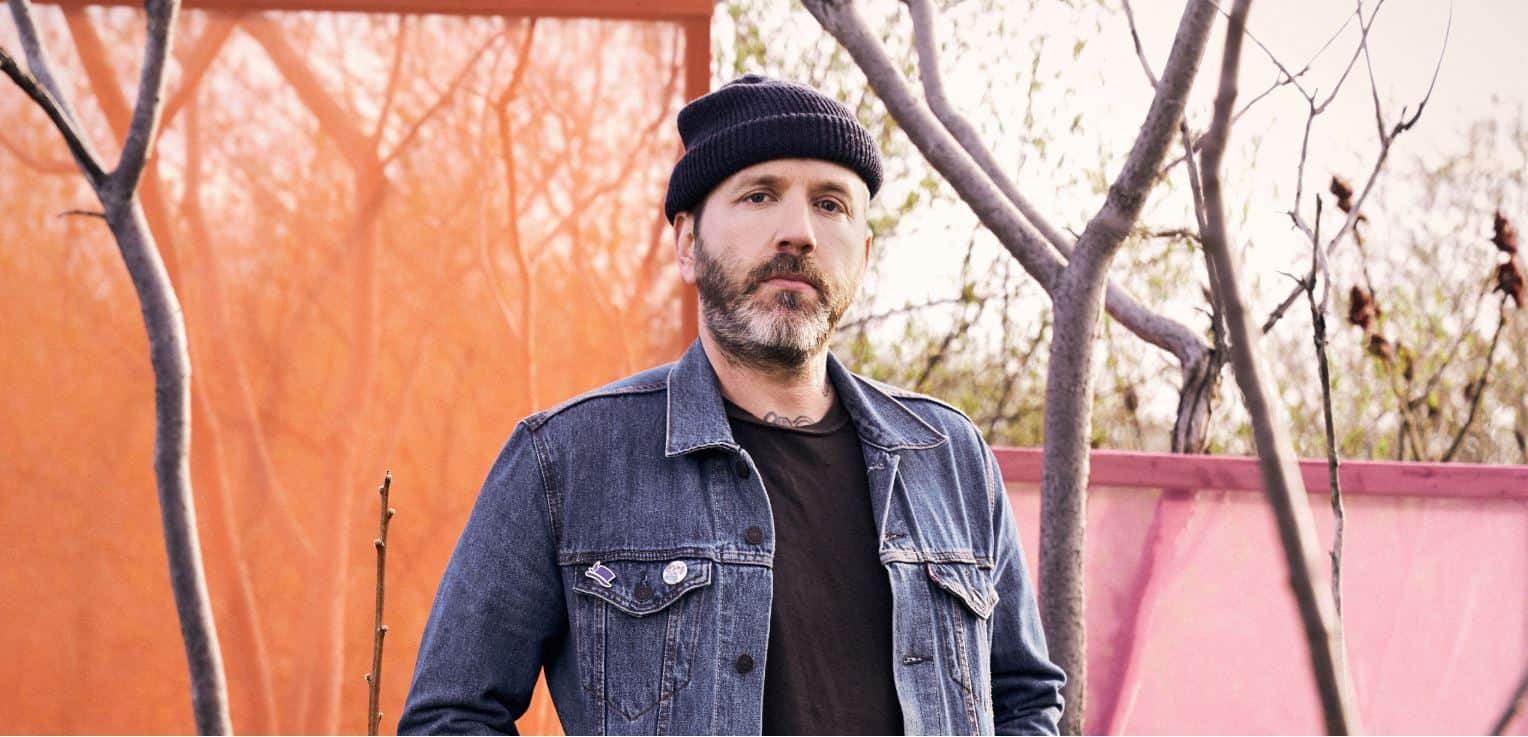
Americana’s leading lady Lera Lynn throws caution and expectation to the wind on her new album ‘Comic Book Cowboy,’ questioning life, purpose, art, and the music industry.
Stream: “Comic Book Cowboy” – Lera Lynn
I love making music so much. What I found through the process of giving my career a funeral is that I lost purpose, and I have to have that to stay alive.
* * *
Lera Lynn had a reawakening.
The American singer/songwriter had thought she was done with the music business, done making music, and done performing for her fans, but then on her 40th birthday, with guidance from a friend, she had an epiphany: “I love writing and recording songs, and whatever happens after, who cares?” Comic Book Cowboy (set to release September 19 via Ruby Range Records) was set in motion that evening, as was Lynn’s love for creating art.

Let it all fall apart
Believe it never was my heart
I gave it a good funeral
Casseroles, cookies
Champagne and casket look-sees
But they keep bringing it back to life again
Happiness is a trap – look again
Your silence is full of noise
Trapped in the dream of being you
With your handfuls of toxic toys
– “Comic Book Cowboy,” Lera Lynn
The name of the album, Comic Book Cowboy – also the title of a recently-released single – is at once unusual and evocative, conjuring a wealth of vivid imagery and endless ideas. It’s the perfect place to begin any conversation about the record. “I feel that song, lyric, and concept of putting on this suit, this shell, and trying to get through the world really encapsulated what all of the songs on this record are about,” Lynn tells Atwood Magazine. “Especially where I am in my life right now, and where I am in my career right now, and as a woman and as a mother.”
Lynn has been making music for 20 years. She stepped into the Nashville scene with her debut record Have You Met Lera Lynn in 2011, followed by her sophomore record The Avenues. Lynn has since released many EPs and LPs, a musical score to the critically acclaimed HBO show True Detective, which Lynn starred in as an unnamed singer in season two, alongside writing music for television shows and video games. Lynn has remained an independent artist throughout her career, and pre-pandemic she was sustaining a living, however, since the pandemic, Lynn has felt the financial squeeze.

“My career was doing this [gestures upward] before 2020, and now… [gestures downward] I did have a sustainable career before the pandemic, and then everything changed,” she says candidly. “I can’t really articulate exactly what happened, but everything changed. It’s no longer sustainable for me with my new responsibilities, with my family, and everything else.”
This despondency is reflected in not only the storytelling, but also the sounds of her latest album. Lynn sings about her worth, now that she no longer has the “physical allure” singers in their 20s have. “It’s cute when the young girls sing all sad and agonize. Don’t you wanna hear my midlife existential strife? It’s the saddest kind.” On her latest single “Beige,” Lynn questions the sameness and safeness of art and worries she will just become another impression in someone’s algorithm: “The deepest fear I hold so dear, singing softly in my ear, though I push for the color scheme, I’m another white in a sea of creams.”
There are lighter moments, too. On “Left Turn Lane,” the last song recorded for the record, Lynn says she “wanted to write a song about a moment, just, like, making eye contact with someone that you can’t actually access, and you both have this crazy feeling, like, you know there’s something, there’s something magnetic between you. And then the moment’s over.” The sound is thick with longing and steady, hypnotic beats. There’s a dreamlike quality to the song, perhaps because we can only dream what happens after those moments.
Red light
Heavy traffic
Closing in on the night
I wanna get through
I pull up next to
A bus that is waiting too
And by happenstance
Looking thru our windows
We lock eyes in the same glance
We find eyes in the same dance
– “Left Turn Lane,” Lera Lynn
“It’s beautiful that way,” she smiles. “It’s a really fun song. I said to my partner and co-producer, Todd Lombardo, ‘I have another song.’ We got into the studio as a band and tracked it live, and it was so easy and so fun and that was one of my best memories from making that record.”
Atwood Magazine caught up with Lera Lynn at her home in Nashville. We spoke about topics from music, to politics, to technology, to finding our power as women in our late 30s and early 40s. Read on as she opens up about reinvention, resilience, and the realities of today’s music industry – and stay tuned for her raw and uncompromising new album Comic Book Cowboy, out September 19 via Ruby Range Records.
— —
:: stream/purchase Comic Book Cowboy here ::
:: connect with Lera Lynn here ::
— —

A CONVERSATION WITH LERA LYNN

Atwood Magazine: Thank you for speaking to me today, Lera! I really love your new record Comic Book Cowboy. It has such a rich sonic palette and also feels like the first album I’ve heard this year that reflects how dark the world has become. I think I called it ‘existential’ on social media. It's dark and asks a lot of questions. Would you say that’s an accurate description of the album?
Lera Lynn: It is existential for sure. I’d say it’s dark. I feel like this record, though, has a lot more acceptance than the records that I’ve made in the past. It’s like, ‘shit’s dark, but.. What are you gonna do?’ It just is what it is, and we move on.
When did you start writing the record?
Lera Lynn: Oh gosh. Well, I did a tour by myself for the album ‘Something More Than Love.’ This is such an interesting thing touring completely alone. It’s liberating, but it’s also very lonely and it gets dark sometimes. Spending a lot of time driving. I had a stream of consciousness, making voice notes of poetry or lyrics or whatever. I guess that’s like when I started, although I wasn’t thinking about making a record at that time. I was feeling so disheartened and discouraged and just needed to let it out. You can hear those feelings on the record. I don’t know if that’s a good thing or not. I mean, the world’s got enough of that, but that’s the record that I made.
I have noticed that artists have been releasing upbeat stuff. I don't know if that's in reaction to what's going on. As in, ‘I shouldn't make anything negative. I should try and put a positive spin on life.’ So, it was nice to listen to a record where things aren't good and actually reflect a lot of people’s mindsets. Whether that's globally, nationally, or personally as a woman. Comic Book Cowboy is very dark, but it's honest as well.
Lera Lynn: I think that’s what I was aiming for, just real, you know? I think I’ve definitely been more aware of how my music needs to tick certain boxes in the past, like, how to get it on the radio or on playlists on Digital Streaming Platforms (DSPs) or, you know, music that we might play at a festival. With this record, I just kind of said, ‘f all that. I’m just going to put it out how I want to, and if it resonates with you, that’s great, and if it doesn’t, well, guess what? There’s 10,000 other songs released every day.’
There is an acceptance to this record, which comes through on a few of the songs. “Laundry,” the final track is one that stood out for me, I think because it’s about giving up parts of ourselves that we once swore we’d never do. It has a bittersweetness.
Lera Lynn: It is not negative or positive. The only way to enjoy life is to accept and find the silver lining and everything.

On a lot of songs on this album, you are questioning and seeking, particularly around your identity of being a mother and wife. It’s funny because I had a similar conversation to the artist Jillian Jacqueline (who released her EP Bright Eyed Baby in the summer) about the labels ascribed to women, and also about her initiative MOTHER, which I know you are involved in. Could you talk more about this topic?
Lera Lynn: Yes, that’s the question that I get consistently from men: “how do you balance motherhood and your career?” And I just think it’s interesting that men are never asked, “how do you balance fatherhood in your career?”
No, they're not.
Lera Lynn: It is challenging, and I’ll admit that there are some seemingly biological obligations that women have to parenting that men maybe don’t have as much. When the children are young they just really want to be close to mom.
I think the thing that’s most discouraging, is that people assume that if you’re a mom, that you become irrelevant, that you don’t still have important thoughts and feelings and things that might help other people. Also, that you’re not really provocative anymore You’ve lost your sexual edge and therefore you’re no longer intellectually provocative.
You’re no longer of interest to the commercial market, because we can’t sell you in the way that we could make when you were in your 20s, which is total bullshit. I’ve never felt more powerful and more articulate and more bold and brave than I do at this point having had a child and moved through the insane transition that is losing your identity as a person before becoming a parent, a mother specifically, and after. You don’t shrink away, you actually become bigger.
What you’ve just said, and the real lived experience of women, feels like such a juxtaposition to what's going on politically and socially in the United States. This can't be a coincidence.
I like that your record asks the questions: ‘What is my worth as I am now, as a mother, as a wife, as a woman who isn’t in her 20s anymore?’ We're fed the story that when you hit 40 you’re of no use, which is insane to me. I’m two years away from it and I actually feel stronger than I've ever done before.
Everyone wants hope and sun
But what I can supply
Is doing someone else’s laundry
Sitting, wondering
Why we’re alive
It’s cute when the young girls
Sing all sad and agonize
Don’t you wanna hear
My midlife existential strife?
It’s the saddest kind
– “Laundry,” Lera Lynn
Lera Lynn: You have more perspective and clarity on what’s important and how to get through things. There’s so much richness in aging.
I really did enjoy exposing that part of my experience in this record. And then these lyrics… I remember I sent the song “Laundry” to a male songwriter friend of mine, whose name I’m not going to mention, and said, “So what do you think of this?” And he was like, “maybe leave out the midlife bit?” And I’m like, “Dude this!” That’s the most important part of the song! I am proud to not hide that part of myself, mostly because I know there’s a bunch of people my age that are thinking the same thing and are going through it.
You've been a cautionary voice surrounding AI and music, and you actually sing about it on this album with “Digital You/Digital Me” and “Now That We Hold It All.” Earlier this year, you even experimented with OpenAI and got it to create a song “in the style of Lera Lynn” and posted it to your socials as a warning.
Where you sit as an indie artist and a songwriter right now, what are your concerns and do you think labels are doing enough to protect artists and songwriters?
Lera Lynn: I am embracing AI in a lot of ways, and I think that it’s changing our world in a lot of good ways. I’m not a luddite. I think that there’s just not enough safeguards around intellectual property, that being first and foremost, my biggest concern. For someone to be able to go into OpenAI and write a prompt to make a song in the style of Lera Lynn, it’s just… I don’t even know the word for it. It’s sickening, honestly.
I’ve worked my entire life to carve out my vocal style, my lyrical style, the cadence, the phrasing, I mean, all of these things have taken years and song after song, record after record, and shows on stage, and for someone to just enter a prompt and have a piece of music that sounds a lot like my music in seconds, and to be able to monetise, that is just wrong.
I think that if people wanted to do something like that, and it was clearly indicated that it was an AI copy, and if the artists that it was copying were credited and received royalties from it. Okay. That’s better, but there’s no safeguard in place. It’s just the Wild West.
My other fear is that what is incentivising the DSPs to prioritise human music over AI music that they’re generating themselves, and they just don’t have to pay any royalties on?
We’re all scrambling to try pitch for playlists, thinking that we’re going to reach a slightly larger audience or in some cases, an audience that buys your music. Paying for Discovery campaign ads on the DSPs and we’re scraping. And then to also, ‘oh, by the way, now the computers are making music, so we actually don’t need you. If you want to keep making music you can, but we’re not gonna do anything to promote it, we’re just gonna add more competition, and we’re gonna prioritise it because we own all of it.’ Those are my fears.
Making music is already unsustainable for 90% of people who are doing it. I guess my biggest fear is that art in general, the world will suffer because people can’t sustain life as artists and are forced to get other jobs and music is going to be made by somebody who’s really good at marketing and typing in prompts.
Right now…
What does that mean now?
We have become so backwards facing
Now machines replacing all the light
How will we know what’s really true?
Has the voice of god turned hollow
Now that we only follow manufactured blue?
They want our hearts upside down
– “Now That We Hold It All,” Lera Lynn

You talked in terms of, like, artists not being able to sustain themselves as artists, which we saw during the pandemic. How do you continue to make art given the lack of financial compensation for your work?
Lera Lynn: That’s a really good question. Most of my revenue comes from fans buying my records, buying vinyl and CDs from my online store and on tour. Touring is getting squeezed more and more. The only reason that I am able to continue doing this is because I’ve just been able to ask for a lot of favours from friends who can give their time. I don’t know how anybody else does it otherwise.
This is what concerns me too as a music critic and music fan. We’re going to end up with a very skewed picture of life via art because you’re going to end up with one type of person making the art, i.e., a person who can afford not to be paid for their art, so someone very privileged. There are going to be whole demographics whose experience won’t be recorded and who will end up feeling increasingly isolated.
Lera Lynn: I know there are some exceptions, people that break through and represent the other side of life. When I say that I’ve asked favours, I don’t mean people high up in the industry. I mean, I’m doing everything myself. I’m busting my ass working harder than I ever have. But in terms of actually making a record, that’s favours. Those are friends going on a tour that is hand to mouth. It’s like, ‘am I going to be able to pay the band? How many tickets have we sold? Fuck! We’ve to sell more tickets. Where aren’t the tickets selling?’ The idea that I would have money to take home after that to survive on, that’s a pipe dream.
I’ve wanted to tell my fan base ‘hey, seriously, if you want to see a show, this might be the last chance.’ It feels like that every time. It’s just too unpredictable. It’s too expensive. It’s a big risk. And then also to have a child at home. We go out on the road and lose money and be away from my family, and it’s just like something’s not quite adding up here anymore.
There’s there’s so many people touring now. There’s so much competition. People are getting squeezed economically. I don’t know if they can afford to go to shows and if they can, you can’t go see a show three nights a week, unless that’s your job. It’s just not realistic. I don’t know what the solution is.
I feel like a lot of artists are in the “fake until you make it” phase, and I’m guilty of that to a degree as well, but I also think it’s really important to speak the truth about what is happening in the industry. DSPs are obviously extremely convenient and easy to use, but they are also making it a challenge for artists to connect with fans, and some people just don’t understand the impact that streaming is having on artists. They don’t understand how it works or how people get paid or don’t get paid, and how much money it takes to keep the whole thing going. I wish that was common knowledge. I think the more people find out about that, people like you, the more people will understand the importance of buying a piece of merch or a concert ticket or downloading a record. If it’s an artist that they wish to see continue.
I have a certain responsibility to speak up for other artists that might see this and be like, ‘oh, I’m not alone, okay? I’m not the only person struggling.’ And also inform fans of the reality of the industry.

Coming back to the album, what was the first song you wrote for it and what made you realise that this is becoming a record and this is the direction I’m going in.
In between awake and sleeping
When the door opens to dreaming
That’s when the music starts playing
That’s when the words come to me
And I leap from the dream to catch it
But by then it has run away
So it is this fear of losing
Every time I finally lay
Lera Lynn: I think the first song was “Cherry Tree.” I wrote that the day after my 40th birthday. I had this lovely dinner with friends on my birthday, and afterwards some of us came back to my house and we played some songs on the piano. There was a friend of mine present, Daniel Tashian. He’s a successful songwriter, singer, producer, wild card, and sweetheart.
At that point I had actually quit music. I sold some instruments. I put all my stage clothes in storage, and I moved the other instruments out of my house. I couldn’t even bear to be in a room with a guitar. The piano was still here, but it was a strange time for me.
I remember asking Daniel that night, ‘how do you keep writing in spite of feeling like you don’t necessarily deserve a platform to speak?’ Why do I need to say anything to anyone? Why do I deserve that?’ And he was like, “well, nobody else is asking that. You might as well.”
Then the next day, I wrote “Cherry Tree,” and that’s when I felt like, ‘Okay, I might make a record. I might put it out. I might really lower my expectations and just do this because I actually love writing and recording songs, and whatever happens with the release, who cares?’ It’s crazy that we’re going on tour, I also didn’t expect to do that. I remember telling my band on the last tour, like, ‘This the last tour.’
I can't believe you put your instruments away and nearly gave up!
Lera Lynn: I just felt so tortured by giving everything that I have to an industry that is just basically indifferent. Having worked 20 years at this point, and not having a sustainable career.
I decided it was time to quit. I spoke to my therapist actually multiple therapists helping me process this separation of self from career and art. My therapist said “give it a good funeral” and that really stuck with me. I put it in the lyrics of “Comic Book Cowboy.” It’s funny just sort of letting my dream die in a way, is what liberated me into making art again.
That's so sad, but also, wow! Letting go of it allowed you to keep going. I'm glad you did.
Lera Lynn: I love making music. I love it so much. What I found through the process of giving my career a funeral is that I lost purpose, and I have to have that to stay alive. To be a person, to be a good mother and a good wife and a good friend and daughter, I have to have a sense of purpose and that just happens to be how I derive that. I wish that I could be satisfied and fulfilled by just being a wife and a mother alone, but that’s just not me.
Is there a song on the record that reflects the mood of the album?
Lera Lynn: I think “Comic Book Cowboy” is that song. There’s so much in there. It tackles a lot about an ego death, trying to fake until you make it, and giving up on that and just being myself and asking why I’m doing any of this.
It’s crazy that it’s taken me this long to figure out what actually motivates me. It’s just the music!
When you’re young and you get all twisted up with the business, and numbers and progress and it’s easy to lose sight of the music. I guess it took failing and stripping all of that away for me to get back in touch with my love for music and my disregard for the rest of it.

Do you have a favourite song from the record?
Lera Lynn: There are so many different moods and styles that span this record. I think “Beige” on the more introspective side is one of my favourites. I like that it’s very moody. I just love the harmony and the lyrics, and I think that is a forward reflection of who I am, a person that has never wanted to be the same, in a weird way.
I’ve been an artist at least, and I’ve always been like, ‘what is everybody else doing, okay, I’m going to do the opposite.’ So that song speaks to the repetition of our world. The lack of creativity that we are often surrounded by. Because it’s all about output and not quality.
Production quality is so much higher now than it used to be across the board, so it’s easy to be tricked into thinking something is high quality because of the high production value, but what is actually here? How deep does it go? Can you chew on the song for a while? Does it make you want to come back and investigate and figure out what the person is talking about?
Given you’ve been doing this for twenty years and all the things we’ve talked about during this interview, why do you continue?
Lera Lynn: It’s sort of what we were talking about before. ‘Why are you doing this? Do you even have to have a why?’
Get your priorities straight. My experience has been doing it because you want to find success and sustainability, which is understandable, but you can’t prioritise that. Priority has to be doing it just because you love doing it, which sounds so ridiculous. How’s anybody going to manage to do that if they can’t pay their rent!
I don’t know the answer to that question, because I’m struggling with it too. But the biggest lesson of my life for the last five years has been that this is my purpose, and I’m just gonna find a way to do it and the outcome is completely irrelevant.
— —
:: stream/purchase Comic Book Cowboy here ::
:: connect with Lera Lynn here ::
— —
— — — —
Connect to Lera Lynn on
Facebook, 𝕏, TikTok, Instagram
Discover new music on Atwood Magazine
© Alysse Gafkjen
 © Alysse Gafkjen
:: Stream Lera Lynn ::