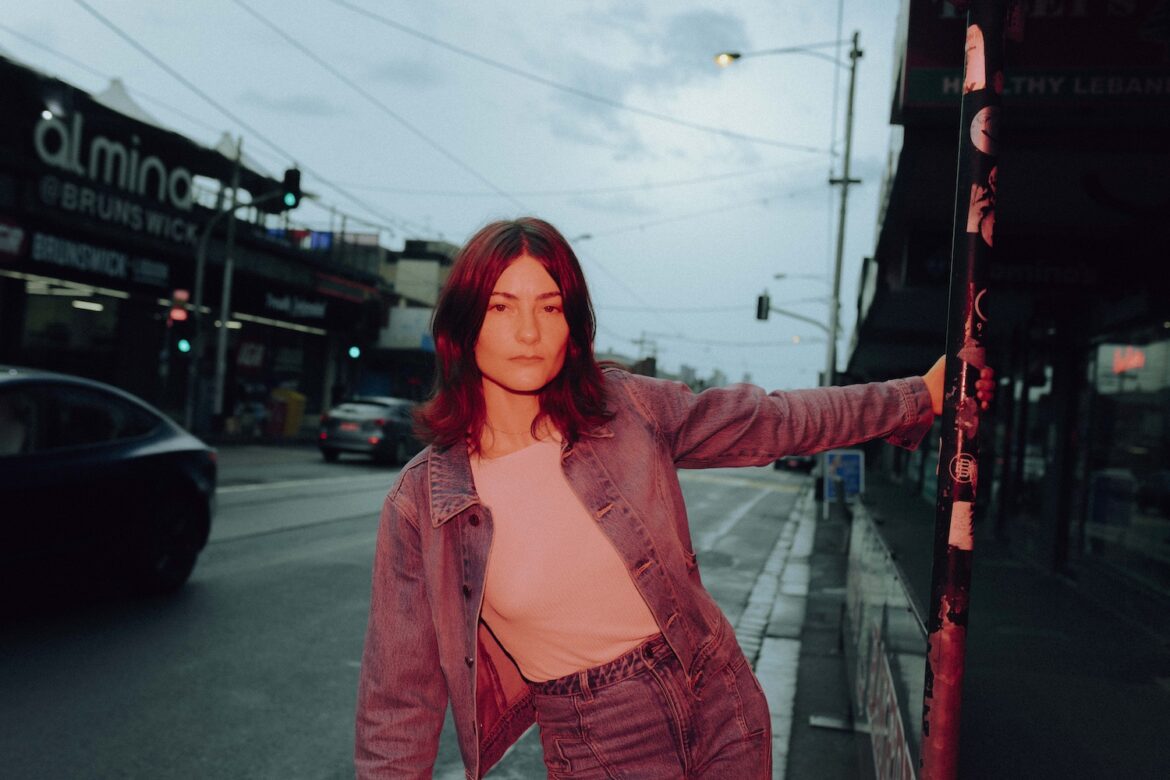
Rowena Wise is in her most raw and self-searching chapter yet, channeling the wounds we inherit and the truths we try to outrun into soul-stirring indie folk songs about our messy, flawed humanity. The Australian singer/songwriter brings that reckoning into sharp focus on her forthcoming sophomore album ‘Bad Things Feel Good*,’ where self-performance and existential loneliness collide with the courage to sit with what cannot be solved cleanly – beginning with lead single “Blood Ties,” a searing confrontation with family silence and emotional suppression.
Stream: “Blood Ties” – Rowena Wise
You’ve got blood ties stuffed in your mouth / Won’t let the truth come tumbling out… I’ve been grappling with these growing pains of adulthood, allowing the messiness of life to sink in rather than trying to make clean sense of it.
* * *
Family love can fail most painfully when it has no language – when the people bound closest to us have been taught to offer duty in place of tenderness, endurance in place of admission.
A parent can love fiercely and still freeze before another person’s pain, reaching for old scripts when the moment asks them to step closer.
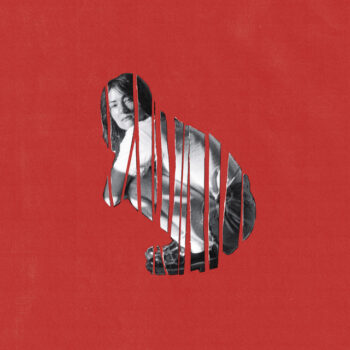
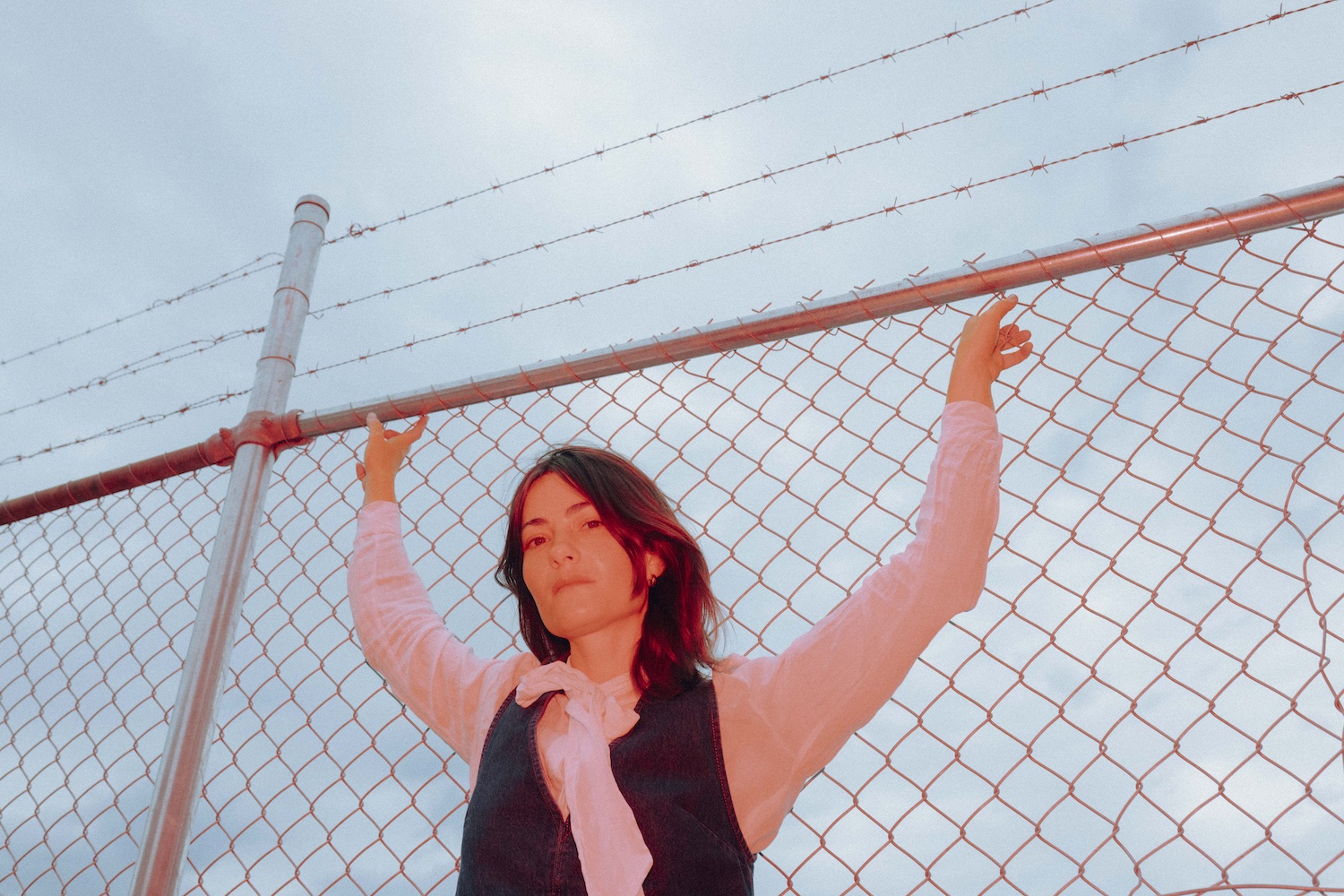
Rowena Wise’s searing, soul-stirring “Blood Ties” confronts the inherited silence that leaves people stranded from one another in their most desperate hours – a father unable to meet his son’s mental health crisis with openness because no one ever taught him how to name his own pain. Smoldering, gritty, achingly expressive, and emotionally unguarded, the Naarm/Melbourne artist’s first solo single in two years charges forward on crackling guitars, a restrained but powerful groove, and a vocal performance that feels instantly unforgettable: Warm at the edges, raw at the center, and clear-eyed enough to stare straight into the hurt. This is a song about the harm passed down through emotional avoidance – not as cruelty, but as conditioning – and the courage it takes to break that cycle by finally speaking.
He walked along the driveway
You played upon the porch
Running along the gravel
as his car was taking off
A father that didn’t hold you
When leaving or coming home
And so you were raised believing
You should dry your eyes alone
Out now via Beloved Records / Remote Control Records, “Blood Ties” opens the door to Wise’s forthcoming sophomore album Bad Things Feel Good*, out August 7 via 22Twenty / Beloved Records. The song offers a powerful first glimpse into the record’s larger world – one where inherited patterns, mental health, self-abandonment, complex intimacy, and moral uncertainty all press against each other without resolving into easy lessons.
Raised in Margaret River, Western Australia by a luthier father and a Chicago-born folk musician mother, Wise comes to songwriting through a deep lineage of craft and storytelling: trad folk roots, poetic lyricism, and a band-driven indie canvas shaped by years of touring and live collaboration. Her 2024 debut album Senseless Acts of Beauty was a spiritual milestone, a record born from heartbreak, trauma, and the beginning of a long inner reckoning. With Bad Things Feel Good*, that reckoning grows thornier, less certain, and more willing to sit inside the mess rather than smooth it into a clean arc.
“I am a storyteller at heart,” Wise tells Atwood Magazine. “I come from a trad folk background, which I think colours my style of poetic lyricism over a band-driven indie pop canvas. I write songs about unravelling, love, loss and selfhood, songs that sound like a close friend whispering into your ear. I want to connect with people through music, as a means of consoling, witnessing, reflecting what people didn’t realise they already felt.”
That mission has only sharpened over time. Wise sees Bad Things Feel Good* as a record that looks past the first wave of survival and into the stranger territory that follows: What happens after you think you have overcome something, only to realize the old shapes are still living in your choices, your relationships, your body? “Senseless Acts of Beauty had more tenderness and a bit of a cathartic arc of overcoming heartbreak and trauma,” she says. “Bad Things Feel Good* is about turning your gaze to the more uncertain parts of love and selfhood, and has a more raw, restrained energy.”
“I’ve loved, lost, and left the realm of comfort to pursue hard truths,” Wise adds. “I realise now that pain has become something that doesn’t senselessly happen – it comes as one part of a larger picture, and I want to learn from it rather than recoil. Now I don’t know who I am, but I do know that I just want to be human, to be at peace with the messiness of life without continuing to try to tell a clean, novel story about it.”
When your own son was broken
When his life was down the drain
Your only advice that one
has gotta suffer for to gain

“Blood Ties” understands silence as an inheritance – passed down through absences, half-held grief, and the old demand to survive pain without naming it.
Wise sings from the charged space between accusation and empathy, addressing the father directly while refusing to flatten him into a villain. The song’s force comes from its understanding that love alone is not always enough. A parent can care deeply and still fail to show up; a family can be bound by blood and still choked by silence. Midway through the first verse, Wise distills that inheritance into a brutal exchange: “When your own son was broken / when his life was down the drain / your only advice that one has gotta suffer for to gain,” she sings, and the line lands like a generational wound – pain offered as proof of character, suffering mistaken for strength, endurance confused with healing.
You’ve got blood ties
stuffed in your mouth
Won’t let the truth come tumbling out
About the black sheep running around
It was always you
“I wrote ‘Blood Ties’ after a close friend experienced a mental health crisis,” Wise shares. “In the aftermath, I watched his father struggle to respond – not because he didn’t love his son, but because he didn’t know how to meet him emotionally. He had grown up in a culture that taught men to suppress their feelings, to equate strength with silence, and to see vulnerability as weakness. When faced with his son’s pain, he simply didn’t have the tools to step into it with him.”
“At its heart, ‘Blood Ties’ is about how essential vulnerability is within the relationships that matter most,” she continues. “Loving someone isn’t just about providing or protecting – it’s about being willing to sit in discomfort, to speak openly, and to let yourself be seen. When we can’t do that, even the deepest love can feel distant.”

The music understands that distance. “Blood Ties” never explodes for the sake of spectacle; it churns, tightens, and bears down, letting its restraint make every line hit harder.
Guitars scrape and shimmer with warm, crackly energy, the rhythm section keeps a steady pressure underfoot, and Wise’s voice carries the song’s full moral weight – aching, commanding, and beautifully unguarded. She has called it “a killer band-driven track,” and that phrase fits: The band doesn’t overwhelm the story so much as give it muscle, letting the groove pull listeners closer until the song’s most devastating images are impossible to evade. “You don’t wanna see your son swinging from his family tree” is one of those lines that leaves the air changed around it, brutal in its clarity and compassionate in its purpose.
It’s cold in the cafeteria
The sky faded blue to black
Here comes the nurse relaying
that they’re gonna use ‘the act’
He shrouded his pain in silence
Now he’s babbling monotone
Because he was raised
believing he should dry his eyes alone
I call you and you’re shaken
It’s not how it’s supposed to be
You don’t wanna see your son
swinging from his family tree
You’ve got blood ties stuffed in your mouth
Won’t let the truth come tumbling out
About the black sheep running around
It was always you
“This song is very close to my heart, as a lot of the unspoken pain in it is something I resonate with,” Wise says. “Personally and in the context of a society that constantly asks us to mask pain. I wrote it about a close friend of mine who was going through a mental health crisis, and I saw how avoidant his father was when it came to talking about the deeper rooted pain. They loved each other, but it was clear that there was a vast divide between them, that neither of them felt safe to be honest and vulnerable with each other for fear of being perceived as ‘weak’ or ‘broken.’”
“This was triggering for me as I grew up in a small country town in South-West Australia, where the culture often dictated to shut up about your feelings, to soldier on. Particularly if you were male. There were a string of young male suicides after I left home, which sparked the Blue Tree Project – dead trees painted blue from head to toe out in paddocks, beside highways, to raise awareness for mental health discussion in rural communities. I think it’s so important to be honest with those closest to you, to overcome the discomfort and conditioning to stay resilient, in order to end the generational cycle of emotional suppression.”
The “black sheep” refrain is the song’s masterstroke because it shifts the frame without softening the indictment.
Wise sees the father not only as the person failing to respond, but as someone shaped by his own unspoken hurt – an isolated figure who may have learned long ago that emotion was dangerous, shameful, or useless. That doesn’t excuse the damage, but it deepens the wound. “Blood Ties” is fierce because it asks more of love. It insists that care cannot stay abstract, hidden behind duty, protection, or pride. Care has to speak. Care has to risk discomfort. Care has to sit beside another person’s pain and say, plainly, I’m struggling too.
“I thought about how the odd ones in families are coined as the ‘black sheep’; the different ones that are misunderstood by their kin,” Wise explains. “The colour black spoke to me about depression and isolation, like the simile ‘black dog.’ In ‘Blood Ties’ I am addressing the father character directly – I wanted to be confrontational in a way that humanised him, attempting to understand what shaped his relational patterns.”
“The reality is that they themselves likely feel isolated and lost too, because they perpetuate the disconnect with their own tendencies to put up walls instead of asking if people are okay,” she adds. “Calling the father character the ‘black sheep’ is simply trying to acknowledge that he has his own problems too. He may have grown up in a time where he was punished for showing emotion, which has caused him to feel disconnected from himself and from others. He is the odd one out – the black sheep – because he isolates himself in the act of not showing up honestly and lovingly during his son’s mental health crisis.”

The same human complexity gives Bad Things Feel Good* its shape. “Blood Ties” begins with the damage passed through family silence, but the album’s released singles keep widening that question: What do we inherit? What do we perform? What do we hide from others, and what do we hide from ourselves? Wise is not writing about pain as a straight path toward wisdom. She is writing about the grey areas before wisdom arrives, the places where people hurt one another, fail themselves, and still remain worthy of care.
“Diamond In The Rough,” the album’s second single, carries that uncertainty into the theater of self-performance. Where “Blood Ties” watches someone trapped inside emotional conditioning, “Diamond In The Rough” studies the loneliness of standing on a pedestal – the pressure to stay exceptional, desirable, impressive, and untouchable long after the performance has started to hollow you out. Wise wrote the song after watching a friend move through an identity crisis, but its ache reaches beyond one person’s story. It understands how easily strength can become armor, how praise can become a cage, and how “special” can start to sound like a threat when there is no room left to fail. “We don’t have to be extraordinary to be worthy,” Wise says. “We are not special, we are simply enough.”
If “Diamond In The Rough” brings the album’s questions into the body – into glamour, pressure, shame, and the nervous performance of being seen – “Home In This World” tilts those questions toward the sky. The album’s third released single sits with a different kind of estrangement: the loneliness of being alive inside a vast, chaotic universe that does not hand us meaning on demand. Wise wrote the song “to honour the part of me that sometimes feels utterly alone in the universe,” and its gentler, more expansive terrain gives Bad Things Feel Good* another horizon. Here, the wound is not only familial or relational; it’s existential. The song doesn’t fight that smallness so much as make space for it, allowing loneliness to become heavy, beautiful, and strangely clarifying all at once.
Across these three released songs, the record’s sound mirrors that refusal to force life into neat shapes.
Produced by Rob Muinos and recorded live over three days at Ratshack Studios with Richard Bradbeer on bass, Jess Ellwood on drums, and Matt Dixon on pedal steel guitar, Bad Things Feel Good* favors restraint, pressure, and presence over polish for polish’s sake. “I recorded the songs live, vocals and guitars and all, so there’s these soaring and crumbling moments,” Wise says with a smile.
The record embraces flaws as character – the sound of songs breathing, bending, and breaking open. These rawer performances let the cracks speak, as the band holds steady without sanding down their rougher edges. For an album concerned with imperfect parents, self-made pedestals, existential solitude, and the uneasy work of becoming, that live-wire humanity is the point.
Is this the way to love
to shrug it off, don’t make a fuss
I don’t know what it takes
to slowly break you open to us
You don’t want to break my heart
so it’s time to talk
“Blood Ties” remains a stunning return from an artist whose voice feels built for reckoning: Intimate enough to draw close, strong enough to hold the wound open, wise enough to understand that healing is rarely simple. Rowena Wise doesn’t offer easy absolution, and she doesn’t leave us in blame. Instead, she writes toward the harder, braver possibility – that families can learn new languages, that silence can be interrupted, that vulnerability can become the first real act of repair.

In “Blood Ties,” love is not proven by endurance alone.
It is proven by presence. By openness. By the courage to let the truth come tumbling out before the blood in our mouths becomes all we know how to swallow.
That courage echoes through the growing world of Bad Things Feel Good* – through the friend stepping down from the pedestal in “Diamond In The Rough,” through the lonely consciousness searching for a home in “Home In This World,” and through Wise herself as she lets the mess of life remain messy without mistaking uncertainty for failure. Atwood Magazine recently caught up with Rowena Wise to step inside that thorny, necessary world: The family silences, self-made pedestals, existential drift, live-band risk, and hard-won humanity behind one of this year’s most compelling indie folk reckonings.
Bad Things Feel Good* is out August 7 via 22Twenty / Beloved Records!
— —
:: stream/purchase Blood Ties here ::
:: connect with Rowena Wise here ::
:: stream/purchase Bad Things Feel Good* here ::
— —
Stream: “Blood Ties” – Rowena Wise
A CONVERSATION WITH ROWENA WISE
Atwood Magazine: Rowena, for those who are just discovering you today through this writeup, what do you want them to know about you and your music?
Rowena Wise: I’m Rowena, I’m an artist from Naarm/Melbourne. I am a storyteller at heart. I come from a trad folk background, which I think colours my style of poetic lyricism over a band-driven indie pop canvas. I write songs about unravelling, love, loss and selfhood, songs that sound like a close friend whispering into your ear. I want to connect with people through music, as a means of consoling, witnessing, reflecting what people didn’t realise they already felt.
We just passed the two-year anniversary of your debut LP, Senseless Acts of Beauty. What's your relationship with that record and its songs now?
Rowena Wise: That album was a spiritual milestone for me. I experienced a traumatic relationship before writing that record, so it was the start of my processing of it. Sometimes songwriting has this spooky way of revealing deeper truths you’re not quite realising yet. Music has a way of expressing meaning that words alone cannot express. Since it’s come out, so many people have connected with it in their own ways. I have also connected to it in my own way that changes and surprises me, as I change and surprise myself. Now, the pain and joy in those songs resonates with me in a way that reminds me to be kind to myself. They remind me that even in darkness and confusion I can make something honest, which is inherently beautiful.
Who are some of your musical north stars, and what are you most excited about the music you're making today?
Rowena Wise: I grew up listening to a lot of trad folk music, then hit an eclectic array in my adolescence when I started making mix tapes, recording the radio onto my crappy little cd player cassette unit. I listened to artists such as Joni Mitchell, Richard Thompson, Sufjan Stevens, Bjork. My tastes have varied a lot – I dig a lot of stuff between The Drones to Gillian Welch to Chappell Roan these days. I feel like the running thread between all I love is the potency of feeling, and emotional authenticity of the story being told, no matter what the sound. I like to think these broad influences have shaped the music I’m making today; real connective storytelling sketched over something that sounds entirely like itself.

Your sophomore album Bad Things Feel Good* is due out later this year. How do you feel this record reintroduces you and captures your artistry now, especially compared to your past releases?
Rowena Wise: Senseless Acts of Beauty had more tenderness and a bit of a cathartic arc of overcoming heartbreak and trauma. Bad Things Feel Good* is about turning your gaze to the more uncertain parts of love and selfhood, and has a more raw, restrained energy. Although it has tender moments, there’s more intensity in the performance. The themes are more nuanced – some songs capture a more particular element of heartache and letting go, complex intimacy in romantic and familial ties, gentle existentialism, moral vertigo. I got used to the feeling of touring with a live band after the first record, so I recorded the songs live, vocals and guitars and all, so there’s these soaring and crumbling moments.
I feel like this record really represents where I am now as a person making art. I feel like I’ve been grappling with these growing pains of adulthood, allowing the messiness of life to sink in rather than trying to make clean sense of it. I’ve fallen in love, I’ve been self-destructive, felt the pressure to perform as a person, felt alone in the universe. I don’t know who I am but I accept that feeling bad sometimes is a necessary part of growth. I believe it’s healthy to have a bit of fear ahead of a new record release – I’m scared and excited to put something out that feels more raw and imperfect, tackling more complex themes. It feels bolder to me.
What inspired you to kick off this new ‘era’ with “Blood Ties” – how do you feel this song sets the scene for the album?
Rowena Wise: I feel that “Blood Ties” was a good way of setting the scene for Bad Things Feel Good* – the song tells a really clear, intense story, is candid and intentional with its delivery. It’s a killer band-driven track that supports themes of family dysfunction and mental health. I think that the restrained, powerful groove pulls people in, allowing intense lines like ‘you don’t wanna see your son swinging from your family tree’ to land harder. The rest of the album is a mosaic of similarly knotty yet relatable themes. I thought “Blood Ties” would reflect that while drawing people in with its warm, crackly energy.

“Blood Ties” confronts what is often left unsaid – it quite literally gives a voice to words (and pain) unspoken, most literally with the line, “it’s time to talk.” What does this song evoke for you, now, as we’re talking about it today?
Rowena Wise: This song is very close to my heart, as a lot of the unspoken pain in it is something I resonate with. Personally and in the context of a society that constantly asks us to mask pain. I wrote it about a close friend of mine who was going through a mental health crisis, and I saw how avoidant his father was when it came to talking about the deeper rooted pain. They loved each other, but it was clear that there was a vast divide between them, that neither of them felt safe to be honest and vulnerable with each other for fear of being perceived as ‘weak’ or ‘broken.’ This was triggering for me as I grew up in a small country town in South-West Australia, where the culture often dictated to shut up about your feelings, to soldier on. Particularly if you were male. There were a string of young male suicides after I left home, which sparked the Blue Tree Project – dead trees painted blue from head to toe out in paddocks, beside highways, to raise awareness for mental health discussion in rural communities. I think it’s so important to be honest with those closest to you, to overcome the discomfort and conditioning to stay resilient, in order to end the generational cycle of emotional suppression.
As a writer, I’m in awe of your refrain, “You’ve got blood ties stuffed in your mouth, won’t let the truth come tumbling out about the black sheep running around, it was always you…” Can you take me back to the writing room with this one – I’d love to hear how you put this imagery together, if you don’t mind sharing, from a songwriter’s perspective?
Rowena Wise: I thought about how the odd ones in families are coined as the ‘black sheep’; the different ones that are misunderstood by their kin. The colour black spoke to me about depression and isolation, like the simile ‘black dog.’ In “Blood Ties” I am addressing the father character directly – I wanted to be confrontational in a way that humanised him, attempting to understand what shaped his relational patterns. I think that when people are avoidant about their emotions and vulnerabilities, they can often stigmatise those with mental illnesses as the odd ones out. The reality is that they themselves likely feel isolated and lost too, because they perpetuate the disconnect with their own tendencies to put up walls instead of asking if people are okay. Calling the father character the ‘black sheep’ is simply trying to acknowledge that he has his own problems too. He may have grown up in a time where he was punished for showing emotion, which has caused him to feel disconnected from himself and from others. He is the odd one out – the black sheep – because he isolates himself in the act of not showing up honestly and lovingly during his son’s mental health crisis.
“Diamond in the Rough” continues to flesh out the world of Bad Things Feel Good* as you unpack the stress and unravelling of a friend’s identity crisis. What’s this song about, for you personally?
Rowena Wise: I’ve had a lot of friends reach out about “Diamond in the Rough” since I put it out, saying they connect to its themes of pressures to perform and avoid failure at all costs. I didn’t realise it would speak to a very familiar part of many of us. The song was sparked by a friend whose unravelling I witnessed; her need to feel exceptional and admired was slowly eating away at her. She is truthfully very talented and magnetic, but I sensed a sadness and isolation, that she didn’t feel fully seen by others. I related to the way she didn’t feel fully understood, and recognised my own struggles to be vulnerable and human over stoic and productive. It’s tricky when we’re told from a young age that we’re amazing, that we’re going to go far in life – or if we have a family that is hard to please and not supportive in the way we need. It can lead to feeling like you have to take care of yourself from a young age, hiding behind your own resilience and strength. I think that some high-achieving people have these self-made pedestals, and the taller the pedestals get the wobblier they become. I’ve been trying to allow myself to fall and fail and realise that is okay, that it’s a normal part of learning. It’s part of being a flawed human, full of light and dark. It’s not just about the blinding light of excellence and success.
What’s the story behind the album’s third and latest single, “Home In This World”?
Rowena Wise: I wrote this song to honour the part of me that sometimes feels utterly alone in the universe, and how that loneliness can feel both heavy and strangely beautiful. I often feel that the world is driven by chaos. We’re born into it, shaped by it, moving along paths that intersect with countless others in ways that feel accidental and unplanned. So much of life seems to unfold without inherent meaning. That lack of control has, at times, left me feeling alienated, like I’m drifting within something vast and indifferent.
How are you pushing yourself, lyrically and sonically, at this juncture? What’s exciting you about your music at this time?
Rowena Wise: I am excited about how much fun I’m still having writing thoughtful lyrics, but with more interest in what’s unrefined and uninhibited. Since putting out my first record, I’ve felt more sure-footed as an artist whose songs people will hold closely, because of the confessional, emotional transparency. It used to feel more scary to bare my bones like that. Now I feel encouraged to continue writing so personally, using songwriting as an insular, therapeutic process of my inner world. It’s a gift to be able to entertain myself with my own mind, to feel like I can disappear into the objectivity and abstraction of emotion. It helps me understand what I actually feel, and to stay honest in the expression. At this juncture I feel more free to write what I feel without caring as much how it will be received, because I’ve already embodied the music in the act of making it. It’s nice to feel more free-spirited about writing, to infuse emotionally sincere songs with silly lines like ‘Will they let me into heaven with my fake ID?” It’s also awesome to embrace the risk of recording an album completely live in the studio – the flaws become interesting, characterful affectations. They make it more human.
What do you hope listeners take away from Bad Things Feel Good*, and what have you taken away from creating this music and now putting it out?
Rowena Wise: I hope that people connect with Bad Things Feel Good* in a way that makes them feel witnessed in whatever internal struggles they have, letting themselves sit a bit more comfortably with the unknown rather than keep reaching for clearcut answers. The album’s themes span a broad spectrum, but each song is distilled into a really personal, transparent world that I believe people will connect with in their own way. Mental health, self-abandonment and undefined intimacies with others – they are all part of the grey areas of life, they’re hard to make sense of. The songs sit in the murkiness of feelings – the album title reflects this. Bad things don’t really feel good. Deep down, though, it’s good to acknowledge how some bad things are part of the human experience and should be approached with curiosity. Sometimes self-destruction feels good, literally and in the sense that it’s part of understanding yourself and your own unravelling before you heal. Sometimes life’s pains feel good in the sense that they shape you, teach you, empowering growth and inevitable change. I hope people walk away from this album feeling more curious about the contradictory nature of experience. I hope there’s a sense that joy and self-expansion can in turn fill the space that pain carves within them.
In the spirit of paying it forward, who are you listening to these days that you would recommend to our readers?
Rowena Wise: I am listening a lot to Hana Stretton at the moment, a Naarm-based songwriter. Her songs feel so incredibly intimate, in a way that’s warm and brittle and elemental. They’re equal part dreamy and lush, and pointedly human in their emotion and storytelling. Also Charlotte Meade from Meanjin – she’s such a vivid lyricist, her voice is so tender and lilting and conversational. Listening to her feels like a warm embrace in the dark backroom of a party.
— —
:: stream/purchase Blood Ties here ::
:: connect with Rowena Wise here ::
:: stream/purchase Bad Things Feel Good* here ::
— —
Stream: “Blood Ties” – Rowena Wise
— — — —

Connect to Rowena Wise on
Facebook, TikTok, Instagram
Discover new music on Atwood Magazine
© Nick Mckk
 © Nick Mckk
:: Today’s Song(s) ::

 follow our daily playlist on Spotify

:: Stream Rowena Wise ::