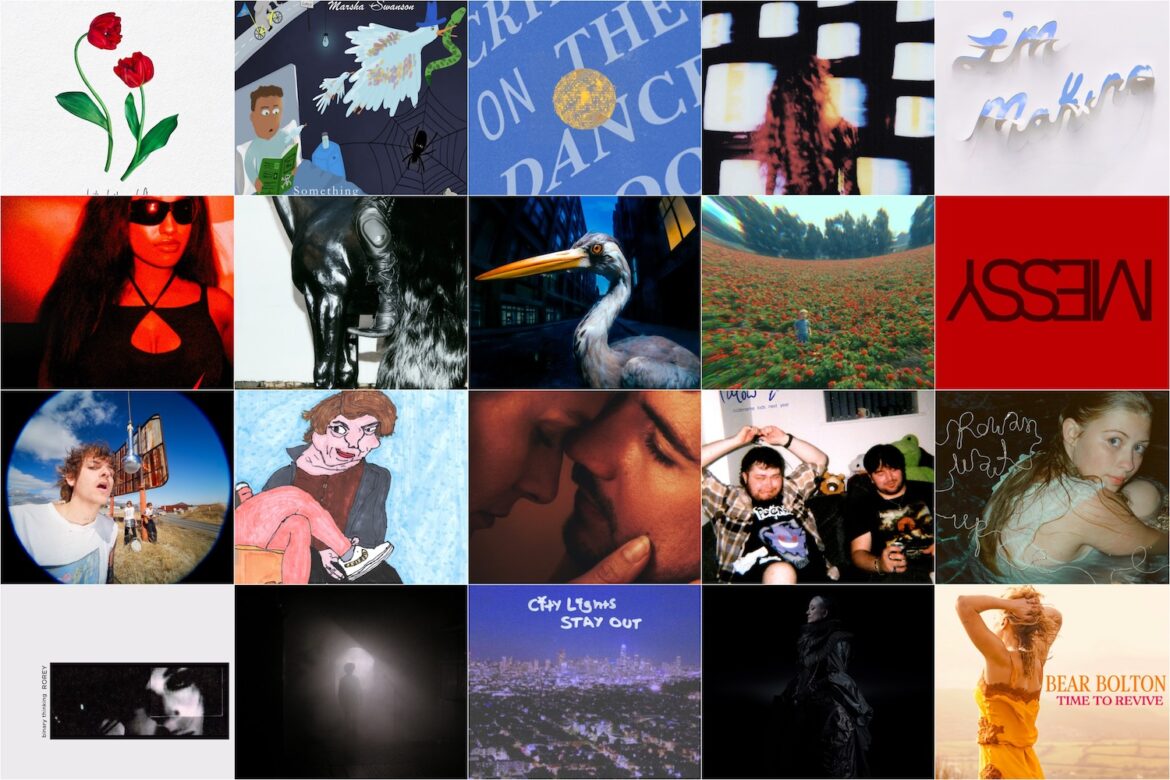
Every Friday, Atwood Magazine’s staff share what they’ve been listening to that week – a song, an album, an artist – whatever’s been having an impact on them, in the moment.
This week’s weekly roundup features music by Antony Szmierek, Academy, Scott Helman, ROREY, Noah Hill, This Is The Deep, Little Oil, Angus Legg, HAYLA, CHINCHILLA, Jordan Higo, Pillow Fort, Bear Bolton, Jack Larkin, Gerron, Marsha Swanson, Lora Mouna, Stay Out, Blythe Woods, and GILSKA!
•• •• •• ••
 follow WEEKLY ROUNDUP on Spotify


•• ••
:: “Seminal” – Antony Szmierek ::
Mitch Mosk, Beacon, New York

The sun is soaking us to the bone, the heat has settled in, and Antony Szmierek has arrived with the soundtrack to surrender. Released in June, “Seminal” is a dreamy, pulse-forward club reverie that lands somewhere between late-night release and a heat-hazed afternoon – utterly intoxicating, yet laid-back enough to let the moment stretch. Airy pianos drift above bass-heavy 808s and an enchanting breakbeat, giving the track a blissed-out momentum perfectly timed for the heart of summer.
“Seminal” continues the former English teacher’s singular fusion of spoken-word poetry and dance music, following the breakout success of 2025’s Service Station at the End of the Universe and opening the door to his next album, Decoding Birdsong (out August 21). Szmierek has built his career on making the everyday sound monumental, and here he leans all the way into that instinct, casting loneliness, faith, coincidence, and desire against production built to lift a crowded room.
His writing is playful until it suddenly cuts deep. Hope becomes a paper bag strained by heavy groceries; faith becomes a microwave clock read like holy scripture. Then the chorus sends the song’s private isolation rushing outward: “Oh my god it’s incredible / Just how lonely I feel / You shoulda seen us in the video / I’d never felt so real.” The music keeps dancing while the lyric cracks open beneath it, capturing the bizarre way joy and loneliness can occupy the same body at the same time.
“‘Seminal’ is about choosing to believe in something. Coincidence as a religion. Making your own luck in the face of loneliness and doubt. The smallest things can feel seminal, seismic and life affirming if you just choose to lean in,” Szmierek explains.
That choice gives “Seminal” its charge. Szmierek treats coincidence like evidence, a forgotten cork at the bottom of a pool like a sacred sign, and the smallest brush with connection like proof that life still has more to offer. As summer bears down and the days blur into one another, “Seminal” asks us to lean in, loosen our grip, and believe the ordinary can still knock us sideways.
:: “Crying on the Dancefloor” – Academy ::
Mitch Mosk, Beacon, New York
Heartbreak has rarely sounded this irresistible. Academy’s debut single “Crying on the Dancefloor” surges forward on a vivid, infectious pulse, pairing dreamy pop production with a chorus so catchy and charming it practically glows. Yet Will Cunningham’s visceral vocal performance sends shivers straight down the spine, carrying every rush of desire, embarrassment, and loneliness until the song’s euphoria starts to sting.
Academy is the producer-led collective of Sydney/Phoenix-based writer-producer PATON, and “Crying on the Dancefloor” arrives after a six-year journey through pandemic delays, transcontinental distance, and interest from other artists. Written with Cunningham in December 2019 and ultimately kept for an independent release, the song draws its widescreen pop sweep from Fleetwood Mac, the Eagles, and Harry Styles – a lineage of bright melodies carrying bruised stories beneath them.
The scene itself is painfully familiar: One person dancing freely while another watches from the edges, replaying every missed chance and hoping nobody notices the hurt. Cunningham’s voice tightens around the chorus – “Got me crying on the dancefloor / Got me feeling like I never did before” – and the melody opens wide enough for private rejection to become communal release. Academy understands the thrill of a chorus that smiles while its singer comes undone.
“This song almost wasn’t ours. I wrote it in December 2019 with Will, before we knew the next few years would scatter us across two continents. It sat for a long time and nearly ended up in the catalogue of a well-known artist. I’m SO glad it didn’t. ‘Crying on the Dancefloor’ only works if you’ve felt that specific denial, smiling under strobe lights because the alternative is falling apart. The Fleetwood Mac and Eagles influence mixed with Harry Styles wasn’t an aesthetic choice but where we landed after blending it with pop sounds. Those records taught me that euphoria and grief can share the same four bars. Releasing it now, as the first thing Academy puts into the world, feels like closing a six-year loop. It’s the song that made the case for the whole project. This is a pop song in its purist form, produced to be loved by the masses,” PATON shares.
By the final chorus, the dancefloor has become both camouflage and confession. “Crying on the Dancefloor” captures the instant when holding it together becomes its own performance, then gives that performance an irresistible beat – proof that the songs we scream loudest often carry the wounds we are still trying to hide.
:: “Mr. Record Label” – Scott Helman ::
Emily Weatherhead, Toronto, Canada

The entertainment business can be a machine that sees artists only as dollar signs, but Scott Helman is using his music to challenge this narrative. Released under Helman’s independent label, Fo Fum Records, “Mr. Record Label” is a smart, biting commentary on the music industry, exploring how it often exploits the artists it depends on to survive. It’s also an incredibly catchy song that embodies the creativity and passion of the talented artists who make up the Canadian music scene (and while Helman might currently be based in LA, his Northern roots remain at the heart of everything he does.)
The song starts out with a funky bass riff over a simple drumbeat. Helman’s signature lush vocals come in, immersing you into a narrative about wealthy label executives and the musicians who keep them in business. Bright harmonies echo in the background as Helman reaches the chorus, singing: “Says I need him / Says I need him / Oh / But I’m paying his rent.” The song’s musical landscape becomes more layered as it goes on. Electric guitars and a groovy percussion line come marching in like a response to Helman’s call to arms, evoking the crackling energy of a triumphant parade. By the end of the song, the tone has shifted from resigned to empowered; the true magic of music will always lie in the hands of the musicians who create it and the listeners who are moved by it.
One of the most exciting parts of this song has been its reception. Its lyrics have resonated with musicians at every stage of their career, from emerging indie artists to seasoned stars like Kesha and JoJo. Even if you’re not a musician, the sentiment of struggling to make ends meet while watching the people you work for live a life of luxury is all too familiar for many of us. Helman’s never been one to shy away from using his voice to remind us of what is truly important in life, from inspirationally existential tracks like “Machine” to impactful reflections on songs like “EVERGREEN.” “Mr. Record Label” is proof that he has much more to say, and I for one can’t wait to hear it.
:: “Binary Thinking” – ROREY ::
Chloe Robinson, California
When someone breaks up with us, we tend to convince ourselves that it’s their loss and that one day they’ll wish they hadn’t let us go. While that may be true, indie-pop artist ROREY flips the narrative, asking: What if we didn’t even matter enough to be someone’s loss? “Binary Thinking” stunningly examines this concept through a richly layered sonic landscape driven by warm acoustic guitar work, dynamic basslines, and melodies that linger long after the song ends. The singer-songwriter shares, “I wondered a lot if my absence was more of a relief. I feel like the song highlights that cyclical “Binary Thinking” when you’re left speculating. While this song was written over a year ago it could have been written yesterday. Silence is open to interpretation and the intention behind it doesn’t change the impact.”
That same willingness to confront uncomfortable truths sits at the heart of ROREY’s artistry. Whether exploring the uncertainty of lost connections or the turbulence within her own mind, the New York-based musician channels deeply personal experiences into music that is as haunting as it is healing. With Dysphoria, her sophomore EP released August 15, 2025, she transforms the chaos of a manic episode into a visceral sonic journey. Unforgettable harmonies, otherworldly vocals, and spiraling instrumentation collide to reflect the fractured yet beautiful experience of trying to find clarity within the storm.
Through every release, ROREY proves that vulnerability is not a weakness but a form of connection. “Binary Thinking” and Dysphoria serve as reminders that uncertainty, heartbreak, and internal battles are experiences that rarely exist in simple black-and-white terms. By embracing the messy spaces in between, ROREY creates music that doesn’t just reflect the times when we feel lost, it reminds us that there is power in finding our way back.
:: “Bye Baby” – Noah Hill ::
Josh Weiner, Washington DC

It’s the middle of the summer and most of us are looking to take it easy and chill out some. A nice, chill acoustic track like “Bye Baby” by Noah Hills could do just the trick, even though the lyrical subject matter is rather rough: the conflicting thoughts and feelings that occur post-breakup. “I know I said I could handle it,” sings Hills, a native of Byron Bay in New South Wales, Australia. “But now I’m out here in Hollywood, and I’m missing ya… I want you to bail me out and call me up.”
Not only is Noah newly single – not to mention recovering from a recent health scare – but he’s also a newly solo artist, having decided to branch out from his longtime electropop band, Parcels, and produce some new material on his own. His debut album, Ok Ok Now, will be out on September 5th and is entirely a solo project, inasmuch as Hill wrote, arranged, mixed and produced the whole record himself. Based on “By Baby,” though, he has what it takes to function as a one-man army on the music front, and come this fall, we’ll be able to see if the rest of the album follows suit. Early signs sure are strong!
:: “I’m Making” – This Is The Deep ::
Danielle Holian, Galway, Ireland

With “I’m Making,” This Is The Deep offer an enticing glimpse into their forthcoming debut album, Everything (Dick Herman, The Whale and The End Of The Beginning), a work that appears as ambitious in scope as it is adventurous in execution. The single is kaleidoscopic in both sound and spirit, weaving together post-punk urgency, chamber-pop refinement and psychedelic flourishes into a composition that remains surprisingly cohesive. Richly orchestrated with strings, harp, synths, guitars and inventive percussion, the track thrives on its restless momentum, balancing melodic immediacy with an ever-present sense of mystery and theatrical intrigue.
What distinguishes This Is The Deep is their commitment to creating an artistic world that extends far beyond the music itself. Drawing from indie, art-rock and folk traditions while embracing surrealist storytelling, the collective demonstrates a rare willingness to dissolve conventional genre boundaries in favour of something altogether more imaginative. The influence of visual art, theatre and cinematic fantasy is woven seamlessly into their creative identity, lending “I’m Making” a vivid sense of character and purpose. If this single is any indication, Everything promises to be an immersive and richly rewarding debut that celebrates curiosity, experimentation and the transformative power of collective creativity.
:: “What’s Become of Me” – Little Oil ::
Mitch Mosk, Beacon, New York

Little Oil have made exhaustion sound strangely enchanting. “What’s Become of Me” drifts in like an indie folk reverie, all lilting melody, intimate vocals, and a hint of twee sweetness, filling the room with warmth even as the song stares down the weight of a world that has worn its narrator thin. Its gentleness never dulls the hurt. The softer Little Oil play it, the deeper the resignation settles.
The San Francisco Bay Area psych-folk project frame that weariness in spare, heartfelt language, tracing the moment when every old failure, unpaid debt, and hardened defense finally catches up. “And I’m so tired / Of breathing fire / That in the dead of night / You can plainly see / What’s become of me,” they sing, a chorus that hears fatigue from both sides of the flame – the pain of living under pressure and the shame of passing that pressure onward.
Thirteen guest singers gather around the refrain, expanding one person’s confession into a sweetly stirring campfire chorus. Their voices bring the song’s central comfort into focus: We may be trapped in the same difficult reality, but recognizing one another inside it can loosen the burden. “What’s Become of Me” carries the scale of a Greek tragedy in miniature, with every harmony answering the fear that we are suffering alone.
“It’s a song born out of resignation at the situation we find ourselves in. We see our past failures catching up with us and influencing the situations we are in today and there’s nothing we can really do about it. We are tired of ‘breathing fire’ As in tired of being in the line of fire but we are also tired of having to put up a tough exterior and being the ones that are ‘breathing fire’ on others. Having the big campfire chorus at least gives it a Greek tragedy feel in that we are in the same boat. Like ‘oh you were feeling that way too? I thought I was the only one.’ And with that, we at least find some relief,” Little Oil share.
That relief gives “What’s Become of Me” its lasting warmth. Little Oil offer no grand escape from the hellscape outside, only the intimate wonder of discovering other voices beside your own – worn down, still singing, and finally a little less alone.
:: “Like I Never Left” – Angus Legg ::
Mitch Mosk, Beacon, New York
Homecoming asks a crueler question than departure: Will the person you left still open the door? Angus Legg’s “Like I Never Left” lives inside the breath before the answer, tracing a long flight from London to Melbourne as love and regret crowd the cabin. His emotionally charged vocal gives the song its breathtaking beauty, trembling over a gentle arrangement that carries raw vulnerability and soul-stirring warmth in equal measure.
Released as the final single and closing track on Legg’s debut EP, A Long Time Gone, “Like I Never Left” completes the story begun on his previous release, “12th of May.” That song captured the grief of leaving a new love behind; its companion follows him home, rehearsing his first words from 17 lonely hours away and wondering whether four months apart have extinguished the fire he abandoned.
“‘Like I Never Left’ is about coming home, carrying the quiet uncertainty of whether ‘home’ is still waiting on the other side. In this story, home isn’t a place, it’s a person,” Legg tells Atwood Magazine. “The song follows the final hours of a journey, the plane ride, the taxi from the airport, and the moment I arrive at the doorstep I once knew, wondering if it still knows me. The chorus flashes back to the day I left, questioning whether I made the right choice, reliving the weight of saying goodbye to someone who meant everything, and sitting with the loud hint of regret.”
Legg makes the airport itself complicit in the heartbreak. “As I kissed you in the car and parked our future at the gate,” he sings, compressing an entire relationship into one devastating image before the chorus bursts open around a single question: “Why the hell’d I let you keep on driving?” Each repetition gathers urgency, as though enough force might send him backward through time and stop the car before it disappears.
“‘Like I Never Left’ is a companion piece to my previous release, ‘12th of May.’ Where ‘12th of May’ captures the day I left, full of grief and uncertainty, ‘Like I Never Left’ lives in the return, holding onto the blind hope that what you had might still be there. The song is layered with references to ‘12th of May,’ with small details and easter eggs woven throughout. The final four lines still make me cry.”
“I always think visually when creating music. For this one, I kept coming back to two images. The first: running through a hay field at golden hour, hands brushing through the wheat, completely free. The second: a 19th century English pub, late, loud, and alive, where a story is being sung around a table, and slowly the whole room leans in, joining in rhythm and voice,” he continues.
Those images meet in the song’s sweeping intimacy. “Like I Never Left” carries the freedom of that golden field and the communal pull of a room leaning closer, yet Legg keeps the person at its center exposed. The final verse strips the journey down to two knocks, approaching footsteps, and a silence heavy enough to hold four months of fear. Then the door opens: “As you hold me like I never left.”
“It is the final single and last track on my upcoming EP ‘A Long Time Gone’, it’s the end of the story for now, it frames what had been the most pivotal year to date exactly how I want it to, I hope you enjoy the ride,” Legg concludes.
“Like I Never Left” earns its release through the distance that precedes it. Legg carries us across continents, through every spiraling doubt and rehearsed reunion, before arriving at an embrace gentle enough to quiet them all. Home has been waiting on the other side after all.
:: DARK – HAYLA ::
Ashley Littlefield, California

HAYLA has been at the forefront of empowering vocals and songwriting in driving electronic dance hits in recent years. The Liverpool-born singer-songwriter started her journey in 2018 with her debut on Example’s “Show Me How to Love (Feat. Hayla),” from his Banger & Ballads LP, offering a preview of just how influential and uplifting her vocals are. She followed in 2021 with a collaboration alongside the rising underground female powerhouse DJ and producer Maxinne, on her sophomore house album for Toolroom Productions, HAYLA’s vocals lift the enticing groove on “See Right Before My Eyes” into a heightened experience.
Building on that momentum, she skyrocketed her success across the globe in 2023 by collaborating with John Summit on “Where You Are.” The track earned widespread acclaim and achieved gold certification with the debut of Summit’s album, Comfort in Chaos (2024). She has also collaborated with Kygo and Illenium, further proving her force in the dance scene. From there, HAYLA released her debut album DUSK, which introduced a darker influence on her sound while keeping the same hopeful melody she weaves throughout her discography. Now, HAYLA’s sophomore album DARK is officially out on Restless Minds Music.
DARK spans 11 tracks and leans more toward alternative storytelling, with the title track “DARK” serving as a prominent staple of the record’s overall direction and offering an emotional journey towards healing. In her own words, “This song is about grief. All of the conversations that weren’t had, all of the memories I keep and the heaviness felt in the aftermath. The dreams that bring a lost one closer again and the glow that you find in the darkest of nights that remind you you’re not alone. I have been surrounded in a warmth ever since I suffered this loss. There are signs everywhere if you’re open to them. Sending love to anyone who’s grieving.”
:: “Dog Eat Dog” – CHINCHILLA ::
Josh Weiner, Washington DC
Everyone wants to be happy, as Thomas Jefferson coolly reminded us all 250 years ago this summer. The problem is, once you’re done pursuing happiness and have finally achieved it, is your day-to-day life fodder for powerful songwriting anymore? Is it really so interesting to write songs telling people how happy and conflict-free your existence now is?
London-based singer CHINCHILLA faced that dilemma herself. “When you’re happy there’s nothing to be dramatic, artistic or deep about,” she says, “and when you’re sad, it’s depressing.” The songstress born Daisy Bertenshaw figured that the best way to deal with those conflicting feelings was to convert them into a new song “about the frustrating feeling of being discontent and unsatisfied in both happiness and in sadness.” That very track, “Dog Eat Dog,” finally came about as the product of “a three-hour venting session [which] ended up unlocking one of my quickest writes.”
Such efficiency is to be expected from an artist who, even though her debut LP is still in the works, has already become well-versed in music-making over the past several years. CHINCHILLA earned her degree in Music Industry Practice in 2018 and has since had five EPs, two headlining tours and multiple festivals to her name. For her latest song, “Dog Eat Dog,” she’s teamed up with producer Mike Wise and co-songwriter Sara Boe for a track which channels Western, pop, and stadium sounds and details her personal combat to keep her head above water at all costs. “Heavy the head that wears the crown,” she sings. “I keep projecting the anger, I keep rejecting the anchor.… and I fight back… I swear I don’t wanna be sad.” And she likely won’t have to be, given the boost in career success that this fiery new track and its upcoming parent album will likely help her to secure!
:: “HEAVY” – Jordan Higo ::
Mitch Mosk, Beacon, New York

Jordan Higo makes pressure stunningly seductive. “HEAVY” smolders from the first note, its distorted guitars and propulsive drums feeding a sweltering alt-R&B slow burn while glistening textures flicker through the haze. Higo’s soul-rooted vocal stays measured at the center, but the restraint only intensifies the song’s pull – dreamy, dramatic, and utterly intoxicating as desire gives way to consequence.
The Yorkshire-born, London-based artist returns after four years away with the opening chapter of his debut mixtape, pushing his writing into a heavier, more abrasive world while preserving the intimacy at its core. “HEAVY” sounds like an arrival because every element knows exactly how much weight to carry.
“‘HEAVY’ came from recognising a loop in myself that I couldn’t get out of. That place where impulse happens before understanding, and then afterwards you’re left sitting with the consequence of it. I didn’t write the song from a place of having figured it out, I still haven’t. It’s more about being inside the cycle: impulse, regret, repeat.
“The song doesn’t offer resolution; sometimes there isn’t any. Being aware of the ‘thing’ doesn’t free you from it. “They lied when they said, ‘the truth will set you free,’” Higo shares.
That cycle gives the chorus its visceral charge. “It’s the head / It’s the heat / It’s the heart – It’s heavy,” Higo repeats, compressing thought, impulse, and desire into a refrain that pounds like blood against the temples. By the time he admits, “I know what I said / But it’s all gone up in smoke,” the track has become its own fever dream, circling the same damage with every pulse.
“Sonically, the song needed weight, he adds. “The softer and more restrained vocal doesn’t carry the full weight of the meaning on its own. The world around it had to hold that pressure underneath. The distorted guitars, heavy drums and rawness gave it a darker, more physical space to live in. More abrasive, more direct, almost like the sound was pressing back against the vocal.”
“After four years away from releasing, ‘HEAVY’ felt like the first song that showed me where the next chapter was heading. Music was never a path I had neatly mapped out from childhood; it was something that called from a distance, growing louder until I couldn’t ignore it. For a long time, I was learning how to give shape to that instinct. With ‘HEAVY,’ it felt like that thing finally came into focus. It wasn’t a reinvention. It felt more like an arrival.”
“HEAVY” leaves the loop spinning and the room smoldering. Higo gives impulse a breathtaking physicality, allowing every guitar flare and drum hit to press against his voice until the tension becomes almost unbearable. The result glistens beneath its own weight – passionate, propulsive, and deeply fulfilling in the way only a song this consumed by its own heat can be.
:: “Codename Kids Next Year” – Pillow Fort ::
Mitch Mosk, Beacon, New York
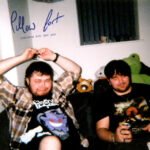
Pillow Fort came back swinging. “Codename Kids Next Year,” the Nottingham trio’s first release in three years, is raw and radiant – a hard-hitting emo rush whose surging dynamics carry equal parts defiance and release. Ryan Crick’s vocal hits with the force of a door finally slammed shut, yet charm still flickers through the song’s fury, making independence sound messy, exhilarating, and long overdue.
Written after Crick graduated university and moved across the country to leave a tumultuous home life behind, “Codename Kids Next Year” draws a firm line between survival and self-definition. The opening refrain – “And I’ll never be what I say / I don’t think through anything / I’ve ended up okay” – carries the stubborn confidence of someone still figuring life out while refusing to let anyone else narrate it. Pillow Fort channel the emo revival’s intricate push and pull into a song that snaps between mounting tension and full-bodied release.
“Codename Kids Next Year was written in 2022, shortly after I graduated university and was thrown head-first into the real world. I’d moved across the country to leave behind a tumultuous home life, and the song became a declaration of that new-found independence. The opening lyrics, which repeat throughout the song, draw a line under the life I was living, aiming to show that I could survive on my own. Sonically, the track is heavily inspired by the emo revival, and gives the chance for us to show our interpretation of the intricate dynamics of the genre, alongside the raw, emotive vocals many bands in the scene are known for,” Crick shares.
The chorus lands like a sprint toward the future: “And I’m in a hurry / To pick up the rest of my life / It’s alright / It’s alright.” That repeated reassurance sounds half-convinced and fully necessary, the kind of phrase you shout until your body begins to believe it. Pillow Fort capture the charged collision of freedom and grief that comes with putting distance between yourself and family, where every step forward still carries the outline of what you had to escape.
As the first step toward Pillow Fort’s forthcoming debut album, “Codename Kids Next Year” carries the thrill of a band racing toward the rest of their life. Crick, Sam Rodmell, and Isaac Peacock return with a song that hits this hard because it has somewhere to go – away from the old life, into the uncertain one, and toward a future claimed entirely on their own terms.
:: Time To Revive – Bear Bolton ::
Danielle Holian, Galway, Ireland

Bear Bolton’s debut album, Time To Revive, arrives as a testament to the resilience of the human spirit, a collection of songs that documents not just a musical journey but a life fully lived. Released as she turns 40, the album marks a pivotal moment of personal and creative transformation, the point at which Bolton finally embraced the identity she had always secretly held. Spanning blues, reggae, rock, folk, and classical influences, the album is united by one constant: honest, heartfelt storytelling. From the tequila-fuelled nostalgia of the opening track to the powerful rock anthem of the closing title track, Bolton invites listeners into her world, sharing the stories that have shaped her with a vulnerability that is both brave and deeply affecting. This is music that comes from a place of lived experience, and it carries the weight of that authenticity in every note.
The album’s musical range is remarkably eclectic, yet each track serves a distinct purpose within the larger narrative. “Tequila Talkin'” opens with laid-back blues, transporting the listener to summer afternoons and conversations that seem to exist outside of time, while “Sunday Blues” delivers a playful 12-bar anthem about hangovers and life’s recurring guilty pleasures. “Last Night” offers a moment of pure nostalgia, a reggae-infused recollection that feels like a photograph fading at the edges. “Me and My Mind” explores the power of fantasy and imagination, while “This Love,” originally written as a wedding gift, celebrates the rare and precious gift of healthy, peaceful love. The album’s emotional depth is most apparent in its quieter moments: “Faded Pictures” reflects on leaving a marital home and finding peace with memories that remain meaningful, and “Sentivo solo la pioggia” stands as one of the most honest and heartbreaking reflections on postnatal depression ever committed to record, performed in Italian with classical influences and anchored by the devastating lyric, “The only person I’d ever lost and wanted back was me.” “Mrs Robinson” tells the story of a brief encounter that unexpectedly became a catalyst for rediscovering confidence and self-worth, while the title track closes the album with a powerful rock anthem encouraging women to reclaim themselves after years of putting everyone else first.
What distinguishes Time To Revive from countless other debut albums is Bolton’s candid acknowledgment of its imperfections and her unapologetic embrace of the journey that brought her to this point. She admits that she can hear things she would do differently now, but she is refreshingly honest about the learning curve involved in producing and releasing music during one of the most turbulent periods of her life. “Life isn’t perfect,” she says, and neither is this album, and that is precisely what makes it so profoundly authentic. The involvement of family members, from musical contributions by her stepbrother and nephew to photography and videography by her sister, adds a beautiful layer of meaning to the project, transforming it from a solo memoir into a celebration of family and connection. With warmth, vulnerability, and musical versatility, Bear Bolton has crafted a debut that is both intimately personal and universally resonant, a work that speaks to anyone who has ever faced the challenge of starting over. It marks the beginning of what promises to be a truly remarkable artistic journey.
:: “Colorburst” – Jack Larkin ::
Mitch Mosk, Beacon, New York

Jack Larkin’s music promises to put a smile on your face.True to its name, the vibrant “Colorburst” is utterly dreamy and lilting, a song that pulls a grin from ear to ear before you even realize what’s happening. Its swaying indie folk warmth gathers around the body like a cozy room, while Larkin’s enchanting melodies give every passing doubt a little more air and color.
As the closing track on Larkin’s fourth album, Purkinje Shift, “Colorburst” completes a story about clarity slipping in and out of reach. The record follows an unnamed protagonist through periods of confusion and change, bookended by a vision procedure that promises renewal. Larkin wrote, produced, and performed every instrument himself, giving the album’s final scene the focus of one mind finally deciding to move.
“We go through times in life where things seem unclear, and change is really frightening – but every time you go through that cycle, it becomes a little bit more normal too. When you feel like you’re at a low point in life, you start to see things a little differently – and that can be inspiring and motivating. After working through many internal and external questions, the protagonist seems to be seeing things a bit more clearly. Restless and ready to move to the next chapter, the protagonist goes under for the vision procedure again as the doctor reassures any worries about the change,” Larkin explains in the album’s press release.
The lyrics linger at the threshold between fear and readiness. “I’m lost in the calm / A lantern at dawn / Tired of rehearsing / These unready words,” Larkin sings before the song slips into the language of an eye exam: “Tell me which is clearer, option one or two / There’s no need to worry, you will awake renewed.” Those clinical instructions land like reassurance, transforming the procedure into a leap toward the life waiting beyond hesitation.
“The song is really about that last moment of hesitation before diving into new waters. It can be equally exciting and nerve racking, but somewhere beneath the fear, there’s a quiet certainty that you’ll surface on the other side. There’s a sense of peace that comes with that,” Larkin adds in an exclusive statement to Atwood.
The arrangement carries that decision with a smile, swaying gently as the protagonist prepares to surrender control and trust what comes next. “Colorburst” closes Purkinje Shift with an embrace of movement over certainty, sending us out with our eyes closed for one final moment before the light rushes in.
:: CHOKE! – Gerron ::
Danielle Holian, Galway, Ireland

There is something quietly fearless about CHOKE!, the debut EP from Irish singer-songwriter Gerron. Across five songs and just under fifteen minutes, she wastes no time chasing trends or overcomplicating her message. Instead, she leans into emotional honesty with a confidence that feels earned, turning heartbreak into something vivid, melodic, and strangely exhilarating. From the explosive rush of opener “CHOKE!” through to the reflective closing moments of “Anymore,” the record unfolds like pages torn from a diary and set against shimmering synths, soaring harmonies, and polished pop production. Lead single “Messy” remains the obvious centrepiece, transforming the chaos of betrayal into an irresistible anthem that begs to be shouted back in crowded rooms, but it never overshadows the rest of the collection. Tracks such as “Grapefruit” and “To Change a Man” reveal a songwriter willing to sit with uncomfortable truths, resisting easy resolutions in favour of something more nuanced and emotionally satisfying.
What makes CHOKE! so compelling is Gerron’s ability to balance vulnerability with undeniable pop instinct. Working alongside songwriter and producer Daniel Brazil, she has crafted a sound that feels expansive without losing its intimacy. The production glows with atmospheric textures and crisp electronic flourishes, yet her velvety voice remains the emotional anchor throughout. Every layered harmony feels purposeful and every chorus lands with genuine emotional weight. Rather than presenting resilience as a triumphant finish line, Gerron frames it as an ongoing process, allowing moments of doubt, anger, and quiet self reflection to exist alongside newfound confidence. It is this emotional complexity that elevates the EP beyond polished contemporary pop, giving each track a lyrical sincerity that lingers long after its final note.
For a debut project, CHOKE! is remarkably assured. Clocking in at just 14 minutes and 57 seconds, it leaves listeners wanting more without ever feeling incomplete, a testament to the strength of its songwriting and its focused vision. Gerron has arrived at a version of herself that feels authentic rather than manufactured, embracing both the cracks and the confidence that come with personal growth. This is not simply an introduction to a promising new artist. It is a declaration of intent from a songwriter who understands the power of emotional transparency and knows exactly how to dress it in irresistible pop melodies. If CHOKE! is the foundation for what comes next, Gerron is poised to become one of the most exciting voices emerging from Ireland’s pop landscape.
:: “Something Real” – Marsha Swanson ::
Danielle Holian, Galway, Ireland

Marsha Swanson’s “Something Real” unfolds like a beautifully illustrated story brought to life through sound, a song that exists in the delicate space between memory, imagination and emotional truth. Rather than simply telling a story, the track creates an atmosphere, inviting listeners into a world where dreams and reality gently overlap. With its thoughtful songwriting and graceful sense of melody, “Something Real” captures the wonder of seeing the world through curious eyes, while recognising the deeper emotions that sit beneath our imagined worlds. It is a song about discovery, about the invisible threads that connect what we dream, what we feel and what we understand.
At the heart of the track is Swanson’s remarkable ability to transform a profound idea into something warm and accessible. “Something Real” explores the importance of imagination not as an escape, but as a way of making sense of life’s complexities. Her expressive vocal performance carries a quiet sincerity, allowing every phrase to feel personal and heartfelt. The arrangement gently surrounds the listener with rich textures and delicate details, creating a soundscape that feels both nostalgic and timeless. There is a sense of storytelling woven through every moment, as though each note is opening another page in a much larger emotional journey.
“Something Real” is a song that lingers because of the feeling it leaves behind. It celebrates creativity as a bridge between people, reminding us that stories, music and imagination can help us recognise parts of ourselves we may not always have the words to express. Beautifully crafted and deeply human, the track reflects Marsha Swanson’s gift for creating music that does more than entertain; it inspires reflection, encourages connection and reminds us of the extraordinary power hidden within the simplest ideas.
:: “The Difference” – Lora Mouna ::
Chloe Robinson, California
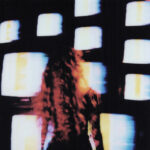
Lora Mouna dives deeper into her wistful sonic world with “The Difference,” her latest single and music video that blends atmospheric textures with undeniable allure. The track studies the quiet unraveling that comes with feeling disconnected from yourself, caught in an endless loop of behaviors, emotions, and routines. The piece sonically mirrors the experience of dissociation, with every instrument floating in its own orbit, disconnected yet somehow bound together in perfect harmony. Her high-pitch, breathy tone drifts through the track like a distant memory adding to the song’s magnetic sense of detachment and emotive weight. The dreamy visuals bring the song’s surreal world to life, as flickering static screens emit a ghostly glow that feels both haunting and heavenly.
Brooklyn-based, North Carolina-born artist Mouna transforms her innermost reflections into melancholic, diary-like compositions, using her ethereal vocals and confessional songwriting to explore moments of vulnerability within herself and her connections with others. Her songs serve as a reflection of inner healing and self-exploration, merging the raw energy of indie-rock with folk storytelling and Middle Eastern sonic elements drawn from her culture and creative influences. From an early age, Lora found inspiration in the music of her Syrian mother, whose voice and piano playing first sparked her connection to songwriting. Over time, her own voice evolved through years of opera lessons. With “The Difference” listeners can hear her roots and training collide in a sound that feels uniquely her own.
:: “City Lights” – Stay Out ::
Mitch Mosk, Beacon, New York

Stay Out tear through the disillusionment of watching a once-bright city lose its shine. “City Lights” is feverish and hard-hitting, charging forward on blistering riffs, relentless drums, and the Oakland trio’s dual-vocal attack. Grant Pack and Mason McGeorge hurl every line with the urgency of people trying to outrun a past that keeps catching up, balancing pop-punk immediacy with the emotional weight of places that no longer hold the same promise.
The song returns to familiar streets after absence has changed them. “City lights, not as bright as they shine like they used to / Patterns in the sky aren’t cutting through,” Stay Out sing, watching nostalgia collapse into isolation. The city remains, but the person who gave it meaning has gone, leaving parks, skylines, and old routines haunted by a life that cannot be recovered.
“‘City Lights’ was written by dreamers, for dreamers. It’s a reflection and constant reminder that the struggles along the way are part of the journey, and made you who you are today. Stay Out is so lucky to have met each other to make amazing songs, we are excited to share this one with you, sending love from the Bay Area!” vocalist and bassist Grant Pack shares.
That dreamer’s resolve breaks through the chorus: “Fading skies and long goodbyes / Broken dreams from lullabies / This time I won’t let them die.” The melody surges as the lyric digs its heels in, giving grief somewhere to run while refusing to let disappointment have the final word. Stay Out’s feverish momentum captures the panic of growing older, but the chorus keeps reaching for the future with both fists raised.
“City Lights” hits because it understands how quickly possibility can curdle into memory. Stay Out let the loss burn through every guitar and shouted refrain, then emerge carrying the one thing the city could not take from them: the determination to keep dreaming anyway.
:: “Rowan Wait Up” – Blythe Woods ::
Mitch Mosk, Beacon, New York
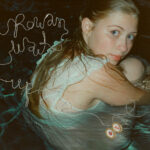
A best friend drifts out of reach one unanswered conversation at a time. Blythe Woods’ debut single “Rowan Wait Up” lives inside that slow fracture, casting an intimate indie folk spell whose lilting melody holds both the love that remains and the fear that speaking might finish the break. Woods sings with close, tender urgency, her voice radiant with longing and packed with the strain of trying to catch up before the distance hardens.
Raised between New York, Los Angeles, and Montana, the now-NYC-based singer/songwriter introduces herself with a song already rooted in her diaristic instincts. “Rowan wait up / I know you’ve been bitter but what’s up / ’Cause you seem so distant from me now,” she sings, transforming a name into both an address and a plea. The repeated “Can you wait? / ’Cause I don’t know how” gives the song its ache: Woods recognizes the friendship slipping away, yet language fails her at the moment she needs it most.
“Things happen that are bigger than you. Even when everyone still cares, everything changes. I wrote ‘Rowan Wait Up’ about that strange feeling when you still love your best friend, but you don’t know how to talk to each other anymore. You miss when everything felt easy, before every conversation felt like it could fall apart. I feel like people don’t talk about this kind of heartbreak enough. Sometimes no one stops caring. They just stop knowing how to say it,” Woods shares.
Frustration begins seeping through the song’s gentle touch as Woods moves from asking Rowan to wait toward daring her to finally speak. “Say it, just say it,” she insists, later pressing, “Come on use your words, I dare you / To tell me how you really feel.” The dreamy arrangement magnifies the stakes, surrounding every unfinished sentence with a glistening hush while the emotion underneath grows more desperate.
“Rowan Wait Up” leaves their friendship suspended between memory and confession. Woods captures the particular heartbreak of loving someone who still exists, still cares, and can no longer meet you in the language you once shared. Her enchanting debut stays with the waiting – where every unsaid word carries the weight of a bond neither person quite knows how to release.
:: “ELECTRIC” – GILSKA ::
Danielle Holian, Galway, Ireland

GILSKA continues to carve out a distinctive space within electronic pop on “Electric,” a single that feels both intimate and expansive. Atmospheric and quietly seductive, the track unfolds with a patient confidence, balancing brooding textures against moments of melodic clarity. Intricate rhythmic patterns subtly draw from her Sri Lankan heritage, while deep sub bass, layered vocal processing and shimmering synth work create a richly immersive soundscape that comfortably bridges contemporary R&B and alternative pop. Every production choice feels considered, resulting in a piece that is as intellectually engaging as it is emotionally resonant.
What makes “Electric” particularly compelling is the way it reflects GILSKA’s broader artistic identity. Having evolved from classical foundations into a songwriter unafraid of genre boundaries, she fuses cinematic sensibilities with club-ready sophistication without sacrificing authenticity. The influence of her grandfather, a celebrated Sri Lankan pop singer, is felt less through imitation than through a shared commitment to expressive storytelling and cultural pride. “Electric” stands as another confident step in her ascent, confirming GILSKA as an artist capable of transforming personal heritage into music that feels strikingly modern and universally affecting.
— — — —

Connect to us on
Facebook, 𝕏, Instagram
Discover new music on Atwood Magazine
:: Weekly Roundup ::
follow WEEKLY ROUNDUP on Spotify
:: This Week’s Features ::