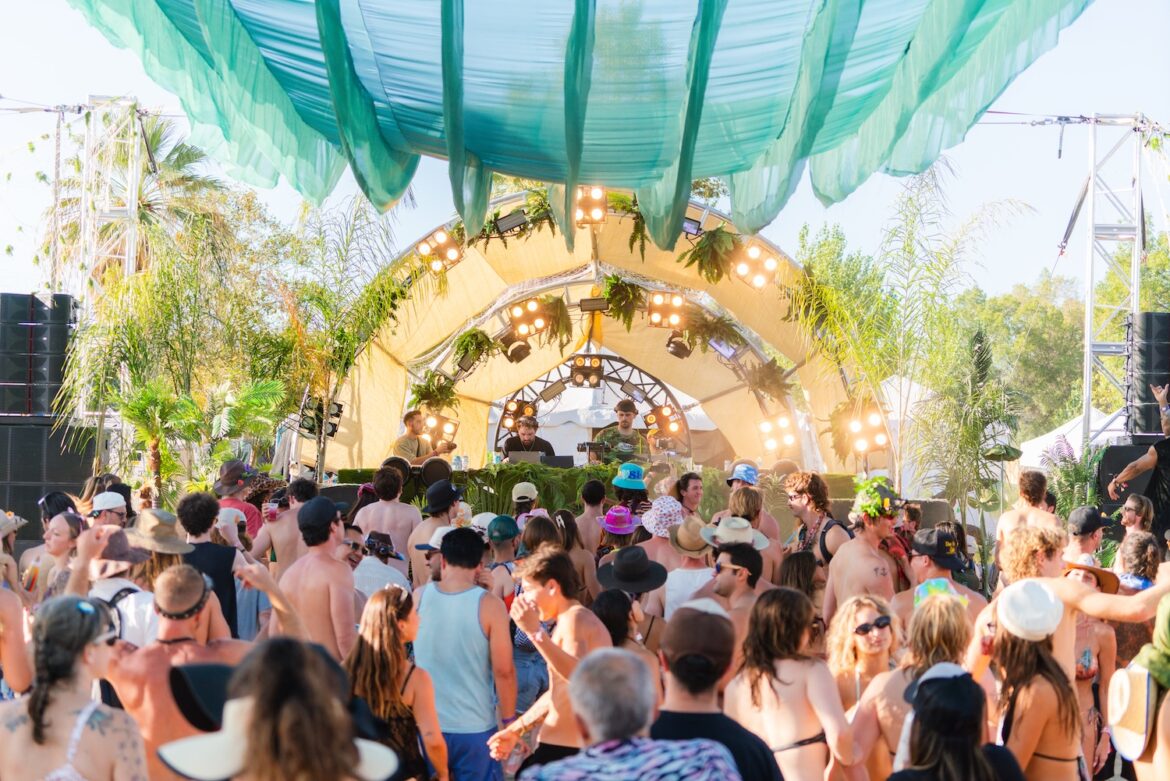
On the shores of Lake Perris, Southern California’s Same Same But Different Music Festival blends thundering bass, live painting, and playful surprises into a colorful culture of eclectic music discovery and connection. From beachfront dance floors and psychedelic performances to sound baths, spontaneous jam sessions, and unexpected artistic encounters, the festival invites curiosity at every turn. It’s a vibrant, free-spirited escape where music and imagination flourish, strangers become friends, and the simple act of being together feels like something worth celebrating.
Orange and yellow blend across the sky above Moreno Beach at Lake Perris, contrasting with the brightly patterned hot-air balloon in the distance.
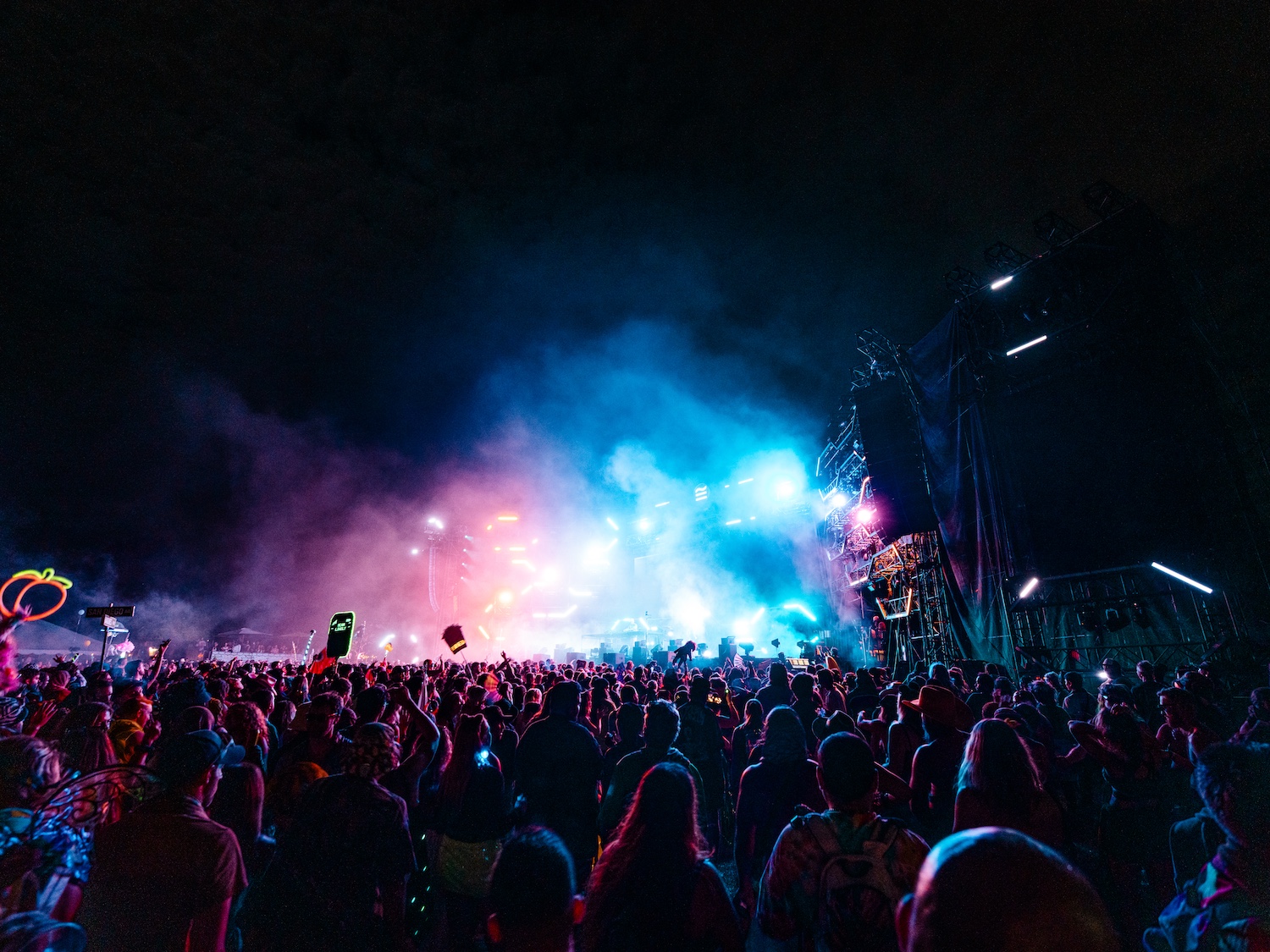
The festival’s welcoming spirit reveals itself almost immediately. As soon as people entered the gates, they greeted one another with “Happy Same Same,” an expression of genuine gratitude and an open invitation into new experiences. From Friday, September 25, through Sunday, September 27, 2026, festival-goers at Same Same But Different Music Festival immersed themselves in bass, house, and a diverse range of eclectic genres that encouraged music discovery. Each stage offered something entirely new – not just a view, but a different sound and perspective above the lake’s glistening waters, echoing the weekend’s shimmering energy.
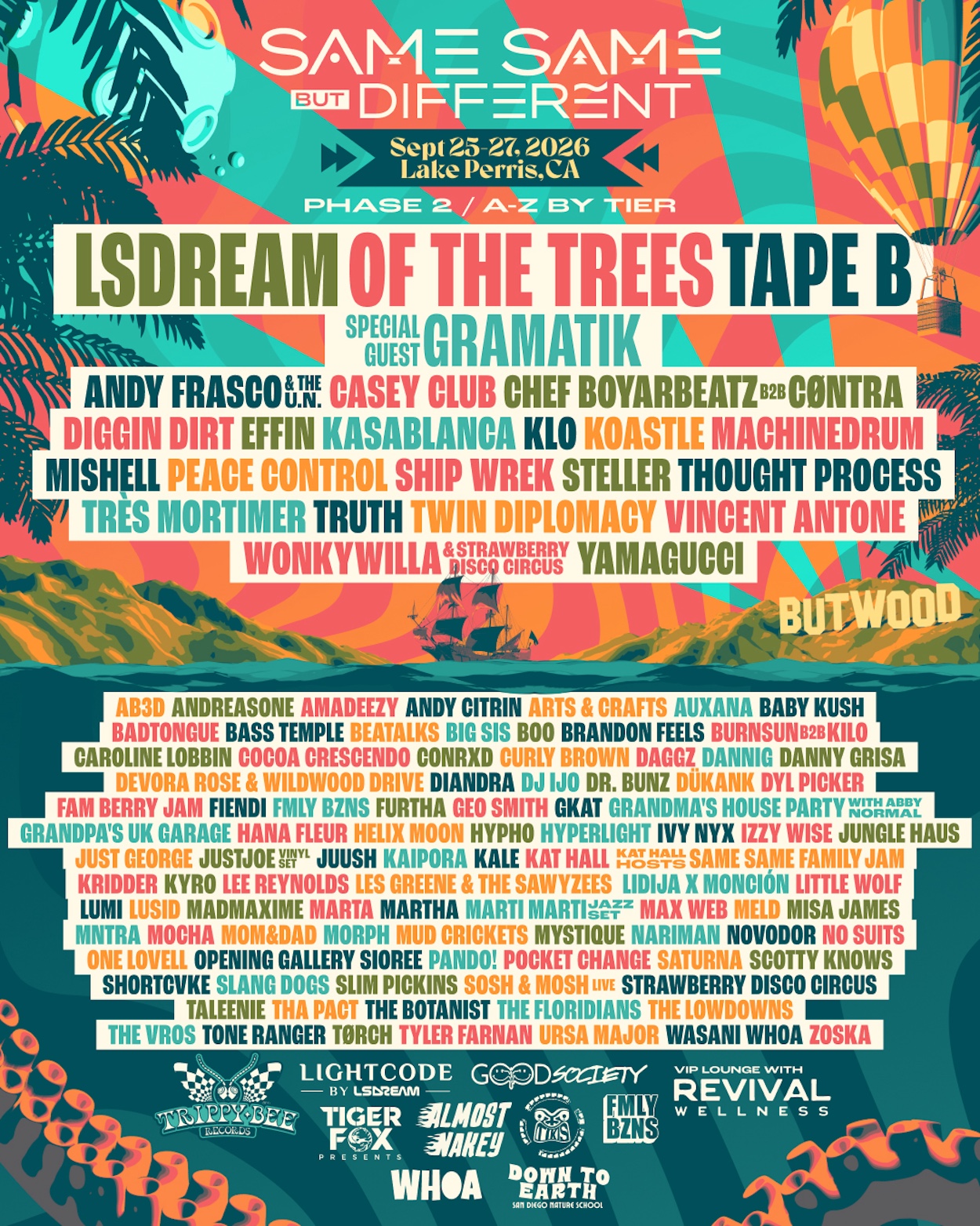
One of the bands that played The But – transformed into BUTwood with a theme inspired by Hollywood’s Golden Age – was Miami-based psychedelic indie rock band The Floridians, who made their first West Coast appearance at the festival. “The scenery alone… it’s a very good environment for our music,” Ian Renaud told Atwood Magazine on Friday, two days before their performance. “If you look behind you, that is one of the most gorgeous things you’ll see,” David Gonzalez added. The band also described how the surrounding landscape could influence their improvisation, inspiring different creative choices when soloing or taking liberties with their arrangements. The landscape drew you through the festival grounds, inviting you to wander from the moment you arrived.
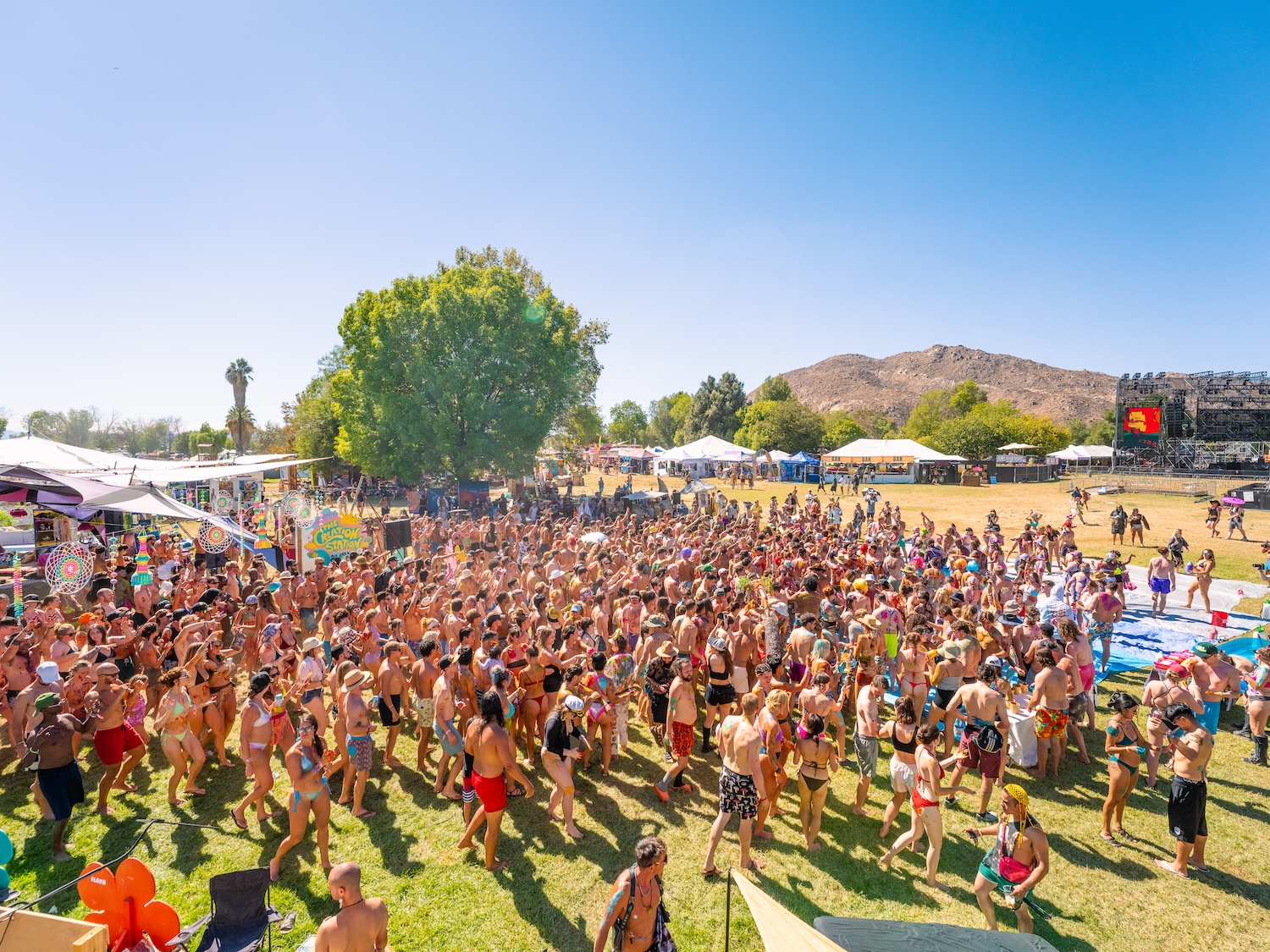
While the weekend was warm, most stages felt open-air, with dancing under the Southern California sunlight. Just beyond the box office was Groove Grove. The small, open space had keys, a drum set, and couches surrounding it. People gathered around, listening to the jazzy arrangements the participating musicians created, adding to the whimsical charm that celebrated originality and performance. On the grass by the Same Stage, an art car served coffee while people danced freely, and others had their portraits taken at a funky open-air set near the live painters; possibilities abounded.
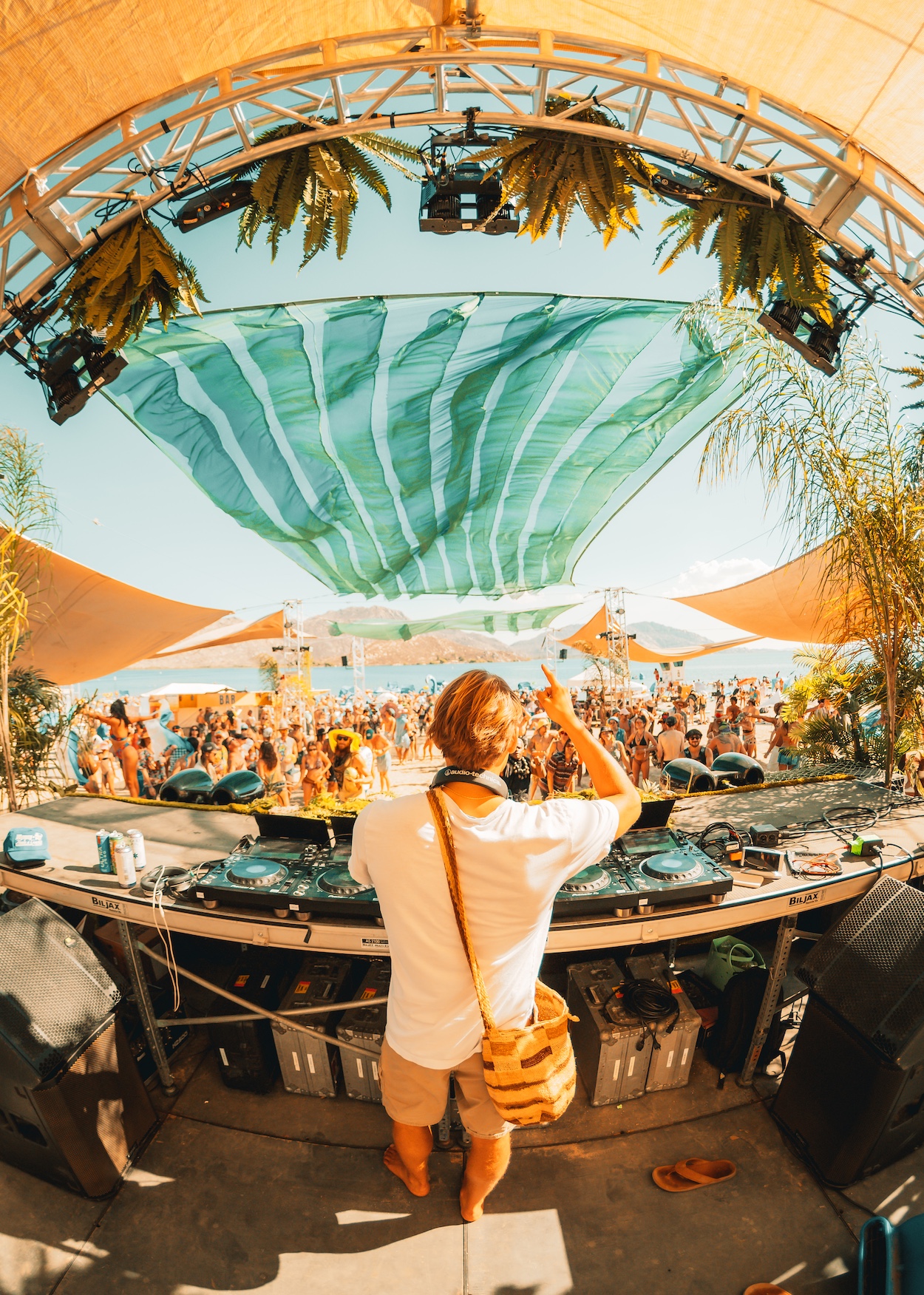
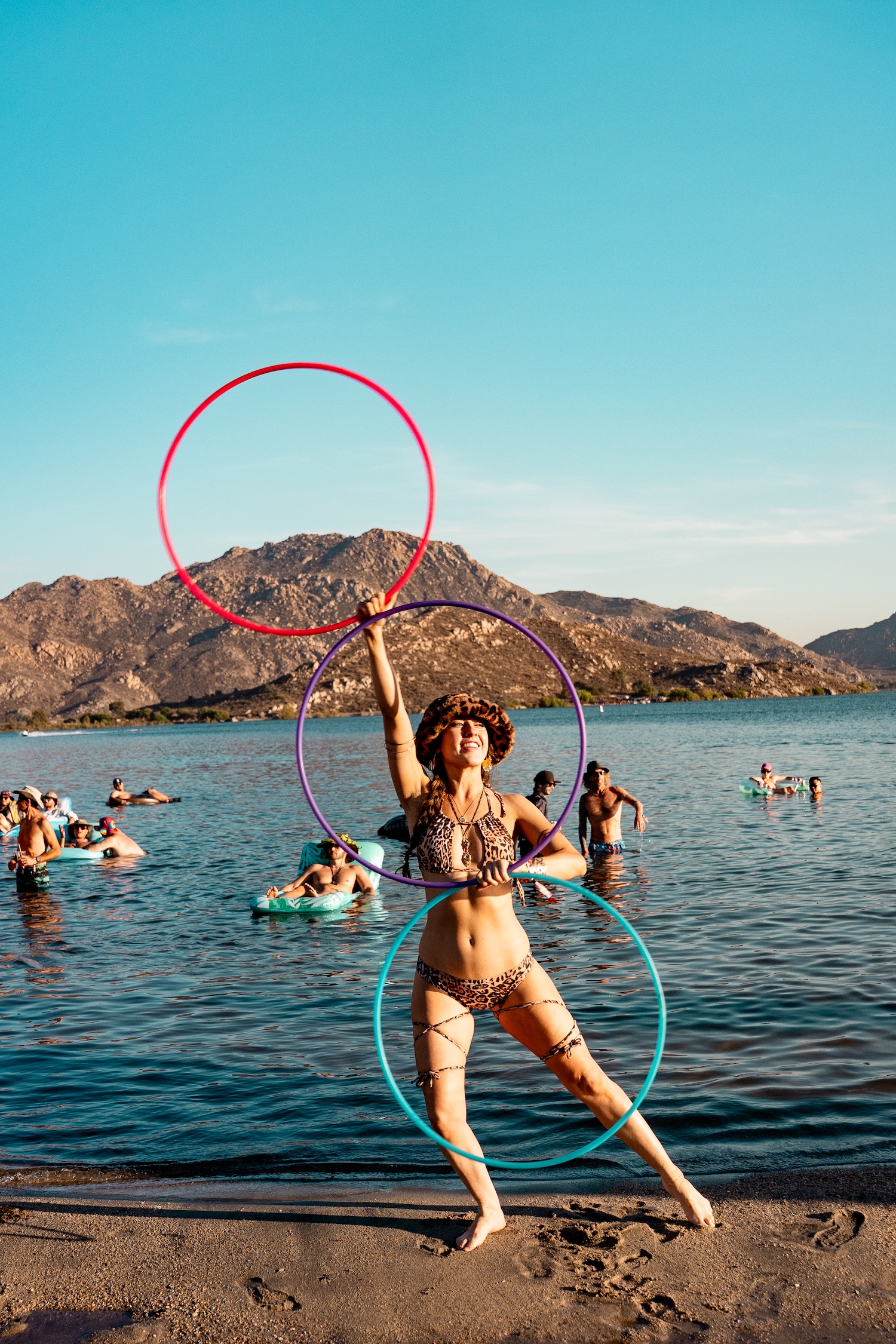
From there, bare feet shuffled through the sand as people left the water to embrace the rhythm near Coconut Cove.
A fisherman’s net appeared above the stage as people swayed below on the dance floor. Around Lake Perris, curiosity was everywhere, especially in the festival’s smaller details. One experience I discovered was at the Smell Museum, where various aromas were listed, each capturing the fragrance’s nature. Scents like “Grandma’s Purse” or “Sinatra’s Microphone” had notes of “Bourbon, Cherry,” and a hint of “Regret.” Nearby, the But theater charmed its audience with the stillness and joy of watching past Amy Winehouse performances while lounging in beanbag chairs on the chilled grass. As the popcorn maker churned, the warm, salty aroma of butter filled the air, and the stark crunch of popcorn broke the stillness between scenes. The screenings added to the ambiance, letting participants regroup, relax after a dip in the lake, or take a sound break from the stages.
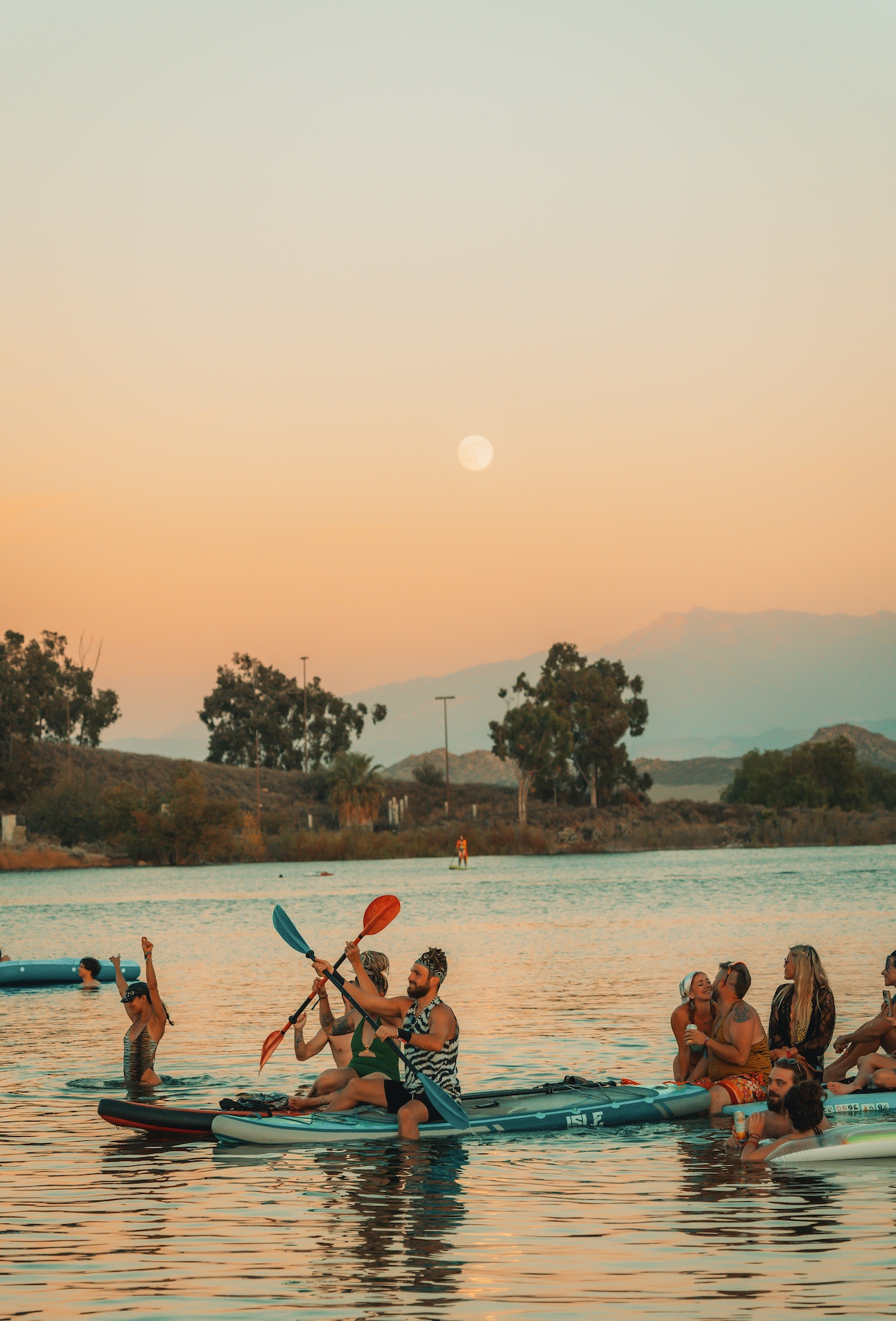
At Coconut Cove, JustJoe’s vinyl set carried across the sand beneath the nearly full moon as the beach cooled after a hot day. On Saturday, Twin Diplomacy played as festival-goers basked in the midday glow on the beach, leading into Sunday evening’s Mishell performance and its house grooves just before sunset. Just across the lake, Nakey Island was a short ferry ride away, with music and smiles filling the boat as people looked out at the water. DJs Kyro, Machinedrum, and DJ IJO created a smaller, intimate experience by the water, where free spirits danced, flow stars spun, bodies grooved waist-deep in the water, and others lay in hammocks drifting between the trees. The island also let people unwind, spark connections, and meet the unexpected, with no schedule or timeline (not a bad place to be stranded).
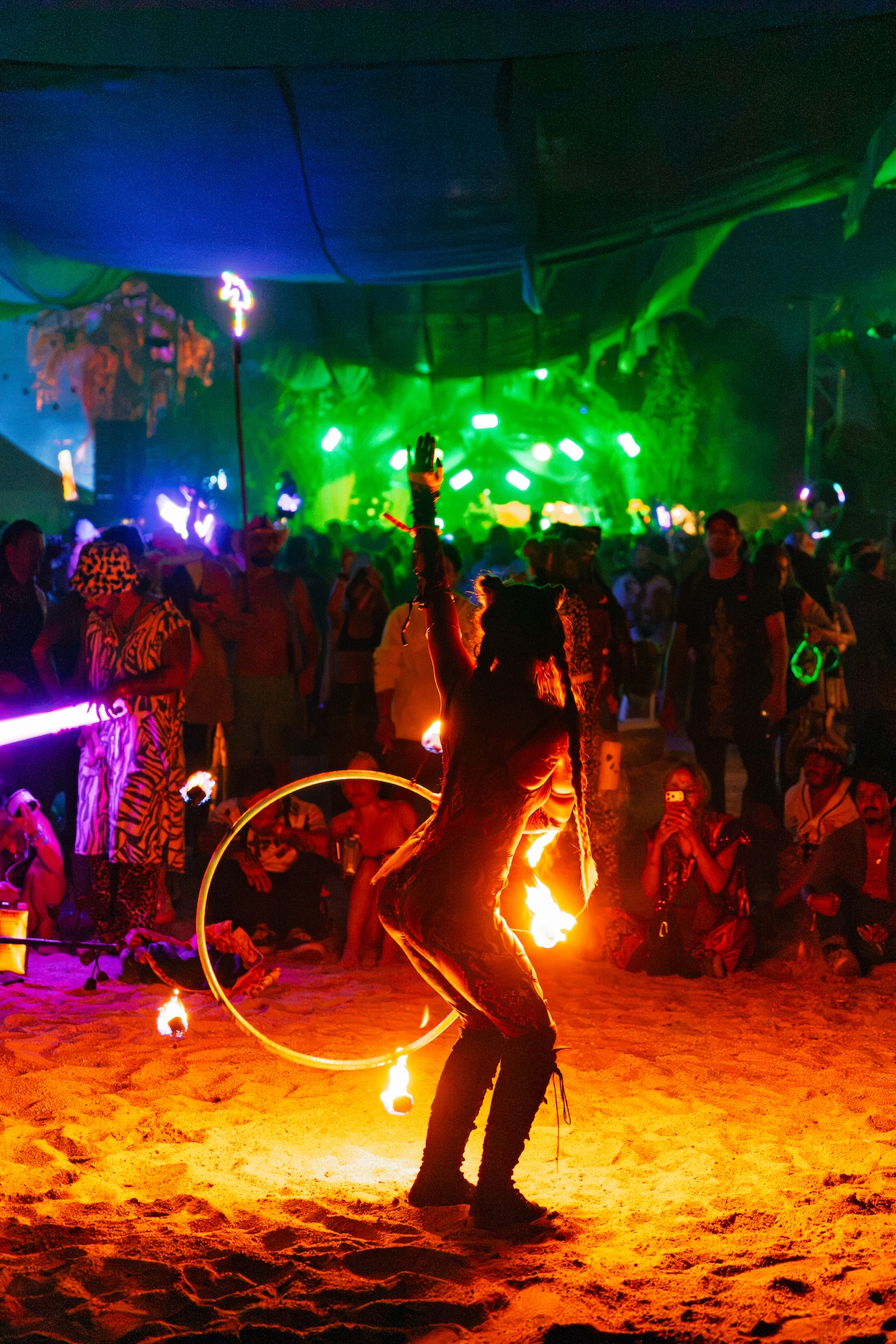
Beyond the music, Same Same But Different invited participants to embrace personal creativity while learning from workshop creators and facilitators and exploring a new craft or artistic endeavor at a slower pace.
On the InnerSpace stage, a short walk up from the beach at Coconut Cove, meditation facilitator Anne Thomas guided a sound bath on Friday afternoon. The stage later transitioned to InnerBass programming. She used a mallet to circle the rim of a singing bowl, bringing sound into the meditation. The bowl’s resonant vibrations were central to the sound-healing practice. After her session, Thomas, who introduced herself as “Annie,” told Atwood Magazine that she started as an observer and participant in her first sound bath at Lightning in a Bottle, which led her to sound healing. Thomas shared her favorite part of the sound-healing process: the frequency within the practice and the vibration of the sound bowls, which she calls “a universal language.” She wants participants to feel beautiful and find healing through their own journey.
Same Same But Different’s creativity included festival workshops, which added spontaneity. The Creation Station featured a large, glistening disco ball at the center. People could unwind on pillows scattered along the outer edge, next to live painters leaning into their paintbrushes as they interacted with the art. The space was especially immersive, with guides sharing their knowledge and experience – every program aimed to teach and inspire. On Friday, one facilitator, Justin Fair, spoke with Atwood Magazine after his workshop. He spoke about the tactile experience of clay, hoping participants could connect with the medium’s intention through the malleable, hands-on experience of working with the earth. Shortly after, seven live painters on an interview panel discussed their experiences getting started and offered advice to listeners on moving into full-time work in the visual arts. “Community in general made me pursue it,” said Camille Murray, whose work incorporates dream-like environments. Murray shared that live painting, surrounded by music and people, changes how she connects with her work. Contributing to the conversation, Kaylee Choiniere, an abstract painter whose work focuses on “the expansiveness and vibrancy of the natural world,” explained how conversations with festival-goers about her artwork inspire future creative ideas. The stories people share with her become part of what fuels her work, extending the creative exchange beyond the painting itself.
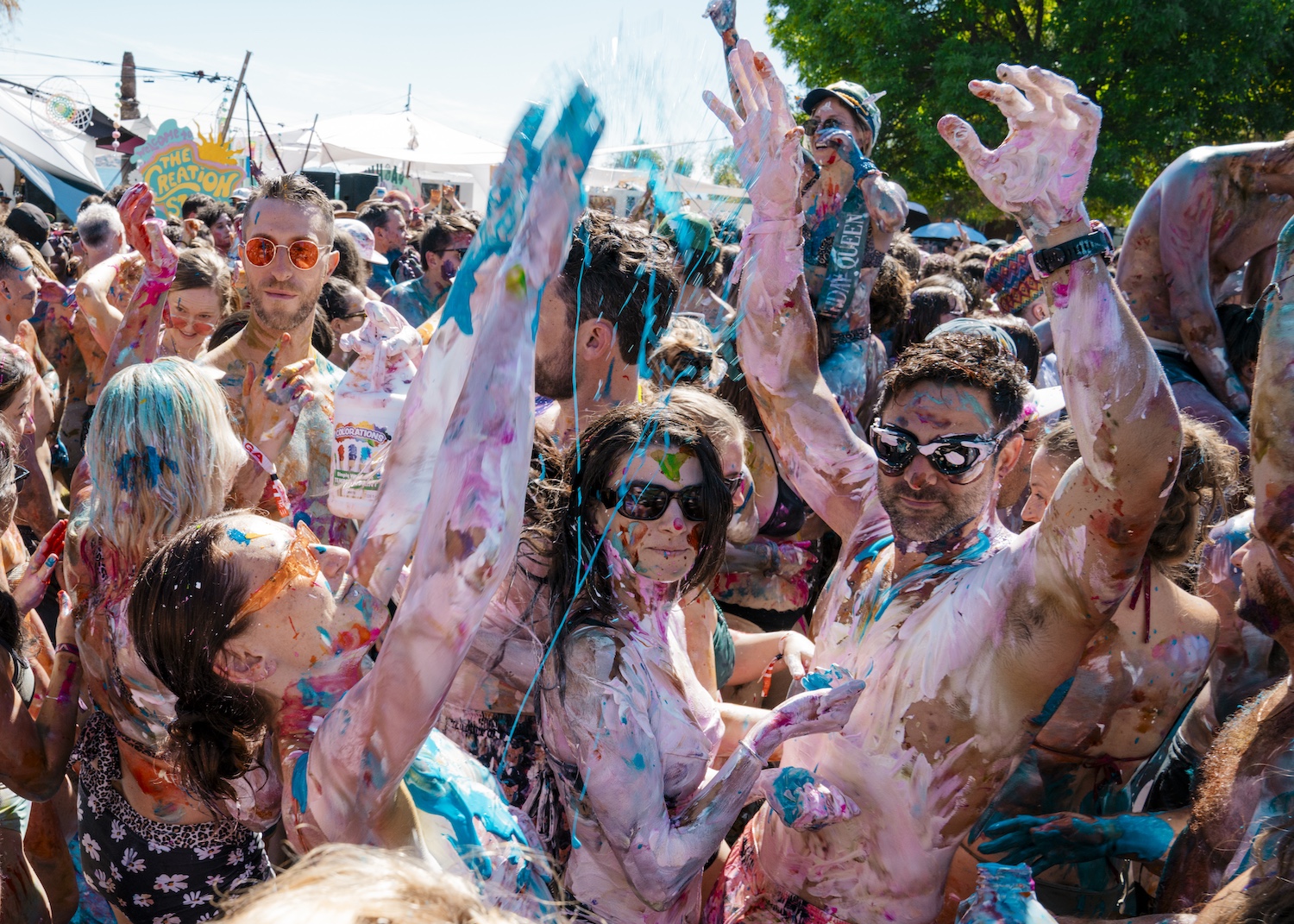
Later that weekend, on Sunday afternoon, Camille Murray was focused on painting at her station when Atwood Magazine sat down with her to learn more about her process and how her art connects with music.
Murray described the live painters as a tight-knit community, united by the challenges and rewards of creating art in public. Beyond the finished canvas, everything from an artist’s materials to the arrangement of their workspace becomes part of the experience. She called it a “vibe station,” a space that represents the artist as much as the work itself. For Murray, painting in this environment also invites a more communal approach to expression. As she put it, festivals are a place where artists can “express ourselves in the wild.”
Her painting drew directly from the surroundings at Lake Perris, incorporating a third eye representing intuition, stylized lines inspired by electronic music, and a blue heron standing as a gatekeeper of portals. “So we have the third eye of intuition here in the middle,” Murray began. The lake itself carried emotional significance in her work, with water representing the feelings people hold and release. “When we lead with our intuitions, we let the emotions flow,” she explained. The relationship between sound and visual art was equally important, particularly in the way she translated techno, house, and drum and bass into the painting’s overlapping forms. “You see the layers, and you think of how music is layered.” As music surrounded her station, the painting became another expression of the sounds and setting unfolding around it.
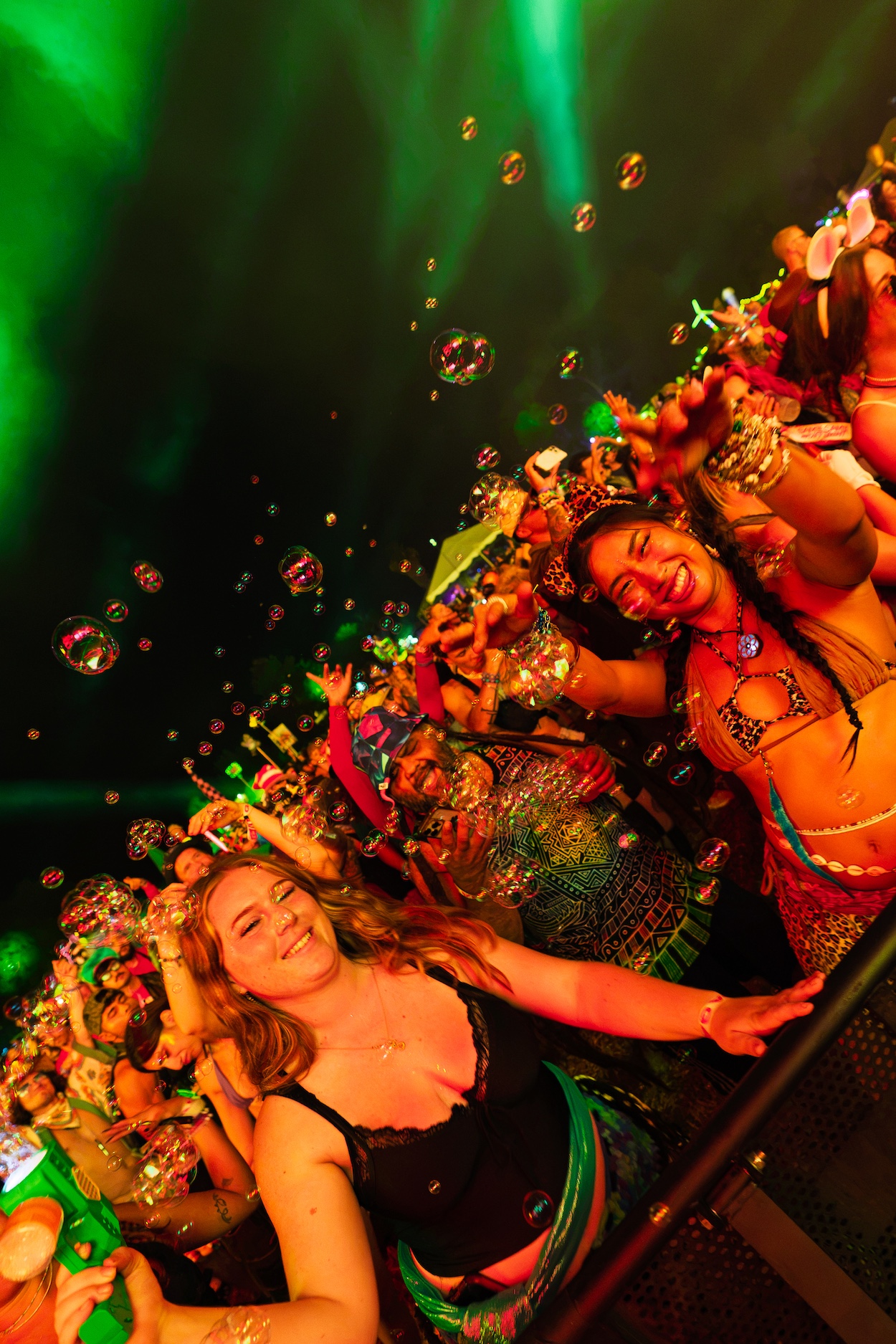
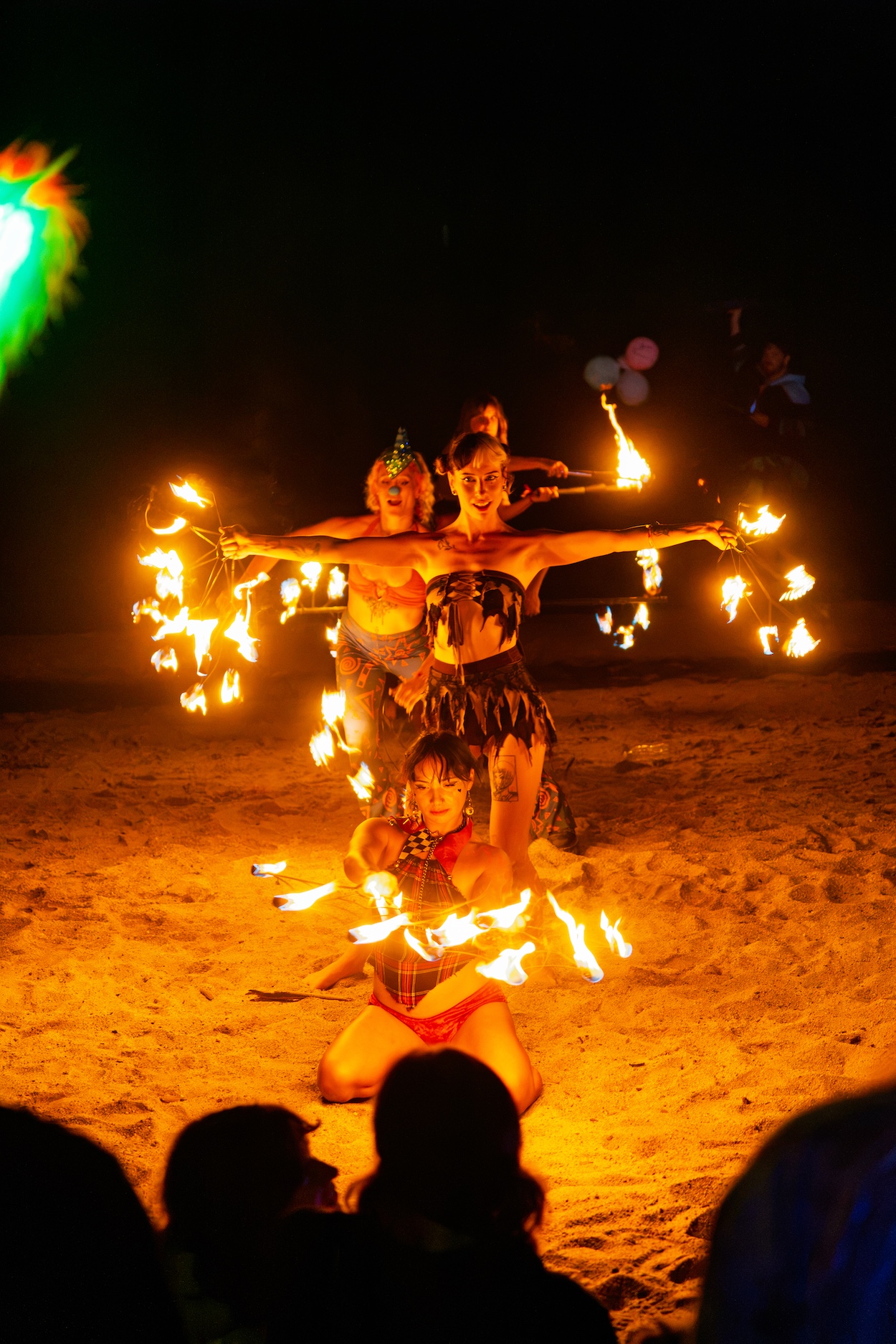
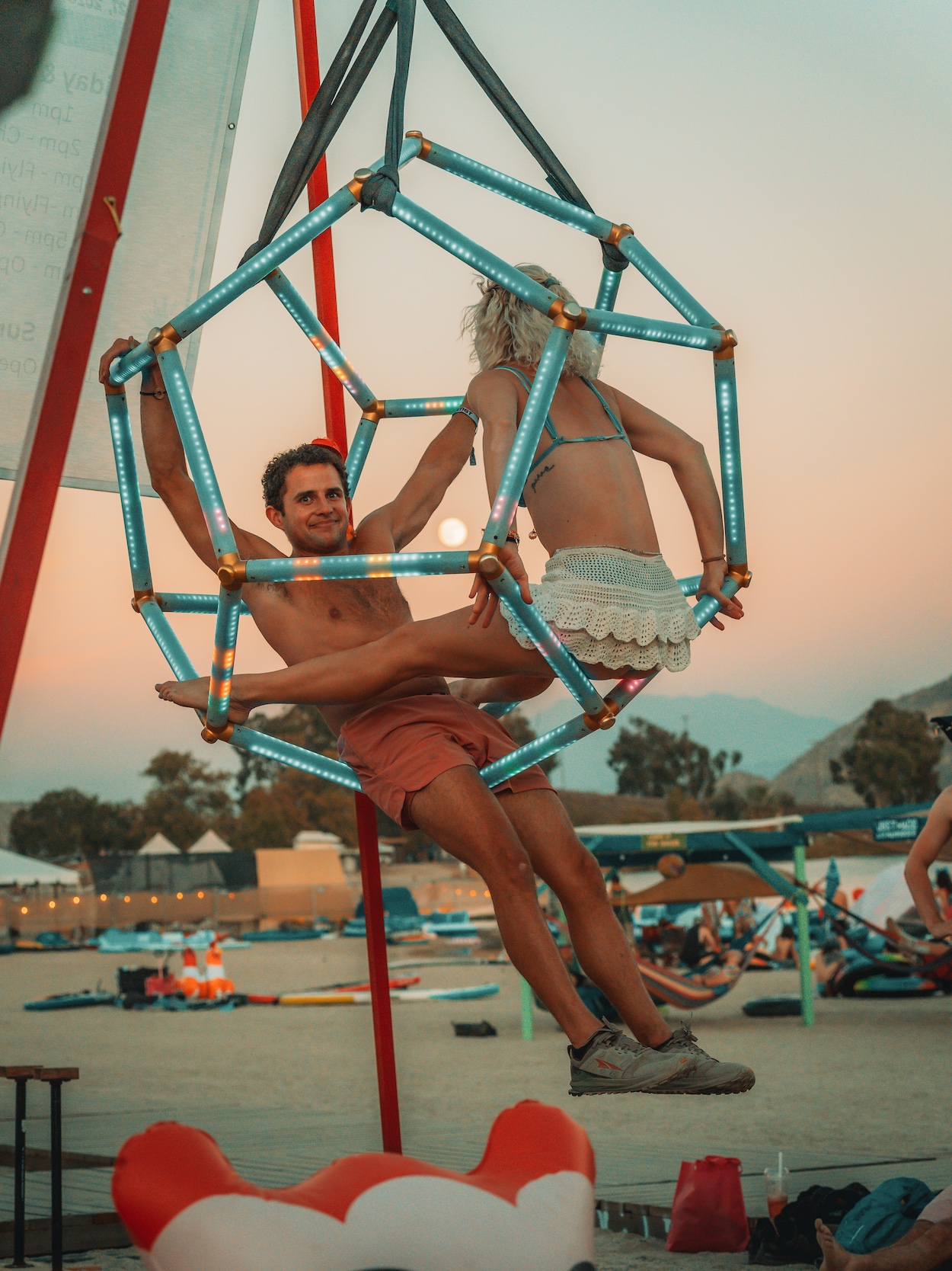
Style was also a significant part of the Same Same But Different experience.
Several vendors on the grounds focused on sustainable fashion practices. One vendor, Celeste Shoop-Cohen, owner of the San Diego-based vintage store ThriftJoy, spoke with Atwood Magazine about her business. Shoop-Cohen started by selling exclusively online, then later expanded into her own store. She emphasized the impact of giving clothes new life and the importance of sharing a piece of her style – a fur coat with a little history – so festival-goers could express their individuality. She also shared the value of the connections she made at her tent through vendor and music experiences, which generated not only new conversations but also online connections that continued long after the dance floor cleared and the music ended.
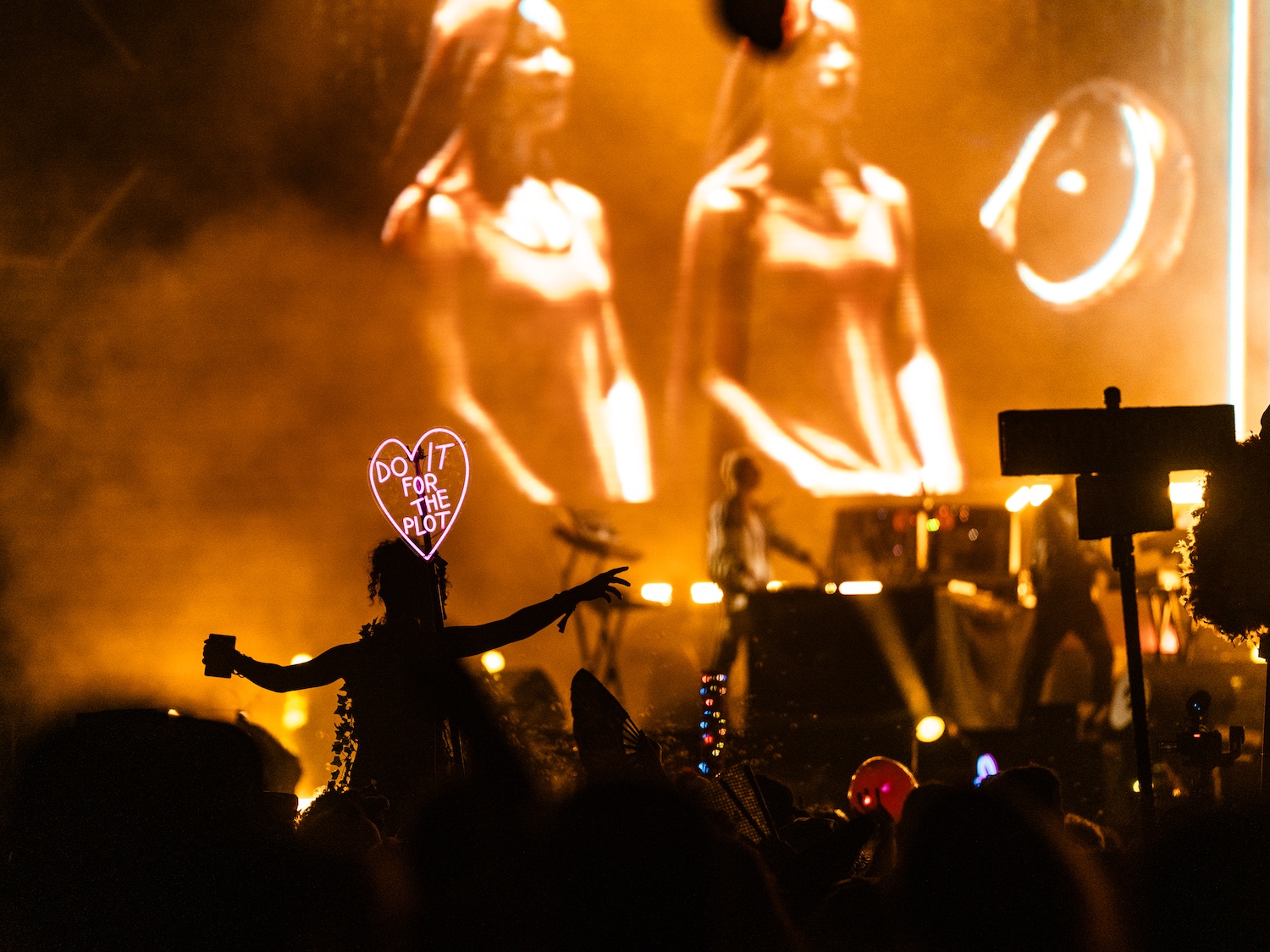
Away from the festival’s more leisurely corners, the Same Stage offered another kind of immersion. Throughout the weekend, bass artists delivered wobbling basslines and an infectious energy that kept the crowd moving. Sets from Effin, Vincent Antone, and Of The Trees on Friday; Gramatik and LSDREAM on Saturday; and Tape B closing out on Sunday showcased the festival’s bass-heavy side. For music discovery and genre-blending, Vincent Antone, Steller, and Effin brought their unique expression to the stage, each adding distinct sonic textures to the weekend’s musical landscape. Effin cultivated a style that fit naturally within the Same Same But Different atmosphere, with his signature sampling techniques and vintage 1950s influences. Ahead of Effin’s Friday set, Atwood Magazine spoke with him onsite about his music and the recently announced Heartbeats, which he had unveiled at Lost Lands shortly before the festival. Released on October 8, the album explores heartbreak while reflecting his growth and where he stands as an artist. Effin said he does a few laps to gauge the energy and check out the festival grounds before his sets, which shapes what he ultimately mixes into them. That approach felt especially fitting at Same Same But Different, where the intimate setting gave performers and audiences room to feed off one another’s energy.
Effin’s approach to sampling also echoed the visual artists scattered throughout the festival grounds.
He compared his soundwork to collaging, combining fragments of older recordings with his own electronic textures to create something distinctly his own. Later in his set, the sound was saturated with low end, drawing on the dreamy, vintage-inspired aesthetic of his previous album, Daydreams. The music faded into an easy groove for the audience as Effin eased back his bass-heavy production, letting the familiar vocals of the Wallace Collection’s 1969 song “Daydream” emerge. In the middle of the crowd, smiles burst as people swayed, their voices booming as they sang the lines, “Daydream / I fell asleep amid the flowers.”
As the crowd sang along, Effin brought his own bass textures back into the mix, transforming the familiar melody into a powerful electronic release. The shift caught listeners by surprise, and the low end hit with a force you could feel – the speakers’ rumble vibrating in your chest as the bass broke through the chorus. His cascading visuals on the LED screen behind him reinforced that collage-like approach, bringing the music’s contrasting layers into a cohesive visual experience. His sonic splicing and production created a narrative, much like the artistic visual process, sinking listeners into a daydream before pulling them back into the present.
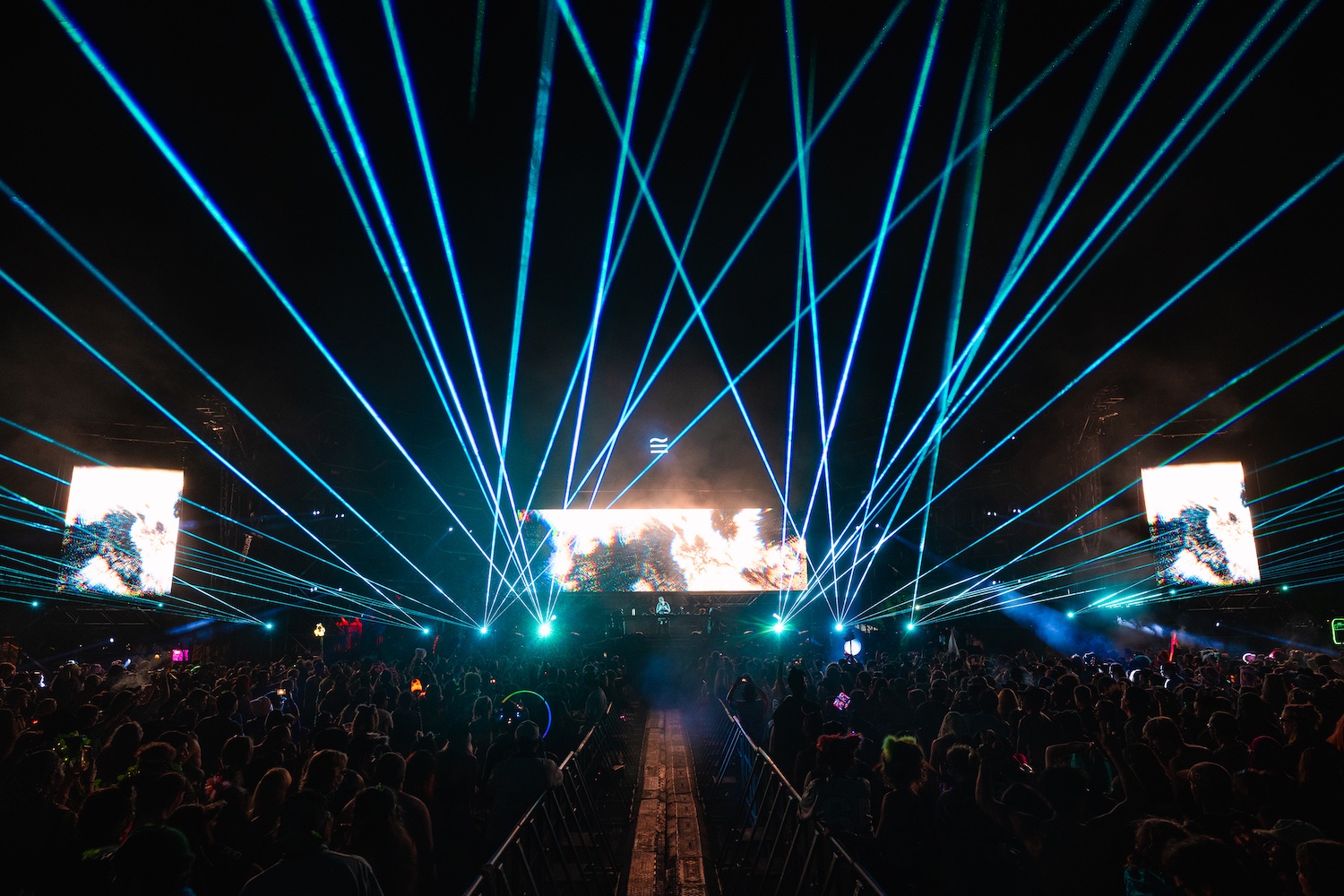
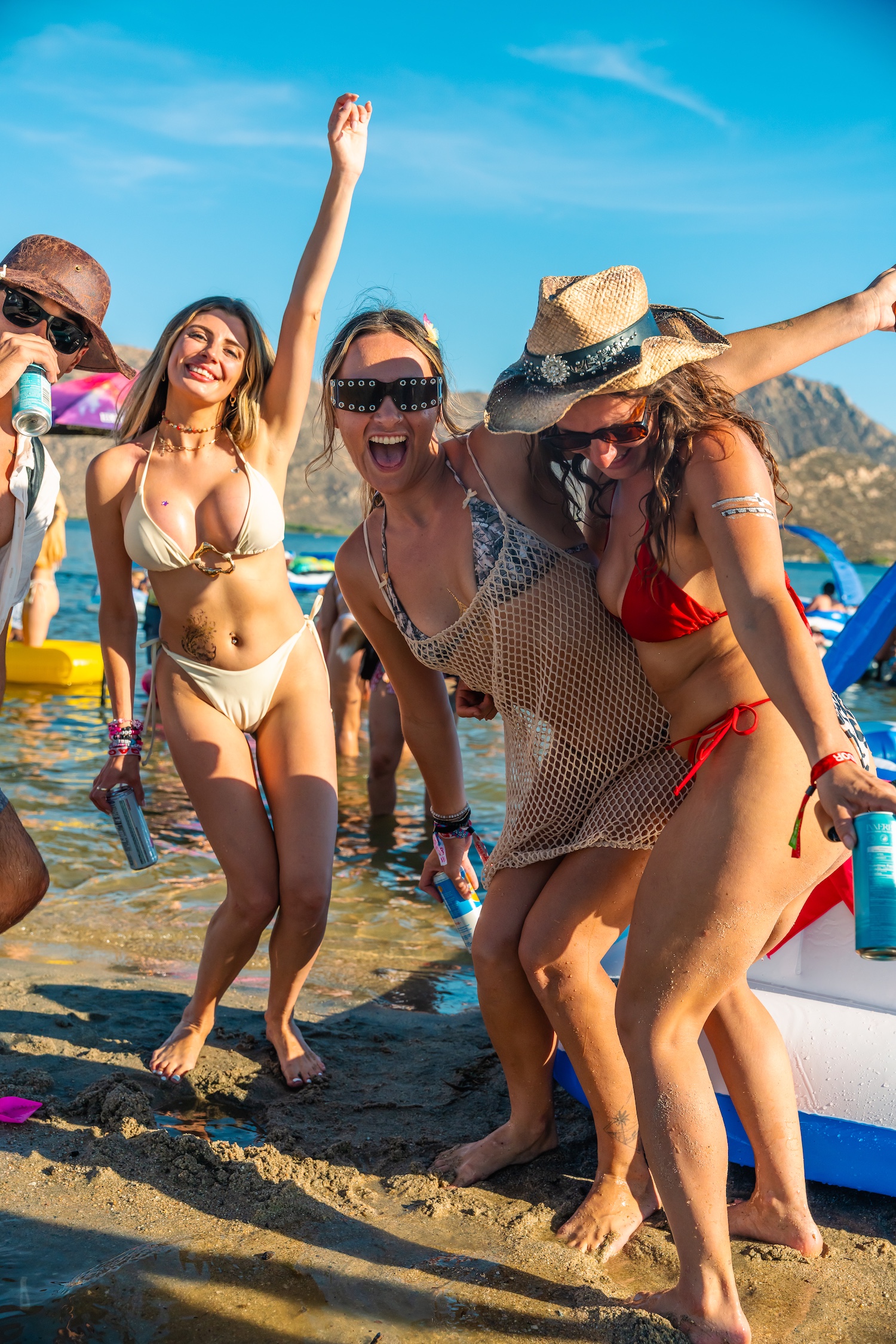
Late Sunday afternoon, hi-hats and a kick drum called listeners to Coconut Cove as they joined the crowd near the lake.
One participant, Matty Davey, stood out with a warm presence, smiling as they soaked up the music. The skyline was saturated with dusty blue as the sand cooled, while dust particles drifted over the crowd, catching the last light as the sun sank into night. Atwood Magazine caught Davey between wandering sets as they introduced themselves: “I used to live in San Diego, but now I live in Indiana. I’m on the way to moving to Portland,” they said. Davey shared that they have been going to the festival since 2021, and they camped this year. “Just such a special place for freedom and family and fun expression,” Davey continued, explaining that returning each year helped them feel centered. “I met these beautiful women from the San Francisco area, and we were dancing together – all night long. Just had the best time – vibing and sharing energy, and dancing together is lovely.” Before embarking closer to the music on the beach, Davey shared what makes Same Same But Different special: “They do a good job of creating space and making little moments for connection and for intentionality. There’s so much care put into the experience that I think it allows people to be connected and continue to connect throughout the weekend.” As evening settled in, Davey looked into the camera and leaned into the pull of the crowd’s energy, enjoying the festival’s last day.
As the sun lowered over Lake Perris near the end of the weekend, the Floridians performed on Sunday. Two days before, they had reflected on their musical influences and the significance of returning to these grounds as performers. The band members, Ian Renaud (lead guitar and vocals), Sebastian Guerrero (keys and synth), Tristin Cata (bass), and David Gonzalez (drums), recalled attending Desert Daze at Lake Perris, where they had watched Tame Impala perform. “A dream come true, honestly,” Renaud said. For the band, returning as performers represented a full-circle moment, transforming a place they had once experienced as fans into a setting for their own music. When asked how sounds and art have shaped their music discovery, Renaud pointed to the band’s psychedelic influences. “Kevin Parker is the guy,” he said. “I was really into bands like Allah-Las and Beach Fossils. That still transcends into our music now, especially like guitar tonalities and stuff like that.” He also cited the big psychedelic sounds of Tame Impala, MGMT, and Empire of the Sun, influences that continue to shape the band’s musical identity.
That relationship between inspiration and opportunity extended beyond the music itself. The band reflected on how seeing other musicians and visual artists pursue their craft at festivals like Desert Daze had encouraged them to imagine what might be possible for their own careers. Now, returning to Lake Perris as performers, they hoped to offer that same sense of possibility to others. For Renaud, community is at the heart of that ambition, and it also informs the band’s forthcoming album, The Escape Artist. “Everywhere we go, we’re trying to build a community of love and just good energy,” he shared. Escapism is central to the record, but the idea takes on a particularly meaningful form in a festival setting, where music gives people an opportunity to disconnect from everyday pressures and immerse themselves in the present.
“If we could just get people to come to our set and just turn off their brain for a little bit and just be present in the moment, not worry about their jobs or any issues that they have, or how much money’s in their bank account – they’re just there in the moment, present.”
— —
:: connect with Same Same But Different here ::
— —
— — — —

Connect to Same Same But Different on
Facebook, 𝕏, TikTok, Instagram
Discover new music on Atwood Magazine
© 2026
 © 2026
Unofficial Festival Playlist