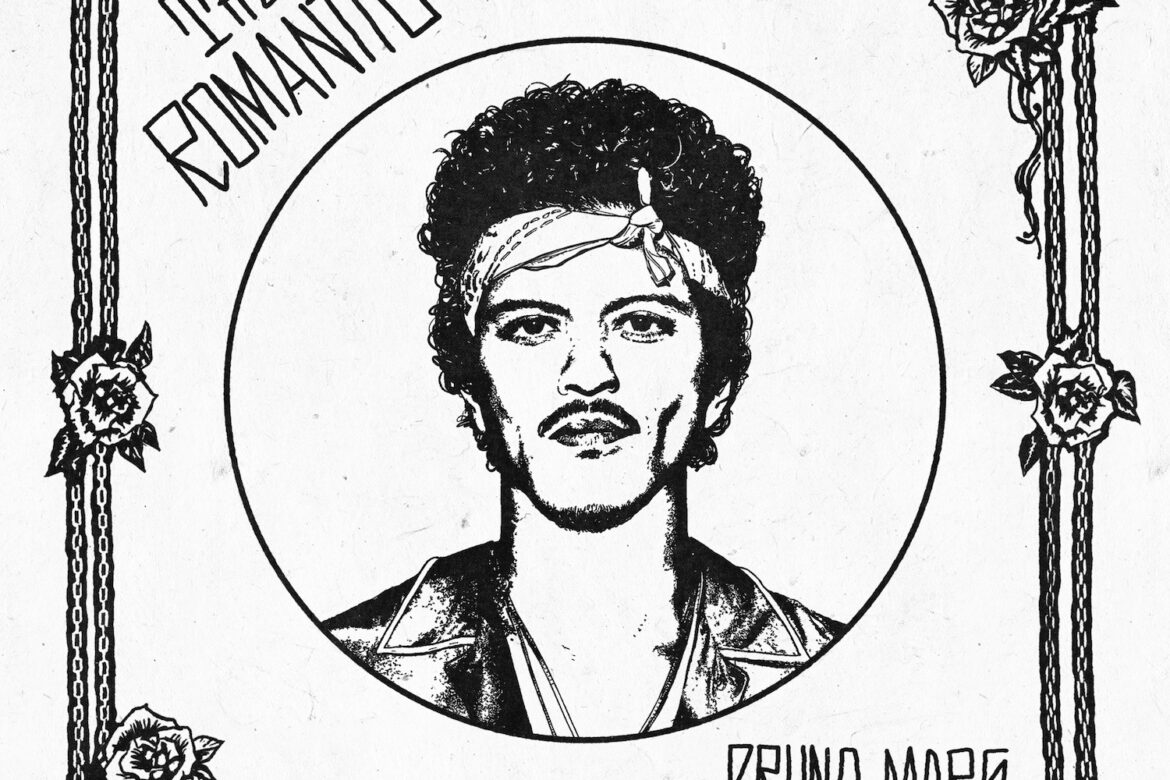
Atwood Magazine’s writers dive into Bruno Mars’ long-awaited fourth album ‘The Romantic,’ a familiar return to the sound, swagger, and sentiment that made him a global superstar – unpacking its grand romantic gestures, its dancefloor charm, and whether comfort in his signature sound has come at the cost of deeper evolution.
Featured here are Atwood writers Ankita Bhanot, Ashley Littlefield, Josh Weiner, and Lauren Turner!
— —
To start, what is your relationship with Bruno Mars’ music?
Josh: How many examples are there out there of duets where the lead artist fizzled out after a few hits, but the featured artist went on to become a global superstar? I can’t think of all that many, but “Nothin’ On You” by B.O.B. feat. Bruno Mars is definitely one example. I remember when that song came out in 2010, around the time I finished high school, and while B.O.B. scored a few more successful singles, but now has gone well over a decade without a new one, Bruno Mars went on to be one of the generation’s most iconic singers and reliable hitmakers from that point onwards. I’ve been a fan of his ever since that first mainstream single of his became a #1 smash (surely a sign of things to come, wouldn’t you say?!) and have continued to listen to him regularly, even throughout his long album hiatus that only just now concluded after close to 10 years with The Romantic.
Lauren: Bruno Mars’ music was the soundtrack to my early teenage years. I remember vividly how big “Nothin’ on You” was like Josh mentioned as well as “Billionaire” and “Young, Wild & Free.” His voice was featured and starting to make its way across some of the biggest hits of 2010. So it was no surprise that when Doo-Wops & Hooligans was released around that time, he blew up in the way that he did. “Just the Way You Are,” “Grenade,” The Lazy Song,” “Count on Me” – it seems like every song off that album was being played everywhere. But what captivated me and made him stick as a prime artist within my life was “The Other Side” and “Talking to the Moon.” I fell in love with his storytelling, his voice – but more importantly how he combined those two to make his art. “Talking to the Moon” is such a heartrending yet beautiful concept and the way he yearns in that song is so real and brings the whole thing to life. But he does this in all of his music. You can almost hear him smirk in his cheeky song “Runaway Baby,” you can feel his eagerness in “Locked Out of Heaven” and you have this mutual understanding of pain and heartbreak in “When I Was Your Man.” He is an artist that has mastered portraying human emotion so well within his catalogue. By the time Unorthodox Jukebox and “It Will Rain” came out, he was a standard and constant in my rotation.
Ashley: A lighting tree of LED Par cans illuminated the high school dancefloor, where the DJ would surprise students with Bruno Mars’ classical slow dance at the time with “Just the Way You Are,” from Doo-Wops & Hooligans in 2010, or turning up the energy on the dancefloor with “Treasure” with Unorthodox Jukebox in 2012. Bruno Mars’s groove is infectious, no matter the age of listeners or year. His records are timeless listening, wherever you are on your life’s roadmap. In 2016, 24k Magic became a soundtrack that glistened the soundwaves when I worked in retail in the mall. Fast-forward to 2021: the Silk Sonic duo with Anderson .Paak was a modern time machine from the 1970’s, delivering an undeniable vibe and creativity that shines through the singer/songwriter and record producer, while both artists’ personalities create individual charisma and charm. There are infinite possibilities for the ecstatic energy to shapeshift into curated moments for his audience.
Ankita: Revisiting Bruno Mars’ 2010 debut Doo-Wops & Hooligans immediately transports me back to my middle school in San Jose, California, where my friends and I first became aware of the incredibly emotive and sensitive R&B singer. Doo-Wops acts as a sort of memory book for my formative seventh- and eighth-grade years: “Just the Way You Are” used to play across our campus during lunch over the announcement speakers; “Marry You” was blasted in our gymnasium during painfully awkward mixers where couples had their first slow dance; and “Count on Me” accompanied a graduation slideshow of classmates hugging in classrooms and hallways. It remains the one (and only) Bruno Mars project whose lyrics I can recite from beginning to end.
With my naïve understanding of love at 13 years old, I thought a man catching a grenade for his partner was the most romantic declaration I had ever heard in a song. As a woman who is now nearly 30, that opinion has since changed.
Since that album, my connection with Bruno Mars’ music has gradually waned. In recent years, he has stepped away from releasing regular solo studio albums, instead focusing on collaborative projects, his Las Vegas residency, and various business ventures. I truly loved An Evening with Silk Sonic, his collaboration with Anderson .Paak, which produced tracks I still have on repeat today: “Leave the Door Open,” “After Last Night,” and “Smokin’ Out the Window.”
That’s why I was incredibly excited to hear about a new solo album from Bruno Mars for the first time in a decade – though admittedly skeptical as well. I initially wondered whether the project was born out of genuine creative inspiration or simply an attempt to stay relevant in today’s intensely competitive music landscape. As an artist who has long written about romance, love, and heartbreak, I also found myself curious about whether his personal life might shape the music. Reports suggested he and his longtime partner, Jessica Caban, had separated around 2024-2025 after more than a decade together – a relationship that endured profound moments, including the loss of his mother in 2013.
What are your initial impressions and reactions to The Romantic?
Josh: I enjoyed it, inasmuch as it’s a solid half-hour of party-friendly fun, with a decent mixture of fast and slow-paced songs that ultimately make for an enjoyable listen. I’ve seen reviews calling it out for being too derivative of his and other artists’ past works, and I won’t argue against that too loudly. But in the end, Bruno Mars expanding on his existing template still makes for a decent listening experience, especially since it’s been nearly 10 whole years since he last gave us a full-length sampling of said template. I gave the album a 7.3/10 in my original review and am happy to stand by that rating, especially since the critics seem to more or less agree with me.
Lauren: I think the first thought I had after listening to this entire record was, “Ahhhh, this is Bruno. Bruno is back!” We have always known Bruno as a romantic, so returning with that title was only fitting and exactly what I would have wanted to see from him. For me, and I feel like a lot of his fans, he is nostalgic (partially due to almost a decade in waiting haha). But I was 17 when his last solo album came out (24K Magic). Now, I’m about to turn 27. He knows his fans, he knows it’s been a while and I think he made this album for them. This album wasn’t for my 27 year old self, it was for 17 year old me, and I think she would’ve loved every minute of it.
Ashley: His use of instruments on The Romantic leans into his roots and honors who he is as an artist and how he chooses to express himself. The classical guitar, soft percussion, and vocal textures feel uniquely layered and distinct in production on each track. Each track guides listeners into an understanding of his roots and his distinct musical choices. At the end of the album, there are some of my favorite songs from his new release.
Ankita: My first listen left me cautiously optimistic – and by my third, I was genuinely charmed. The Romantic is not a reinvention, and it doesn’t pretend to be.
What surprised me most was how much the album rewards patience. Songs I initially brushed past – “Why You Wanna Fight?”, “God Was Showing Off” – revealed themselves on repeated listens as some of the record’s most joyful moments. Mars’ voice remains one of the most distinctive and effortlessly emotive instruments in pop music, and this album gives it room to breathe in ways that feel genuinely luxurious. There’s a warmth here that’s hard to manufacture, and Mars has never had to.
Seeing as this is Bruno Mars’ first solo album in 10 years, how does The Romantic compare to 24K Magic, Unorthodox Jukebox, and Doo-Wops & Hooligans? What are the most striking similarities or differences?
Josh: Even though he’s gone a decade without a new solo album– even though it sure doesn’t feel that long, given how culturally ubiquitous he’s remained that whole time– I don’t think Bruno Mars evolved that much artistically in the interim. The Romantic sounds largely cut from the same proverbial cloth as his other albums, both sonically and thematically. Even the running time of the new album is basically the same as all three of his albums (four, counting his Anderson. Paak collaboration, An Evening With Silk Sonic), at 9 tracks and 31 minutes.
But hey, another key similarity is that this album has already scored a #1 single (“I Just Might”) just as all four of its predecessors did, and it’s got plenty of compelling deep cuts to go along with the hits. “On My Soul” and “Cha Cha Cha” are two of my favorites, and we’ll see how the rest all fare now that the accompanying album is out.
Lauren: Like Josh mentioned, The Romantic follows a somewhat similar format to what we know Bruno Mars for. He’s stuck to his roughly 30-40 minute album length – which is kind of refreshing in a time where albums are over an hour, almost two nowadays. He’s given us upbeat tracks to dance along to and slower ones to tug on our heart strings like in previous albums. He’s remained cool, smooth and one hell of a songwriter. Due to this, I think The Romantic perfectly fits on the shelf of Bruno Mars’ discography.
With all that being said, I think the biggest difference in this album isn’t found necessarily within his discography but instead within the music industry. In a time where music is trying to be “TikTok” worthy and cater to a quicker attention span, Bruno Mars still remains true to himself. What he is putting out is still so unique and original sounding. It’s refreshing and different!
Ashley: This album feels more organic to his nature, romance, and vivacious charm. While percussion predominantly leads the album on 24K Magic. His fresh cuts on that album are evident in his vocals, as in “Finesse.” For his radio hit on Unorthodox Jukebox, “Locked Out of Heaven” is a staple of his sound and was certified Diamond by the RIAA on October 5, 2022. Now, with The Romantic, the instruments chosen embody the authenticity of embracing roots through sound, giving an intentional spunk.
Ankita: What has always separated Bruno Mars from his contemporaries isn’t just the quality of his albums – it’s his almost unfair ability to produce singles. Not one or two, but entire arsenals of them. Doo-Wops & Hooligans was arguably one of the greatest debut single runs in modern pop history – “Just the Way You Are,” “Grenade,” “The Lazy Song,” “Marry You,” “Count on Me” – songs that didn’t just chart, they embedded themselves into the architecture of a generation’s memory. Unorthodox Jukebox gave us “Locked Out of Heaven,” “Treasure,” and “When I Was Your Man” – three songs so distinct from each other they could have belonged to three different artists, and yet all unmistakably him. 24K Magic continued the tradition with “That’s What I Like” and “Finesse.”
The singles on The Romantic feel less immediately timeless. The album maintains the familiar balance he’s always struck between vulnerability and celebration, tenderness and dancefloor energy. Those tonal similarities are comforting in their own way.
But comfort is also my reservation. Mars enters this album as a man who has seen considerably more of the world than the one who wrote “Grenade” at twenty-four – someone who has collaborated with some of the most inventive producers working today, weathered loss, and lived through a decade of profound personal change. I wanted to hear all of that. I wanted reinvention, or at least evolution. What we get instead is an artist who has mastered his own formula so completely that he seems, for now, content to live inside it.
Mars has framed this project as a deliberate come-back – a return to his roots as a solo artist and a reaffirmation of his strengths in pop, soul, and dance music. Where do you hear those “roots” shining their brightest – and where does he push beyond them?
Josh: I mean, there’s plenty of ways (too many, maybe?) in which The Romantic recalls Bruno Mars’ earlier roots. I’ll throw out a couple more on top of the ones I’ve already identified: he’s reteamed D’Mile, who was a key figure on the Silk Sonic project and returns as lead producer here, and several of the lyrics recall the young-n-girl-crazed Bruno of the early 2010s. “Risk It All,” for instance, made me think of “Grenade” at several moments– although I’ll also give that song some originality points, as it’s the most mariachi-influenced of any Bruno Mars song I can think of offhand.
Lauren: I assumed that was what he was trying to do and those roots shine bright throughout this whole album. I see those roots shine the brightest more within the concepts than the sound though, which, to me, makes it so special. “I Just Might” reminded me of “Finesse” and “24K Magic,” where we have this upbeat song about a night on the town. “God Was Showing Off” reminded me of “Just the Way You Are,” while thinking of this person who just stunningly shocks you. “Something Serious” reminded me of that “I’m gonna get ya” mentality of “Treasure.” “Nothing Left,” especially with the lyric, “And it kills me to think somewhere I lost my baby,” gave me “When I Was Your Man” vibes. “Dance With Me,” my personal favorite, reminded me of my original favorite “Talking to the Moon,” where that yearning I’ve come to love Bruno for capturing so well, comes through the most throughout the entire record. Again, I think he made this album knowing that his fans have been waiting for almost a decade. Those fans have been waiting because they wanna see Bruno do Bruno.
I think he pushes beyond those roots by dipping into mariachi in “Risk It All,” like Josh mentioned. Or, exploring the Cha Cha in “Cha Cha Cha.” He very much brings in a Latin influence, which is so fitting for this album because the Spanish language is a Romance language.
Ashley: The blistering heat of the tune “On My Soul” is a dancefloor groove that blends the history of disco and soul, with his vocals aligned with the rhythm’s cadence. “Nothing Left” carries a potent vocal pop, stripped down with a downtempo rhythm and electric guitar. Similarly, “Dance with Me” tugs at the heartstrings for a soulful, melodic pop dream that can be visualized with the sound of his voice. He pushes his sound with “Risk It All,” featuring a flamenco-style guitar that blends his pop vocals into a melodic, authentic root-cut.
Ankita: There’s an ease to this album that immediately signals Mars hasn’t lost a step. The pop and dance instincts are fully present and fully confident – “On My Soul” and “Cha Cha Cha” are the album’s most purely joyful moments, the kind of tracks that don’t ask anything of you except to move. His command of that register is undiminished, and there’s genuine pleasure in hearing him inhabit it so effortlessly after a decade away.
The soul – the raw, aching, confessional soul that made “When I Was Your Man” feel like an open wound – finds its home on “Nothing Left” and “Dance With Me.” These are the songs where I hear the artist who first made me pay attention. They’re quieter, more exposed, less interested in the crowd. “Nothing Left” in particular feels like it was written from a real place rather than a familiar template, and it’s not a coincidence that it’s the song I’ve returned to most.
What’s most impressive is how cleanly he moves between all three modes – pop, dance, soul – without ever losing his footing. That kind of range, executed with this much confidence, is genuinely rare. But fluency and depth aren’t always the same thing, and on an album framed as a return to roots, I found myself wishing he had lingered longer in the soul corner. That’s where his roots run deepest. That’s where, even after all this time, you can still hear exactly who he is.
Bruno Mars teased The Romantic with lead single “Risk It All.” Is that song a faithful representation of the album as a whole? Does it capture the emotional and sonic thesis of the project – or does the record reveal something more layered?
Josh: Hmm, I’m fresh off of addressing this track in my previous answer, so we’ll see what I can add on…. Yes, I’d say it represents the album as a whole, as several other invitations to accompany Bruno in a slow dance follow this one. Plus, although no other song here is as directly mariachi-influenced as this one is, a lot of traces of Latin music do follow (on “Cha Cha Cha,” for instance), so “Risk It All” offers a preview of what’s to come to in that sense. So sure, it “captures the emotional and sonic thesis” of The Romantic to a certain extent. Is there something more layered to be uncovered here? I don’t know– I wouldn’t call the lyrics especially esoteric. It’s a nice, simple slow burner track, and I’m fine with that.
Lauren: I would say so! One could argue “Risk It All” is his most romantic song on the album, and that is what this album is filled with – romance! Every track has some sort of trace of it. Like I’ve said before, we know Bruno as a romantic and society has kind of been putting out this “romance is dead” mentality. I think, if anything, this record shows/proves that romance isn’t dead and is very much still a part of our world and what humanity craves (in whatever form that is). Everyone still came to listen to the romantic himself on February 27th. The record just debuted as NO. 1 on Billboard’s 200 Chart. The timing of this album could not have been better. It came exactly when we needed a little romance.
Ashley: The album carries a shift in tone and production style throughout the journey of the lyrics. It’s challenging to categorize an entire album based on one song, as there are layers of each track that collectively contribute to an album. As in the influence of signature sound in the album, where he reveals himself more in The Romantic, yes, this delivers the sonic thesis. Towards the end of the album, however, the few remaining songs carry more lyrical layers that dive deeper into the story of The Romantic. One example of a song that continues the push in its lyrics is “Nothing Left,” because the association of romance is equally charming as the experience of letting go, offering a cathartic, affectionate glow and the thematic yearning and enchantment that come with it.
Ankita: As a representation of the album as a whole, “Risk It All” both succeeds and misleads in equal measure. The Mexican bolero, mariachi horns, and Latin flourishes that open the track feel like the record’s most calculated gesture – a nudge toward an audience whose ears might perk up at a familiar sound, rather than an expression of anything deeply personal to Mars. As a thesis statement, it points toward the album’s greatest weakness: a tendency to reach for broad appeal over emotional specificity.
Yet, twenty seconds in, the contrivance drops. A beat of silence opens up, and then Mars’ voice cuts through – clean, confident, unhesitating: “Say you want the moon, watch me learn to fly.” In that moment, something real surfaces. There’s an almost painful openness in that line and the way he delivers it – the particular flavor of desperation that only arrives when you’ve fallen for someone so completely that humiliating yourself for them starts to feel like devotion. It’s the most emotionally honest moment the song offers, and it’s over quickly.
What “Risk It All” doesn’t prepare you for is the album’s prevailing mood – which is largely celebratory, upbeat, and dance-floor ready. This song is one of the record’s quieter, more aching moments, and in that sense it’s something of an outlier. The emotional richness buried beneath its more crowd-pleasing instincts gestures toward what the album could have been, had it trusted that vulnerability more consistently.
Bruno Mars has positioned this album as his romantic manifesto. What do you think he means by calling himself “The Romantic”? Is this record about devotion, fantasy, nostalgia, vulnerability – or something else entirely?
Josh: Bruno Mars is a ladies’ man. He has been his whole career. So, I see The Romantic as a record that elaborates on that well-known identity of his. When this “romantic” guy declares “I just might make her my baby,” none of us doubt he’ll have much trouble achieving said goal.
Is the record about “something else entirely” beyond those four qualities? Maybe someone else will have a deeper reading of the lyrics, but for me, those sound about right. There’s vulnerability, for instance, when “the romantic” guy gets his heart broken, as happens to “romantics” from time to time. See “Nothing Left” and “Why You Wanna Fight” as instances of that in particular.
Lauren: Haha, what I’ve been saying this whole time! Bruno is already known as one of the romantics of our generation. His music has always been centered in this. I couldn’t agree more with Josh’s answer and I love how he answered this question. Bruno is for sure elaborating on his already well-known identity. I think this record is about all of those themes and more! It’s about everything that comes with romance – devotion, fantasy, nostalgia, vulnerability and even heartbreak, passion, affection, etc.
Ashley: Bruno Mars in The Romantic is embracing the vulnerability that he embodies, which creates fresh feelings of personifying his expression in this album and authenticity that shines through each track. There are subtle moments of devotion in tunes like “Risk It All” and “On My Soul,” Yet Mars carves a personal discovery that is unique to the listener’s personal experience through his romantic lens.
Ankita: The Romantic isn’t just a declaration of how he loves – it’s a declaration of who he is in an era that has largely moved on from that identity. In 2026, calling yourself a romantic is almost a countercultural act. It’s a refusal. And I think on some level, Mars knows that.
But the honest answer is that this record is most clearly about nostalgia. It’s nostalgia for a version of love that felt uncomplicated and grand. The problem is that nostalgia, when unexamined, can become a kind of avoidance. And there are moments on this album where Mars seems to be romanticizing the idea of love rather than love itself – reaching for the feeling without quite doing the harder work of excavating it.
The most vulnerable he gets – on “Nothing Left,” on “Dance With Me” – is when the manifesto drops and something rawer takes over. Those are the moments where “The Romantic” stops being a title and starts feeling earned. I just wish the whole album lived there.
Across his career, Mars has often played with persona – the showman, the old-school crooner, the funk revivalist. Who is he on this album? Does The Romantic feel like a character, a confession, or a culmination?
Josh: You could argue that bits and pieces of those personas pop up all across The Romantic. Bruno Mars enters showman mode on the #1 hit, “I Just Might” and other upbeat tracks here like “On My Soul;” he softly croons in old-school style on slow-burners like “Dance With Me;” and the “Uptown Funk” guy brings that style back in full force on “Something Serious.”
Of those three options, I’ll go with “character” the most. “The Romantic” is a girl-crazed character Mr. Mars is playing all throughout this album, and he’s not shy about letting his tender side come through.
Lauren: I think it is a culmination. We talked about him coming back to his roots, and like Josh said, you can argue that bits and pieces of these personas that we have known him for pop up across the record. Maybe this is his way of coming back/honoring his roots, by showcasing them all. But even deeper – we keep saying he has always been the romantic and maybe this is him agreeing and taking on that title fully. Maybe just maybe, this is him going, “I’m all of these things, which together, make me the romantic.”
Ashley: All of his characters and personalities from his previous albums are blended for a collective feeling of confession and revival of his personality that adds to an exclusive version of himself in this album while referencing his previous work in the lyrics, “There’s a party at The Pink Ring, / Ooh, the hooligans, we outside.” with the second track of the album, “Cha Cha Cha.” There is a sense of growth and reference that supports where he is now on The Romantic. Bruno Mars’s charismatic charm always makes his album so fun to dive into, and this one is no different and more satisfying since his last solo release!
Ankita: On The Romantic, Mars feels less like a showman, a crooner, or a revivalist – and more like a man trying to remind himself who he is. If I had to choose one word, I’d say it’s an attempt at culmination – a reaching backward to gather all of his personas under one roof – but it doesn’t quite land as one. The character of “The Romantic” is clearly intentional and clearly constructed, yet the album’s most affecting moments are the ones where the construction falls away. “Nothing Left” doesn’t feel like a persona at all. It feels like Peter Gene Hernandez sitting alone in a house he used to share with someone, and that specificity – that glimpse of a real person behind the stage presence – is what his best work has always offered.
The tension of this album is that he seems to want it to be both: a grand, crowd-pleasing declaration of identity and a quiet, personal reckoning. When it tries to be the former, it occasionally slips into performance. When it surrenders to the latter, you remember exactly why you fell for him in the first place.
Which song(s) stand out for you on the album, and why?
Josh: Having skimmed through some reviews of The Romantic, it seems that a critical favorite– even from those who disapproved of the album as a whole– was “On My Soul,” and I can see why: it’s probably the most energetic song on here. I also like “Something Serious,” since it channeled funk, a genre Mars has championed in the past, and “Dance With Me,” since it brought the whole record to a soothing conclusion.
Lauren: There’s a couple of songs that stand out to me, but I adore “Dance With Me.” The timelessness, old-school type of feel to it just ends the record so beautifully. The concept of the song too, is just so gorgeous. To dance with someone one more time and the intimacy that holds – and then to hope that sparks the love again – it is simply romantic 😉
Ashley: “Risk It All,” “On My Soul,” and “Nothing Left” are my favorite tracks off the album. “Risk It All” adds romance and texture through its classical guitar and personality, making it a recurring theme throughout the album. “On My Soul” shatters expectations for a flavor of fun and groove. Lastly, “Nothing Left” opens with a guitar intro that speaks volumes alongside his vocals. The song explores what once was, with a raw, vulnerable connection that contrasts with the projection and strength of his vocals.
Ankita: I absolutely love the musical composition on “Why You Wanna Fight?” The opening 30 seconds begin with a zippy, energetic electric guitar, followed by a few beautiful moments of Mars’ signature crooning. His voice sounds rich and clear, while still maintaining the golden warmth at the edges of his notes, creating a languid sound that almost seems to drip with honey.
Even as the lyrics describe a lovers’ quarrel, the song carries a playful, teasing edge. You can easily imagine a smiling Mars trying to coax a grin out of his partner – something many of us do when trying to make up after an argument.
“God Was Showing Off” feels most reminiscent of the Bruno Mars I’ve always loved. The joyful trumpets woven around his voice in this declarative love song bring to mind the sunny, buoyant energy of “That’s What I Like” from 24K Magic.
Do you have any favorite lyrics so far? Which lines stand out?
Josh: I like the lines on the song “Risk It All” that show just how devoted Bruno Mars is to his companion (ex. “I would swim across the sea just to show you, sacrifice my life just to hold you. I could go on and on to prove that you belong here in my arms). These lyrics remind me of the similarly-themed “Grenade,” one of my early favorites of his, while also demonstrating that Bruno’s remained a sincere and likeable guy all of these years later.
Lauren: Kind of going off my last answer, I love “Dance with me darling/ Just one more time/ Put your pride aside right here next to mine/ Girl you know I’m hoping, hoping, when the music ends you and I will fall in love all over again,” from “Dance With Me.” It feels stripped down and so intimate. You can almost feel that desperation that someone feels when the love is going awry and you’re just craving that one last good moment with them. I also love, “Is heaven your name? or is it divine?/ Don’t matter girl it’s gonna look good next to mine,” from “God Was Showing Off.” It’s just such a Bruno Mars line. I couldn’t imagine anyone else singing it or pulling off its wittiness and charm.
Ashley: “Say you want the moon / Watch me learn to fly” is a classic, nostalgic reflection on the fascination with “Risk It All,” connecting the moon to how romance and affection symbolize reaching beyond what is possible here, in the organic nature of our human experience on earth. Another lyric that stands out is “Thought our light would never fade away,” in “Nothing Left.” Just as the moon needs light to shine, so does the glow of connection in our relationships, keeping the light we use to guide our direction. What can I say? My weakness lies in melancholy aptitude when it comes to Bruno Mars.
Ankita: Bruno Mars’ voice has always struck me as so strong and distinctive that I’ve often been able to look past the more simplistic writing in some of his projects over the years. The gravitas and raw emotion in his delivery almost eliminate the need for overly complicated lyrics. I can’t say that any lyric on this project stands out as especially poetic or intricate.
However, I would like to give a shoutout to “Nothing Left,” the one song I connected with most viscerally because of its deeply earnest and vulnerable lyrics.
There are a few lines in this song that really linger with me, as Mars sings with palpable heaviness about the complexity of still loving someone deeply while realizing that your path with them has to come to an end. It’s an incredibly painful process of recognition and letting go, and Mars expresses these sentiments in a beautifully euphonious way.
I especially love these devastating lines from “Nothing Left”:
“All alone in this home that
we built just thinking of you
Thought our light would
never fade away.”
* * *
“The smile on your face
that I used to make is long and gone
And it kills me to think
somewhere I lost my baby.”
On a lighter, more playful note, as a lifelong hip-hop lover, I also adored the wink to Juvenile’s 2003 hit “Slow Motion.” On the album’s second track, “Cha Cha Cha,” Mars sets the infamous line – “I like it like that, she working that back, I don’t know how to act” – against a groove layered with Latin pop, ’70s soul, and funk, creating one of the record’s most irresistibly fun choruses.
What does this album reveal about where Bruno Mars is now, as an artist and a storyteller? Is it reinvention, refinement, reaffirmation, or something else entirely?
Josh: I think it proves his longevity most of all. Here he is, 15+ years after “Nothin’ On You,” and still crankin’ out smashes. I wouldn’t go so far as “reinvention,” as I don’t think he radically reinvents his creative identity here, but “reaffirmation” is one I could get behind: he went almost 10 years without a new solo album but reaffirmed that he’s still a gifted musician and showman once he finally resurfaced.
Lauren: I think this album reveals that Bruno Mars has always kind of known his music style and who he is. Maybe, he needed to take a step back for a while to see it himself? But between its title, how this record hasn’t really strayed away from his roots and the comments he has made on it so far – I believe it to be reaffirmation. Reaffirmation to himself, to his fans and to the music industry.
Ashley: In this album, it’s impactful through a delightful reaffirmation of the way he leans into his perspective and the big picture of deepening his understanding of how he moves in the world. The production style and choice of instruments are distinct and represent the current times by embracing individuality. Bruno Mars expresses his roots and affectionate charm and illustrates love in ways that light a path into listeners’ hearts.
Ankita: Neither reinvention nor refinement – it’s displacement. The Romantic doesn’t reveal an artist who has grown into something new or sharpened what he already was. It reveals an artist who has drifted from his own center, pulled outward by commercial gravity and a music landscape that rewards a very specific sound right now. The storytelling is still technically competent, but the specificity and emotional nakedness that made his early work feel personal – like he was singing about something real – has been replaced by a more polished, generic intimacy that could belong to anyone.
The irony worth naming is that the album is called The Romantic, and yet it’s his least romantically vulnerable record. If anything, it reveals an artist in the middle of a quiet identity negotiation – between the soulful, classicist pop craftsman he built his reputation on, and the chart-aware, era-responsive artist he seems to be becoming. Whether that negotiation resolves into something interesting is still an open question.
What does “romance” mean in 2026 pop music, and does Bruno Mars redefine it here?
Josh: Whatever “romance” may mean in 2026 pop music (I’ll somewhat lazily support the dictionary’s definition, “feelings or demonstrations of love or desire, especially idealized love”), I don’t think Bruno Mars offers any Earth-shattering reinvention of it on The Romantic. He’s a guy who wants to court the ladies in a mild-mannered way, and given his pop star status, he doesn’t seem to have much trouble doing so. Listening to him play that character for a half-hour might not be radically innovative, but it makes for an entertaining listen, especially when backed by consistently strong production.
Lauren: “Romance” has for sure lost its definition a bit across the board. It seems there’s been this struggle around the word’s definition for a while now, not just within pop music. I kind of touched on it above, but there’s been this wave of “romance is dead.” I don’t think Bruno Mars redefined romance. However, I do think this record is a reminder that romance isn’t dead. That it very much is still a thing within our world that we can all relate to in some shape or form.
Ashley: Bruno Mars has always carried a classic mentality and expression when it comes to “romance.” The excitement and anticipation in “Marry You,” from Doo Wops & Hooligans, stands in contrast to the way love and romance have changed significantly in pop music, which is now often more casual or digital. Mars reiterates and gives new weight to what it means to keep your heart and mind set to “the bar beyond the stars.” In this way, Mars reshapes the traditional focus of romance, bringing sincerity and aspiration back into the spotlight for 2026.
Ankita: Much of today’s romantic landscape centers on the self. Social media often emphasizes that we should put ourselves first – cutting people off quickly if they don’t meet our needs and approaching relationships with a degree of skepticism. In many ways, it’s a worldview that discourages vulnerability, authenticity, and the willingness to fall in love without hesitation. Contemporary pop music often reflects this mindset.
As someone in my twenties who has navigated dating alongside the rise of apps and the explosion of social media relationship gurus over the past decade, I’ve noticed that many people seem hesitant to embrace the wild, uncharted journey of falling in love for fear of being hurt. The era of grand romantic gestures can sometimes feel like a relic of the past. Instead, today’s pop songs often mirror the emotional turbulence many people experience in their own lives – oscillating between fierce independence, betrayal, confusion about what we want, and the lingering damage of toxic relationships.
Some tracks on The Romantic offer a refreshing return to warmth and a genuine belief in romance, though many of Mars’s sentiments verge on the trite. At times, he seems to paint with too broad a brush, aiming to relate to everyone rather than drawing from his own lived experience. The album forgets a crucial lesson: relatability emerges from specificity. Love is always felt more honestly – and more palpably – when it’s rooted in truth.
Where do you feel The Romantic sits in the pantheon of Bruno Mars’ discography?
Josh: All of his albums are good, so it’s hard to say. Doo-Wops & Hooligans may be the one I have the most nostalgia for, since it came out when I was just starting college in 2010, while 24K Magic is possibly his “best” one, since it’s as packed with hits as a 9-track album not named Thriller can be. For now, I’ll put The Romantic roughly in the middle, behind those two, but we’ll see how time may come to alter my preferences.
Lauren: This is another solid album in Bruno Mars’ discography. Doo-Wops & Hooligans and Unorthodox Jukebox had the biggest impact on me, and maybe its because they hit during my vital teenage years. So, I’d put The Romantic right after those I think. But I love a Bruno album anyday.
Ashley: Bruno Mars appeared on my timeline simply by observing, and I’ve thoroughly enjoyed the groove since 2021 with the storytelling of Silk Sonic. I am also digging the collaborations with Lady Gaga in 2024, including “Die With A Smile.” The Romantic ventures into new territory as he uncovers more of his soul to share with his audience and the world. He’s heating up the dancefloor, sharing the importance of roots, with eclectic and dazzling chemistry in his songwriting, and I am in for the long haul for what is to come for Bruno Mars!
Ankita: I’ll never be unhappy to see Bruno Mars’ name attached to something new, and The Romantic did grow on me – repeated listens revealed a record with more to offer than my first impression suggested. But something is missing, and I can’t unhear it. Whether it’s time, age, or the wear of his own complicated relationship to love, the signature that once made him unmistakable has gone quiet. There was a version of Bruno Mars – born Peter Gene Hernandez – who could make you feel like the entire history of pop music had been building toward exactly this song, this hook, this moment. That man sang “Treasure.” He sang “Locked Out of Heaven.” He is harder to find now.
What’s here instead is an artist who has drifted, perhaps without even noticing, into the same gravitational pull that has swallowed half the industry – that frictionless, Bad Bunny-adjacent Latin pop atmosphere where everyone sounds like they’re competing for the same playlist slot – and squarely inside the era of a Bruno Mars who releases singles called “Fat Juicy & Wet.”
But the man who once made a thirteen-year-old in San Jose believe that catching a grenade was the most romantic thing she’d ever heard – that kind of magic doesn’t just disappear. It waits. I’m still waiting.
— —
:: stream/purchase The Romantic here ::
:: connect with Bruno Mars here ::
— —
Stream: “Risk It All” – Bruno Mars
— — — —
Connect to Bruno Mars on
Facebook, 𝕏, TikTok, Instagram
Discover new music on Atwood Magazine
© John V. Esparza
 © John V. Esparza
The Romantic
an album by Bruno Mars