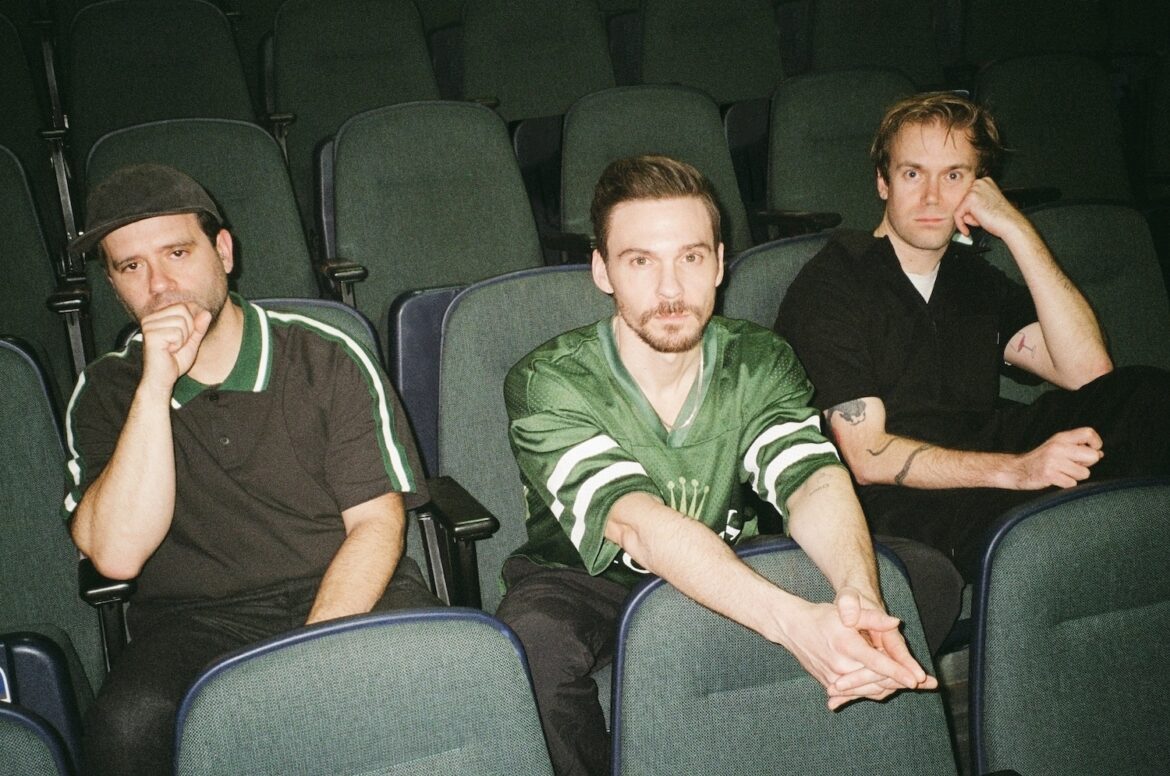
A restless songwriter to the bone, Winnetka Bowling League’s Matthew Koma is already back in the saddle – chasing new choruses and cracking the code all over again. A year after Sha La La’s release and days before the band’s big Lollapalooza debut, he opens up about process, perspective, and why the only thing better than finishing a song is writing the next one.
“This is Life” – Winnetka Bowling League, Medium Build, Dawes
“I think I’m on too high a dose of Prozac to really give a shit what somebody on the internet says,” Matthew Koma quips midway through our conversation –
– a laugh-line that lands with the kind of deadpan wisdom only earned through time, trial, and maybe one too many YouTube comments.
For someone who’s spent the better part of two decades in the music industry – as a pop hitmaker, and now frontman of the Los Angeles-based trio Winnetka Bowling League – Koma has learned how to both embrace and emotionally detach from the chaos of putting your heart into songs and watching strangers assign meaning to them. “They’re snapshots,” he says of the band’s debut album. “And they’re not for me.”
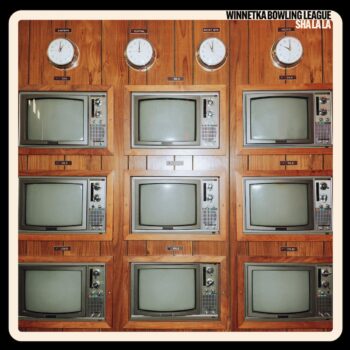
It’s been just over a year since Sha La La came out, and what once felt like a long-awaited arrival – Winnetka Bowling League’s first LP after five years of beloved singles and EPs – now feels more like a new beginning – and for Koma, old news.
That’s not to take anything away from the music: Powered by a mix of power-pop euphoria and existential tenderness, Sha La La is a front-to-back emotional time capsule, brimming with big harmonies, sharp storytelling, and the kind of lines that cut right to the bone (“It’s gonna take your heart and your money / It’s America in your 20s”). Across ten tracks, Koma – alongside bandmates Kris Mazzarisi and Sam Beresford – reflects on nostalgia, growing pains, miscommunication, and modern love with humor, heart, and a healthy dose of disillusionment. With dreamy indie pop flair, it’s a record that taps into what it means to want something – connection, clarity, comfort – and not know how to hold onto it.
Matthew Koma Talks Astrology, Context, & Winnetka Bowling League’s Debut Album, ‘Sha La La’
:: INTERVIEW ::
It’s really just about the process. That’s what I love: Writing songs, recording, cracking codes, feeling like, “Oh shit, we figured out the puzzle.” And after that, it’s not really yours anymore.
* * *
But even now, Koma’s already moved on. “By the time a record comes out, if you’re doing it right, you’re already past it,” he says. “You’re thinking about what’s next.”
And what’s next is big: This weekend, Winnetka Bowling League make their debut at Lollapalooza, playing two sets in Chicago before heading straight back into the studio to begin album two – which, according to Koma, is already written. It’s a full-circle moment for a band who, by Koma’s own admission, spent their first few years doing “market research” on what felt good and what didn’t. Now, they’re settled in – more confident, more connected, and more clear-eyed than ever before.
Still, there’s joy in looking back – especially when the songs still hit as hard live as they did on first listen. “I love playing ‘America in Your 20’s.’ I love playing ‘Sha La La,’” Koma says. “And I think the older a record gets, the more fans have time to live with it – and the more they inform your experience with it. It becomes this feedback cycle that re-energizes it for you.” The crowd, in other words, becomes part of the process – a vital reminder of why these songs were written in the first place.
And then there’s “This Is Life,” last year’s one-off single featuring Dawes’ Taylor Goldsmith and Medium Build’s Nick Carpenter – a moment of friendship and harmony that Koma describes as both a creative spark and a preview of where the band is headed. “It just felt like, ‘Oh yeah, this is where I want the boat to be going,’” he says. It’s simple in structure, but emotionally massive – proof that sometimes, three voices in a room can say more than any hook or production trick ever could.

That same spirit – raw, collaborative, tongue-in-cheek and totally sincere – pulses through the band’s current moment.
Between Koma’s long-running Songs You Didn’t Know I Wrote series and their sardonic live visuals (“Just watch the visuals,” he grins when asked what new fans should expect at Lolla), Winnetka Bowling League continue to balance reflection with reinvention. “I feel like I’ve always lived in a perpetual state of, ‘I gotta prove it, I gotta prove it, I gotta prove it,’” Koma says. “I don’t know what I’m proving or who I’m proving it to, but it keeps me hungry.”
Now, on the edge of their biggest stage yet and already chasing the feeling of the next “cracked code” in the studio, Winnetka Bowling League aren’t just celebrating a milestone – they’re building momentum. As Koma puts it: “Wait ‘til you see my next trick.”
Read on for Atwood Magazine’s check-in with Matthew Koma of Winnetka Bowling League as he reflects on a year of Sha La La, his personal (sometimes fraught) relationship with songwriting, and what’s next for the band as they step onto their biggest stage yet!
— —
:: stream/purchase Sha La La here ::
:: connect with Winnetka Bowling League here ::
— —
A CONVERSATION WITH MATTHEW KOMA

Atwood Magazine: We’re now over a full year out from Sha La La’s release. This album feels like Winnetka Bowling League’s most quintessential soundtrack to date – both in terms of the content of its songs and the sonic identity you cultivated across those ten-plus tracks. What’s your relationship with the album now, a year in?
Matthew Koma: That’s all very kind. I typically hate everything or become insecure hearing anything that’s more than two hours old. I also think when you start playing songs live, they feel different – so when you go back and hear the record versions, they leave a different impression than they did when you first made them.
But yeah, it’s a record I think I’m proud of. I’ve gotten to a place where I’m very comfortable just accepting that these are snapshots – and they’re not for me. The process is for me, for sure. I love making records. But I have to distance myself from having any feelings around it once it’s out there, because I don’t want to ruin anybody else’s experience with it.
I’m really grateful that people like it, and it felt like it helped us take a big step forward as a band. We’d never made a full record before – it had just been EPs. And post-COVID, it felt like we really needed to press the restart button. We started in 2018 or 2019, and then it all came to a halt just as we were starting to gain momentum. It felt almost like starting a completely new band, but with a little bit of information – like, what do we want to accomplish with this album, sonically and song-wise? So I feel like those first few years were market research: What works? What don’t we like? What feels insincere? What feels good? It’s like designing a T-shirt you have to wear, and then you look at a picture three years later and think, “Why did I buy that thing?”
I feel that way about records, period. I don’t know that I have a strong answer for how I feel about it now, because I’m so focused on what’s next – new songs, the next thing. By the time a record comes out, if you’re doing it right, you’re already past it. You’re thinking about what’s next. Because it’s really just about the process. At least for me, the process is what I love: Writing songs, recording, cracking codes, feeling like, “Oh shit, we figured out the puzzle.” And after that, it’s not really yours anymore – especially in the Internet culture we live in, where if it hits the wrong algorithm, 20 comments can make you feel completely misunderstood, like every intention you ever had was wrong. So I almost can’t put stock in that part anymore. I can’t even think about it. I’m happy we did it. I’m really happy to move on and make something new.
I feel like that happened at one point with “America in Your 20’s,” where everybody was reading way too far into it.
Matthew Koma: No, no – there’s some fun in it too. It’s like exposure therapy or something. The first time something like that happens, I think your reaction is, “Oh my god, this is embarrassing,” or whatever the natural response is to seeing a stream of reactions that are the total opposite of your intent.
But then it becomes comforting, because you realize just how much none of it actually matters – for the good and for the bad. It’s like, you’re either discovering our band and you dig what we do, or you’re taking a shit on your toilet and you’re like, “You suck,” or whatever the thing is – and then never thinking about us again.
We’re completely irrelevant to anybody we don’t matter to, and there’s some peace in that. You realize, nobody really cares what we’re doing – except the people who actually care about it, and they get it.
So yeah, it was actually a good lesson and a good experience in some ways. And then of course, just by virtue of a song getting that many views – even if it’s hitting the wrong target audience – you still gain a bunch of people who happen to come across it and get it. So it’s a net win. It’s only an emotional loss if you care. And I think I’m on too high a dose of Prozac to really give a shit what somebody on the internet says.
Stay with me on Sha La La for a second – because like it or not, you're gonna be playing these songs for a bunch of crowds, especially one very big crowd coming up at Lollapalooza! What songs are you most excited to bring to life onstage? Which ones still get you amped to perform?
Matthew Koma: Live is such a different experience. At some point, it almost feels like you’re just a cover band – like you’re playing these tunes for so long. I love playing “America in Your 20’s,” I love playing “Sha La La.” Those are probably my two favorites from the album to play. I also like playing “No One’s Ever Kissed You.” It’s a fun record to play.
And I think the older a record gets, the more time fans have to live with it – and the more they inform your experience with it. Whatever becomes their favorites, or the songs they gravitate toward, it creates this feedback cycle that re-energizes it for you. I imagine when one of our 20-year-old songs eventually becomes a hit, we’re going to be like, “This is so exciting again.”
It’s so dictated by how an audience receives it. But I have a lot of fun playing this record. And every time we get onstage, it actually weirdly re-informs the writing process. Writing can be very insular – and I’m not necessarily thinking about the live component of it as much. So it’s helpful to go play some shows. You learn things like, “Oh yeah, I see why this song works,” and that comes back with you into the shop in a really cool way. So yeah, I love playing those tunes.
You mentioned two of the more high-energy songs on the album, and the first thing that came to mind was how much of that live experience is about the crowd getting energized with you – versus the lyrics, the chords, the harmonies. What’s the most gratifying thing for you onstage when you’re interacting with an audience?
Matthew Koma: I think it depends so much on what the audience is. Like, obviously, if you’re playing a festival where there’s a large number of people who don’t know your band, it’s kind of tale-as-old-as-time: Play the catchy tunes, the songs that feel energetic and fun. I’m a sucker for ballads and lyrics – that’s what I gravitate toward as a listener. So I love when it’s our headline shows and there’s a silent, quiet moment during one of the tunes where I really care about the story. I value that. That’s what I grew up valuing when I’d go to shows. But I also recognize that’s a selfish need or want – because that’s just my preferred experience. I wouldn’t necessarily subject a huge crowd of strangers to that level of indulgence for 45 minutes.
So yeah, it depends on the audience, and what purpose you’re trying to serve. Especially when you’re a lesser-known band, like we are, and you’re playing for bigger crowds who are just getting to know you. You’re still in that phase of like, “Here’s our business card,” you know? You’re showing the highlight reel, so to speak.
“This Is Life,” the song you recorded with Medium Build and Dawes’ Taylor Goldsmith, also turned one recently, and I have to tell you, I absolutely love that song! Can we talk a little bit more about it? I’m seeing it puts a smile on your face.
Matthew Koma: I love that song. I really love that song. Dawes is my favorite band in the entire world, and Taylor is my favorite songwriter in the entire world. I think he’s the best songwriter of our generation – no comparison. And maybe across many generations, if I’m being honest. I think those who know, know. And it’s been cool to see a lot of younger writers and artists discover it for the first time – people who weren’t around when the records first came out.
He would never accept it, but I don’t think Taylor realizes how important he is to the scope of real songwriters. So to get to do anything creative with him is a trip. You’re getting a closer look at the magic trick – the one I’ve been watching him pull off from afar for the past ten years.
In that particular case, it all just felt really organic. I had a verse and a chorus, and I had just met Nick – Medium Build. He came to my studio and we wrote for a bit, and he saw the Dawes poster on my wall. He was like, “Dawes is my favorite band.” And I was like, “No, Dawes is my favorite band.” There was a Christmas show I was playing the next night with the Dawes guys, so I told him, “You should come out and meet them.” And he was totally tripped out, because – like me – he just loves Taylor’s writing, loves Griff’s playing, loves their records. So he came to the show, they met, and it was just this really nice dot-connecting moment between two great writers.
When I had the verse and chorus, I was on a text thread with them and said, “This could be a fun way for us to all do something together – zero pressure.” I hate asking people to do things, so it’s always served with: “Only if this sounds fun and you’ve got a free hour – no pressure.” They both independently wrote verses to the song, and it just became an excuse for us all to hang out. The memory of that – getting to fly to different cities and play it in each other’s sets, taking photos for a day, whatever – it made for a really fun experience. So I think I just heavily associate that song with getting to watch two of my favorite writers flex.
Yeah, there’s a lot of friendship in that song – and it feels heavily influenced by that same spirit.
Matthew Koma: Totally, yeah. It’s rad to sit back after the first chorus and watch your friends – who are such sick writers and singers – do their thing, and be like, “Holy shit.”
And I think… at least where I’m at now, writing the new record, that song kind of bridged the gap to where we’re going. That was exciting too. It just felt like, “Oh yeah, this is where I want the boat to be going,” which is an interesting thing to discover so soon after finishing the record you’re out supporting.
That’s awesome. Any chance we might hear a rendition of it on stage?
Matthew Koma: Yeah, totally – we always play that one.
Do you make up new lyrics, or do you just own Taylor’s and Nick’s verses and sing all three?
Matthew Koma: I would never rewrite their words – they’re the best verses. So yeah, I just sing theirs. And when they can, they join in.
If you’ll indulge me as a songwriter, I find the actual song itself fascinating – because it’s so simple. There aren’t extra hooks, there aren’t different sections stacked on top of each other. It’s really just verse, chorus, verse, chorus, verse, chorus. But every time you hit the chorus, there’s a little more energy, a few more harmonies – and that’s what makes the third chorus, that big final blowout, feel so expressive and meaningful. I’ve tried to play it alone on my guitar, and it just doesn’t hit the same. There’s something about the presence of other voices, of other people in the room. That song feels like it really works best when you’re not alone.
Matthew Koma: For sure. We’re like the Key Food of the Traveling Wilburys. And I think for that song, that vibe suits us well. It’s a massive cheat code to get insane voices to come in and do their thing – the little inflections and changes of shapes to melodies, totally. Thanks for making me self-conscious about ever singing it alone now!
Matthew Koma: I don’t think it intersects much, which is what makes it fun. Especially with a lot of the electronic stuff I was part of, I feel like I was just a different person. I’m not even sure I enjoyed it when I was doing it. So now, with some distance, it feels like a different lifetime – and that’s fun.
There’s also this seriousness that people sometimes take on with their songwriting careers, and it’s always a little funny to me. Of course you craft your skill, but also… you have nothing to do with the songs and how they show up. When a good one comes, and when a terrible one comes – it’s just about showing up to the shop every day. So part of it is just taking the piss out of all the “behind-the-scenes” videos where people are like, “This is how I wrote this – I was in the forest…” It’s so self-important, and I couldn’t relate to that less.
To your point, everyone’s looking for a way to connect the dots – like, “Where did this band come from?” And sure, if we want the new music to be heard, it’s not the worst thing to link it to other songs or artists people already know. But I think it’s probably half that, and half just making fun of people who take it all too seriously – who do two-hour podcasts about how smart and brilliant their work is. I don’t know, it’s a low lift. It takes about 30 seconds to eat a snack on camera and talk a little about the song. And it is fun to write a short paragraph about where I was at, what I was doing, and how the song or session came to be.
Can I be totally honest with you? I've been running Atwood for 10 plus years, I love writing about music, but not once have I been able to sit through a whole podcast about a song’s creation.
Matthew Koma: Who cares? It’s such a weird thing to talk about to me.
I do love the stories. Like, I love the lore of Bon Iver’s Justin Vernon going into his winter retreat, or whatever, and coming out with that first album. I dove right into it.
Matthew Koma: I love context. I love being told where I’m at and how I’m digesting something. I think it’s a specific brand I’m talking about, like more so in pop songwriting, you’re writing pop tunes and they’re great and they’re cool, and some of them are hits and some of them are not. But I hate ego. I think I just hate everybody, if I’m being totally honest.

You’ve traversed so many genres and musical styles over the years. I think that’s part of what makes you so interesting – as an artist, a songwriter, someone who clearly lives and breathes music. For a long time, it felt like you were pretty genre-agnostic. And maybe that’s just what happens when you live and breathe a good song.
Matthew Koma: I think that’s just what happens when you’re desperate to get a door open and nobody will open one for you. Suddenly, you’re like, “Oh, I write EDM songs.” I hate EDM. I hate the culture. I hate that I can’t relate to any of these artists – or anything they listen to – because they’re talking about some weird Dutch shit and have no idea who Elvis Costello is.
But you’re desperate at that point. You just want to swim. You’re like, “I need to survive. I need to eat. I need to figure out how to build a platform so I can do what I actually want to do” – which was Winnetka. Only to realize it’s the same bullshit anyway, and three years in you’re like, “Well, I already hate our old stuff.”
So yeah, I don’t actually think it’s as deep or interesting as being genre-defiant. It’s more like: “Hey, we’ve got this corn. Do you want to eat it?” And you’re like, “Yeah, I’ll eat the corn. Sure. I don’t love corn, but I’ll eat it for a couple years.” So I think it was more that – more about an open door, and I was hungry to get somewhere.
Well, where I was going with that – and where we started off this conversation – is that with Winnetka Bowling League, and especially this last album, you really found yourselves in this dreamy, emotionally charged indie pop space. Big harmonies, traditional verse-chorus structure... if you want to give it a label, I think it sits comfortably in that world. From your perspective, is this what you were working toward all along? Does this feel like the sound and music you’ve been chasing? Or is that always the elusive thing?
Matthew Koma: I think it’s all bullshit. I’m very jealous of the artists who, from the time they were 14 until they had their first success at 20, were doing the same thing all the way through. That’s just what they do. And it worked. And it was authentic and all the good stuff.
I don’t know is the answer. I think at first, yes – because it felt like the polar opposite of anything I’d been doing before. I got to go back to my roots. I got to show the Springsteen influence again and wear that. But then… I don’t know. You realize it’s a forever search. You’re always chasing what feels exciting, what feels true – and that’s always evolving, always changing.
At least the way my brain works, I’m always apologizing for the last thing I did with the new thing I’m doing. So in the moment, I’m sure I was like, “Yes, this is exactly what I want to be doing.” But of course, a couple years later you’re like, “Oh, I would’ve tweaked that game plan a little.” And that’s what new records are for – you get to continuously reinvent or retool. And sometimes the most magical part is six revisions earlier – before you retooled it – because there’s an ignorance in the discovery process. I think that’s why the earlier years of an artist’s career are typically the richest. It’s that “before they knew better” energy – both in songwriting and in recording.
So yeah, I don’t know is still the answer. That album was a snapshot. It was what I thought worked for those songs at that time. I don’t really live in the past wondering what I’d have done differently. It’s more like: Cool, what’s the continuation of that? What’s the evolution? Not that I think it’s all that special or needs to live in some uniquely separate box from anybody else’s music. I think it’s all so influenced by where you’re at in life, what you’re listening to, and what you think is cool in the moment.
It’s so subjective. If you spend two years listening to one record from 1967, you’ll probably think that’s the sonic blueprint for all music – until you discover something else. Honestly this is probably just a defense mechanism. I’m on to the next thing. Wait ‘til you see my next trick!
Which I can't wait for.
Matthew Koma: That drives me a little bit , I feel like I’ve always lived in a perpetual state of, ‘I gotta prove it. I gotta prove it. I gotta prove it.’ I don’t know what I’m proving or who I’m proving it to. That’s just the headset, and I think that keeps me hungry to keep pushing and keep trying to find more truth.
I'm glad to hear there's no stopping anytime soon! That being said, for those who are going to be catching Winnetka Bowling League this coming weekend at Lollapalooza, what do you want them to know about you, and what they can look forward to?
Matthew Koma: If you watch the visuals at Lollapalooza I think you’ll get a grasp for who we are. Just watch the visuals. I think they’ll tell you everything you need to know about how serious we take it.
Can we expect more of the band back on tour second half of the year?
Matthew Koma: We’re landing from Lollapalooza and immediately starting our new record – it’s written, so we’re going right into recording it now. I think we’re gonna be quiet for the next couple of months, probably ‘til the top of next year, and then new music time!
I wish you the best on that. It took about seven years to go from becoming a band to your first album. It sounds like it's going to take only like one and a half to two for the next one!
Matthew Koma: Yeah, I realized I really should have been on the album train a long time ago. I think EPs were a sad excuse to be like, “Again, I don’t really mean this, but what do you think?” Because it’s five songs and you can make it and move on. And now I’m enjoying the job of going in and making a collection and then moving on and doing it again.
It sounds like, if we could just be in the studio with you guys hearing when and how a Winnetka Bowling League song is made, that would be the best possible thing because it’s what's happening right now.
Matthew Koma: Exactly… Kind of. It is that, it’s like if everybody could hear the rough mix that we’re stoked at, when we finally put the thousand hours in and we’re like, ‘this is the code.’ That’s as good as it gets. From that point, it’s not that it’s downhill, but I think that’s why I do it. That’s the feeling that I chase – like, oh, man, we cracked the thing. It doesn’t even mean it’s good. It just means that it feels good.
In the interest of just kind of paying it forward, we talked about some cool artists today, who are you listening to these days that you would recommend to our readers?
Matthew Koma: Certainly not a new artist, but a new record – the new Ben Kweller record is so good. I’ve been listening to that nonstop. I’m obsessed with it. I just got to see him play in San Francisco and it was awesome. He’s such a rare example of someone who might actually be making the best music of his career this far in – which feels kind of odd, honestly. So yeah, I’ve been listening to a lot of that.
I’m trying to think what else… I feel like I’ve just been listening to a lot of podcasts and shit. Annika Bennett, I don’t know if you’re familiar with her – she’s incredible, and I hate the word “underrated,” but she’s one of those people where it’s like: People are going to find out. That’s how it feels. She played me her new record recently, and the lyrics are so good. The songs are so good. She’s pulling from a lyrical place that I really relate to, and that also just feels uniquely her perspective. I’m obsessed with her. I love her voice, I love her way of seeing the world. So yeah, those have been my repeats lately.
— —
:: stream/purchase Sha La La here ::
:: connect with Winnetka Bowling League here ::
— —
— — — —
Connect to Winnetka Bowling League on
Facebook, 𝕏, TikTok, Instagram
Connect to Matthew Koma on
Facebook, TikTok, Instagram
Discover new music on Atwood Magazine
© Heather Saitz
 © Heather Saitz
:: Stream Winnetka Bowling League ::