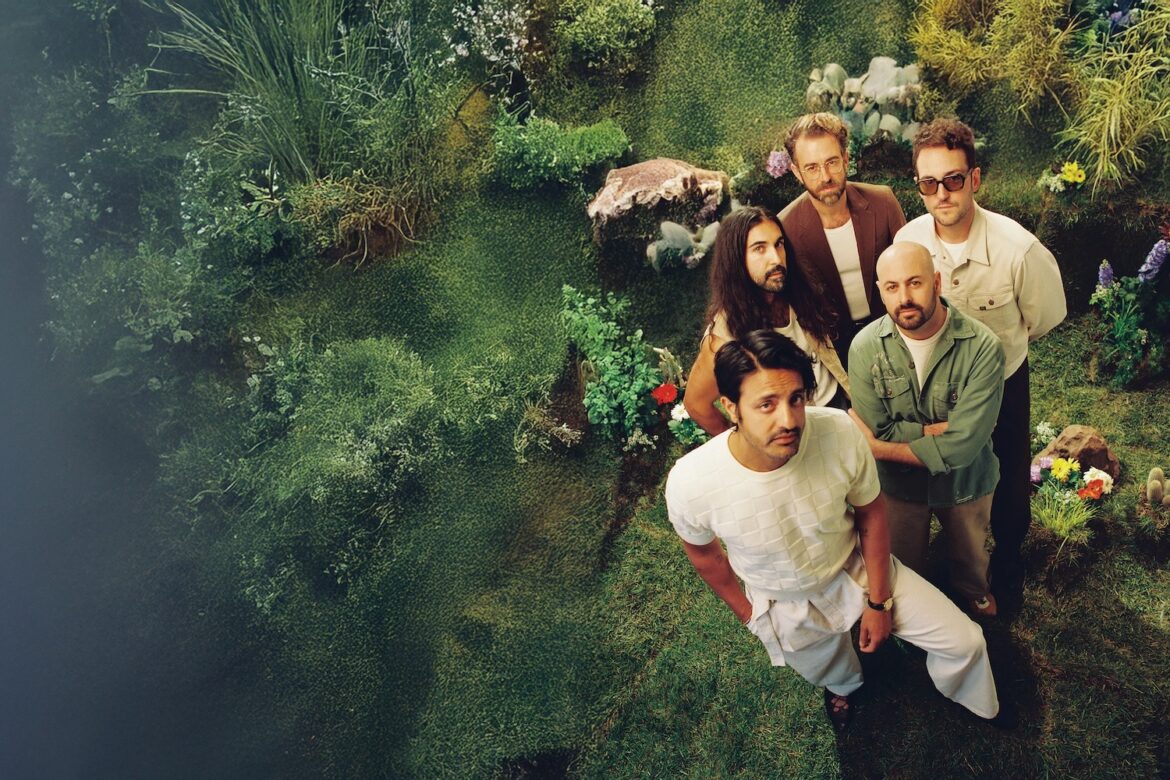
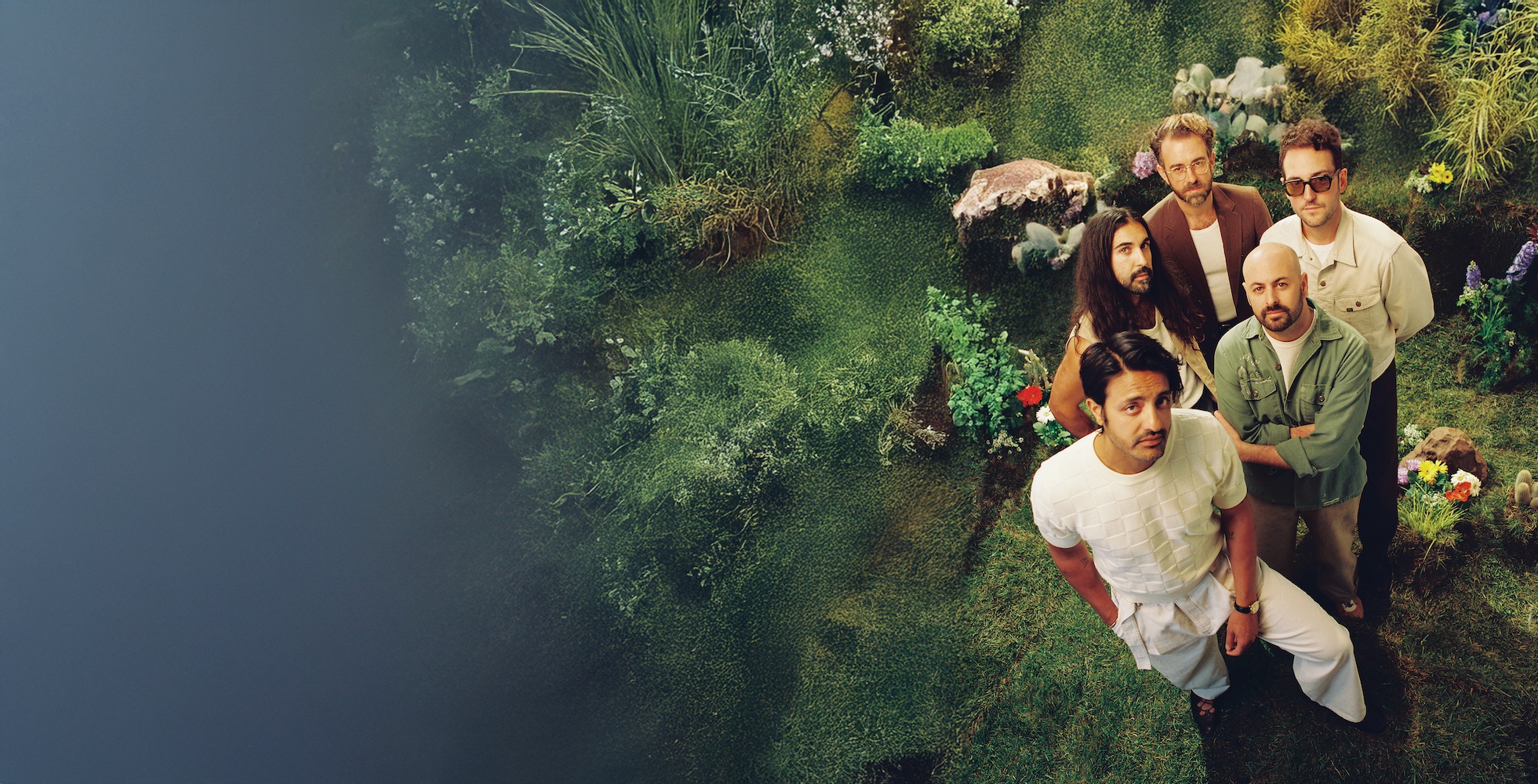
Young the Giant make radical empathy feel like resistance on ‘Victory Garden,’ a life-affirming sixth album that plants hope, brotherhood, and hard-earned reconnection at the heart of their most human chapter yet. Rooted in legacy, survival, and the difficult work of caring through chaos, the record blooms into a powerful reminder that hope is not passive, but something we choose, protect, and pass forward.
Stream: “Evergreen” – Young the Giant
In a time that seems consistently more meaningless and cruel, we want Young the Giant to be a beacon of hope.
* * *
Hope is not passive on Victory Garden.
It is planted, tended, fought for, and carried forward – a living thing made stronger by care, community, and the daily refusal to give in to cynicism. Young the Giant’s sixth album is a triumphant, dramatic return from one of indie rock’s most enduring and deeply human bands, a charged and invigorating collection that captures them doing what they have always done best: Pouring passion, verve, and soul into songs that meet the world’s weight with open arms.
Don’t blink or you might miss it
Life is a garden, you said
Just walk among the flowers
Don’t kill or be devoured
Eye for an eye
Is it karmic suicide?
Eye for an eye
Is it karmic suicide?
Call it a victory
Once in a century
Hope you’ll remember me
In the shade under the evergreen
– “Evergreen,” Young the Giant
Released May 1 via Fearless Records, Victory Garden is a lush, life-affirming collection rooted in radical empathy, communal care, and the daily work of tending hope. It arrives as Young the Giant’s first full-length album since 2022’s sweeping double album American Bollywood – an ambitious, critically acclaimed record that unfolded as a multi-generational saga of immigrants in America.
If that album looked across inheritance, identity, and the weight of a fractured nation, Victory Garden feels like its own intimate and intentional response: Not a retreat from the world, but a return to themselves, to one another, to the garden, to the people and practices that make hope possible in the first place.
That spirit blooms immediately in “Evergreen,” the album’s fiery opening statement and a perfect doorway into the record’s larger world.
From its first invocation of “Victory garden,” the song feels bold, urgent, and alive, setting the tone for an album rooted in legacy, survival, and the kind of love that asks us to build beyond ourselves. Sameer Gadhia’s voice sounds extraordinary here – full-bodied, radiant, and roaring with conviction – as he sings, “Call it a victory / Once in a century / Hope you’ll remember me / In the shade under the evergreen.” It’s an anthem for tending what matters, even when the harvest may belong to someone else.
“Victory Garden is an ode to radical empathy,” Gadhia tells Atwood Magazine. “I think it is a victory for us in what Jake was saying: It’s such an internal practice. Nothing that you’re looking for is out there. You have to do the work within. It’s about trying to create community, trying to be good ancestors. And in a time that seems consistently more meaningless and cruel, we want Young the Giant to be a beacon of hope. For us, that’s really just getting back to the joy of being in a room.”
“For us, the mantra was: Don’t overthink. Do instinctual writing. Get back to the place of not being interested in how we want to sound, but just being ourselves,” he continues. “More than anything, more than any other influence, it was just trying to capture who we are in the most honest way. So I think, in some ways, it’s one of our most honest records. It’s not just a beacon of hope – it’s the struggle to find that empathy in yourself to be able to share that with other people. That radical empathy in this time is its own form of resistance.”
By the river
There’s a sliver of light
Tend your garden
Watch it bloom in the night
Don’t blink or you might miss it
Life is a garden, you said
Just walk among the flowers
Don’t kill or be devoured
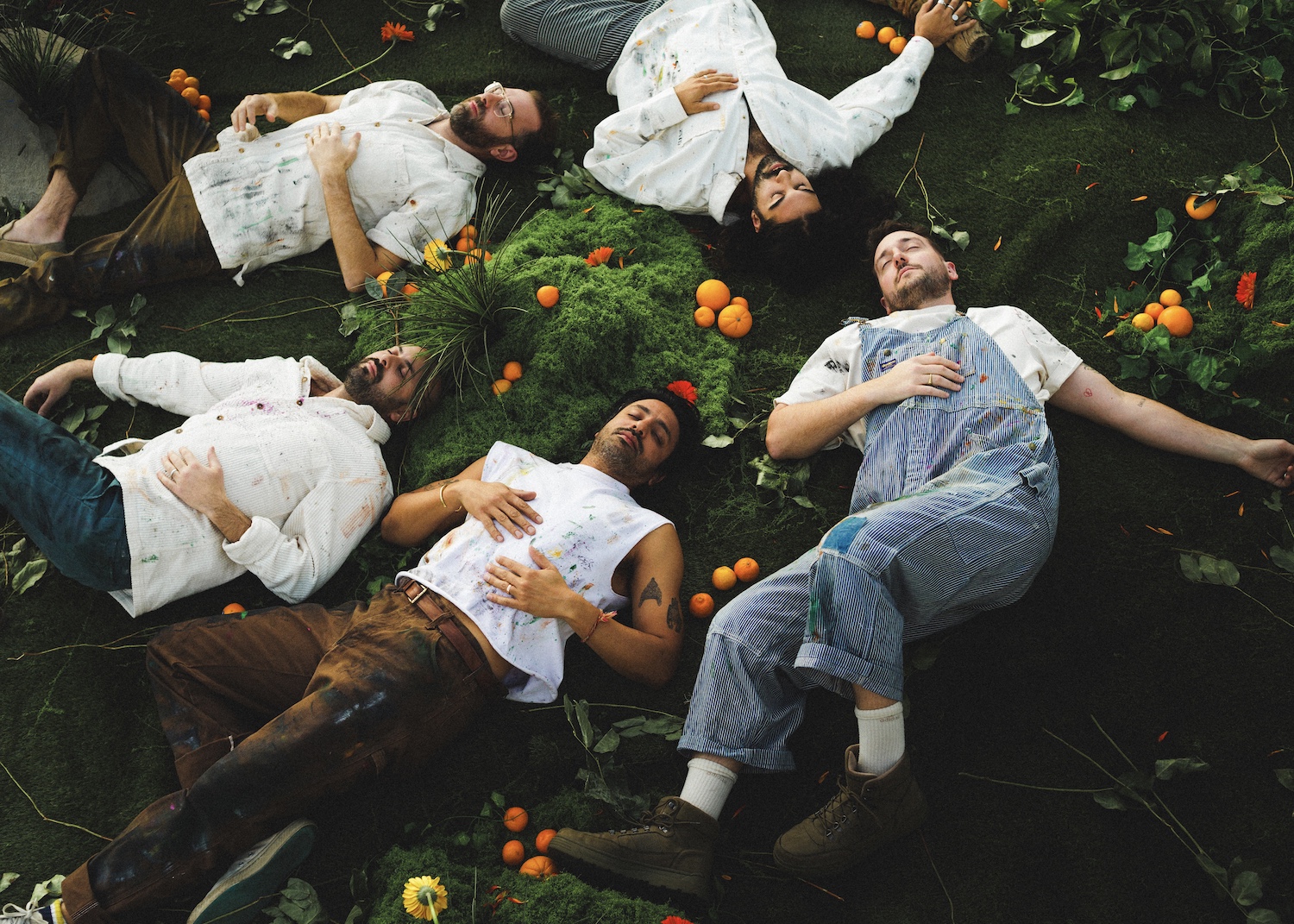
Fifteen years into their journey, Young the Giant sound renewed without pretending to be reborn.
Victory Garden carries echoes of the band’s earliest rush and their later conceptual depth, but its greatest power lies in how fully inhabited it feels: Five musicians back in a room, writing collectively, trusting instinct, and chasing the joy of being together. From the rousing immediacy of “Evergreen” and “Different Kind of Love” to the hard-hitting ache of “God as Witness,” the searching pulse of “Are You With Me?,” and the stripped-back grace of “Life Is a Long Goodbye,” the album moves with the confidence of a band that knows exactly who they are and still has new ground to break.
That return to instinct is more than a process note; it is part of the album’s emotional architecture. Payam Doostzadeh sees “Evergreen” as inseparable from the record’s larger question of legacy. “Radical empathy is moving beyond just walking in someone else’s shoes. It requires taking action,” he says. “I think Sameer hinted at this, and it’s a little bit of the theme of the song ‘Evergreen,’ which talks about legacy. It’s like that Greek proverb: ‘Society grows great when old men plant trees in whose shade they know they shall never sit under.’”
“For me, another form of radical empathy, as far as taking action, is trying to raise this next generation – our kids,” he adds. “I think us millennial parents should all be really proud of the time we’re spending. I remember my dad was always working, and I think all of our dads were doing their best. They were immigrant parents, and they had their 9-to-5 jobs, and they were trying to provide a better place for us, a better world for us. Us paying it forward to our children by having the privilege of being present for them – I don’t want to sound too idealistic, but I really think the best we can do for our world is to raise this next generation of kids to help us fix all this bullshit going on. I’m hopeful that’s possible. That, for me, is my interpretation of radical empathy.”
A golden cage, a record year
I’m hanging from a chandelier
I have a dream I disappear
But I woke up
I can’t take the mind control
My heart my body tells me no
You told me once not long ago
But I forgot
Living in a house that’s not your home
Living on a prayer you used to know
Give in to the weight but don’t let go
Don’t let go
We could be forever, not just once
We could have a different kind of love
Give in to the weight but don’t give up
Don’t give up
That idea gives Victory Garden its emotional spine. The album is not naive about darkness, division, exhaustion, or fear; if anything, its hope hits harder because it knows what it is up against.
Across the record, Young the Giant keep finding language for that struggle: “Different Kind of Love” insists, “Give in to the weight but don’t give up,” while “Bitter Fruit” reaches for “a life worth fighting for,” and “This Too Shall Pass” offers the rooted assurance that “new leaves will grow instead.” Even “Are You With Me?” frames change as both fear and necessity, asking what happens when the cost of staying the same becomes too high. On “Evergreen,” Gadhia sings, “Eye for an eye, is it karmic suicide?” before pushing toward survival, change, and continuation: “And when I’m gone / Hope the garden carries on.” It’s one of the album’s clearest, most potent offerings – a reminder that empathy is not softness, but labor; not sentiment, but action.
“It just felt like the right intro,” Gadhia says of starting the album with “Evergreen.” “That opening moment with Victory Garden kind of leading you in as the lyrics to the song – there are no tracks titled ‘Victory Garden.’ It’s the moment that takes you there. I think it’s the most crystallized idea of the record and the concept of it.”
“It was actually one of the last songs that we’d written,” he adds. “Payam had come up with Victory Garden the next morning, and the next day, we were in a fever dream of songwriting… It’s so fun. You’re in the studio, you’re always chasing that feeling. You never know what’s gonna happen, and when it happens, you have to surrender to it. We were just so excited about that arrival of that song, and I felt it completed the record, so it made the most sense for it to open.”
That sense of arrival runs through the whole record – not as nostalgia, exactly, but as reconnection. After the conceptual weight and solitary strain of making American Bollywood through the pandemic, Victory Garden finds Young the Giant returning to full-band collaboration with a sharpened sense of purpose and a softer understanding of what endurance can mean. The record’s most moving moments are not the ones where hope arrives easily, but the ones where it has to be chosen again and again: In the difficult devotion of “Different Kind of Love,” the existential ache of “Are You With Me?,” the hard-eyed fury of “God as Witness,” and the quiet acceptance of “Life Is a Long Goodbye.”
Your wants, your needs
Your fears, your dreams
It’s all I can think about
It’s been too long
The taste of you on my tongue
The shape of two as one all night
I’m already there
It’s not just a dream
You come as you are
You make me wanna scream and shout
All the words I never said until now
I’m already there
It’s one of our most honest records. It’s not just a beacon of hope – it’s the struggle to find that empathy in yourself to be able to share that with other people. That radical empathy in this time is its own form of resistance.
* * *
The victory in Victory Garden is not conquest. It is tenderness preserved, humanity protected, and hope made useful in a world that keeps testing our capacity to care.
Young the Giant have made a record that feels urgent for this very moment – passionate, communal, hard-hitting, and alive with the belief that being good ancestors begins with how we show up now. In 2026, that message feels more than timely. It feels necessary.
By the end of Victory Garden, hope no longer feels like an abstract virtue. It feels physical – something planted by hand, carried through weather, and strengthened by everyone willing to keep tending it. To dig deeper into that spirit, Atwood Magazine caught up with Sameer Gadhia, Jacob Tilley, and Payam Doostzadeh to discuss radical empathy, the joy of reconnection, and how Young the Giant transformed uncertainty, brotherhood, and care into songs built to bloom beyond them.
In a world full of cynicism, cruelty, and exhaustion, this album truly is a victory.
— —
:: stream/purchase Victory Garden here ::
:: connect with Young the Giant here ::
— —
Stream: ‘Victory Garden’ – Young the Giant
A CONVERSATION WITH YOUNG THE GIANT

Atwood Magazine: It’s been four very long years since the release of your epic fifth album, American Bollywood, a multi-generational saga of immigrants in America. Sameer, you and I dove deep into that record at the time, and I know how much it meant to you and to the band, both personally and professionally. What’s everyone’s relationship with that album and its songs today?
Sameer Gadhia: Some of them I’m still obviously proud of, and as a band, we are extremely proud of. It was a necessity, I think, for me to try and get that narrative across, and I was so thankful to the band that they wanted to go on that journey with me. I learned a lot about myself, and art is, in so many ways, such a great way to process what you’re going through in life. I felt like I was able to scream out a lot of frustration with that record.
When we came into the process of making this record, it was like we had gotten all of that stuff out, and we were searching. American Bollywood was the height of, in some ways, a concept record – which, in reality, I do believe every record is a concept record, but it definitely was. We went really deep, and very intellectual, and I think there was a feeling for all of us, especially just to get back in a room together, to enjoy each other’s company, to enjoy making music again, in the same fashion we’d done before.
Each record does inform where we go next, and Victory Garden is a direct response from that.
I would even go so far as to argue that Home of the Strange, Mirror Master, and American Bollywood feel almost like a three-record series of increasingly philosophical and socio-political thought. You don’t need a degree to dive into the lyrics, but there was always so much to unpack, and what always felt prescient was that you were meeting the moment on those records in a way that was not light; you didn’t hold back. Victory Garden feels distinct from those songs and from that songwriting.
Jacob Tilley: I actually texted the band the other day. In our house, we’ve been getting back into using the record player a lot more. I have a young son, and we want him to be holding physical art and physical music. I texted the guys, “I’m so proud of us.” From the sonics to the presentation of the vinyl, we really went there, and I think we executed it. I think that’s very cute of you to point out that Home of the Strange was the start of that era. I’ve said it before, but the first two records, Young the Giant and Mind Over Matter, felt very much like a public puberty for us. I was 19 when we signed our record deal, and I was still learning how to play the guitar and completely green about learning how to record.
Those two records, I love, and there’s so much captured youthfulness in both of those, but when we hit Home of the Strange, Mirror Master, and American Bollywood, we were able to be more vocal and really have a distinct direction on what we wanted to communicate. But within that, we also lost a little bit of what was so special about the first two records. Not that it wasn’t there, but we weren’t highlighting our brotherhood as much, and we were trying to vocalize our frustration with the outside world a little bit more.
Victory Garden is very much an embodiment of coming to terms with and being public about our internal struggles and growth, too, and coming back to home and realizing that some of the greatest impacts we can have in our lives are turning to our local lives and our gardens at home, and hopefully having a rippling-out effect. We returned to form in a lot of ways after writing American Bollywood through COVID and having a very siloed experience of bringing ideas in, going to studios with masks on, sending guitar tracks in because someone had COVID. We went through that, and Victory Garden was our attempt to get back in a room with each other, go on writing retreats, silo our writing to just the five of us in locations for four days of intensive, immersive brotherhood soul-searching, and really get in the weeds of where we all were as people and bandmates.
I think it shows in the writing. I think it has the youthfulness of our first two records baked in there, but it also has our sonic excellence, I would even say, of the third, fourth, and fifth records, where we really found our studio chops.
Victory feels apropos for this record. Your sixth album starts with the message, “Don’t blink or you might miss it,” and I feel like, in some way, that line alone encapsulates what I’ve heard listening to this record, however many times I’ve already played it. What’s the thesis of Victory Garden, if it had one?
Sameer Gadhia: Victory Garden is an ode to radical empathy. I think it is a victory for us in what Jake was saying: It’s such an internal practice. Nothing that you’re looking for is out there. You have to do the work within. It’s about trying to create community, trying to be good ancestors. And in a time that seems consistently more meaningless and cruel, we want Young the Giant to be a beacon of hope. For us, that’s really just getting back to the joy of being in a room.
For us, the mantra was: Don’t overthink. Do instinctual writing. Get back to the place of not being interested in how we want to sound, but just being ourselves. More than anything, more than any other influence, it was just trying to capture who we are in the most honest way. So I think, in some ways, it’s one of our most honest records. It’s not just a beacon of hope – it’s the struggle to find that empathy in yourself to be able to share that with other people. That radical empathy in this time is its own form of resistance.
Tell me more. What does radical empathy mean to you?
Jacob Tilley: Radical empathy, for me, is… We live in such divisive times. I don’t want to double down on what we all experience day-to-day and what we’re seeing, but the divisiveness in which I think the powers that be are actually trying to divide people is so toxic and corrosive to the fabric of society.
Radical empathy is having understanding and patience with people who come from and have experienced different things than you, because I do believe that’s the only way to really move forward from these growing pains that I think we’re very much seeing coming into this hyper-digital age. I think, for a long time, some of the things that we’re now coming to terms with as a society have always been there, but now it’s on display. There’s no hiding atrocities or untruths or truths.
I think having radical empathy is to understand that most – I’d say 98% – of people are just trying to survive. It is resource scarcity, and understanding that people may disagree with you simply because of a different lens they’re being given to see the world. I think only by having patience and acceptance that people are different is the only way we really move forward.
Conversation is more important than ever, and I think we need to practice conversation again instead of reactiveness, even though those conversations are hard. You gotta bring up some things that aren’t comfortable to talk about to grow. That’s my radical empathy: trying to accept that people are different, and be a good steward when those conversations come up.
Payam Doostzadeh: To add on to that, I think radical empathy is moving beyond just walking in someone else’s shoes. It requires taking action. I think Sameer hinted at this, and it’s a little bit of the theme of the song “Evergreen,” which talks about legacy.
It’s like that Greek proverb: “Society grows great when old men plant trees in whose shade they know they shall never sit under.” I think part of the themes and the genesis of this album title as well – we talked about these writing retreats we were doing. We did some in Idyllwild, which is in the San Bernardino Mountains, just east of LA. We did some in Joshua Tree, out in the desert. And one of the last writing retreats we did for the album, François, our drummer, the night before, we were all at the Airbnb before we went into the studio, and we were connecting, bringing walls down, getting on the same page with one another, and talking about what we wanted to talk about and write about.
He let us know that they were pregnant with their second child, and that was a beautiful moment for us to talk about. That got me thinking about something I had seen recently about Victory Gardens and the idea of communities coming together in wartime to help the relief effort, to grow food together and share recipes. The third space became the neighborhood.
We’re fortunate enough to live in neighborhoods that have community. You walk your dog, you see the other kids, and we all have young children. I was sharing with the guys, “For me, and I imagine for all of us, my Victory Garden is my daughter. It’s seeing life through her eyes, tending to childhood or being a father, tending to them and their seasons of hot and cold, and bloom, and winter, and all of this.” I thought it was a powerful idea. I wasn’t even suggesting it would be the album title, and then the next day we wrote “Evergreen,” and I think it resonated with everyone. This was the first week of spring last year.
For me, another form of radical empathy, as far as taking action, is trying to raise this next generation – our kids. I think us millennial parents should all be proud of the time we’re spending. I remember my dad was always working, and I think all of our dads were doing their best. They were immigrant parents, and they had their 9-to-5 jobs, and they were trying to provide a better place for us, a better world for us. Us paying it forward to our children by having the privilege of being present for them – I don’t want to sound too idealistic, but I really think the best we can do for our world is to raise this next generation of kids to help us fix all this bullshit going on. I’m hopeful that’s possible. That, for me, is my interpretation of radical empathy.
I know you also spent the past couple of years celebrating a few major milestones, including Mind Over Matter’s 10th anniversary. I do sometimes hear little hints of nostalgia in the music itself, both thematically and maybe sonically. Did revisiting older material have any impact on your headspace going into this record?
Sameer Gadhia: I don’t think it was particularly that. I think the circumstances that allowed for that music to happen were, in some ways, recreated. We created that space that was unencumbered by life and responsibility, and there was a place where just the five of us could really connect together and process that through our music. When we talk about instinctual songwriting, it’s so easy as a musician and a writer, when you get to a place where you can literally dress up a song any which way you want to, and you can spend a lot of time talking about music and your influences and this and that. But I think, in a lot of ways, it’s just wearing another mask.
The sound of Young the Giant, the first two records – granted, that was us 15 years ago – it’s the desire to just be ourselves as much as we can be. Even if that meant, at that point, like Jake earlier said, figuring it out on the fly. We didn’t overthink parts.
We went with Brendan O’Brien as a producer because we wanted to do the record fast. We didn’t want to overthink it. We wanted it to flow like water, and we wanted to have the imperfections in the recording, because it’s so easy to try and chase perfection. But in reality, I think what makes our thing special are the mistakes. We went in with Brendan, we did it in three weeks, and we did it the old-school way, man. People don’t really do it that way anymore. We wrote all the songs, then we did pre-production in a room with Brendan, where we were just jamming the stuff. Then we took it to Henson in LA, and we pretty much recorded the bulk of it live, with the guys being in one room. We knew all the parts, just how they used to do it back in the day. It’s how we did it on our first album.
I think maybe it’s a product of that. In our life experience, in our ability as songwriters and as musicians, we’ve taken all we’ve learned throughout our discography and taken it back to the same settings of how we can just be ourselves as much as possible.
Payam Doostzadeh: I also want to add that there was so much trust amongst each other. There’s five of us in this band, and we’re all writers, and we all play our instruments, and people can play other instruments. I think we’ve always been fairly good at it, and I’m really proud to say that we’ve gotten excellent at it, especially in this writing process for Victory Garden. Being in the studio and knowing that I can trust Jake and Sameer and Eric and Fran, and they can trust me to deliver, to chime in, and to have good ideas.
It’s not like, “Oh, I want to put this on it.” There’s always going to be a certain amount of ego, but everyone is really good at honing it in and contributing exactly what’s best for the song. Not, “What do I want to put on the song?” It’s, “What is best for the song?”
Sometimes you have to force yourself to do less, and that can be difficult. In writing and in music, it’s easier to do more. Especially the more comfortable you get with your instrument, restraint is what shows real maturity. It’s like that famous quote: It’s not the notes you play, it’s the space in between the notes. I think it’s the space in between all of our contributions where the magic is. That really was evident in this writing process.
I’m gonna go back to the top again. I already quoted “Evergreen” once, but I’m gonna do it again: “Call it a victory once in a century, hope you’ll remember me in the shade under the evergreen.” We’ve already talked about the metaphor of planting a tree that you won’t be alive to appreciate. This song is fiery, it is bold, and it’s such an exciting way to kick off the record in flying colors. Why start your album with this song?
Sameer Gadhia: It felt like the right intro. That opening moment with Victory Garden leading you in as the lyrics to the song – there are no tracks titled “Victory Garden.” It’s the moment that takes you there. I think it’s the most crystallized idea of the record and the concept of it. It was actually one of the last songs that we’d written. Payam had come up with Victory Garden the next morning, and the next day, we were in a fever dream of songwriting. We’d written a couple of things that day that didn’t really connect, and then towards the nighttime, we’d had dinner already, had some drinks, and Jake went on the synth. That arpeggio immediately brought everyone in.
It’s so fun. You’re in the studio, you’re always chasing that feeling. You never know what’s gonna happen, and when it happens, you have to surrender to it. We were so excited about that arrival of that song, and I felt it completed the record, so it made the most sense for it to open. The night before, thematically, we were talking about seeing life through our children’s eyes, but also had connected in a crazy way about generational trauma, and how so much of our fears and insecurities comes down from molecular stuff that’s inherited by our ancestors and previous generations – our families trying to do the best they could, trying to process an insane world.
I think the perfect absolute, which is impossible to reach, is to rip that from its stem, take the things that are the most powerful, and build something new, create a new garden. A victory of power, not hidden from all this trauma that you carry and hold. That’s the ultimate goal of any parent: to raise their children without trauma. And it’s impossible to do it, but it’s striving to get there.
“Different Kind of Love” heralded your return to the spotlight earlier this year as this album’s lead single. I once again find myself drawn to the song’s chorus: “Living in a house that’s not your home, living on a prayer that you used to know. We could be forever, not just once, we could have a different kind of love, give in to the weight, but don’t let go.” There’s a tension between ownership and transience, past, present, and future. What does this song mean to all of you?
Jacob Tilley: “Different Kind of Love” was one of those ones that… We used to all own a band house together, and we just moved on from that, actually. It was a song that was written there, and it’s about a difficult kind of love that you have. There’s the very traditional songwriting of writing a love song, but for me, that song really embodies my relationship with the band. It comes back to that radical empathy theme of understanding that things that are good and worth fighting for and true are sometimes difficult. That’s what the push and pull of that song is.
All love – you meet someone, there’s the flower stage, the honeymoon stage, and the enduring love takes time and patience and understanding. That kind of love, to me, whether it be my relationship with bandmates, or friends, or my wife even, that’s the real shit right there. That’s the stuff that isn’t just the chemical reaction, or that initial flood of emotions. That’s the stuff you have to dig deep for and really fight for and stay true.
To me, that’s a good embodiment of that song: The relationship of us as a band. We’ve been together for 15 years, and we’ve grown up together. We’ve fought like brothers, cried like siblings, and done all the things together. It’s the enduring love of our band, really, that I resonate with. We wrote that song in the band house, which was always like the tragedy of the commons to me. It was a great space, but none of us lived there, so it would fall into disarray at times. It pushed our relationship as bandmates, just looking after our home together.
But it was enduring, and that endurance gave seed to that song, which was one of those ones that came quickly like “Evergreen.” It was written out of the band house and embodies that relationship of fighting for love and staying true and keeping your eyes on what is important.
Sameer Gadhia: That’s definitely it.
It’s beautiful. It’s a song about brotherhood, about everything that comes with it, but there are so many layers to it. I love that I was listening to it and took away something totally different, and that is another key to making good music: It doesn’t matter what it means to somebody if it hits something deep inside.
Sameer Gadhia: Right, at levels. It is about our brotherhood, but it’s about any type of love that’s difficult. Any type of enduring love is difficult to tend to.
Payam Doostzadeh: I was there this morning with my daughter when she was being a little difficult, and I’m like, “I love you, but why are you wanting so much?” It’s really any relationship. It’s that love that needs – you gotta work for it. But it’s worth it, and that’s what makes it beautiful.
I was always so upset that there’s no English equivalent for “vale la pena,” which is the Spanish phrase for, “It’s worth the pain.” You could say “worth the pain,” but it doesn’t hit the same.
Jacob Tilley: There’s “saudade” in Portuguese. It’s a term for missing someone. It hurts, but it’s a hurt from being absent from someone. It’s such a romantic idea, I think, and for some reason in English, we don’t have a name for it.
Many of these songs feel like they’re searching for meaning and hope in the world, whether it’s the assurance of “This Too Shall Pass,” or the nihilism and nostalgia in “Bitter Fruit.” I would love to take a window into the songwriting retreats that brought this record to life. What were the conversations, and what were your mindsets at the time? Did you feel like you were building toward something specific? Were there conversations around certain themes? Or did everything happen piecemeal?
Sameer Gadhia: We touched upon this a little bit. When we had the band house, when we had COVID, when we made that trilogy of albums, things felt more and more intellectual and heady and complicated and separate. The way we recorded, everything was separate. All we knew was that we had this strong desire to reconnect and really have fun. It’s so hard, because you start making music and it’s fun to do. With every record, when you become a professional at doing this, you sometimes lose that joy. You’re trying to create the best thing because the stakes are high.
I think we realized that what was best for us was to enjoy this and have fun. We had spent so many months toiling over American Bollywood, in a great way, because it was such a labor of love. We’d actually even made a whole record before that, more or less, and then scrapped it, and then did American Bollywood. It had taken a long time, because we’d had the band house and we’d go and write three or four days a week, but during that time, our minds weren’t completely there. Some of us maybe were feeling fear or worry about the stakes of the record, but at the same time, there was life and responsibility on the other side of it.
All we knew was that we were going to try and create the setting for a record, and that would be to do these writing retreats. We went to Idyllwild, to Joshua Tree. We spent a week there, we got a place together, we’d get there the night before, really break bread together and get deep, and then spend the whole week really, really in – 10, 12 hours a day – and then get ourselves back out. It was surgical. We really ate, slept, and breathed the record, and I think that was the point from the beginning.
Once we did that, everything was actually quick. Ninety percent of this record comes from those writing retreats, and we only did four of them. We spread them out over a year. That’s where most of it came from. “Different Kind of Love,” we had essentially finished a retreat, and we were still buzzing from that. “This Too Shall Pass” is actually a track from the Home of the Strange era, so those are the outliers.
But like I said, it was about setting up the scene for the record to eventually come about, and not chasing it – letting it come to us.
Payam Doostzadeh: I think that’s a good point. It was as surgical as it was effortless, and that’s not to say it wasn’t hard work. That comes into play with the thing about trust I was talking about earlier. It worked. Being out there in the desert, out there in Idyllwild at our childhood friend’s producer’s home studio, it allowed us to make this record in a way that was more fun, rewarding, effortless, and surgical than we ever have before.
I want to add, too, we decided to work with Brendan O’Brien as our producer at Henson – Jim Henson Studios in Hollywood. We did a little bit of pre-production after all these demos we made at the writing sessions. We recorded maybe 14 or 15 tracks, and at the end of each day at the studio, the board mix, after eight hours of working or however long, was basically 90% of what you hear on the final mastered versions.
We basically had it. There were a little bit of overdubs, a little bit of zhuzhing up here and there, but it was crazy to hear these tracks be pretty much done after one day of recording. That was because we had put in the work beforehand to get them there, and we knew sonically where we wanted things to be. It’s also a testament to Brendan O’Brien’s efficiency and just a masterclass in production and songwriting. It was such a pleasure to work with him.
I’ve heard legendary things about the way Brendan O’Brien streamlines the process. Was that new for you guys, outside of some of what we’ve already discussed? Was it new to be working at such a fast clip?
Jacob Tilley: Let me just add an anecdote about Brendan O’Brien. We’ve experienced a lot of great producers. We’ve been with people that are like, “Just leave the warts on,” and sometimes those are epic because they have a vibe, but they don’t sound as good. Then we’ve worked with people that are cutting and tightening everything up so the production is slick, but maybe it loses some of the soul.
I’d never been with a producer that really embodied the music like Brendan before. Eric or I would usually turn up to the studio first, just because guitars and synths – I always had to do some prep work before jumping into a live session. I would walk in every day, and Brendan is an incredible guitar player, but maybe an even better piano player. I’d walk in and he would be playing these beautiful renditions of the songs we were recording that day. He had the melody in the top line in the right hand, he had beautiful accompaniment in the left hand.
I’d never been with a producer that was literally putting his fingers into the cake batter and learning what everyone’s doing. Being able to have renditions of the songs under his fingers like that actually made him such a good producer, because he would really understand, “Okay, the top melody is this, this is what we’re shooting for to highlight, or what needs to be felt underneath.” I’m not downplaying any of the greats we have worked with, but I’d never seen that level of embodiment in that stature before. Just really breathing, living, and learning the music. It was really, really masterful, and I’m forever grateful to have had some viewership of his methodology.
I want to zoom back out, but first, I have to talk about “God as Witness.” It might be one of my favorite songs on the record, if only for how savage and direct the bridge is. I got the whole lyric sheet the other day, and I enjoyed reading through all of your lyrics, Sameer. I think what I’ve come to find is that verses and choruses have a lot of great language, but it’s in the bridge of a lot of your songs that the full, real meaning – you just let it rip. “God as Witness” is perhaps the most rippiest of all, which is totally not English, of all these tracks. Can you tell me a little bit about this song and its message?
Sameer Gadhia: Definitely. That was one of the first tracks we wrote for this record. It was the first day of that very first writing retreat. This record, we do things a lot and have done them in so many different ways, but this record literally was like, “We are going to be in the same room the whole time together, all the time.” So I can’t speak for having individually written those lyrics. I think it’s a group effort with this song and with all the others, for the most part.
We were getting at the feeling. We were getting towards what Victory Garden was. We hadn’t really figured out what it was. Usually when you’re making music in the beginning, you’re taking stabs in the dark, and then there’s a moment that centers you towards where things are gonna go. I think “God” is definitely that song.
It’s interesting when you write a song so early on in a process. It was at risk of not even being on the album. It was very, very close. At the very end, there were a couple other tracks that didn’t make it either, but that was the one we were all debating. I’m very glad it did make it, because you’re right, the bridge – there’s the rage of the nonsensical and the world that we live in, all there, but tempered with an understanding.
White noise, White House, white lies
White picket fence,
no chance, people in tents
Red dog, My God, my heart
Beating outta my chest
for the people in France
You don’t know me, I’m a freak
Gotta turn the other cheek,
‘cause I never talk back
My hair, my teeth, my feet
Will I ever come clean?
Ask your friends for the feedback
I’ve treated all of you to a bunch of songs that I really love on this record. I’d love to hear what are some of your favorite tracks, and what are some of the songs that stand out most to you that you’re excited to have out in the world next month?
Jacob Tilley: One of my favorite moments on the record is actually the bridge of “Are You With Me?” That song is so cathartic for me in so many ways. The bridge is grappling with existential dread, which I know everyone in our band deals with a lot. It’s the thinking man’s burden of existence and finding your place in the mural and the big tapestry of it all.
That song, for me, was also oddly enough the hardest one to record in studio. I had really bad hay fever that day, and I was struggling so hard to lay my guitar parts down. I think I was on some Sudafed stuff, so I was popped up, and I couldn’t sit in the pocket like I usually can. The guys were so patient with me.
Now, every time I hear that chorus – “Are you with me?” – it feels like the guys being like, “Yeah, we’re f***ing working. You got this,” because they were patient with me that day. I love that bridge so much. The positive nature of it, again, like “God as Witness,” just kind of a stream of consciousness, is really acute lyrical writing. Sameer kills. It feels great.
Payam Doostzadeh: I love that one, too. It’s a special one. It’s funny, I feel like on a lot of our records, when people ask, “What’s your favorite track?” it’s always the most down moment, or the most mellow song on the record – “Call Me Back,” “Firelight,” “Guns Out,” “Islands,” all those tracks that are not the big rock songs.
But I will say one of them, and I’ll let Sameer chime in too, is “This Too Shall Pass.” It’s a song that Sameer mentioned. We wrote that, I want to say, in between Mind Over Matter and Home of the Strange, so 10 years ago or so, in a studio downtown, at Seahorse Studios. We really wanted it to work on several records, and we never found the spot for it. We’ve written a lot of music, and I’m always like, “Man, there are so many songs we’ve done in the past that would be awesome to bring back.” Not in the sense of being lazy or anything, just in the sense of we have so much good stuff out there that no one’s ever heard.
This is one of those rare songs that poked through from the back catalog, if you will. Thematically, and the tones on it, and Brendan helped us breathe some new life into it arrangement-wise. He’s an incredible arranger as well. So yeah, that one for me, “This Too Shall Pass,” is definitely one of my favorites.
Sameer Gadhia: I have to say, “Life Is a Long Goodbye” is one little nice nugget at the end that I do appreciate. It’s one of the last tracks we wrote as well, the same day as “Evergreen,” more or less. It was initially a longer song and mid-tempo, and it was great. It was a vibe, for sure. I think we took it to Brendan, and he was like, “It’d be really interesting to hear this with just piano, maybe some classical guitar, and your vocal.” I think that really sold it. The songwriting is solid on that one, and leaves you wanting more, so I enjoyed that one.
Nothing gold can stay
Life is short, so they say
What can you do
When Father Time is singing?
And I’ve heard his melody
Floating, soft in a dream
What does it mean
The end is just beginning?
Staring at a desert sky
Play it out a thousand times
Never know the reason why
Life is a long goodbye
When you were talking earlier about stripping everything down to simplicity and not putting everything in, all the technical specs, “Life Is a Long Goodbye” instantly came to my mind. Simple might be the wrong word, but that track is a little bit more bare bones, and yet it’s gorgeous. Zooming back out, what do you hope listeners take away from Victory Garden, and what have you as a band taken away from creating this record and now putting it out?
Sameer Gadhia: I think we hope that people pass it forward. It’s so easy to fall prey to the hopelessness of our world. It’s so easy to see the world as a one-dimensional thing, or even a dualistic thing of good and evil. It’s so much more complicated than that.
There are so many amazing human beings, and in some ways, even though the world seems the closest to ending it’s ever been, I think we’ve evolved so much as a society in so many ways that people don’t recognize and appreciate. Having that radical empathy and understanding in each other – we hope people feel that way and want to pay it forward.
Payam Doostzadeh: I think taking some action, whether it be big or small, whether it’s being a better parent, a better friend, a better spouse, a community member doing something, showing up in some small way. It’s the Gandhi code: Be the change you want to see in the world. I think it really is that. That’s how I feel about this whole thing. If we start with small chunks, it’s a lot more doable.
Sameer Gadhia: We talked about “Different Kind of Love,” and as a group, it’s a harder type of love. It’s hard to see so many different perspectives, to have compromise, to work together. Us as a band, in some ways, are a microcosm of any group of people from around the world working together. If we can do it, then others can. It’s a harder type of love. It takes a lot of empathy and understanding. If we have that ability to work a little friendlier with one another, understand one another, all the rest.
The Victory Garden Tour kicks off at the end of next month. It’ll be a 43-plus-date run, taking you basically through most of the summer, all around the country. My wife and I had the privilege of seeing you guys last year at Bearsville Theater up in Woodstock, New York. First of all, what a show. For a packed house like that, it was incredible. I’ve seen you guys a few times, and I can honestly say that considering what you were doing with your songs and the performance of it all, it’s the best show of yours that I’ve ever seen over the past decade. What can fans expect from this upcoming run of shows, and what’s getting you amped to take these songs on the road?
Payam Doostzadeh: I’m so happy you were a part of that night. It was definitely the first time we had done a format like that, and I was happy that you were part of that.
Jacob Tilley: I think more than ever, you mentioned the In the Open tour, and I actually think that was the genesis of this next chapter in a live event. We really reimagined a lot of things and leaned into what I think some of our strengths were.
I’ve been busy working away, trying to incorporate parts of the In the Open tour that I brought to this tour, really leaning into our sonic beds and exploration. We, as a band, are not very satisfied, which is a great thing to be cursed with in a lot of ways. There’s always wanting to be better, wanting to take it to the next step.
Within that, we’re all trying to push our playing and our live sound even further, but we’re also really thinking about the musical direction this time around. We’re gonna be incorporating songs that we haven’t played in a long time.
One thing I will credit our tour manager and front-of-house guy, Lloyd Williams, with: He’s been a strong advocate for us to keep a robust repertoire in place. We’re gonna be changing things in and out, and also shedding new light on catalog songs that maybe didn’t get some sunshine. I think there’s gonna be a good highlight of the Home of the Strange era, as we’re coming up on that 10-year anniversary, too, and obviously a great celebration of Victory Garden, because it’s our victory lap.
As we finish up, who are you listening to, if anyone? Are there any artists that you’d love to pass it forward to and mention that you’re really excited about at the moment?
Jacob Tilley: I have a one-and-a-half-year-old son right now, and we oscillate between “Baby Beluga” and IDLES. He loves punk music, which I probably have something to do with. When the baby beluga is no longer happy singing in the sea, we scream and shout.
I love those guys. I think, in a lot of ways, they embody a lot of the things we’re talking about: radical empathy, radical love, acceptance, seeing everyone for who they are, accepting everyone. They just use different tools and different paintbrushes. They really resonate with me as a band that I feel very akin to. We’re not as punk as they are, and we don’t ever have to be, but I love that energy, and I love the message and the flags that they carry for the music scene right now.
Sameer Gadhia: There’s a Portuguese artist who speaks and sings in English. Her name’s MARO. I’ve been aware of her for a couple years now. She did a Tiny Desk a few years ago that was fantastic. She just put out a new album, and I’m really enjoying it.
It’s a unique take on indie rock from a musician and songwriter who, at her core, does pop really well, and even some R&B to a certain degree. Her runs as a vocalist are very beautiful, and she’s just a well-crafted songwriter. The production choices are really unique. It’s a fun, fun listen for me.
— —
:: stream/purchase Victory Garden here ::
:: connect with Young the Giant here ::
— —
— — — —
Connect to Young the Giant on
Facebook, 𝕏, TikTok, Instagram
Discover new music on Atwood Magazine
© Josh Aikin
 © Josh Aikin
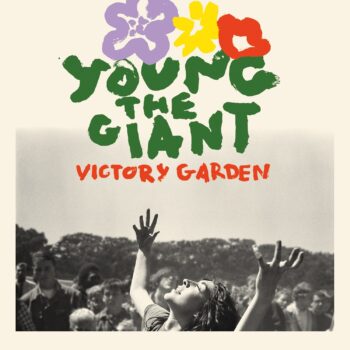
Victory Garden
an album by Young the Giant