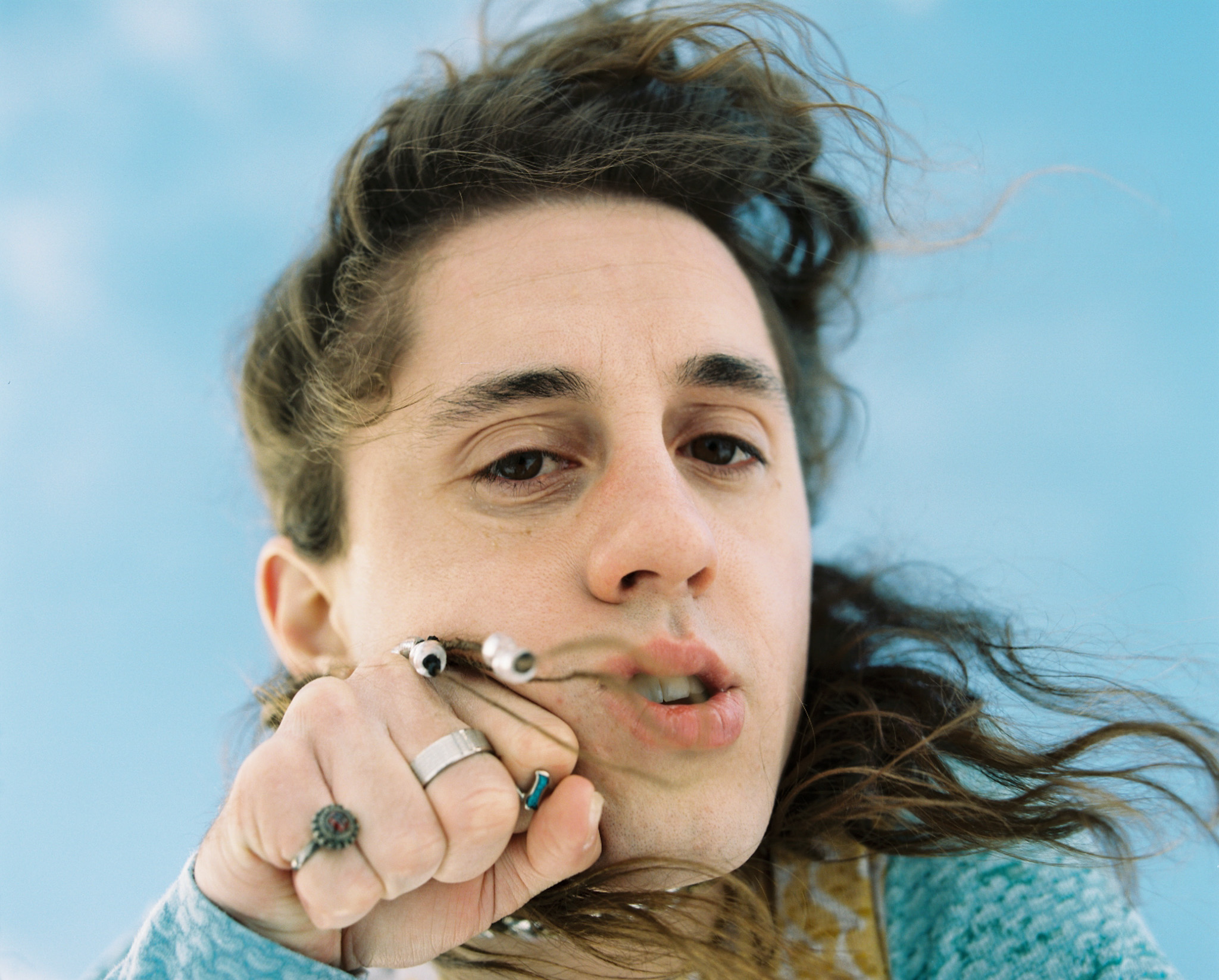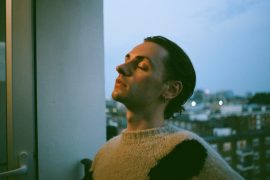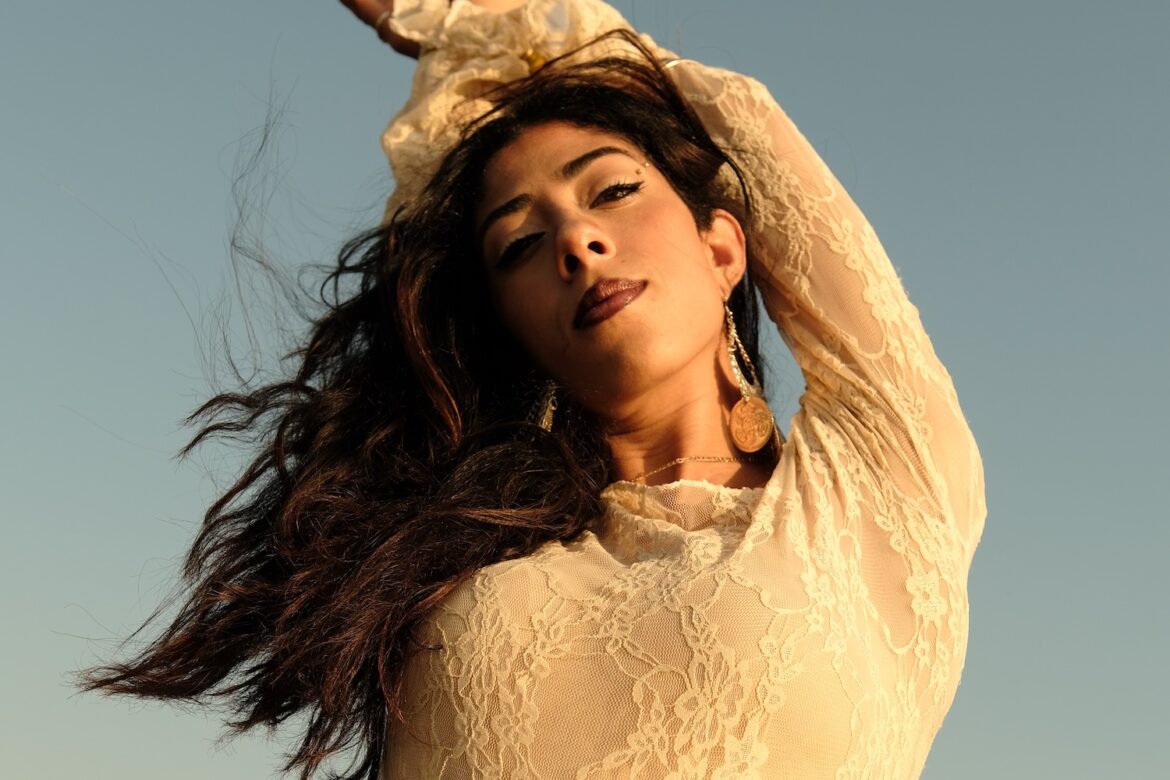
Atwood Magazine met with rapper, singer, poet, and activist, Sara Emessiry, performing under the moniker Felukah, to chat about her poetic roots, rising above the commercial pressures of the music industry, and spiritual grounding in the creative process.
Stream: “danger / خطر” – Felukah
A felucca is a traditional wooden boat that rides the Nile River in Egypt.
Felukah is a woman whose words and beats cruise us fluidly between Arabic and English poetry, hip-hop and neo-soul, confrontation and confession, braggadocio and spiritual seeking – a rapper, singer, poet, and activist from Cairo, Egypt, based in New York City. Effortlessly blending Arabic culture with Western sounds, Felukah is an Arabfuturist innovator. In her latest single, “danger / خطر” (released June 27, 2025), Felukah charms us with melismatic Arabic vocal runs and punches us with lucid aphorisms in English like “no power without control, no beef without the smoke.” Her multilingualism and multiculturalism are natural manifestations of her history and identity, having spent a childhood in Cairo then moving to New York City to study Creative Writing at CUNY.
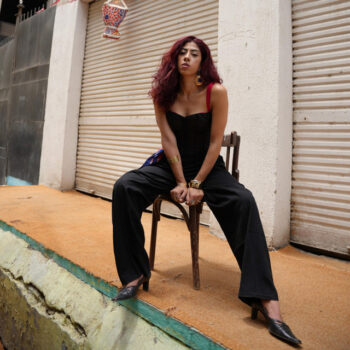
Felukah’s artistic journey began with poetry, inspired by the spoken word artists she encountered in a high school English classroom. This love of language never left her, evolving into a music that fused poetry, hip hop, radical joy, and appreciation for her heritage and roots. As she sings in one of her top tracks, “Ask the Birds in Cairo”:
“Wherever life takes me
I fall in love daily
With the words, with the language.
Ask the birds, they understand this
In Cairo.”
Felukah is a woman defined by her love, radical and generous. Love for her home. Love for her friends. Love for the self and the oppressed. During her first world tour, Qabl El Shams (Before the Sun), she donated a portion of the proceeds from her tour to relief efforts in Palestine and Lebanon, and has spoken at a number of live performances about the ongoing atrocities committed against Palestinians.
This all flows out of Felukah’s spirituality, as she tells Atwood Magazine, alongside her ability to use her music to uplift people, authentically talk about her lived experience as a woman, and confront other humanitarian crises. Courage and energy comes only when she takes the time to be centered, rather than living like a bot, as she had been when she first arrived in New York City, juggling multiple jobs while studying full time.

Praised as a forerunner of the “new wave of Arab women,” Felukah embodies a kind of womanhood that is not limited by labels, expectations, or binaries, making dance music with lyrics that flow between playful and politically conscious.
Growing up in a culture with narrow perceptions and rules for femininity, Felukah often sings and speaks about the liberation that she has experienced when letting go of the burden to conform.
On July 18, Felukah will be headlining the opening night of the Summer Nights Poetry and Music festival at Rockefeller Park in New York City, performing for free alongside poets Ariana Reines and Peter Gizzi. In advance of this show, Felukah spoke with Atwood Magazine about her poetic roots, rising above commercial pressures of the music industry, emphasizing intentionality, authenticity, and spiritual grounding in her creative process. Rooted in radical love, joy, and resistance, Felukah embraces her multidimensional identity – merging cultures, languages, and artistic forms to challenge limits and inspire others.
— —
:: stream/purchase danger / خطر here ::
:: connect with Felukah here ::
— —
Stream: “danger / خطر” – Felukah
A CONVERSATION WITH FELUKAH

Atwood Magazine: Thank you so much for taking the time to chat, and for being here, and for performing for free in New York at Summer Nights with Poets House.
Felukah: Yes, I’m so excited. I think it’s gonna be super fun. I haven’t done a solely poetry performance in a while, so it’s really exciting. Glad to be part of this.
I was really excited to hear your origin story with poetry – you sing/rap about it in your most recent single, “From a poet to a student to a server to today.” Could you talk about that a bit more, your history with poetry, journey from poetry to music?
Felukah: It really all started with poetry. I don’t remember exactly the moment I was like, “Oh, this is the coolest art form of all time,” but it was definitely during school. I’m grateful to be one of those people who had a teacher who pushed them to see something in themselves and motivated them to think of something bigger. That was my English teacher in high school. She was set on the fact that I was going to be a known writer, travelling the world with my books. It was when we started studying spoken word that she was like, “You would be really good at this. You’re a really good public speaker and a great poet. What if you combine those?”
So I began watching a lot of really cool spoken word artists like Rafeef Ziadah, a Palestinian poet. I watched one Alicia Keys did with Def Jam and was like, “Hold up. This world is so rich.” I started writing spoken word for open mics and talent shows at school. I found it such a cathartic place to express my emotions––however verbose and flowery. I loved to pack in as many cool words as I could; it makes sense how I fell into hip hop and songwriting years later. But it was always poetry at the source.
I loved learning about rappers who were really poetic. When I learned about Chance the Rapper or Noname, that was a mindblowing moment of “Wow! It’s not all about drugs and sexualizing women.” There was so much more to hip hop than I knew. I’m sure many people knew that, but as a young girl growing up in Egypt, the hip hop I was being served was surface-level Billboard Top 100 kind of vibes. You don’t find the conscious alternative rappers in those top charts most of the time. Now we have Chance and Noname doing amazing. More and more it’s become cool to be intellectual, to try. In the ‘90s and 2000s when I was growing up it wasn’t very trendy yet.
So multiple sources of inspiration made me feel like I could merge these worlds of poetry and music. I haven’t looked back since and have been creating from that same mindset. I do definitely want to come back to poetry as its own thing, and that’s why I’m really excited about this event, to be surrounded by writers and thinkers. Poets just vibrate differently from musicians. Different worlds but it’s the same world all in all.

Tell me more about that, the difference you feel between poets and musicians, and where you position yourself within that. You seem comfortable existing in multiple identities and multiple worlds at once, artistically but also with regards to place.
Felukah: I feel like the music industry is a lot more profit driven. Maybe because you can see the pipeline of what Tiktok virality or opening for a certain artist can do for your career, streams are peaking and you’re playing bigger venues. It also moves faster because it’s consumed much quicker. So it naturally becomes this machine that can make you a lot of money or make you really famous, and sort of clouds the art. Real artists always know that. They’re here to make art, not something that’s just gonna pop off on Tiktok or wherever. That’s at least not my goal. I’ve yet to meet a poet who’s like, “Man, I just want to get that one Tiktok viral.” It’s a lot more about substance and intentionality. That’s something I really cherish about the poetry spaces and writing spaces that I used to frequent, which I want to do more of. I’ve been thinking about starting a book club as well.
There’s definitely some kind of slowness that comes with being a writer versus the life of a musician, which can often be a lot more fast paced. In that fast pace, you naturally lose some of the substance and consciousness about “Why am I doing this? Who is this serving? What is this serving for me?”
There are so many artists that are able to merge those worlds and move so intentionally––like Solange. She takes her time with things and pours so much poetry into her work. Not even just linguistic poetry––in space, in design, in fashion. There are so many ways to be poetic. I try to focus on artists like her, like Erykah Badu, like Sade, who are very poetic beings.
100%. We love poetry that gets beyond the page. There is a poetic way of existing in the world. How long have you been in New York?
Felukah: I came here in 2017. I was at The New School studying poetry and creative writing, and then in junior year I transferred to CUNY and graduated from there. The New School was dumb expensive! I was like, “Yo, this is hard on my parents right now.” I didn’t want to go into debt so it made more sense to switch. I had the same professors in CUNY, I was so happy to be there. Same quality of education for way cheaper. I feel like I cheated the system!
Since then I’ve just been here. I started making music when I was in my senior year of university. It made sense to funnel my poetry into rap. There is something about the pace of New York that is very motivating. There’s no option to just sit idly by. You’re not going to be great by doing nothing about it, you know. I think that’s what really inspired the hustle mentality in me, and it just feels like there’s always a furnace going off. It’s less of an urgency to release music, write chapbooks, self-publish, get my name out. It’s my own pace. I don’t want to subscribe to somebody else’s pace of what my success story should look like. But there is something about New York that asks “What’s the alternative? Just sit in bed? No, we’re gonna be getting up and working.”
I’m very grateful for that about New York City. It does drive me absolutely insane, but we love it.
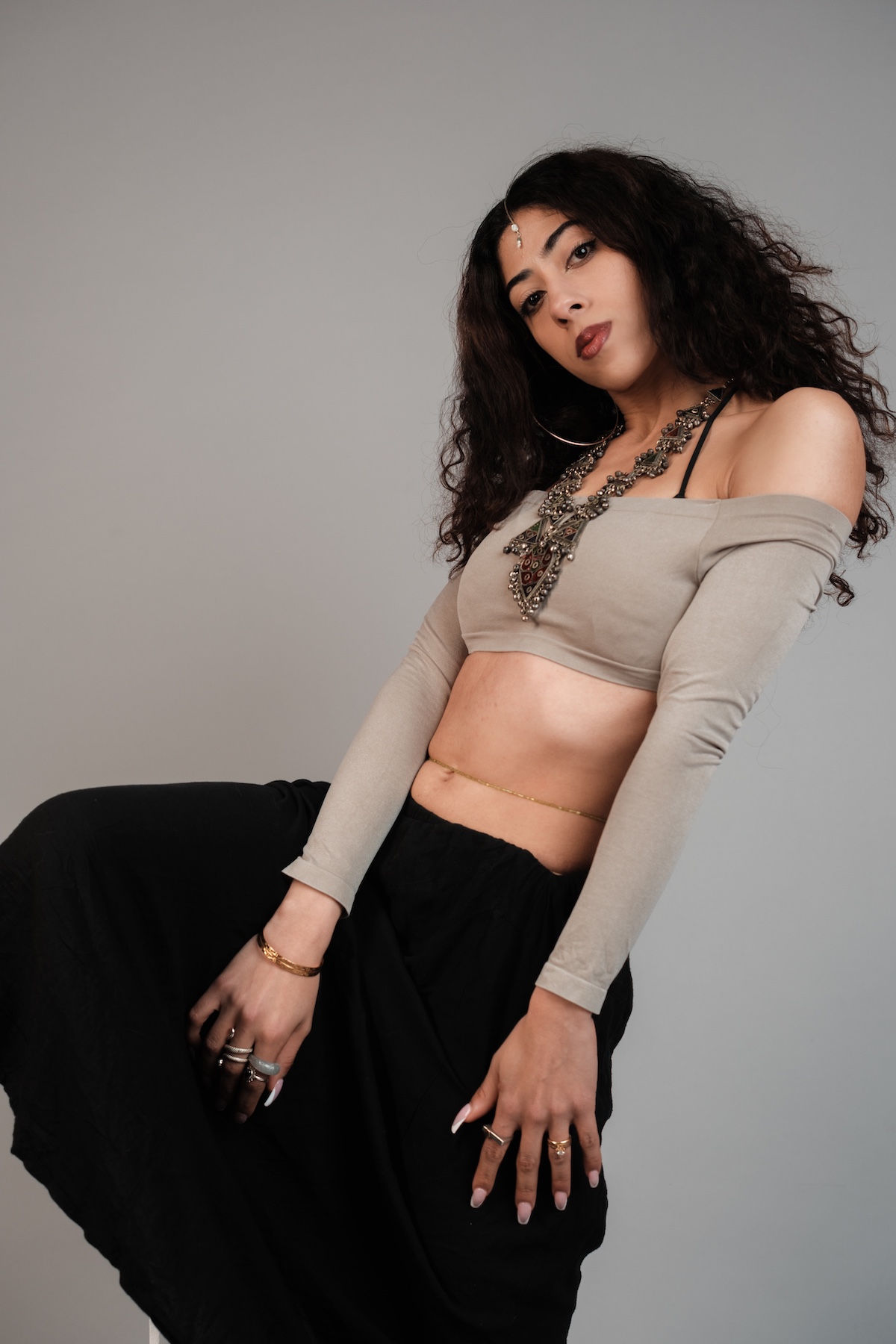
Totally. That sense of urgency and intentionality is very much present in your work. You’ve been referred to as an Arabfuturist and part of the new wave of Arab women, do you feel a sense of calling in your position as a creative?
Felukah: I really do, honestly. I don’t want to sound like someone with a weird complex of “It’s all on me.” It’s not. It’s on all of us. But coming from the background that I did, growing up in Cairo, I got a firsthand experience of the limitations of being a woman and not a cis man. I can’t speak about the whole Middle East, I don’t want to generalize, but at least in Egypt there was so much to unpack. So many times being told, “That’s not ladylike to speak like that,” or “It’s not feminine to appear this way,” or dress this way, or even choose certain career paths. But I am very grateful and privileged to have very accepting supportive parents who were a lot more progressive than traditional Egyptian Muslim parents. They really encouraged me to do what I wanted. When I decided to pursue music, they were like “This is a little different to writing.” Writing has prestige about it, an air of refinement. Music can be like that but there’s a beat to it. It’s not that different. I’m trying to make something for intellectuals and non-intellectuals alike. It’s as deep as you want it to be.
In the beginning my parents were like, “Absolutely not,” picturing me as a professional dancer, getting up on stage in nightclubs. But I kept being persistent and showing them that I was serious about this. Now they’re my biggest supporters and come to all my shows. For those who don’t have supportive parents, I want to be a beacon of hope to try and do the things that you want to do and speak on issues that others might feel are taboo, to break that barrier.
What do you feel is something that is not talked about that should be talked about more?
Felukah: Oh, so many things! The list goes on and on, really. I’m thinking about war big time. It’s as much of a women’s issue as it is a humanitarian issue. There’s so much warfare going on in the world. I really think that art is the healing component. I always say, “People don’t memorize political speeches, they memorize songs.” If you can create songs and anthems and uplift people, whether it’s escapism to forget the misery that we’re seeing on the news every day or hope to keep on in the resistance and keep fighting the fight, we need that. We need some kind of documentary poetics and music that is shaping the scene.
I’m always going to be talking about women’s issues on a grand or minute scale, putting in my life experiences and making sure I’m staying authentic to my sound. I don’t even think I’m political, I’m just calling a spade a spade. I’m not afraid to call things out like that.
Who would you say would be your like influences then, poetically as well as ideologically?
Felukah: So many. Definitely Erykah Badu, musically and aura-wise. Solange, Lauryn Hill. I love Tupac’s poetics, the world he created in his verse. Akua Naru is a name I need to mention. She is an insane poet and artist. It was when I listened to her “Poetry: How Does It Feel Now???” That was the song that really made me feel, “Oh, my God! Poetry is so sexy. It’s alive. It’s radiant.” It’s something different to hear it and experience it compared to reading off the page. There’s a balance to strike between training your voice to deliver your message and your poetry in a beautiful way. To be accompanied by music is just next level.
The poets I grew up reading: Nayyirah Waheed, Rumi. I love Sufism and spirituality as a whole. Bringing that to the surface in music has been my focus for the past few years, but long before music, it was always in poetry. I’m spiritually inclined for sure.
How does that impact your daily practice, and your creative practice? I know that creativity is a very spiritual thing as well.
Felukah: It is. I can’t imagine doing this any other way. When I first moved to New York, I was studying and working at a cafe and babysitting and holding down all these jobs, which is the classic New York experience, but I didn’t feel that spiritual connection. I felt like I was in this weird echo chamber of making money, spending it on rent, studying, crossing off all these boxes and becoming like a bot.
That’s the thing about spirituality. I feel like God, faith, the universe, radical love, whatever you want to call it, is always there. You just have to keep refining that connection and keep coming back. Really, it’s the self. First and foremost it’s a connection to yourself. It was definitely a path I had to continue to carve out, and I still have to carve it out. I don’t think it ever ends. I never found Nirvana. You just have to keep working at it.
My daily practice helps so much to remember that there’s something greater and deeper than all of this and the little trivial concerns of how great my song does this month, or all the comparisons I could get into about other people releasing books and music. To know that I’m 1000% in the right place at the right time. And I know that I’m divinely protected. That’s something I keep saying to myself: We’re so divinely protected. It just reinstates my faith and my belief in my own vision. You’ve got to have belief in your vision to be an artist because constantly people will be telling you, “This isn’t it,” or you don’t get the opportunities that you want. It’s a lot of rejection. So, if you don’t have that unwavering belief in the self, in the spirit, in all these beautiful things, then you can easily drown.
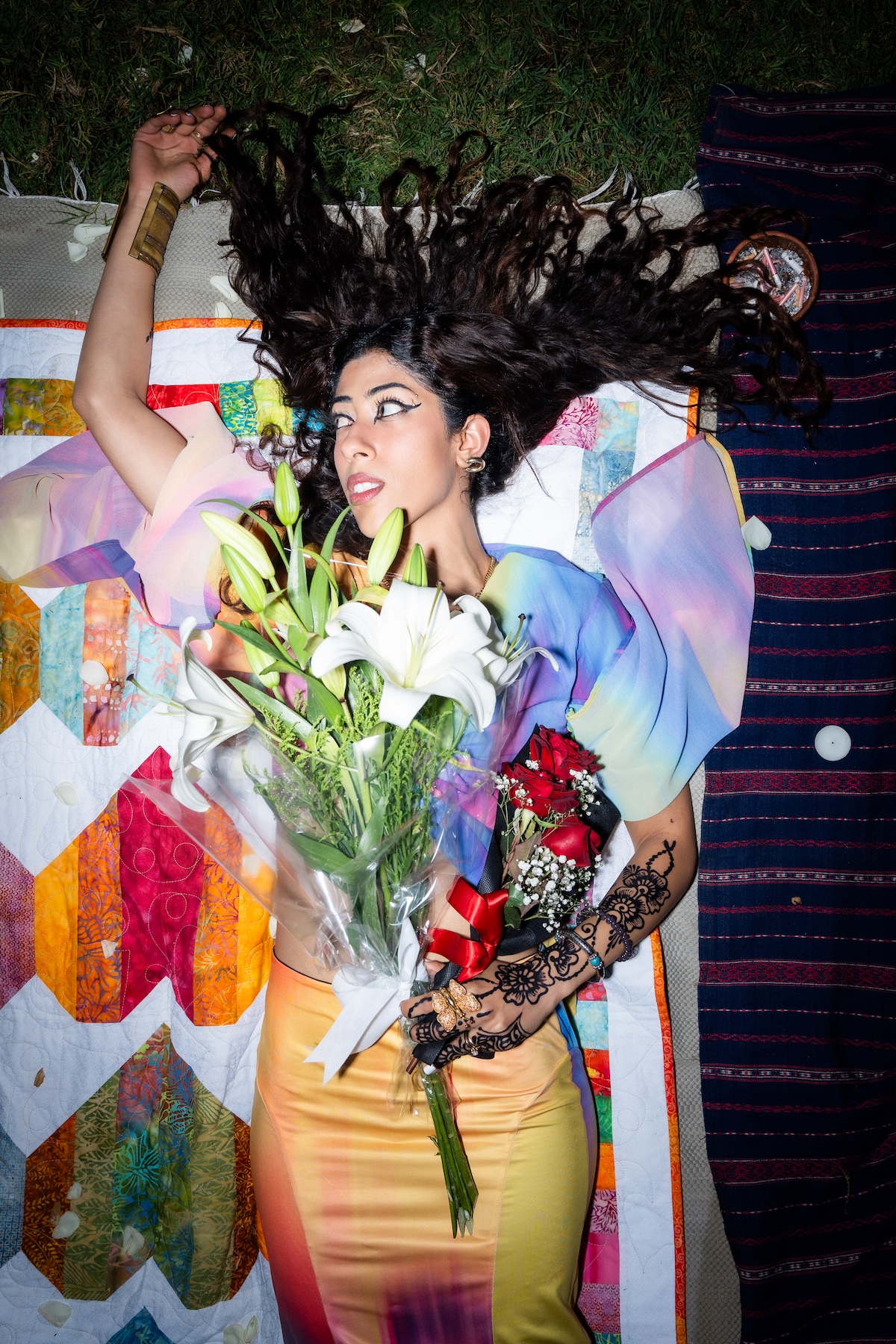
Did you have a turning point, moving from that bot life to realizing that you had to attend to your soul?
Felukah: I’m lucky to be traveling a lot. I go back home often to Egypt. Sometimes you just have to step out of America, or maybe just out of New York, to somewhere more rural where there’s more nature. When I’m around nature I feel called back to the source.
The setup I have in my house where I grew up in Egypt, it’s a little city in Cairo, the suburbs of Cairo, but still metropolitan. There’s lots to do but I see trees, I can walk and not be rushed. It’s different being in New York. It’s very motivating, it’s great to keep you alive and hustling, but you need to unplug every once in a while, even to go upstate or to the beach or out of the country. That switch up of environment will change your thinking and remind you there is soul, there’s substance, there’s human connection. There are other reasons to exist than just to make as much money as possible. A lot of people in New York are very capitalistic––and that’s okay, make the money that you want to make––but for someone like me and other people who are spiritually inclined, there’s so much more to life.
What are you currently excited about, curious about?
Felukah: Yes, I love this question! So open ended. So many things! I’m in a really, hamdallah, knock on wood, healthy headspace where I don’t see competition around me. I think it is coming back to the spirituality thing. I grew up Muslim but don’t practice the same way that my parents do. I don’t think that negates the fact that I see myself as a spiritual person. Having rituals in my life has been super cool; my singing, my sound bowls, my crystals, my synthesizer.
I’ve been getting into production more which has been so liberating, because, you know, it’s a male dominated industry––entertainment as a whole, especially music. I reached a point where I was like, “I know what I want to hear, I know I want to feel in a song. I don’t want to wait to have to explain that to somebody, more often than not a man.” A lot of times your ideas get shut down and you’re like, “I think this is my song!” You have to use your voice, communicating what you want and don’t want. I’m learning to use my voice more in these production sessions with others. That’s important for collaboration in general, to be as open and honest as you can with your peers. But there’s also the solution of working on my own production. Let me try to fulfill this vision fully first here and then I can bring it to a producer and bring it to others. I’m excited to be learning about all of this. I just started DJing in the past few months as well, so that’s been super fun.
It feels like I had a wave of clarity starting 2025. I was like, “Yeah, the world’s on fire. There’s so much bullshit happening all around us. The time is now to take that leap of faith and trust in my instincts, trust in my gifts, invest time in honing my craft, whether that’s vocal training, dance training, production lessons.” Really trying to elevate because I don’t know how much longer we have, and I need to give it all I’ve got.
That’s such a liberating realization to have. It kind of removes the burden of results too.
Felukah: Seeking discomfort has been a big thing for me this year too. Why stay in my comfort zone? Why only play these kinds of shows? Why only market myself as this kind of person or artist, when I know I don’t have limits? Any limits that I put on are usually put on by somebody else. I’m really trying to channel a limitless way of being. You can’t limit somebody who doesn’t see the limits for themselves.

That makes me think that Walt Whitman quote, “I contain multitudes,” which is already evident in your work, especially in its multilinguality, fluidly switching between Arabic and English.
Felukah: Thank you! For the longest time I was told that this would set me back, that I wouldn’t be able to access the core audience of fans in the Arab world or in the West because I was mixing it up. But those who want to learn Arabic can, or Arabic speakers who want to learn English can, or maybe you don’t speak either and you just feel the music. You feel the intonation of the singing. I stuck to it. There are so many bilingual, trilingual, multilingual artists in the scene now, so I’m glad I stuck to it. It’s been a big lesson in doing whatever I love. If it’s not popping, not trending, it doesn’t matter. Everything changes, trends are recycled and come back. If you’re working towards just being a trend, then it’s going to be short lived. But if you’re working on things that you really love and speak to who you are, that’s for the long run.
That’s amazing that you see that, the multitudes of being in my music, because that’s something I want to showcase more of.
I feel like it really resonates with the diasporic experience, too. Code switching and things like that. I also love the joy in your music. Do you feel that as you explore DJing too? I was reading up on DJ Habibeats and he was described as a “party architect.” What a great phrase! It made me think about how dance music is an art form that is also a public service, designing and giving joy.
Felukah: I love that you brought up joy. Whenever I think about the themes that I work within, or the purpose of what I do, it has to be radical joy and radical love. I’m not scared of the word radical. I feel like we need it. I said it before in an interview and somebody was like, “Well, I wouldn’t call you radical.” But I was like, “I’m calling myself radical! Radically loving and radically joyous. Why is that so scary to you?” The world is so bereft of that right now. The world is in a hurting, hurting place politically, which is seeping into interpersonal connections. A lot of my friends are going through it. Mental health, insecure income, inflation. So many things are robbing us of joy. To get up and dance is absolutely revolutionary. To get up and release your music that you don’t know if anyone’s going to like it is revolutionary. To be a party architect and bring people together and uplift your heritage and culture, are hugely revolutionary acts.
People need to be ready to just be silly, be outrageous, have fun, dance in public. I’m super into exposure therapy, rejection therapy, these days. On the same wavelength as seeking discomfort, it’s super cool to be like, “Damn! I don’t know how to act in this space. I don’t know anybody here. What if they don’t like me? What’s the worst that can happen?” Even if they don’t like my set, I’m gonna go home and have a meal and life will continue!
Somebody who inspired me in their limitlessness and not giving a fuck is Tyler the Creator. He’s always been like, “I’m an oddball. I’m weird. I have a tooth gap. I like this kind of music. I’m gonna wear pastels, and I’m gonna just do it with so much grace and so much intention.” Now look at him! One of the biggest artists of our generation. I can’t see all that and be like, “Let me try and conform to Tiktok trends. Let me make Tiktok music.”
It’s so good to have those figures. When I write a poem, I think, “Would I feel okay with showing this poem to Brenda Hillman or John Burnside or Carl Phillips or Frank Bidart?” If I was writing to a Tiktok or Instagram audience, I might settle for worse.
Felukah: I love that process: What if I showed my inspiration, my idols, this work? I think that’s a much healthier way to create than “how can I pull in as many people as possible?” Again, it’s a profit thing. To remove yourself from that space of needing it to go crazy or reach millions of people. Instead being happy if it reaches even just one person who feels something. My mom always says that before I’m about to perform. Like classic artists backstage, I’m panicking, “What if nobody’s here? What if it’s just my mom in the crowd?” She’ll say, “There’s definitely somebody else outside. I was just there. And even if it’s just this one person, they’re here to enjoy your work and your music. They’re gonna leave elevated because you’re doing what you do.
What a beautiful mentality. That makes me so excited about Summer Nights.
Felukah: I was so honored that Poets House hit me up. Even though I’m mostly booked for music concerts or DJ sets, it was so cool to know that there’s somebody out there who knows the poet in me is alive and well! I’m working on a new spoken word piece for that day specifically!
That’ll be incredible! You’re a poet; you belong. Poets House is your home. Thanks for taking the time to chat!
Felukah: Thank you so much for the great conversation!
— —
On July 18 at 7 PM, poetry meets music outdoors in Battery Park City for the first night of Summer Nights. Under the sun at the Pavillion in Rockefeller Park, enjoy readings from acclaimed poets Peter Gizzi and Ariana Reines, and dance along to genre-bending, bilingual music by Felukah. Poet and spoken word artist Regie Cabico will host the festivities.
— —
:: stream/purchase danger / خطر here ::
:: connect with Felukah here ::
— —
Stream: “danger / خطر” – Felukah
— — — —
Connect to Felukah on
Facebook, 𝕏, TikTok, Instagram
Discover new music on Atwood Magazine
© Essam
 © Essam
:: Stream Felukah ::