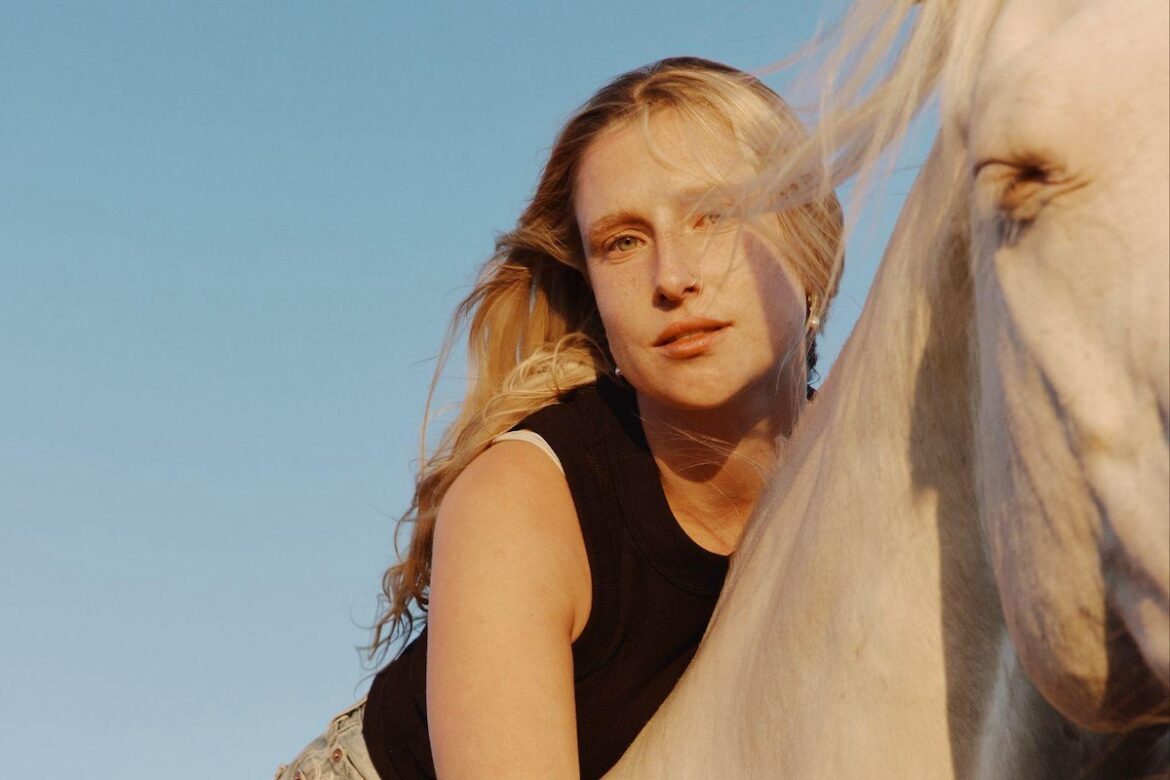
Atwood Magazine catches up with UK-based singer/songwriter Billie Marten to discuss the intimate making of her tender and playful fifth LP ‘Dog Eared,’ life on the road, her favorite authors, and more.
Stream: ‘Dog Eared’ – Billie Marten
If there’s one thing Billie Marten loves as much as music, it’s leaving her mark on a good book.
While opening for Tennis on their North American Farewell Tour, the Yorkshire-born songwriter has made it her mission to leave behind a few parting gifts – i.e. signed bookmarks – hidden inside her favorite books in bookstores in each city along the way, a treasure hunt her supporters across the country are eagerly taking part in.
It’s only right then for Marten’s fifth LP (due July 18) to be called Dog Eared – its title being drawn from a literary reference. “I love to read and I love books, they’re a huge inspiration for me,” shares Marten. “A dog-eared book is an image in my head that is very worn and thumbed-through, and I guess I feel like that sometimes.”
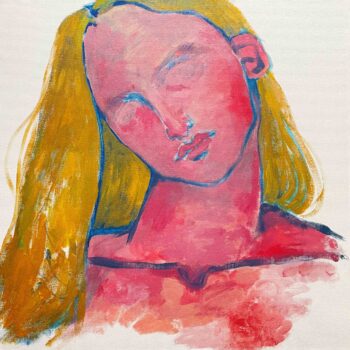
Recorded in New York in the summer of 2024 alongside an all-star team of musicians and producer Phil Weinrobe (Adrianne Lenker, Tomberlin), Dog Eared captures an irreplicable, intimate moment in time. With the intention of making something other than a strictly singer/songwriter record with Marten at the focal point, Marten, Weinrobe, and the ten-piece ensemble approached the album’s 10 songs with a careful listening ear and a deep reverence, doing only what felt right in service of the music at hand.
“This record feels like what music is supposed to be,” Weinrobe enthuses, “a creative dialogue between wide open musicians, all pushing in the exact same direction, and that direction is clear – the controls are set for the heart of Billie’s incredible songs.”
During each recording session, Marten and the musicians performed as one resounding body, huddling up in a circle with nothing separating them from each other – no phones, no studio walls and no equipment other than their instruments. The result is an offering of pure, concentrated, and effortlessly tender creative expression and energy. Singles such as “Feeling” and “Crown” lay the groundwork and give us a taste of the beautiful, dreamlike-folk record to come.
“Oh, the moment that I lay her down,
I’ve never been so proud
Broken bottles and tear dust on the ground
And I thought, “You are in me now”
You are in me now
The cat sits in the shade
And I am not afraid of love
The cat sits in the shade
And I am not afraid”
– “Crown,” Billie Marten
Dog Eared is Billie Marten’s most playful offering to date, yet there’s a groundedness about it, too.
It’s an album that, if it were tangible, would stretch and roll around in one’s hands like play-doh, or like wax inside a lava lamp. Marten is as profound in her observations as she’s always been, only this time it comes with an air of lightheartedness and curiosity – as if seeing the world through a child’s eyes. Rather than arrive at a set destination, Marten is finding joy in exploration, reveling in the here and now with an openness and warmth that feels especially comforting in today’s solemn climate.
Time after time again, Billie Marten reminds us that the magic in our lives is real, and it isn’t too hard to find, even in the quietest moments. Sometimes we only need a gentle nudge to remember to stop and look.
— —
:: read more about Billie Marten here ::
:: stream/purchase Dog Eared here ::
:: connect with Billie Marten here ::
— —
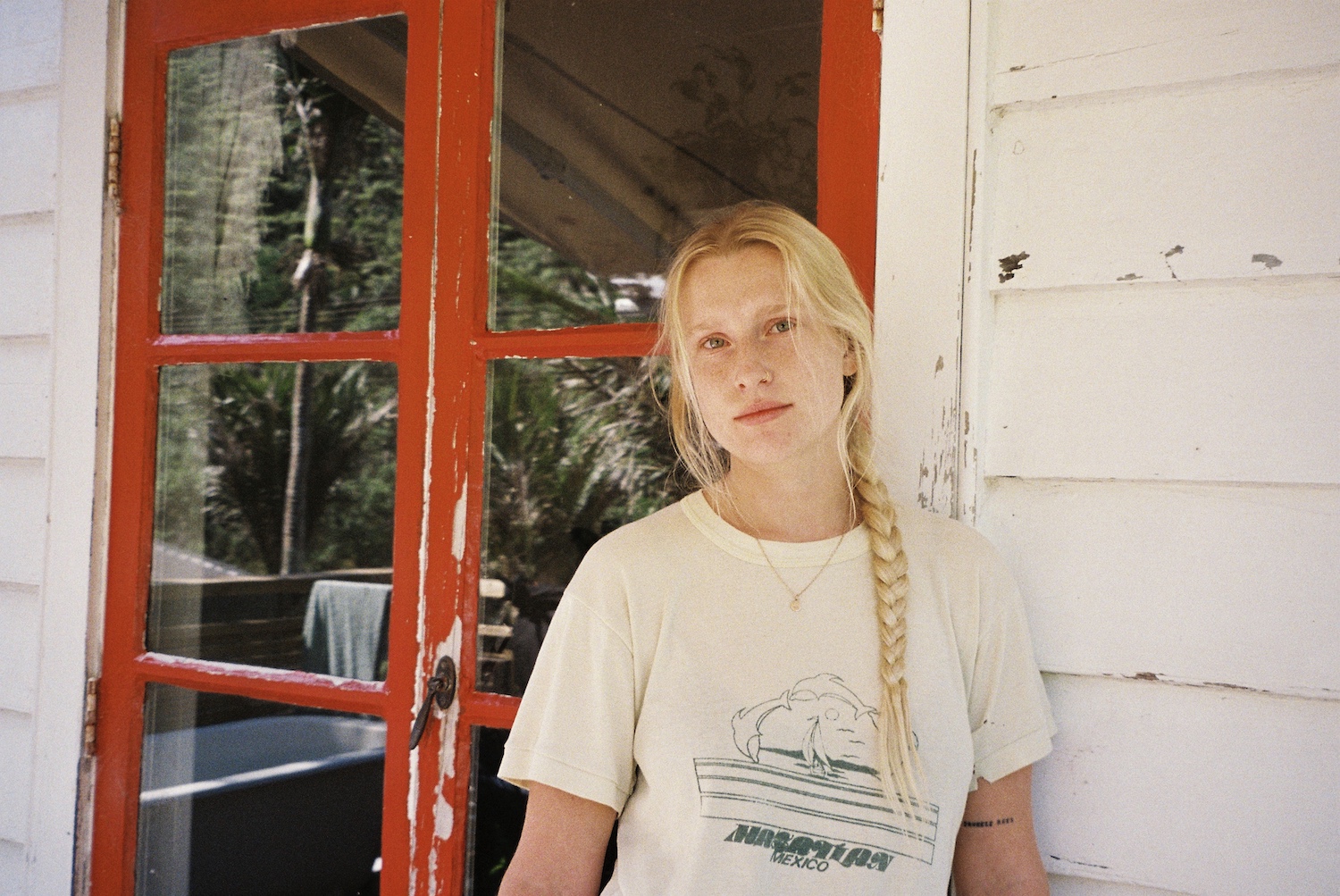
A CONVERSATION WITH BILLIE MARTEN
Atwood Magazine: Hi Billie, so nice to meet you! To start, I just want to wish you a happy early birthday! Do you have any birthday plans?
Billie Marten: Well thanks so much! We’ve got a show in Toronto tomorrow night, so I shall be doing that!
If there were a word to describe this past year of your life, what word comes to mind?
Billie Marten: Enriching. I feel very enriched by people and by culture. You know, all the good stuff that we need.
What is your relationship with aging – just in general, and as a woman in the music industry? I feel that sometimes, there’s pressure on women when it comes to aging, especially in front-facing careers. I’d love to hear your feelings on the topic.
Billie Marten: Oh I’ve lots of feelings on it. I could definitely write an essay on this question. I think it’s really fascinating. Sometimes there’s a shining light on age, and other times, it’s completely ignored. It’s difficult to understand the parameters of how we see it. It’s tricky. Age is something that I’ve tried to get away from my whole life. When I first started making music, the whole tagline was: “She’s good for a twelve year old,” or “Billie Marten releases debut album at seventeen,” or something like that.
I just remember feeling like that wasn’t really a relevant factor. It’s something that still kind of haunts me in interviews. I guess it comes from starting things so young. It’s been, quite rightly, an interesting topic, you know, growing up within the industry and not having much of an adulthood. That’s all fascinating to me. But I feel that it’s difficult to talk about the present. That’s what I want to do. I want to talk about the present or the thing I’ve just made, and it tends to be that interviews are sort of based on my ten years of growing up. But the album does talk a lot about age, so I’m kind of contradicting myself a lot which I think is important for artists to do. I’m still very much finding my way, but I also feel like I’ve lived a lot.
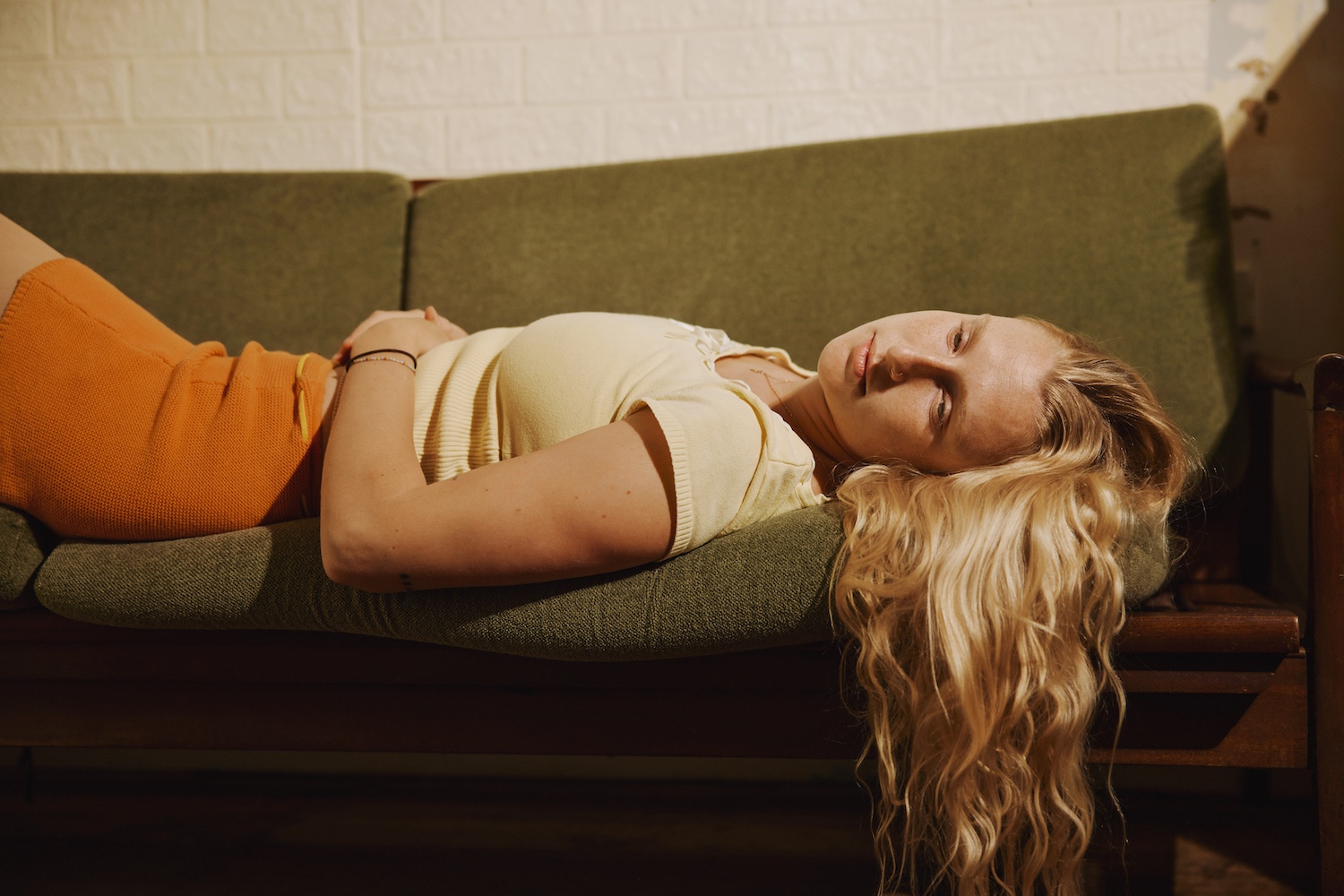
That makes sense. I feel like your soul’s age is ancient.
Billie Marten: [laughs] I’m trying to catch up with my inner age, while at the same time exploring my actual age, and reflecting on the ages that I’ve missed and trying to get those facets of my character in there, too. Music is difficult, because you have to present an idea of a personality, and that’s not necessarily the whole thing, you know? I find it really important for the avenues of heaviness and sincerity to come out via song. But around that, I like to keep things light and funny. I think silliness is really important in this industry, and we don’t really do enough of that.
What is your relationship with past versions of yourself? Do you still carry those selves with you, or is there a sense of detachment now?
Billie Marten: Definitely detachment that I never thought I would feel. I used to write songs that were sort of cries out into the void. At that time, I was a very sad, lonely teenager. I didn’t grow up in a culturally rich area in the UK. I was lacking my people, and I was listening to a lot of sad and lonely artists. A lot of Elliot Smith. A lot of Nick Drake. Those were the people that I gravitated towards, because I used to find lots of beauty in sadness. Now I find beauty in joy.
I guess that’s the biggest change for me. Lots of those songs early on are quite difficult for me to sing now, because I can feel how poorly I was, and I have a lot of empathy for my past self. Some of the old songs I still play every night, and I have rebranded them mentally. I think relationships with your songs will always, always change, and if they don’t, that’s kind of worrying because you’ve probably stopped listening to them. You’ve stopped listening to them on stage or stopped thinking about them.
That’s a really interesting point. I know what you mean about feeling empathy for your past self. As a teen I used to relate really strongly with a song off your first album called “Lionhearted”. I’m no longer in that place mentally, but I’m so grateful to have connected with it at that time. I needed it.
Billie Marten: I think when we’re at our most vulnerable points, we take the mask off and we cry, or we close the door and we return. We return back to our child selves in those moments, and that is something to be celebrated. It’s also a great reminder to take care of yourself as you would a child. We’re all brave and we all soldier on, and we present ideas of well rounded, functional adults. But we are all until the day we die complete children who have not done it before. It’s quite a nice reminder of the fact that I was so small and vulnerable.
This reminds me of a book I’ve just finished reading called Tuesdays with Morrie. Have you heard of it?
Billie Marten: Great book.
It’s really great. There’s a point in it where Morrie talks about this same concept, how we come into the world as children and leave it as children, too.
Billie Marten: From babies to babies.
Exactly. From little babies to big babies.
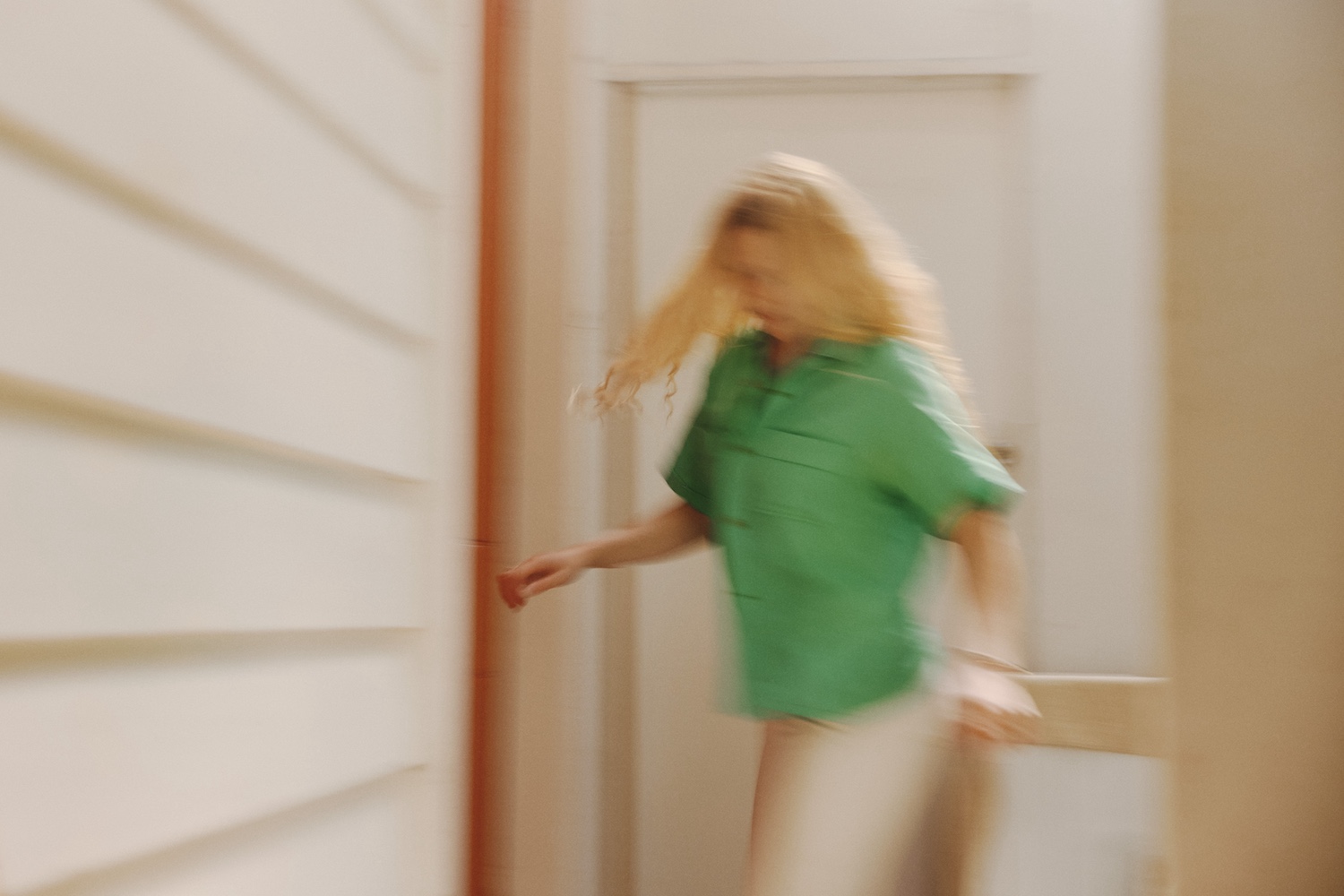
I used to find lots of beauty in sadness. Now I find beauty in joy.
* * *
What does an ideal day for Billie Marten look like? Where are you geographically? Who is around, or maybe not around?
Billie Marten: Great question. Well first of all, I would have had a ten hour sleep. I love to sleep; it’s where I do my best work [laughs]. So I will have woken up from a lovely, scrumptious sleep, and I’ll wake up and go straight to the garden, and I’ll water the plants. So we’re at home. I think my happy place, very luckily, is my home. I don’t get to spend a lot of time there, so it really is like going on holiday for me. I’ll water the plants. I’ll make some breakfast, and the sun will be out. And I will sit there in my deck chair in the garden all day and get brown. I’ll read my books, and maybe write, but maybe not. And I’ll stay there until the sun goes away.
That sounds like a perfect day. What would you have made for breakfast?
Billie Marten: My partner makes the best scrambled eggs in the world, which I’m very grateful for. So I’ll have those with buttered toast. And on top, we have this thing called Grandma’s Chili, which is some sort of Chinese spice, and it just elevates the eggs so much. It’s got soybeans in it and dried onion, and it’s been cooked in oil for maybe a thousand days. It’s delicious. And then on the side will be yogurt, granola, strawberries, raspberries, blueberries, chia seeds on top, some mint, some honey, some almond butter.
That sounds incredible.
Billie Marten: It really is.
I know these questions are a bit random, I’m sorry if we go a little all over the place, these are just questions I’ve always wanted to ask you. What is the first memory you have with the guitar?
Billie Marten: No, this is great. I love random. Hm, my first memory? Well, my dad bought me a pink Yamaha guitar.
I’ve got a pink Yamaha guitar!
Billie Marten: Never get rid of it, because I got rid of mine and I regretted it.
How come you got rid of it?
Billie Marten: Because I probably thought I was too cool for school. But I remember going to that music shop – no, I think it was a birthday – and opening the cardboard box. I thought it was a big Quality Street. Do you have those chocolates here? We have them at Christmas. They’re in the same shape as a guitar box. So I remember thinking it was just a massive box of chocolates. But it was a pink guitar. And the smell of it, the wood and the strings and stuff, it was just like a really visceral experience. And then my dad taught me four chords. He said, “You can kind of play every song with these four chords”. And then I just remember going straight up to my teeny weeny room and just kind of pretending with it. It was a cool day.
Yeah, sounds like a great day! You have a new record coming this summer called Dog Eared. Upon reading about this album, I noticed it’s a distinctly American album compared to your other ones, as it was recorded in New York alongside producer Phil Weinrobe. Do you notice any difference in creating in the States versus at home in the UK?
Billie Marten: Oh, hugely. Not to diss my home country, but it’s just an elevated level of musicianship out there. I think North America has been blessed with power in music and a love of it. I grew up listening to predominantly American records, and I remember in the past few years purposely gravitating towards early 2000’s American records. I was listening to a lot of Sun Kil Moon. There’s this sort of coolness there that we don’t have at home. Or maybe we’re cool in a different way.
It was very fun for me, selfishly, to be in a room surrounded by my favorite players. It was an album of pure intuition. We didn’t have any pre-production. They had never heard the songs before. In the mornings, we would put all our phones in a bowl and then get in the studio, and then I’d play the song real quick on the Nylon. By the end of the day, we will have what you hear on the record. It was all live and no headphones, so I couldn’t hear myself singing most of the time. It was very intense but sort of effortless at the same time.
How did that experience challenge you, if at all?
Billie Marten: I tried to journal during that time. I lasted two days. I remember sitting at a cafe one morning and writing down that this was the hardest I’ve worked in my life. I wrote it down then because I knew that my future self was not going to be able to remember that. And obviously I don’t now think that it’s the hardest I’ve ever worked in my life.
But going back to it, I do remember an intense concentration and willingness to make a really good record. I think I just tried a lot harder than I have done in the past, and that’s what artists should strive to do. We all get accepted in the beginning for the thing that we have, but it doesn’t necessarily mean that we should stay in our lane and be comfortable. I think [David] Bowie said something like that. He said, “Here’s your comfort zone, and this is where you should be at all times,” on the outside of it. I want that now. I think that takes time and age, and I guess less fear. Or more fear, depending how you look at it.
Do you struggle with perfectionism when it comes to creating? If so, how did this recording experience help, if at all?
Billie Marten: I’m learning that I have very high levels of standard for myself, in all aspects of being. They’re often very unattainable. The record making aspect is sort of a challenge for me to accept, the imperfect nature of it all. If I had it my way, and if I had more control over the record, we would definitely have chosen different takes, and I would have done my vocals again. I think it’s less beautiful sounding and more interesting to the ear. If we think about our favorite records, there’s all sorts of idiosyncrasies and mess ups— things AI can’t do, such as make human error. I think if you’re working with someone that celebrates your error, then that’s probably a good partnership.
That’s such a great point. I too gravitate towards records that feel human-made, where it feels like there were people in a room making the music. Is there a place you feel most at home when creating?
Billie Marten: I’m a homebody, so I do love to write at home. But I think it’s the environment that you make for yourself. Sometimes I feel so at home in a dive bar, like I did last night in –where were we last night? Cleveland? I felt really at home in New York, which was strange for me. I felt a kinship there. Sometimes I feel so at home in the city, and other times I feel so at home in a field with no one there and sort of get back to my roots. There’s no specific place. I think it really is a mindset and being lucky enough to surround yourself with people that make you feel at home.
Beautifully said. Most if not all the songs on Dog Eared include some kind of nature metaphor or imagery, my favorite of them being from “Clover” when you sing: You’re raining heavy / I’m almost dry / I’m only learning to love you right. I think it’s really beautiful that so much of your musical identity is tied to nature, because it just goes to show what an endless well nature is. It’s always giving to us, and it’s always teaching us new things. What is your relationship to the natural world, and what are some lessons you’ve learned from having written about it?
Billie Marten: Well, very well observed first of all. I think you said it all really. It really is just an endless well. It is the only substance that we have that can encompass every single human emotion known to man. And there’s literally a flower or a plant that corresponds to that said emotion. I think it’s first of all a really good writing tool, and I don’t know how anybody could write a song without it. Secondly, it’s almost like a form of conscience that lets me know how I’m doing, almost like a barometer. My relationship to it is so strong, and I feel such anxiety and anger when I can’t be in it.
Would you say you’re sensitive to weather conditions and changes?
Billie Marten: Hugely. That’s why my perfect day is just soaking up the entire sun. Even if it’s two minutes before we get in the van and there’s a little square of sun, I would be soaking it up in the street. It’s like recharging. But then, I don’t believe in “good” weather. I mean, I live in England for starters. [laughs]. There’s a great scene about this in Killers of the Flower Moon. Did you see that film?
I haven’t yet!
Billie Marten: It’s all about Native American community in the early 1900s. There’s a scene where there’s this huge storm coming in, and Leo DiCaprio goes to close the window. This woman, I forgot what she’s called, but she comes in and says, “No, no, leave it open. Nature has just given us a sign to stop and look at it”. And then they both sit there. You know that feeling of being inside and it’s storming outside? It’s so comforting. It’s so powerful. She was teaching him to learn from the storm. It’s a really beautiful scene. Watch it, if only for that scene.
That sounds beautiful, I will. Coming up on the last questions here. Is there an author you’ve never met but feel as though they’d be your best friend?
Billie Marten: I love that question. It’s funny, I’m drawn to an author, and I will then read whatever they can give to me. But I still don’t know anything about that author other than what they’re giving me through their books. I don’t know what they look like. I don’t know where they’re from, unless it’s painfully obvious. It’s kind of the only avenue I have of anti-celebrity culture. It’s awesome. I love David Sedaris. He’s one of my favorite writers. He’s very funny and dry, and I get that love from my dad. That dryness and kind of outlook on life I find very impressive.
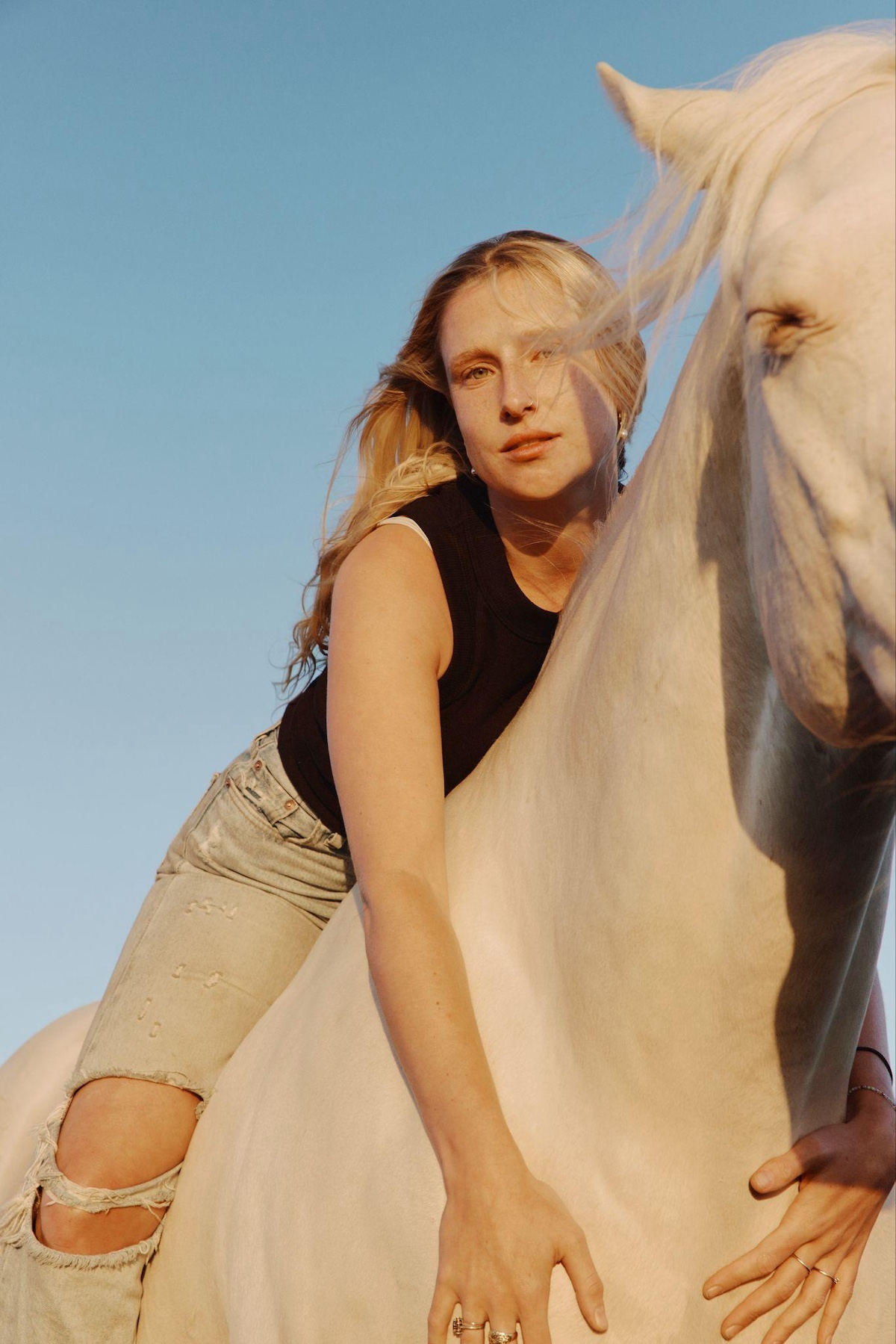
And then on the other side, I like lovely, beautiful, lyrical books about huge emotions and onomatopoeia and big swathing statements. There’s one book called “The Horse of Selene,” which is written by a woman called Juanita Casey. It’s based in this remote island in Ireland. I love horses, so the title drew me to that. But there’s some beautiful metaphors about women and how we are. It’s full of nature and full of beauty. I’d like to meet her. You get her full personality through that book. She’s a very fearless, stern Irish woman. Doesn’t take shit from anyone.
Lovely. Are there any more books you’d like to recommend to our readers?
Billie Marten: Yes, loads! Where do I begin? Let’s see. Okay. “Bluets” by Maggie Nelson. It’s all about how she loves the color blue.
I think I’ve heard of that one! I’m excited to read it one day soon.
Billie Marten: You’re gonna love it. Then there’s “Crossroads” by Jonathan Franzen. “The Heart is a Lonely Hunter” by Carson McCullers, who I always thought was a man and she is, in fact, a woman. Oh, there’s a book I was thinking about the other day called “Naive, Super” by Erlend Loe. It’s a tiny philosophical thing about looking for meaning and finding it in modern brands. It’s about how there are certain brands that we gravitate towards, and others that we just hate for no logical reason. Though it’s more poetic than that. Maybe someone can read it at the same time as me.
— —
:: read more about Billie Marten here ::
:: stream/purchase Dog Eared here ::
:: connect with Billie Marten here ::
— —
Stream: “Feeling” – Billie Marten
— — — —
Connect to Billie Marten on
Facebook, 𝕏, TikTok, Instagram
Discover new music on Atwood Magazine
© Frances Carter
 © Frances Carter
Dog Eared
an album by Billie Marten