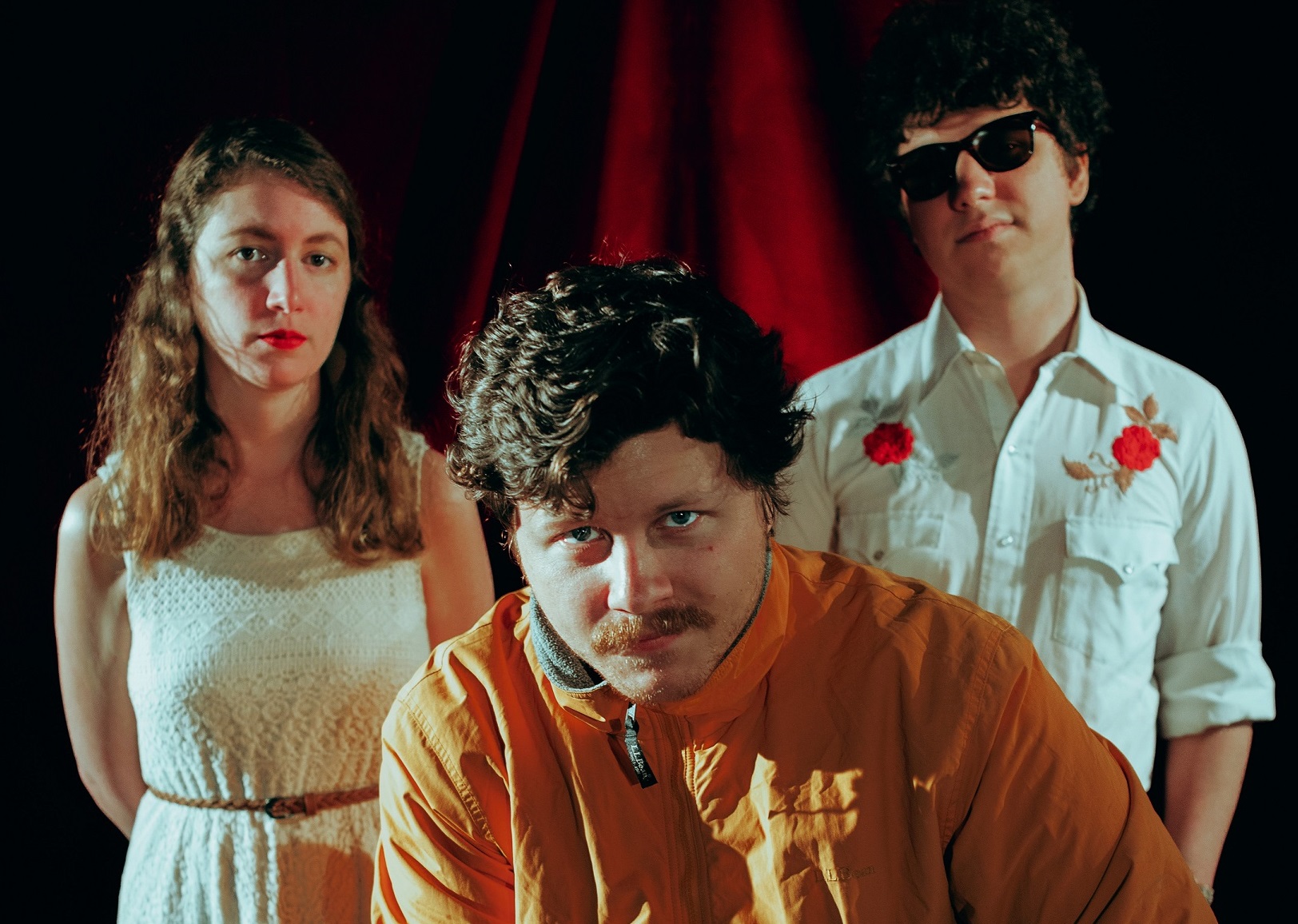
Pretoria’s new EP ‘If We’re Pretending’ marks a fresh start for the Chicago-by-way-of-Grand Rapids band, unraveling another layer of their sensitivity as they navigate life, love, and identity in a new city.
Stream: ‘If We’re Pretending’ – Pretoria
Before Chicago, there was Grand Rapids – and before the big city, there was The Treehouse.
Formed in 2018, Pretoria built their name on unforgettable live shows, genuine DIY spirit, and a sound as eccentric as it is emotionally resonant. After joining forces in 2018, the five-piece indie band – comprised of Rob Gullett, Matt Burdick, Trevor Sharnas, and Ben DeWitt – began performing within their local scene, eventually running their own home venue called The Treehouse. Playing music was never about fame, rather expressing themselves the way they know best: Through genuine, memorable, and eccentric tunes that are sure to get stuck in your head. Pretoria’s music is everything but surface level, challenging the deepest of thinkers and feelers simultaneously.
While Michigan kicked off the band’s career, their journey has only just begun. As they continue to grow, they must move on – even if that means saying the hardest of goodbyes. Their latest EP, If We’re Pretending (released June 13th), navigates through the different transitions of life with a focus on the group’s recent relocation to Chicago. Moving on is frightening, a formal salutation to the familiarity of the world. Instead, a person finds themselves greeting the unknown, crossing their fingers and hoping for the best. Without risk-taking, everyday becomes a lifeless, predictable pattern. Pretoria demonstrate that they’re resilient in the midst of change, even when it’s hard to manage.

In response to all of the heartache, struggle, and adaptation, they created and released their most vulnerable work yet. A fully representative EP that explores emotional depth, transition, and sexuality. Each song is written without gender roles imposed, as a representation of lead songwriter and drummer Ben DeWitt’s pansexual identity.
“My goal is to contribute to a culture where non-gendered language feels natural and normalized – especially in indie music, where so many songs still default to boy-meets-girl. That narrative doesn’t always reflect my own relationships, and I want our songs to create space for a broader range of the human experience.”
The EP begins with a bang: “Boiler Water Notice” acts as an original twist on a personal love story. An opening track that displays the group’s clever charm and wit. The intentionality of this project’s compelling storytelling and timeline is no coincidence, which is shown within the first song.
On a liar’s alley sidewalk far beneath Chicago skies
You blew my brains out into the water supply
“We wanted to start the EP with something striking,” the DeWitt shares. “Something that shows the listener we’re not afraid to get straight to the weirder stuff, but also letting them know that they’re in for a treat. The guitar parts in the introduction are a concept I had in my head for a while – one guitar stays on a single note while another guitar, beginning in unison, slowly creeps down chromatically in oblique motion, eventually harmonizing every single note in the chromatic scale with the first guitar’s note. It’s a wild concept that just barely sounds good, but I think it makes for a ballsy intro. Especially when accompanied by the lyrics in that section. This song is inspired by my girlfriend and how when we met, I wasn’t really expecting to fall for someone. It uses death as a metaphor for love, and describes infatuation as a poison contaminating my water supply. I promise I won’t talk about music theory again, I swear.”
“Emerson, Everywhere” is an unforgettable single, which is ironic considering the song’s entire messaging revolves around this exact ideology. In a way, that’s what makes the track stand out: Its funky guitars paired with the anticipation of longing, alongside its reference to artist Emerson Woeleffer.
Flashback mеdicine
Now I’m living for the thought of you
Abstract Emerson
Moving pictures coming into view
“While I often begin writing songs with lyrics or melodies, this song began as the groove that would eventually become the instrumental of the chorus,” DeWitt explains. “The lyrics describe a post-breakup scenario where it seems like everywhere you look, something reminds you of them. I was in a relationship when I wrote this, but I knew I was about to move to Chicago and potentially exit the relationship in the process. The lyrical content of this song was an anticipation of the pain in my future. Those lyrics paired with fun, groovy hooks makes for a nice juxtaposition. This track has by far the most synth/keyboards in this otherwise guitar-heavy record.”
A personal favorite from the project, “My New Room” dives into perspectives from a previous move. Its groovy undertones remind listeners that moving can be bittersweet, yet exciting all at once.
I felt nearly nothing when I turned in my key
Say goodbye to an empty room
“This is one of the older songs, possibly the oldest song, on the record,” DeWitt shares. “It is about when I graduated college and moved from my very shitty $370/mo apartment in Kalamazoo Michigan to a slightly nicer house in Grand Rapids. Though it was a modest improvement, I was moving in with some friends of mine and it made me really happy and optimistic. On one of my first days living in the new place, there was a big snow storm and we were stuck inside all day. I used that day to write and record the first demo of this song. The chorus words “say goodbye to an empty room” always remind me of my final look at my old room before carrying the last of my things out the door. The sound is upbeat, sentimental, and somewhat pop-oriented. The guitars in this one have a certain twinkle to them.”

“Selfish” is the ultimate revenge song, written from an incredibly intriguing point of view. Oftentimes when you hear love songs, they seem like an accurate representation of the average person’s relationship. Hearing jealousy from the perspective of an artist is commonly underrepresented in music. Everyone experiences human emotions, yet songs like these are never written with the musician role embedded throughout. Everyone can relate to this song even if they aren’t in a band- but this unique approach is part of what makes it so special.
We were smoking on the sidewalk
After the show
We got paid a hundred fifty
That we split between four
Makes me wanna get a job
‘Cause I hate being poor
And I’m glad you came to see me
But where did you go?
“This is one of the demos I wouldn’t play for my mom,” DeWitt admits. “I was dating someone who, in many people’s view, was out of my league (for context, same person from ‘Emerson, Everywhere’). The lyrics describe a common scene where she had come to a show of mine and been hit on by another guy. This never bothered me, and I gained some selfish satisfaction knowing that no matter who approached her, I would be the one walking out with her at the end of the night. The lyrics caricaturize this scenario into a near-cucking situation (sorry). With the chorus being the emotional release of all the frustration built up in the verses, which go into detail about the more sucky side of being in a band. The song has a slow build up at the beginning, focusing on really pulling the listener in with the story and gradually layering strokes-esque guitars. Then it explodes into a stadium-sized chorus.”
New beginnings mean starting over, and going through the motions yet again. This tiring process is described in “I’ve Got No Wanting,” resulting in disinterest regarding relationships.
Yeah let’s not and say we did
I’ve got no wanting to
“This song describes my feelings shortly after moving to Chicago and exiting my previous relationship,” DeWitt offers. “I was jaded. The thought of dating again sounded exhausting. I felt like even if I happened across the love of my life, I couldn’t stand going through the motions of the first date, first kiss, meeting parents, etc. the simple, baroque-pop-ish instrumental leaves plenty of room for the wordy vocals. The chorus has an interesting split vocal concept I was experimenting with, which is motivated by a split guitar solo halfway through the tune. The song is meant to take the listener on a journey through this idealistic hypothetical relationship doomed to end in another breakup.”
Pretoria took their darker origins with them, which is shown in “Laundry II.” This song proves that they will continue to be true to themselves. No matter where they end up, they will always carry their past in a shiny trophy case.
And you can have it all
My empire of dirty laundry
Am I all the parts you take, or
Just the vessel that remains
“This song draws from some of our emo/pop-punk roots and goes for a heavier style than our typical sound (unless that gets altered in the studio). Lyrically, the song applies the famous “Ship of Theseus” paradox to the breakdown of a romantic relationship. If you give yourself entirely to a partner, what happens to your identity when the relationship ends? Is your true self the pieces you left with them, or the empty vessel that bears your name? Following this theme, the song is named after “Laundry” from our 2019 EP despite sharing nothing in common besides the title (also chose the title because the Nine Inch Nails reference in verse 2 is my favorite line).”
The EP concludes with “Home,” with melancholy melodies intertwined throughout the track.
Took all the cash that I borrowed
Moved to Chicago
And now I just feel so alone
DeWitt calls it a “homesick anthem.” “This song is a bit of a sad ending to the project,” he adds. “It details poor coping mechanisms, failures, and seemingly doomed music careers. The instrumental is slow and somber, as if each player has been fatigued by hopelessness.”
Pretoria lay it all bare on If We’re Pretending – unraveling the doubts, dreams, disappointments, and delicate triumphs that define early adulthood and artistic growth. It’s a record of emotional honesty and musical ambition, grounded in vulnerability and sharpened by self-awareness. We caught up with the band to dive even deeper into the stories behind the songs, the move to Chicago, and the resolve that keeps them going.
— —
:: stream/purchase If We’re Pretending here ::
:: connect with Pretoria here ::
— —
Stream: “Home” – Pretoria

A CONVERSATION WITH PRETORIA
Atwood Magazine: “Boiler Water Notice” includes the unconventional sides of your creativity. How have you managed to authentically represent yourselves in your music?
“Our personality and style comes from letting things flow naturally. We try to approach our songs with the only goal being to make something cool and meaningful. As long as we stay true to that goal, our quirks and preferences will carry us to a natural and unique result.”
As a band who originated in Michigan, can you tell me more about your transition to Chicago? What was it like to move from the state where you built your career?
“At times the transition was scary and frustrating. We had a good thing going in our hometown of Grand Rapids, MI, and our growth was slowing after our move. There were parts of me that felt like we were throwing away the years of hard work we put in to build something in Michigan just to start over. On top of all the music-related stuff, none of us had ever lived in such a large city. I personally grew up surrounded by farmland and fresh air. Even though I consider myself flexible, there are still a lot of things about Chicago to which I’m still adjusting. The air isn’t as nice here. I can’t step onto the back deck and huck an apple core into the tall grass like I could at my childhood home.”
In the beginning of your song, “Selfish,” the difficulties of pursuing music full-time are described. Has your perspective changed as your band continues to grow? Additionally, how have you continued to preserve amidst discouragement?
“Unfortunately the struggle is still so real despite our growth. Don’t get me wrong, we are truly so lucky to be where we are and I wouldn’t dare take it for granted. But music, especially being in an original band, doesn’t pay. We all have to have other major sources of income. Our goal is to sustain ourselves with the band, but it seems near impossible sometimes. Especially when I look at some of my favorite musicians in the current music scene, true masters of their craft that I look up to in every way, and realize that they too cannot survive from music. It’s depressing. I don’t really have many external motivators. What keeps me going is that music is just part of my existence. To be me is to make music. I think a lot of other musicians feel that way too. They have art in them that needs to be out. Hopefully there will be some changes in the music industry that allow middle-class artists to survive, but until then we’ll be having all the same experiences described in Selfish’s first verse.”
Moving is such a vulnerable experience, it’s only natural to feel lost. The hardship of saying goodbye is captured in the last song of the EP, “Home.” As you settle into a new city, where have you found the comfort of home?
“After moving to Chicago there was definitely a time period where we all felt like small fish in a big pond. I feel like we really relied on each other to find comfort in such a new environment, spending a ton of time together, writing new songs and getting to know the music scene in Chicago as best as we could. Our sense of “home” comes from this feeling of connectedness that came with pulling up ours roots and changing ours lives around with each other.”

“My New Room” revolves around a different move in your lifetime. Do you find yourself relating this song to your most recent relocation?
“I think the main thing in “My New Room” that I relate to our more recent move is the feeling of hope. Even if we’re unsure of what the outcome may be, we can still be safe in knowing we’re trying to make a better life for ourselves.”
“Laundry II” strays away from your established sound, leaning more into your emo/pop-punk roots. Do you see yourself playing into this darker side of yours in the future?
“Many of our members grew up playing in emo and punk bands, and we had a lot of fun leaning into our heavier and noisier side on this track. While it’s not necessarily a style we actively set out to incorporate in our sound, these genres definitely have their place in the band’s DNA and we’re always open to exploring elements of emo-adjacent music when we feel the inspiration and it benefits a song. The “emo” label these days often gets used to describe any open displays of emotional vulnerability in music, and that’s certainly not something we’d ever shy away from.”
The EP follows a theme of ambiguity, blurring the lines between gender roles within each song. Since you took a new approach, providing a new perspective for listeners, did the songwriting process look different for you?
“This EP was a bit more collaborative than past projects. The majority of the songs were still written by individual writers, but many arrangement and production changes were made as a group. I wouldn’t say there’s a direct connection between the more collaborative process and the rejection of gender roles in the project.”
How did you decide on the title “If We’re Pretending?” How does this title accurately represent the project as a whole?
“The title refers to the imposter syndrome we often get as artists. At times we can’t help but feel silly for pursuing this dream of music when it seems like all the odds are stacked against us. The title is taken from the line “If we’re pretending, might as well get what we want” from the song “I’ve Got No Wanting.” I think this really sums up the whole concept of the EP. Even if we’re total fools that have no hope of ever succeeding, we’re still going to do it our way on our terms.”


* * *
Music is a second language for Pretoria, and one they never intend to stop speaking.
Learning a language takes time, even once you’ve mastered it, there’s always more to polish. As they begin to navigate through this chapter of their lives, they’re willing to admit they’re not perfect, and if anything, they’re nervous. Perfection is impossible, but real, raw emotion is what makes them special- a quality that shines right through Pretoria. We all have felt like failures at some point in our lives; Pretoria’s members are just bold enough to actually admit it.
The reality is, making it in the music industry doesn’t just seem like a dream – it is one, even for the bands you actively listen to. If We’re Pretending gives the listener a peek into what a musician’s life actually looks like: The good, the bad, the doubts, and the fantasies. This EP bonds music lovers and musicians by embracing everyday worries in an introspective and eye-opening fashion.
— —
:: stream/purchase If We’re Pretending here ::
:: connect with Pretoria here ::
— — — —
Connect to Pretoria on
Facebook, 𝕏, TikTok, Instagram
Discover new music on Atwood Magazine
© Brady Olson
 © Brady Olson
If We’re Pretending
an EP by Pretoria