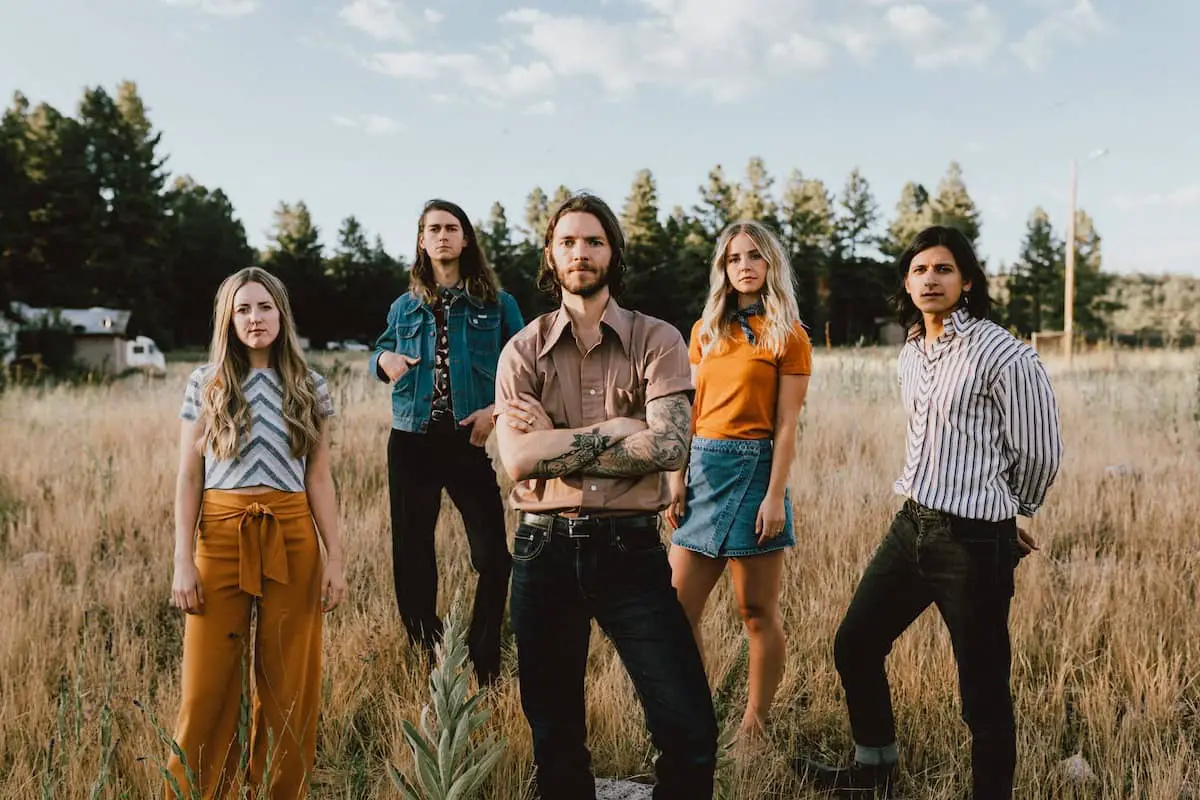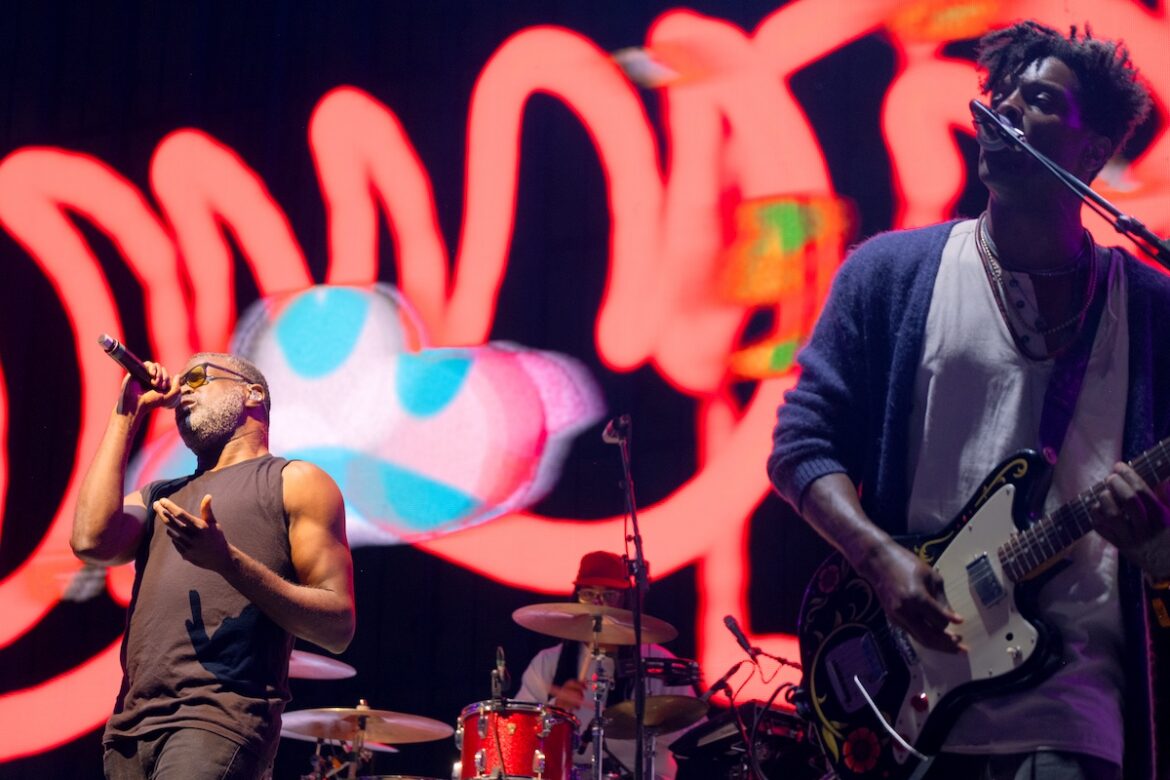
TV On The Radio successfully ran the first year of There Goes The Neighborhood, a Brooklyn-based festival with hand-picked artists that feel like all the parts that make the band as captivating as they are.
There’s something magical about live music in an urban setting – the echo of sound against steel, the glow of sunset filtering through concrete, and the shared pulse of a city coming alive one last time before summer ends.
This September, TV On The Radio hosted the festival iteration of a new music festival, entitled ‘There Goes The Neighborhood,’ at Under The K Bridge Park, a venue located quite literally beneath the Kosciuszko Bridge in Greenpoint, Brooklyn. The space was perfect for the mini-festival: Five artists in total performed below as the setting sun peeked through the gaps between the bridge and roads above, making for a unique listening experience for artists that are just as niche and experimental with their sounds.
If the festival becomes annual, it’s a perfect way to end off the summer season, with TV On The Radio curating a set of artists that they are passionate about and wish to spotlight. This year’s lineup included the punk rock band Spellling, experimental and moody poet/musician Moor Mother, the one-of-a-kind Sudan Archives, and sonic bending DJ Flying Lotus – all before TV On The Radio took to the stage for the final set.
Spellling
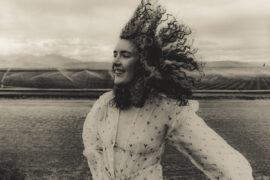
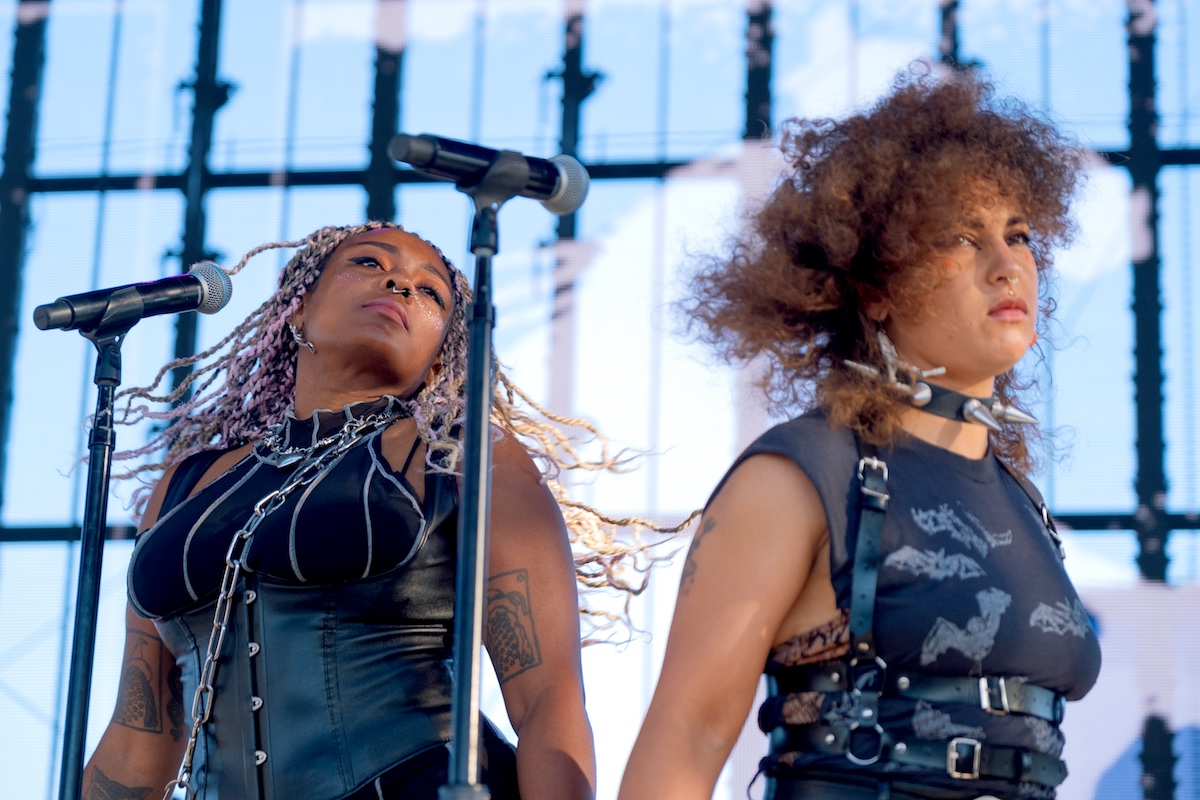
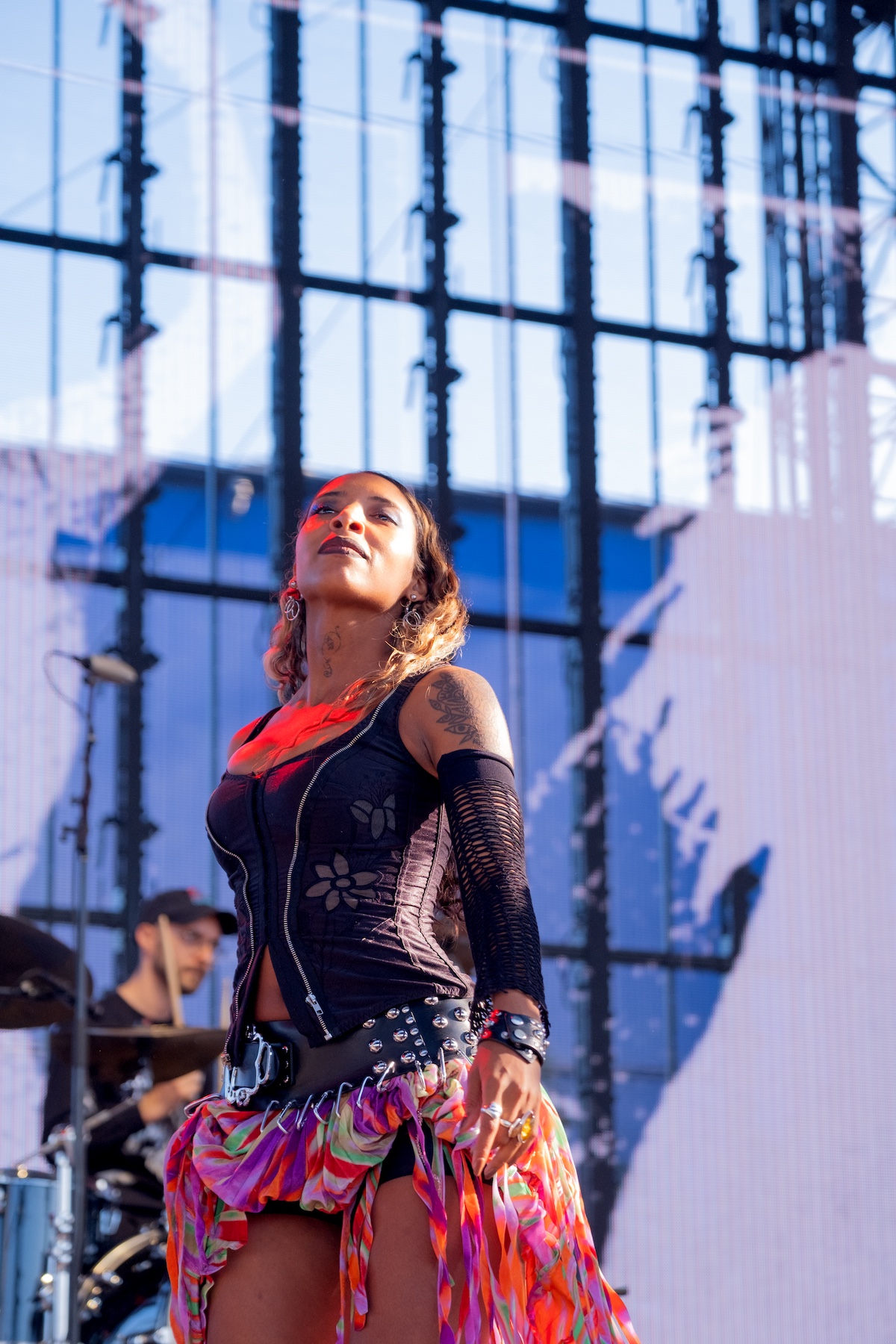
Kicking things off, Spellling was an eclectic mix with equal parts grunge, alternative rock vibes from the early 2010s while still imbuing more modern gothic / e-girl aesthetics with their stage presence. Lead singer Chrystia Cabral has a voice that’s rich and soulful, mixing vocal elements from across the genre spectrum. One moment she’s howling into the mic, the next she’s using a Britney ‘baby voice’ technique only to jump to more witchy, whispery, haunting vocals. It all came together to create a dynamic and textured vocal performance that was only strengthened by her bandmates and the chemistry they shared.
Their musical landscapes are diverse, oscillating between faster paced, more classic rock tracks while jumping into slower, more subdued ballads. Despite the switches in tone, Cabral had an alluring stage presence and was able to match the energy that each track exuded, from jumping across the stage on louder and booming tracks to letting her voice take the lead on songs that embodied a sense of melancholy. They were a great opener to get early festival attendees excited for what was to come.
Moor Mother
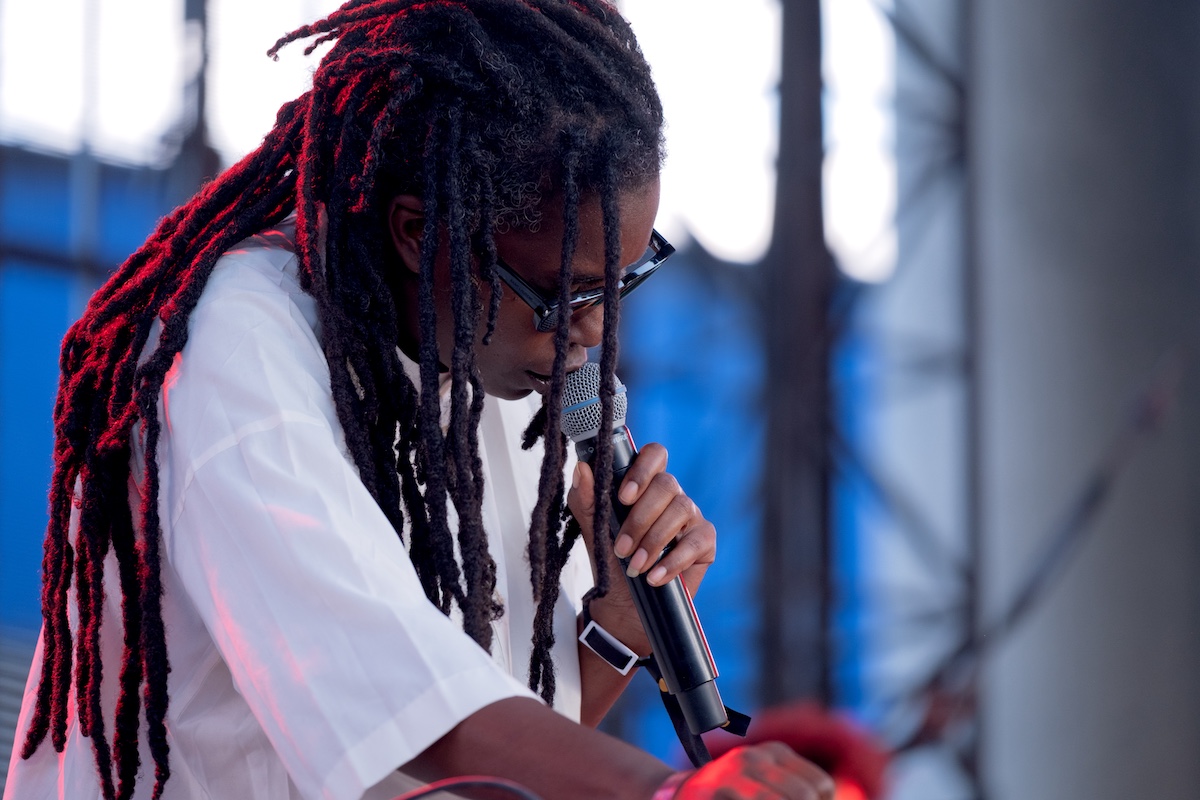
Perhaps one of the most unique and strangest acts of the night came from poet, musician, and activist Moor Mother. Moor Mother’s music is inherently subversive and ambient; the songs lack a traditional structure and are akin to spoken word poetry. She opened up with a rendition of the Star Spangled Banner, bandmates playing the traditional instrumentals of the track as they slowly devolved into more sinister soundscapes, Moor Mother’s lyricism eerily and poignantly reflecting upon the state of the country.
Whose flag will hang?
Whose blood is still dripping?
Oh say can you see where we are going?
Much of Moor Mother’s music seemed to be geared to get audiences thinking and feeling deeply rather than creating songs with a conventional chorus and such, to make them directly confront the uncomfortable injustices that impact so many in this country day in and day out. While Moor Mother certainly isn’t for everyone lines like “We will always vote for our own demise, our own destruction,” to “Who are these so-called artists? They offer no solution . . . just sounds and chaos,” were deeply resonant with the state of the country at large.
Sudan Archives
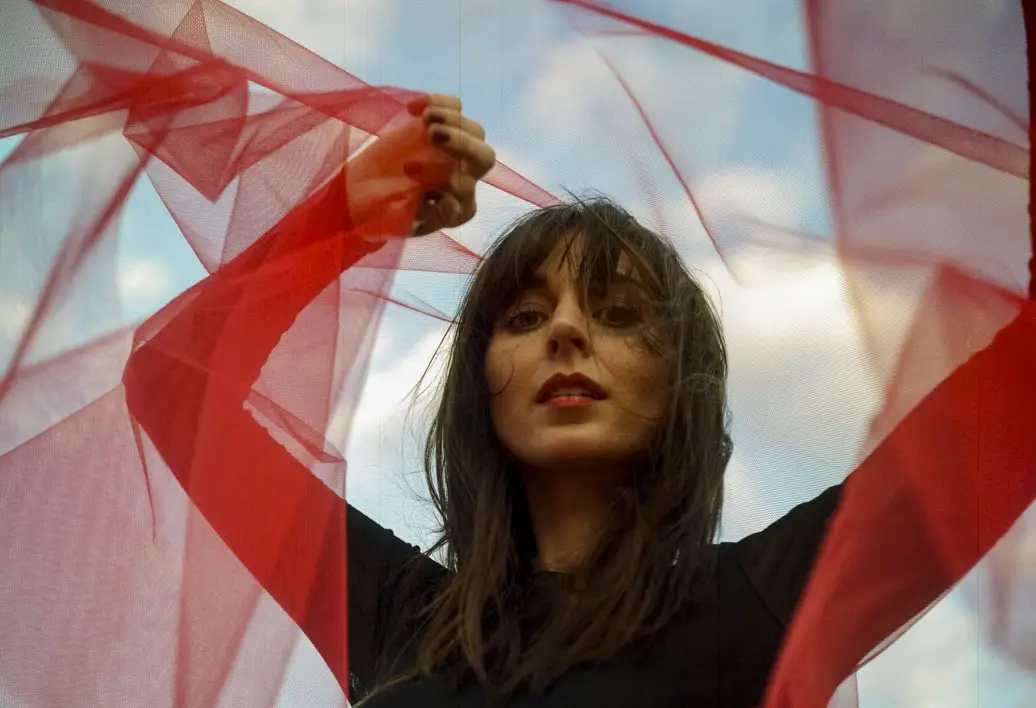
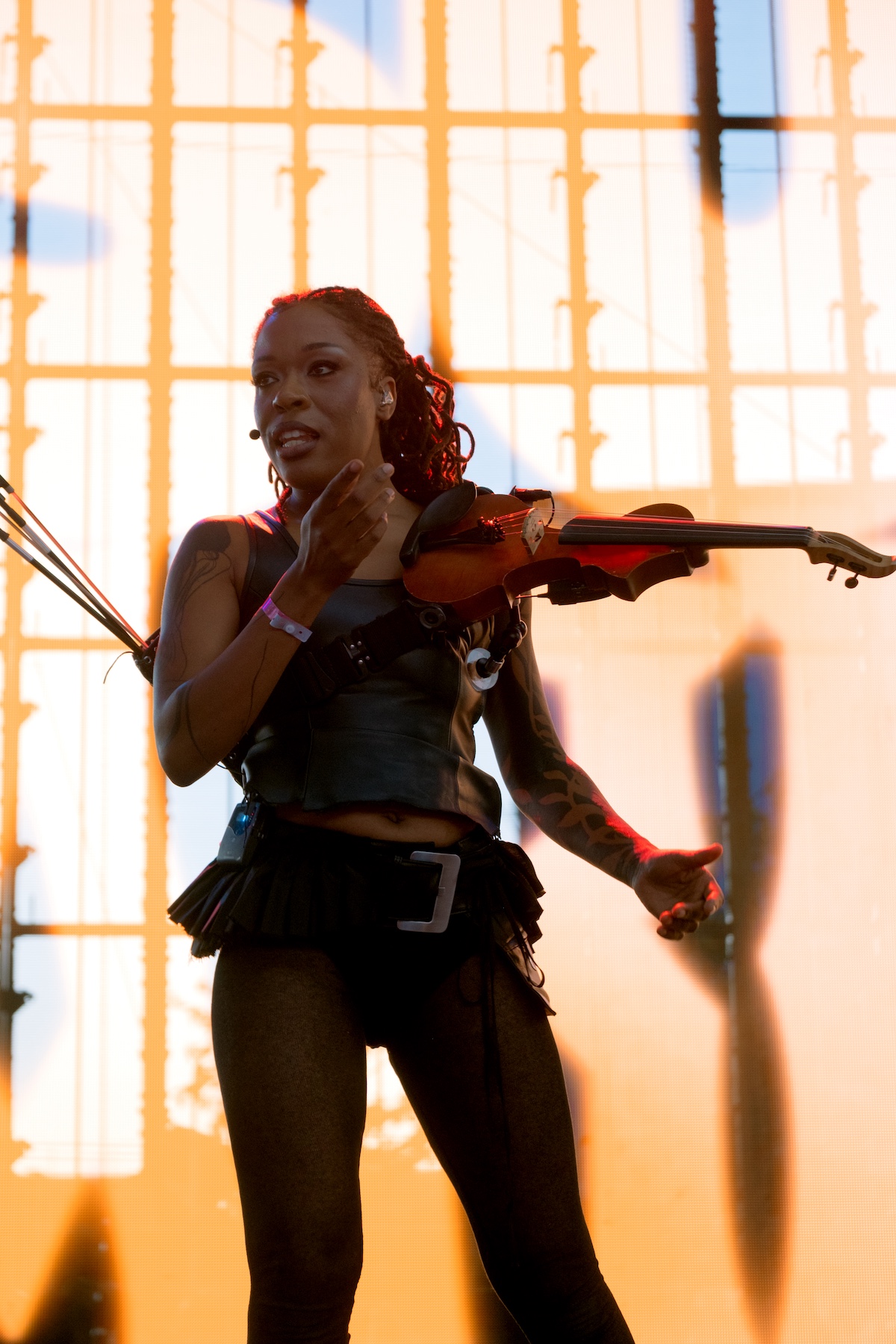
Known for her siren-like voice, performances with her violin strapped around her shoulders, and effortless mix of elements across folk, rock, R&B, and pop, Sudan Archives got the crowd’s energy soaring once she took to the stage. Sudan Archives is one of those few artists that can command the stage by themselves, no additional bandmates or singers were up there with her. Nonetheless, she had the crowd moving and fully enthralled throughout her performance.
What makes Sudan Archives in particular so special to watch is the diversity of her discography; it comes together to create an incredibly unique live performance. One moment she’s playing the violin like a guitar, the next we’re jumping with her as she performs new tracks that mix hyper-pop, house, and rap on “MY TYPE,” only to shift back to an emotionally stirring track where her skills with the violin are on full display. She was able to jump between all these genres without giving the audience whiplash, making her set one of the stand out performances of the night.
Flying Lotus
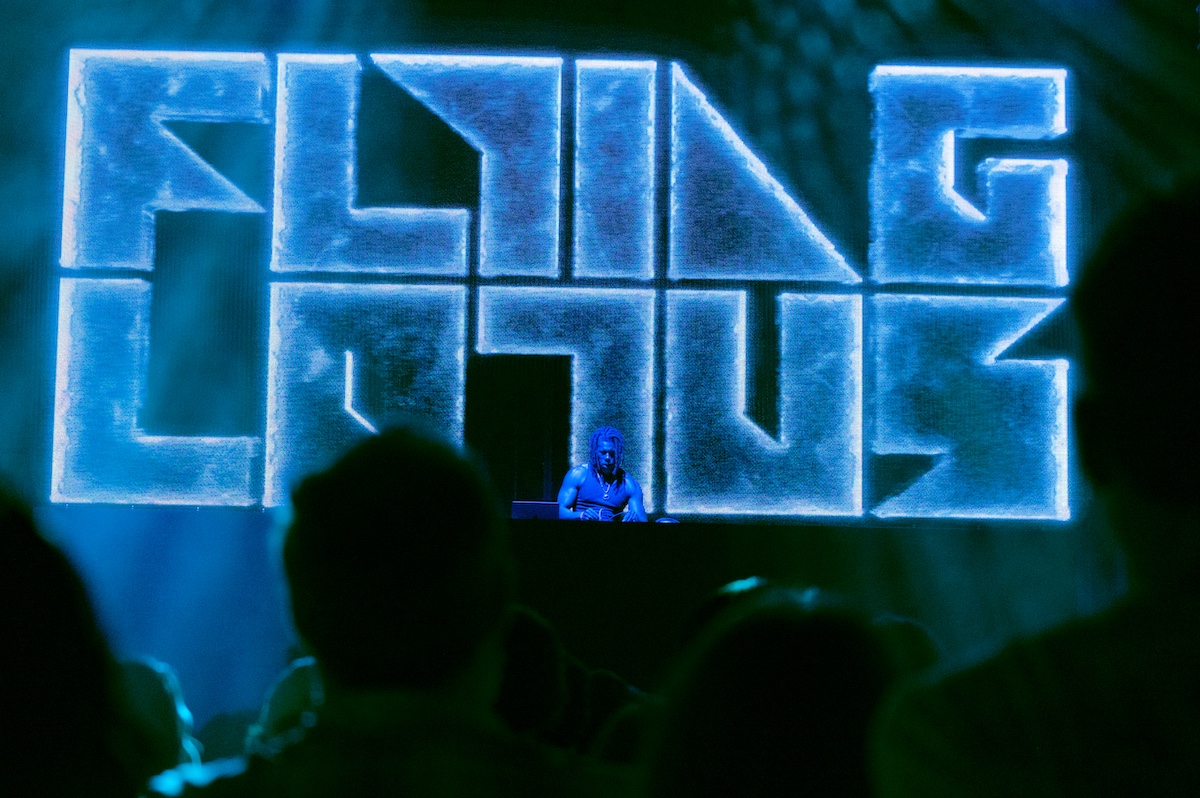
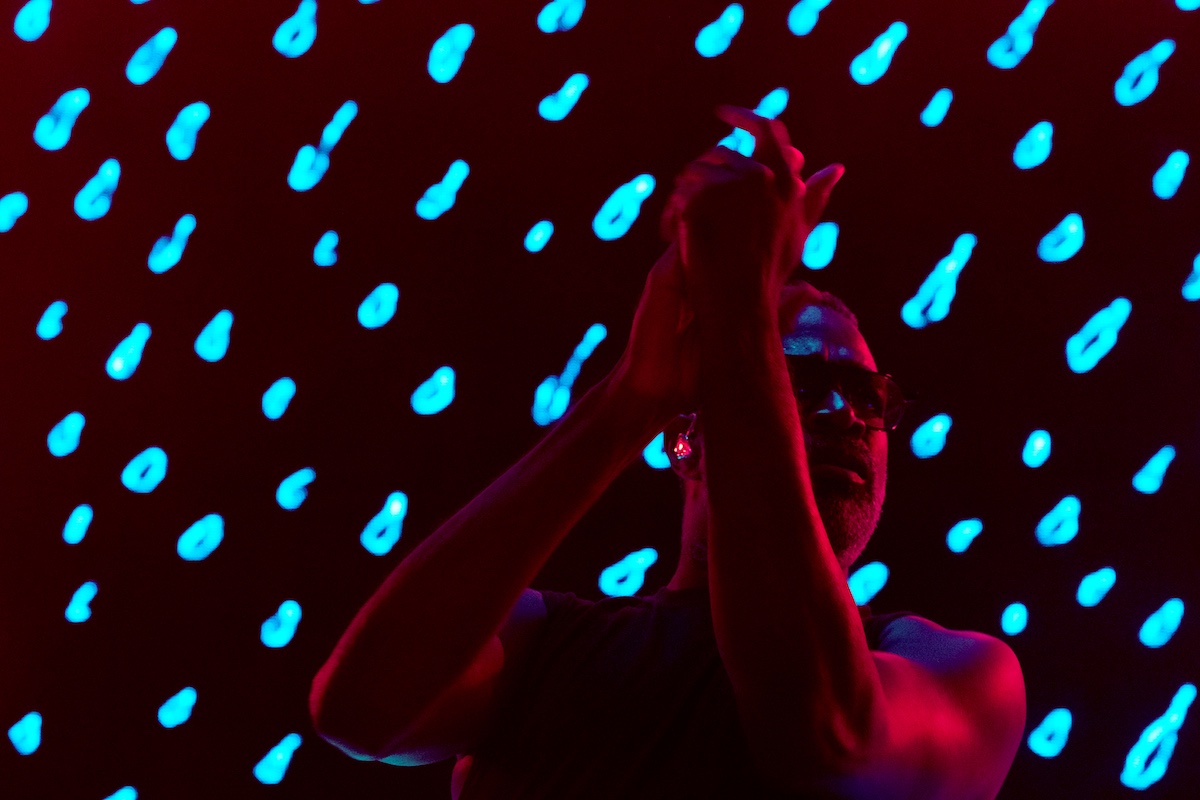
In keeping with the same energetic charge of Sudan Archives, DJ Flying Lotus brought fans a psychedelic set that touched on a wide array of diverse soundscapes. From more groovy sounds to traditional house production, Flying Lotus was a good palette cleanser, allowing festival attendees a moment to dance and be simultaneously mesmerized by the kaleidoscopic visuals that were displayed behind him for the duration of his set.
The visual elements blending and morphing into another in conjunction with his clear mastery of sonics was a particularly impressive part of the night; tracks that clearly had endless moving parts sounded intoxicatingly energetic in a live setting. Flying Lotus was the perfect pen ultimate performer before TV On The Radio came on stage to close out the night.
TV On The Radio
Closing out the night, the crowd beneath the bridge for TV On The Radio consisted of a sea of fans that were palpably eager for their performance. The space beneath the bridge suddenly became overcrowded with shoulder-to-shoulder listeners.
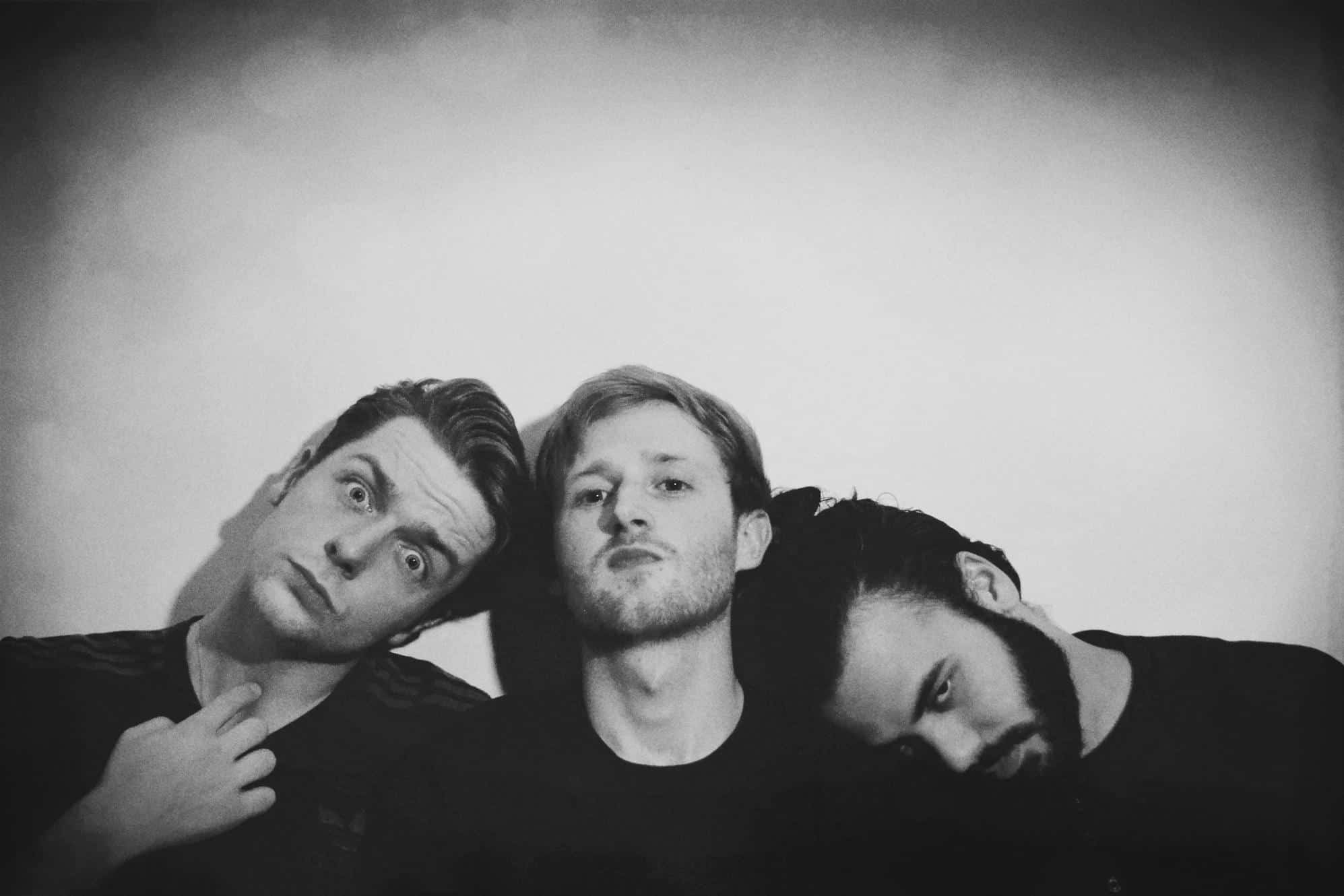
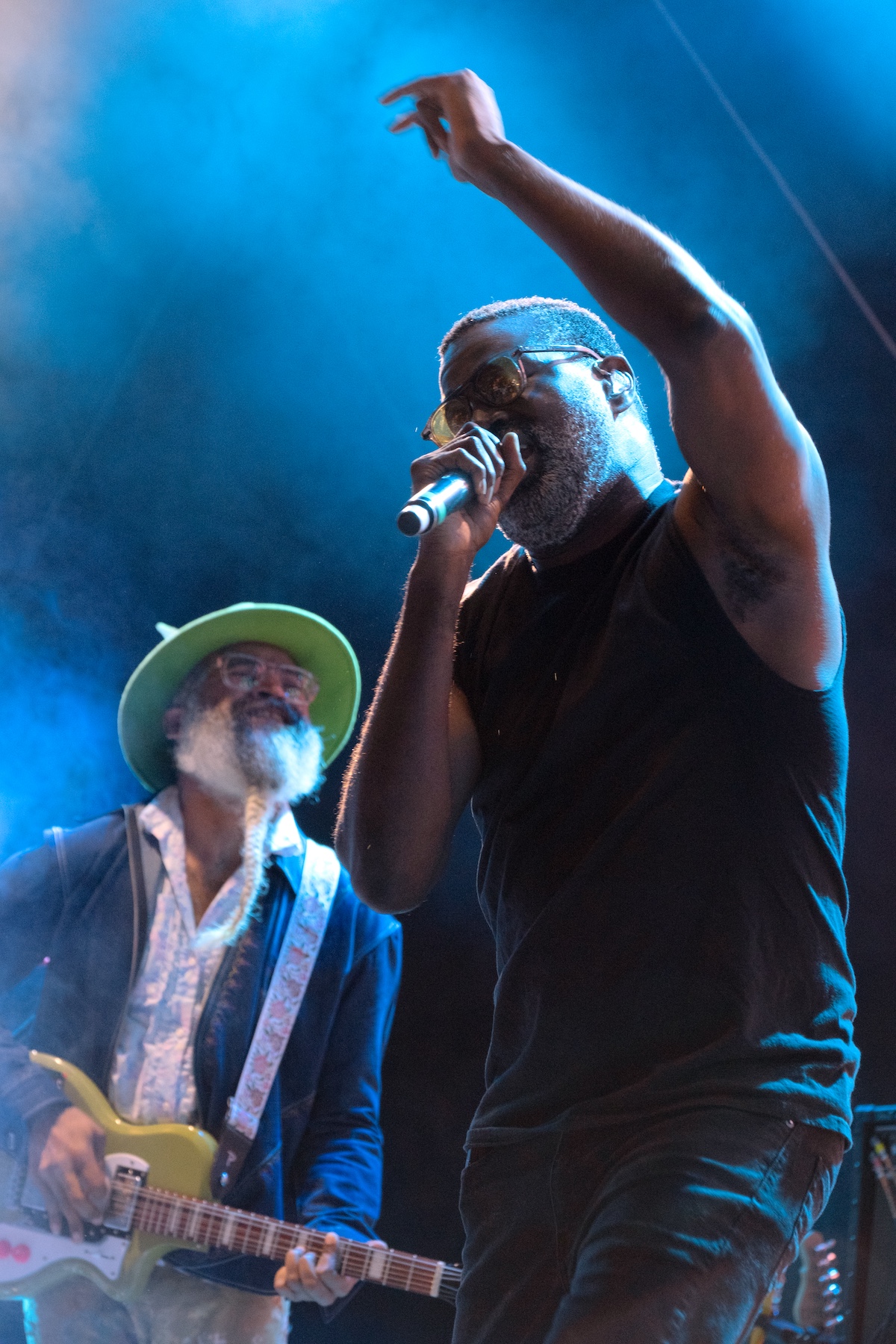
Their performance was full of their signature displays of soaring vocals, band chemistry that is rarely seen among modern day artists, and full of intimate moments that lead singers Tunde Adebimpe and Kyp Malone shared with the crowd.
Adebimpe encapsulated the prior acts in such a heartwarming sentiment, showcasing how much the event and artists he shared the stage with meant to TV On The Radio, “That’s what happens when you bet old, you get to invite everyone you love and watch the fucking show!” From there, the band opened with the symphony of instrumentals and vocals that make up TV On The Radio’s distinct grandeur that flows throughout their music. Both Adebimpe and Malone have rich and distinct vocals, Adebimpe with an expressiveness and intensity that brings a force to tracks he’s leading on while Malone embodies the casual coolness of classic rock voices. When their voices came together throughout the set, it created a beautiful resonance that left the audience incredibly moved.
With tracks spanning more classic pop-rock genres to faster paced head bangers all the way to introspective ballads, TV On The Radio’s set felt like the amalgamation of all the artists that performed leading up to this grand finale. As if the music in itself wasn’t impressive and impactful enough, the band expressed their solidarity with marginalized communities throughout the states and abroad, such as a passionate proclamation of their solidarity with the Palestinian people. With moments like this peppered throughout their set, TV On The Radio successfully ran an amazing finale to There Goes The Neighborhood’s first rendition.
The first year of There Goes The Neighborhood was a festival that had the perfect mix of artists to accompany such a unique venue with a beloved band bringing it all together. Should the festival continue in the coming years, those local to New York should make their way to The K Bridge each September to see what artists TV On The Radio have pulled together. If this first go around taught us anything, it’s that the band has a varied array of musical tastes that compromise talented artists, ones that they’re committed to uplifting with them.
— —
:: connect with TV on the Radio here ::
— — — —
Connect to TV on the Radio on
Facebook, 𝕏, Instagram
Discover new music on Atwood Magazine
© Skyler Kim
 © Skyler Kim