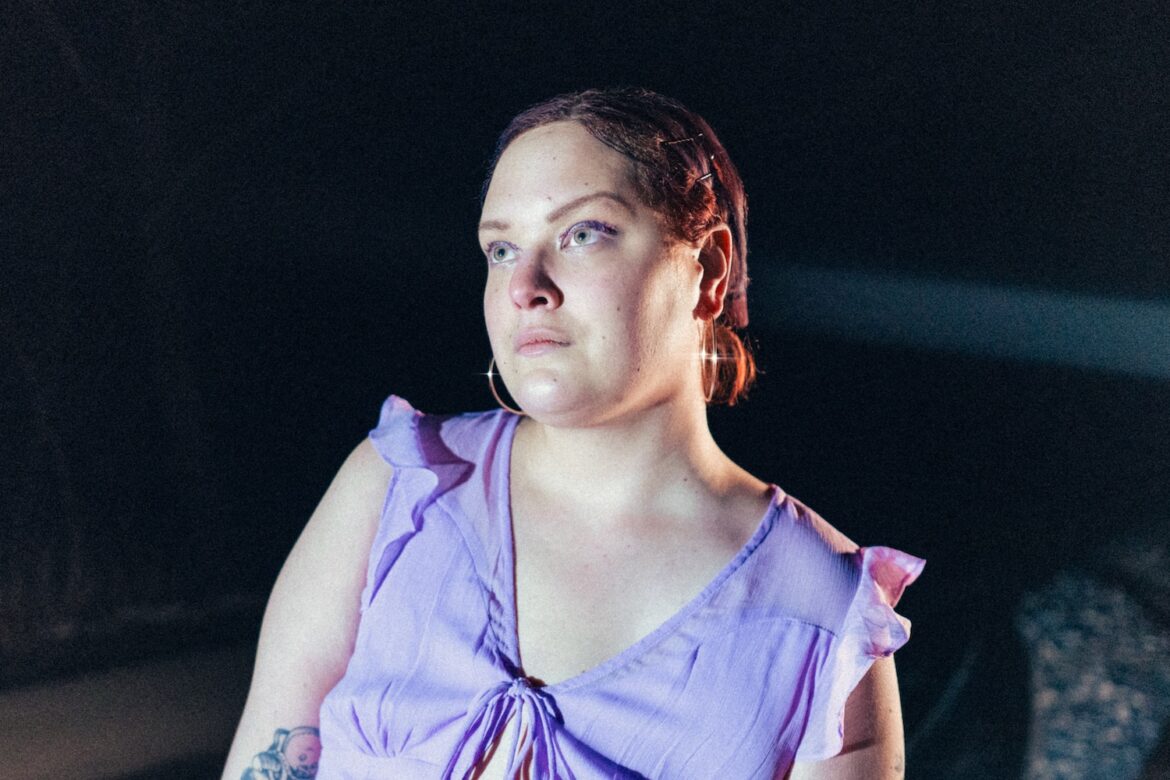
Stevie Knipe opens up about living with cancer, singing what they were once too afraid to put into words, and the making of Adult Mom’s unapologetically honest and raw fourth album ‘Natural Causes’ – a quietly devastating record shaped by illness, endurance, and the hard-earned permission to speak plainly without rushing toward resolution.
Stream: ‘Natural Causes’ – Adult Mom
Ten years into Adult Mom, Stevie Knipe is no longer writing toward resolution.
If anything, Natural Causes exists in the opposite space – where clarity doesn’t arrive as an answer, but as a way of standing still inside what hurts, what lingers, and what refuses to be neatly processed. It’s a record shaped by time, illness, anger, and acceptance, but it doesn’t posture as a comeback or a triumph. It listens more than it declares.
Across Adult Mom’s catalog, Knipe has always written with a startling emotional plainness – songs that feel like they’re being said aloud for the first time, without armor or euphemism. But on Natural Causes, that honesty sharpens. Written between 2020 and 2023 and released via Epitaph this spring, the album arrives in the wake of cancer treatment, long-unraveled relationships, and a decade of personal and artistic self-interrogation. What emerges is not closure, but presence.
Time doesn’t move in a straight line across Natural Causes. Songs written years apart now speak to one another; memories once flattened by survival resurface with new texture and consequence. The distance between then and now doesn’t soften what happened – it sharpens it, allowing Knipe to encounter the past from a body and a vantage point that has fundamentally changed.
“It’s like a portal opening to look at the past in a whole different way – and realizing how many moments were really complicated and nuanced, and how they still live in my body now,” Knipe tells Atwood Magazine.
Rather than flattening experience into metaphor, Natural Causes lets contradiction stand. Rage coexists with gratitude. Humor brushes against devastation. Songs like “Benadryl” and “How About Now” document illness without sentimentality, while tracks like “Crystal” and “Headline” reckon with queerness, memory, and harm through clarity rather than abstraction. Knipe doesn’t ask the listener to witness from a distance – the record invites you inside the feeling itself.
This invitation is mirrored in the album’s sound. Natural Causes moves between jangling immediacy and bare-boned intimacy, allowing acoustic restraint to sit beside moments of distortion and confrontation. The songs don’t build toward release so much as insist on contact – opening with force, pulling back without warning, and refusing to smooth over emotional edges once they’ve been exposed.
That emotional architecture comes into sharp focus across Natural Causes’ standout songs. On “Benadryl,” Knipe documents the isolating haze of chemotherapy with stark restraint, singing softly over gentle acoustic guitar as small, ordinary details carry the weight of survival without embellishment. “Why don’t they have any windows here?” they wonder aloud. “Would it kill them to have something without a gray hue? If this is where the dyin’ go then perhaps they need to fit the dyin’ mood.” The song unfolds in fragments – bland, uninspiring hospital rooms, IV Benadryl, jokes made to stay upright – letting exhaustion and fear exist without dramatization or narrative polish. “Every part of this becomes a new nightmare,” they confess at one point, reckoning with the raw realities of their hardship before landing on a poignant, ever-so-slightly hopeful note. “The light at the end keeps getting further out, but once again it flickers and blinks just enough for me to get through it again. Another day, another pain, but at the end of it I think I’ll be okay.” The intimacy of their performance makes the song feel almost overheard, as if the listener is sitting beside Knipe in the quiet in-between moments of treatment rather than being guided through them.
The same clarity carries into “Crystal,” which shifts the lens inward. Built on deceptively buoyant folk textures that later give way to feverish alt-rock eruptions, the song captures the dissonance of knowing yourself while still being seen incorrectly – emotionally, romantically, and queerly. Its sweetness masks a deeper ache, one that surfaces as Knipe sings from behind the barrier of self-recognition and self-protection: “I am living in crystal / Two way glass / I can see myself / But you cannot see me back.” As the song swells and fractures, that internal dissonance finally spills outward, turning fragile introspection into something louder, rawer, and impossible to ignore. “Crystal” holds that tension without resolving it, letting the pain of misrecognition linger as both a wound and a moment of hard-earned clarity.
I am living in crystal two way glass
I can see myself but you cannot see me back
And I sit at a long brown conference table
Determine if it’s worth it just to pass
I’ve been stomach sick lately
I fantasize greatly
Of passing out in a public place
And the ambulance comes in
They call the next of kin
It’s months before I wake
And by then everything is okay
I wait in line for a better time
Breaking the glass comes with bad luck
But it eventually will pass
Till then I’ll try to find safety behind
It’s not you
I need someone whose more kind
As Natural Causes draws to a close, the record turns toward its most unflinching questions – not about survival alone, but about agency, endurance, and what it means to remain present in the face of uncertainty. If “Benadryl” sits with survival, “How About Now” confronts it head-on. The song refuses euphemism, tracing the brutal immediacy of illness and mortality as Knipe reckons with control, fear, and endurance in real time – not as abstract concepts, but as lived conditions that shape each day: “You always wanted me dead, well how ‘bout now?” they sing starkly. “I guess I’m gettin’ pretty close. If I refuse the treatment, it’ll spread out to my bones, then there’s no turning back, I’ll be dead before the fall.”
That intensity carries into closing track “Headline,” where memory and imagination blur into something more volatile. Revisiting scenes of adolescent vulnerability and unspoken harm, the song builds toward a vision of reckoning that is furious, surreal, and unresolved – not a fantasy of justice, but an expression of rage finally allowed to surface. Natural Causes ends without offering comfort or closure, leaving the listener suspended inside that final image, asked to sit with the weight of what was endured rather than be guided gently out of it.
Taken together, these songs don’t just illustrate the emotional scope of Natural Causes – they enact it.
The record’s most difficult moments aren’t isolated peaks, but part of a sustained reckoning, one that unfolds gradually as Knipe allows themself to name experiences that were once endured in silence. In that sense, the album’s intensity isn’t about escalation, but articulation – about finding language for what has long lived beneath the surface.
What emerges from that articulation is a form of anger that isn’t performative or explosive, but clarifying. The rage on Natural Causes isn’t interested in catharsis for its own sake – it’s the result of finally naming what had long been absorbed, endured, or redirected inward. Rather than erupting, it steadies the music, giving shape to experiences that could no longer remain unspoken.
“There was no option to not just be super plain about what I was feeling and what was happening,” Knipe explains. “It was a huge turning point for me personally, because I was finally able to say things that I was too afraid to say and too afraid for people to hear.”
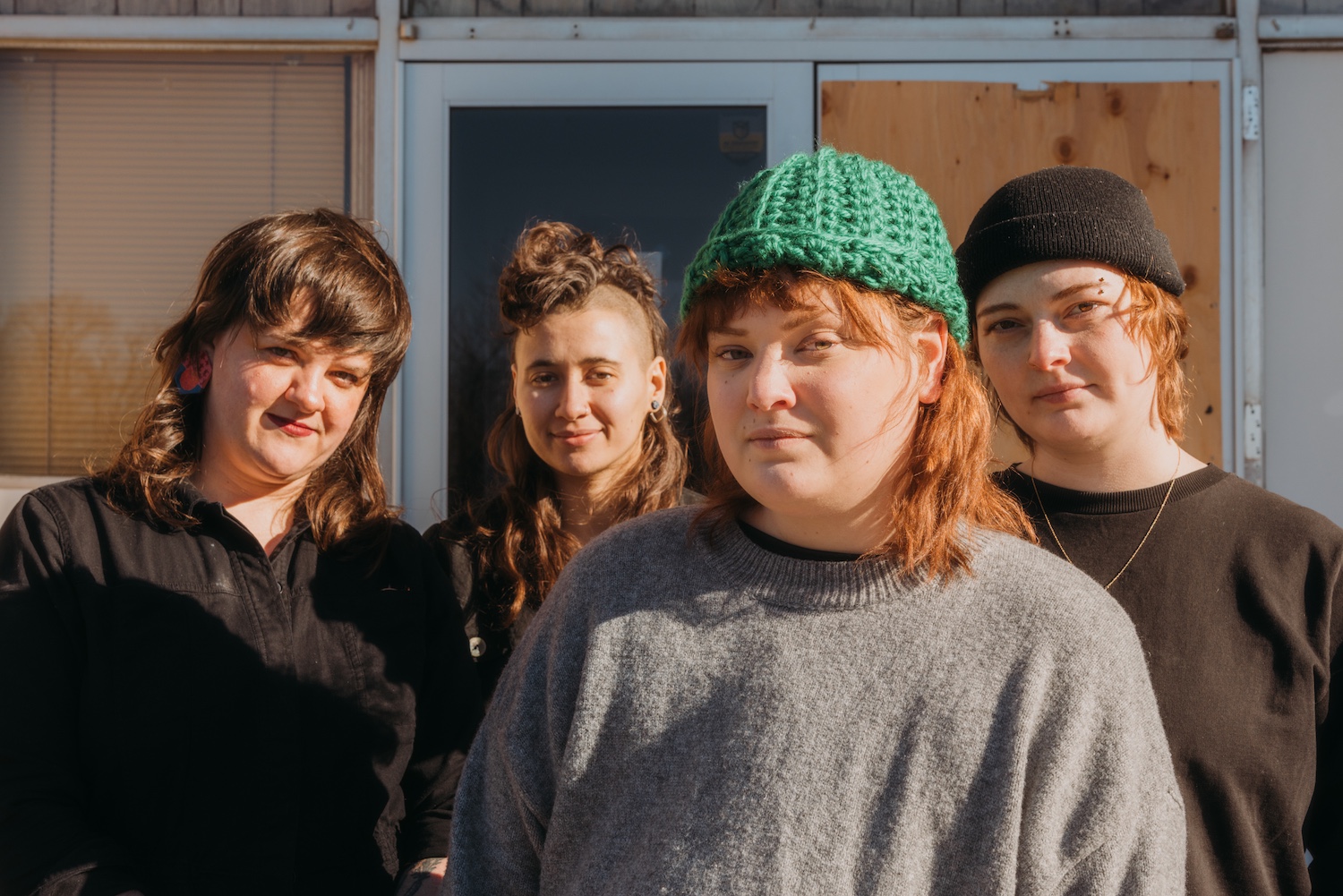
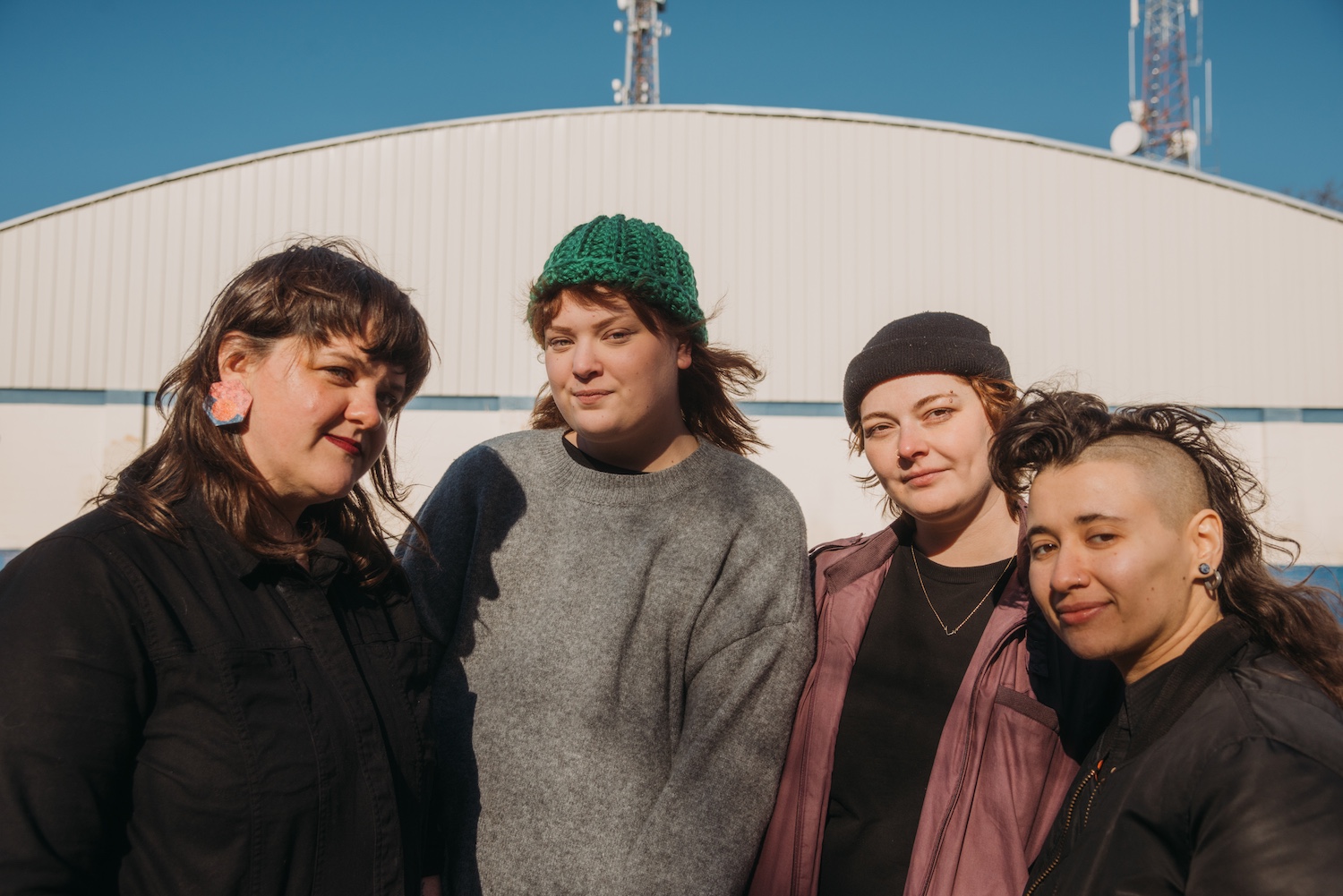
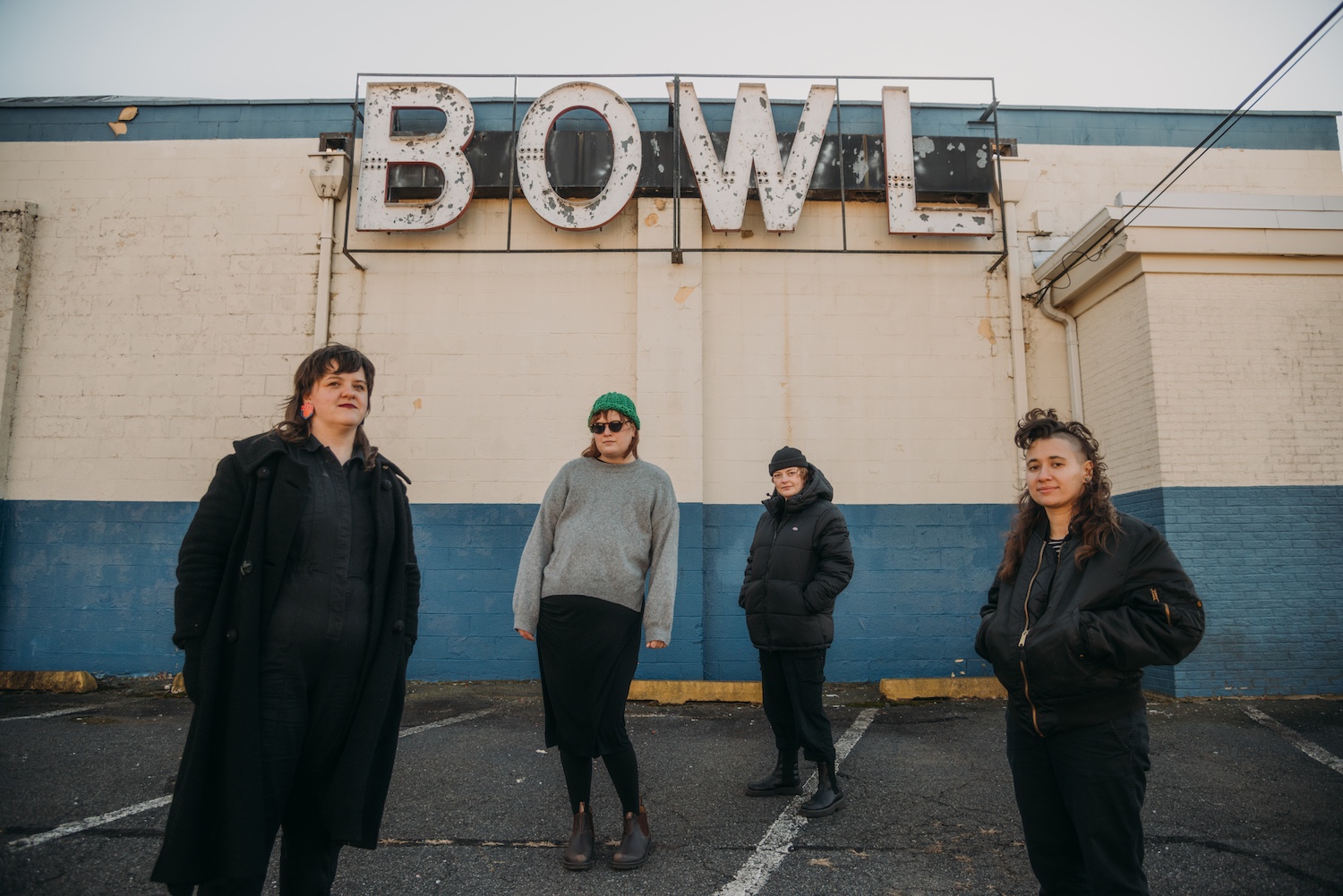
That plainness doesn’t mean emotional simplicity. If anything, Natural Causes is Adult Mom’s most emotionally layered work – not because it says more, but because it resists explaining itself away. The album was recorded collaboratively during an intensive session in New York’s Hudson Valley, with the full band – Knipe, Allegra Eidinger, Lily Mastrodimos, and Olivia Battell – shaping every detail together. That communal process mirrors the record’s deeper truth: That self-knowledge doesn’t arrive alone.
“It’s never really over,” Knipe says, reflecting on different aspects of trauma. “But how do we move through? How do we move through a moment? How do we feel a moment and move through and have radical acceptance?”
Throughout our interview, Knipe returns again and again to the idea of control – not as dominance over circumstance, but as a reclaimed relationship to one’s own life.
After years of writing from survival mode, Natural Causes marks a subtle but profound shift: The permission to remain, to feel fully, to stop rushing toward meaning. “I think it’s really helped me work through a lot of trauma in my life – and to make these distinctions between what I can change and what I can’t,” they share. “This really helps solidify my role in my own life.”
There’s an unmistakable weight to the way Knipe speaks about the present – not with fear, but with steadiness. Cancer is not framed as a metaphor or a lesson; it is named plainly, acknowledged as ongoing, and held without spectacle. “I’m going to be in cancer treatment for the rest of my life, whatever that looks like,” they admit.
And yet, Natural Causes is not a record defined by illness. It’s defined by awareness – by the decision to stay emotionally awake, even when the answers don’t come. What gives this album its quiet power is not the promise of resolution, but the refusal to look away. Adult Mom’s songs don’t offer answers so much as companionship – a way of sitting with unfinished stories, unresolved pain, and the slow work of learning how to live alongside them. In conversation, Knipe speaks with the same quiet precision that animates the songs themselves: Attentive, self-aware, and deeply human.
Read on as Stevie Knipe reflects on a decade of Adult Mom, the making of Natural Causes, and the complicated work of learning how to live inside uncertainty without turning away from it. What follows is not a narrative of overcoming, but a portrait of someone choosing presence – again and again – as an act of care.
— —
:: stream/purchase Natural Causes here ::
:: connect with Adult Mom here ::
— —
Stream: ‘Natural Causes’ – Adult Mom
A CONVERSATION WITH ADULT MOM
Atwood Magazine: Natural Causes, Adult Mom's fourth studio album, is out now. What has it been like to have this record out in the world?
Adult Mom: Like a huge relief, because it was such a slow process to get it finished. I didn’t want to feel pressured to release, release, release, and thankfully Epitaph was really supportive – they were like, “Take all the time you need.” So it became this very slow-moving process, a huge practice in patience. And yeah, it was honestly just really euphoric and relieving once it was finally out in the world.
Your band has taken on a few forms over the decade or so since you first debuted. For new and old fans alike, who is the band now compared to the one that you first introduced us to back in the 2010s?
Adult Mom: Oh my gosh – it’s funny, because I was just thinking about this and totally forgot to even acknowledge it. In, I think, two weeks is the 10-year anniversary of our first record, Momentary, which makes me feel old – even though I’m not old. But it does spark that moment of reflection, like, whoa. I started this project when I was about 18 or 19, and now I’m 31. That’s prime time for growth, realization, and change. I’m really grateful that this project has been able to document my 20s for me in that way. I think the 18-year-old version of me who threw something up on Bandcamp on a whim would be incredibly shocked at where I’m at now – in a good way.
Momentary, Lapse of Happily turns 10 this year. Let's talk about it for a second. As your debut album reaches its first decade, what is your relationship like with it today? How does it hold up, for you?
Adult Mom: It’s always that thing as an artist where, when you look back on older work, you’re like, oh, we could have recorded this a little better, or maybe I could have added a harmony there. But I’m really grateful that record exists the way it does. I was in college when we made it, and we recorded it at a studio on campus, which was really accessible. We were also surrounded by so many creative people at Purchase College, and that had a huge impact. So yeah, I stand by it.
It’s funny, too, because “Beer at 3am” is probably the song everyone wants to hear – it’s the highest-streaming one and all that. I know a lot of artists can feel annoyed by that, like, this song is ten years old, listen to my new work. But I love that song, and I’m really glad people still connect with it. It’s a mix of feelings for me. On one hand, I look back and think, wow, I was going through so much at 19 when I wrote that record. I just want to hold that person’s hand and tell them it’s going to be okay.
Maybe you can be your own 3 AM now.
Adult Mom: Exactly.
Do you have any other personal favorites from that album that are for you a highlight? Like, ‘I can't believe I wrote that song.’
Adult Mom: Yeah, there’s a song called “Wake,” which is kind of an underrated jam that we actually almost never play live. But I played it recently at a solo show, acoustically, and I was like, oh hell yeah, this song actually rocks. It was funny to go back and realize, oh yeah, I’ve basically never played this song. It’s so old, but I still stand by it. Honestly, I feel really proud of most of the songs.
Fast forwarding a little bit, your third album, Driver, came out in 2021. I hear some similarities between that and Natural Causes, but I also feel like it was its own standalone beast. Were there any throughlines for you between Driver and Natural Causes? Do you feel like you've been following a growth pattern here?
Adult Mom: Yeah, I think the process of making Driver was a huge and important learning experience for me. It was the first time I was co-producing, so I learned a lot about how to communicate what I wanted in a collaborative process. Before that, I was very DIY – either it was fully my vision, or I was deferring to someone else’s opinion on how things should be done. That process was, not to make a pun, about being more in the driver’s seat of record-making.
There was so much pre-production work that we did with my co-producer Kyle Pulley. We spent months fleshing out arrangements through demos, adding MIDI parts in GarageBand and saying, okay, maybe we’ll do it this way. Olivia, our drummer, and I would also sit in a basement together and figure out drum arrangements. It was a really planned process, and while it was challenging, it gave us the tools to eventually produce this next record ourselves. I really don’t think Natural Causes in its full realization would exist without Driver, at least not educationally.
Your latest record is Adult Mom's fourth studio album. Can you share a little about the story behind Natural Causes?
Adult Mom: I wrote a lot of the songs during the pandemic and quarantine era. Many of them were written between 2020 and 2022, which was really the height of the writing. After Driver was released, about two months later, I was diagnosed with breast cancer, which kind of put a pin in everything in my life. I had a lot of time to be reflective during that period, and some of the songs were written after I went through treatment. It’s funny to think about now, because the bulk of the record was written pre-cancer, and then a few songs came after that experience.
As a writer, it’s interesting because so much of the record deals with mortality, and I didn’t fully realize that until we got into the studio. I remember thinking, oh wow, almost all of these songs mention death at least once. It felt like this kind of cosmic thing my brain was doing, like it somehow knew I was about to have a really intense brush with mortality. I think some people are surprised to hear that, because a lot of people assume all the songs were written after cancer, and they weren’t. I think going through the pandemic also had a lot to do with it – your brain starts thinking about things you never really had to think about before.
First of all, how are you feeling today? How are you now?
Adult Mom: I’m well. It’s interesting. When we finished the recording process for Natural Causes, I was in remission and it felt like this record was… not like a goodbye to cancer – I don’t really think of it as ‘the cancer record’ – but like, this way of encapsulating that moment in time for me, and then we’re going to move forward. And I was re-diagnosed stage four last year.
I'm sorry.
Adult Mom: Thank you. I’m OK. I’m well, I’m stable, but I’m going to be in cancer treatment for the rest of my life, whatever that looks like. It’s funny, because I do think it speaks to the message of the record, where it’s kind of depressing and it’s never really over, in different aspects, trauma and all these different things. But how do we move through? How do we move through a moment? How do we feel a moment and move through and have radical acceptance?
I guess your own perspective on this music and this album would have also changed with the re-diagnosis. I wish you nothing but the best with your treatments, first and foremost. It's interesting to me that you mentioned how some of the songs are pre- and some of the songs are post-diagnosis. Which songs were post-diagnosis, and to you, do they ‘feel’ that way, or does it all feel like one record?
Adult Mom: So, the songs that were written post-treatment are “21,” “How About Now,” and “Benadryl.” Those three songs came after treatment. And obviously, “How About Now” and “Benadryl” are very clearly about the experience of treatment. “21” is different and reflects on a college experience, but I don’t think I would have been able to write that song the way that I did before.
Because everyone says this, and when people were saying it to me when I first got diagnosed, I was like, f* off. People were like, oh, you’re going to really start to reflect. You’re going to have realizations. You’re going to have moments of clarity about your past. And I was like, okay, I’m just trying to get through this. But sure, okay, cool. And after I went through all of it, it really did feel like a portal opening to look at the past in a whole different way and to start feeling anger that I had been experiencing differently – anger I maybe hadn’t been allowing myself to feel before.
One of the things I love the most about Natural Causes is how you didn't hold anything back. A few years ago, John Dolan at Rolling Stone called Driver a “coming-of-age indie pop masterpiece.” I would posit that if that was a coming-of-age indie pop masterpiece, this is an ‘adult rock masterpiece.’ I think that the music has leaned farther into the rock space than ever before, and it's a very mature, but still no less impactful expression of adulthood and some of the real troubles and challenges and thoughts we face as we make that next transition from our 20s into our 30s.
Adult Mom: Thank you so much for saying that. That’s so kind. Yeah, it’s also that thing, when I was writing it, I was in love and in a very healthy, happy relationship for many years. I am still incredibly allergic to writing a happy song for whatever reason. I was just in so much writer’s block for so long because I was happy.
I know what you mean.
Adult Mom: Yeah, I was like, okay, and then every lovey, happy song I tried to write just felt forced and trite, or like it wasn’t coming out properly. And so it kind of forced me to reexamine older things and use that as fodder, because I was like, I can’t write about this happy moment in my life for whatever reason. I think it helped me feel more mature about certain things and come into a new perspective for growth, for sure.
Bring me back to the early 2020s, post-Driver headspace. What was your vision going into Natural Causes?
Adult Mom: The one thing that I appreciate about my own songwriting is that the process is always the same. I bring an acoustic demo to my band, and that’s always how we’ve done it, and that’s how we did it for this record. But we were kind of shopping around for different producers and sending a lot of demos, trying to figure out a vibe, for months. And I felt like I was just banging my head against a brick wall, because everyone was so talented, but it wasn’t feeling right. It started to feel really constricting. I didn’t want to feel like I had to follow something up sonically just because ‘Driver’ was successful. And then you start to put so much pressure on yourself – how it’s supposed to sound, how it needs to sound, all of that.
I was having this internal crisis about it. And during that period, my bandmates and I had developed a really strong bond, interpersonally and creatively. I finally felt comfortable not trying to do everything by myself – arrangement-wise, writing-wise. So through the frustration of not being able to find the right producer, I was just like, you know what, f* it. This room of people – everyone in this room is a songwriter or a producer in their own right. I’m very blessed to have the bandmates that I have. Allegra Eidinger, our guitarist, is an incredible producer and songwriter – they have a great project called Allegra Heart. Lily Mastrodemos has an incredible project called Long Neck, and she’s just such an amazing songwriter and instrumentalist. And Liv has been drumming with us for many years. So we were all just like, let’s do this ourselves. Why bring a random person into our little family?
Through that frustration, we were able to turn to each other and really bring it down to brass tacks. We spent a couple weekends in a demo studio, just playing around with every single song until things felt good for everyone in the room.
I'm curious about what the name ‘Natural Causes’ means for you. It's not a song on the album with that name. There's not a lyric in the songs with that name. Where did it come from?
Adult Mom: Yeah, there was a day where Liv, our drummer, and I were listening to the rough bounces on a really long car ride, trying to pin down an album title. And we realized, okay, almost every song talks about death or mortality in some way, just in different ways. So we were like, let’s think about death-oriented titles without feeling super morose. We were spitballing back and forth, throwing out different names.
But then we started having this really long conversation about growth. And I remember saying, this album kind of feels like an industrial building in a place where it shouldn’t be, slowly being overgrown by the nature around it. There are weeds and ivy, and it’s just getting swallowed by its environment. So then we were Googling different biological terms for that process, really getting intent about it. And I don’t remember who said it, but we were like, oh yeah – that’s just the natural cause of what happens to something where it’s not supposed to be.
And then we landed on ‘Natural Causes,’ which I loved because it captures that idea, but also obviously references dying of natural causes.
Thank you for sharing that. I'm curious how it feels on the other side for you as the artist, as the maker of these songs on this album. How do you feel Natural Causes reintroduces Adult Mom and captures your artistry today?
Adult Mom: For me, it feels like Adult Mom fully realized as a band. It really came out of collaborating together in a deep, intimate way. And it’s really emotional and special to me that this is the record we made fully together. So whatever changes in the future – in our individual musical careers or with this band – we’ll always have this. Not as a peak, necessarily, but as a truly realized collaborative process.
For me, it’s a really beautiful record of friendship, even though the subject matter isn’t necessarily about that. But I think it still lives there underneath everything. Yeah. That feels like the best way to put it.
You open the record with “Door is Your Hand,” and the very first line is, “Picturing that you were dead is the only way to cope with my head, but it never lasted long. You'd never let me live with you gone.” What a way to start a conversation. Can you tell me about this song in particular, and what drove you to make it the album's opener?
Adult Mom: Yeah, well, I’m really obsessed with a hook – especially a bold opening lyric. Those are my favorite things in the world, and I try to do that as much as I can. But the song itself was born from an abusive past relationship, reflecting on it and letting myself feel super angry about it. And when we recorded it, it became this kind of 90s, teenage-dirtbag-inspired anger anthem. I remember us being like, oh, it’s gotta be the first song. It has to be the first song because it’s so bold. It just felt like the strongest way to open the record. So it was us being a little cheeky, like, we want it to feel almost like a smack in the face right when the record starts.
You go on to sing, “and you took what you wanted and you slammed the door in my face when I resist. I picture your head rolling off into a dead end.” It's an apropos conclusion to what you start. At the same time, it's such a vivid, raw fantasy. Once again, I love how you trade decorum for that straight fire. What I really appreciated about that song is how you tell it like it is and you don't hold back. I really admire that as a way of setting the scene for all that's to come. But also just making a song that feels good – that isn't self-censored.
Adult Mom: I think with this record as a whole – and especially that song – I really worked hard to stop censoring myself, or worrying about how certain people might react to the subject matter, and instead let myself feel freedom in writing what I was actually feeling. Then I could come back to it and be like, okay, maybe that part was a little harsh, maybe I feel differently about that, maybe I’ll change it.
I think it takes getting older, and processing and healing, to be able to have healthy, unbridled anger that doesn’t feel impulsive. And that song was directly birthed from a trauma-therapy exercise my therapist was doing with me, where she would have me picture the person that hurt me and run them over with a car. Which is so unhinged to say – every time I tell someone that, I’m like, I’m not a murderer. I would never do that. I’d never do that. I’d never do that actually.
But it’s really just a way to trick your brain into having some sense of control over a situation you weren’t able to control, right? So the song started as this question of, okay, what would you do if that person were in the room with you right now and you felt threatened? And obviously, I would never murder anybody. But it’s an empowering PTSD process – a revenge-fantasy space – while still trying to be mature and thoughtful about it.
I was also really fascinated by some of the lyrics in “21.” “Twenty-one in the corner of my mind, would have died for the antonym of blind to see. Twenty-one, what a stupid reckless sage, all the happiness that you had waged.” You weren't kidding earlier when you said you're allergic to writing a happy song. Obviously, this was written on the other side of your 20s, and I'm kind of curious what “21” represents to you?
Adult Mom: Oh, yeah. I mean, I think “21” is my favorite song on the record, maybe. It changes. Only because it’s just so fun melodically to play. But the age 21 for me was total chaos. Chaos, chaos, chaos. Constant heartbreak, coming out as queer, being slammed with gender and sexuality realizations. Early 20s are just a slap of, who am I? Who am I becoming?
And I was also drinking a lot back then. Through most of my 20s, I was a big drinker, a partier. On the back half of my 20s, I stopped drinking. I quit, and I still don’t drink. Once I stopped, I could see more clearly that my relationship with alcohol had been problematic. I started looking back on moments where I was like, oh, I was using alcohol in an unsafe way.
So I feel like that song came from looking back on that period with more distance and clarity. “21” wouldn’t have happened if I wasn’t sober. There’s definitely that aspect of it.
The end of that song feels kind of like a post-mortem reflection on one’s 20s.
Adult Mom: Yeah, it’s like, oh, I’m gonna procrastinate. I’ve always been incredibly self-aware, like, okay, I know X, Y, and Z is a problem, and I’ll deal with it eventually. I know it’s going to be dealt with because I know I have to grow and change that behavior. But when you’re in your 20s, especially your early 20s, the stakes just feel so much lower. It’s like you feel like you actually have all this time for things to change. Drinking too much, smoking cigarettes, whatever. At least in my early 20s, it didn’t feel like, oh, this is bad for me. And then in your later 20s, especially after cancer, it’s like, yeah, it suddenly feels a lot more urgent.
“And you'll go to bed real early, and you'll meditate, and you'll leave the party late, and you'll separate, and you'll think yourself deserving, and you'll liberate, and you'll get closer to thirty, and you'll resign your hate.” It's a beautiful, mature approach to the way that we grow from our 20s into our 30s, from reckless to more thoughtful, and taking care of ourselves in ways that help nourish our everyday, rather than living for the moment. I feel like this brought a positive, anthemic spirit to the act of being out of your 20s and into your 30s; maybe we don't have it all figured out, but hey, we're trying.
Adult Mom: Yeah, it’s so funny. I have so many friends who had a lot of anxiety about turning 30, and when I turned 30 last year, I was like, finally, I’m in my 30s. I feel like since I was a child, I was always called an old soul or whatever, and I couldn’t wait to stop dealing with petty stuff. I feel more fully realized in my 30s. There’s all this pressure built up to it, and then once you hit it, you’re like, oh, this is actually pretty chill. I don’t have to do anything I don’t want to do socially. I’ve become so much more brazen. I’ll go to a social event, and in the past, if I wanted to leave, I’d be like, oh, I have to go feed my cat or whatever excuse. Now I’m just like, I’m really tired. I don’t want to be here anymore, so I’m going home.
The difference of speaking up for yourself rather than making excuses to fit in is so liberating.
Adult Mom: Because your peers are also just like, yeah, I’m also tired. Or they’re like, oh, I totally get it – I’d also rather be home watching TV than at a loud bar. The stakes just change because you’re more self-reliant. And for me, the worry of rejection or loss – like losing friendships or whatever – really shifted once I realized I could rely on myself more. And yeah, it becomes this feeling of, okay, if this doesn’t work out, it doesn’t work out, which is not something I felt in my 20s. Back then it was like, if this doesn’t work out, I’m going to die.
Everything was quite literally life or death. And then you're like, no, those stakes were low.
Adult Mom: Yeah, it’s ironic because then when I got cancer, well, it is actually life or death now. So really changes your perspective on things that do not matter.
I understand. So, my current favorite song is “Crystal.”
Adult Mom: I think that’s fun to know. I love that.
Both the lyricism and the storytelling on this song, but even more importantly, the way that it rises from this soft folk face to this brazen, outpouring toward the end. I just think it's a beautifully, perfectly crafted song. What's the story behind that one? What is it about to you?
Adult Mom: It’s about a high school relationship, my first relationship ever. It was my straight era, which unfortunately lasted longer than it should have. I was dating a guy for a couple of years, into early college, so it was a very transformative relationship. But essentially, as 17-year-olds dating each other goes, it was less than perfect.
At the time, I was 17 and kind of knew, in the back of my mind, that I was gay. But it was that thing where I was like, hmm, not gonna approach that right now. Not gonna approach that right now. And this guy was really obsessed with me, or just very in love with me. I cared about him and all that stuff, but I didn’t know why I wasn’t as in love with him as he was with me. I just kept faking it for a long time.
The weird part was that he constantly accused me of being a lesbian in our relationship. And at the time, I wasn’t fully aware of it, so I was like, no, I think you’re being paranoid. Looking back, it’s pretty hilarious, because one, I am. But two, I was like, dude, I was the co-president of the Gay-Straight Alliance at our high school. And I was like, no, I’m an ally. I’m an ally. That’s why I’m so involved in LGBTQ human rights, and that’s why I’m going to this queer youth retreat for the weekend.
It’s so wild. I want to shake that person and be like, you are gay. Okay, you are gay. But anyway, it’s about knowing that thing about yourself without fully realizing it, and feeling trapped inside heteronormativity.
Can you talk about the experience of putting these feelings down in paper like this? What is it like to bring words like that to life in song?
Adult Mom: Yeah. It’s just so fundamental to my healing and growth as a person, because when you’re older and able to look back, you’re always going to have a more mature perspective. Thankfully, I’ve been in therapy for about half of my life, so so much reflection has happened.
I’ve had conversations with my therapist and my friends where I’m like, I don’t know why, but in high school I always fantasized about passing out in science class and being wheeled to the hospital, and having that attention, that circle of protection around me. I craved it so heavily. And yeah, it’s a shameful thought.
So to be able to put it on paper and then sing about it, I think it normalizes those feelings, and I’ve found that I’m not alone in them. It takes a lot of courage. It’s kind of like exposure therapy, where you’re just like, okay, it’s out there. This is how I feel, and this is how it is.
You released “Crystal” as the lead single off this album. How does this track fit into the overall narrative, if there is one, of Natural Causes?
Adult Mom: I think some of that process of wanting to faint, and wanting everyone to be around me and take care of me, was part of the early stages of me working through ideation, like suicidal ideation. Not to say it in a super dark or intense way, but I do think that’s where it began. And I think this record, for me, really establishes a difference between control over your own life and the lack of it.
So “Crystal” is this moment of not having control over my identity, my life, or my relationship, being stuck in a very constricting situation and desperately wanting to establish control in ways that maybe weren’t healthy. Wanting to pass out, or be hurt, in this passive way. And to me, that feeling of searching for control threads through the record in a pretty consistent way.
Why do you think it is that at this juncture that became such a salient theme for your writing?
Adult Mom: I think it’s just naturally how my progression has gone, like brain-wise. I think especially after going through treatment with cancer, but then also like getting sober and just like not like this, just like there’s this like these intense moments of clarity through both of those things. And it is really like a boot camp of trying to establish a difference between things that you can control and things that you can’t. And it’s that is like the thing that I think of every day when I wake up or whenever every single day, every moment of my life is like, right, what can I do and what can’t I? And that is like a huge marked difference from how I would ever approach situations in the past. So I think like that kind of mentality has, yeah, just got me there with songwriting.
When it comes to control over your own life, what are you most grateful for having?
Adult Mom: I think presence. I’m just most grateful for being able to be present.
Do you have any definitive personal favorites or highlights off this record that you definitely want to mention?
Adult Mom: Yeah, I mean, “21” is one I really love. It’s funny, whenever I talk about this album, I’m like, what? I forget all the songs on this record. “Benadryl” and “How About Now” feel like sibling songs to me, and those two I’m really, really proud of. Being able to be so point-blank about things that are incredibly hard to talk about, and also incredibly hard to hear on the other side, felt important. Playing those songs for my parents was emotional, everyone was crying, you know. It was all part of being radically accepting of the situation.
You close the album with another stunner, Not only are the words of “Headline” beautiful, but also I feel that your vocal harmonies take it to the next level. You close out this album – one that is admittedly in the wake of COVID and cancer – on a high note, with a glimmer of hope.
Adult Mom: Yeah, I love that song. It was so fun to arrange with the band and to produce. I think there’s something we really love as a band – this sense of cheekiness, a kind of tongue-in-cheek, slight campiness to things. And we’re all huge fans of alt-country – Lucinda Williams is massive for all of us. So when I brought them the song, everyone was like, oh, it feels a little twangy – we should lean into a country-ish vibe.
Once we decided on that, it became really fun to borrow techniques that country and Americana folk songs use – three-part harmonies, fiddle, all of these different textures. For me, it’s a little campy – kind of on-the-nose campy, which felt right because it is a revenge fantasy song.
When I was writing it, I was thinking a lot about the movie Holes – I don’t know if most other millennials have seen it or read it – and specifically Patricia Arquette’s character, Kate Barlow. She has this huge redemption-revenge arc, where the racist cop kills her boyfriend and then she goes on this murderous rampage for decades. That character was really at the forefront of my brain when I was writing the song. I was like, oh yeah – what would you do to those evil boys?
I also can't let you go without talking about “How About Now,” which is the darkest fantasy on the record – and maybe the most unfiltered song. You really allowed yourself to say all the dark and scary thoughts that polite society tells us not to say. “You always wanted me dead. Well, how ‘bout now? I guess I'm gettin’ pretty close if I refuse the treatment.” You close it by singing, “And I'll survive it. I'll get through it. I'll survive it. But at what cost to me?” I'd love to learn more about that song, and what it means for you. Once again, I imagine that writing these words down is its own form of therapy… But I don't want to assume, and I'd love to hear you talk about it if you don't mind sharing.
Adult Mom: That song came later. So after I finished treatment – chemo, radiation, surgeries, all the big stuff – I didn’t write a song for almost a year. It was just a full drought for me. And it was really frustrating because I just couldn’t write about cancer yet. I couldn’t, because it didn’t feel like it was in the rearview. It just felt so present. So it took almost a year for me to even write any semblance of lyrics in my notes app or in my journal.
And that song came very suddenly. There are some songs that come out that feel almost hypnotic to me, where they just come out and there’s no thinking at all. And then there are other songs where there’s a lot of craft involved. This one was just so natural. I was literally lying on my bed with my guitar, and the chords came out, the first line came out — that was the first thing. And from there, everything just opened up. It felt like floodgates opening, and everything flowed out so easily. It was so cathartic. I was sobbing after finishing it.
And honestly, I think the whole process of writing that song couldn’t have been more than a half hour. I know. And it’s that thing where, as a writer, when you get that high of, oh my god, that was crazy, that just came out, you yearn for it. You want it all the time. But for me, there was no option to not be super plain about what I was feeling and what was happening. It was a huge turning point for me personally, because I was finally able to say things that I was too afraid to say — and too afraid for people to hear.
I think being a cancer patient comes with this kind of toxic positivity and warrior mentality. People say things like, you’re so strong, you’re a warrior, you’re going to beat this, you’re in a battle, you’re going to get to the other side. And I had a lot of resentment about that, because it always just felt like something really shitty that was happening to me. This song was a way of working through those feelings — like, is all of this worth it? Is all of this worth it just to continue on?
My body was decimated by chemo, radiation, and surgery. And after going through all that, it’s like, okay, you’re not dead, you’re better. But then it’s also like, holy shit, I’m fully in a different body, and I’m a fully different person. So at what point is it okay? At what point is it too much? Those thoughts didn’t feel okay to share with other people, because everyone was just like, we just want you alive, you know? So yeah. That was it.
Do you have any personal favorite lyrics in on this album that really resonate, stand out to you still?
Adult Mom: Hmm. I loved writing the bridge of “Burned Off.” I’m trying to remember what the lyric is… “I wanted to hurt you back in a sit down whisper note. Try to find the upper hand so I could bend it until it broke.” I really love that line. There are some lyrics where I’m like, oh, that’s a lyric. Like, that feels like a lyric.
It does.
Adult Mom: My AP lit teacher would have been happy or proud of that one. I like that one a lot. There are several lines in “You in June” that I really love. I think the repeating pattern of, “on the first day, on the first month,” on whatever, the second month, all those words, lyrics… I like the patterns of that.
What do you hope listeners take away from Natural Causes, now that it’s out in the world?
Adult Mom: I think I would like people to listen and feel more trusting of their emotions and their first instincts. I think I want people to feel the catharsis of it, and maybe even feel inspired by that. And I also hope they feel like a witness to a story, while still being able to reflect on it in their own lives — which, I guess, is kind of the point of all of it.
And what do you feel you've taken away from creating it?
Adult Mom: I think it’s really helped me work through a lot of trauma in my life. It’s also helped me make clearer distinctions between what I can change and what I can’t, like I said earlier. That process has really helped solidify my role in my own life.
One of the lyrics that stood out to me the most is, “hostage muscle to the skeletal, I cling to what I can control, and barely grieve the things the cancer stole.” It definitely speaks to what you just shared. I know this record was written a few years ago, and we've talked about how much has changed in that time. You even said how there were days where you didn't even recognize yourself when you were going through it. How do you feel you’ve grown since you wrote these songs? Do you feel that you are the same different person compared to the version of you who wrote Natural Causes?
Adult Mom: Hmm. I think a lot has changed since I wrote that record. And I feel like I’m in another active moment – where things are still happening, and there’s usually a period after where you’re like, oh, now I’m above it, or now I’m growing. I feel very much in the center of the hurricane right now.
So I’m sure my answer would be different in a few months or a year or whatever. But in this moment, I actually feel like I’m relating to the person who wrote this record more than ever.
Thank you so much for these songs. It's been such a pleasure to listen to Natural Causes, and it's been really nice talking to you today as well, learning more about it from your perspective. Wrapping up, who are you listening to these days that you would recommend to our readers?
Adult Mom: Well, definitely my bandmates’ projects – a thousand percent. So Long Neck, which is Lily’s band – she’s just such an incredible songwriter. Definitely listen to Long Neck. And Allegra Heart just put out a freaking fantastic EP – absolutely listen to that. I would die for both of those people forever and ever.
But then my current obsession, which is funny because she’s quite big, is Lizzie McAlpine. I know she’s had a few TikTok moments, and that’s what introduced me to her, but I don’t know what it is – I’m just completely enraptured by her. Every single thing that she writes, I’m like… it’s been a while since I’ve felt this way.
My other favorite-favorite songwriter is Laura Marling, where everything she makes feels like pure gold to me, and I haven’t felt this excited about a songwriter since Laura Marling. So yeah, I’m very stoked to be this hyper-fixated on Lizzie McAlpine.
— —
:: stream/purchase Natural Causes here ::
:: connect with Adult Mom here ::
— —
Stream: “Headline” – Adult Mom
— — — —
Connect to Adult Mom on
Facebook, 𝕏, TikTok, Instagram
Discover new music on Atwood Magazine
© Bao Ngo
 © Bao Ngo
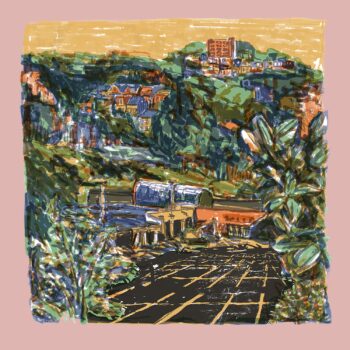
Natural Causes
an album by Adult Mom