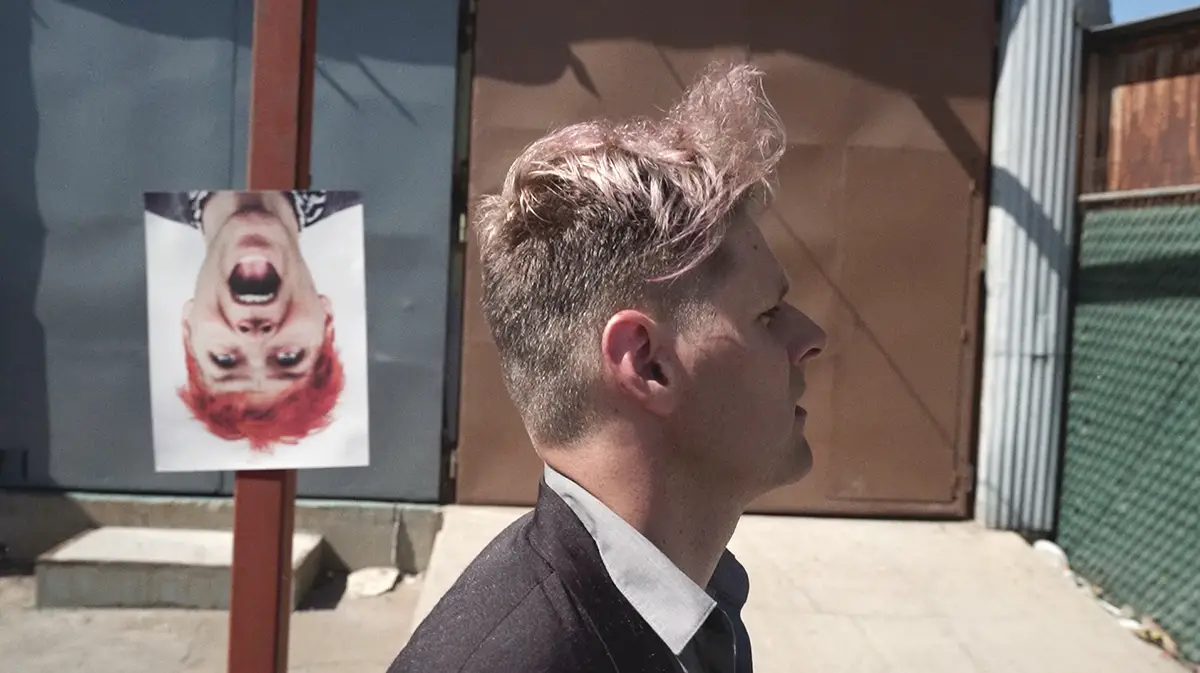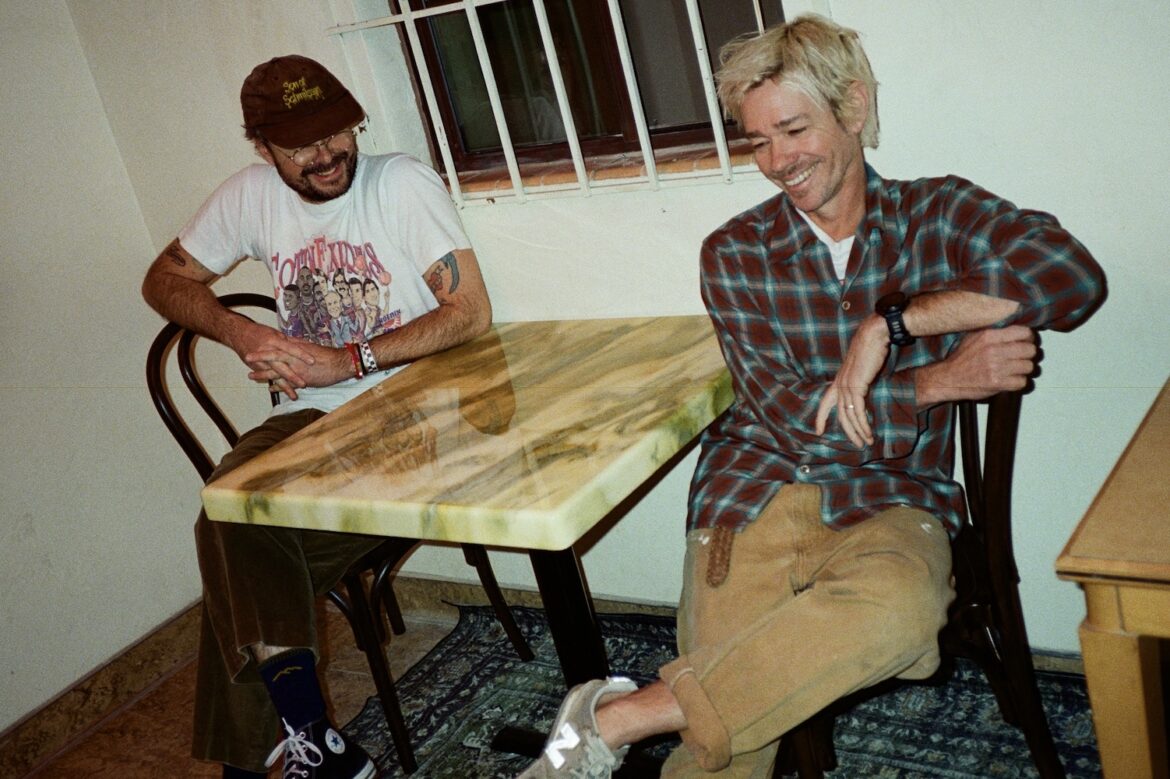
Indie rock legends The Format reckon with belief, responsibility, and moral urgency on “Boycott Heaven,” the blistering, emotionally charged title track off their long-awaited third album – a hard-hitting, clear-eyed gut-punch that rejects deferred salvation in favor of choosing the present.
 follow our Today’s Song(s) playlist


Stream: “Boycott Heaven” – The Format
The Format were never a band built for closure.
Even at their most romantic, their songs carried that extra voltage – a restless, questioning pulse that made the sweetest melodies feel like they were still searching for ground. So hearing them again in 2026 doesn’t land like a nostalgia play or a reunion victory lap. It lands like a revelation: Two old friends walking back into the room, turning the lights on, and daring themselves to say something that matters.
That’s the energy at the heart of “Boycott Heaven,” the title track from Boycott Heaven, The Format’s long-awaited third album, out today (January 23, 2026) via The Vanity Label. It’s hard-hitting and triumphant, yes – but it’s also thorny, searching, and spiritually combustible, built less like a straightforward anthem than a pressure valve slowly twisting open. The song doesn’t just announce the band’s return; it interrogates what we’ve been promised, what we’ve been taught to worship, and what we cling to when the old answers stop working.
On my, I will pray to the paper
But the people on the way there,
just a distant memory
On my, throw the baby with the water
And anoint your sons and daughters
with some ancient history
Holding on to something
Letting go of nothing
Holding on to something to believe in
Something to believe in
Something to believe in, oh
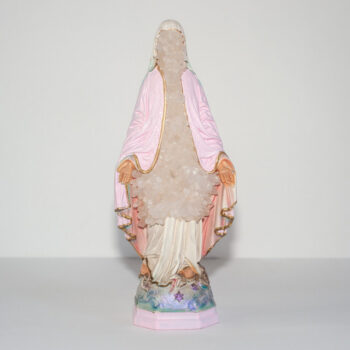
The phrase “Boycott Heaven” is provocative on its face – spiritual, political, personal all at once – and Sam Means loves that it refuses to behave like a single, settled definition. “To me, it just kind of encapsulated a lot of the things that I was feeling,” he reflects. “Heaven can be a lot of things… it could just be a reward. It could be whatever.” That elasticity is the point. Means is clear that “this isn’t a literal ‘anti-religion’ album at all,” but rather an invitation to sit inside the question: What are we doing this for? “It does really capture so many things about how I feel about the way the world exists today,” he says. “It seems like more and more today, some people are going through life, kind of stomping on things in order to get to the other side… and sometimes you have to call that out.”
Nate Ruess, for his part, frames the song’s core as a present-tense moral urgency – a refusal to outsource goodness to some far-off reward. Asked what “Boycott Heaven” means to him, he replies: “I think… I’m saying there’s more to do in this life – mainly more good to be done in this world – so try to focus on now as opposed to where you are maybe headed next.” It’s not abstract for him. It’s insistently human. If we’re waiting on the afterlife to justify our choices, what happens to the people living inside the consequences right now?
You can hear that tension immediately in the song’s opening scene – a modern ritual rendered with razor clarity: “On my, I will pray to the paper, but the people on the way there just a distant memory.” In a few lines, sung with Ruess’ charismatic passion and angst, “Boycott Heaven” sketches a world where faith becomes procedure, where tradition becomes inheritance, where devotion can blur into habit. Then comes the ache that defines the track’s first half: “Holding on to something, letting go of nothing. Holding on to something to believe in.” It’s a phrase that feels like a confession disguised as a chant – the human need for structure and meaning colliding with the fear of admitting the structure is failing you.
It’s a long line
and it bleeds into the pavement
Sixty-something words to save them
from this recent misery
So ask why-y-y you will
never see the truth
The many ways in which it’s bruised
all of the people you knew
Holding on to something
Letting go of nothing
Holding on to something to believe in
Something to believe in
Something to believe in, oh-oh-oh-oh
And then – like only The Format can – the song pivots from contemplation to combustion.
The words hit with the blunt-force honesty of someone who’s done pretending: “Lost my motivation, wasn’t much for chasin’ the cross,” Ruess confides. “Boycott Heaven ‘cause there’s gotta be somewhere better far from the sun.” It’s defiant, exhausted, lucid – a line that doesn’t deny the longing for belief, but rejects the institutions and bargains that so often come with it. Means calls attention to what happens next, too – how the song refuses to end in certainty. “If you listen to the lyrics at the end of that song,” he says, “the chant is, ‘we all could use something’… You need some sort of light at the end of the tunnel to look toward as you’re getting through life.” In other words: The song isn’t preaching disbelief. It’s asking what belief costs – and what it’s supposed to give back.
Lost my motivation,
wasn’t much for chasing the cross
Boycott Heaven ’cause there’s gotta be
somewhere better, far from the sun
Holy roller, please,
the damage to your knees
is something that cannot be undone
So boycott Heaven ’cause they
never, ever gave a f*** about us
That unsettled honesty shows up in one of the cleverest lyrical moves on the track: That inversion near the end. After repeating “Holding on to something, letting go of nothing,” Ruess flips the line into its uneasy mirror: “Holding on to nothing, letting go of something.” Means loves that twist because it quietly admits uncertainty – “a clever little way to just point out, ‘I’m not definitively right here.’” That’s what makes “Boycott Heaven” feel so raw, so real and lived-in: It isn’t a manifesto; it’s a conversation held at full volume, the kind where conviction and doubt trade places mid-sentence.
Holding on to nothing
Letting go of something
Holding on with nothing to believe in
Something to believe in
Something to believe in
Nothing to believe in
Something to believe in
Something to believe in
Something to believe in
Oh-oh-oh-oh-oh
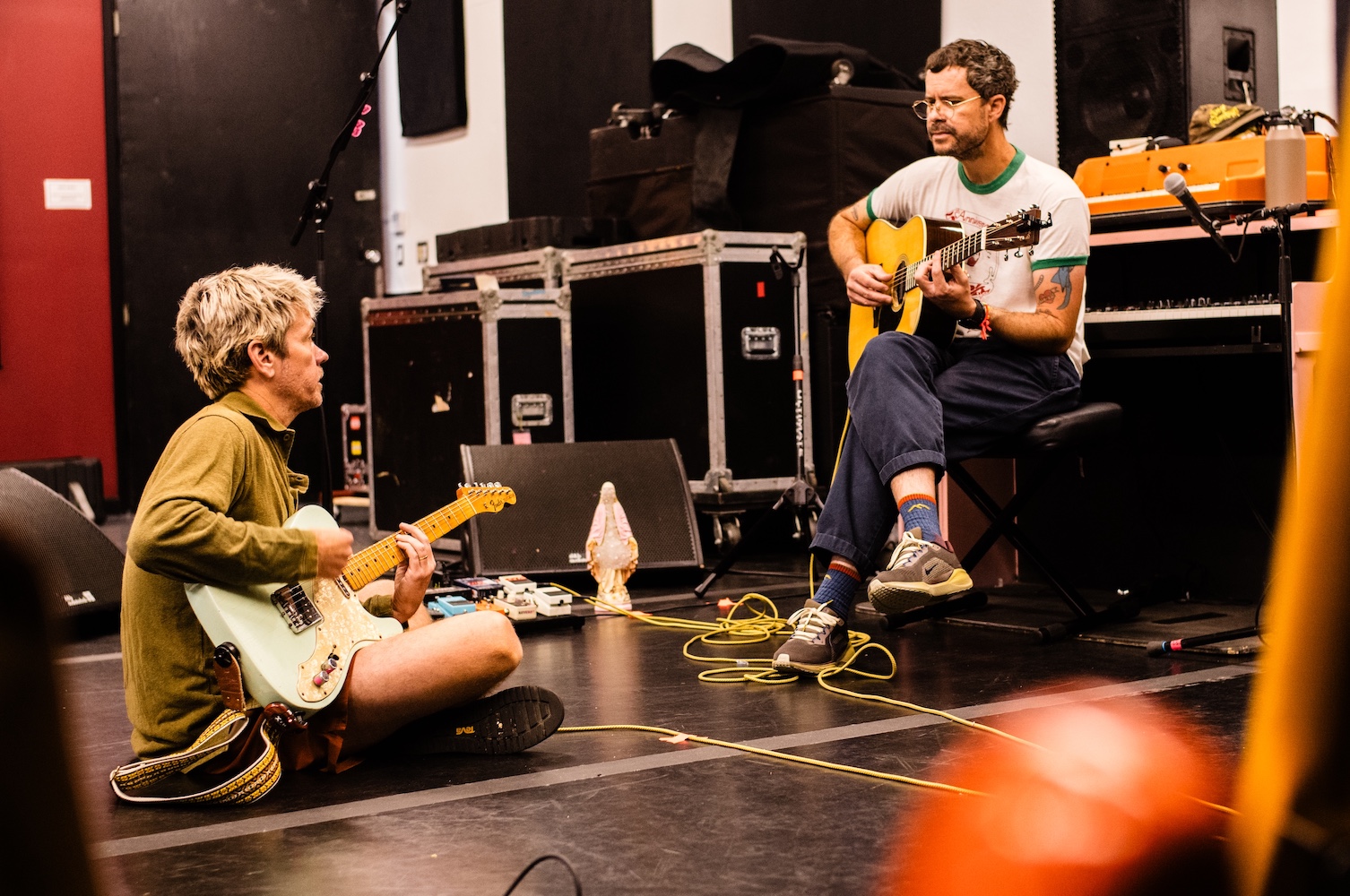
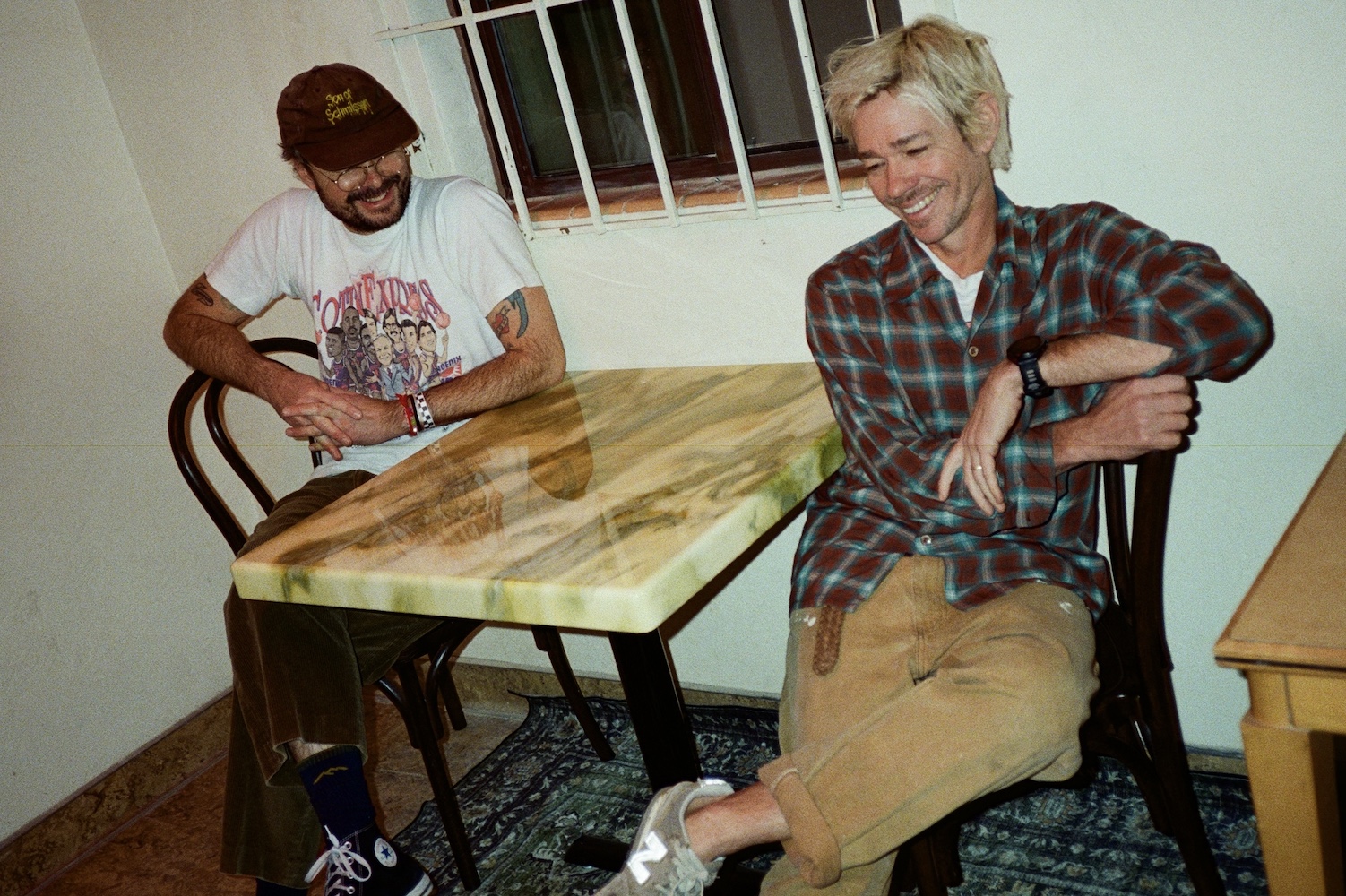
The story of how this album even exists makes that urgency hit harder. Means describes The Format’s whole return as “pretty spontaneous” – not a long-plotted comeback plan, but two friends pulled back into orbit by the sheer gravitational force of making something good. The catalyst was Ruess teaching himself guitar and recording in his basement. Means visited, heard the demos, and couldn’t believe they were just sitting there: “I was like, ‘what are you doing with this stuff? Like, this is great!’ And he’s like, ‘nothing. I’m just having fun.’” A few months later: “Maybe we should do something with this.” Recording began in January 2025, and once it started, it moved fast – weekends, flights, back-and-forth files, momentum building into inevitability. “We didn’t even have a conversation about it… It wasn’t like, well, what’s this going to be? … It was just two friends making music,” Means says. “And about halfway through, it was like, is this a Format record? I think my response was, ‘What else would it be?’”
That’s why “Boycott Heaven” hits like more than a standout track – it reads like the album’s thesis statement, the emotional and philosophical center of a record that’s clearly trying to meet the world as it is. Means says it outright: “It’s called ‘Boycott Heaven’ for a reason. It’s the title track. It kind of explains what’s going on.” And there’s something deeply moving about a band returning after nearly two decades not to smooth over their sharp edges, but to sharpen them – to write songs that still crackle with melody and wit, while staring directly at the chaos outside the window.
As an album, Boycott Heaven feels like The Format refusing to shrink themselves to fit the comfort of a comeback narrative.
It’s leaner, louder, and more guitar-forward than anything they’ve made before, recorded with a deliberate live-band urgency that favors momentum over polish. Across tracks like “Holy Roller,” “There’s No Gold at the Top,” “Human Nature,” and “Leave It Alone,” the record grapples with disillusionment, moral fatigue, and the slow erosion of inherited beliefs – not from a place of cynicism, but from hard-earned clarity. These songs don’t posture or preach; they observe, question, and push back, tracing the emotional toll of growing older in a world that feels increasingly unmoored. From the defiant spiritual reckoning of lead single “Holy Roller,” to the clear-eyed indictment of ambition and rot on “There’s No Gold at the Top,” and finally to the devastating moral clarity of “Leave It Alone” – which confronts the violence unfolding in Gaza with a directness that’s impossible to shake – Boycott Heaven reveals itself as a record not just about belief, but about responsibility. What emerges is a body of work that’s restless but focused, intimate yet outward-looking – an album less interested in answers than in honesty, and all the friction that comes with it.
Boycott Heaven is also deeply shaped by the time lived in between records – by adulthood, parenthood, and the lived responsibility of staying present in a world that often rewards disengagement. Where the album’s disillusionment is clear, its refusal to detach is even clearer. These songs sit inside contradiction rather than resolving it: Hope without certainty, anger without nihilism, tenderness without naïveté. There’s no attempt to sand those tensions down or pretend clarity comes easily. Instead, the record documents what it feels like to keep showing up anyway – to choose engagement, meaning, and care not because they’re guaranteed to be rewarded, but because opting out feels like a deeper kind of loss.
For Ruess, that sense of necessity is inseparable from who he and Means are now. “I think we developed as songwriters, but more importantly we developed as people,” he says. “If you’re true to who you are, whatever you’re creating is going to be authentic. This feels like us as people right now.” That grounding is felt across Boycott Heaven, where reflection doesn’t soften the music’s edge – it sharpens it. The album doesn’t attempt to sound younger or wiser than it is; it sounds present. In that way, Boycott Heaven isn’t about closing a chapter or rewriting the past, but about honoring the fact that growth leaves marks – on voices, on values, and on the questions that refuse to disappear with time.
“I just want people to like it and internalize it the same way they have our old stuff,” Ruess shares. “It’s been such a surprise after all these years that people have stuck around, and they’ve stuck around because of what the songs meant to them. I hope this album has the same effect and also brings new people along the way. What I’ve taken away from it is that I actually do enjoy writing and recording music. I’m still very on the fence about the playing life thing, though!”
With Boycott Heaven out now, what feels most miraculous isn’t just that The Format are back – it’s that they sound like themselves and like who they’ve become.
Means puts it best when he talks about the album as a whole – it’s “totally unique while also… absolutely a Format album.” The sound is bigger, bolder, more guitar-driven – recorded with that intentional live-band immediacy – but the heartbeat is the same: A band that turns discomfort into catharsis, questions into choruses, and fear into something you can sing back.
“Boycott Heaven” doesn’t hand you comfort. It hands you clarity – the bracing kind that doesn’t let you look away. It’s a song about belief as a human need, and belief as a human trap; about the temptation to wait for salvation, and the moral necessity of choosing the present anyway. It’s the Format’s grand return, yes – but more than that, it’s a reminder of why their music mattered in the first place: They’ve always known how to make uncertainty feel like something you can hold – something to believe in.
So let it go (Mm, mm)
Let it go (Mm, mm)
Let it go (Mm, mm)….
— —
:: stream/purchase Boycott Heaven here ::
:: connect with The Format here ::
— —
Stream: “Boycott Heaven” – The Format
— — — —

Connect to The Format on
Facebook, 𝕏, TikTok, Instagram
Discover new music on Atwood Magazine
© 2026
 © 2026
:: Today’s Song(s) ::
follow our daily playlist on Spotify
:: Stream The Format ::