Every Friday, Atwood Magazine’s staff share what they’ve been listening to that week – a song, an album, an artist – whatever’s been having an impact on them, in the moment.
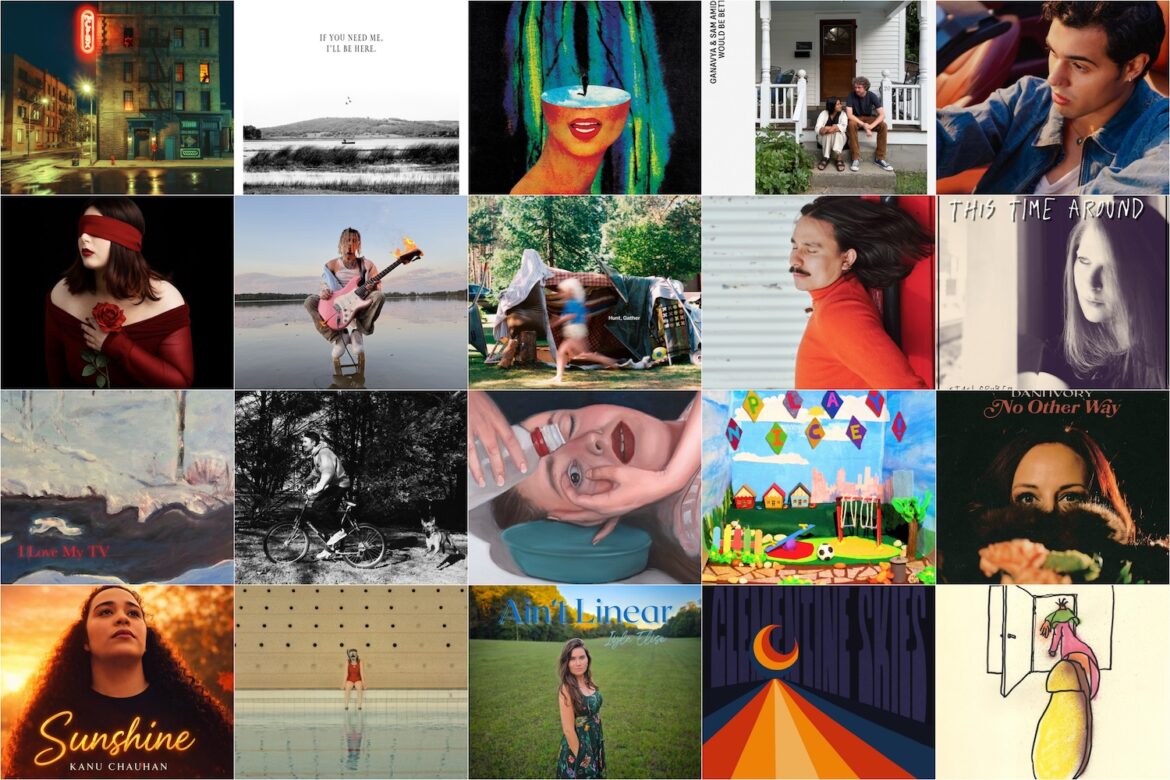
This week’s weekly roundup features music by Medium Build, Wulfer, Dry Cleaning, Marketplace, Mergui, Djo, Konradsen, Andervel, Nuclear Cowboy, Yafania, McKenna Esteb, Eric Gabriel, Misty Coast, Lil Crush, Bobby Freemont, Staci Gruber, Ganavya & Sam Amidon, Coral, Iyla Elise, Dani Ivory, and Kanu Chauhan!
•• •• •• ••
 follow WEEKLY ROUNDUP on Spotify


•• ••
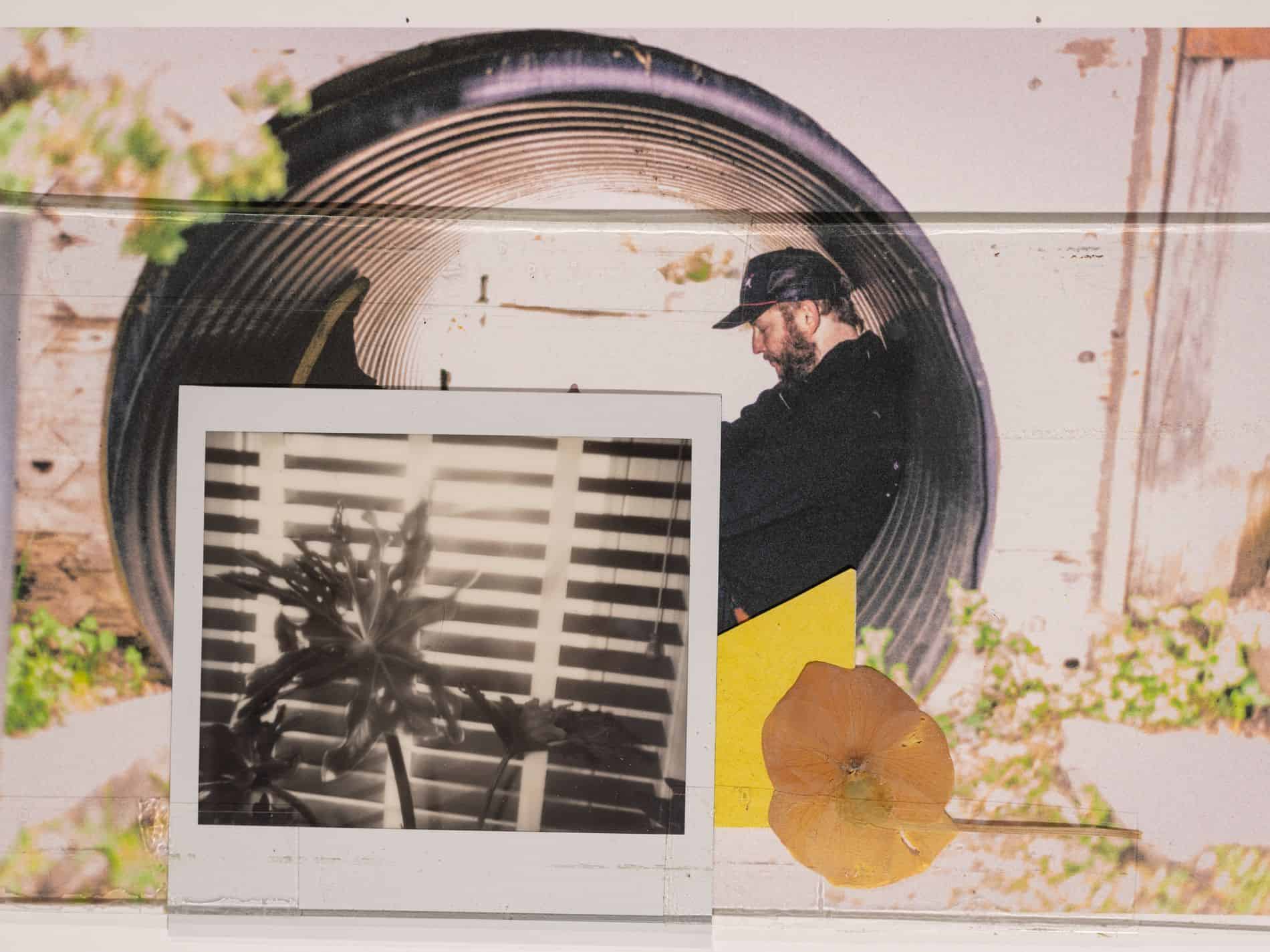
:: takeaways – Medium Build ::
Mitch Mosk, Beacon, New York
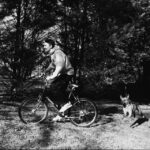
Looking back can hit even harder than moving forward – not in a nostalgic way, but in the kind of recognition that settles in slowly, when a song you wrote years ago suddenly returns to you with a new weight, as though it understands you better now than it did then. Medium Build leans into that feeling on his freshly expanded takeaways series, adding four more songs – “R3verse,” “Downtown Theatre,” “fat broke loser,” and “Never Told U” – to a project that already felt like an open journal, now widened even further.
At its core, takeaways has always been about that tangible barrier between past and present – old songs, new songs, demos, day-of recordings, all living side by side without hierarchy or polish getting in the way. As Nick Carpenter puts it, “it’s old tunes, new tunes, demos, day-of, not overcooked. Just raw fun. It’s a lighthearted place. It’s really a thin line between me and the crowd.” That ethos carries through this latest addition, where nothing feels too precious to revisit, reshape, or reintroduce.
And yet, for all its looseness, this particular batch cuts deeper than ever. “R3verse” – a reimagining of “Reverse” from Carpenter’s 2015 Roger EP – lands with a heaviness that feels impossible to shake, as if time itself has pressed down on every word, every pause, every breath. Lines that once floated now feel anchored, weighed down by years of living, loving, and losing in between.
You said you knew me in a minute
I tend to give myself away
But how did you put such a dent in
When we barely said a thing
You sat there playing with your fingers
I checked my phone a couple times
And it was gracefully uncomfortable
Until the server brought some wine
Did I only want to sleep with you
Or was that just the old routine
And were you truly so wrapped up
in all my bullshit about me
– “R3verse,” Medium Build
That’s the quiet power of this project: These aren’t just songs being revisited – they’re songs being re-lived. Carpenter doesn’t clean them up or dress them differently for the sake of evolution; he meets them where they are now, letting the distance between then and now speak for itself. The result is something more honest than reinvention – an emotional continuity that refuses to smooth over the rough edges.
Across “Downtown Theatre,” “fat broke loser,” and “Never Told U,” that same thread continues – unfiltered, immediate, and deeply, inescapably human. There’s humor, there’s ache, there’s a looseness that keeps everything from collapsing under its own weight, even as the subject matter grows darker and more exposed. It’s not about perfection; it’s about proximity.
Taken together, these additions make takeaways feel less like an EP and more like a living document – a space Carpenter can return to again and again, not to finalize anything, but to keep processing in real time. And in doing so, he offers something rare: A window into what it means to grow alongside your own work, to let it change as you do.
I find that all my charm wears off after a couple drinks
Anyone with their antennas up can see that I’m high
A fat, broke loser with dishonest thoughts of being somebody
A sad dude looking for a ticket to ride
I wondered why my nephew scared me
so much and then I figured it out
I hate myself so much, why would I make a new me?
Maybe he’ll be better, an upgrade, a standout
A college essay who overcomes his upbringing
I used to talk to Jesus
Now I’m drunk and talking to myself
Used to think I was someone
Now I see that I’m someone else
Used to think I was Jesus
Sent down here as God’s own son
Thought that everybody loved me
Now I see I was the only one
The only one
– “fat broke loser,” Medium Build
If anything, this latest expansion reinforces what’s always made Medium Build so compelling – not just the songwriting itself, but the willingness to stay inside it, even when it gets uncomfortable. Because sometimes the hardest thing isn’t writing the song – it’s coming back to it years later and telling the truth all over again.
:: “Thought of You” – Wulfer ::
Sophie Severs, Boston, MA

Wulfer’s sonic world finds its foundation in soft – yet undeniably sturdy – grit. Debut record I Love My TV rouses strength out of some of life’s most vulnerable moments with striking clarity and precision.
Within standout track, “Thought of You,” the mind is an altar. Every passing thought is sacrificial, acting as an ode to the beloved. But please – do not stray into sappiness and the realm of happily ever afters, for this is not a profession of love but more so a purging of it.
Opening with a flurry of distorted guitars and layered feedback, the track guides listeners into a mind befuddled by noise. Wulfer’s vocals cut through the cacophony, singing: “Thought of you / Yeah it’s the thought of you / That gives me shit to do / When I get home.” Memory supersedes physical presence; obsession is unrelenting – but not invincible.
As noted before: this is no love song. Wulfer expresses these thoughts not to sit in them but instead to have them dissipate. The track is less devotional and more scathing, as evinced by the closing lyrics: “If I tell you what is gonna shut you up / Would you leave me alone.” Defiant and dynamic, “Thought Of You” is masterful meditation on rumination.
:: “Hit My Head All Day” – Dry Cleaning ::
Julia Dzurillay, New Jersey

If you ever wanted to know what it feels like to drink wine at a dark bar in Williamsburg, this is it. London-based post-punk band Dry Cleaning released Secret Love in January 2026, complete with their single, “Hit My Head All Day.” In a press release singer Florence Shaw said this song is “about manipulation of the body and mind.”
More specifically, it was inspired by the far right using social media to get (and keep) power. Is that message abundantly obvious on first listen a la “Love It If We Made It” by The 1975? Not particularly. But I think inadvertently speaking on a heavy and controversial topic is even more interesting. It’s an alternative music kind of cool that everyone wants to be.
:: “Play Nice!” – Marketplace ::
Danielle Holian, Galway, Ireland

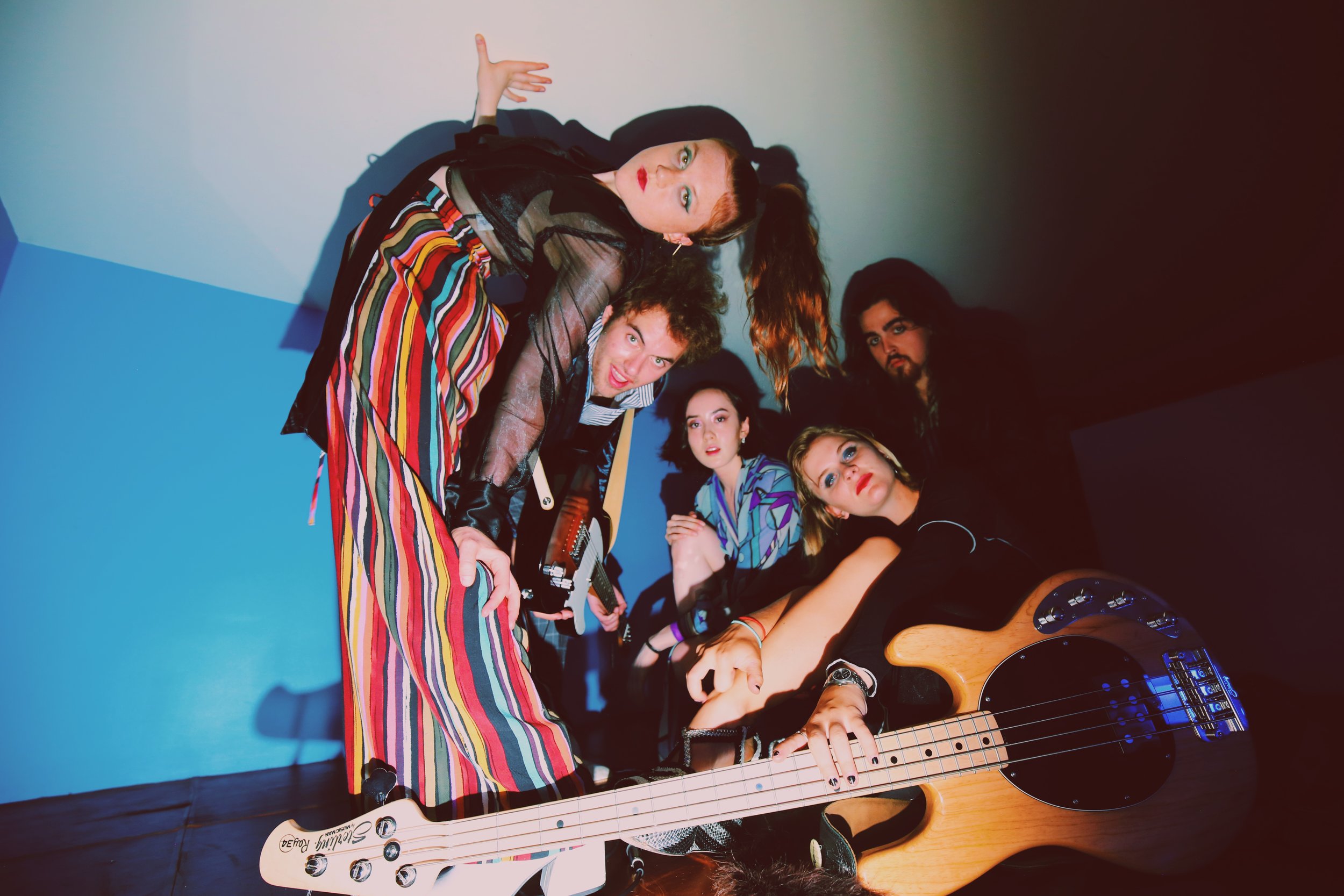
Marketplace return with “Play Nice!” in a flash of alt-pop sheen and indie bite, a single that lands with the kind of confidence that suggests a band fully aware of their momentum. Produced by Chad Rodgers, the track pulses with buoyant immediacy: bright, needling guitar lines cut through subtle synth flourishes, while the rhythm section locks into a driving, elastic groove that keeps the energy tightly coiled. At the centre, charismatic lead vocals deliver equal parts charm and venom, turning pent-up frustration into something sharp, cathartic, and irresistibly catchy. It’s a diss track, yes, but one that grins as it swings, playful on the surface, pointed underneath.
With “Play Nice!” the North East five-piece lean into a bolder, more direct sound, hinting at the fearless streak set to shape their output through 2026. The band’s strength lies in that tension between hook-heavy accessibility and a serrated lyrical edge, and here they strike the balance with striking ease. As they head into a year packed with high-profile showcases and growing critical attention, this single feels less like a stepping stone and more like a statement of intent. Marketplace aren’t just riding a wave, they’re steering it, and ‘Play Nice!’ suggests the breakthrough moment is no longer looming but rapidly arriving.
:: “3 Tears” – Mergui ::
Josh Weiner, Washington DC

“It’s about a relationship that has high tides and low tides”… “It’s a love story that turns into a breakup story”… “It’s the arc of a relationship that begins all flowers, and then gets to the point where it’s all just total chaos, and then we finally see it resolve out”…
These are some of the descriptions being made of “3 Tears” by Mergui coming from within his own creative circle (ie. the crew of the song’s music video). As for me, I’ll go ahead and float over an outside opinion: I enjoyed discovering Mergui’s music last year through my work with Atwood, and I’m glad to see that he’s continued to leverage his profound vocal gifts and willingness to “let his vulnerable side come through in his songs,” as I wrote last year. Or, as Mergui says himself, “the song looks at a relationship where emotional vulnerability and insecurity are used to hold things together out of fear of being alone rather than real love. It captures the moment of clarity when that dynamic isn’t enough anymore, and putting yourself first means moving on.”
Needless to say, “3 Tears” makes for some heartfelt material as Mergui enter Justin Timberlake mode and tells the lady who did him wrong: “Cry, baby. Cry all you want. Cry, cry, cry, cry, cry.” Just don’t expect any affectionate reaction from him in the process: Mergui makes it clear that “tonight, I can’t find one reason to stay by your side.” It’s a rough situation, for sure, but with someone this vocally talented there to guide us through it, it’s worth tuning in to see how it all works out. And the same can certainly be said of Mergui himself as he gets a new year in his exciting career going!
:: “Mr. Mountebank” – Djo ::
Emily Weatherhead, Toronto, Canada

Djo’s The Crux (Deluxe) came out in September of 2025, and I haven’t been able to stop listening to it since. While some deluxe albums feature a few bonus tracks that are a fun addition to the original release, The Crux (Deluxe) serves as a complex reflection that tells its own story. With overlapping themes and melodic callbacks, this is a deluxe version that truly enriches the listening experience of the original twelve tracks. “Mr. Mountebank” is a standout, encapsulating a disillusionment with success and the strings that trap you once you achieve it.
In a typical Djo song, you can hear the influence of Joe Keery’s role as a guitarist in Post Animal. His songs often feature melodic, guitar-heavy instrumentals that highlight his musicianship. “Mr. Mountebank,” however, opens with a buzzy synthetic keyboard line that immediately invokes an artificial contrast from the rest of the album. The vocals are distorted. A background synthesizer line drives the momentum forward, rising quickly throughout the first verse. It sonically introduces the core theme of the song: What happens once you reach the top?
The central line, “Not afraid, not for sale/ Long game class acts never fail,” is repeated throughout the song. In the beginning, these lyrics sound like a confident proclamation. By the end, they sound more like a prayer, asking whether it’s possible to hold on to your authenticity and your success at the same time. While we may not all have the experience of dealing with the fallout of fame, the ideas in this song remain universally relatable. The lyric “Cast it out, fade away. / Wish that I could wish my little wish away” encapsulates that melancholic feeling you get when a dream comes true, but it’s just not what you expected. On top of its thought-provoking lyrics, this song is so sonically layered that you’ll hear something new every time you listen to it. With songs like this one, Djo continues to solidify himself as a musician worth paying attention to, and I’m excited to hear what he does next.
:: Hunt, Gather – Konradsen ::
Mitch Mosk, Beacon, New York
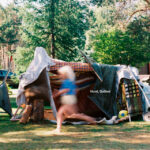
There’s a moment, somewhere in your late 20s or early 30s, where life stops feeling like an open-ended question and starts becoming something you have to shape with your own hands. Not in some grand, cinematic way, but in the small, daily choices – what you build, who you keep close, what you carry forward. Konradsen sit squarely inside that space on Hunt, Gather, a soul-stirring record that doesn’t just reflect on growing up, but lives inside the process of it.
Released today, the Norwegian indie folk duo’s third album arrives as their most smoldering, seductive, and sonically immersive work yet – a collection of songs that feel both intimate and expansive, grounded in everyday detail while reaching toward something more atmospheric and open-ended. There’s a softness to it, as well as a quiet confidence in how it unfolds, letting textures breathe and emotions linger without ever forcing a resolution.
That sense of openness is matched by the album’s collaborative spirit. Bringing in voices like Beharie, Gia Margaret, and Angie McMahon, alongside producers Hans Olav Settem and Marit Othilie Thorvik, Konradsen – Jenny Marie Sabel and Eirik Vildgren – expand their world without losing their center. The songs don’t feel crowded; they feel shared, built from within a creative space that invites others in rather than handing anything off. It’s a shift that also mirrors how the band themselves have evolved. What began as a bedroom project has slowly grown outward, shaped by time, experience, and the people they’ve gathered along the way. That growth isn’t just sonic – it’s human, a widening of perspective that you can feel in every corner of this breathtaking record.
“I say that we make hopeful noise,” Sabel tells Atwood Magazine. “That’s kind of my definition of our music… it’s a bunch of stuff happening, but it’s always a little light in the end. It can’t be too sad.” It’s a simple phrase, but it unlocks the album’s emotional core – a way of holding tension and warmth in the same breath, letting uncertainty exist without ever tipping fully into darkness.
Lyrically, Hunt, Gather leans into that in-between stage of life – adulthood not as arrival, but as an ongoing negotiation. Questions of responsibility, partnership, and purpose run through the album, not as fixed answers but as passing thoughts, fragments of conversation, moments of doubt and clarity that sit side by side. It’s an album about building a life while still wondering what that life is supposed to look like.
“It’s like being in the middle of life,” the duo add, “realizing you’re grown up, but still figuring out a lot of stuff.”
And yet, for all its introspection, there’s a warmth that carries through it – a sense that even in uncertainty, there’s something worth holding onto. Konradsen have always had a way of stirring the heart, of finding emotion in the smallest details, but here, it feels fuller, more lived-in, more human than ever before. These songs don’t just observe life – they move through it, quietly, deliberately, and with an openness that invites you to do the same.
In the end, Hunt, Gather doesn’t try to resolve the questions it raises. It lets them sit, breathe, and evolve – just like the people asking them. And maybe that’s the point: Not to have it all figured out, but to keep searching, keep gathering, and keep building something meaningful out of the pieces you find along the way.
:: “Ironclad and Palm Trees” – Andervel ::
Mitch Mosk, Beacon, New York

Memory has a way of holding onto the smallest details – the way light falls through a window, the hum of a radio, the shape of a room you haven’t stepped inside in years. On “Ironclad and Palm Trees,” Andervel turns those fragments into something living and breathing, a breathtaking folk composition that drifts in like a warm summer breeze and settles somewhere deep in the chest.
Carried by close-miked acoustic guitar and voice, the song feels immediate and intimate from the start, before slowly opening into something more expansive – swells of cello, aching harmonies, and a quiet sense of drama that builds without ever breaking the spell. Lines like “white noise on the radio / rituals and routine” and “corpses buried in the soil / blurred out faces on the walls” read like snapshots pulled straight from memory, grounding the song in a world that feels both vivid and fragile at once.
Reykjavík-based, Mexican-born artist Andervel – the project of singer/songwriter José Luis Anderson – draws from a life lived between places, weaving together the warmth of Mexico and the stark, windswept stillness of Iceland into a sound that feels both rooted and untethered. “Ironclad and Palm Trees” sits at the heart of that duality, its title itself a reflection of the two worlds he moves between.
“‘Ironclad and Palm Trees’ is a very vivid and descriptive song that establishes images from my grandparents home back in Mexico – the Ivy growing on the fence, the family pictures on the wall in my grandparents’ bedroom, the spiderweb with big garden spiders in spring – that’s a place where I spend a long time as a kid and it’s a place that it’s very dear in my memory.” From those early images, the song unfolds as both recollection and reckoning, shaped by distance and time as Anderson reflects on building a life in Iceland while remaining tethered to the people and places that raised him.
“I’ve been living here in Iceland for a while now and that means to be away from my family most of the time… and every time I see my relatives in Mexico… specially with my grandparents… you know how it is: the older you get, the more the time passes on you.” That awareness – of time slipping forward, of moments growing more finite – gives the song its emotional weight, turning each detail into something to hold onto a little tighter.
“My grandmother started becoming tired… and she had a big window in her bedroom and across the street through this window you could see a palm tree… and at the top of it there was a colony of budgies.” In one of the song’s most moving threads, that image becomes something more than observation – a symbol of continuity, of memory taking shape in unexpected ways. “My grandma lost a daughter… and she told me that her daughter used to look at those birds and tell her… if I die before you, I’m gonna come and visit you in the shape of a budgie – so I think that’s why my grandma really liked looking at this palm tree.”
“While I was recording this song last year, my grandma unfortunately passed away, and she could never hear this song,” he continues. “But it is very dear to me because every time I play it live I tell the story and it is a wonderful way to honour the memory of someone I love so dearly and has meant so much to me.” And in that sense, “Ironclad and Palm Trees” becomes more than a song – it’s a living archive, a way of keeping someone close even as time and distance pull everything else apart.
:: “The Last Goodbye” – Yafania ::
Danielle Holian, Galway, Ireland

At just 3 minutes and 16 seconds, Yafania’s new single “The Last Goodbye” captures the fragile, heart-wrenching moment before a relationship reaches its tipping point. The song dives into the seconds when pride crumbles and the only option left is to speak the truth, blending sharp, intimate lyrics with polished pop-driven production. It’s a confession set to melody, a desperate plea to hold onto love before it slips away, and a vivid snapshot of vulnerability that resonates universally.
What sets “The Last Goodbye” apart is its cinematic quality, turning a fleeting emotional moment into an immersive experience. Yafania balances intensity and restraint, letting every note and lyric underscore the tension of that final pause before goodbye. The track not only showcases her knack for storytelling but also signals a bold new chapter for the songwriter, establishing her as a voice capable of marrying emotional honesty with pop sensibility in a way that lingers long after the song ends.
:: If You Need Me, I’ll Be Here – Nuclear Cowboy ::
Danielle Holian, Galway, Ireland
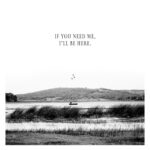
On If You Need Me, I’ll Be Here, Nuclear Cowboy lingers in the in-between, between homes, between versions of himself, between grief and gratitude. The Montana-raised, Brooklyn-based artist has long crafted music from contradiction, but this five-track EP feels especially intimate in its restraint. “Keepsake” and “Easy Come” open with hushed alt-folk textures threaded through subtle electronic details, evoking the emotional starkness of Bon Iver and the pastoral futurism of Bibio. Yet Nuclear Cowboy’s voice remains grounded, reflective without drifting into abstraction.
As the record unfolds, “Mirage of Me” and “Bite the Bullet” gently widen the sonic lens, introducing shimmering synths and alt-pop undercurrents that hint at the romantic melancholy of John Maus. The closing “Find Myself” strips everything back to a brief, synth-led meditation, less a grand finale than a quiet reckoning. Across its runtime of 13 minutes and 30 seconds, the EP resists easy closure, choosing instead to honour the weight of unanswered questions. It’s a project that trusts subtlety, embracing emotional ambiguity as both subject and soundscape.
:: “Wish I Smoked” – McKenna Esteb ::
Josh Weiner, Washington DC

Not too long ago, I discovered and got to write about McKenna Esteb, a young singer and guitarist from Seattle who recently hopped one state over and settled in to focus on her music career in Boise, Idaho. Only two-ish months after “Fall Butter” comes another song of hers entitled “Wish I Smoked.” It’s great to see that McKenna has remained artistically prolific and also open to switching up her style; whereas “Fall Butter” was a gentle slow-burner designed to evoke the season in his title, “Wish I Smoked” dials up the indie rock grit as Esteb declares “I wish I smoked, it would give me an excuse for missing you” and further analogizes her rough romantic situation to “a physical vice– like smoking.”
“It captures the push and pull of wanting something you know is bad for you, and the desire to trade that vice for another,” Esteb says of her song. “In this case, wishing the pain were visible and external, rather than something internal – unseen by others, yet slowly eating away at you from the inside.” With this song out, we’re one step closer to the release of her new album, Love You Forever, which will feature both “Wish I Smoked” and “Fall Butter.” After two promising initial samples of it, I for one am ready to be served the full-course meal… and maybe save room for some post-dinner cigarettes? Yikes…
:: “Always Sun” – Misty Coast ::
Mitch Mosk, Beacon, New York

Light can feel almost unreal when it cuts through something heavy – like it doesn’t quite belong there, like it’s too soft for the weight it’s pushing against. Misty Coast lean into that contrast on “Always Sun,” a hazy, immersive indie pop track that wraps its warmth around something far more fragile, letting longing and hope coexist in the same breath.
Built on lush, swirling synth textures and a slightly off-kilter, analog warmth, the song creates a sense of depth that’s hard to escape – dreamy, yes, but with an undercurrent that pulls you deeper the longer you stay. Lines like “it’s always sun when you’re dreaming… and if it rains it’s ’cause you’re leaving” carry a quiet emotional gravity, reframing love and absence through a lens that feels both tender and quietly devastating. Even as the arrangement blooms outward, there’s a sense that everything is hanging by a thread, held together by memory, imagination, and the hope that it might all return.
Misty Coast – the Norwegian dream pop duo of Linn Frøkedal and Richard Myklebust – have long balanced beauty and noise in their work, and here, they let the melody take center stage, stretching out over a rich, textured soundscape that feels both expansive and deeply personal. The track draws from vintage analog gear and tape-treated elements, giving it that dizzy, slightly seasick quality they describe – a feeling that mirrors the emotional push and pull at the song’s core.
“We wanted to write a song that felt both uplifting and rooted in a sense of longing,” they explain. “When everything goes to hell, at least you still have your dreams, right?” That sentiment lingers long after the final note fades – a reminder that even when reality fractures, there’s still a place, however fleeting, where things remain intact.
:: “Rent” – Eric Gabriel ::
Mitch Mosk, Beacon, New York
Some connections are meant to last, and others are only ever passing through – brief, bright encounters that move at their own pace and leave before you can ask them to stay. Eric Gabriel leans into that tension on “Rent,” a quirky, soulful slow-burn that finds its footing in smoldering guitar licks, warm keys, and a vocal performance that feels both loose and locked in, following its own easy, unbothered stride.
There’s a casual confidence to the way the song unfolds – unhurried but intentional, playful without losing its emotional undercurrent. Lines like “she says why buy one / when you can rent one” carry a wry charm, but they also hint at something deeper: the push and pull between wanting closeness and resisting commitment, between indulging the moment and fearing what might come with staying. That duality gives the track its staying power, letting it sit comfortably between lighthearted groove and quiet reflection.
“There’s a line in Tom Waits’ ‘Christmas Card from a Hooker in Minneapolis’ where Waits sings along the lines of, ‘I’d buy used car lot and not sell any of them, just drive a different one every day depending on how I feel.’ I love that – something about the urge to have options, to not be tied down, and the simple indulgence of following how you feel,” Gabriel says. Written the night before recording, “Rent” embraces that same spirit of spontaneity, with lyrics that blur the line between cars and relationships while leaning into a more playful tone than much of his forthcoming work. “The line in “Rent,” ‘why buy one when you can rent one,’ was initially inspired by Waits’ car metaphor,” he adds. “The rest of the lyrics followed with a few one-liners that could apply to cars and someone not committing to a relationship… I like that it leans more lighthearted compared to other songs on [my upcoming] album.”
New York City-based songwriter, pianist, and producer Eric Gabriel brings that radiant looseness into his upcoming album Lucky Day Roadrunner, recorded live in Brooklyn with producer Philip Weinrobe. In that context, “Rent” feels like a snapshot of the record’s ethos – instinctive, character-driven, and just a little off-center in the best way, content to move at its own pace without forcing a destination.
:: Reel Music – Lil Crush ::
Danielle Holian, Galway, Ireland

Lil Crush is opening the door to an entire sonic universe with the release of his brand new album, Reel Music. Clocking in at 30 tracks and just over an hour and a half, the project feels less like a traditional album and more like a fully immersive playlist of moods, memories, and late-night confessions. Lil Crush glides effortlessly between hip-hop, silky R&B, flashes of alternative country, and left-field pop experimentation, creating a sound that feels both global and deeply personal. Tracks like “I Hate Partying Alone,” “Devilish Angel,” and “Want U” set the emotional tone early, blending melodic vulnerability with confident delivery, while songs like “Meta gURL” and “B.O.B” inject a futuristic energy that keeps the project constantly evolving.
What really makes, Reel Music, hit is the chemistry across its wide-ranging collaborations. Frequent partner Colombian Crush appears throughout the album, helping anchor the project’s identity while features from THR333, The Latin Prince, Fa’id, BRIZO, and Beachy expand its sonic palette in exciting ways. Whether it’s the dreamy bilingual vibe of “Un Momento Mas,” the hypnotic bounce of “Helado,” or the laid-back haze of “Sativa Toker / Saratoga,” Lil Crush proves he can shape-shift across styles without ever losing his emotional core. By the time the closing stretch rolls through with tracks like “Lose Yourself,” “LUV,” and “7UP,” it’s clear that Reel Music isn’t just ambitious; it’s a statement. Lil Crush positions himself as a fearless genre-blender with a knack for melody and storytelling, delivering a project that feels as expansive as it is personal.
:: “clementine skies” – Bobby Freemont ::
Danielle Holian, Galway, Ireland

Bobby Freemont’s “clementine skies” is a tender embrace for anyone who has known loss. From the very first notes, the song unfolds as a private letter whispered into the void, an intimate confession wrapped in melodies that shimmer with both fragility and awe. Co-produced with Stephen Kerr, Freemont crafts a sonic landscape that moves like grief itself: unpredictable, fierce, and breathtakingly alive. There are echoes of Kanye West’s 808s & Heartbreak in the raw vulnerability, and the swelling, distorted guitars recall the grandeur of Smashing Pumpkins, yet it is Bobby’s singular, luminous voice that anchors the track, making heartbreak feel both personal and universal. Each lyric is a gentle journal entry suspended between memory and moment, capturing the bittersweet duality of grief, the sweetness of remembrance and the sting of absence, joy and sorrow entwined.
Structurally, “clementine skies” is cinematic in scope. It begins in hushed reflection, every note a measured heartbeat, every chord a quiet exhale. As the song progresses, tension and texture accumulate, building toward a cathartic wall-of-sound crescendo where guitars ring with unrestrained fervor. The emotional release is not just loud, it is a soaring exhale, a space where sorrow becomes something to inhabit rather than endure. By the time the finale arrives, listeners are left both breathless and comforted, suspended in the delicate balance between devastation and beauty. It is a rare musical feat: a track that allows grief to be fully felt, yet transforms it into something expansive, even comforting.
Beyond its sonic brilliance, “clementine skies” is part of a larger, immersive journey. As one of a series of singles leading to Freemont’s debut album, The Death of Bobby Freemont, the song blends music, visual art, and storytelling into an experience that transcends the ordinary. Every note, every texture, every whispered lyric is a doorway into an imaginative universe, where listening becomes an act of reflection and engagement. Freemont reminds us that music can be a living, breathing companion, capable of holding our sorrow, illuminating our memories, and ultimately offering solace. “clementine skies” is a hug in sound, a space to pause, grieve, and marvel at the quiet, indelible beauty of human emotion.
:: “This Time Around” – Staci Gruber ::
Josh Weiner, Washington DC

As a longtime Boston resident, I am always happy to see where music artists from my hometown wind up. New York is typically a more common destination than Nashville, I’ll admit, but I’m happy to discover a notable exception in the form of Staci Gruber. And here’s an even more atypical element of Staci’s profile: she’s actually a professional neuroscientist! When not teaching and researching psychiatry at Harvard Medical School, Dr. Gruber keeps her side passions as a musician alive and well. She released her debut album, Life Is Good, in 2015 and has continued to release standalone singles periodically since then.
“This Time Around” is the latest in that trend. Dr. Gruber headed down to Nashville to record this track, which was co-written by Michael Orland and produced by Erik Halbig. It’s an Americana-drenched chunk of fun which its author describes as “really a story of love that pulled too hard, truth that came too late, and a heart that finally listened when it mattered most.” Dr. Gruber can tell you a lot about the effects of marijuana on the brain, but I can personally make an educated guess about what effects her music will have on your body: it’ll make you want to head to the dancefloor in a jiffy!
:: “Would Be Better” – Ganavya & Sam Amidon ::
Mitch Mosk, Beacon, New York
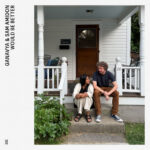 A voice this close leaves nowhere to hide – every breath, every hesitation, every passing thought laid bare against the soft glow of a fingerpicked guitar. On “Would Be Better,” Ganavya and Sam Amidon lean fully into that intimacy, crafting a hushed, soul-stirring indie folk meditation that feels less like a performance and more like a shared confession, suspended in time.
The arrangement moves with gentle patience, its dreamy acoustic textures and lightly churning undercurrent giving shape to a song that never forces its way forward. Instead, it circles its central idea – longing for a world that feels smaller, kinder, more connected – until the refrain begins to settle deep: “the world should fit in six neat strings / would be better.” That simplicity carries weight, turning abstract yearning into something tangible, almost within reach.
Acclaimed vocalist and transdisciplinary artist Ganavya meets singer/songwriter and folk experimentalist Sam Amidon in a collaboration rooted in care, the two folding their voices together with a natural ease that mirrors the song’s emotional core. Written in a burst of connection and shaped across space, “Would Be Better” emerged late last year as part of a December double release alongside “Willow Street,” a pairing that traces what Ganavya describes as “a tender dialogue between distance and belonging.”
What lingers most is the song’s sense of openness – not resolution, but possibility. In its quiet unfolding, “Would Be Better” doesn’t try to fix the distance it names; it simply holds it, gently, offering a vision of closeness that feels both imagined and real at once. As Ganavya reflects, “This is a song that was born from loneliness… as if [the songs] needed to keep each other company,” a feeling that runs through every line and note. The song itself becomes that companion – a way of carrying connection across distance, of keeping loved ones near even when they’re far. “I’m still on the road. I’m still traveling,” she says, “but I am learning… how to come back home, how to fit everyone I’ve ever loved into my pocket, no matter where I go.” And in that sense, “Would Be Better” offers more than longing – it offers a way through it, a reminder that even the smallest song can hold an entire world.
Spring started last week, and you can already feel it – a little more light in the evenings, a little more warmth in the air – but it doesn’t quite reach everything. There’s still a heaviness to the world, a sense that while parts of it are beginning to open, others are tightening, hardening, breaking in ways that are harder and harder to ignore. “Would Be Better” feels like a small but real counterweight to that – a reminder, even for a few minutes, of closeness, of care, of what it means to hold onto one another. Not in some grand, sweeping way, but in the simplest terms: A voice, a guitar, a little light and love peeking through the blinds.
:: “Garden” – Coral ::
Mitch Mosk, Beacon, New York

There’s a particular kind of loneliness that doesn’t come from being alone, but from feeling invisible in a room you thought you belonged in. Swedish singer/songwriter Coral taps into that uneasy in-between on “Garden,” a slow-burning indie pop release that aches with the exhausting search for attention that never quite arrives, and the hollow silence that follows when it doesn’t.
Starting from a place of hushed vulnerability, the song gradually opens up – guitars churning, drums pushing forward, emotion spilling past its edges – until it reaches a breaking point that feels both inevitable and overwhelming. At its center lies the quietly devastating line, “so i wonder why i’m still here, like i even got a chance / it’s like playing in the garden but without all of your friends,” a lyric that captures that specific, sinking realization of being present but not included, seen but not truly recognized.
What makes “Garden” hit as hard as it does is its patience. Coral doesn’t rush the feeling or force the release – she lets it build, layer by layer, holding onto the tenderness even as the arrangement swells around her. That contrast between softness and surge gives the song its emotional gravity, turning a deeply personal moment into a shared, almost universal ache.
“This is one of those songs that was actually written many years ago, but found new life when I started developing new material together with my team for the upcoming album,” she tells Atwood Magazine. “It deals with the feeling of being on the outside, chasing attention from someone even though you know, deep down, that it’s a lost cause. That childlike embarrassment that comes with wanting to be seen, and the constant questioning of why you keep looking outward to feel worthy. Why it can’t just come from within, from your own sense of self-worth.”
Released last October as Coral’s first single in five years, “Garden” marks a return that feels both natural and transformative – a reintroduction rooted in the same intimate world she’s long inhabited, now expanded into a broader, more fully realized sound.
:: “Ain’t Linear” – Iyla Elise ::
Danielle Holian, Galway, Ireland

Iyla Elise’s new single, “Ain’t Linear,” feels like a quiet revelation wrapped in a slow-burning groove. Rooted in Americana but brushed with blues and soul, the track unfolds with a natural ease that mirrors its message: love is messy, unpredictable, and rarely follows a straight path. There’s a lived-in warmth to the instrumentation, nothing rushed, nothing overworked, thanks to Simon Reid’s understated production, which allows every note to breathe. Elise’s voice sits right at the center, rich with feeling but never overstated, capturing the push and pull of devotion with a kind of unforced honesty that lingers long after the song ends.
What makes “Ain’t Linear” especially compelling is its emotional balance. It doesn’t chase grand declarations or easy resolutions; instead, it leans into the small, complicated moments, the strain, the tenderness, the conscious choice to stay. That tension between hope and heartache gives the song a subtle depth, elevating it beyond a standard love song into something more reflective and human. With this release, Iyla Elise continues to carve out a space where genre lines blur, and sincerity leads, marking “Ain’t Linear” as both a standout single and a meaningful step forward in an already thoughtful and evolving catalog.
:: “Anymore” – Dani Ivory ::
Mitch Mosk, Beacon, New York

Clarity doesn’t arrive all at once – it flickers, it stings, it settles slowly into your bones until one day you realize you’re no longer asking for permission to be yourself. Dani Ivory captures that quiet turning point on “Anymore,” an achingly raw piano ballad that trades spectacle for truth, unfolding with a dusty, late-night stillness that feels weathered and wondrous – as human as it gets – from the very first note.
Built around contemplative, Billy Joel–esque piano chords, subtle country guitar accents, and a smoldering vocal performance that aches without ever overreaching, “Anymore” finds its power in restraint. Ivory doesn’t dramatize the fallout – she lets it breathe. Each line lands with the weight of realization, culminating in the emotionally defiant refrain, “I’m not yours / No, no no no, I’m not yours anymore.” This sense of release isn’t explosive, but earned – a heavy, heartfelt reclaiming of space, identity, and self-worth that lingers long after the song fades.
“I wrote ‘Anymore’ after leaving someone who mistook control for love,” Ivory shares. “It’s about waking up from the fog of infatuation and excuses and realizing you’re done letting someone else’s insecurity cage you. It’s a reluctant release: part mourning, part reckoning; and ultimately a return to my true self. Even when you know it’s good for you, letting go can still hurt.” The tension she speaks of – between freedom and grief, clarity and ache – runs through every second of the song, giving it a depth that feels as reflective as it is resolute.
Originally released at the start of the year, “Anymore” now finds a home on Ivory’s new EP No Other Way, a project she describes as holding “grief, growth, love, and everything in-between… about losing someone, holding on, and choosing to stay when it’s hard.” In that context, the song feels like a threshold moment – the point where looking back finally gives way to moving forward. And in its insistence, it offers something lasting: Not just closure, but the courage to choose yourself, even when it hurts.
:: “Sunshine” – Kanu Chauhan ::
Danielle Holian, Galway, Ireland

Emerging from the bustling heart of London’s music scene, independent artist Kanu Chauhan announces her arrival with “Sunshine,” a radiant single that effortlessly fuses pop, indie, and chill elements into a three-minute, twelve-second burst of optimism. Originally hailing from Ghaziabad, India, Kanu’s relocation to London in 2022 was more than geographical; it was a transformation of her creative identity. Immersed in one of the world’s most eclectic music ecosystems while pursuing a Global MBA, she channels both her personal narrative and a cosmopolitan sensibility into a sound that feels intimate yet universally resonant. “Sunshine” doesn’t just showcase her voice; it stakes a claim for her as a bold, self-directed force in the independent music sphere.
The production of “Sunshine” is equally meticulous, with bright melodies, infectious hooks, and lush arrangements that radiate warmth. The accompanying music video, directed by John Psaras and edited by Krish Pinto, is a visual testament to this dedication, crafted over three months in London with a close-knit creative team. The careful attention to detail translates into a visual and sonic package that immediately draws viewers in, a feat underscored by the video’s impressive 128,000 YouTube views since release. Each frame, like every note, communicates a sense of joy and authenticity, illustrating Kanu’s ability to craft a holistic artistic experience in a competitive, digitally-driven landscape.
But beyond production values and catchy choruses, “Sunshine” thrives on its narrative heart. Kanu’s music captures the nuanced exhilaration and uncertainty of life as a global artist navigating love, creativity, and personal growth in a new city. There’s a subtle universality in her lyrics and melodies, a capacity to make the personal feel collective without diluting its intimacy. In a crowded independent music scene, Kanu Chauhan’s “Sunshine” is a refreshing reminder that authenticity paired with craft can resonate worldwide. It marks the rise of a voice poised to leave a lasting impression, inviting listeners to bask in the glow of her sound while anticipating what she will illuminate next.
— — — —

Connect to us on
Facebook, 𝕏, Instagram
Discover new music on Atwood Magazine
:: Weekly Roundup ::
follow WEEKLY ROUNDUP on Spotify
:: This Week’s Features ::