Atwood Magazine is excited to share our Editor’s Picks column, written and curated by Editor-in-Chief Mitch Mosk. Every week, Mitch will share a collection of songs, albums, and artists who have caught his ears, eyes, and heart. There is so much incredible music out there just waiting to be heard, and all it takes from us is an open mind and a willingness to listen. Through our Editor’s Picks, we hope to shine a light on our own music discoveries and showcase a diverse array of new and recent releases.
This week’s Editor’s Picks features Borderline, Fiona-Lee, verygently, Adrian Lyles, Winyah, and Kat Cunning!

 follow EDITOR’S PICKS on Spotify

“Watching It Burn”
by Borderline“Built our house to watch it all burn down.” Borderline’s “Watching It Burn” begins from the wreckage of a life, a love, a shared world that was supposed to keep two people safe – only to become the very fire they have to escape. The indie rock band’s second single of the year is a blazing, cinematic anthem for the moment a connection turns unstable – when the walls start smoking, the ground gives way, and all you can do is stand there with your heart in your hands, watching the life you knew collapse into flame.
It’s a song about collapse, yes – but also about release: The brutal, breathtaking freedom of naming the damage while it’s still burning.
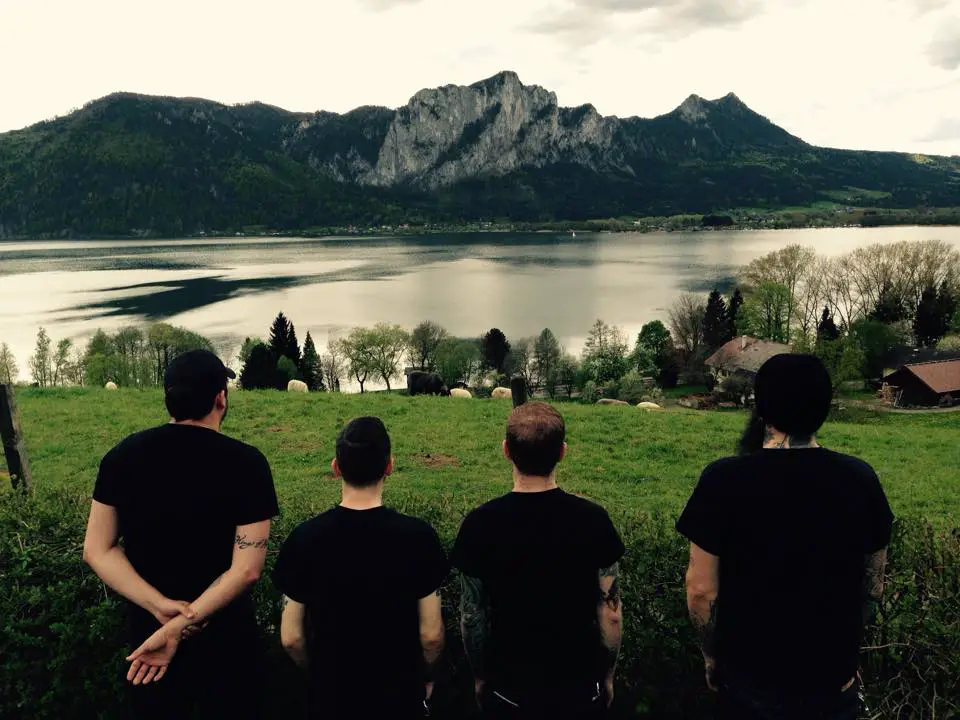
Released in mid-March via EMPIRE, “Watching It Burn” is one of the latest previews off Borderline’s upcoming self-titled debut album, Borderline (out June 26th). Hailing from Auckland, the rising New Zealand quartet – Ben Glanfield, Jackson Boswell, Matthew McFadden, and Max Harries – have been best mates since childhood, and that closeness gives their music its irresistible pulse: A rare, instinctive chemistry that lets them swing between polished alt-pop, funk-tinged grooves, and arena-sized rock without losing the emotional center. They released their debut single “Spinning” in 2022 while still in high school; followed that with 2023’s Perfect Movie Scene and 2025’s Chrysalis EP; signed to EMPIRE; earned Aotearoa Music Award nominations for Pop Artist of the Year and Breakthrough Artist of the Year; made their U.S. debut with six buzzed-about SXSW sets; supported Teddy Swims on an arena tour in New Zealand; and kicked off 2026 with “Tainted,” which was named “Track of the Week” on BBC Introducing. Still barely out of their teens, Borderline already sound like a band building toward something vast.

You call me an actor, never say what I’m thinking
Always so dramatic when you say that you’re leaving
You slam the door, don’t know what for
I’m a lot, but you’re a lot, and that says a lot
Ooh, I’m wondering how you haven’t worked it out
You should know by now
“We’re four New Zealand boys who found each other through music at different stages as we were growing up,” Borderline tell Atwood Magazine. “Somewhere along the way it turned into everything for us.”
“We essentially live to create the songs we wish already existed,” they add. “Music that feels big, honest, and something you can live inside for a few minutes. There’s a lot of emotion in what we do, but it’s always paired with energy, we want people to feel something and move at the same time.”
I hate to admit it, but I’m down and out
Knew that we were walking on shaky ground
Built our house to watch it all burn down
I try to find balance while the world goes ’round
Keeping up appearances for someone else
Built our house to watch it all burn down
That mission roars through “Watching It Burn.” From its opening line – “You call me an actor, never say what I’m thinking / Always so dramatic when you say that you’re leaving” – the song drops us straight into the wreckage of a relationship where communication has curdled into performance. Everyone is talking, no one is hearing, and the house they built together is already cracking at the foundation. The lyric “I’m a lot, but you’re a lot, and that says a lot” lands with a wry sting, a flash of self-awareness inside the chaos; later, “Is it the house, or where we placed it?” cuts even deeper, turning the song’s central image into a devastating question of blame, timing, and doomed architecture. Was the love wrong, or was it simply built on ground that could never hold?
“The whole idea started with us wanting to write something that felt anthemic, big guitars, synths, and a chorus that makes you want to take the roof off and sing along!” the band share. “The lyric came out of that tension you get when communication breaks down, people are saying things, but not really saying what they mean. We were chasing that feeling of an emotion sitting inside something that feels huge. It’s something we think people can relate to in their own way.”
You call me a traitor for putting my heart out
Too easy to cut this, like a razor paper
Is it the house, or where we placed it?
All I know now is I’m sleeping on the pavement
Ooh, I’m wondering how you haven’t worked it out
You should know by now
Borderline have always had a gift for making emotional devastation feel communal. On last year’s Editor’s Pick “When It’s Raining,” they wrapped anger and sadness in echoing piano, swelling guitars, and power-ballad catharsis, turning inner turmoil into a spiritually cleansing downpour. “Watching It Burn” returns to that larger-than-life emotional terrain, but with a harder, brighter edge: The guitars hit like headlights on wet pavement, the synths surge with widescreen intensity, and the chorus is all open-road adrenaline and heartbreak smoke. “I hate to admit it, but I’m down and out / Knew that we were walking on shaky ground / Built our house to watch it all burn down,” Ben Glanfield sings, his voice cutting through the band’s stadium-sized wall of sound, feeling with the full-bodied urgency of someone finally saying the things he has been swallowing for too long
Then comes the saxophone outro – Max Harries’ scene-stealing final lift – and the whole track bursts into color, transforming collapse into spectacle, sorrow into motion, pain into the kind of hook you want to scream from a car window with the roof down.
“We wrote ‘Watching It Burn’ with our own perspective of what it meant,” Borderline say. “For us, it came from that feeling of putting everything into something, a relationship, even a version of your life, and then watching it fall apart in a way you can’t control.”
“But we’re really fond of the idea that people can interpret our songs however they please and that once a song is out, it doesn’t belong to us in the same way anymore, so the audience is free to find their own meaning or story behind the lyrics. Their personal connections with ‘Watching It Burn’ are just as true to the song as our own!”
That openness is part of what makes the song hit so hard. “Watching It Burn” can be about a relationship, a dream, a chapter, a younger version of yourself – anything you loved enough to build, and lost enough to mourn. The band’s upcoming debut album, produced by Aotearoa Music Award-winning producer Nic Manders, captures that same sense of scale and immediacy across 13 tracks, with “Watching It Burn” sitting alongside “Tainted,” “That Girl,” “When It’s Raining,” and more as a portrait of a young band finding the full force of their sound. Borderline say the new music feels “more direct, more honest, and more like us,” and you can hear that confidence in every second of this single: Four musicians trusting their instincts, chasing the biggest version of the feeling, and landing on a song that sounds designed to detonate live.
“Oh 100%!” they say when asked if they always imagined “Watching It Burn” as a big live song. “This song was massive from the day we wrote it, and knew it would be super fun live.”
“Max pulling out the sax for the outro is a huge moment,” they add. “When that kicks in, it shifts the energy in the room and you can really feel the crowd lift.”
And this lift is the point. “Watching It Burn” does not leave us in the ashes; it turns the fire into fuel. Borderline may be singing about collapse, but they perform it like a breakthrough – all nerve, neon, and open-throated release. In their hands, heartbreak becomes architecture, ruin becomes momentum, and a burning house becomes the backdrop for one of the year’s most exhilarating rock anthems. This is the sound of a band on the edge of something enormous, staring down the blaze and refusing to look away.
I hate to admit it, but I’m down and out
Knew that we were walking on shaky ground
Built our house to watch it all burn down
I try to find balance while the world goes ’round
Keeping up appearances for someone else
Built our house to watch it all burn down
“Every Woman”
by Fiona-Lee“Because it’s all too common how every woman has been in a similar position with a man.” Fiona-Lee’s “Every Woman” does not ask for permission to be angry, and it does not soften its fury for anyone’s comfort. The East Yorkshire singer/songwriter’s feverish title track off her second EP is a blunt-force reckoning with sexual assault, rape culture, shame, silence, and the endless burden placed on women to explain harm that should already be obvious. It’s brash, bodily, and blistering – an indie rock eruption that turns confrontation into catharsis, naming the violation, the minimization, the defensiveness, and the cultural rot with a voice that refuses to flinch. “What’s hard to understand,” she sings again and again, and the question lands like a challenge, a condemnation, and a rallying cry all at once.
Released in mid-February via Gravity / Capitol Records, “Every Woman” is the title track to Fiona-Lee’s sophomore EP Every Woman (out now). Produced by Thom Lewis, known for his work on Sam Fender’s Hypersonic Missiles and Seventeen Going Under, the six-track record follows last year’s striking debut EP Nothing Compares to Nineteen and finds Fiona-Lee sharpening her already visceral gift for turning diary-like confession into full-bodied release. The 26-year-old artist has quickly become one of the UK’s most compelling new songwriters, earning praise across the press landscape, support from BBC Radio 1 and BBC 6 Music, tour slots with CMAT and Miles Kane, and upcoming live dates including her debut UK headline tour and a support slot with Paul Weller. Yet for all the momentum around her, “Every Woman” feels less like a career move than a necessary act of truth-telling – the kind of song that burns because it has to.

“Ey up. I’m from East Yorkshire,” Fiona-Lee tells Atwood Magazine. “First thing I do every morning is have a cup of tea. Always squeeze the bag. You are welcome to form your own opinion on my music, but I would say my music is lyrically very confrontational and self confessional. My songs are basically how I process life and validate experiences I’ve had whilst commenting on society.”
I wonder if he’d talk to you
Take a shot at intimidation
I could tell him what you did to me
Then how you couldn’t handle
my confrontation
That directness is everywhere in “Every Woman,” from its opening confrontation – “I wonder if he’d talk to you / Take a shot at intimidation / I could tell him what you did to me / Then how you couldn’t handle my confrontation” – to its devastating second verse: “It could’ve been worse / You could’ve hurt me / It’s not the first / violation of my body / But why’s it the norm / What we must go through / To learn who to trust and learn how to run.” Fiona-Lee writes with a frightening clarity here, refusing euphemism and refusing shame. The song does not spiral inward; it points outward. It names a system that teaches women to brace, excuse, justify, rationalize, and stay silent – then rips that silence open with guitars, grit, and an almost physical insistence on being heard.
“I wrote ‘Every Woman’ after being at a friend’s house and talking about our own experiences with sexual assault,” she shares. “It just clicked that that literally every woman I knew had a similar story, and basically went home and wrote it when I was really pissed off. I remember feeling a very physical drive within me when writing it and just thinking I really wanted other women to hear it and feel pissed off too, and for men to hear it and know that it’s directed at them.”
That physical drive surges through the song’s arrangement. “Every Woman” is all serrated guitars, biting vocals, and forward motion – a call-to-arms built to be shouted from a packed room until the walls shake. Fiona-Lee’s voice has a raw, vibrato-tinted force that makes every line feel lived-in, not performed; she sounds wounded, furious, and utterly clear-eyed. The track’s power lies in how naturally it fuses accusation and release: The chorus is catchy enough to feel communal, but the lyrics keep cutting through any temptation to treat this as simple catharsis. “And it’s so straightforward so don’t ask me so many questions on my side of the communication / What’s hard to understand.” That line is the song’s spine – not just anger, but exhaustion at having to explain the obvious to people more invested in defensiveness than care.
Because it’s all too common
how every woman
has been in a similar position
with a man
And it’s so straightforward
so don’t ask me so many questions
on my side of the communication
What’s hard to understand
“I don’t think the meaning will ever really change for me,” Fiona-Lee says. “It’s always represented calling out rape culture and confronting those that should be held accountable.”
The song’s final stretch broadens that confrontation into a demand for education, empathy, and accountability: “Because boys should be educated / Boys should learn to cry / And not feel emasculated / To ask how to get it right.” It is one of the track’s most potent turns because Fiona-Lee does not stop at indictment; she pushes toward responsibility. “Every Woman” is not only about what women carry, but about what men are taught to ignore, excuse, defend, and repeat. The song’s anger is not reckless – it is purposeful, clarifying, galvanizing. Its fury does not close the door; it breaks one open.
I’m sure he didn’t mean it
Does intention overrule harm
Maybe inexperienced
But you don’t need to read minds
Because boys should be educated
Boys should learn to cry
And not feel emasculated
To ask how to get it right
Because boys should be educated
And taught what it looks like
Without getting so defensive
To know when they cross the line
Fiona-Lee put it plainly: “‘Every Woman’ is about sexual assault, a subject that remains dangerously silenced. Despite how common it is, rape culture attaches shame to the conversation. It’s clear we have failed and are still failing to teach young men how to respect women. This song is about releasing that shame and reclaiming power. It’s about taking action and confronting those who should be held accountable. I want women to hear it and feel anger – not as something to suppress, but as something validating and energising. And I want men to hear it and know this song is addressing them, and calling on them to take responsibility.”
That sense of reclaimed power runs through the entire Every Woman EP, a record Fiona-Lee describes as a more mature step forward from Nothing Compares to Nineteen. Its songs move through self-reflection, imposter syndrome, friendship fracture, health anxiety, shame, compassion, and self-acceptance, opening with “Erin” and closing with “Victim” in a wider arc of confrontation and healing. For Fiona-Lee, the EP became a lesson in strength beyond volume: Not every truth has to be screamed to be powerful, though “Every Woman” proves that sometimes a scream is exactly what the moment demands.
“To me, this EP feels a lot more mature,” she says. “Writing the songs and being on that journey of creating and sharing them has really helped me understand myself more and I’ve definitely recognised a lot of personal growth throughout the whole process. I think I’ve learnt so much about just ‘serving the song’ too within the production process. Before this EP I always thought that as a young woman you have to be constantly loud and shouting above the noise to be heard – but I’ve learnt that there’s a lot of power in moments of softness and vulnerability.”
“I hope people can hear the songs and feel encouraged to speak their truth and open up about their experiences in a way that can really empower them,” she adds. “I want people to know that they have a voice and when it comes to things like sexual assault they really don’t have to stay silent. I want it to energise people and also encourage a boogie to songs like rational!”
Because it’s all too common
how every woman
has been in a similar position
with a man
And it’s so straightforward
so don’t ask me so many questions
on my side of the communication
What’s hard to understand
And it’s so f*ing blatant
and they can say it’s a generalisation
but if they cared enough
to even listen they might understand
Every woman… Every woman
“Every Woman” is not interested in being palatable. It is interested in being true. Fiona-Lee takes a subject too often buried under shame, silence, and semantic gymnastics, and drags it into the light with the force of a storm breaking open. The result is a song that feels both deeply personal and terrifyingly collective – a fist in the air, a nerve exposed, a refusal to carry what was never hers to hold. In its fury, “Every Woman” makes room for validation. In its directness, it finds liberation. And in Fiona-Lee’s hands, anger becomes not an endpoint, but a beginning: A way back to voice, body, self, and power.
“STRONGER THAN THAT”
by verygently“Flat on my back, now where do I go? / Panic attack, I’m an American psycho.” “STRONGER THAN THAT” lives in the aching aftermath of an unhealthy relationship – the part no one really warns you about, when the body has left but the nervous system keeps reaching back. verygently’s breathtaking single traces the fallout of love gone wrong with a trembling, open-chested grace, lingering in the panic, grief, temptation, and self-protective distance that can follow us long after a relationship ends. From the start, the Nashville trio pull us into the dazed seconds after emotional impact – breath shallow, heart racing, the whole room spinning as old wounds threaten to swallow whatever good might come next.
Comprised of Drew Erwin, Joey Hendricks, and Tristan Bushman, verygently began as the natural next step for three established singer/songwriters whose longtime collaboration evolved into a band in 2024. Since then, they’ve quickly carved out a space of their own with harmony-driven indie rock that balances heartache, humor, catharsis, and camaraderie, releasing the EPs DUMBA$$ MODE and FAME! while building momentum on the road with artists like Augustana, The Fray, The Band Camino, and Ruston Kelly. Now, with a debut full-length album on the horizon, “STRONGER THAN THAT” and the previously released “HOW IT’S ALWAYS BEEN” (ft. Ruston Kelly) offer an early glimpse of a band coming into sharper focus – three distinct voices blurring into one radiant, resonant whole.

“The universe has been very kind to us,” verygently tell Atwood Magazine. “It feels like the music we are making and releasing today is a lot more realized than our first two EPs. Starting this band has been a bit of a whirlwind and the beginning was sort of thrown together out of necessity. It’s been nice to have had the opportunity to play so many shows though and hone in the sound that I feel like is reflected more accurately on this new project.”
That deeper sense of self comes through in every breath of “STRONGER THAN THAT,” a song that sways like a slow dance and cuts like a confession. Written with Sam Hollander and Better Than Ezra’s Kevin Griffin, the track began with a guitar riff inspired by Griffin’s three-string cigar box, then expanded into a moody, atmospheric indie folk reverie shaped around verygently’s stunning three-part harmonies. Their voices ache and rise together, folding into one another with the kind of warmth that makes pain feel communal – not erased, exactly, but held. What began as a simple, organic demo eventually became what the band describe as “the biggest, moodiest thing” they could make, and that ambition pays off: The song feels intimate and immense at once, a soft storm of voices, strings, and unresolved longing.
“The mind and body can go to pretty strange places when you’re dealing with strong emotions,” the band share. “Anxiety is hard. Mourning the loss of relationships that once meant a lot to you is hard. Letting your wounds get in the way of potential connections is hard.”
“The original demo was very organic and simple. No drums or anything,” they continue. “And we actually got it mixed and planned to put it out, but then decided to wait and bring it into the studio when we were cutting songs for our album. The sonic world was really just trying to create the biggest moodiest thing we could in order to match the energy the lyrics convey.”
At the heart of “STRONGER THAN THAT” is the devastating recognition that wanting someone – or wanting the comfort of what’s familiar – doesn’t mean you should go back. “But I can’t meet you where you’re at / I’m stuck in the past / She’s stronger than that,” they sing in the chorus, the line landing with equal parts shame, tenderness, and awe. Strength, here, isn’t grand or triumphant; it’s the act of not giving in. It’s the unanswered call. It’s knowing a door is bad for you and still having to talk yourself out of opening it. By the time the bridge circles around “Now I’m the enemy / I never meant to be / Just wanted something to last,” the song has become a portrait of a narrator caught between remorse and self-awareness, trying to make sense of the ways hurt people can keep hurting each other.
“This song is just about not giving into the temptation of something that’s been proven to be not good,” verygently explain. “Even if it feels like something you want in the moment.”
That’s what makes “STRONGER THAN THAT” so soul-stirring: It understands that healing rarely arrives cleanly. It can look like panic, relapse, restraint, mourning, self-blame, and still choosing not to cross the line. verygently don’t turn that struggle into a lecture; they turn it into harmony, into ache, into a breathtaking swell of sound that makes alienation feel a little less lonely. “STRONGER THAN THAT” is a song for the aftershocks – for anyone who’s tried to love through the wreckage, anyone still learning the difference between longing and return, anyone who needs to believe that not going back can be its own kind of grace.
“We hope it can make people feel less alone in times they’ve felt alienated by intense emotions,” the band say. In “STRONGER THAN THAT,” they do exactly that – transforming the haunt and sting of old wounds into a radiant, rich reminder that strength can sound soft, very gentle, and breathtakingly alive.
“All That I Wanted Was You”
by Adrian Lyles“How did a month go by? / How could the tears subside?” Adrian Lyles’ “All That I Wanted Was You” begins in the strange, suspended space after a relationship ends – when time keeps moving, the world refuses to stop, and the heart can’t quite understand how anything is supposed to feel normal again. Softer and more restrained than some of his most explosive releases, the Dallas-raised, Los Angeles-based singer/songwriter’s latest single is no less stirring: A brooding, emo-pop-tinged ballad that turns helplessness, regret, and late-arriving clarity into a shiver-inducing anthem. It’s intimate at first – all close-to-the-chest guitar, aching vocal presence, and unanswered questions – but its emotional world keeps widening until that chorus hits like a wound reopening: “But all that I wanted was you.”
A singer, songwriter, multi-instrumentalist, and actor, Adrian Lyles has quickly emerged as one of alternative pop’s most dynamic young voices, threading together rock, pop, hip-hop, indie, and raw confession into songs that feel restless, theatrical, and deeply personal. After making waves with “Formalize Me,” “King of Everything,” and “Concrete Boy,” he spent 2025 building out the ambitious Horizons: Dawn, Dusk, and Night EP trilogy – a striking, shape-shifting body of work made with GRAMMY-winning producer Oak Felder that traces cycles of love, identity, choice, and transformation. Released in February, “All That I Wanted Was You” was written with Brian Brundage, and arrives as a new door opening after that world: A heartbreak song that feels like both a final look back and a first step forward.
How did a month go by?
How could the tears subside?
Is it bad that I’m hoping
you’ll never get over this?
Do you still wear the necklace I gave you?
Or did your friends all do you a favor
And convince you to throw it away
Or hide it, or burn it, or break it?
Or is it still hanging under your face?
‘Cause I’ve got everything that you gave

“I love creating, I love making weird new all over the place art, I love being overly honest through it,” Lyles tells Atwood Magazine. “Every record is a look into my soul.”
That honesty cuts through every second of “All That I Wanted Was You.” Lyles describes the song as “a yearning and regret-filled anthem about how it feels to lose someone, and realizing how much they meant to you after it’s already too late,” and the track lives inside that realization with devastating patience. “Is it bad that I’m hoping you’ll never get over this?” he asks early on, before spiraling through keepsakes, memories, and the cruel little artifacts a relationship leaves behind: A necklace, a face burned into memory, the things given and kept even after the person is gone. The song’s ache comes from that helpless in-between – wanting relief, wanting the other person, wanting proof that the loss mattered.
But all that I wanted was you
I don’t show up, you act crazy,
but that’s what we do
The person that said that she loved me
Hey, wasn’t that you?
Said I was changing
but I know I can’t follow through
But neither can you
All that I wanted was
“When I made this record, I was in a really dark place and fresh out of a situation that ended for reasons completely out of our control,” he shares. “That feeling of helplessness is one of the most in-your-face emotions on the record. I also think that’s one of the worst ways for a relationship to end, knowing neither of you wants it to, but there is nothing you can do to stop it. That inevitable pain wrote ‘All That I Wanted Was You.’”
What makes “All That I Wanted Was You” so memorable is the way its sound mirrors that emotional volatility. Lyles doesn’t flatten heartbreak into one clean feeling; he lets it move, buckle, swell, and contradict itself. The verses feel hushed and exposed, as if he’s reliving memories alone in a dark room, while the chorus opens into a larger declaration of pain – less polished confession than emotional overflow. “I don’t show up, you act crazy, but that’s what we do / The person that said that she loved me / Hey, wasn’t that you?” he sings, capturing the bruised circularity of two people who know the pattern and still can’t quite break it. By the time he reaches I hate that it’s true, the song has stopped searching for blame and started sitting with the grief beneath it.
“I really like records that move and fluctuate,” Lyles explains. “Thinking back, the emotion that lives in this record is so all over the place, from sad to angry, to regretful, etc., that the sound of the record needed to be just as chaotic. These memories that are being relived through the record are intimate and close to the chest, so we have just the guitar and quiet vocals that then move to this declaration of pain in the chorus that should feel explosive. The vision for the record was to make sure it was sonically accurate to what I was feeling.”
Do you miss me sometimes?
How we talk it to talk it
Or how I listen and smile?
Loving all of the nonsensе
I see your face, I think it baked
In the sidе of my head
In the back of my eyelids
Me in a daze, you roll away
Down the hall, through my life
To the streets, on the highway
That emotional accuracy has shifted for Lyles with time. What once sounded like helplessness now carries the weight of acceptance – not the easy kind, but the painful understanding that some losses can’t be reversed, only lived through. “It’s funny how things have changed for me,” he reflects. “When I had initially written this record way back when, the most noticeable feeling in the record was a painful helplessness. I felt trapped in a situation, and all I could do was watch the series of events unfold, but looking at it now from the new place I’m in, the most undeniable feeling I get from the record is acceptance. Accepting that things change, people go away, and not everything works out. It sucks, but that’s life sometimes.”
But all that I wanted was you
I don’t show up, you act crazy,
but that’s what we do
The person that said that she loved me
Hey, wasn’t that you?
Said I was changing,
but I know I can’t follow through
But neither can you
All that I wanted was
“All That I Wanted Was You” aches because it knows regret doesn’t always arrive as a lesson; sometimes it arrives as a chorus you can’t stop singing. Adrian Lyles turns that ache into one of his most affecting releases yet – a soft-burning, spine-tingling anthem for the relationships that end before the heart is ready, and for the version of yourself you have to leave behind in order to move forward. “It feels like I closed the last door on who I was, and I’m ready for all new doors to open,” he says. That’s the quiet power of this song: It mourns what’s gone, but it doesn’t stay there. It stands at the threshold, heartbroken and wide awake, waiting for whatever comes next.
“Rat Race”
by Winyah“Don’t you get tired of keeping up with the Joneses? / It’s okay to focus on your own shit.” Winyah don’t waste a second getting to the point on “Rat Race.” The South Carolina five-piece’s latest single is a roaring, ragged indie rock anthem about growing up, burning out, chasing a dream, and trying to stay connected to the people you love while life keeps pulling you further from home. It’s restless and raw, full of fire and swagger – the sound of a band kicking up dust on the highway, staring down the pressure to keep moving, keep working, keep proving themselves, and still somehow keep their hearts intact.
Formed in 2023 and named after Winyah Bay – the coastal South Carolina landmark where four out of five members grew up – Winyah are Thomas Rowland, Stephen Russell, Robert Buffington Jr., Luke Gordon, and Jacob “Jake” Riley. Their music pulls straight from the source: humid nights, endless highways, small-town ache, southern grit, and the adrenaline of life on the road. Since releasing their debut album Lot to Learn last February, they’ve amassed over 25 million global streams, played major festivals like Bonnaroo and Lollapalooza, sold out their first headline tour, and built a reputation for high-energy live shows that hit like release.

“We’re an indie/alternative rock band from South Carolina,” Winyah tell Atwood Magazine. “Our songs are gritty and real – full of friction, soul, and defiance – and we pride ourselves on our high-energy live shows. Winyah is more than a band name; it’s a hometown, a headspace, a heartbeat.”
That heartbeat pounds through “Rat Race,” the first preview of Winyah’s upcoming sophomore album on Cloverdale Records. The track finds the band entering a heavier, more emotionally charged chapter – still fun, still fired-up, still unmistakably built for the stage, but sharpened by the ache of distance and responsibility. Where Lot to Learn captured five lives in motion, “Rat Race” feels like the moment that motion catches up with them: the dream getting bigger, the stakes getting higher, the people back home feeling farther away.
Don’t you get tired of keeping up with the Joneses
It’s okay to focus, on your own shit.
Don’t you get tired, of the picture perfect nonsense
Another destination of empty validations.
Mom’s home alone, changing up all the bedrooms.
Tellin herself she’s not confused
Makin amends with the issues
The kids are all gone, chasing after a paycheck
When they come home they talk way less,
Too much to get off their chest.
“Thomas here (lead singer)! I wrote this with my parents in mind, about my experience seeing them struggle from afar as I was in Nashville and out on the road, not able to be there with them,” Rowland shares. “It’s nostalgic – but stressed, coming from someone who’s trying their best to make it in a world of unknowns. Sonically, I wanted the tones to parallel those feelings of adrenaline, angst, stress, and worry, but with a tinge of hope and triumph. I think of this song almost like a juxtaposition between success and the struggle it requires, the sacrifices of not being able to be with the ones you love, and the viewpoint of it all from afar.”
That push-and-pull gives “Rat Race” its bite. Rowland sings about a mother home alone, changing bedrooms, making amends with old issues; a father on the phone, trying to keep a straight face; kids chasing paychecks and coming home with too much sitting unsaid in their chests. The details feel lived-in and painfully familiar, but Winyah don’t let the song sink under the weight of them. The guitars snarl, the rhythm drives, and the chorus opens wide with all the bruised, blazing urgency of a band trying to outrun guilt without losing sight of love: “It’s not that we don’t love you, we’re just dreaming, and we don’t have time to care / Running in the rat race, we’re in last place, but the love is always there.”
It’s not that we don’t love you,
we’re just dreaming,
and we don’t have time to care.
Running in the rat race,
we’re in last place,
but the love is always there.
“Absolutely! The chorus is exactly that, the climax or resolution to the pictures painted in the intro and verses,” the band explain. “While we’re out here grinding it out on the road, it’s hard to be there for those that we love back at home, just because we are so far away and always traveling. The second chorus kind of points towards our attempts to find the ability to be there for the ones we love, even when we’re out on the road. While we feel a responsibility to be there for our loved ones, we also feel a responsibility to keep working our tails off to provide for ourselves, the project, and ultimately our loved ones in the long run. It’s all about finding the balance, and I think the second chorus shows that we’re trying our best to figure that out!”
That’s the soul of “Rat Race”: not escape, not abandonment, but the hard, messy attempt to hold multiple loves at once. Love for home. Love for family. Love for the work. Love for the dream. Winyah understand that growing up often means living inside contradiction – wanting to be present while chasing something far away, wanting to build a future while missing the people who made you, wanting to slow down while the world keeps demanding speed. Their swagger doesn’t hide the vulnerability here; it amplifies it, turning anxiety into motion and guilt into a full-throttle indie rock eruption.
Dad’s on the phone, and
he’s tryna keep a straight face,
He’ll never say he’s not okay,
but it hasn’t been this bad since ’08.
Back when I was seven years old,
new xbox and a couple games,
were enough to keep me entertained,
I wish it could’ve stayed that way.
It’s not that we don’t love you,
we’re just dreaming,
but I’ll find the time to care.
Saying nothing is saying something,
I’m just hoping you know I’m well aware
If we’re running in the rat race,
we’re in last place,
but the love is always there.
“We hope that listeners hear this song and feel comfortable in their own shoes,” Winyah say. “No matter who you are, growing up is tough, especially when you’re doing new things in new places, far from those you love. We want the listeners to feel that they’re not alone in that. I think that’s what we’ve taken out of it. We’ve definitely learned a lot about the balance of home life and road life over the past few years, and I think the biggest thing we’ve taken from this song is that it is possible to be there for someone from afar, but that it takes patience, empathy, and love to figure it out! No one is perfect, and the best thing we can do for each other is to be honest and compassionate.”
“Rat Race” is Winyah in full charge – restless, radiant, road-worn, and alive with that ragged fury that makes them such a singular force in the indie rock landscape. It’s a song about the cost of motion, but also the meaning inside it; about running hard and still remembering what you’re running for. Winyah may be in the race, but they’re not losing themselves to it. They’re carrying home with them – in the grit, in the fire, in the love that’s always there.
“Sore Thumb”
by Kat Cunning“I was born in a choke hold.” Kat Cunning’s “Sore Thumb” begins with a gasp and grows into a reckoning. Achingly intimate and quietly anthemic, the song is a tender indie pop reverie for anyone who’s ever felt punished for being visible – for being too loud, too strange, too much, too different, too alive to disappear.
A performer, writer, actor, and storyteller, Kat Cunning has long made art that feels both theatrical and deeply personal: cinematic, sensual, raw, and rooted in the body. Their 2025 EP Glass Jaw was bold and visceral, a genre-bending world of danger, desire, queer defiance, and radical joy. “Sore Thumb,” though, opens a softer door. It’s a return to simple, honest storytelling – warm lower tones, spacious production, and a vocal performance that doesn’t need to climb toward spectacle to leave a mark. It glows from within.
I was born in a choke hold
Found my feet each time I stumbled
Now I trip on my tongue, oh
Art of being not so subtle
Like the sun reflectin’ off a traffic light
An extended hand just asking for a ride

“These songs are the proof of my life,” Cunning tells Atwood Magazine. “I love when they find people who feel represented by them, especially the queers and the freaks like me. I write stories I can’t help but tell, and sing to remind myself to breathe. I want my music to be a friend to you, or a room you feel safe dancing in.”
That sense of refuge sits at the heart of “Sore Thumb,” a song Cunning calls an “understated lowkey pride anthem.” Written in their first session with Anna Schulz, the track is about coming to terms with not fitting in – and learning to love that difference as a natural superpower, even when the world tries to punish you for standing up or sticking out. The lyrics move with bruised grace: “I tried to fix what was broken / Tried to quiet what was loud / But I’m stickin’ out.” It’s a line that aches because it knows the cost of self-erasure; it’s a line that heals because it refuses to stay small.
I’m sticking out like a sore thumb
Here in the company no one
Yeah, I’m so precious and broken, oh I
Got em goin’ now
I’m stickin’ out like a sore thumb
Got their attention I hold em
I tried to fix what was broken
Tried to quiet what was loud
But I’m stickin’ out
“I’ve had big curly blonde hair since I was born and I have always attracted attention,” Cunning shares. “While growing up, that attention came with misaligned assumptions, fetishization and reprimanding of who I am perceived to be. I had to grow a very keen understanding of my identity, especially as a queer person.”
“‘Sore Thumb’ is about learning that being different is a super power. When you stand out from the crowd, people are looking at you. You can either spend your life wishing for invisibility or accept the responsibility of speaking up for people who can’t speak for themselves.”
That transformation – from exposure into agency, from wound into light – gives the song its smoldering pulse. Cunning doesn’t sing “Sore Thumb” like a victory lap; they sing it like a truth they’re still learning how to hold. “One of these is not alike / Fallen fruit bitter to the bite / In an apple orchard I’m the orange / In a batch of roses I’m the thorn / I’m the neon in the night,” they sing, turning alienation into image after image of vivid, unruly beauty. Their voice is warm and close, the drums distant and steady, the arrangement rising with what Cunning calls an “undulating growth” – never rushing, never forcing, just slowly filling the room until the loneliness feels almost sacred.
One of these is not alike
Fallen fruit bitter to the bite
In an apple orchard I’m the orange
In a batch of roses im the thorn
I’m the Neon in the night
“Anna and I really wanted the song to have an undulating growth,” they explain. “I like songs that don’t shove themselves at me. Rather, I like the ones that get under my skin and move my water crystals. This song invited me to write is at the pace Anna orchestrated in the warm, lower tones that don’t compete with my range. The drums feel epic, but they stay out of my way like a cavalry appearing on a distant hill. It’s a relationship to space that feels epic and alone.”
That space matters. It lets every ache breathe. It lets Cunning’s words settle into the skin, especially when they speak to the reality of living between categories – in genre, in gender, in life – and eventually deciding to stop begging for belonging. “The thing about having nowhere to sit, is you have to stand out,” they say. “Eventually you stop trying to ask for a seat at the table. You climb on top of it and put on a show.”
“I’m nonbinary but I’m a shape shifter. I’ve been too much or too little of something for all of my original dreams, but I’m a moving target and whatever you think I am, there’s more to it.”
“I think most people are this dynamic they just choose to water things down for the ease of belonging in a society. I want to live in a society where less people do that. I want a whole hand of Sore Thumbs.”
“Sore Thumb” is gorgeous because it doesn’t pretend sticking out stops hurting. It simply insists that hurt doesn’t have to be the end of the story. Kat Cunning turns visibility into tenderness, vulnerability into presence, and difference into a room big enough for the queers, the freaks, the misfits, the shapeshifters, and anyone else still learning how to love the parts of themselves the world tried to quiet. In its soft heat and open-hearted ache, “Sore Thumb” stands out exactly as it should – radiant, wounded, brave, and beautifully alive.
I’m stickin’ out like a sore thumb
Here in the company no one
Yeah, I’m so precious and broken,
oh I got em goin’ now
I’m stickin’ out like a sore thumb
Got their attention I hold em
I tried to fix what was broken
Tried to quiet what was loud
but I’m stickin’ out
— — — —

Connect to us on
Facebook, 𝕏, Instagram
Discover new music on Atwood Magazine
Editor’s Picks
follow EDITOR’S PICKS on Spotify