Groovy, smoky, and seductively soul-soaked, Ana Grosh’s confessional “Call Me Back” captures the brutal loneliness of an after-party comedown, aching for connection in the dreamy haze of late-night longing.
 follow our Today’s Song(s) playlist


Stream: “Call Me Back” – Ana Grosh
We long to be seen because there’s nothing lonelier than having no one to witness our lives.
* * *
The last person awake after the party carries the whole night in their body:
The laughter gone sour, the room gone stale, the phone suddenly heavier than it should be. Ana Grosh’s “Call Me Back” lives inside that tender, brutal comedown, where a good time gives way to the ache of needing another human being to answer.
Groovy, smoky, and soul-soaked, “Call Me Back” makes loneliness feel almost cinematic – a seductive fog of thick drums, gentle electric guitars, and vocals that smolder with charm, candor, and raw feeling. Grosh sings like she’s trying to keep herself together in real time, turning a late-night plea for a ride home into a devastatingly relatable cry for connection.

This pity party’s over
I’m wishing I was sober
They said we’re drinking to forget
Then they got me drunk and went to bed
Now I’m scrolling through my contacts
Hoping I can get a call back
It’s 2 AM in Tennessee
But in Atlanta it’s already 3
Atwood Magazine is proud to be premiering “Call Me Back,” the achingly intimate and breathtakingly beautiful new single and music video from Ana Grosh. Out now via Dog Brothers Records, the song follows Grosh’s 2025 label debut “Freedom” and deepens the Atlanta-born, Nashville-based artist’s gift for turning raw, real-life feeling into richly textured alt-pop storytelling. Written and produced by Grosh, “Call Me Back” finds the singer/songwriter, producer, and multi-instrumentalist leaning into the grit, atmosphere, and emotional candor that have made her a magnetic rising voice.
Grosh has been building her world one honest confession at a time. A 22-year-old artist with roots in alt-pop, soul, R&B, blues, and trip-hop, she first found her way into music production after flunking guitar lessons, convincing her teacher to show her GarageBand and Logic instead. By 15, she’d released her first original song; years later, viral stairwell performances helped introduce a wider audience to her striking voice and genre-fluid sound. Now, as she steps further into her own as both a performer and producer, Grosh is making music that feels lived-in and unguarded – dramatic, funny, messy, seductive, and bruised by the kind of painful truths that linger with us.

At the heart of “Call Me Back” is a night out curdling into a lonely walk home, a crowded room becoming a place where no one is really reachable,
a phone full of names that suddenly feels like a list of dead ends. The song was born from that strangely specific, deeply familiar hour when the party has lost its glow and all that’s left is the need to be picked up and held onto – or simply heard.
Voicemail
All I get from you is voicemail
Don’t you know how to make me cry
Call me back when you get this
I drank too much
Pick up your phone
Call me back when you get this
I drank too much
Come take me home
“‘Call Me Back’ is a raw, late-night reflection on that aching loneliness that can hit after a party,” Grosh tells Atwood Magazine. “Inspired by times when I was drunk and couldn’t drive myself home, I’d call everyone I knew, desperate for a ride, but also desperate for that human connection. It’s a sad anthem for the quiet after-party blues – when the noise fades, and all you’re left with is a longing to be seen, to be heard, to be called back, and a hope that someone out there is listening.”
“I wrote this song in the midst of college when my friends and I would drink every weekend,” Grosh adds. “On more than one occasion I would be the last one awake after drinking all evening, and I would have no one to talk to and I just felt so lonely and consumed with sad drunk thoughts. I would always think about calling old friends, random numbers, and even my mom just to have someone to talk to late at night, maybe I did sometimes and just don’t remember it.”

“Call Me Back” opens with the brutal clarity of a night gone wrong: “This pity party’s over / I’m wishing I was sober / They said we’re drinking to forget / Then they got me drunk and went to bed.” In four lines, Grosh captures the cruel little betrayal of being left alone with the feeling everyone else was trying to outrun. The humor is dry, the hurt is fresh, and the whole scene lands with a messy, visceral honesty – the kind that can only come from knowing exactly how it feels to be too awake, too emotional, and too far from home.
By the time she’s “scrolling through [her] contacts / hoping [she] can get a call back,” the song has shifted from anecdote into ache. The Tennessee-to-Atlanta time difference adds a quietly devastating detail – one life spilling into another, one daughter calling toward home from a room that suddenly feels miles away from everyone who might understand her. Then the chorus arrives like a confession breaking loose: “Call me back when you get this / I drank too much / Pick up your phone / Call me back when you get this / I drank too much / Come take me home.” Grosh doesn’t over-sing the plea; she lets it rise until want and embarrassment and vulnerability blur together, singing into that red phone as if force of feeling alone might make somebody answer.
I’m so drunk I call my mom
How’s she doing
How’s the dog
She’s the biggest fan of my career
But I only see her twice a year
Now I’m crying on the sofa
One too many vodka sodas
I just want someone to hear me talk
But their working normal people jobs
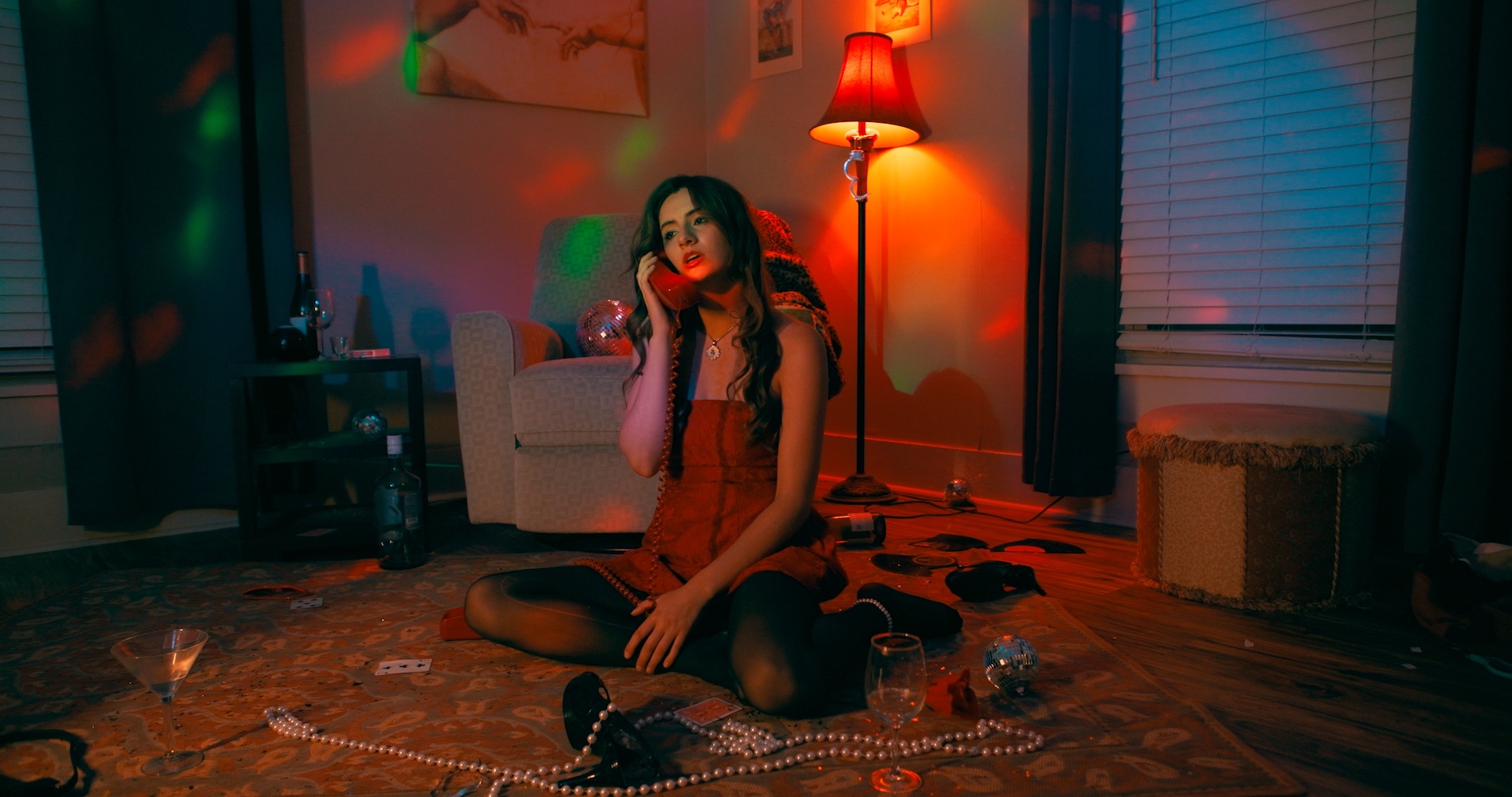
Only no one does – and in the song’s music video, that unanswered plea becomes its own heartbreaking journey.
“It’s inspired by a night where I wanted to leave the party, but I was going to have to walk home if I didn’t find a ride,” Grosh explains, and the clip follows that memory into the streets, turning the simple act of getting home into a surreal, soul-baring portrait of isolation.
“The music video unfolds after the party, when the noise fades and the loneliness becomes impossible to ignore,” Grosh explains. “Stranded at an empty party, alone in a messy room, mascara running, lipstick smudged, she calls a landline again and again, reaching for connection, hoping someone will answer – but no one does. Wrapped in an oversized leopard-print jacket, she realizes she has to walk herself home. She steps onto the streets – some completely empty, others crowded like Broadway in Nashville, yet still just as lonely. All the while, she carries the landline phone, dialing numbers and leaving voicemails that no one will hear.”
Dressed in red and draped in faux fur, Grosh looks like the last spark of the night refusing to go out. The house around her still carries the evidence of everyone else’s fun – cups scattered, party lights glowing, the room in disarray – but the celebration has given way to silence. She wakes into the mess alone, gathers herself as best she can, and clings to that bright red phone like it’s a lifeline, dragging it with her from room to room and, eventually, out into the open night air. There’s a dreamlike absurdity to the image – a woman in a red dress, a leopard-print coat, and a full landline receiver wandering through Nashville – but the feeling underneath it is painfully real.
As Grosh moves from empty suburban streets into brighter, busier pockets of the city, the video deepens the song’s central ache: Being surrounded by life doesn’t mean you feel any less alone. Neon signs and passing headlights don’t answer back. Crowds don’t equal comfort. Every unanswered call becomes another little heartbreak, another reminder that the person she needs might be nowhere, or asleep, or gone for good. By the end, “Call Me Back” has become more than a plea for a ride home; it’s a confession sung into the void, a desperate hope that someone, somewhere, will pick up before the night swallows her whole.

“Call Me Back” lands because it understands the difference between being around people and being known by them.
Grosh doesn’t treat loneliness as an empty room or an unanswered phone alone; she treats it as a witness problem, a human ache born from moving through life unseen even when there are bodies everywhere. The song’s deepest hurt isn’t that no one picks her up – it’s that no one picks up, period.
“I think everyone goes out and talks to many people without ever actually connecting with anybody,” Grosh muses. “Connection is a lot more than a being in a crowded room or having a conversation. What draws me to find connection in life is the same thing that draws me to creating and putting out music; the need to be understood. We all want to feel understood. We make music and listen to music because sometimes that’s the only way we can feel understood. We long to be seen because there’s nothing lonelier than having no one to witness our lives.”
Voicemail
All I get from you is voicemail
Don’t you know how to make me cry
Call me back when you get this
I drank too much
Pick up your phone
Call me back when you get this
I drank too much
Come take me home
Call me back when you get this
I drank too much
Come take me home
That need to be witnessed sits at the center of Grosh’s artistry.
She writes with the wit of someone who knows life can be ridiculous, the voice of someone who can make even a tossed-off line cut deep, and the honesty of an artist unafraid to admit the feelings most of us try to laugh off, sleep through, or bury beneath another drink. “Call Me Back” is funny until it hurts, glamorous until it cracks, and deeply human in the way it lets longing spill out without smoothing over the mess.
Stream “Call Me Back” exclusively on Atwood Magazine, and dive into our full conversation with Ana Grosh below as she opens up about her song’s late-night origins, the ache of wanting to be understood, finding her voice as a songwriter and producer, and the real-life moments that continue to shape her soulful, story-driven world.
In the end, “Call Me Back” leaves us with that same phone-heavy feeling we began with: The whole evening held in the body, the whole heart waiting for someone to answer.
Call me back when you get this
I drank too much
I drank too much
All I get from you is voicemail
All I get from you is voicemail
Don’t you know how to make me cry
— —
:: stream/purchase Call Me Back here ::
:: connect with Ana Grosh here ::
— —
Stream: “Call Me Back” – Ana Grosh
A CONVERSATION WITH ANA GROSH

Atwood Magazine: Ana, for those who are just discovering you today through this writeup, what do you want them to know about you and your music?
Ana Grosh: My greatest hope is that people feel something real when they hear my music. I try to tell the stories that most people overlook and verbalize the feelings most people are scared to admit. I’m inspired by Pop, Soul, and R&B, but more than anything I’m inspired by the real life, dramatic, funny, messy, and uncomfortable feelings I experience as a young woman.
With us being so many years into your career, can you recommend a couple deeper cuts or personal highlights from the Ana Grosh catalog for Atwood’s crate-digging audience to sink their teeth into?
Ana Grosh: I’ve been releasing music since 2020, but I feel like I’ve only been making the kind of music I love for the past two years. Nonetheless I still do appreciate the music that got me to where I am now. My all time favorite deep cut and a song of mine that I feel like aged the best is called “Missing Out” from my first EP. It was one of the first songs that I really leaned into the jazzy, soulful part of my voice and writing, which in turn taught me what I really want out of my music.
Who are some of your musical north stars, and what are you most excited about the music you're making today?
Ana Grosh: I’ve always loved Lana Del Ray, but most recently I’m very inspired by Joy Crooks, Adele, Kali Uchis, and Amy Winehouse. What excites me most about the music I am making today is being able to bring my songs to the stage and put on the show I’ve always wanted.
Today we're premiering your new single “Call Me Back,” which you've called a “sad anthem for the quiet after-party blues.” What's the story behind this song?
Ana Grosh: I wrote this song in the midst of college when my friends and I would drink every weekend. On more than one occasion I would be the last one awake after drinking all evening and I would have no one to talk to, and I just felt so lonely and consumed with sad drunk thoughts. I would always think about calling old friends, random numbers and even my mom just to have someone to talk to late at night, maybe I did sometimes and just don’t remember it. The music video is inspired by a night where I wanted to leave the party, but I was going to have to walk home if I didn’t find a ride.

It's fascinating to me that, after going out and being around people, the comedown finds us needing more connection – maybe a different kind of connection, but connection nonetheless. Why do you think you long for there to be someone out there, listening like that? Where might our innate longing to be seen comes from?
Ana Grosh: I think everyone goes out and talks to many people without ever actually connecting with anybody. Connection is a lot more than a being in a crowded room or having a conversation. What draws me to find connection in life is the same thing that draws me to creating and putting out music; the need to be understood. We all want to feel understood. We make music and listen to music because sometimes that’s the only way we can feel understood. We long to be seen because there’s nothing lonelier than having no one to witness our lives.
What’s this song about, for you personally?
Ana Grosh: My feelings toward this song have evolved a lot since when I wrote it. When I first wrote it, I was just feeling that typical loneliness in a crowded room sensation. A year later and now there’s a specific connection in my life that is no longer the lifeline it used to be, and every second is suddenly a battle to not pick up the phone and call them. It’s strange how your past self can understand and verbalize something before it even happens. There’s something divine to be said about writing the song you are going to need to hear before you actually need it, maybe that only makes sense to me.

What do you hope listeners take away from “Call Me Back,” and what have you taken away from creating it and now putting it out?
Ana Grosh: With every vulnerable song I put out, I always hope it reaches the people who need to hear it. Creating and putting out “Call Me Back” has forced me to be really honest with myself about why real connection in my life feels like a rare occurrence, and if I lose that connection, how will I find a new one?
In the spirit of paying it forward, who are you listening to these days that you would recommend to our readers?
Ana Grosh: I’ve been obsessed with Valley James. She’s been very inspiring to me lately and I can’t recommend her music enough.
— —
:: stream/purchase Call Me Back here ::
:: connect with Ana Grosh here ::
— —
Stream: “Call Me Back” – Ana Grosh
— — — —
Connect to Ana Grosh on
𝕏, TikTok, Instagram
Discover new music on Atwood Magazine
© Mia Humphrey
 © Mia Humphrey
:: Today’s Song(s) ::
follow our daily playlist on Spotify
:: Stream Ana Grosh ::