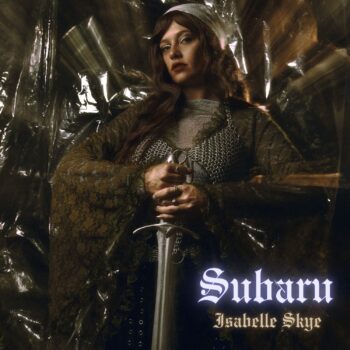
Australian singer/songwriter Isabelle Skye confronts fear, fury, and the loss of everyday safety on “Subaru,” a breathtakingly brooding indie pop reckoning that turns one violating encounter into a raw, radiant act of recognition.
Stream: “Subaru” – Isabelle Skye
The walk home should belong to the person taking it.
It should be ordinary: Pavement underfoot, keys in hand, the familiar route back, the body moving through the world without having to rehearse escape plans. On “Subaru,” Isabelle Skye lingers in the brutal rupture of that everyday peace, singing from the frozen space between fear and fury as one violating encounter redraws the map of a life.
Gentle in its touch yet devastating in its truth, “Subaru” aches with the weight of an experience too many people know by heart: The split-second calculation, the swallowed reaction, the sudden loss of ease in places that once felt familiar. The Australian singer/songwriter’s third career single is an achingly intimate indie-pop reckoning with vulnerability, survival, and the anger that rises when fear becomes part of the route home.
You’ve been inside for too long
Judgments really hit a wall
Your innocence didn’t last long
Vulgar words fall from your mouth
Didn’t you know that we don’t feel safe
Walking the streets alone?
Atwood Magazine is proud to be premiering “Subaru,” the breathtakingly brooding, beautifully restrained new single from Naarm/Melbourne artist Isabelle Skye, alongside its accompanying music video (out May 28). A vessel for dread, frustration, and hard-won catharsis, “Subaru” pairs Skye’s burgeoning ethereal indie pop foundations with smoldering neo-soul flourishes, centering her dusky, emotionally charged voice as it moves through shock, fear, restraint, and release. Recorded at Fish Bones Tone Shack, produced and mixed by Fabian Hunter, and mastered by Andrei Eremin, the song wraps its raw core in harp, guitar, drums, bass, keys, and layered backing vocals, all gathering around a performance that feels exposed, focused, and deeply human.
An Aboriginal artist raised in Naarm/Melbourne, Skye arrives as a soul-stirring voice with a world already forming around her: Intimate, dreamlike, rooted in raw emotion and real experience. After writing and performing through her teenage years, studying music formally at 17, and becoming part of Naarm’s thriving scene through projects including Doe Eyes, China Beach, and Shot By Jane, she began releasing solo music in 2024 – bringing with her a sound that feels tenderly self-possessed from the start.
With only two singles previously released, she has already earned coverage and airplay from The AU Review, PBS, RRR, Triple J Unearthed, 4ZZZ, SYN, and FBi Radio, while “Subaru” arrives as her most piercing statement yet: A song that refuses to look away from the everyday calculations too many women are forced to make just to move through the world.

For Skye, the balance between beauty and emotional exposure sits at the heart of her work.
Her songs – including past singles “Fairy Dust” and “Kaleidoscope” – live in a lush, moody sonic environment, but their center is undeniable: The ache of memory, the pull of connection, the fragile force of feeling too much and choosing to sing through it anyway.
“My music is deeply rooted in emotion, vulnerability, heartbreak, nostalgia, and human connection,” Skye tells Atwood Magazine. “Sonically, it sits within an ethereal indie pop world, but I think at its core it’s really about creating atmosphere and honesty. I’ve always been drawn to music that feels cinematic and emotionally raw, and that’s something I try to bring into everything I create.”
That artistic compass comes into piercing focus on “Subaru,” a song that gathers Skye’s cinematic instincts and emotional directness into one of her most affecting releases yet. Inspired by classic voices like Carole King, Stevie Nicks, Nancy Sinatra, Margo Guryan, and Mazzy Star, as well as more modern touchstones including Clairo, Lana Del Rey, and Tennis, Skye carries that lineage forward in her own language – tender, brooding, and unafraid to name what hurts.

On “Subaru,” that artistic instinct lands in one of Skye’s most confronting spaces yet.
The single began with a real walk home, a stranger’s car, and the awful moment when ordinary surroundings turned threatening.
“I wrote this song about an experience I had while I was living out in the forest,” Skye says. “One afternoon, a man stopped his car near me, ran towards me, and asked me a really inappropriate sexual question. It left me stunned and immediately feeling unsafe, especially because it was just the two of us in these quiet backstreets.”
“After it happened, I remember feeling shaken, but also frustrated with myself for not reacting differently or confronting him more. But the reality is that, as women, so many of us are conditioned to respond in the least confrontational way possible just to keep ourselves safe. Although the song comes from a very specific personal experience, the bigger theme behind it is how common it is for women to move through the world feeling unsafe on a day-to-day basis, constantly taking precautions for basic safety. I wanted “Subaru”to capture both the fear and the quiet anger that can come from that.”
Why in the world did you think
You could stop and park your car?
Now you’ve got me avoiding
Backstreets and Subarus
Why did I have to freeze
And put the right number in your phone?
The song opens with disarming restraint: A gentle guitar figure, a glimmer of harp, and then Skye’s voice, close enough to feel like a confession delivered inches from the ear. She sings softly, but never passively; every phrase carries the charge of a body remembering what it had to survive. When she asks, “Didn’t you know that we don’t feel safe walking the streets alone?” the question lands with blunt, devastating force – not as metaphor, but as lived reality given melody.
That tension only deepens as “Subaru” blooms around her. Piano slips into the frame, the arrangement widens, and after the line “Why in the world did you think you could stop and park your car?” the drums hit with startling clarity, opening the track into its full, aching splendor. The contrast is harrowing: Even as Skye sings from terror, the music surrounding her is breathtakingly beautiful, as if the song is holding space for both the wound and the person who lived through it.
Then comes the line that makes “Subaru” unforgettable: “You’ve got me avoiding backstreets and Subarus, how dare you?” Skye returns to it again and again, her voice growing rawer with each repetition until the phrase becomes less a lyric than an indictment. It’s the song’s emotional center of gravity – the moment fear curdles into rage, and rage finds language sharp enough to name what was taken.
“This part of the song explains how this experience altered how I went about my day,” Skye says. “I didn’t walk the back way to my house anymore and I was always on the look out for his car that was a Subaru, when I was writing it I felt anger that anxiety had filtered into such a simple activity which is walking around in the world.”
What lingers isn’t only the fear itself, but the aftermath: The altered routes, the second-guessing, the anger at being made to carry another person’s violation into the rest of your life. In that sense, “Subaru” becomes more than a document of one incident; it’s a reckoning with how quickly a place, a path, even the sight of a car can become charged with memory.

For Skye, making “Subaru” meant returning to an experience she couldn’t simply leave behind – and finding a way to carry it differently.
The song doesn’t erase what happened, but it gives shape to the fear, frustration, and helplessness that followed, turning a moment of vulnerability into an act of expression.
“Writing has always been one of the main ways I process and express my emotions,” Skye says. “Sometimes songwriting arrives without warning, usually at the exact moment I need an outlet the most, and it becomes a really therapeutic experience for me. With a song like this, revisiting those emotions wasn’t always easy, but I think there’s something healing about turning an experience that made you feel powerless into something creative and honest. One of the most beautiful parts of songwriting is that once the song leaves you, it becomes something other people can connect to in their own way. People interpret it through their own experiences, and if it can make someone feel seen or a little less alone, then that means everything to me.”
That sense of transformation – from shock into testimony, from isolation into connection – sits at the heart of “Subaru.” Skye isn’t presenting pain as a spectacle; she’s honoring the complicated process of living with it, writing through it, and letting the song become a place where others might recognize pieces of themselves.
That, ultimately, is where “Subaru” hits hardest: In the impossible coexistence of wound and wonder. Skye’s voice aches in the retelling, carrying the stunned breath of the moment itself and the slow-burning outrage that follows. She doesn’t distance us from what happened; she pulls the listener close enough to feel how one stranger’s cruelty can distort the ordinary, turning a walk, a street, a car, a route home into a source of dread. It’s an intimate song about a deeply personal violation, but its force comes from how painfully recognizable that violation is – how many women have their own version of this story, and how unacceptable it is that anyone should have one at all.

What makes “Subaru” so powerful is that it lets beauty and brutality occupy the same space without diminishing either.
The arrangement glows around her, tender and elegant, while the lyric keeps returning to the damage done: “You’ve got me avoiding backstreets and Subarus, how dare you?” That line is the ache, the accusation, and the aftermath all at once. It’s horrifying that this memory had to become music, and moving that Skye could make art from it – art that might one day be someone’s favorite song, not because of the pain behind it, but because of the truth, courage, and connection it carries forward.
“Subaru” takes on another kind of resonance through its music video, which surrounds Skye’s devastating story with warmth, kinship, and care. Rather than literalizing the encounter at the center of the song, the visual moves through scenes of life as it should be: Friends and family gathered close, music being made in the studio, a dog wandering through the frame, candles being lit, food and drink shared, laughter spilling into the backyard. It’s home in the fullest sense – familiar, tender, unguarded, alive. Against the song’s violation of safety, the video becomes a portrait of comfort reclaimed.
That contrast makes “Subaru” all the more affecting. The experience Skye describes should feel foreign to the body; the world around it should feel this easy, this generous, this open. In giving the song a visual language of community and softness, Skye doesn’t dilute its subject matter – she reminds us what was interrupted, and what everyone deserves to return to.
“The music video was filmed by my beautiful friend Lauren Merritt,” Skye says. “I’ve always had such a deep love for vintage aesthetics and analogue textures, so it felt really fitting to shoot the clip on Super 8 film. There’s something about it that feels nostalgic, intimate, and emotionally raw in a way that suited the song perfectly. The video was filmed in the studio and features little moments with myself, my band, and my producer. What I love about it is that, although the song comes from a difficult experience, the energy of that day was actually filled with joy, warmth, and support.”

“Subaru” begins with a walk that should have felt ordinary, and it ends by asking what it would mean for that ordinary freedom to be restored.
Skye doesn’t offer easy resolution, because the world that made this song necessary still exists; instead, she gives us a reminder of what safety, tenderness, and belonging can feel like when held close. In her hands, a moment that never should have happened becomes a vessel for recognition – raw enough to wound, graceful enough to comfort, and open enough to let others find their way inside.
Stream “Subaru” exclusively on Atwood Magazine, and dive into our full conversation with Isabelle Skye below as she opens up about the real-life experience behind the song, transforming fear into music, shooting the video on Super 8 film, and creating art rooted in vulnerability, memory, and lived truth.
You’ve got me avoiding
Backstreets and Subarus
How dare you?
— —
:: stream/purchase Subaru here ::
:: connect with Isabelle Skye here ::
— —
Stream: “Subaru” – Isabelle Skye
A CONVERSATION WITH ISABELLE SKYE

Atwood Magazine: Isabelle, for those who are just discovering you today through this writeup, what do you want them to know about you and your music?
Isabelle Skye: For anyone discovering me for the first time, my name is Isabelle Skye, a singer-songwriter from Naarm. I’ve been writing music since I was 17 across a range of different projects, from disco through to rock ’n’ roll, but in 2024 I finally decided to share my solo music with the world, which had been a very long-awaited dream of mine. My music is deeply rooted in emotion, vulnerability, heartbreak, nostalgia, and human connection. Sonically, it sits within an ethereal indie pop world, but I think at its core it’s really about creating atmosphere and honesty. I’ve always been drawn to music that feels cinematic and emotionally raw, and that’s something I try to bring into everything I create.
Who are some of your musical north stars, and what are you most excited about the music you're making today?
Isabelle Skye: My musical north stars started with classic artists like Carole King, Stevie Nicks, Nancy Sinatra, Margo Guryan, Mazzy star which led to more modern artists like Clairo, Lana Del Rey and Tennis. These are all such strong female artists and these women motivated and inspired me to be the artist I am today.
Your latest song is as achingly raw as it is painfully vulnerable. What’s the story behind “Subaru”?
Isabelle Skye: I wrote this song about an experience I had while I was living out in the forest. One afternoon, a man stopped his car near me, ran towards me, and asked me a really inappropriate sexual question. It left me stunned and immediately feeling unsafe, especially because it was just the two of us in these quiet backstreets. After it happened, I remember feeling shaken, but also frustrated with myself for not reacting differently or confronting him more. But the reality is that, as women, so many of us are conditioned to respond in the least confrontational way possible just to keep ourselves safe. Although the song comes from a very specific personal experience, the bigger theme behind it is how common it is for women to move through the world feeling unsafe on a day-to-day basis, constantly taking precautions for basic safety. I wanted “Subaru”to capture both the fear and the quiet anger that can come from that.
“You’ve been inside for too long, judgments really heat up all,” you sing at the track’s start. Can you share more about the story of this song, and how you went about building out its world?
Isabelle Skye: The line, “You’ve been inside for too long, judgments really hit a wall,” was actually a reference to COVID and that strange period of isolation we all experienced. It was my way of almost sarcastically saying, ‘Hey, I know we’ve all forgotten how to socialise a little, but this is definitely not the way to approach a woman.’
One thing I love about this song is how brutally honest it is - blunt and direct, which I find is often necessary when trying to make real points about important issues. “Didn’t you know that we don’t feel safe walking the streets alone” is a perfect example of this in action. How did the idea for this song start - and ultimately, what is Is it about you now?
Isabelle Skye: The lyric, “didn’t you know we don’t feel safe walking home alone” felt important to me because it’s such a universal experience for women. Walking home alone is such a basic everyday thing that shouldn’t feel unsafe, but unfortunately for many women it does. The song came from a personal experience, but it also reflects a much bigger issue. ABS 2024 data released in September 2025 recorded 7,121 victims of sexual assault in Victoria, with 87% being women, which was a 13% increase from 2023. I wanted the lyrics to feel blunt and honest because sometimes there’s no softer way to say these things.
Your lyric,“you’ve got me avoiding backstreets and Subarus” sends shivers down the spine every time you sing it. Can you tell me about this line, and its importance for you in the context of this song?
Isabelle Skye: This part of the song explains how this experience altered how I went about my day, I didn’t walk the back way to my house anymore and I was always on the lookout for his car that was a Subaru, when I was writing it I felt anger that anxiety had filtered into such a simple activity which is walking around in the world.
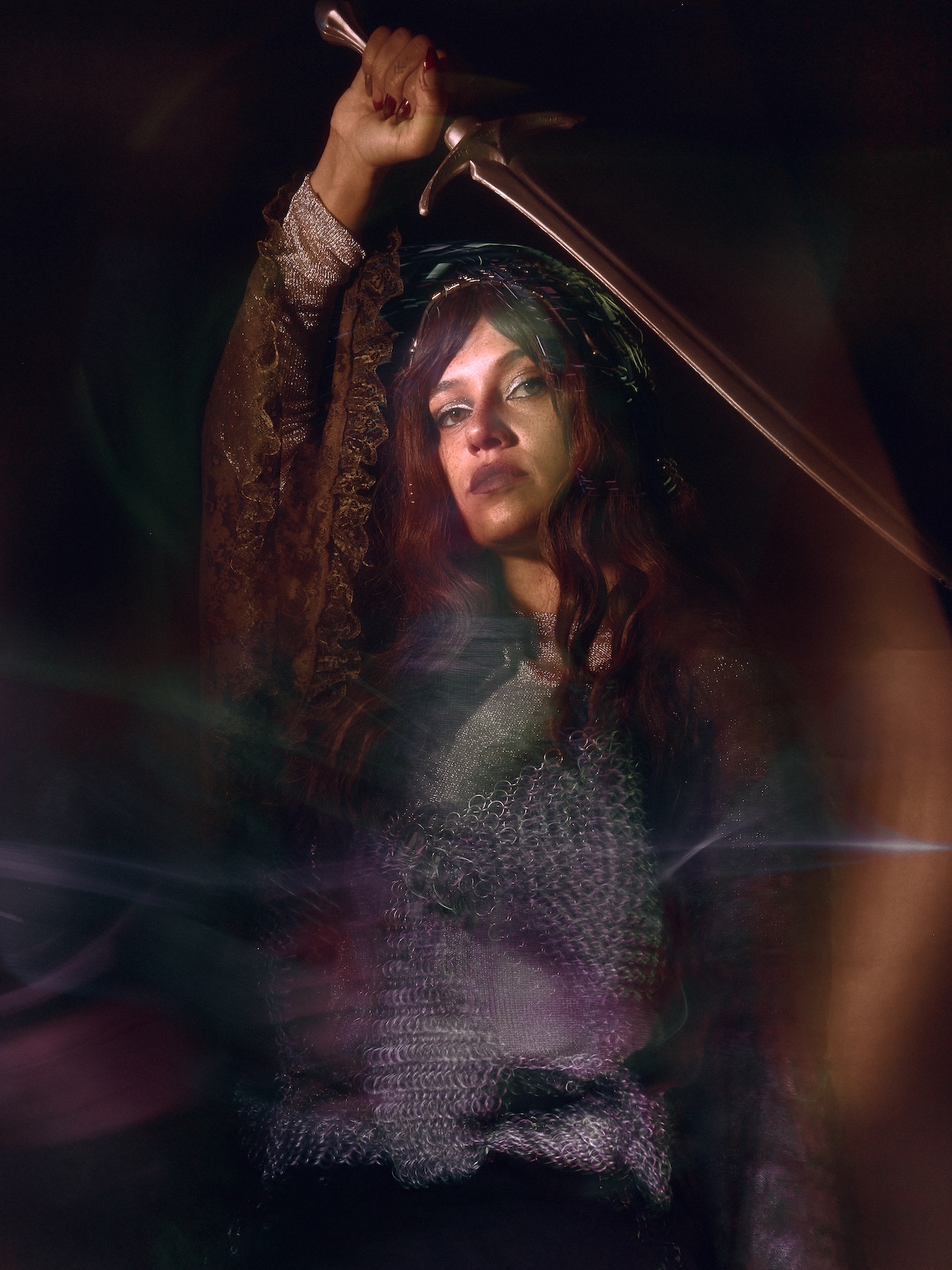
What was your experience like, if I may ask, reliving your trauma through writing and recording this song? How does that impact your trauma; do you find it’s helped you, in any way?
Isabelle Skye: Writing has always been one of the main ways I process and express my emotions. Sometimes songwriting arrives without warning, usually at the exact moment I need an outlet the most, and it becomes a really therapeutic experience for me. With a song like this, revisiting those emotions wasn’t always easy, but I think there’s something healing about turning an experience that made you feel powerless into something creative and honest. One of the most beautiful parts of songwriting is that once the song leaves you, it becomes something other people can connect to in their own way. People interpret it through their own experiences, and if it can make someone feel seen or a little less alone, then that means everything to me.
Can you share a bit about the song’s music video? How does you feel this visual adds to the experience of “Subaru”?
Isabelle Skye: The music video was filmed by my beautiful friend Lauren Merritt. I’ve always had such a deep love for vintage aesthetics and analogue textures, so it felt really fitting to shoot the clip on Super 8 film. There’s something about it that feels nostalgic, intimate, and emotionally raw in a way that suited the song perfectly. The video was filmed in the studio and features little moments with myself, my band, and my producer. What I love about it is that, although the song comes from a difficult experience, the energy of that day was actually filled with joy, warmth, and support.
What do you hope listeners take away from “Subaru,” and what have you taken away from creating it and now putting it out?
Isabelle Skye: I hope listeners who can relate to this experience, whether big or small, feel seen and heard through the song. We should all be able to move through the world feeling safe, and unfortunately that isn’t the reality for so many women. I think it’s a conversation we need to keep having openly, even when it’s uncomfortable, and if my little song can help spark those conversations in any way then that means a lot to me. For me personally, putting the song out has been both vulnerable and empowering. It reminded me how many shared experiences exist between women, and how powerful music can be in creating connection and understanding.
— —
:: stream/purchase Subaru here ::
:: connect with Isabelle Skye here ::
— —
Stream: “Subaru” – Isabelle Skye
— — — —
Connect to Isabelle Skye on
Facebook, Instagram
Discover new music on Atwood Magazine
© Sinead Leigh
 © Sinead Leigh
:: Stream Isabelle Skye ::