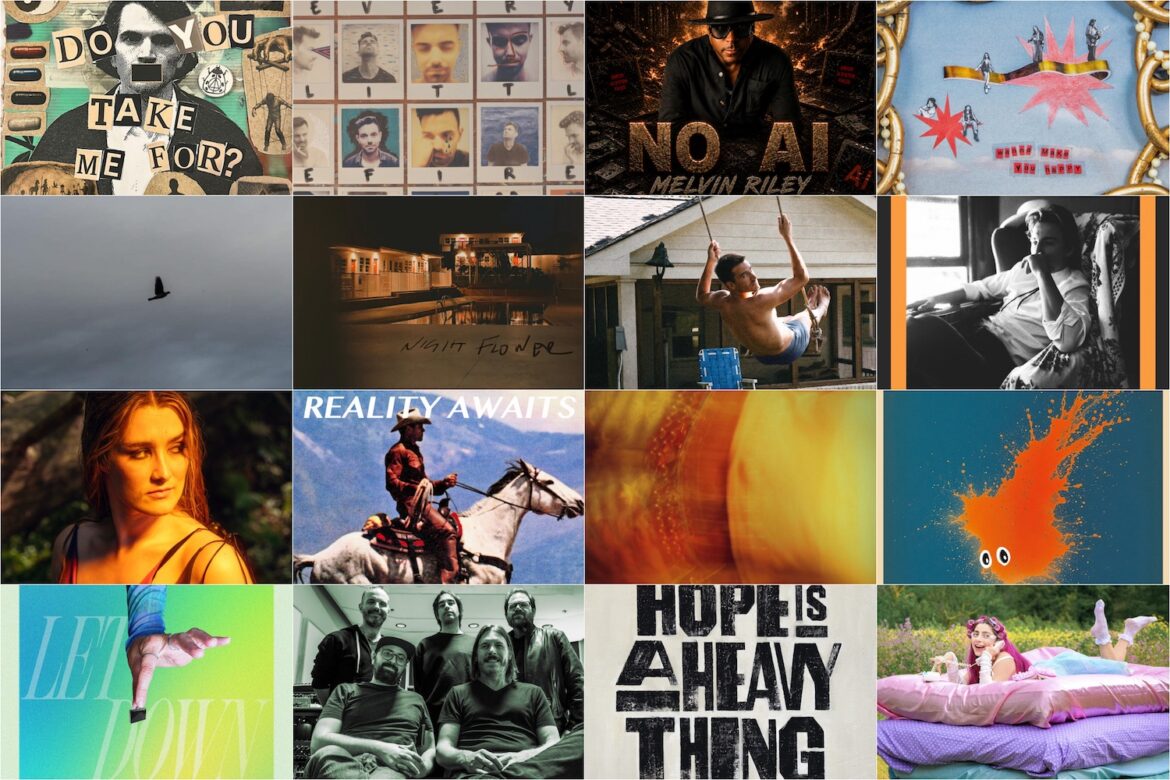
Every Friday, Atwood Magazine’s staff share what they’ve been listening to that week – a song, an album, an artist – whatever’s been having an impact on them, in the moment.
This week’s weekly roundup features music by Medium Build, Joy Oladokun, The Strokes, Harry Hudson Taylor, Lucy Robinson, Melvin Riley, #1 Dads, MIIA, E.VAX, ALANI, The Kountess, slowdrip, Evan Roderick, seeTrees, Cally Cole & The Cosmos, and Colm Warren!
•• •• •• ••
 follow WEEKLY ROUNDUP on Spotify


•• ••
:: “Home Depot” – Medium Build ::
Mitch Mosk, Beacon, New York

Longtime readers know Atwood sometimes doubles as a Medium Build appreciation page. Nick Carpenter’s candid songwriting and visceral voice have made him my favorite artist of the past few years, and every new release only deepens my admiration for the way he can make private damage funny, musical, and impossible to look away from.
“Armor,” the first single off Medium Build’s upcoming sixth album, King of Having Fun, came flying out of the gate with every intrusive thought exposed. Its follow-up settles into a looser groove without sacrificing any of Carpenter’s bite. “Home Depot” is a truly enchanting, soul-stirring song full of sway and heart, ache and charm – a ‘90s pop-country jam whose irresistibly catchy chorus begs to be sung back, while an utterly smile-inducing guitar solo blazes with a spirit we haven’t heard quite like this from Medium Build before.
He’s at the home depot
buying all the stuff to build a house
He’s storming in to plumbing
talkin’ with a toothpick in his mouth
Can’t tell him nothing
he’s a pro at almost everything
You got a question you just
ask him it’s like googling
Ain’t it a handful, the things
we do to keep the demons down?
Hey Steve’s been building
walls since you were 17
Hey Steve, hammered
watching movies on repeat
Hey Steve, is this how you pretend
to keep it cool in a world so mean?
Steve enters with a toothpick in his mouth and an answer for everything. He’s storming through plumbing, holding court at the bar, losing money on the game, and assuring everyone that “you can’t call it drunk driving if you’re not driving very far.” Carpenter sketches him with care and hilarious precision, capturing the guy who can build a house, patch a wall, and diagnose any practical problem placed in front of him – provided nobody asks what’s happening inside.
“Inside every one of us is a man unwilling to discuss the heavy, deep, painful, and emotional,” Carpenter writes of the song.
That half-joke opens into a portrait of masculinity built around deflection. Steve has been “building walls since [he] was 17,” handling every wound the only way he knows how: “Shove it down, bottle up, let it loose then pack it up / Start a fight, break stuff, punch a hole, patch it up.” Carpenter lets the list tumble forward with comic momentum until its violence starts to register. The same hands that repair every broken thing around him remain useless when the damage belongs to him.
Yeah shove it down, bottle up,
let it loose then pack it up
Start a fight, break stuff,
punch a hole, patch it up
Storm out, disappear,
show up with another beer,
Clench jaw, tight lip,
pretend that you don’t give a shit
“Steve is every stepdad you’ve ever met,” Carpenter tells Atwood Magazine. “There’s emotional labor and there’s physical labor, and I find that a lot of men don’t know how to do emotional labor, so they overdo physical labor.”
“By the end of the tune, I realized… I’m writing a love letter to the men in my life, saying, ‘Hey, brother, take it easy. Let us in.’”
Carpenter’s compassion gives “Home Depot” its staying power. Steve begins as a caricature and gradually comes into focus as a person who learned to confuse capability with strength, usefulness with worth, and silence with control. When Carpenter finally cries, “Who broke your heart?” the question lands without a trace of mockery. Beneath the bravado sits a man nobody has thought to check on, carrying pain he lacks the language to name.
Carpenter saves the song’s deepest cut for last: “He’s at the Home Depot buying all the stuff to build a house / His heart’s the only project he ain’t got the tools to figure out.” “Home Depot” makes us grin, sway, and sing along before quietly breaking us open – another breathtaking reminder that nobody can turn the everyday rituals of hurt, avoidance, and longing into music quite like Medium Build. Consider the appreciation page alive and well.
Hey Steve, who broke your heart?
Hey Steve, ain’t no one checkin’ on him?
Hey Steve, is this how you pretend
to keep it cool in a world so mean?
Cool in a world that’s so mean?
He’s at the home depot
buying all the stuff to build a house
His heart’s the only project
he ain’t got the tools to figure out
:: “Kind” – Joy Oladokun ::
Mitch Mosk, Beacon, New York
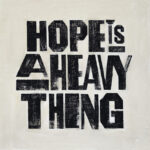
Joy Oladokun sings like she’s placing her whole self in your hands. “Kind,” her third single of the year, is a sweet, smoldering return from one of my favorite singer/songwriters – a graceful slow burn whose beauty gathers with every line. Her voice carries every bruise and boundary into the open, and the intimacy she surrenders into each moment makes this performance impossible to shake.
The music holds close, letting Oladokun’s presence fill every inch of the song. She lets phrases catch, stretch, and darken, moving from aching tenderness to steely resolve while preserving the intimacy at its center. Few singers sound so exposed and so commanding at once; fewer still can make restraint land with this much force. I’ve called Oladokun a voice of her generation before, and “Kind” reaffirms why: She sings from the deepest parts of herself, then leaves enough room for the rest of us to recognize our own lives in hers.
The title holds the song’s central tension. Oladokun has spent a lifetime extending grace, absorbing hurt, and offering second chances, but “Kind” draws a firm line between compassion and giving too much of yourself away. “I might be quick to second chances / But I do not victimize my circumstances,” she sings, before the chorus lands with bruising clarity: “I will not drink down bitter wine / You were the first to draw blood / Don’t be surprised I’ve gone cold / I am not too kind to let you go.”
That refrain hits because Oladokun keeps her humanity intact. The bridge opens the song’s innermost truth: “There’s nothing wrong / With being human / Human enough to break / There’s nothing wrong / With being proud / Strong enough to walk away.” Pain and self-respect sit side by side in her delivery, and the image of “blood stains on my teeth” makes the point plain – tenderness can grow teeth when survival demands it.
Produced by Oladokun with additional contributions from Nigerian producer Spellz, “Kind” opens the door to Hope Is A Heavy Thing, her new album out September 25 via Concord Records. The 12-song record follows 2024’s OBSERVATIONS FROM A CROWDED ROOM and finds her confronting the past to recover her light, drawing from the many musical worlds that have shaped her while asking how any of us keep hope alive in times like these.
“‘To understand your future you have to confront your past.’ This is the driving theme behind Hope Is A Heavy Thing,” Oladokun shares. “It’s a collection of 12 songs that I wrote to help myself find my light again after burning out. Produced in Nashville, New York, and the back of a speeding tour bus, this album is sonically an homage to all of the music that inspires me.”
“On this record you’ll find music that nods the brilliance of the Soulquarians, the rawness of Bob Dylan, the rhythms of afrobeats, and the sampling prowess of J Dilla. Not to mention a callback to the Ronettes and a few songs that find inspiration in rock and roll protest music of the ‘60s and ‘70s. You’ll also find me at the most authentic I’ve been able to be as an artist. It is a record I wrote for anyone who finds themselves wondering how to hope in these times. Sometimes it means looking back and digging through the muck to find what’s worth fighting for again.”
“Kind” is a thing of breathtaking beauty, a welcome return full of soulful heat and hard-won clarity. Oladokun pours herself into every line, reminding us that kindness has boundaries – and sometimes walking away is how we keep our own light alive.
We could all use a little more Joy in our lives. This song is a welcome, much-needed breath of humanity in the world.
:: Reality Awaits – The Strokes ::
Mitch Mosk, Beacon, New York

I went through a massive Strokes phase earlier this year, long before they announced their seventh album – falling back in love with those first three records and reacquainting myself with some of the material I missed in the 2010s. (Seriously, can someone tell me why “Gratisfaction” isn’t a bigger hit?) They’ve always been one of my favorite bands, but this time, I went deeper – and the music hit me harder – than ever before.
The Strokes are far and away my most-streamed act of 2026, and Reality Awaits only deepens that renewed obsession – proof that falling back into an old favorite can still lead somewhere new.
Released today, their first album in six years may be their darkest – and richest – yet. Recorded in Costa Rica with Rick Rubin and finished across the globe, Reality Awaits burns with a feverish intensity, its smoldering undercurrent carried through wiry guitars, sweaty rhythms, and Julian Casablancas’ ever-elastic vocal performance. The light, passion, and angular snap that have made The Strokes a near-constant presence in music and culture for over two decades remain fully intact, charging these nine songs with raw momentum even as the lyrics stare into increasingly heavy places.
The title reads like both promise and threat. Casablancas writes from inside a culture obsessed with tomorrow while constantly recycling yesterday. Judgment becomes entertainment. Shopping becomes therapy. AI hands down instructions. People start over only to end where they began. Beneath the jokes, jabs, and surreal imagery, Reality Awaits keeps returning to what happens when motion outruns meaning – when the future arrives and leaves us just as restless, lonely, and unsure as before.
That tension courses through the album’s opening stretch. “Psycho Shit” introduces a world of predators, wounded children, and power exercised safely from behind a desk, while “Dine N’Dash” swings from poverty and alienation into violent fantasy and an uneasy reckoning with the beast within. “Lonely in the Future” bares its teeth at recycled culture, fad-chasing, and critics who claim authority over art. “I heard that twenty f*ing years ago, I did / Fantano, word for word, when I was a kid,” Casablancas sneers, letting sarcasm carry a serious question: How do you keep creating in a culture that mistakes novelty for originality?
The outward anger folds inward as Reality Awaits reaches its bruised center. The six-and-a-half-minute, AutoTune-soaked “Falling out of Love” allows contradiction to stand on its own – “Two things can be true, good times I had wit’ you” – while “Liar’s Remorse” links love, pain, and trust in a loop nobody can escape cleanly. Its central refrain, “You don’t have love because you don’t want pain,” cuts through the record’s swagger, exposing the fear beneath every defense mechanism. These songs carry some of the album’s most openly wounded writing, where intimacy means accepting the risk of being hurt rather than trying to outsmart it.
“Going to Babble On” and “Going Shopping” bring that circular thinking into the modern world. The former chants “Starting again” until Casablancas admits they’re “ending the same way that you began,” while the latter races between the city, the country, the mall, and the imagined relief waiting somewhere else. Movement becomes another loop; reality keeps waiting at every destination. I previously wrote about “Going Shopping” as a reflection of modern overstimulation, and the full album deepens that reading – escape, reinvention, and distraction keep colliding, each offering temporary momentum rather than lasting peace.
The final stretch widens the frame again. “The Fruits of Conquest” chants “The damage is done” and meets broken systems with outright disobedience, while “Tyrants of the Mellow Moon” closes on stolen riches, grey-haired guilt, and the knowledge that every performance must eventually end. “At the end, must let all songs die,” Casablancas sings before asking, “Am I too late?” Power fades. Art ends. Legacy survives only through whoever cared enough to listen – and the album leaves that final question hanging beneath the moon.
Across these nine songs, The Strokes sound like a band taking stock of what endures when novelty, romance, ideology, and self-mythology begin to fray. Reality Awaits wrestles with repetition, disillusionment, and the uneasy knowledge that progress often loops back on itself, but its pulse never gives in to resignation. The band remain alert, combative, funny, and deeply alive – older, more self-aware, and still unwilling to let cynicism have the final word. At this point in their story, survival means staying curious, refusing complacency, and continuing to make music that can stare down the present without losing its appetite for whatever comes next.
I’m sure successive listens will uncover the nuances that eventually make some songs glow brighter than others. For the moment, Reality Awaits feels like a gift – nine more Strokes songs added to an already legendary canon, full of sweat, provocation, and the restless spark that made so many of us fall for this band in the first place. Personally, I’m already a fan.
:: “What Do You Take Me For?” – Harry Hudson Taylor ::
Danielle Holian, Galway, Ireland

Irish singer-songwriter Harry Hudson Taylor leans into quiet confidence on his captivating new single “What Do You Take Me For?” a standout preview of his forthcoming EP Hiding From Nature. Written with Seraphina Taylor, who also adds beautifully understated backing vocals, the track unfolds with an effortless intimacy that feels both deeply personal and universally resonant. There is an easy warmth to the arrangement, but beneath its gentle exterior lies a song wrestling with doubt, perception, and emotional honesty. Taylor’s vocal performance never overstates its message, instead allowing every lyric to breathe with lived-in authenticity. The result is a song that rewards close listening, drawing listeners into its reflective world through subtle melodic shifts and a quietly compelling emotional pull.
Entirely self-produced in his home studio before drummer Shay Sweeney added the rhythmic foundation and Paul Carr brought the final mix into focus, “What Do You Take Me For?” is a testament to Taylor’s instinctive craftsmanship and artistic independence. Every element serves the song rather than competing for attention, creating an organic sound that feels timeless rather than trend-driven. Echoes of Beck’s understated experimentation, Bright Eyes’ emotional candour, Kurt Vile’s laid-back introspection, George Harrison’s melodic elegance, Villagers’ poetic storytelling, and Wilco’s earthy musicianship can all be heard without ever overshadowing Taylor’s own distinctive voice. Instead, he distils those influences into something quietly affecting and refreshingly sincere, delivering a song that lingers long after its final notes and further establishes Hiding From Nature as a release well worth anticipating.
:: “Let Down” – Lucy Robinson ::
Danielle Holian, Galway, Ireland

Lucy Robinson’s latest single, “Let Down,” arrives as a refreshing antidote to the relentless culture of overachievement, delivering an uplifting alt-pop anthem that feels as emotionally resonant as it is irresistibly infectious. The Northern Irish-born, Leeds-based singer-songwriter masterfully blends dreamy pop with gritty rock textures, soulful melodies, funk-infused grooves, and subtle electronica, creating a sound that is both contemporary and timeless. Co-written with producer Matt Weir, the track radiates warmth from its opening bars, driven by punchy percussion, fluid basslines, shimmering Hammond organ, and lush vocal harmonies that elevate Robinson’s rich, soulful performance. There’s an effortless confidence to the production, allowing every musician to shine while keeping Robinson’s expressive vocals firmly at the heart of the record. Fans of Sabrina Carpenter, Billie Eilish, and Olivia Dean will find familiar elements in Robinson’s genre-blurring approach, yet “Let Down” possesses a distinctive identity that feels entirely her own. Rather than chasing trends, she crafts a vibrant sonic escape that invites listeners to leave their worries behind, if only for three glorious minutes.
What truly elevates “Let Down” beyond its undeniable pop appeal is its sharply observed message. Robinson turns the exhausting ‘always-on’ mentality into the song’s emotional centerpiece, challenging the toxic glorification of hustle culture with refreshing honesty and quiet defiance. In an era dominated by productivity hacks and impossible expectations, her lyrics offer permission to pause, breathe, and rediscover balance without sacrificing ambition. That sincerity resonates throughout every aspect of the performance, transforming an undeniably danceable track into something with genuine emotional substance. Supported by outstanding contributions from Matt Weir, Si Frances, Abbey Peacock, Holly Mullahy, and the legendary Hammond organ work of John McCullough, the single achieves an impressive balance between commercial accessibility and artistic authenticity. “Let Down” is a radiant, soul-infused pop triumph that proves Lucy Robinson is not only an accomplished songwriter but an insightful storyteller, delivering one of those increasingly rare songs that leaves listeners feeling lighter, brighter, and reminded that sometimes the boldest thing we can do is simply slow down.
:: NO AI – Melvin Riley ::
Grace Holtzclaw, Los Angeles, CA

Melvin Riley believes that the soul and spirit of music could never be artificially replicated. Riley is known for his role as the lead vocalist and core songwriter of the multi-platinum group Ready For The World. His iconic voice and soulful lyrics have shaped the trajectory of R&B as we know it. His art comes from a place of soul-barring honesty. His new solo album, NO AI, makes a clear and direct statement. With his latest work, Riley is standing up for the integrity of creative expression.
Pulsating bass lines, lush rhythms, and soul-stirring vocals collide on Riley’s effervescent album. NO AI means the music is genuine on every level. From vulnerable storytelling on tracks like “I Aint Sh!%” to raw sonic expression on songs like “Greedy,” Riley digs deep to uncover a treasure that he lays out at our feet. Touching on themes of personal growth, passionate love, and the true value of art, NO AI skips the surface-level small talk and goes straight for the heart.
NO AI recently reached the top 10 on the iTunes R&B/Soul Albums chart. Revealing more on the message of his album, Riley confides, “This album is about bringing the heart back to music. Every note, every lyric, every melody comes from a real place.” You can hear the depth of passion in every word he sings. In a legacy of classics like “Oh Sheila” and “Love You Down,” NO AI promises to be another legendary staple for Melvin Riley.
:: “Already Something” – #1 Dads ::
Mitch Mosk, Beacon, New York

Dear reader, I’m going to level with you: When you write about music every day for over a decade, some of the songs you champion – no matter how much you may have loved them at the time – eventually fade from memory. The attention economy works that way, with shiny new objects obscuring so much of what came before them.
But #1 Dads never faded from view. Tom Iansek’s “Freedom Fighter,” off 2020’s Golden Repair, carries one of the most memorable melodies I’ve ever heard, and six years later, I still return to his music time and again.
Now #1 Dads is back, and the beautifully enchanting “Already Something” makes that long absence disappear in an instant. Iansek’s first single under the moniker in six years is a refreshing burst of sunlight, dreamy and charming with a gentle, sun-soaked soulfulness. Motown lives in its bones, but Iansek brings that classic warmth fully into his own world, singing with an openness that makes this stirring tribute to enduring love incredibly easy to fall head over heels for.
The full ensemble gives “Already Something” breathtaking depth. Isaac Barter’s cello and double bass, Kimberly Kai Cao’s violin, Luis Almau’s flute, Antoine Katz’s bass, Lloyd Haines’s drums, and Georgia Potter’s background vocals gather around Iansek with graceful, awe-inspiring finesse, each performance deepening the song while leaving his tender voice at its center. Angus Rigby’s saxophone takes flight in a dramatic solo, blazing through the arrangement with the same soulful command that made his turn on “Camberwell” (off 2014’s sophomore album About Face) a fan favorite.
At its core, “Already Something” celebrates love proven through pressure. “No fear there is already something here / We built it, we own it, our blood and tears” frames partnership as a life assembled together, its strength made visible through every difficult season survived side by side. By the time Iansek reaches “Who did I find / At the end of the fire / It’s only ever been you,” romance lands as recognition: After every move, strain, and upheaval, the person beside him remains home.
“Already Something” is a radiant reintroduction to an artist whose songcraft has always carried uncommon weight – and whose influence reaches far beyond this one project. An acclaimed Melbourne-born, now London-based singer/songwriter and producer, Tom Iansek has spent nearly two decades shaping Australian independent music – both as co-founder of indie label Pieater, and through his projects Big Scary, No Mono, and #1 Dads. He once described #1 Dads to Atwood Magazine as his “main vessel for my creativity and self-expression,” and its long-awaited fourth album, Every Little Fire, arrives October 16 via Pieater after a transatlantic relocation, a growing family, and the vertigo of dismantling one life to build another.
“‘Already Something’ is the only true love song on the record,” Iansek says, calling it “a tribute to my partner of many years.” “Moving through difficult things as a partnership can challenge that partnership, but it can build strength and resilience.”
“Already Something” makes the long wait worthwhile. Its melody smiles, its soft strings bloom, and the saxophone lifts the whole room, but Iansek’s devotion ultimately gives this breathtaking performance its lasting power. If “Freedom Fighter” made #1 Dads unforgettable to me, this radiant return reminds me exactly why – few artists can make gentleness sound so stirring, or hard-won love so easy to believe in.
:: Huldra – MIIA ::
Danielle Holian, Galway, Ireland

There is a quiet confidence running through Huldra, the long-awaited debut album from Norwegian alt-pop artist MIIA. Rather than announcing itself through spectacle or obvious commercial ambition, the thirteen-track record unfolds with patience, inviting listeners into an emotional landscape shaped as much by Scandinavian folklore as by lived experience. Drawing its title from the legendary forest spirit who has long embodied both beauty and contradiction, Huldra reimagines ancient mythology as a deeply personal metaphor for self-discovery. MIIA does not simply borrow the legend for aesthetic effect. Instead, she allows it to become the emotional framework through which themes of heartbreak, longing, empowerment, forgiveness, and healing are explored with remarkable sincerity. The result is an album that feels immersive and cohesive, offering a complete artistic statement in an era increasingly dominated by individual singles.
Produced by Benjamin Dan Ravn Fahre and Joachim JR Rygg, Huldra balances intimacy with cinematic scope through an elegant fusion of pop, indie pop, dream pop, electronic pop, and darker atmospheric textures. Every production choice feels deliberate, creating space for MIIA’s expressive voice to remain the emotional centre of the record. There is a striking restraint throughout the album that allows its quieter moments to resonate just as powerfully as its soaring choruses. Songs such as “I Can Tell a Lie” reveal an artist willing to expose emotional vulnerability without embellishment, while “Necessary Evil” examines the uncomfortable complexities of love with unusual maturity. Elsewhere, “Delicious” offers a compelling celebration of feminine confidence, “I’m in Love with You” provides an exhilarating emotional release, and the closing “Huldrarave” gently guides the listener toward acceptance and self-forgiveness. Each track contributes meaningfully to the album’s broader narrative, creating a sense of progression that rewards listening from beginning to end.
What ultimately distinguishes Huldra is its refusal to reduce emotion into simple binaries. MIIA understands that strength and vulnerability are not opposing forces but complementary ones, and that healing is rarely linear. That emotional intelligence is reflected not only in her songwriting but in the album’s pacing, production, and conceptual unity. More than a decade after introducing herself to the world with the enduring success of “Dynasty,” MIIA arrives with a debut that feels fully realised and artistically assured. Huldra is an album rooted in Nordic identity while speaking to universal human experience, reminding us that our greatest growth often comes from embracing the parts of ourselves we have been taught to hide. Rich in atmosphere, thoughtful in execution, and emotionally resonant throughout, it is a debut that confirms MIIA as one of the most compelling voices in contemporary alternative pop.
:: Just Like Fire – E.VAX ::
Ashley Littlefield, California

Evan Mast captures the heat of love and hints of the unknown. E.VAX, known as half of Ratatat, returns with Just Like Fire, his fourth independent release. Mast continues to showcase his signature electronic and guitar textures as the recent release, out June 26, spans across 14 tracks. The multi-visual artist incorporates more vocal samples than before across the LP and produced it in a hotel room in Vietnam, following his travels – leading to a new focus and solid inspiration unmasked. In May, Mast hinted at the album with the release of “When I’m Gone,” whose uplifting groove bleeds through in the lyrics: “When I’m gone, my love will go on / My love will go on / Even the sky can’t reach it” – signaling the burn of passion and desire, and weaving hope into hearts even when there is the presence of pain.
2021’s self-titled sophomore album saw E.VAX’s long-awaited return following his 1999 debut, Parking Lot Music. While traveling, Mast explored his solo sound and created video art alongside his music – curating a slow-panned cut through his lens as he scrolls through a Storefront. “Rabindra” offers warm electric piano and layered cicadas in the making of the track. Now, with Just Like Fire, he not only incorporates his travel inspirations as a deep focus in a place that resonates with his internal compass and creativity. The record develops a concept and conversation around identity. Mast works through the album as an expression to move in the world, while reflecting on his solo artist destination as he moves forward. Just Like Fire is not only a continuation, but a curated burn of inspiration.
Just Like Fire tracks feature sustained melodic, soulful grooves, intermittent percussion, and sustained chord progressions that leave the listener leaning into the internal conversation in the mind of E.VAX. A notable track is “The love that I have for you and how you make me feel,” an earnest confession of longing and an enticing connection to the soul through listening to the shuffling percussion. Evan Mast curates emotion in his samples on his latest LP, offering a warm heat in his atmosphere, a warm desire to keep moving, the energy of the fire that calls him.
:: “Dancing Through the Madness” – ALANI ::
Mitch Mosk, Beacon, New York

ALANI steps onto the dance floor with fire in her lungs and no interest in shrinking herself. Her third single of the year, “Dancing Through the Madness,” is a spirited rush of dreamy indie pop, charged by a buoyant pulse and the sweaty electricity of a New York nightclub. It’s an instantly feel-good listen with an underlying ache, placing Alani Jahithomas’ emotionally charged vocals at the center as frustration loosens its grip and movement becomes its own form of release.
The chorus makes that release sound irresistible. “But I’ll keep dancing through the madness / ’Cause my fire could burn this whole place down” lands as both declaration and pressure valve, channeling judgment, anger, and self-consciousness into a hook that refuses to surrender the night. Jahithomas’ songwriting captures the split-second choice between acting on impulse and holding onto yourself, letting the music carry what the body needs to shake loose.
Equally magnetic is Alex Boone’s saxophone, which swells, smolders, and soars as a breathtaking accompaniment. It first slips through the arrangement like heat rising from the floor, then comes fully alive in a dramatic solo before continuing to ebb and flow, sizzle and sway around ALANI’s voice. That interplay gives “Dancing Through the Madness” its intoxicating flare, pairing the song’s playful surface with a deeper sense of agitation and release.
A London-based singer/songwriter of French, Lebanese, and Brazilian heritage, ALANI is building toward her debut EP, Somewhere Between Saying It, out August 14. “Dancing Through the Madness” follows builds on her earlier singles “April Showers” and “More Than Friends,” and brings her instinct for emotionally direct writing into sharper focus, backed by a seasoned ensemble that includes bassist Sean Hurley, keyboardist Isamu McGregor, and drummer Sean Hutchinson.
“Funnily enough, the melody to the chorus of dancing through the madness randomly came to me when I was in my best friend’s elevator after a heartfelt discussion about the importance of being the bigger person in an argument,” ALANI tells Atwood Magazine. “I remember loving the melody and rushing back home to write it, but the lyrics wouldn’t stick. A few days later, I went out partying in New York and, to my disadvantage, encountered a group of people I was not particularly pleased to be surrounded by. I remember being fed up that night of always being affected by other people’s opinions about me.”
“That’s where everything instantly clicked, and I remember thinking whilst I was out that night that I needed to go back home and write a song about rising above the anger, the frustration, the temptation to care, by dancing it off to the music and by being authentically yourself. After all, it is common to want to act on impulse when you have bad blood with someone, especially on a night out. But this was a way to channel and calm my emotions, in the hopes of also letting everyone know that these moments can always be handled with grace. A day later, ‘Dancing Through The Madness’ was born.”
Grace gives the song its center, but exhilaration gives it wings. “Dancing Through the Madness” burns bright because ALANI lets every competing impulse stay visible: the ego, the anger, the desire to lash out, and the decision to rise above it all without dulling her own spark. With Boone’s saxophone blazing beside her and that chorus surging ever higher, she transforms a hostile room into a place of freedom – and makes liberation sound like the most thrilling party in town.
:: 「INIT」 – The Kountess ::
Danielle Holian, Galway, Ireland

The Kountess’s debut EP 「INIT」 offers a taste in world-building. The five-track project that transforms the abstract questions of identity into a tangible, immersive sonic experience. The title itself functions as a command, an instruction to activate something hidden beneath the surface, and the EP delivers on this promise with remarkable precision. From the opening “escalating orchestral vortex” that nods to “Alice in Wonderland” to the intimate, journal-inspired closing of “oh my love,” the project is constructed as a cohesive narrative rather than a collection of disparate songs. The layers of ticking clocks that subtly reference the White Rabbit ground the fantasy elements in something achingly human, the anxiety of time slipping away and the pressure to figure out who we are before it is too late. This is music that rewards deep engagement, revealing new layers with each subsequent listen.
The EP’s structural architecture is particularly worth examining, as it mirrors the thematic journey of self-discovery it documents. The opening “intro” serves as a portal, a descent into an inner world detached from external influence. This is followed by the project’s two singles, “Lucky Charm” and “For Life,” which function as the outward-facing moments of the narrative, interactions with the world that prompt deeper inward questioning. The former pulses with the euphoric energy of infatuation, its trap-inflected rhythms and playful melodies capturing the desire to keep someone close like a treasured charm. The latter is more contemplative, a song that unfolds like a perfect late-night drive, exploring the wonder of a moment so beautiful you question its permanence. These tracks showcase The Kountess’s sophisticated pop craftsmanship, proving that meaningful introspection and commercial appeal are not mutually exclusive.
The project’s emotional weight, however, is carried by its concluding tracks, where the narrative turns decisively inward. “anything” confronts the self-imposed limitations that so often become our greatest obstacles, a surrender to the possibility of becoming anything rather than clinging to predetermined versions of who we think we should be. The EP closes with “oh my love,” its most intimate and hopeful offering, inspired by journal entries written during a period of uncertainty. Framing the song as a conversation between two versions of the same person, one overwhelmed by doubt and another offering reassurance from the future, The Kountess creates a stunningly tender meditation on growth and self-compassion. It is a conclusion that transforms the entire project from a collection of songs into a coherent narrative of becoming. With 「INIT」, The Kountess has delivered a debut that embraces the duality of human experience, celebrating the coexistence of chaotic and thoughtful, angry and kind, sad and optimistic. It is an invitation to step inward, embrace contradiction, and celebrate every version of yourself along the way.
:: “Nightflower” – slowdrip ::
Danielle Holian, Galway, Ireland

slowdrip’s “Nightflower” is the kind of song that invites stillness in a world that rarely allows it. Following the release of the project’s debut album earlier this year, Teddy Reimer returns with a deeply introspective single that explores presence, alienation, and the quiet struggle to remain connected to oneself amid the relentless noise of modern life. Rather than offering definitive answers, “Nightflower” finds beauty in uncertainty, pairing poetic lyricism with atmospheric production that feels as weightless as it is emotionally grounding. Every element unfolds with patience, allowing listeners to settle into its reflective space instead of rushing toward resolution.
What makes “Nightflower” so compelling is its sincerity. Reimer channels personal transformation into songwriting that feels intimate without becoming insular, creating room for listeners to find their own experiences within its carefully drawn emotional landscape. Co-produced with longtime collaborator Christian Harger, the track balances organic warmth with expansive sonic textures, resulting in a sound that is both cinematic and deeply human. It is a graceful step forward for slowdrip, reaffirming the project’s gift for crafting music that lingers not because it demands attention, but because it quietly earns it.
:: “Traveling Blues” – Evan Roderick ::
Mitch Mosk, Beacon, New York

Summer sunshine gets cruel when there’s nobody beside you to share it with. Evan Roderick’s “Traveling Blues” basks in that contradiction, a smoldering song whose radiant harmonies, soaring slide guitar, and sun-soaked heat belong to open windows and endless roads. Kissed with bluesy warmth and soulful tenderness, the music glides forward with an easy, beach-day sway, even as the person at its center remains stranded inside his own longing.
Roderick’s traveler is caught between forward motion and an attachment he cannot shake. “Oooh am I a fool / For loving you” floats above an arrangement built for escape, while the verses keep looking toward morning as though daylight itself might loosen the past. That clash gives “Traveling Blues” its sting.
“‘Traveling Blues’ is about the particular cruelty of a beautiful summer day spent alone on the road,” Roderick tells Atwood Magazine. “The irony of feeling your most isolated when the world outside is perfect. Sonically, it’s the feeling I was reaching for – light and breezy, the version of summer I was desperate to get back to.”
The music keeps widening the view. Delicate guitar and electric piano roll beneath the song’s bluesy burn, while Roderick’s voice rises into harmonies that shimmer like heat above the pavement. Its easygoing surface carries a private fracture, and that push and pull between pleasure and pain sits at the center of his songwriting.
“I’ve always resonated with music that’s equal parts happy and sad,” Roderick shares. “Probably because on some level, I’m always trying to balance those two things within myself. ‘Traveling Blues’ is an expression of that balancing act. Lyrically, it’s about the isolation of being alone on a new path. It’s about parting ways with someone and dealing with the pain of knowing you’ve grown in different directions. But sonically, I wanted it to feel like the height of summer, like a beach day – the kind of day I wished I was having.”
A Vancouver-based singer/songwriter and actor, Roderick spent three seasons playing hockey in the BCHL and earned an NCAA Division I scholarship to UMass Lowell before injuries redirected him toward acting, where he landed roles in Netflix’s Spinning Out and Arrow. Through every chapter, he continued writing songs, refining a cinematic strain of Americana shaped by Jackson Browne, Jason Isbell, Wilco, and Tyler Ramsey.
Following last year’s “Early Years,” “Traveling Blues” pushes Roderick deeper into his road-worn blend of Americana and folk-rock while giving that sound a radiance all its own. The harmonies blaze, the slide guitar sighs, and the hook hangs in the air long after the highway disappears – a gorgeous summer contradiction, glowing with all the distance it cannot outrun.
:: “Break in the Light” – seeTrees ::
Danielle Holian, Galway, Ireland

There is something quietly affecting about the way seeTrees approach reflection on “Break in the Light.” Rather than leaning into grand gestures or heavy handed social commentary, the Los Angeles outfit frames existential uncertainty through the warmth of Americana and the open road romanticism of heartland rock. The result feels remarkably human. From its shimmering piano introduction to its buoyant rhythm section, the track unfolds with an effortless sense of momentum that recalls the expansive glow of The War on Drugs while retaining an identity rooted in Drew Lawrence’s seasoned songwriting. It is a song that understands the weight of its questions without allowing them to eclipse its sense of hope, finding beauty in perseverance instead of easy answers.
Lawrence’s lyrics are the emotional centrepiece, exploring the uneasy feeling of inheriting a fractured world while wondering what will remain for those who come next. His writing is intimate rather than overtly political, allowing lines about restlessness and helplessness to resonate on a deeply personal level before expanding into something universal. That emotional sincerity is matched by a richly textured arrangement that feels cinematic without becoming overstated. Jason Abraham Roberts delivers expressive guitar flourishes that add colour and lift, while Aaron Michael Stern’s bass grounds the song with quiet confidence. Together, the musicians create an atmosphere that feels both expansive and comforting, balancing polished production with an organic warmth that gives every melody room to breathe.
Following the promise of their debut album Greater Than The Past, “Break in the Light” confirms seeTrees as a band with a rare ability to marry thoughtful songwriting with immediately inviting melodies. There is a timeless quality to their sound that nods towards Tom Petty, Wilco, and classic Americana without ever slipping into imitation. Instead, they channel those influences into something that feels contemporary and emotionally resonant, offering listeners an anthem that is as uplifting as it is contemplative. In an era where sincerity often feels in short supply, “Break in the Light” stands as an elegant reminder that optimism can be powerful when it is earned, making this one of seeTrees’ most compelling and fully realised releases to date.
:: “Wanna Make You Happy” – Cally Cole & The Cosmos ::
Mitch Mosk, Beacon, New York

Cally Cole & The Cosmos arrive already in full bloom. The New Orleans five-piece’s debut single “Wanna Make You Happy” is bright and bustling, a propulsive glaze of gauzy, smoldering indie pop with a bass that simply refuses to quit. The violin cuts through like a breath of warm light, adding color and depth to an arrangement that keeps gathering momentum without losing its dreamlike pull.
Beneath that heat and sweat sits a song about choosing repair when walking away would be easier. Cole wrote “Wanna Make You Happy” while processing a painful rupture with one of her closest friends, and the chorus holds desire and damage in the same breath: “‘Cause I never wanted anything so / Hard that it was worth the sting / And I do wanna make you happy, babe.” The repetition does not plead for an easy fix; rather, it insists that love can still be worth the work after trust has cracked.
Formed in New Orleans last August, Cally Cole & The Cosmos bring together lead singer and guitarist Cally Cole, violinist and music director Molly Graham, bassist Jemila Dunham, lead guitarist and background vocalist Kate Chopin, and percussionist Rose Cangelosi. The all-women band sold out their first-ever show at the Marigny Opera House in January, months before releasing a note of recorded music – an early spark that “Wanna Make You Happy” more than fulfills.
“When I wrote the lyrics and chords for this song around January of 2025, it was helping me process a deeply painful and sad chapter with one of my closest friends,” Cally Cole tells Atwood Magazine. “A chapter that started with an explosive disconnection, a deep desire for transparency, many tears, a loss of trust, and ended with reconnection, honesty, growth, and understanding. There’s a lot we are willing to do for those we love. Choosing to repair is always the name of the game.”
That choice gives “Wanna Make You Happy” its lift. The song is a gentle giant of soul-stirring sound, building its intoxicating, enchanting pull through a rhythm section that keeps pressing forward and an arrangement that blooms around it. By the end, the band’s achingly beautiful vocal harmonies send shivers down the spine, transforming a plea for repair into a radiant act of devotion.
Dreamy, warm, and carried by four musicians already playing with striking chemistry, this utterly enchanting four-and-a-half-minute entrance leaves the door wide open – I genuinely can’t wait to see where Cally Cole & The Cosmos go from here.
:: “Good Morning” – Colm Warren ::
Danielle Holian, Galway, Ireland
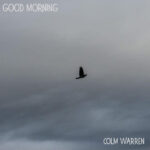
There is a profound dignity at the heart of Colm Warren’s “Good Morning.” Written for his close friend and longtime collaborator John Byrne following the death of Byrne’s wife, Christine O’Gorman, the song resists every temptation to dramatise grief, choosing instead to inhabit its quieter, more enduring moments. Warren understands that loss is rarely defined by grand emotional outpourings. More often, it is found in the silence left behind, in familiar routines suddenly interrupted and in the quiet determination to keep moving forward. That emotional intelligence shapes every aspect of “Good Morning,” from its carefully measured lyricism to its beautifully restrained vocal performance. Byrne’s piano, performed with remarkable grace under deeply personal circumstances, becomes the emotional centre of the recording, carrying a weight that extends far beyond the notes themselves. Rather than seeking catharsis through excess, Warren trusts subtlety, allowing every pause and every understated phrase to deepen the song’s impact.
Musically, “Good Morning” is equally assured. Joe Egan’s production embraces warmth without sacrificing intimacy, while Aidan Cunningham’s sensitive mix and master preserve the delicate balance between orchestral richness and personal reflection. Nothing feels ornamental or superfluous. Every instrument exists to support the emotional truth of the composition, resulting in a recording that feels timeless in both sound and sentiment. What ultimately distinguishes “Good Morning” is its unwavering sincerity. It is neither a conventional ballad nor simply a tribute, but an act of compassion expressed through music, offering comfort without pretending to erase pain. In an era where vulnerability is often overstated, Colm Warren delivers something infinitely more powerful, a song of quiet humanity that honours memory, friendship and enduring love with remarkable grace.
— — — —

Connect to us on
Facebook, 𝕏, Instagram
Discover new music on Atwood Magazine
:: Weekly Roundup ::
follow WEEKLY ROUNDUP on Spotify
:: This Week’s Features ::